Lloyd’s of London charges not a cent extra for this stretch of ocean. The legend, meanwhile, is as healthy as ever.
The Bermuda Triangle is a patch of the Atlantic between three points: Bermuda, the southern tip of Florida and Puerto Rico. Its area is roughly 1.3 million square kilometres, about half the Mediterranean.
It has no official status. You will not find those lines on any nautical chart in the world: no hydrographic service draws them.
Everyone knows them anyway.
Which makes it an excellent case study in how a legend gets assembled — and why it lasts for decades.
How it started
1950. Associated Press journalist Edward Jones publishes a short piece on several incidents in the area between Florida and Bermuda. It goes unnoticed.
1952. George Sand, writing in Fate magazine, repeats the idea and is the first to suggest that the area itself is the cause rather than coincidence.
1964. Vincent Gaddis writes a piece for Argosy and coins the name: The Deadly Bermuda Triangle. The name turns out to be a stroke of genius — short, geographic, memorable. From then on the name does the work.
1974. Charles Berlitz publishes The Bermuda Triangle. Twenty million copies, thirty languages. The legend becomes part of popular culture and stays there permanently.
Note the chronology: twenty-four years from the first newspaper item to the global bestseller, with new “cases” added throughout and old ones gathering detail.
The man who checked everything
In 1975 a librarian and pilot named Larry Kusche did the thing the bestseller authors had never got round to: he went to the archives.
He took the list of mysterious disappearances from the Triangle books and compared each entry against primary sources — ships’ logs, coast guard reports, contemporary newspapers, weather records.
The result appeared as The Bermuda Triangle Mystery: Solved. The findings were monotonous:
- Some incidents had not happened there at all. Several were in the Pacific, thousands of kilometres away.
- Some had happened in severe storms that the books failed to mention, although the weather records were publicly available.
- Some had never happened. Certain “vanished” vessels had arrived in port perfectly well, and it had been reported — just in the following issue, which nobody opened.
- Some were described accurately, with one peculiarity: any mundane explanation had been dropped from the retelling.
Kusche summed it up as “a manufactured mystery… perpetuated by writers who, either purposely or unknowingly, made use of misconceptions, faulty reasoning and sensationalism.”
What the statistics say
The US Coast Guard keeps records for its area of responsibility, which includes this region. Its position has not changed since the 1970s: the number of incidents here does not exceed the average for waters with comparable traffic.
Lloyd’s of London, the world’s largest insurance market, insures vessels transiting the Triangle at ordinary rates. There is no surcharge for an “anomalous zone” — and that is perhaps the most persuasive argument of all: insurers price risk for a living and are not prone to romance.
Traffic. The area carries routes from Europe to the Panama Canal, from the US to the Caribbean, the entire Florida passenger shipping industry and one of the densest flows of private yachts and light aircraft in the world. More movement means more incidents in absolute terms, at an unchanged percentage.
Why the compass really did read wrong
One item on the list turned out to be true, though the explanation is unexciting.
A magnetic compass normally points to the magnetic pole, which does not coincide with the geographic one, so a navigator applies a correction — magnetic declination. But there is an agonic line, a band where magnetic and true north coincide and the correction is zero.
In the twentieth century that line ran through the Triangle region. A navigator used to applying a correction would introduce an error here — and anyone unaware of the quirk could drift off course.
The agonic line has since moved west and now crosses the United States. The legend stayed; the physics left.
What is genuinely unusual about the area
The region has plenty of natural quirks — they are simply all explicable.
The Gulf Stream. One of the most powerful currents on the planet runs through the Triangle at up to 9 kilometres per hour. It carries anything on the surface away fast, and within a day a search covers hundreds of square kilometres. Debris that would be found in an hour in still water is never found here.
Weather. The area lies in the Atlantic hurricane belt and is known for sudden squalls. Mesoscale systems form here that deliver abrupt gusts under clear skies.
Depth. The Puerto Rico Trench reaches 8,380 metres, the deepest point in the Atlantic. What sinks there is never recovered.
Rogue waves. Single waves up to 30 metres high, long treated as sailors’ folklore until instruments recorded one at the Draupner platform in the North Sea in 1995. They occur in the Atlantic too.
Methane. A popular hypothesis about gas hydrate releases from the seabed reducing water density. An elegant idea, but there is no data on such releases for this area, so it is generally filed under theory.
And one more detail
The Bermuda Triangle lies almost entirely inside the Sargasso Sea — the only sea on the planet without shores.
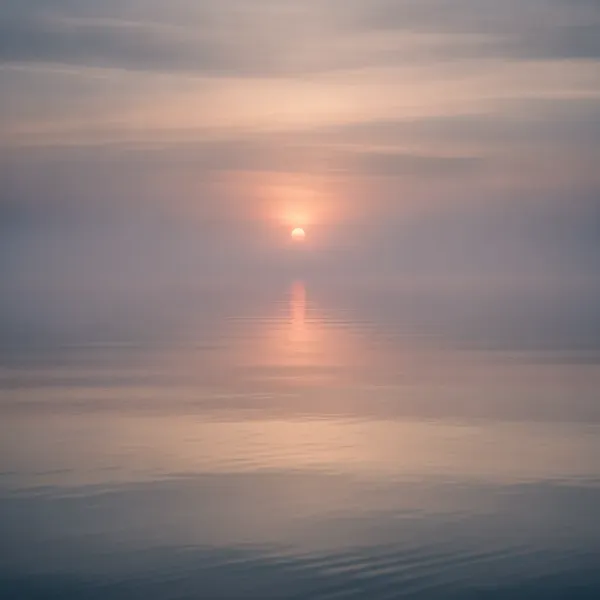
That is the final brushstroke. Picture what sailing crews saw: dead calm, mirror water, fields of brown weed to the horizon, no landmark anywhere, no shore, and a compass that needed no correction. In a flat calm a sailing ship could sit here for weeks.
A place that might have been designed for stories to be told about it.
Is it worth going
Absolutely.
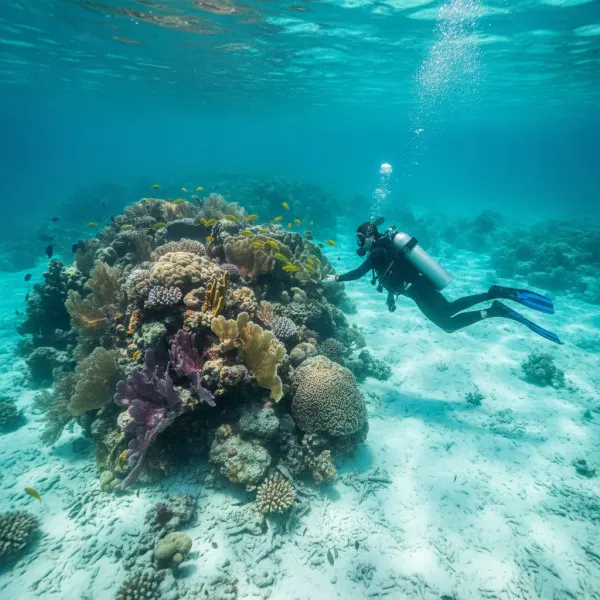
Inside the “Triangle” lie the Bahamas with their clear water and shallow reefs, Bermuda with hundreds of historic wrecks at accessible depths, and the Florida Keys with the only barrier reef in North America. The dive industry works here year-round and is doing perfectly well.
The vessels covering these waters are on the Bahamas pages, and the stories of what the ocean actually does are in the articles on the Mariana Trench and the saltiest sea on the planet.
The real ocean, once you look into it, is more interesting than any legend about it.