Tala
 1 / 18
2 / 18
3 / 18
4 / 18
5 / 18
1 / 18
2 / 18
3 / 18
4 / 18
5 / 18
 6 / 18
 7 / 18
 8 / 18
 9 / 18
 10 / 18
 11 / 18
 12 / 18
 13 / 18
 14 / 18
 15 / 18
 16 / 18
 17 / 18
 18 / 18
Book through Tour Leader Club
37 m · 22 guests · 11 cabins
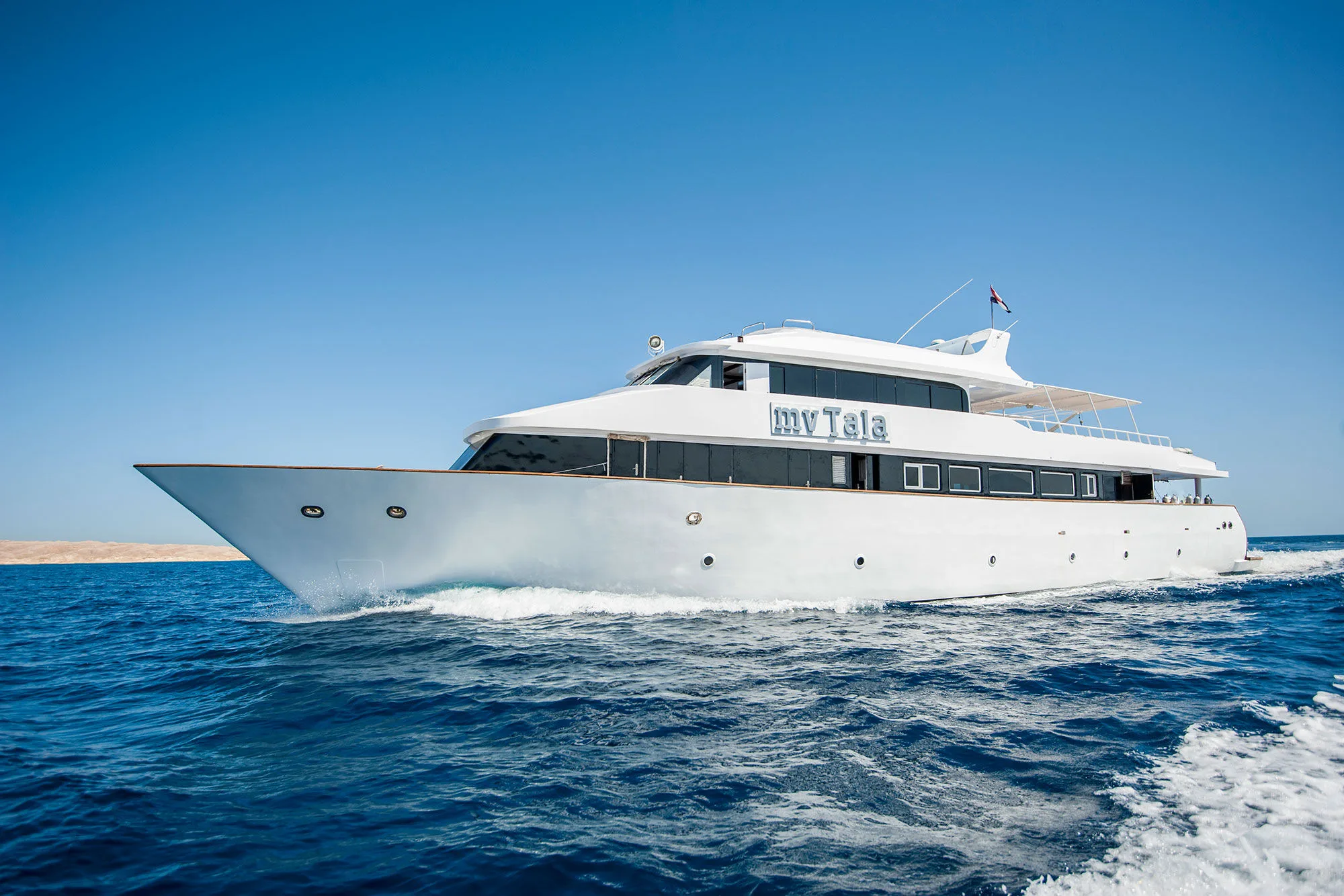
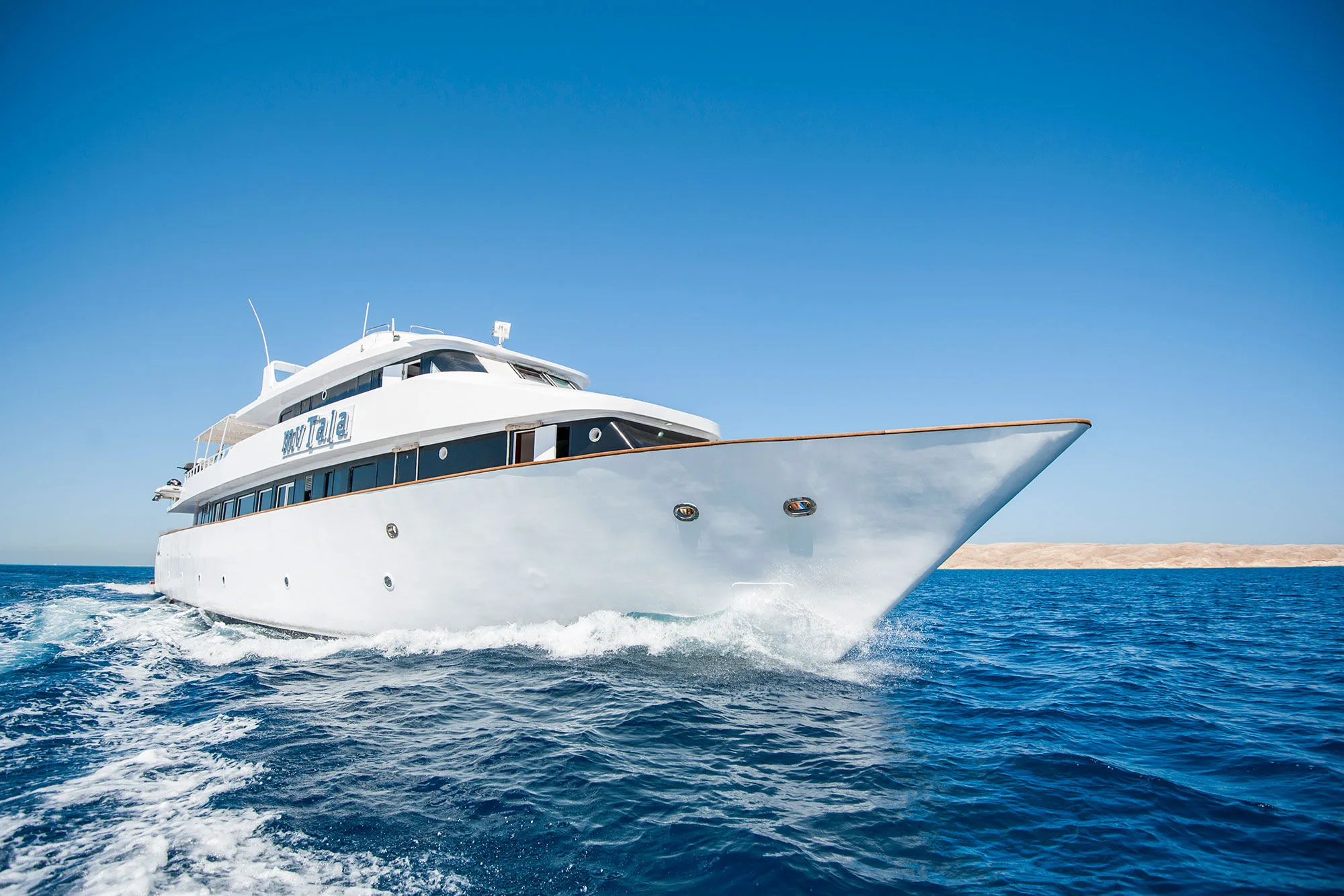
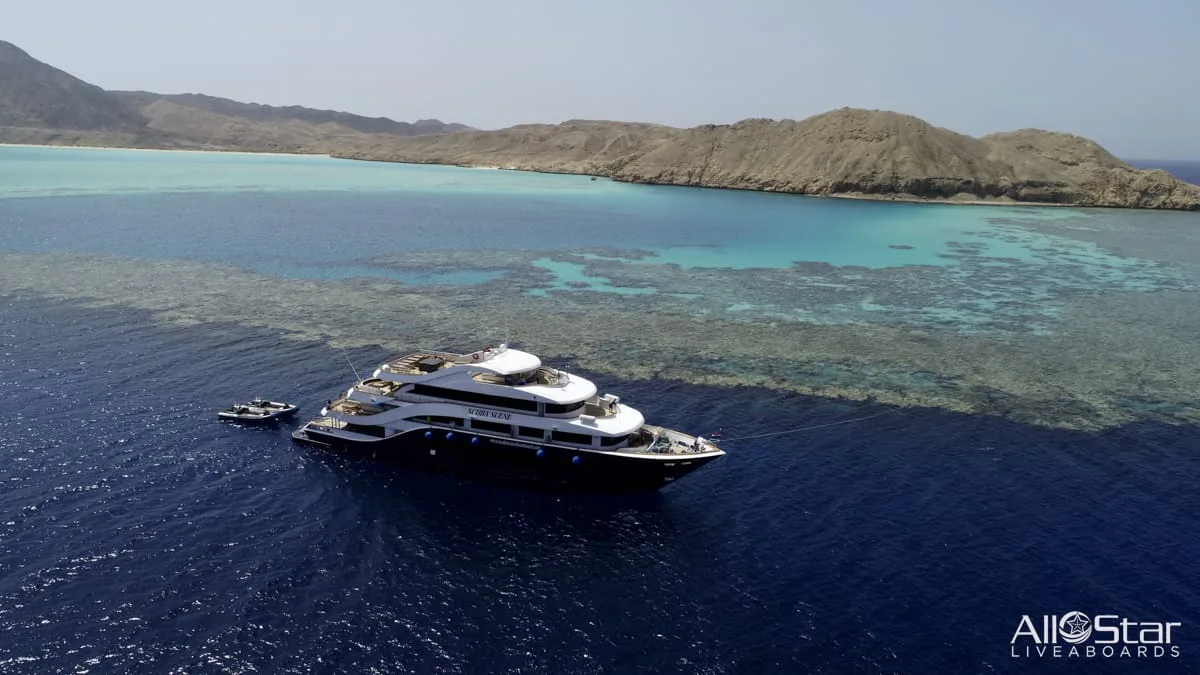
Tala is a 37-metre steel vessel run by Red Sea Explorers out of Hurghada. The easiest way to pick her out in port is the name: “mv Tala” in green letters on the white superstructure, over a plain white hull with a narrow teak stripe along the side. The superstructure is wood and fibreglass, there are three decks, twenty-two guests and eleven cabins — and all eleven have a private bathroom and individually controlled air conditioning.
The operator deserves an introduction, because it defines the character of the boat. Red Sea Explorers has been running since 2005 and was founded by Faisal Khalaf, a GUE Fundamentals instructor and a UTD and INTD normoxic trimix instructor. The company has spent years on technical and exploration diving: over the past decade the team has supported dives to 180 metres and handled the logistics for several research and conservation projects. That explains the kit on Tala: a six-whip fill station with trimix and full helium/oxygen partial pressure blending, helium and oxygen analysers, a Coltri Sub compressor at 200 litres per minute, twenty-five single tanks, ten made-up sets of AL 11 L doubles, ten AL 6 L and twenty-five AL 11 L stages, an unlimited supply of lead and weight belts, underwater scooters and a stock of spare gear — backplates, wetsuits, computers, booties. You will not find that on an ordinary Egyptian recreational safari.
That does not make her a tech-only boat. The programme is the usual one: six days of diving, three to four dives a day, two or three on the first and last days, dive guides on board and instructors for anyone who wants to start or continue training. It simply means people will be assembling doubles and clipping on stages next to you on the dive deck, and that is normal background here.
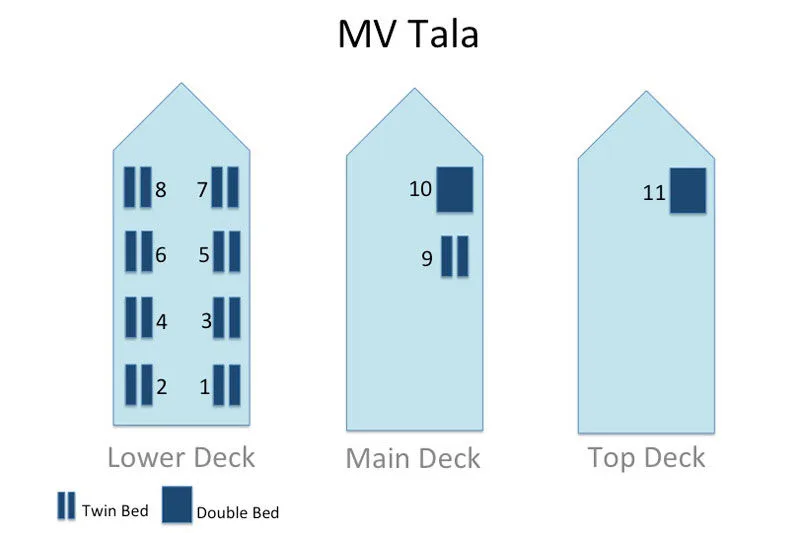
The layout is simple and fully visible on the deck plan the operator publishes. The lower deck has eight cabins along a corridor, all twins, lit by portholes. The main deck holds cabin nine with separate beds and cabin ten with a double, plus the saloon, the galley and the dive deck. The top deck has cabin eleven with a double bed and a door straight out onto the deck, and the open lounging area. Eleven cabins, twenty-two berths, not a triple among them.
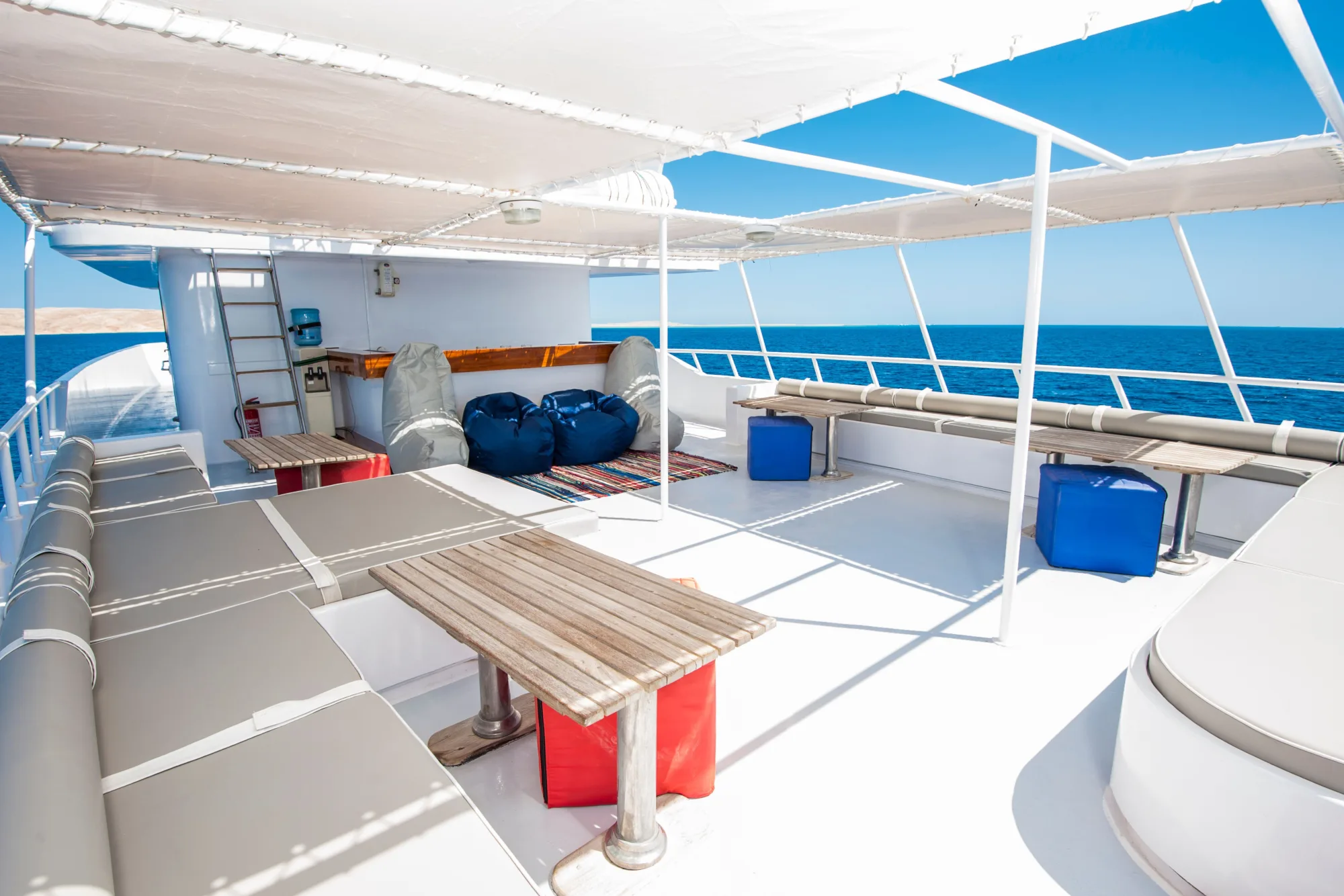
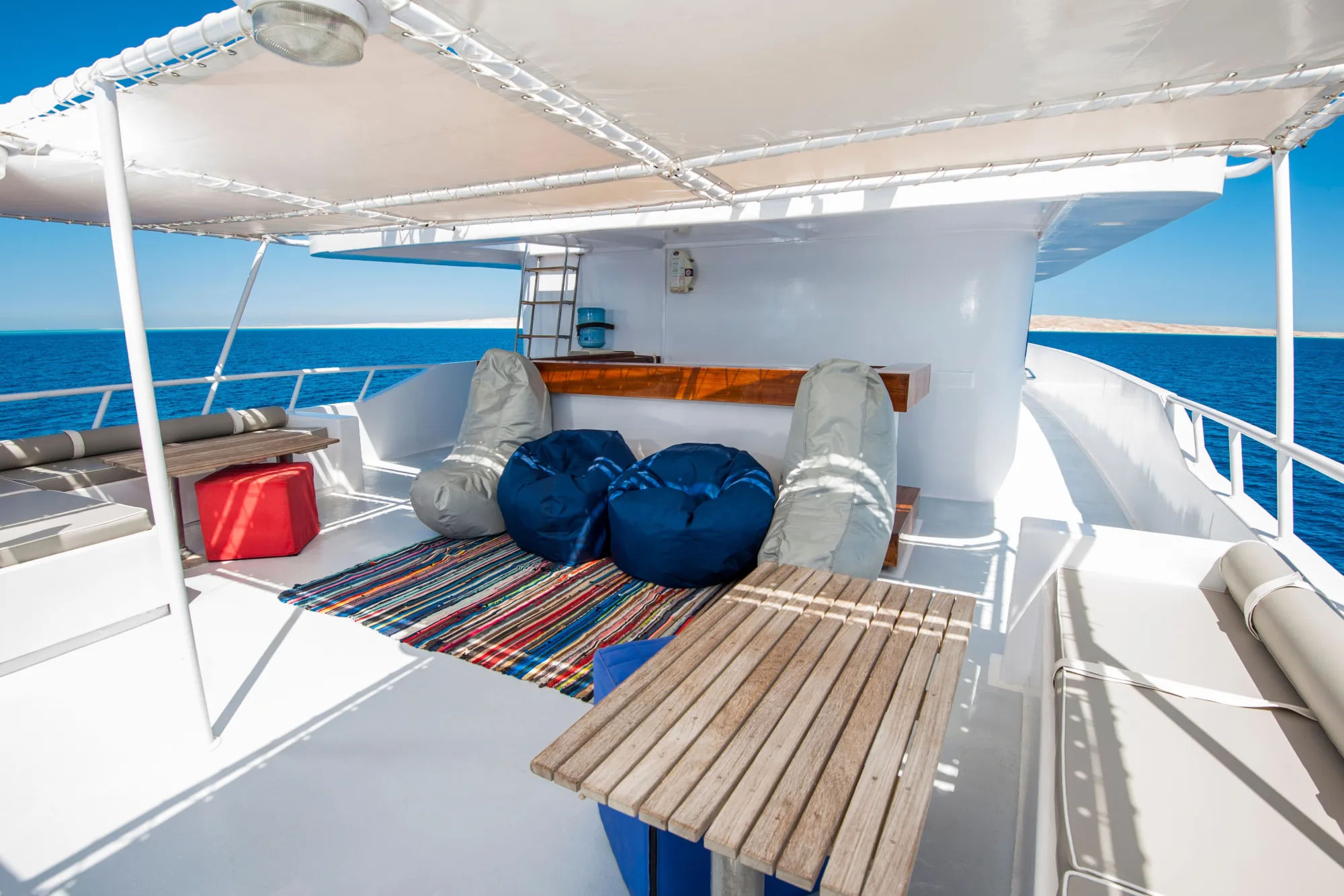
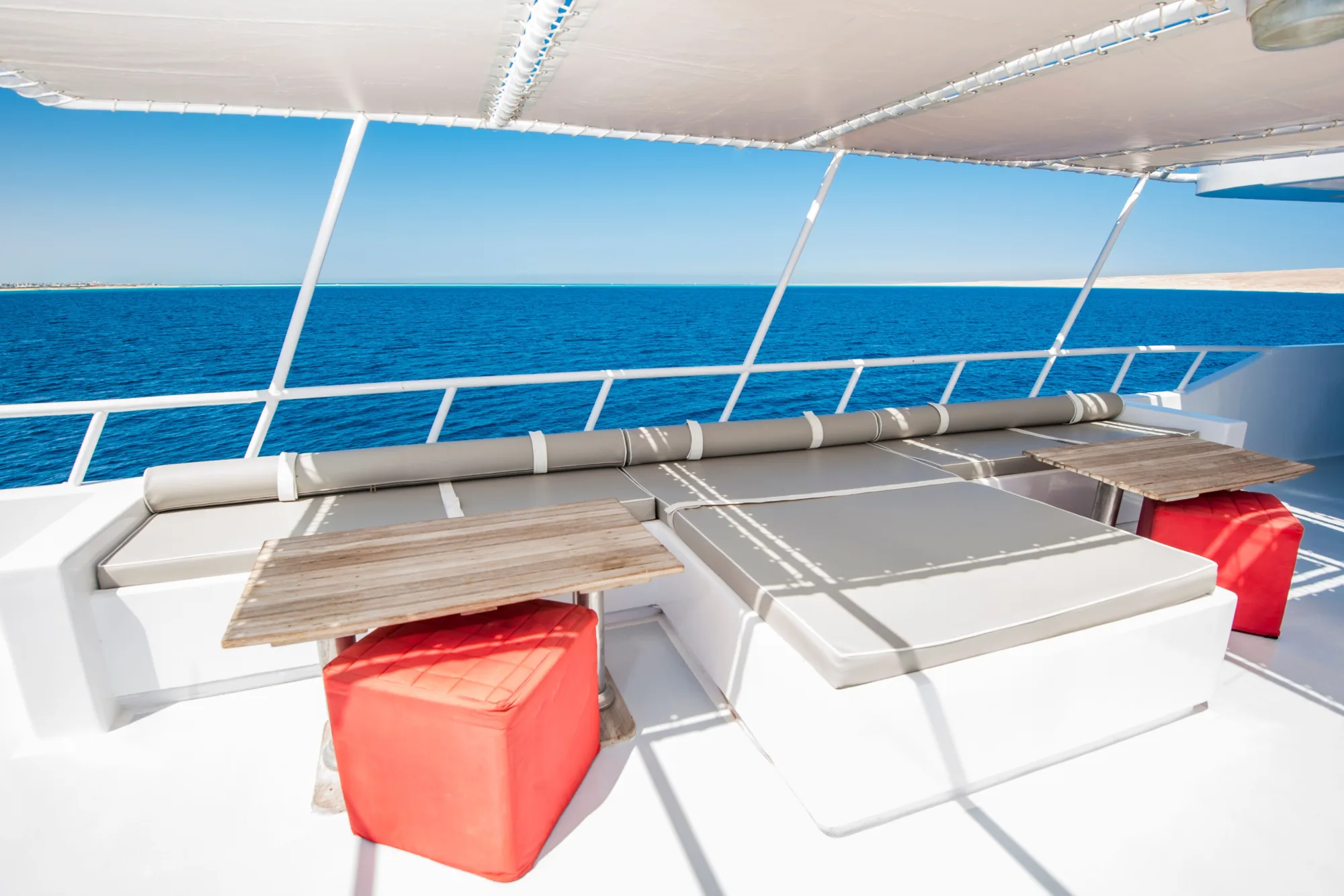
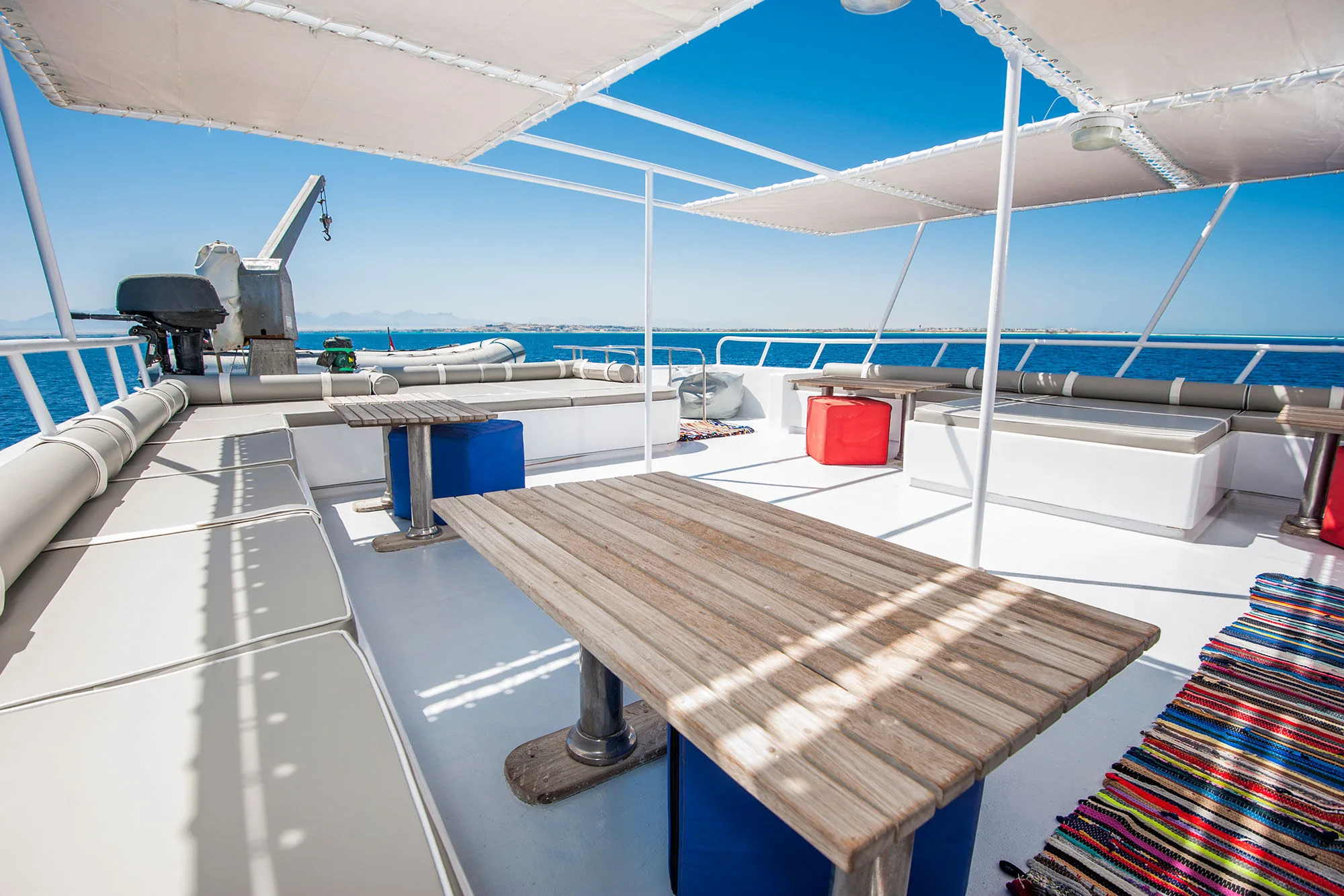
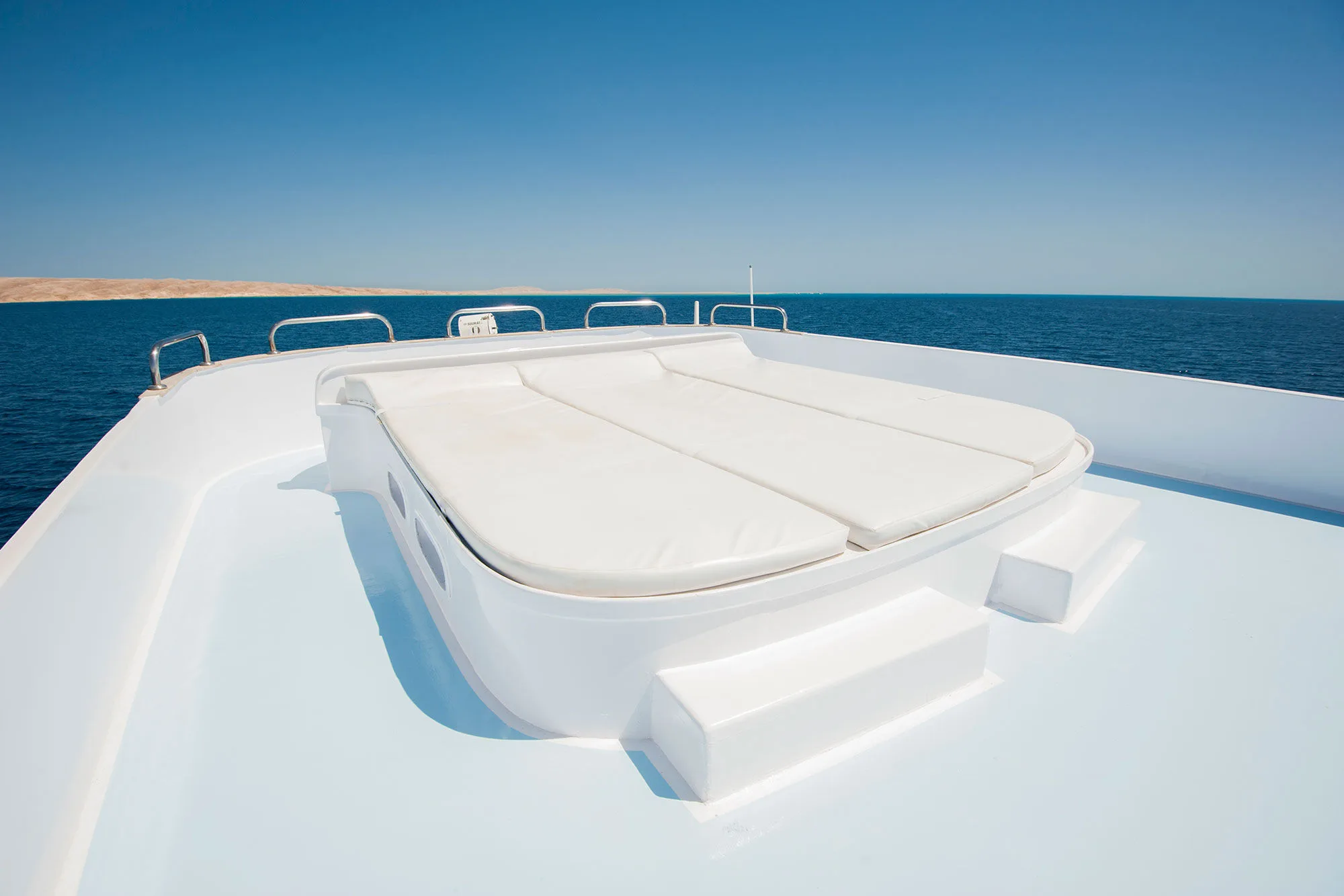
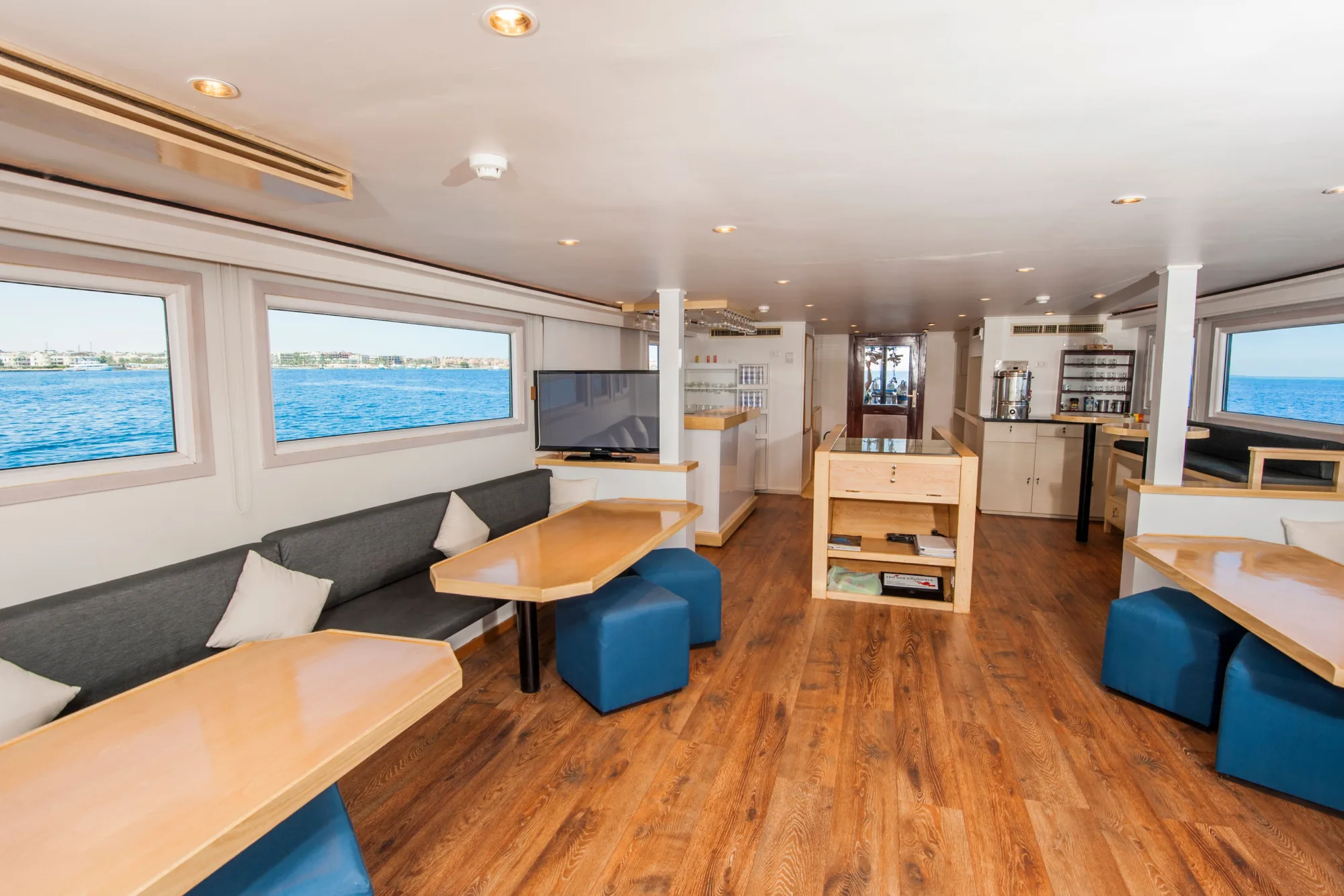
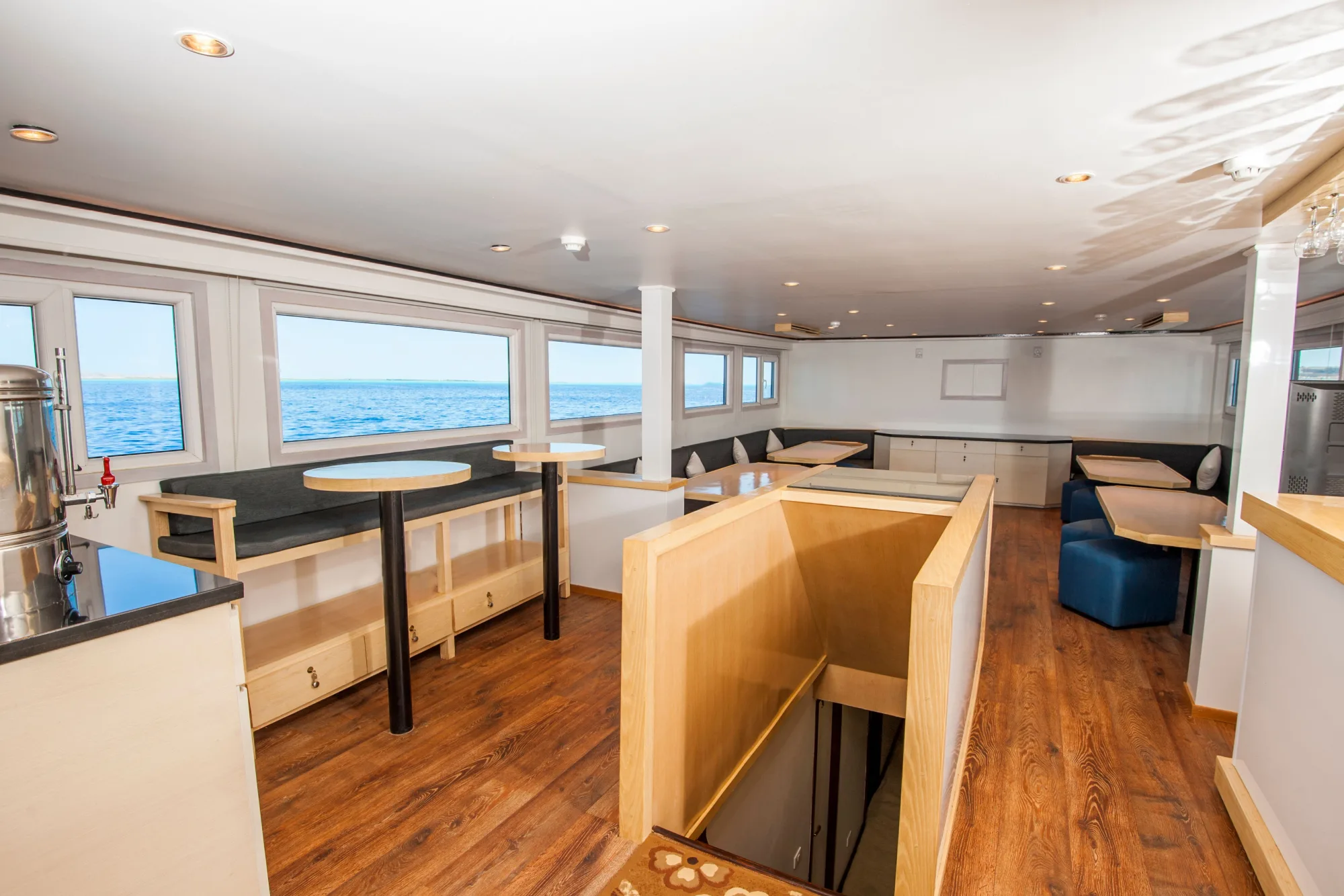
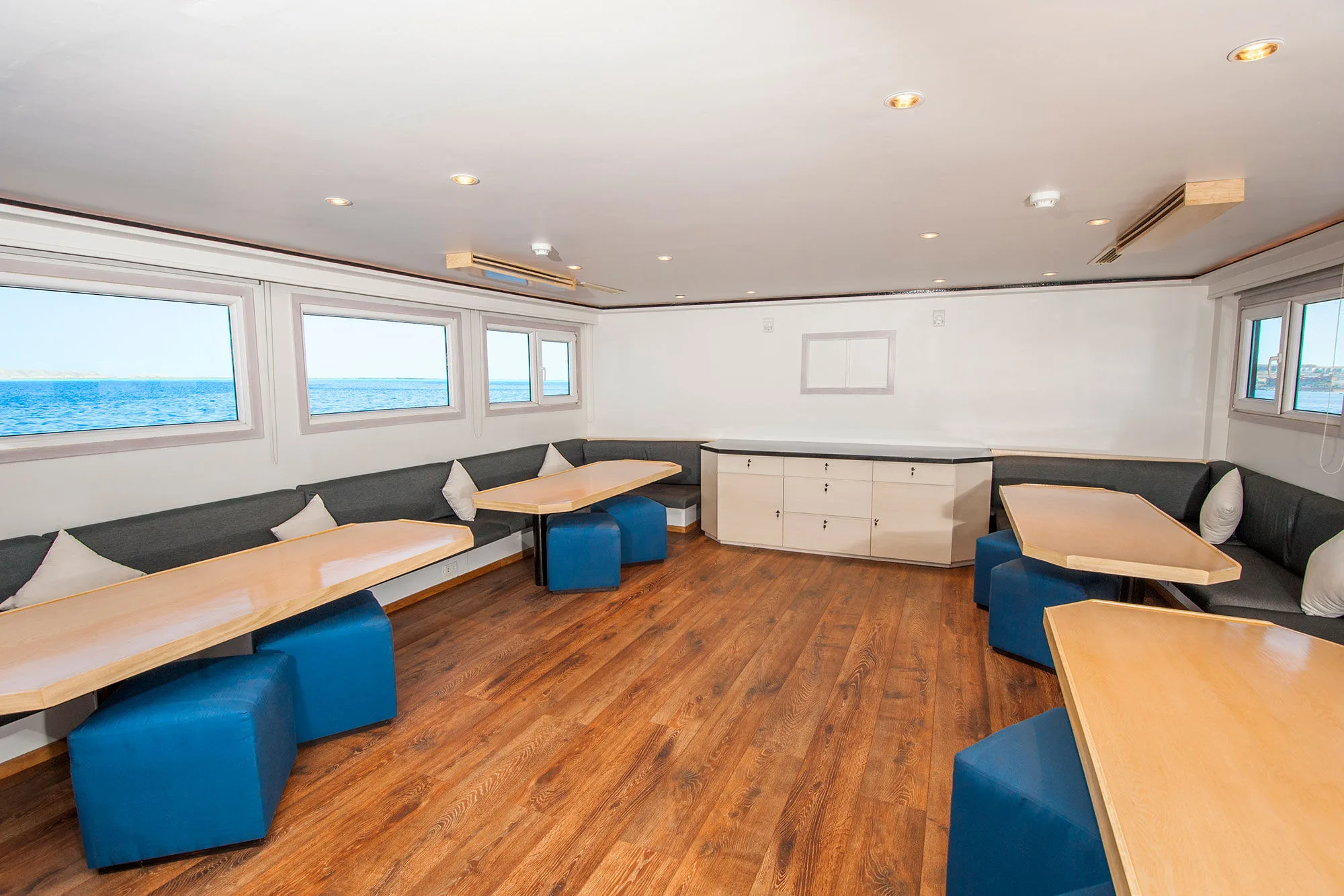
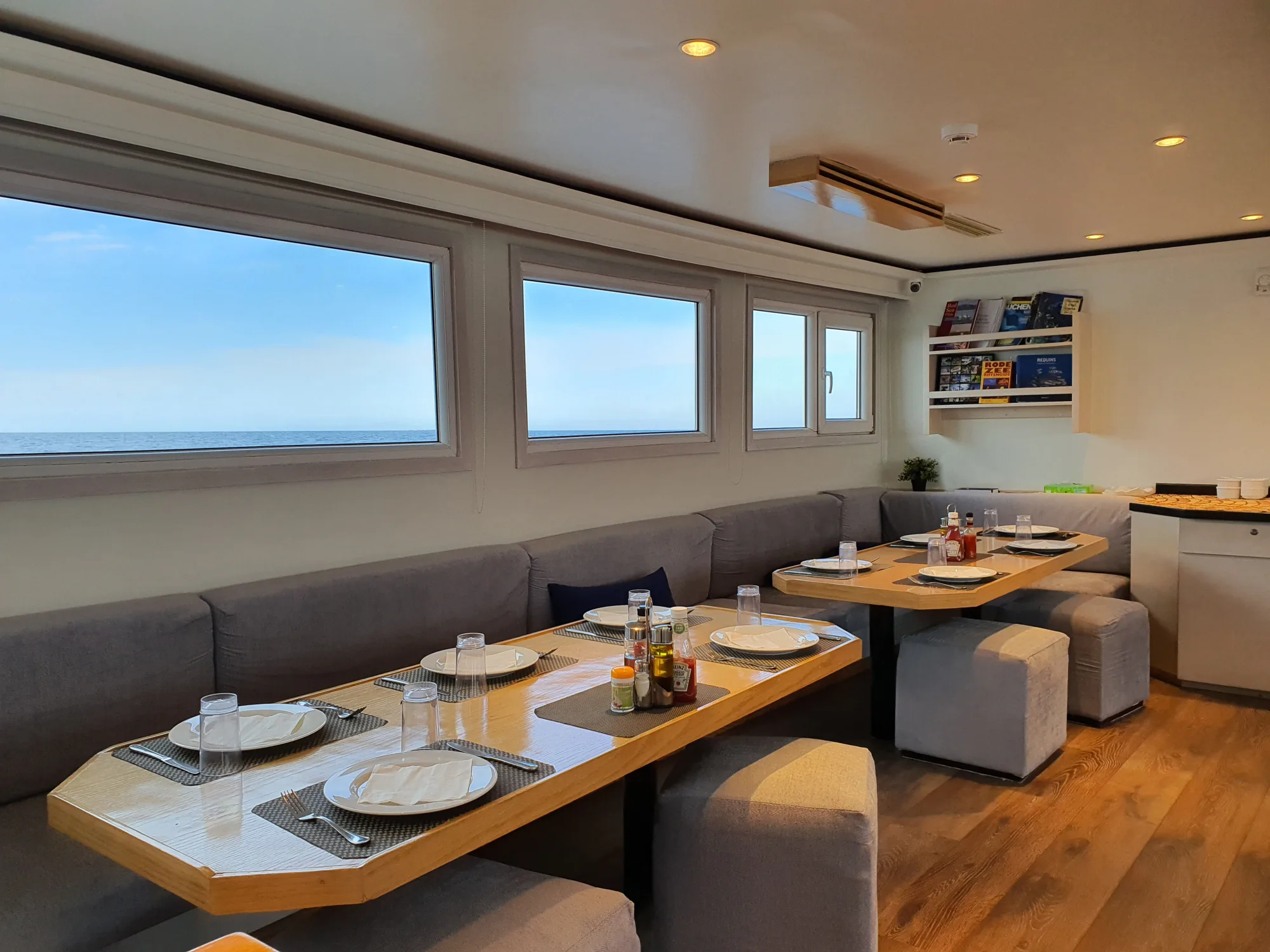
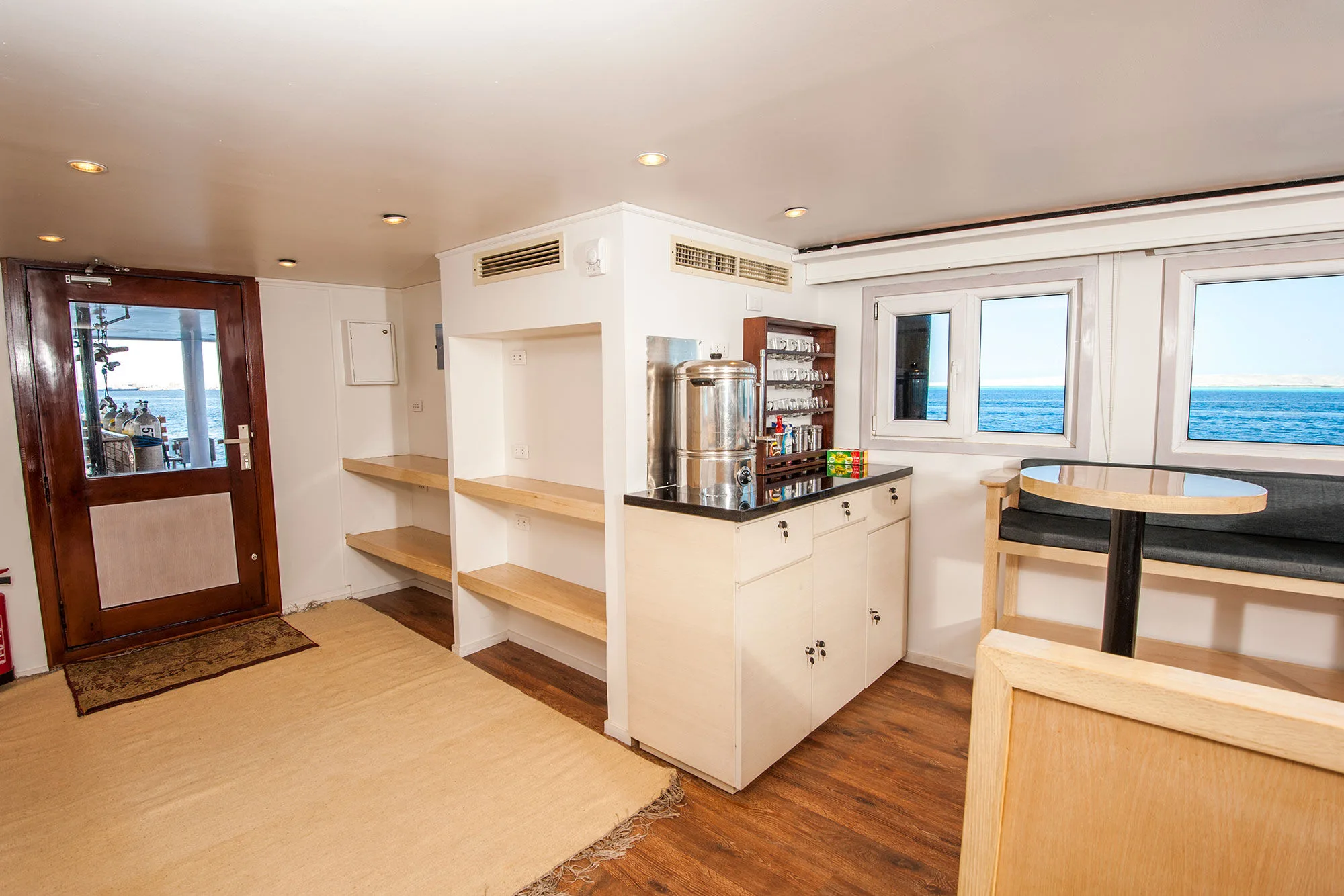
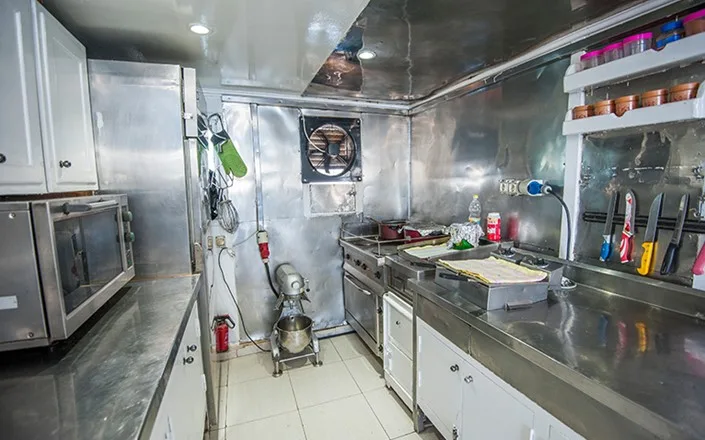
The saloon is bright after its refit: oak floor, grey and blue banquettes along both sides, tables for four by the windows on either side, a television, and a bar with a coffee station and a hot water urn. The windows are panoramic and you can see the sea from any seat. The top deck is an open lounge under awnings with mattresses, bean bags and wooden tables, and above it a separate sun spot with a double mattress and no shade, for anyone who wants the sun undiluted. The galley is industrial stainless steel; everything is cooked on board from scratch, three times a day.
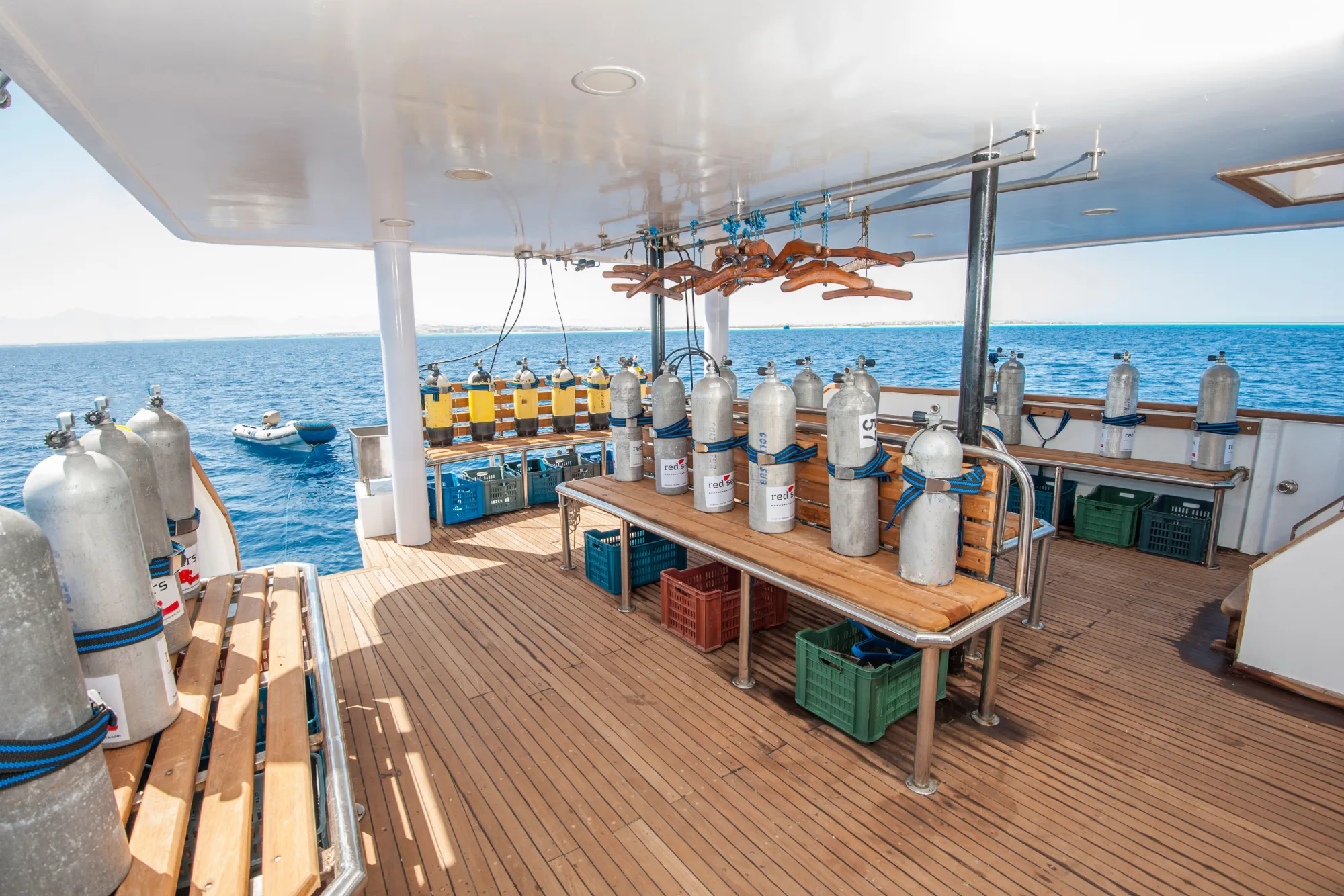
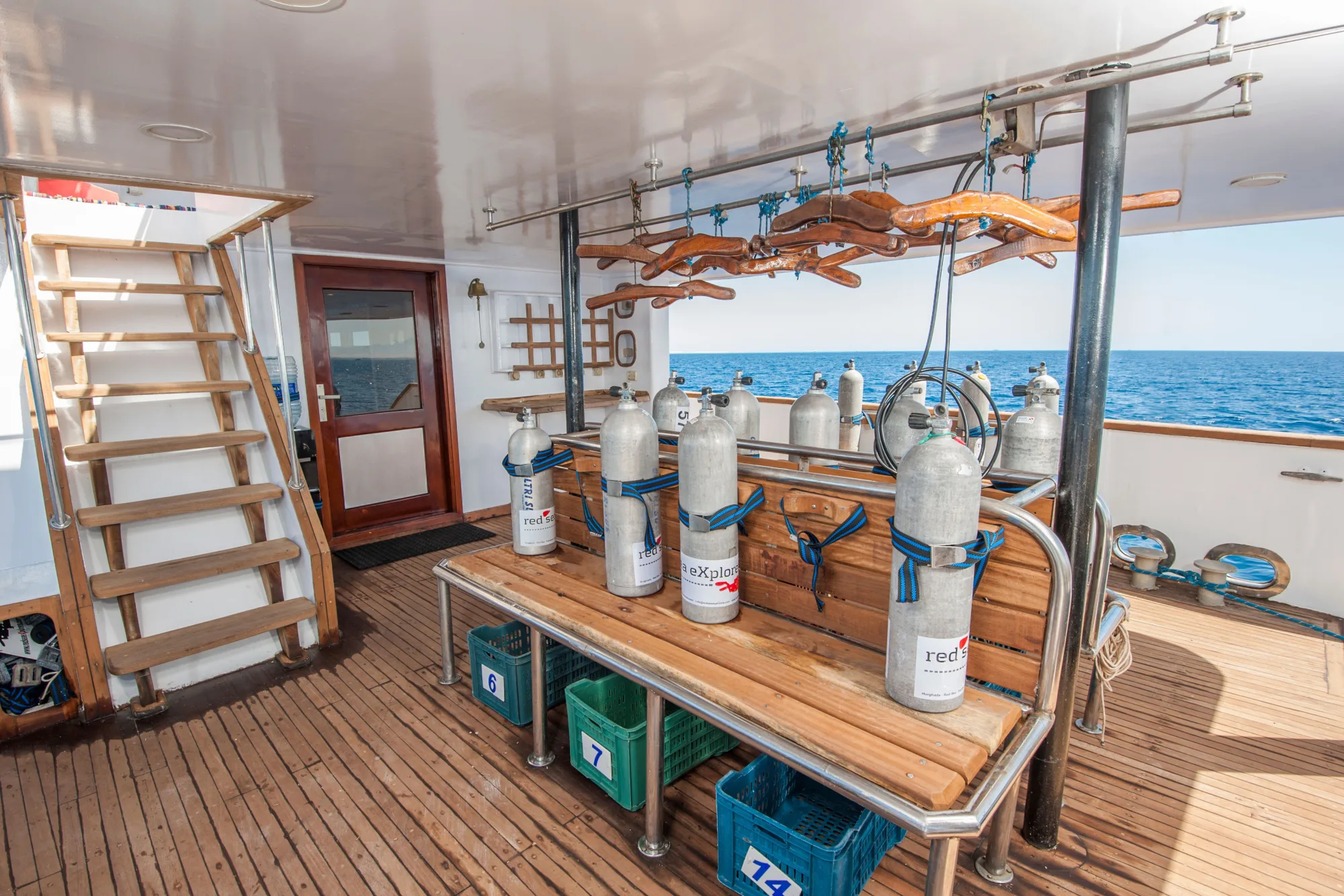
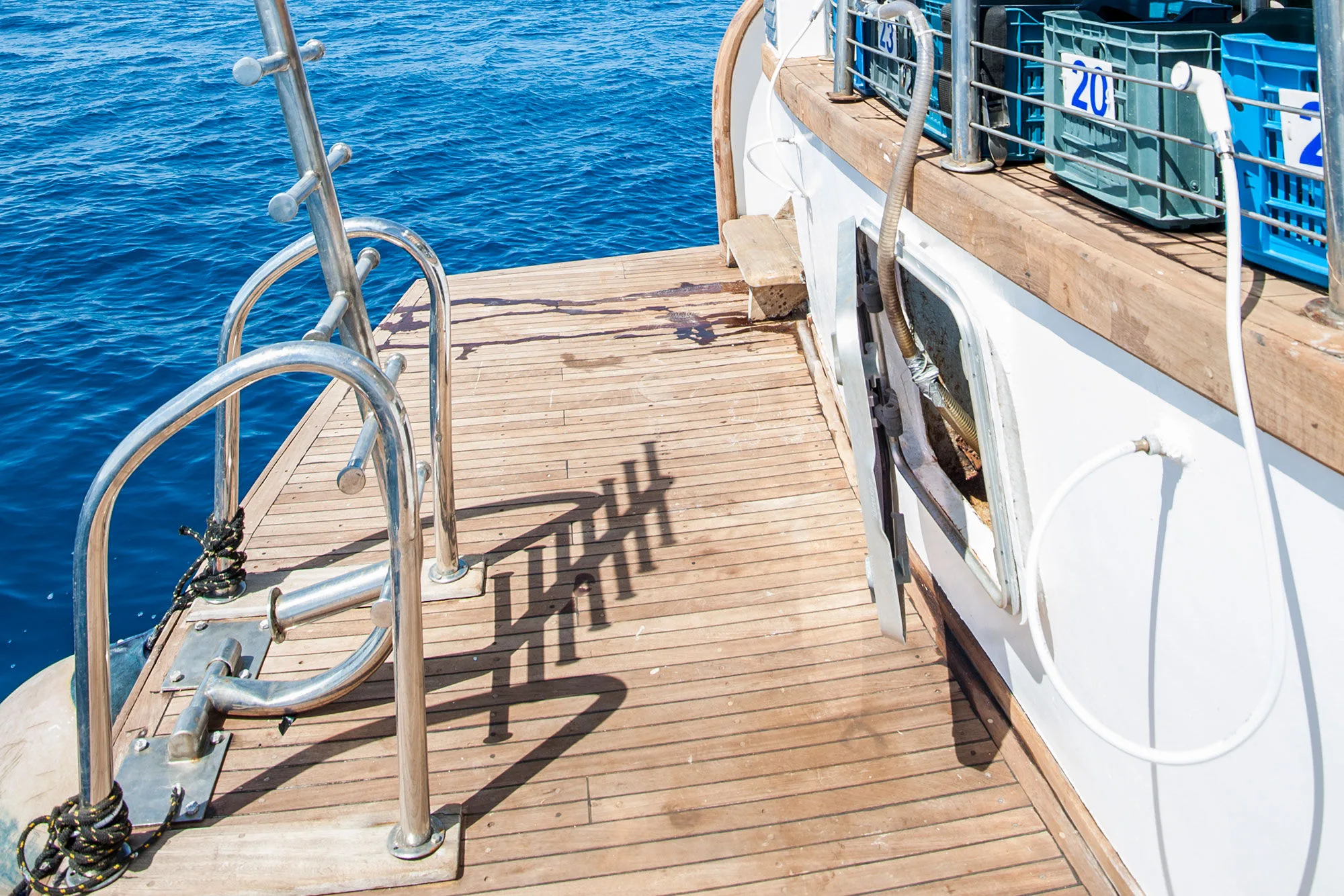
The dive deck takes up the whole after end of the main deck: two rows of tank racks along the sides, a long bench table down the middle, a numbered station with a crate for every guest, rinse hoses and a separate rinse for underwater camera gear. Two ladders lead into the water from the teak stern platform, and a tender runs groups out to the more distant entry points.
The money is worth knowing about in advance. The week covers seven nights in a twin en-suite cabin, airport meet and assist and local transfers, full board with soft drinks, six days of diving, dive guides, a 12 L tank, weights and a weight belt. One charge is collected on board in cash: the route fee together with environmental taxes. It depends on the itinerary — 200 euro on the northern route, 250 on North and Dahab and North and Brothers, 320 on all the southern ones. The Egyptian entry visa costs 35 euro on arrival. Gratuities are described by the operator as recommended and put at 80 euro per guest for the week. Everything bought on board — rental, gases, courses, the bar — carries 10 per cent sales tax on top of the listed price, and payment is requested in cash. Insurance covering diving is not sold by the operator at all: arrange your own policy before you travel.
She runs year round out of two ports, Hurghada and Port Ghalib, on six itineraries, and some departures start in one port and finish in the other. That changes your return ticket, so every such date in the schedule carries its own note. When booking flights, bear in mind that the last dive is usually around midday on the day before departure and the operator asks you to allow twenty-four hours before flying. Check-in is at 4pm, check-out at 11am; depending on the boat’s schedule the first or last night may be spent in a 4-star hotel rather than on board.
Small things better learned now than on the jetty: shoes come off on boarding and are returned at the end of the week, so bring slippers; suitcases are stored away once you have unpacked; you get a towel for fresh water and a bathrobe for salt water, changed halfway through the trip; smoking is banned in the cabins and on the dive deck. Diving gloves and knives are illegal in Egyptian waters, as is feeding fish and anchoring in protected areas. The operator asks for passport details and flight numbers at least ten days before departure, and your passport must be valid for another six months.
No mark-up
You pay the rate the operator publishes. The only thing added on top is the actual payment processing cost — no fee of ours.
We run the booking
Correspondence with the operator, holding your places, the contract, confirmation and all paperwork sit on our side. Nothing for you to arrange yourself.
Pay by card
We send you a Stripe invoice — pay by card, in your own currency, from anywhere in the world. The transfer to the operator is handled on our side.
Support in your language
We help you pick the cabin and dates, answer questions on the route and gear, and stay reachable until you are home — in English, in your time zone.
We quote the exact amount when confirming the booking: it covers the operator's rate plus the actual payment processing cost. No hidden charges.
Yacht Specifications
Length
37 m
Beam
7.25 m
Material
Steel hull, wood and fibreglass superstructure
Capacity
22 guests
Cabins
11
Speed
14 knots, cruising 12–14
Engine
2 x Caterpillar 580 hp
Bathrooms
11
Water capacity
10,000 L
Fuel capacity
12,000 L
Freshwater maker
two desalination units, 4,500 L per day each
On Board
Diving on board
The operator states its experience requirements by route. For the southern itineraries it strongly recommends at least 30 logged dives. For Brothers, Daedalus and Elphinstone the minimum is Advanced certification with 50 logged dives. Your last dive should be no more than six months ago, and you are asked to bring your logbook. If a requirement is not met, the guides may exclude you from particular dives, and they may also change the route to suit the group's level. Red Sea Association rules require every diver to complete a medical self-declaration; if you answer yes to any question, bring a medical certificate from your own doctor. Insurance covering diving and chamber treatment is strongly recommended by the operator but not sold by it — arrange your own. The two nearest decompression chambers are in Hurghada. Diving gloves and knives are illegal in Egyptian waters, as is feeding fish, collecting coral or shells, and anchoring in protected areas. Smoking on the dive deck is not allowed.
Food and drinks
The operator asks you to limit special dietary requests to allergies and religious requirements and to state them when booking, so the cook can prepare separately. Water, tea, soft drinks and snacks are included and unlimited. Alcohol and barista coffee are sold separately on board; the operator asks for cash for everything bought on board, and 10 per cent sales tax is added on top of the listed prices.
Navigation and safety
Cabins
· 8 cabins
Separate beds
Beds: 2 single beds
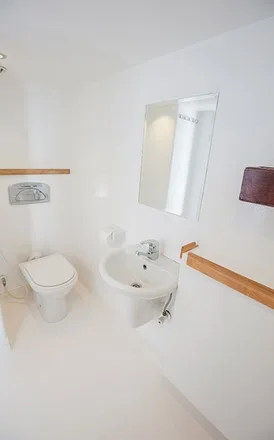
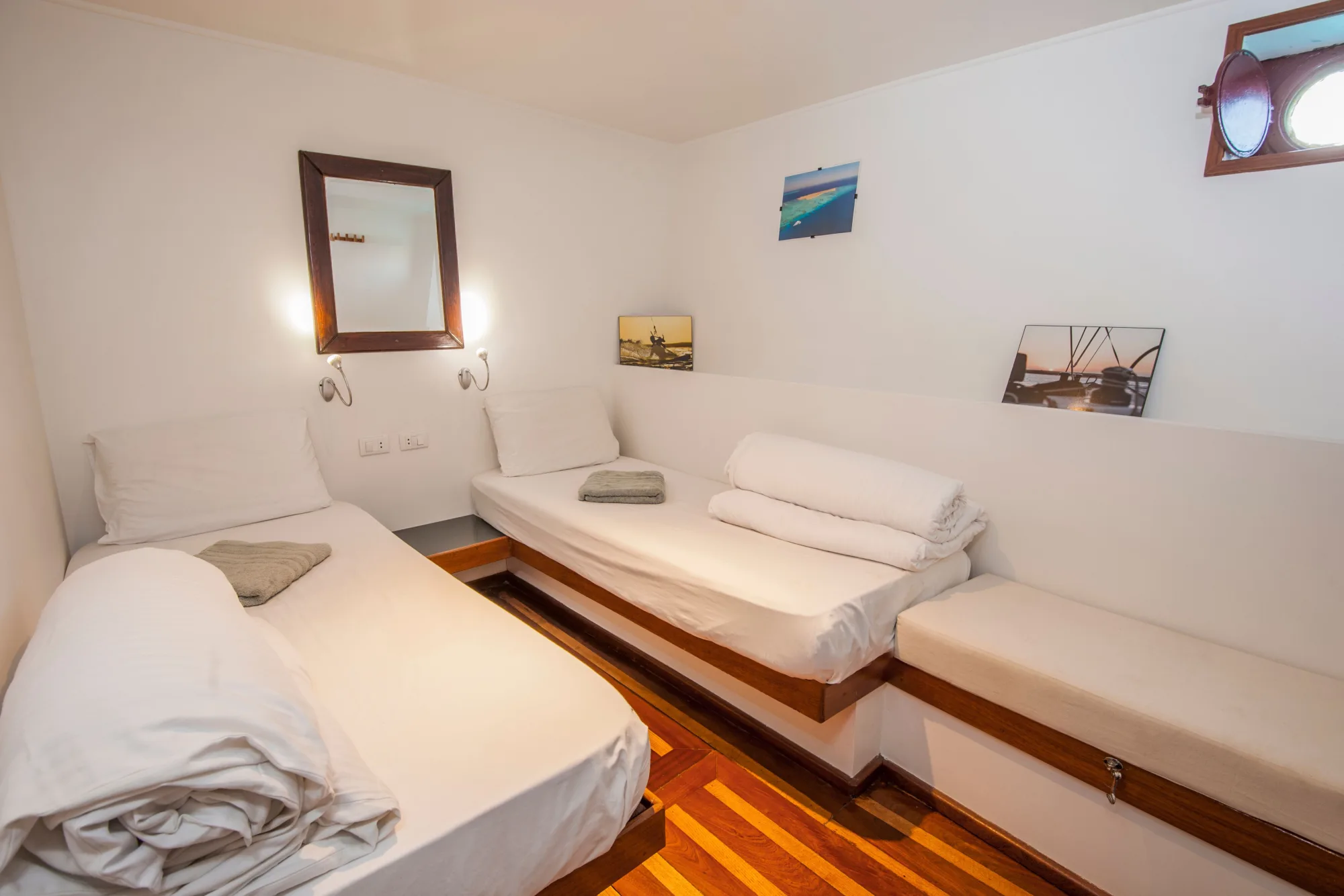
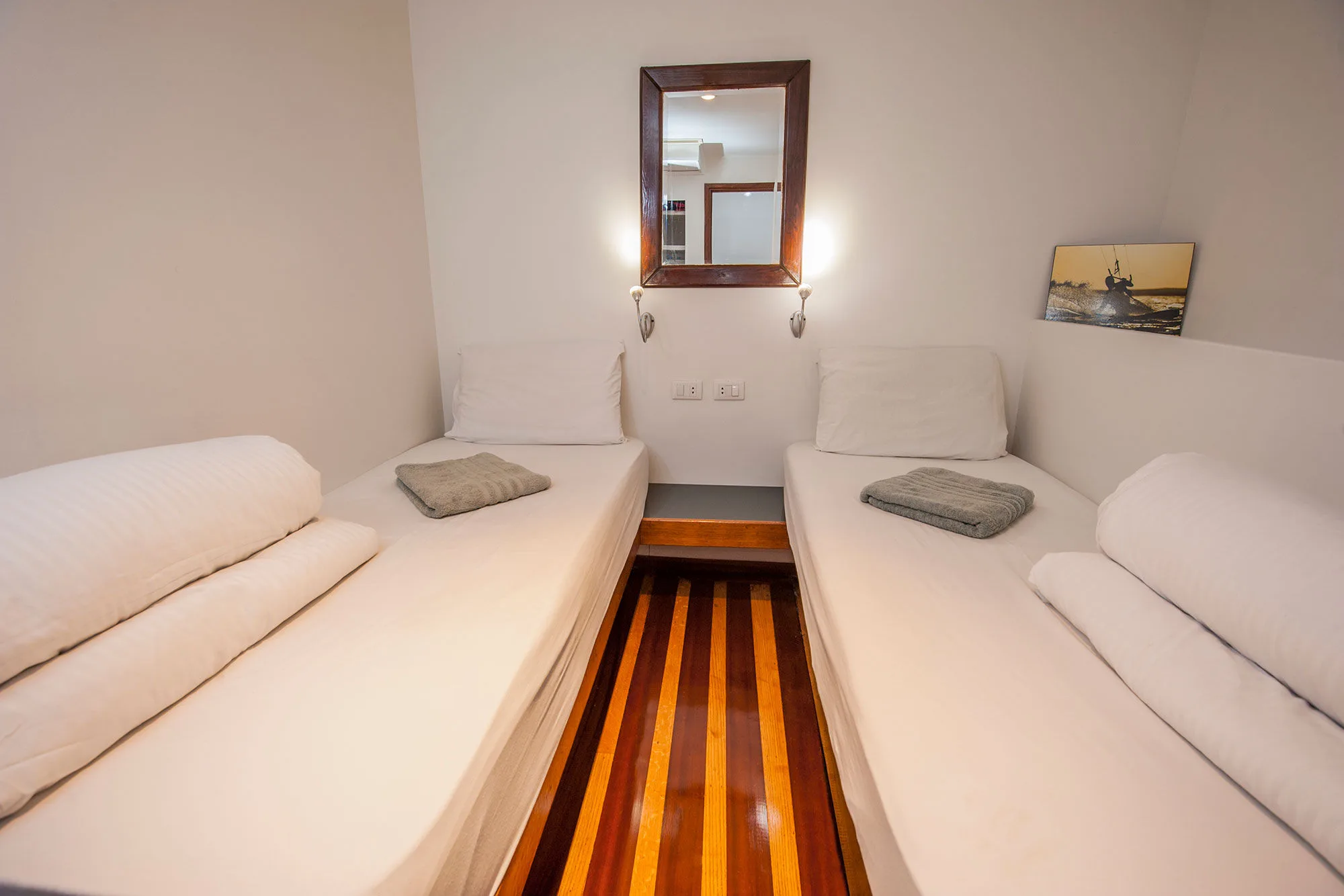
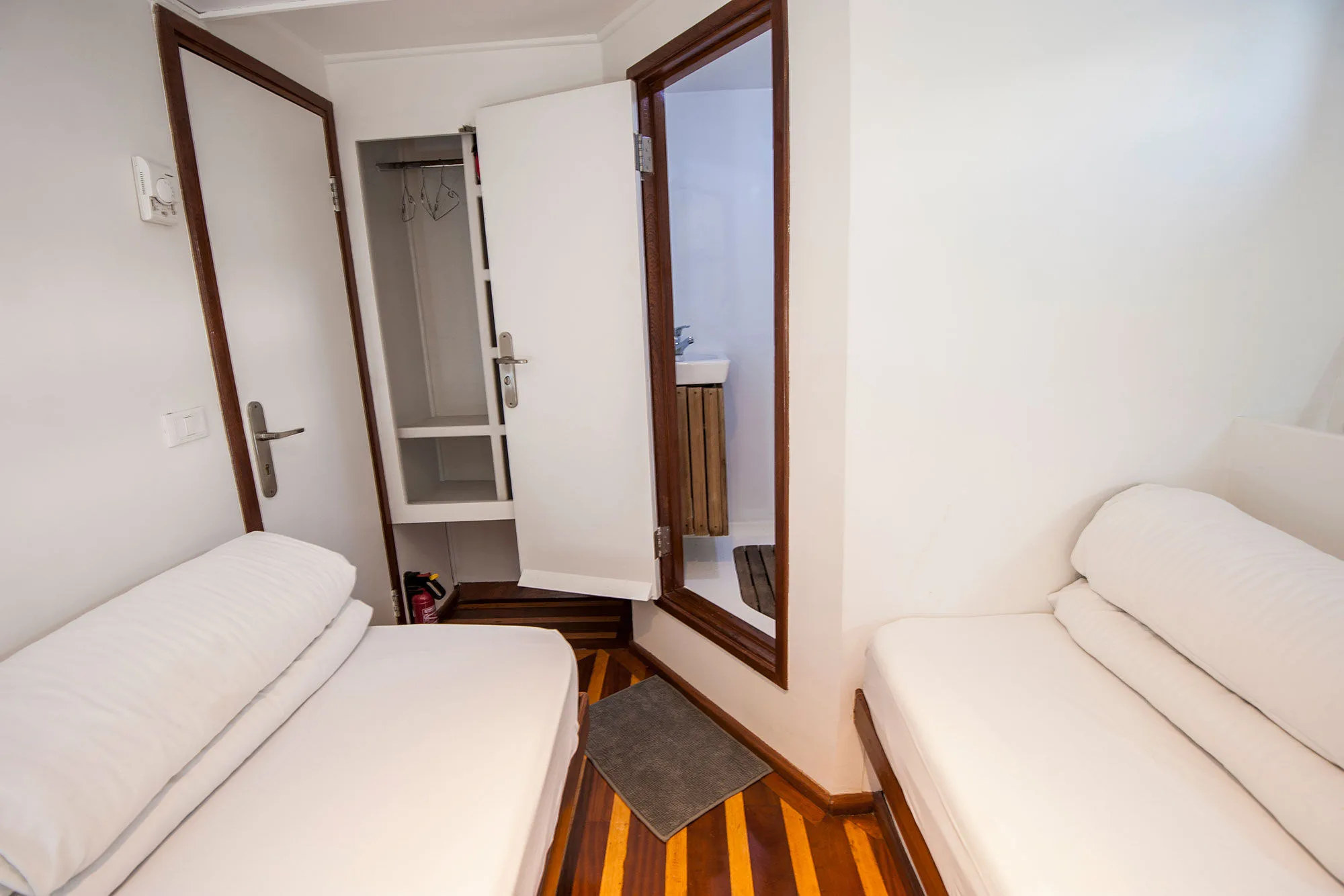
Eight cabins along the lower deck corridor — the base category of the boat and the one the weekly price is quoted from. The finish is light: white bulkheads, a striped teak floor, a mirror and wall lamps above the headboards, pictures on the panelling. There are sockets and switches between the beds, a built-in wardrobe with shelves and hangers by the door, a private bathroom with shower and toilet, and individually controlled air conditioning. Light comes through portholes. The internal layout varies across the eight: some have two parallel beds, others have offset berths along the side. The booking system splits these cabins into two categories — separate beds and bunk-style — but neither the operator nor the system publishes how many of each there are, so confirm the exact layout when you book. The cabin also suits a solo traveller: the operator will pair you with a guest of the same sex.
· 1 cabin
Separate beds
Beds: 2 single beds
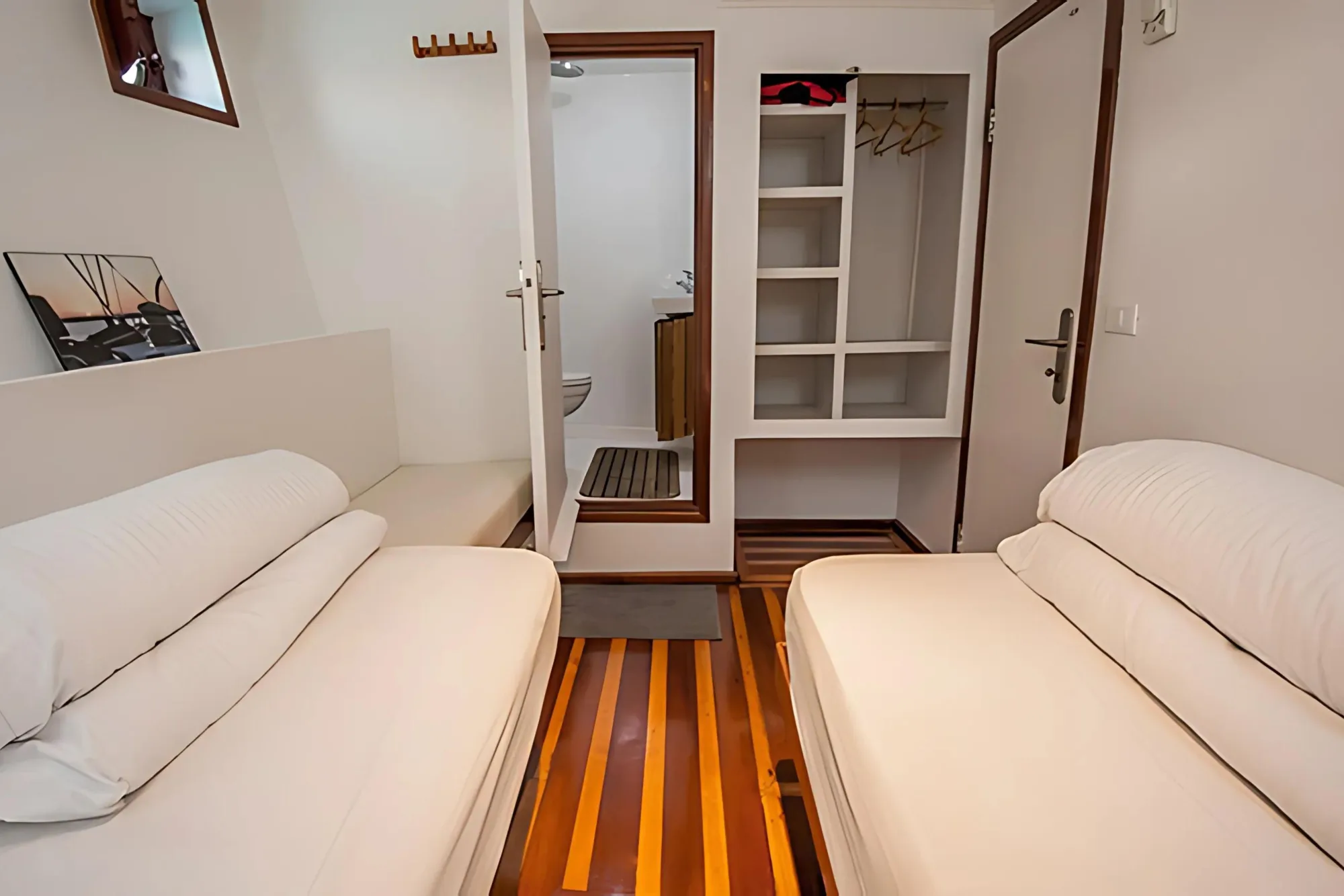
The only twin on the main deck: two single beds along the bulkheads with a striped teak floor between them, a built-in wardrobe with shelves and hangers, and a private bathroom with shower and toilet opening straight into the cabin. A window instead of a porthole, and individually controlled air conditioning. The saloon, galley and dive deck are all on this deck, so you never carry gear up or down a stairway.
· 1 cabin
Double bed
Beds: 1 double bed
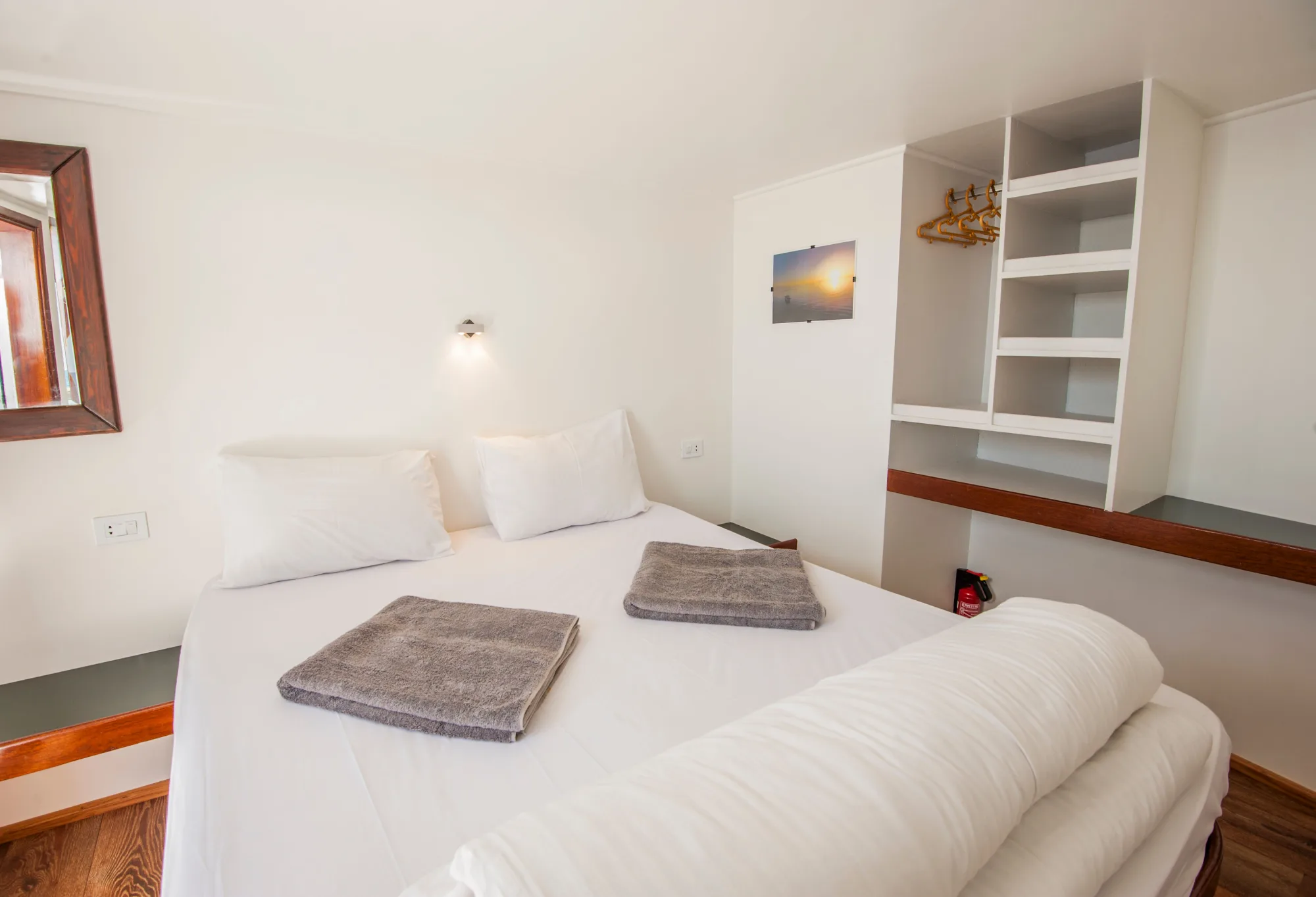
One of the two cabins on the boat with a double bed instead of separate ones. The finish is light: white bulkheads, a wooden shelving unit by the headboard, a wall lamp and a picture above the bed, a wooden trim along the panelling. Private bathroom with shower and toilet, individually controlled air conditioning, and a main deck window. The cabin is sold whole with no sharing — the choice for a couple who want one bed and a door that closes, but do not need the top deck.
· 1 cabin
Double bed
Beds: 1 double bed
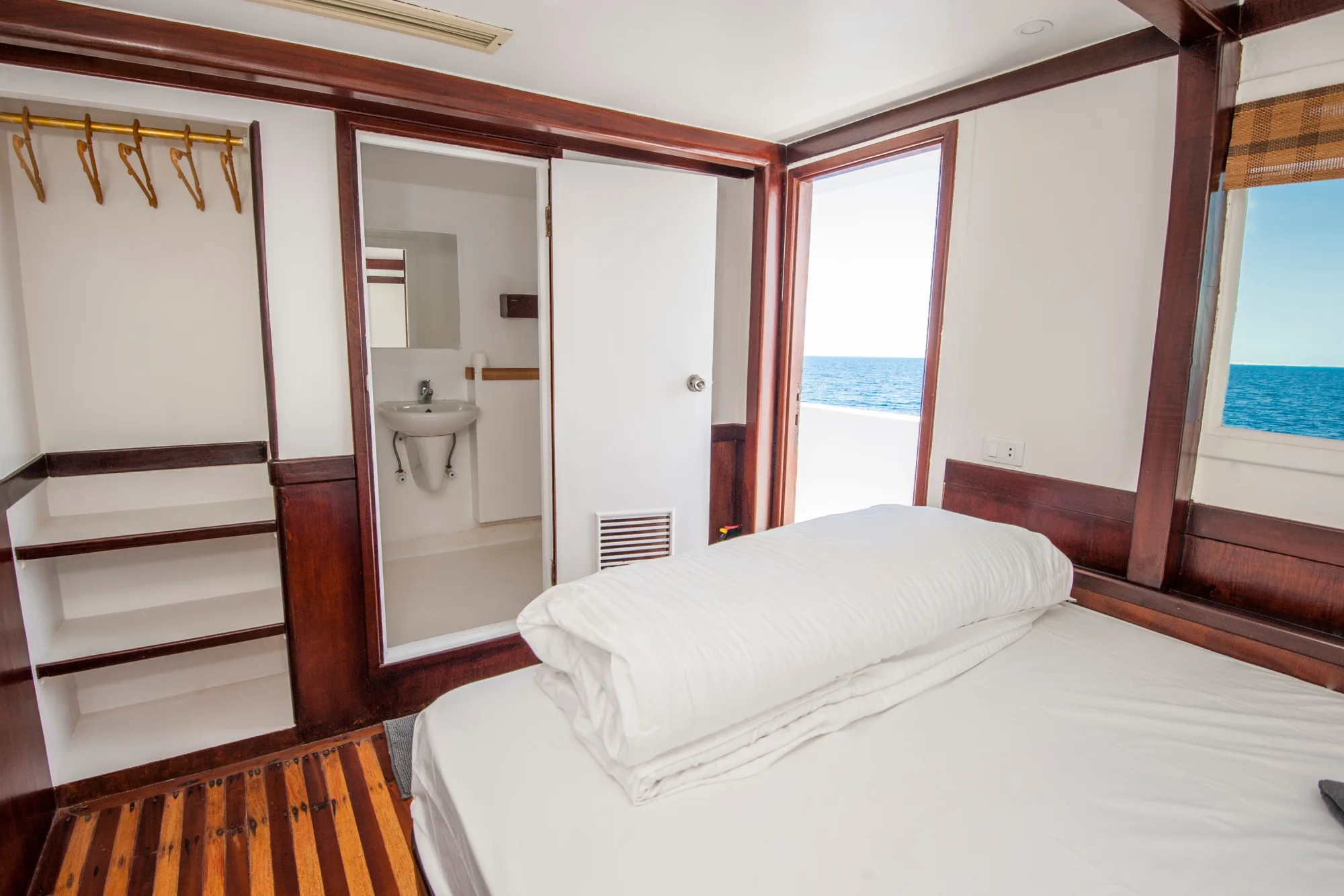
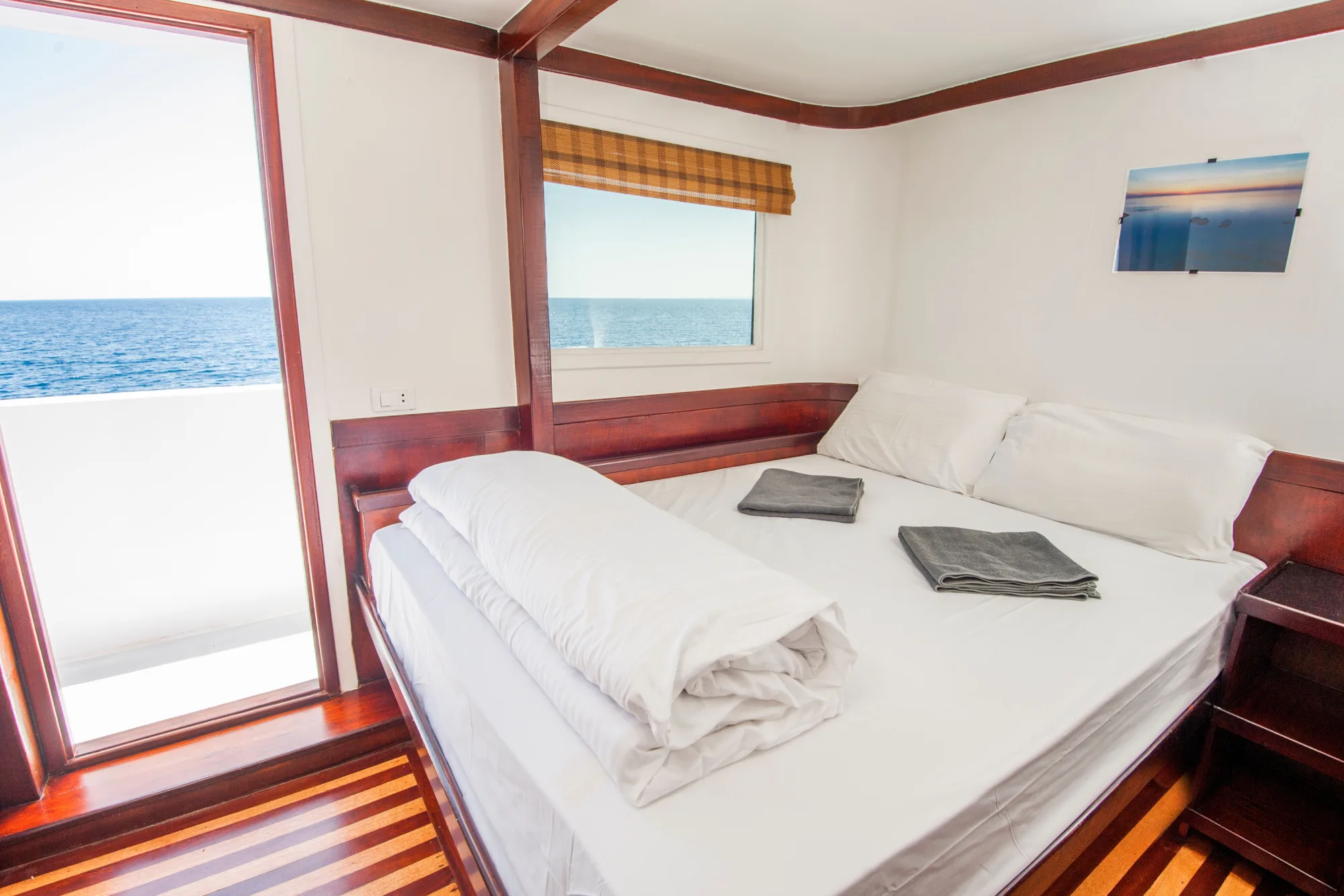
The best cabin on the boat and the only one on the top deck. The finish here is different from below: dark varnished wood on the panelling and lockers, a wide double bed in the middle, a window running the length of the bulkhead with a heavy blind, and a glass door straight onto the deck — a sea view from the bed and fresh air two steps away. A built-in wardrobe with hangers and open shelves runs along the side, the bathroom with shower and toilet is private, and the air conditioning is individually controlled. There is no sharing; the cabin is sold whole. The saloon and the open lounge are right there, and while the dive deck is further away than from the main deck cabins, it is noticeably quieter here at anchor.
Schedule & Pricing
North: wrecks and Ras Mohammed
A round trip out of Hurghada and back, through the classics of the northern Red Sea. Abu Nuhas reef holds four wrecks — Giannis D, Carnatic, Chrisoula K and Kimon M — all between 5 and 30 metres and all within recreational limits; the engine rooms of the Chrisoula K and the Giannis D are easy to enter. The centrepiece is the SS Thistlegorm, bombed in 1941 and lying at 15–30 metres with trucks, motorcycles, boots and crates of ammunition still in her holds. Nearby sits the Rosalie Moller, the Thistlegorm's sister ship, sunk a day later and resting at 30–50 metres — that one is for experienced divers. Then Gubal Island with its eel garden, the barge at Bluff Point for a night dive and the Ulysses lying on her port side, and the Ras Mohammed reserve with Shark and Yolanda reefs. Dolphin House, a horseshoe reef where dolphins are around most of the time, is a stop of its own. This is the cheapest route on the boat and the lightest on fees: 200 euro for route and environmental charges.
December 2026
1 departureMay 2027
2 departuresJune 2027
1 departureJuly 2027
1 departureAugust 2027
1 departureSeptember 2027
1 departureDecember 2027
1 departureJune 2028
2 departuresJuly 2028
1 departureAugust 2028
2 departuresNovember 2028
1 departureDecember 2028
1 departureNorth and Dahab
The northern set plus a crossing to the Sinai shore. Dahab offers two signature dives, both drifts dropped from the tender: from the Bells south along the wall to the Blue Hole, entered through a break in the reef at 5–7 metres, and the Canyon, another drift along a coral wall with star coral colonies, gorgonians, soft and black corals. On the way there are the four reefs of Tiran — Gordon, Woodhouse, Thomas and Jackson — plus Ras Mohammed, the SS Thistlegorm, the Rosalie Moller, Abu Nuhas and Dolphin House. Route and environmental fee: 250 euro.
October 2026
1 departureMay 2027
1 departureJuly 2027
1 departureAugust 2027
1 departureSeptember 2027
1 departureOctober 2027
1 departureDecember 2027
2 departuresApril 2028
1 departureMay 2028
1 departureJune 2028
1 departureJuly 2028
2 departuresAugust 2028
1 departureDecember 2028
1 departureNorth and Brothers
Northern wrecks combined with an offshore run to the Brothers Islands, a national park open to liveaboards only. Big Brother carries two wrecks: the Aida at 30–60 metres and the cargo ship Numidia lying against the wall from 10 down to 85 metres, both overgrown with hard and soft coral. The island walls are covered in soft corals and forests of gorgonians, with tuna, jackfish and snapper in the blue and regular sightings of hammerheads, oceanic whitetips, silky sharks and mantas — sometimes a thresher. The northern half of the trip takes in the SS Thistlegorm, Abu Nuhas, the Rosalie Moller, Gubal and, weather permitting, Ras Mohammed. Route and environmental fee: 250 euro.
September 2026
1 departureOctober 2026
1 departureFebruary 2027
1 departureMarch 2027
2 departuresApril 2027
2 departuresJuly 2027
1 departureSeptember 2027
1 departureNovember 2027
1 departureFebruary 2028
2 departuresMarch 2028
1 departureApril 2028
2 departuresSeptember 2028
1 departureOctober 2028
1 departureNovember 2028
1 departureDecember 2028
1 departureBrothers, Daedalus, Elphinstone
The boat's main route and the reason people come to the Red Sea for sharks. Three offshore reefs in a row: the Brothers Islands with their two wrecks and sheer walls; Daedalus, eighty kilometres off the coast, an isolated reef less than a kilometre wide, known in summer for large schools of scalloped hammerheads; and Elphinstone, twelve kilometres offshore with plateaus at the north and south ends that need at least three dives to cover. The Zealot, a loaded cargo ship from the late 1880s, lies on Daedalus reef starting at 75 metres and dropping to 110 — technical territory. The programme also takes in the reefs of Abu Dabbab with their coral gardens and canyon system, and the Wadi El Gemal national park. This is open water with no day boats around and no guarantees: currents can be strong and conditions decide where the boat moors. Route and environmental fee: 320 euro.
September 2026
1 departureNovember 2026
1 departureDecember 2026
1 departureFebruary 2027
1 departureMarch 2027
1 departureApril 2027
2 departuresMay 2027
1 departureJune 2027
2 departuresJuly 2027
1 departureAugust 2027
1 departureSeptember 2027
2 departuresOctober 2027
1 departureNovember 2027
1 departureDecember 2027
1 departureFebruary 2028
1 departureMarch 2028
2 departuresApril 2028
1 departureMay 2028
2 departuresJune 2028
1 departureJuly 2028
2 departuresAugust 2028
1 departureSeptember 2028
2 departuresOctober 2028
1 departureNovember 2028
1 departureDecember 2028
1 departureDaedalus, Rocky, Zabargad
The deep south, weighted towards reefs and sharks. Daedalus and Elphinstone first, then Zabargad — the largest and southernmost island of the Egyptian Red Sea, with untouched hard and soft coral gardens and a good wall — and Rocky Island, a reef that drops away to extreme depths with black coral trees and permanent current. On the plateau off Rocky lies the SS Maiden, one of the finest historic wrecks in the Red Sea, starting at 80 metres and running past 110. Along the way, Fury Shoal with the horseshoe of Satayah, the cavern systems of Claudio and Malahi and Shaab Maksour, plus Marsa Shouna with its grassy bottom, giant turtles and the occasional dugong. Route and environmental fee: 320 euro.
February 2027
1 departureOctober 2027
1 departureFebruary 2028
1 departureMarch 2028
1 departureApril 2028
1 departureMay 2028
1 departureSeptember 2028
1 departureOctober 2028
2 departuresRocky, Zabargad, St John's
The southernmost route on the boat. St John's sits right on the Tropic of Cancer and belongs to the Elba national park: a scatter of reefs — Habili Gaafar, Habili Ali, Gotaa Kibeera, Gotaa Soghayara and the famous St John's caves with their tunnels and coral columns. Beyond that, Rocky Island with the SS Maiden on its plateau and a vertical drop-off, Zabargad with its coral gardens, Marsa Shouna with turtles and dugongs, Abu Dabbab and Wadi El Gemal. There are no day boats out here at all, and in winter people come for the visibility and the water temperature. Route and environmental fee: 320 euro.
March 2027
1 departurePrices and availability can change. Get in touch and we'll confirm current dates and pricing.
Included in Price
Not Included
Required extras
Optional extras
Extras are shown per person and are paid on board.
from 1035 EUR / 7 nights
Estimated wait time — 24 hours
Similar Yachts
Separate beds
Eight cabins along the lower deck corridor — the base category of the boat and the one the weekly price is quoted from. The finish is light: white bulkheads, a striped teak floor, a mirror and wall lamps above the headboards, pictures on the panelling. There are sockets and switches between the beds, a built-in wardrobe with shelves and hangers by the door, a private bathroom with shower and toilet, and individually controlled air conditioning. Light comes through portholes. The internal layout varies across the eight: some have two parallel beds, others have offset berths along the side. The booking system splits these cabins into two categories — separate beds and bunk-style — but neither the operator nor the system publishes how many of each there are, so confirm the exact layout when you book. The cabin also suits a solo traveller: the operator will pair you with a guest of the same sex.
- Deck
- lower deck
- Beds
- 2 single beds
- Windows
- Porthole
- Cabin numbers
- 01–08
- cabins of this type
- 8
Separate beds
The only twin on the main deck: two single beds along the bulkheads with a striped teak floor between them, a built-in wardrobe with shelves and hangers, and a private bathroom with shower and toilet opening straight into the cabin. A window instead of a porthole, and individually controlled air conditioning. The saloon, galley and dive deck are all on this deck, so you never carry gear up or down a stairway.
- Deck
- main deck
- Beds
- 2 single beds
- Windows
- Window
- Cabin numbers
- 09
- cabins of this type
- 1
Double bed
One of the two cabins on the boat with a double bed instead of separate ones. The finish is light: white bulkheads, a wooden shelving unit by the headboard, a wall lamp and a picture above the bed, a wooden trim along the panelling. Private bathroom with shower and toilet, individually controlled air conditioning, and a main deck window. The cabin is sold whole with no sharing — the choice for a couple who want one bed and a door that closes, but do not need the top deck.
- Deck
- main deck
- Beds
- 1 double bed
- Windows
- Window
- Cabin numbers
- 10
- cabins of this type
- 1
Double bed
The best cabin on the boat and the only one on the top deck. The finish here is different from below: dark varnished wood on the panelling and lockers, a wide double bed in the middle, a window running the length of the bulkhead with a heavy blind, and a glass door straight onto the deck — a sea view from the bed and fresh air two steps away. A built-in wardrobe with hangers and open shelves runs along the side, the bathroom with shower and toilet is private, and the air conditioning is individually controlled. There is no sharing; the cabin is sold whole. The saloon and the open lounge are right there, and while the dive deck is further away than from the main deck cabins, it is noticeably quieter here at anchor.
- Deck
- top deck
- Beds
- 1 double bed
- Windows
- Windows along the side and a glass door onto the deck
- Cabin numbers
- 11
- cabins of this type
- 1
Tala
from 1035 EUR