All Star Red Sea
 1 / 27
2 / 27
3 / 27
4 / 27
5 / 27
1 / 27
2 / 27
3 / 27
4 / 27
5 / 27
 6 / 27
 7 / 27
 8 / 27
 9 / 27
 10 / 27
 11 / 27
 12 / 27
 13 / 27
 14 / 27
 15 / 27
 16 / 27
 17 / 27
 18 / 27
 19 / 27
 20 / 27
 21 / 27
 22 / 27
 23 / 27
 24 / 27
 25 / 27
 26 / 27
 27 / 27
Book through Tour Leader Club
48.5 m · 28 guests · 14 cabins · 13-14 crew members
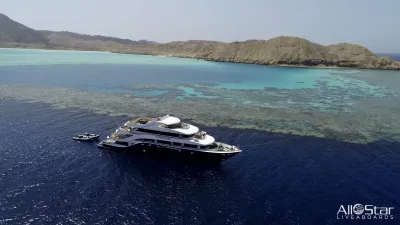
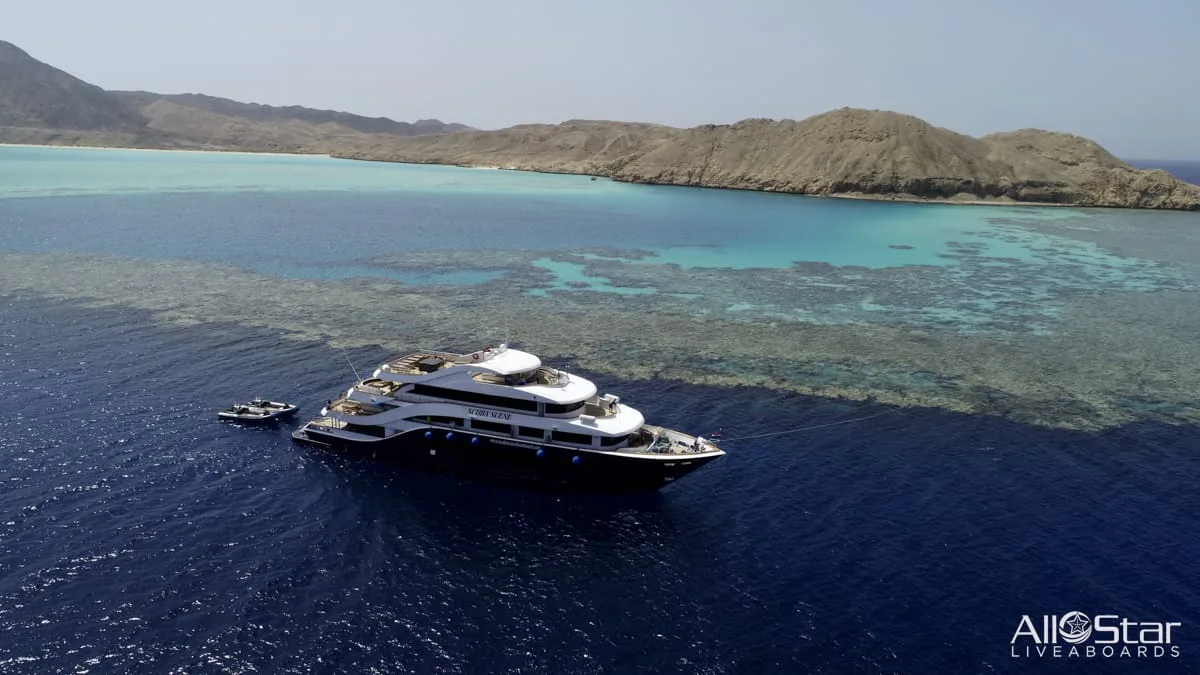
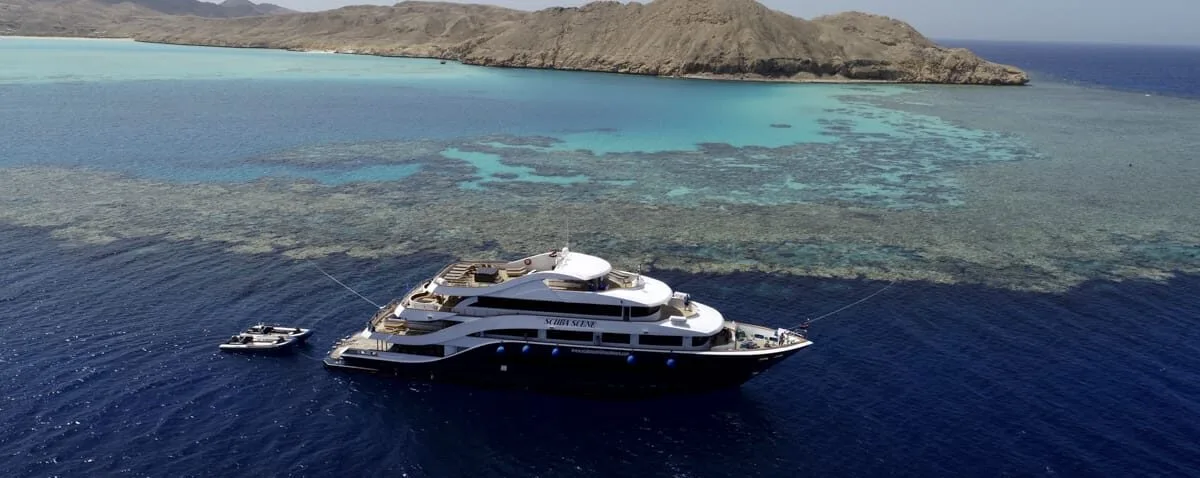
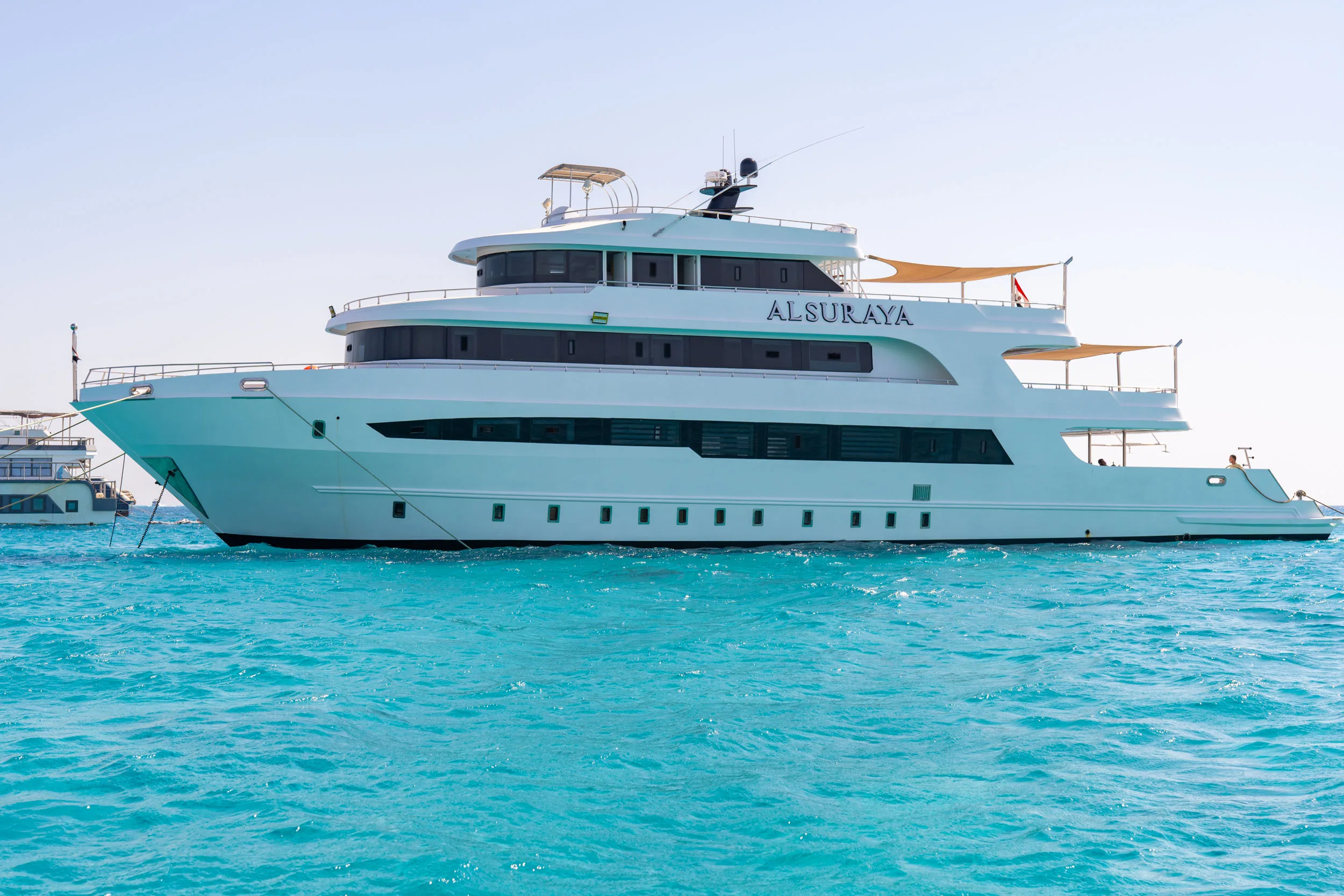
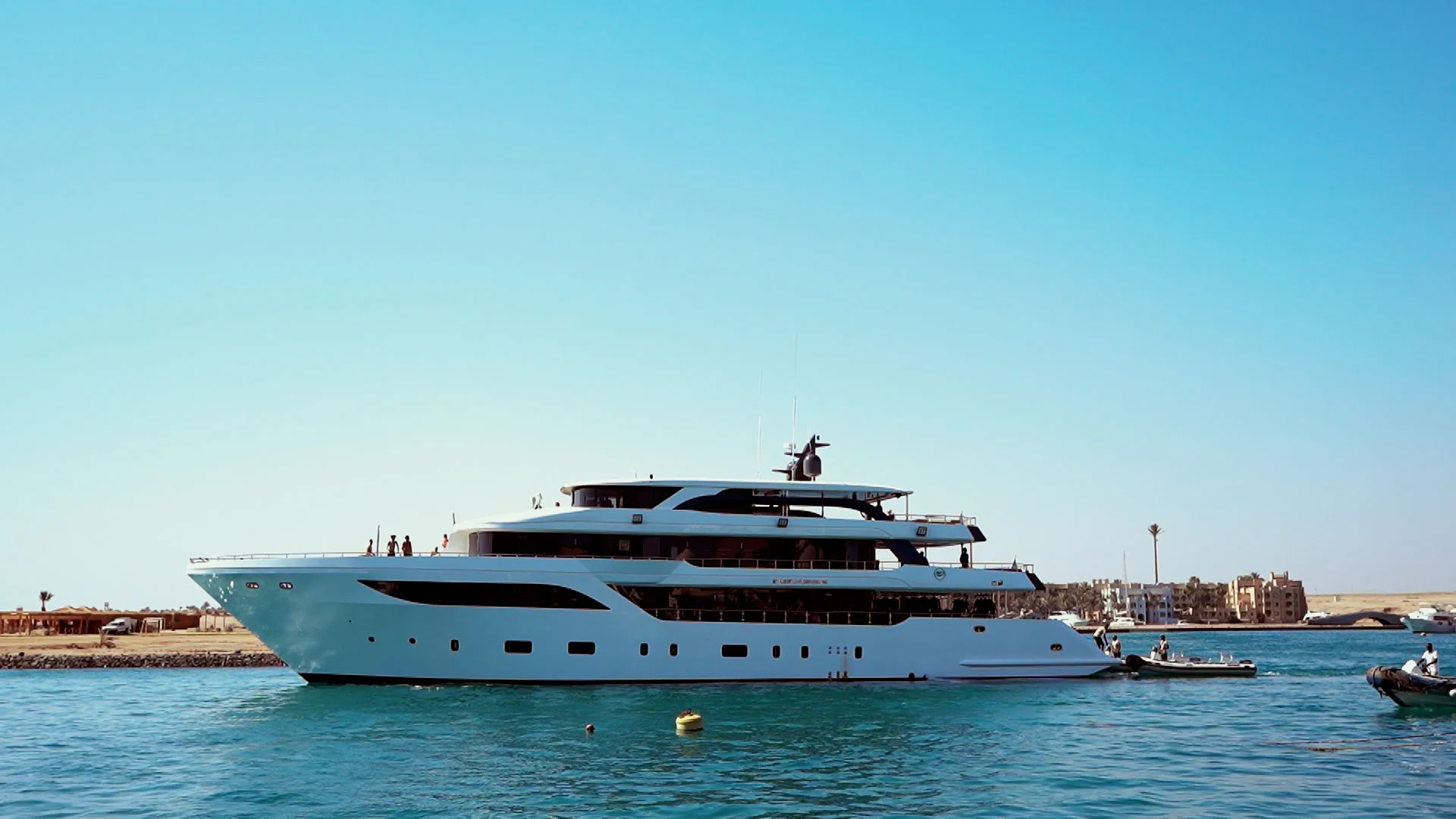
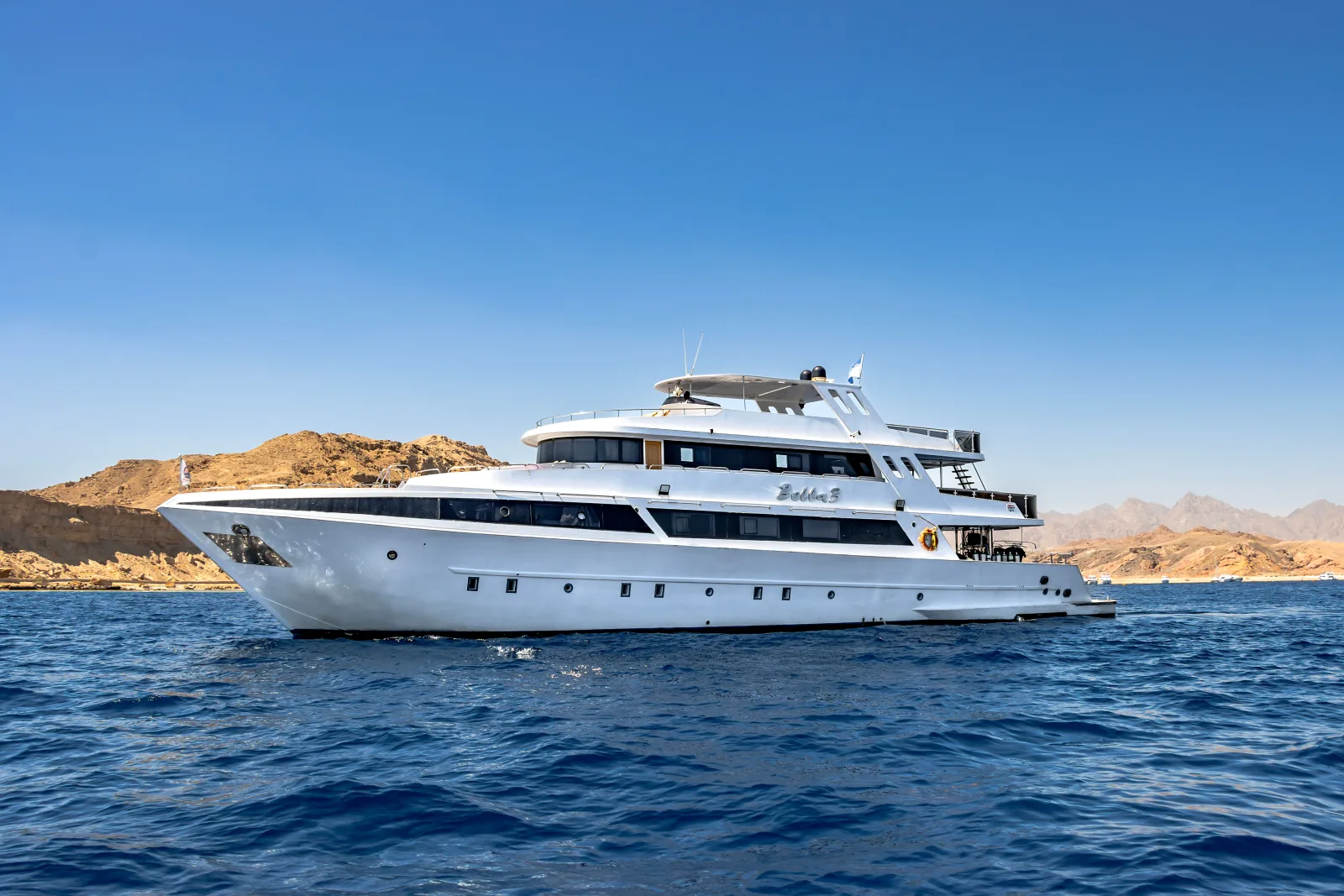
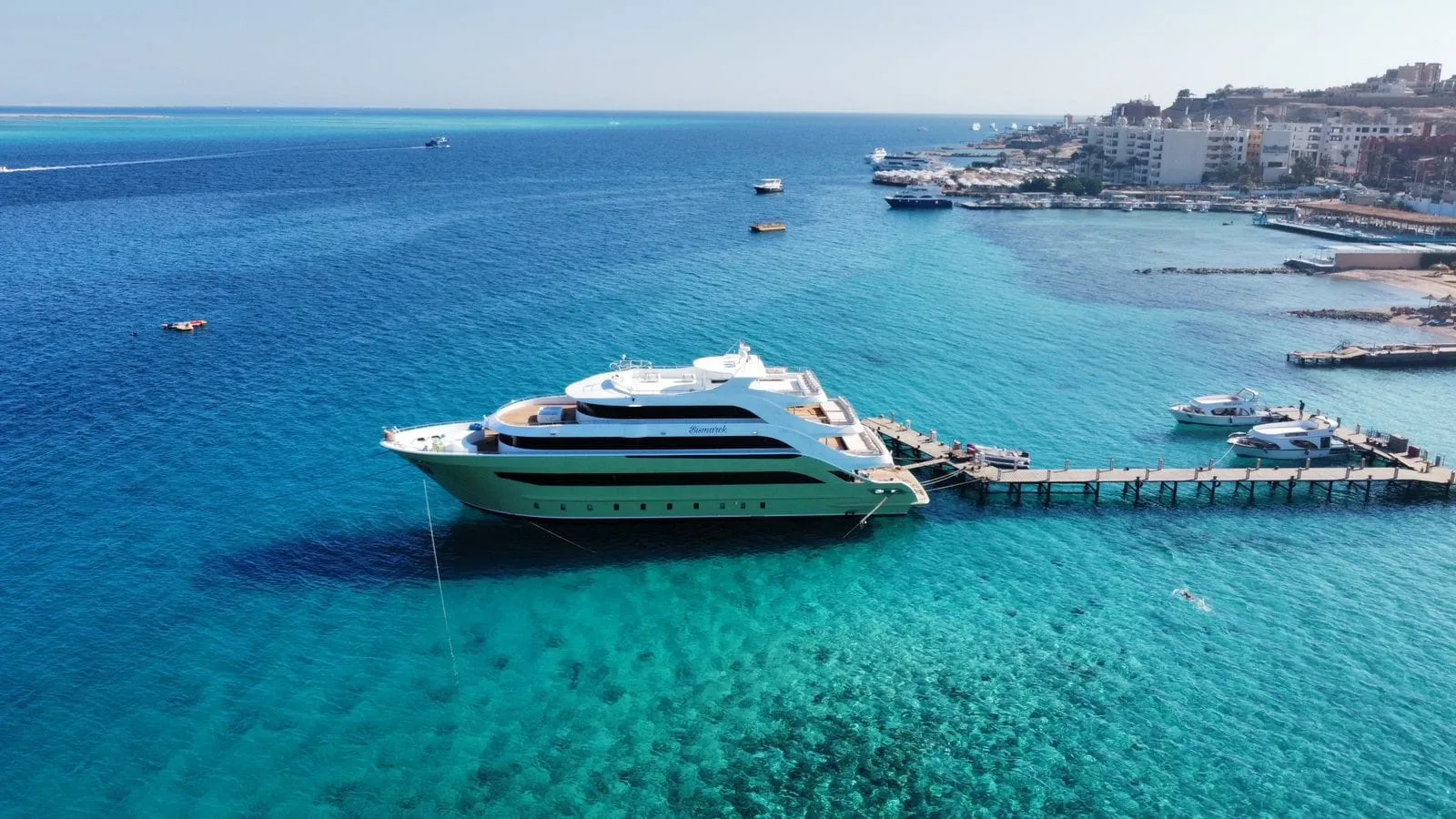
All Star Red Sea is the M/Y Scuba Scene, a steel motor yacht 48.5 metres long and 10 metres wide, custom built in the Egyptian port of Safaga and in service on dive itineraries since April 2023. The name on the hull reads SCUBA SCENE; the vessel is sold under the All Star Red Sea brand by the American company All Star Liveaboards. She is one of the largest boats in the Egyptian fleet: five decks, 28 guests, a crew of 13 to 14 and a genuine swimming pool on deck.
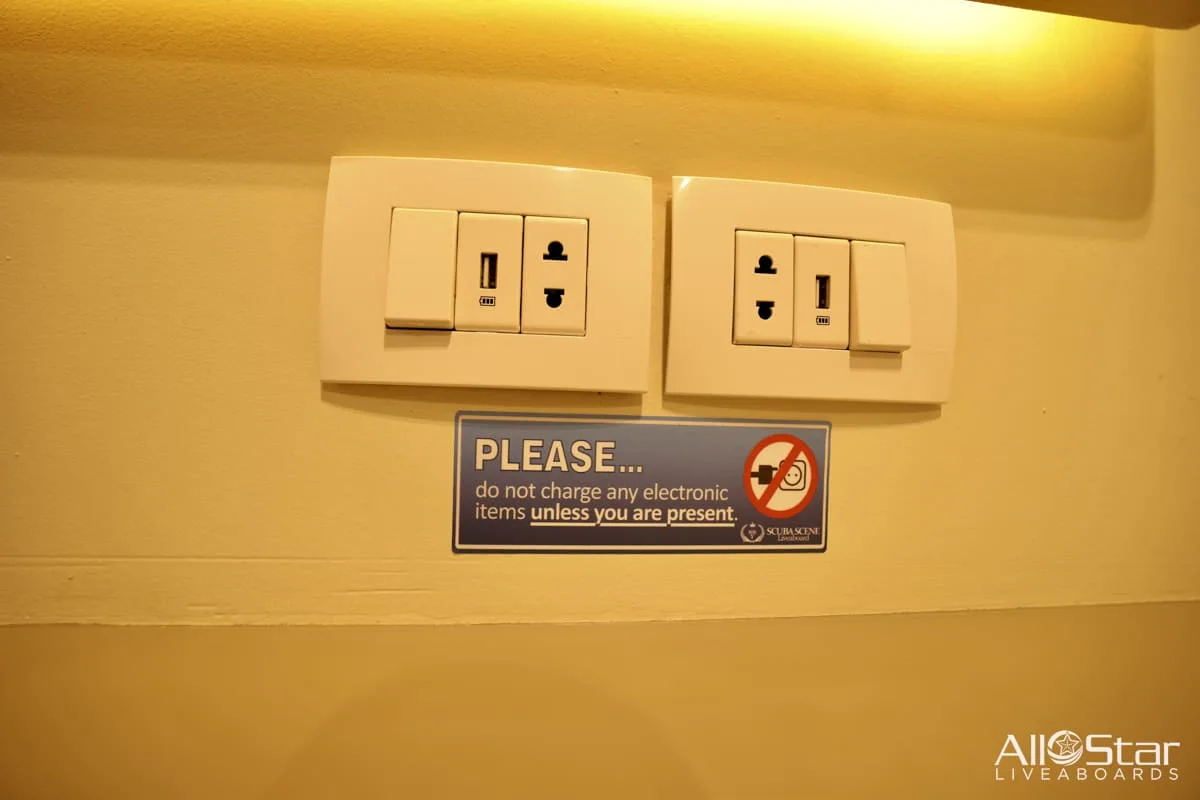
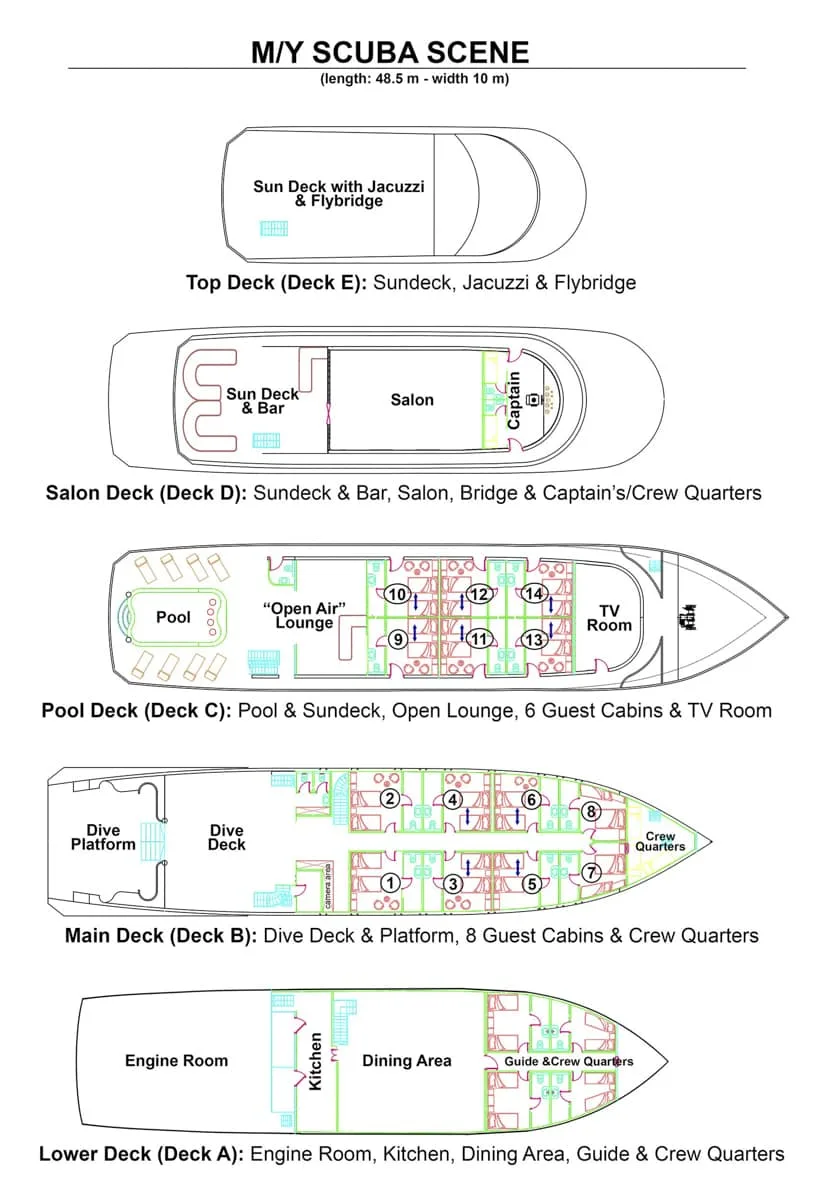
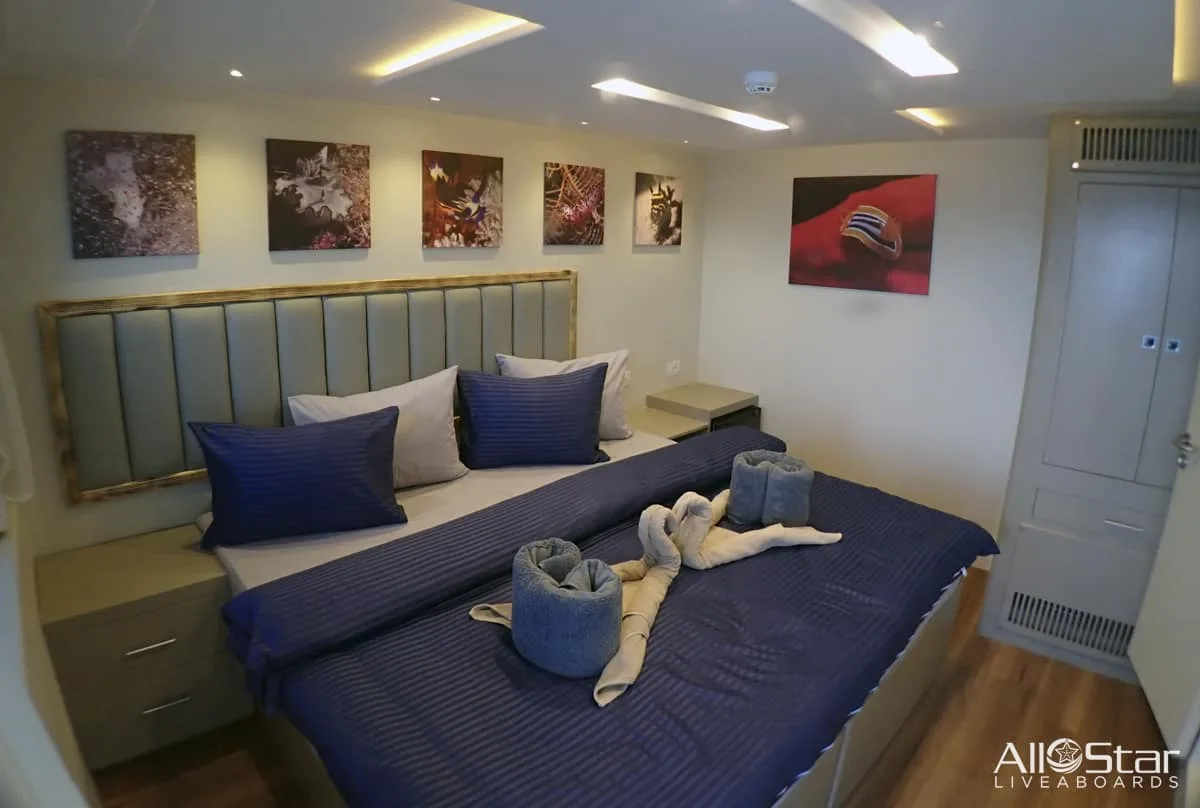
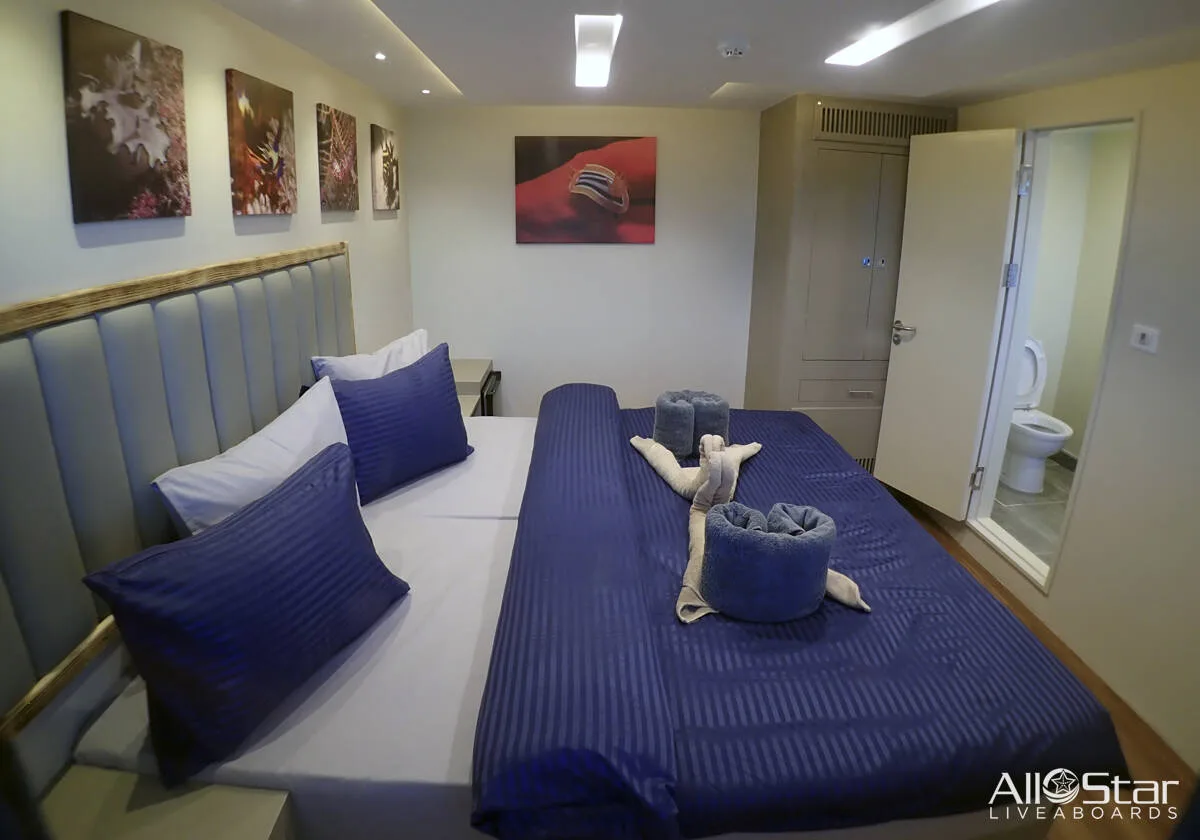
Guests are accommodated in fourteen cabins. Twelve of them sit on the main and pool decks, each with a large ocean-view window running the width of the bulkhead, a small seating area and a bed that converts between a double and two singles. The remaining two, cabins 7 and 8, are slightly smaller and laid out differently: one single bed of 0.9 by 2 metres and one double of 1.3 by 2 metres. They are sold for single occupancy at a smaller supplement than usual. Every cabin has a private bathroom, individually controlled air conditioning and — a rarity in the Egyptian fleet — 220 V European type C sockets and USB ports right in the cabin, so you can charge your gear where you sleep rather than only in the common areas.
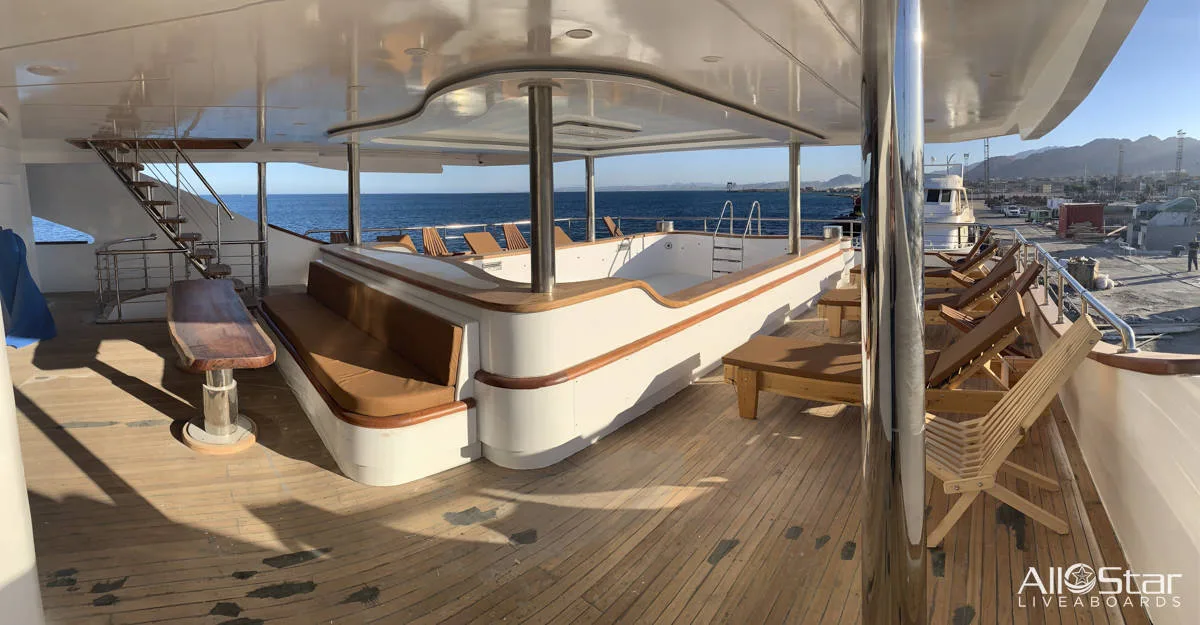
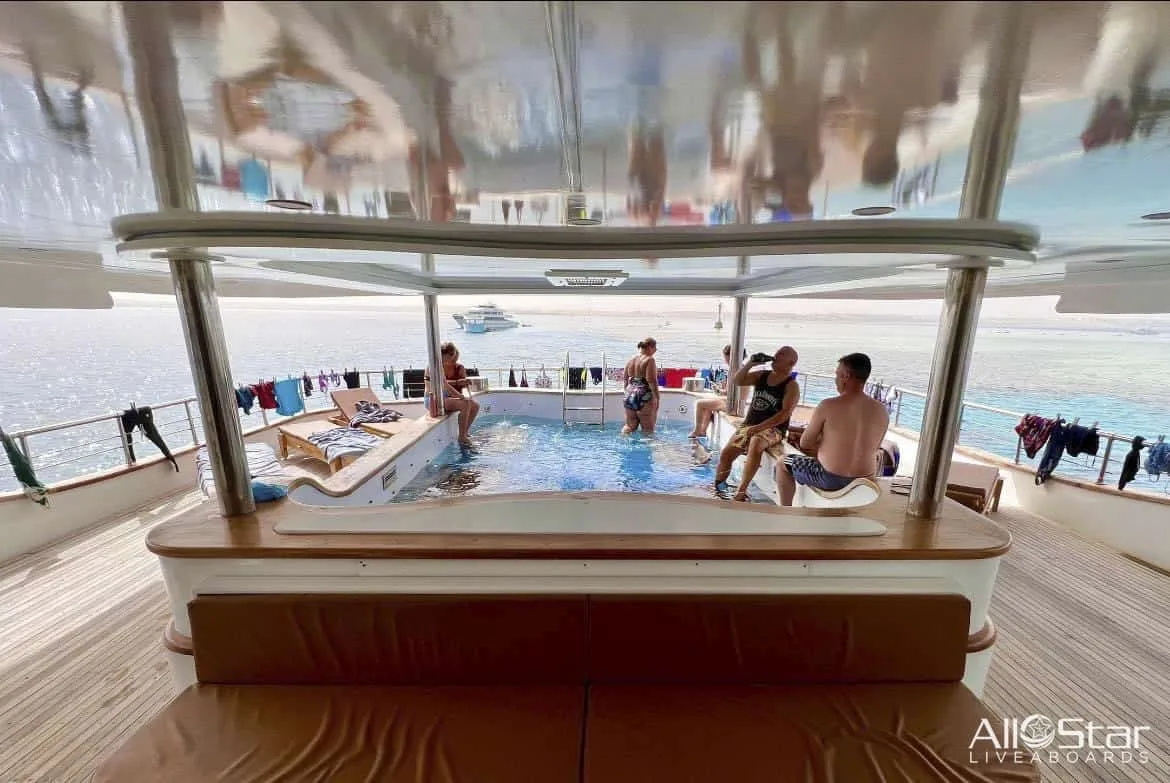
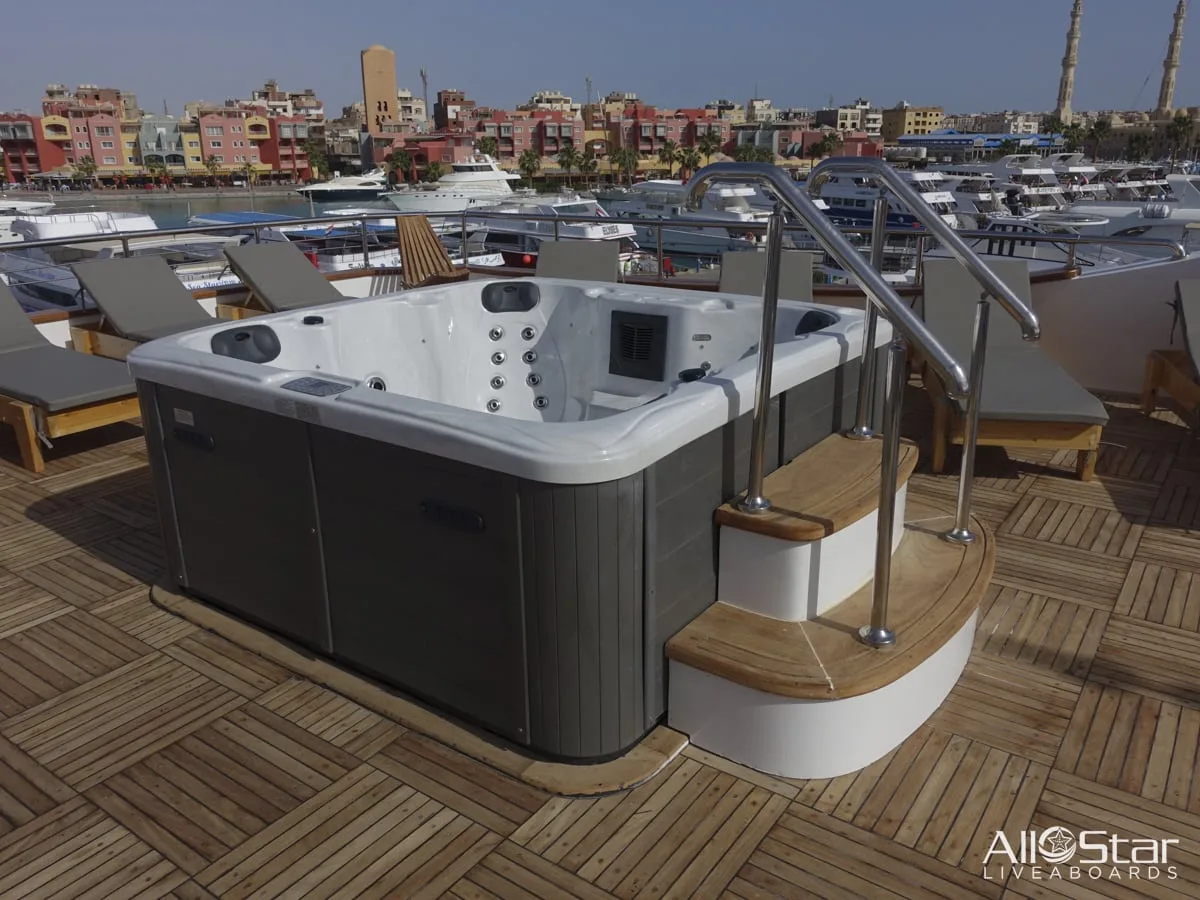
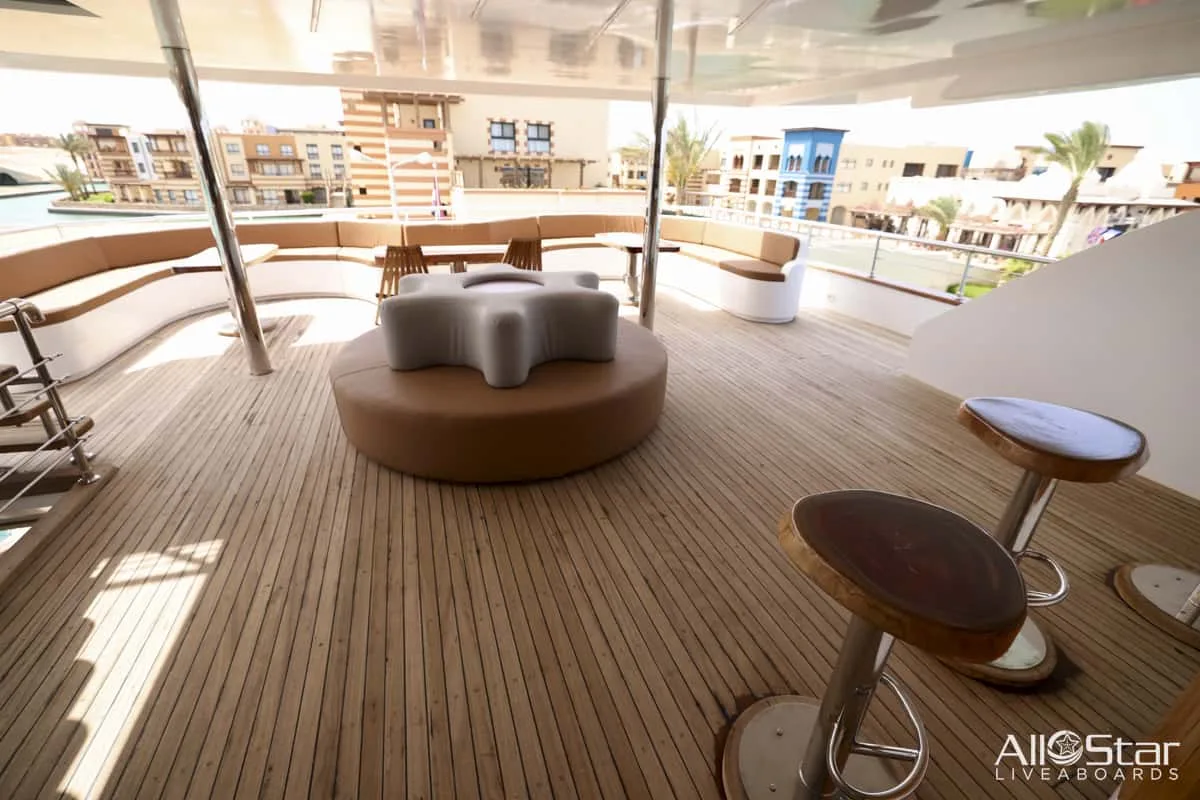
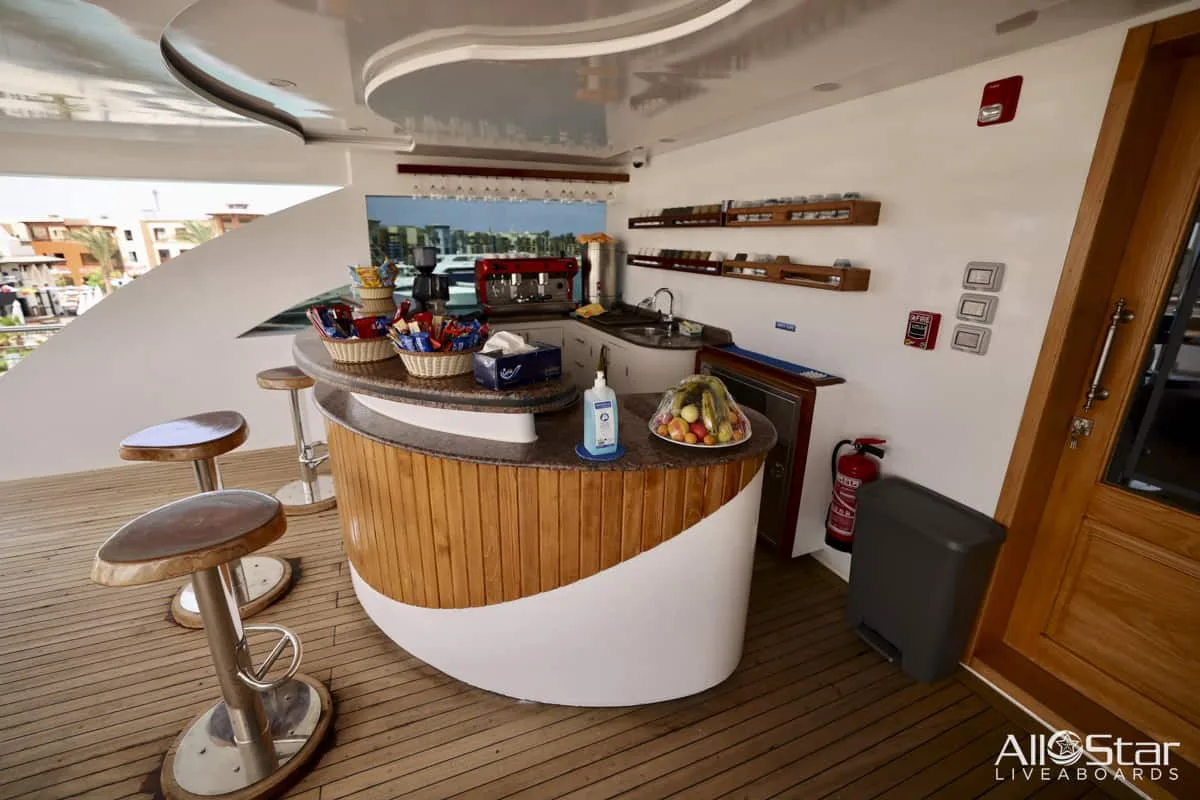
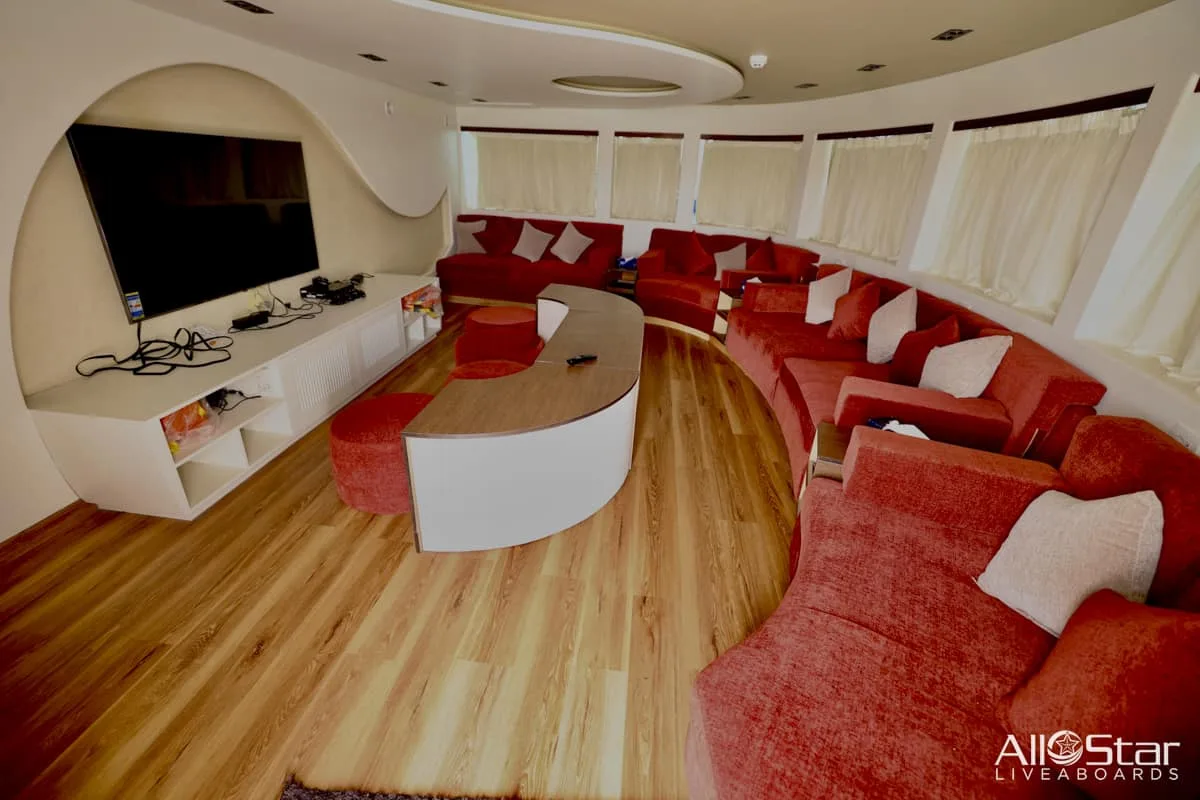
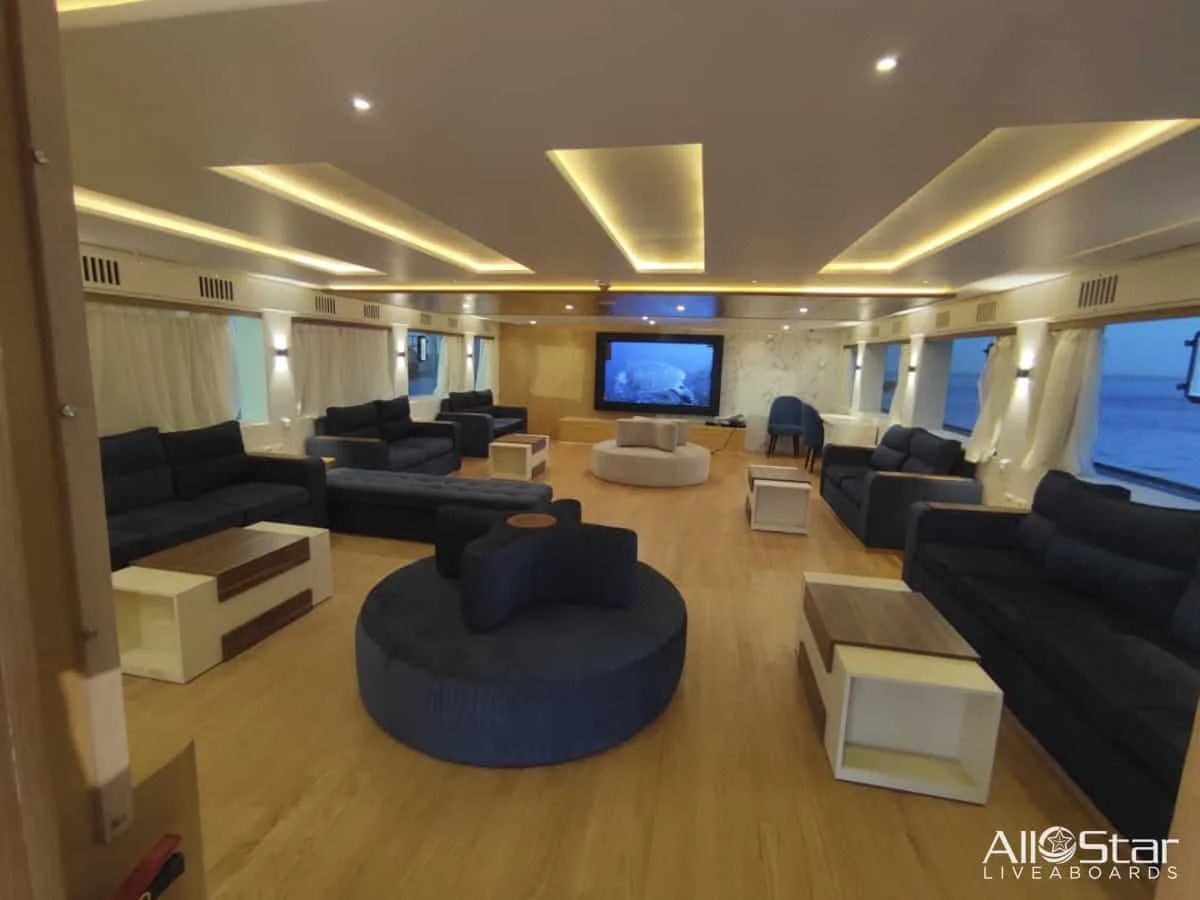
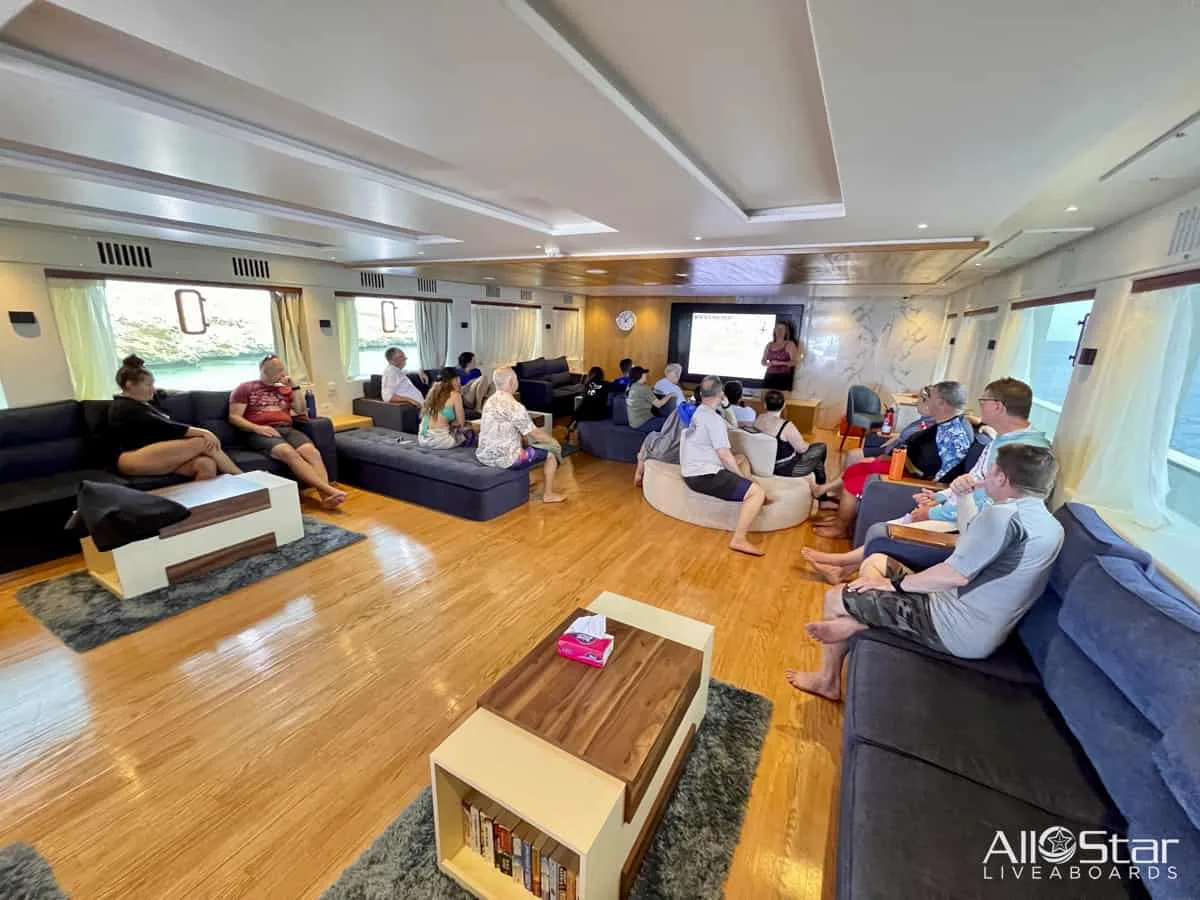
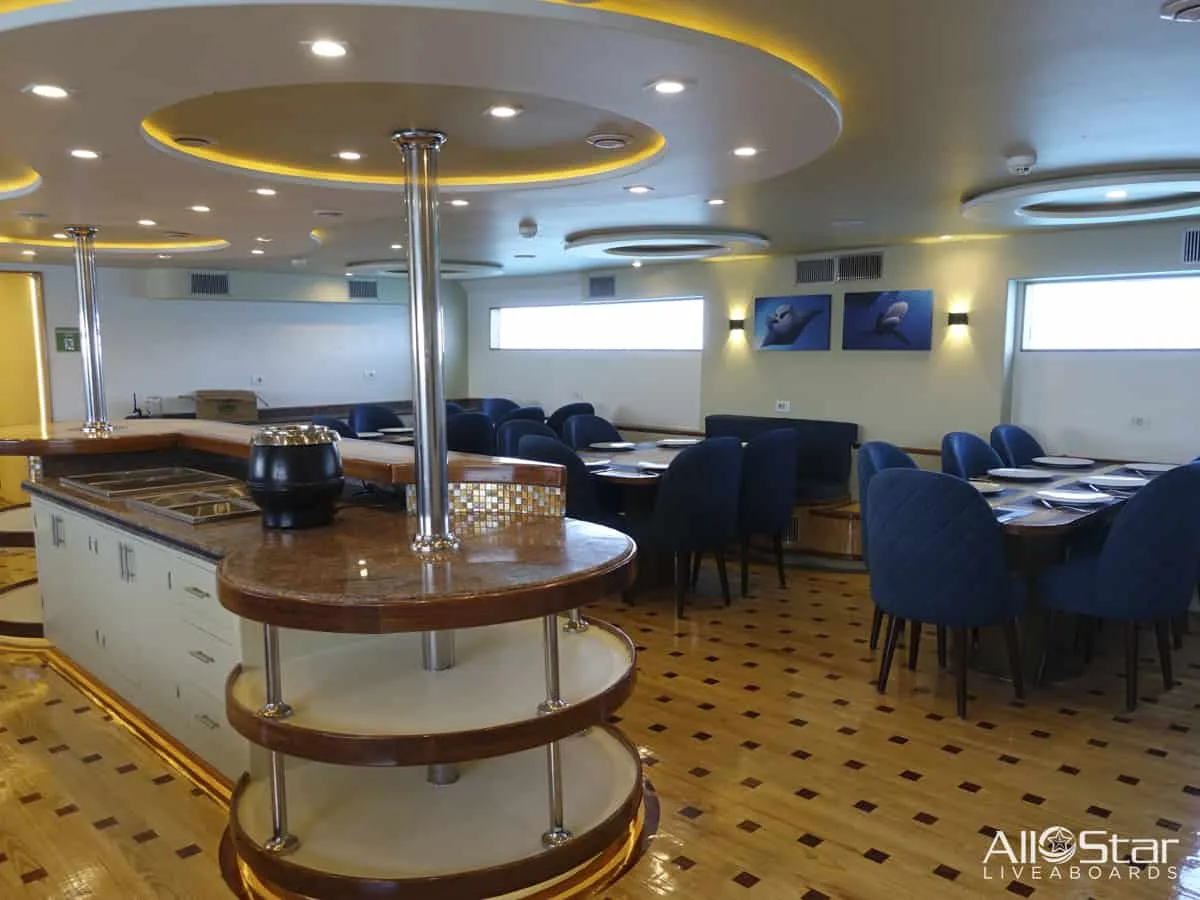
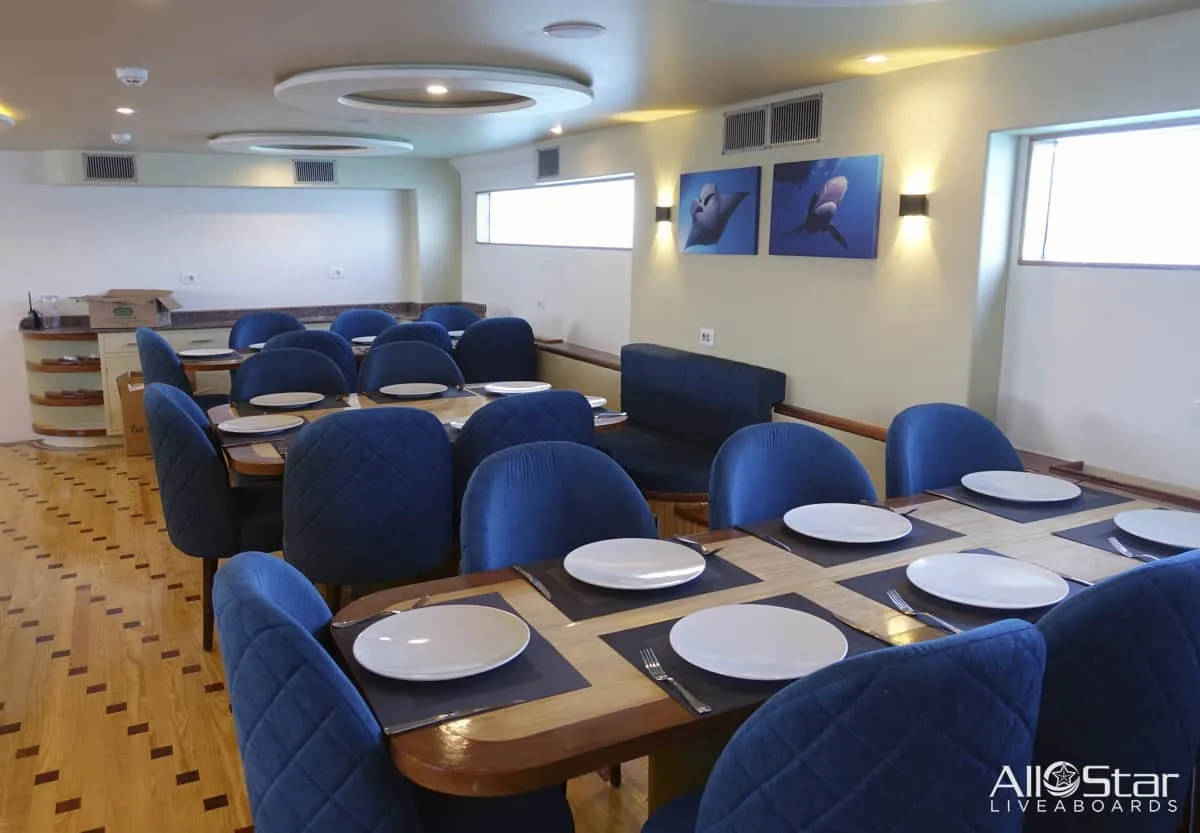
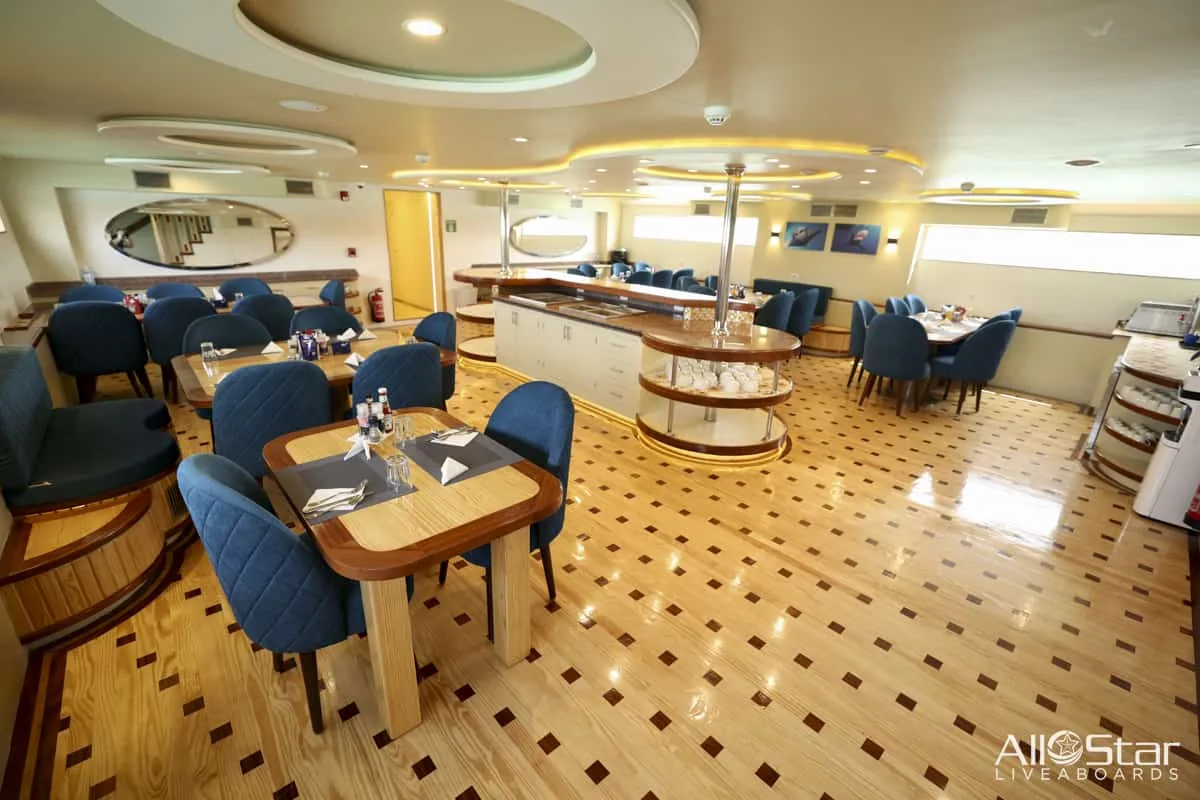
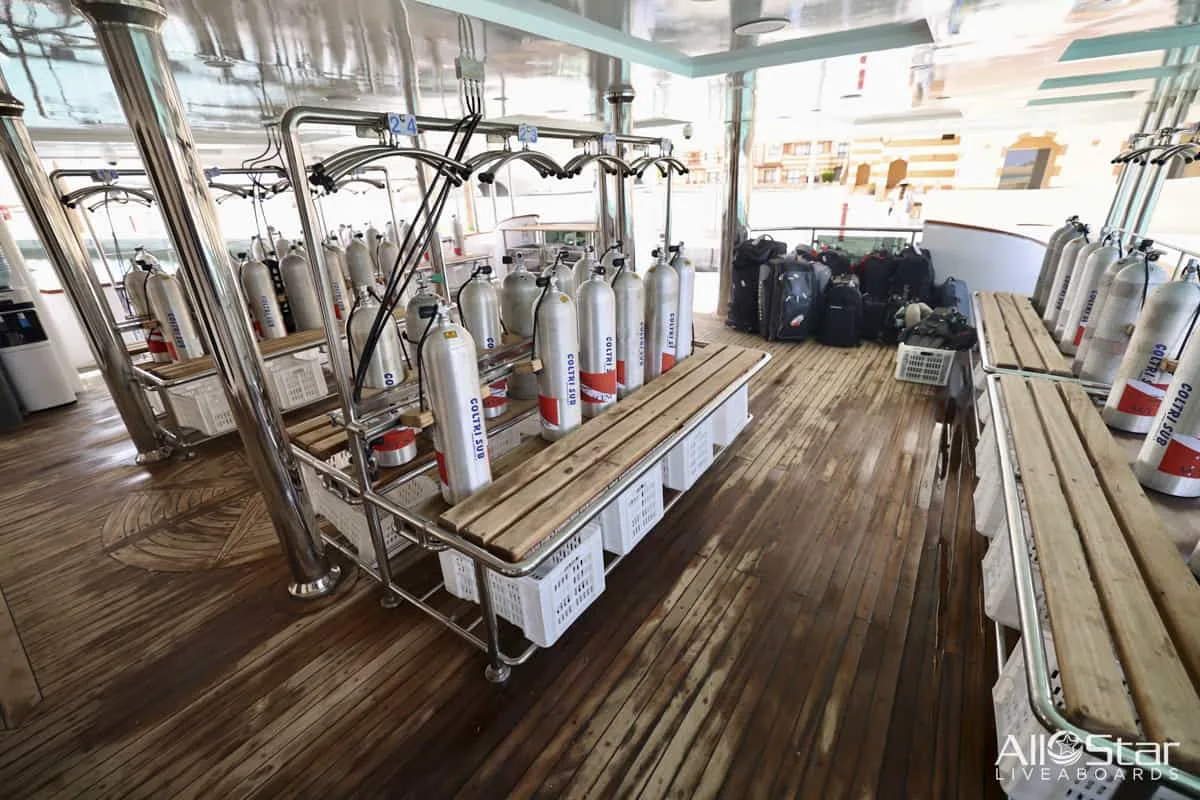
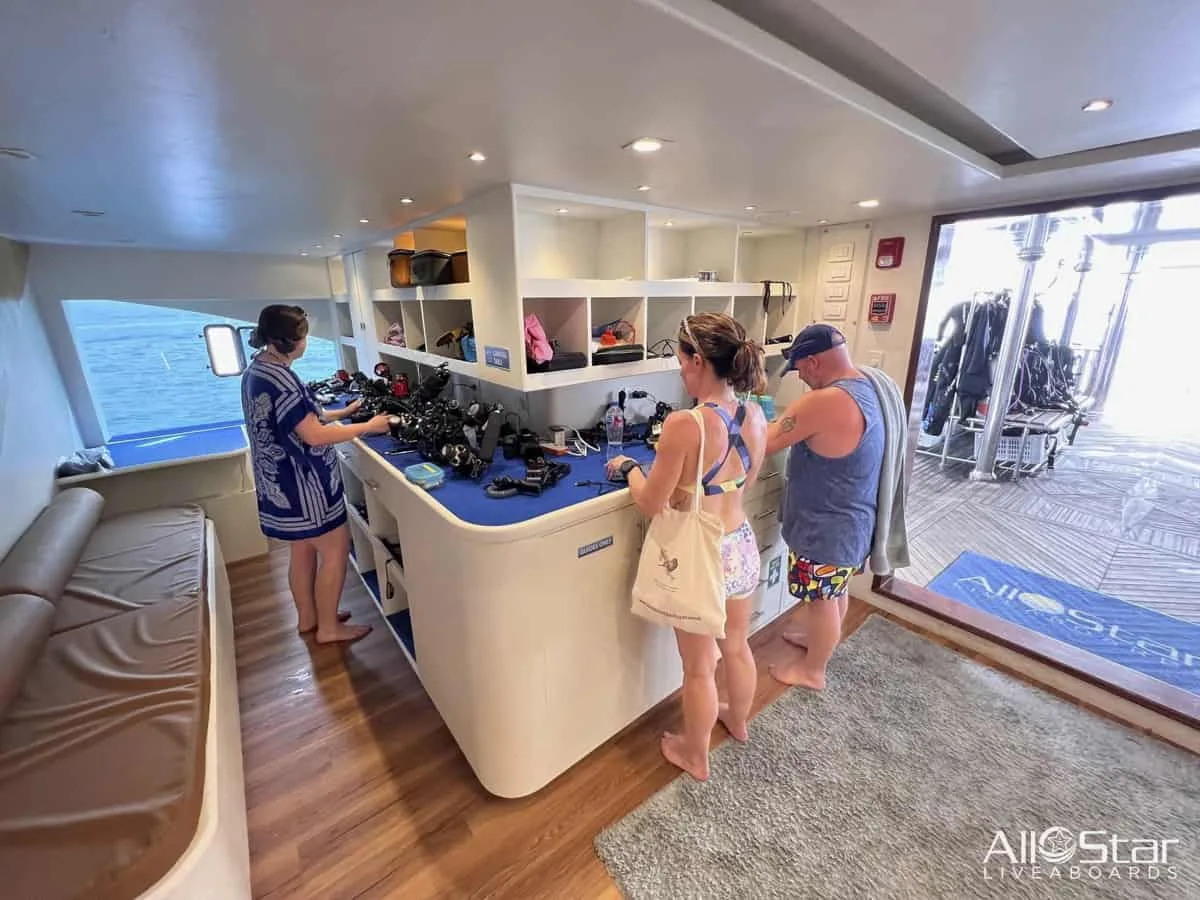
The decks are clearly divided. The galley and restaurant are below; the main deck carries the dive deck and platform, the laundry and a large camera table; the pool deck holds the pool itself, an open-air lounge and a TV room; above that sit the air-conditioned salon, the bar and the bridge; and the top deck has a sundeck with a jacuzzi and the flybridge. The pool is not a euphemism for a hot tub here — it is an actual swimming pool, with a separate jacuzzi one deck higher.
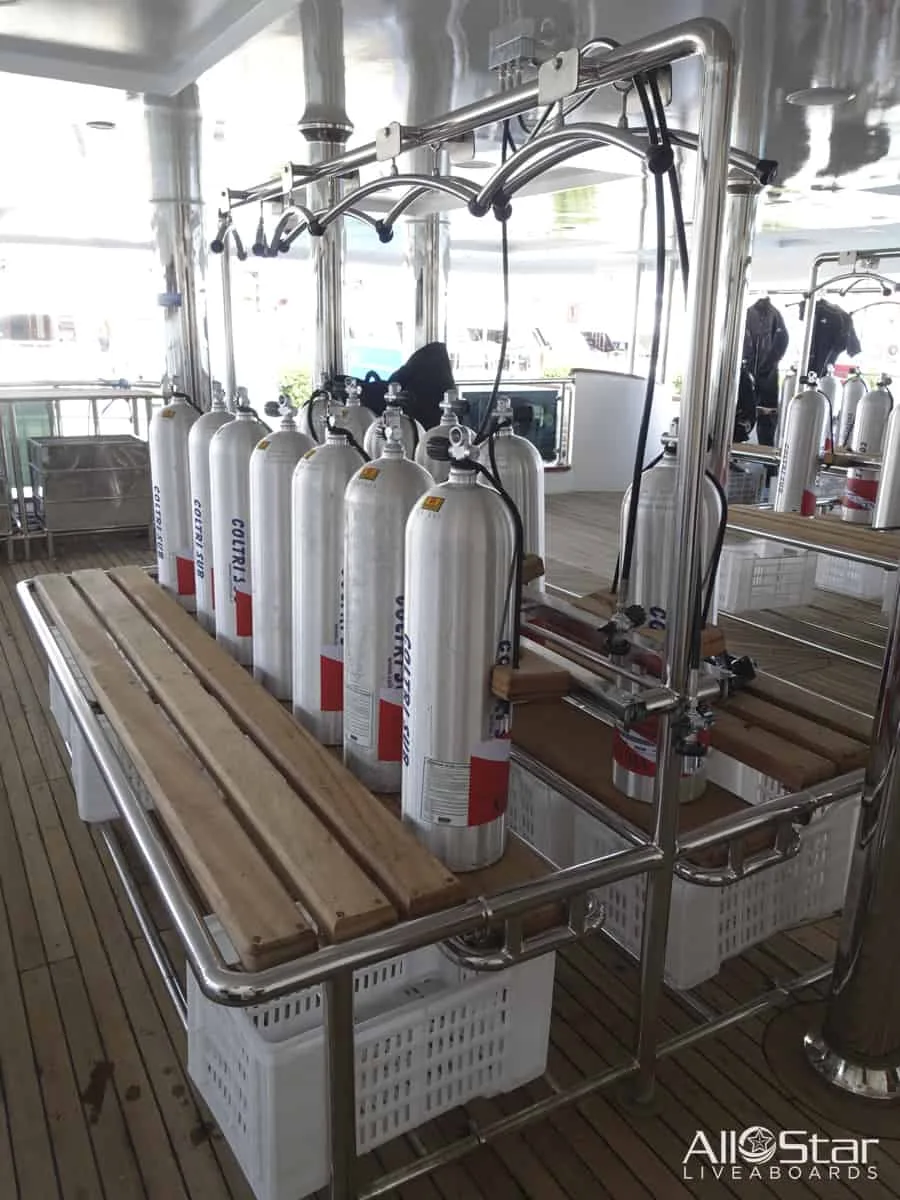
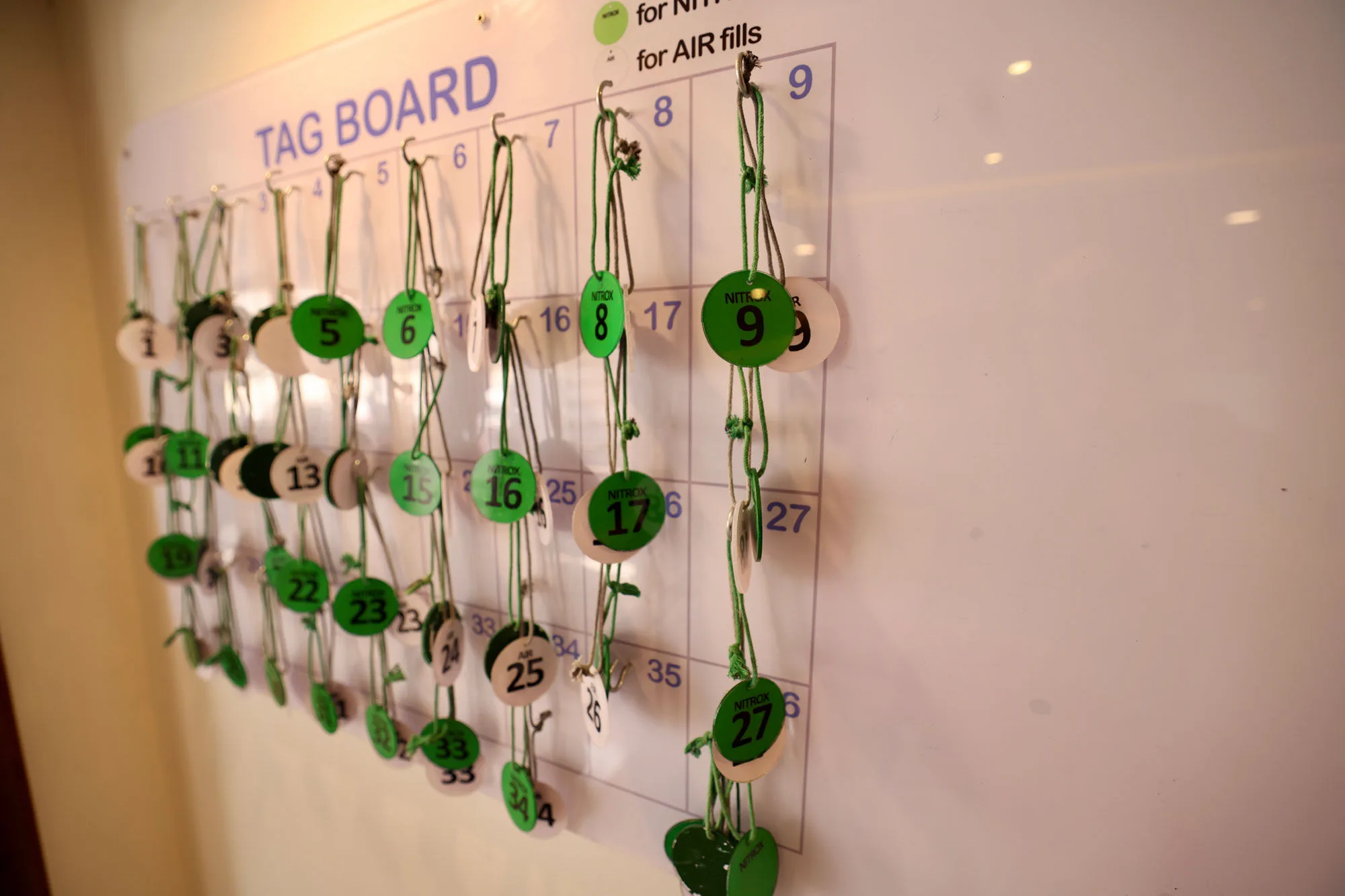
Diving is run from three tenders fitted with a central tank rack and a boarding ladder. Three dives a day plus night dives where they are permitted: no night diving is allowed inside the marine parks at the Brothers and Daedalus. Three to four guides work each trip and the briefings are detailed, with a visual walk-through of the site. Twelve-litre tanks and weight belts are included; 15-litre and extra tanks cost more. Nitrox on this vessel is not free — $100 for the week, or $8 for a single fill. The boat takes rebreathers and sidemount, and the instructors teach Advanced Open Water, nitrox and technical courses up to Tec 50.
The certification requirement is stricter than usual: Advanced Open Water or the Deep Diver specialty is needed on every itinerary, not only the southern ones. Egypt’s diving chamber additionally requires at least 30 logged dives to enter the marine parks, and for the central and southern routes the operator suggests at least 50, preferably a hundred or more. If your last dive was more than a year ago you will be asked to do a refresher. Every diver must carry a surface marker buoy with a reel.
What to know about money before you go. This operator prices in US dollars. A port fee of $250 per person is paid on board in cash or by card — the operator states that it covers Egypt’s 14% VAT and the park fees, and that there are no other government charges collected on board. The Egyptian visa costs $30 and is bought at the airport on arrival. Diving insurance is mandatory and checked before boarding, but the boat does not sell it. Gratuities are described plainly by the operator: 15% of the trip price is customary, cash preferred. Nitrox, rentals, courses and alcohol are settled on board. Cards are accepted above $25 but carry a 3% fee, and card payments also attract Egypt’s 14% VAT on top — cash works out cheaper. American Express is not accepted.
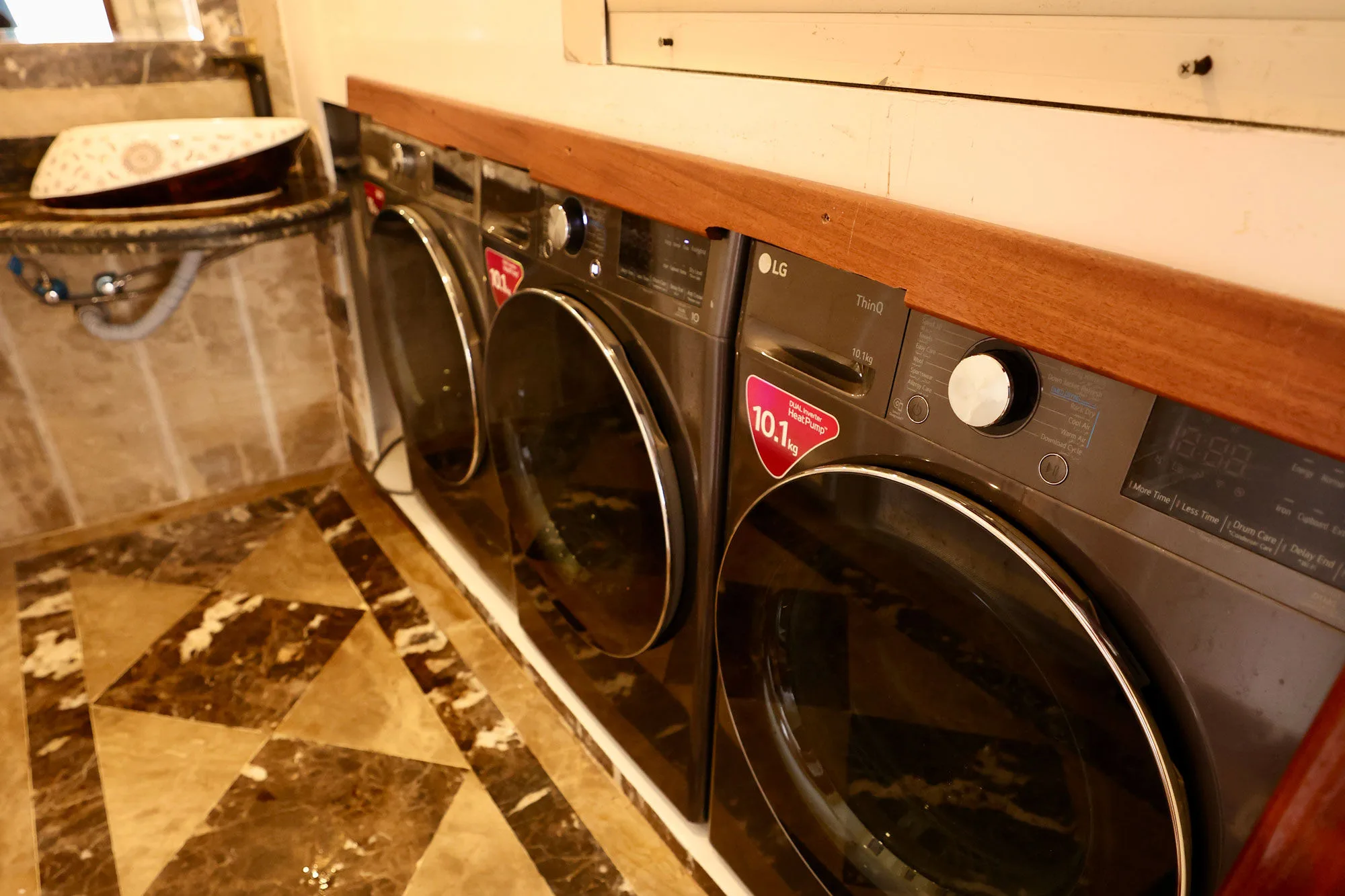
There is Wi-Fi on board, described honestly by the operator: it works in port, and at sea connectivity is minimal. The satellite phone is for emergencies only. Boarding in Hurghada starts at 6 p.m. on Monday and the vessel leaves the dock early on Tuesday morning; disembarkation is after breakfast on Monday, by 9 a.m. at the latest. Return airport or hotel transfers are included. Laundry is free. Smoking is allowed only on the top deck and in the open salon. Fishing from the boat is prohibited under Egyptian rules, and drones are confiscated on entry to Egypt.
No mark-up
You pay the rate the operator publishes. The only thing added on top is the actual payment processing cost — no fee of ours.
We run the booking
Correspondence with the operator, holding your places, the contract, confirmation and all paperwork sit on our side. Nothing for you to arrange yourself.
Pay by card
We send you a Stripe invoice — pay by card, in your own currency, from anywhere in the world. The transfer to the operator is handled on our side.
Support in your language
We help you pick the cabin and dates, answer questions on the route and gear, and stay reachable until you are home — in English, in your time zone.
We quote the exact amount when confirming the booking: it covers the operator's rate plus the actual payment processing cost. No hidden charges.
Yacht Specifications
Length
48.5 m
Beam
10.5 m
Material
Steel
Year Built
2023
Capacity
28 guests
Cabins
14
Crew
13-14 members
Speed
14 knots (10 service)
Engine
2 x Mantrac 1300 HP
Bathrooms
17
Tender
3 tenders with a central tank rack and boarding ladder
Water capacity
16 t
Fuel capacity
60 t
Freshwater maker
20 t/day
On Board
Diving on board
Advanced Open Water or the Deep Diver specialty is mandatory on every itinerary of this vessel, not only the southern ones — this is the operator's own rule. Egypt's Chamber of Diving and Watersports (CDWS) additionally requires at least 30 logged dives to dive inside the marine parks. For the central and southern routes — the Brothers, Daedalus, Elphinstone, St John's, Rocky Island and Zabargad — the operator suggests at least 50 logged dives, preferably a hundred or more. If your last logged dive is more than a year old you will be asked to make a refresher dive. Advanced Open Water can be completed on board. Every diver must carry a surface marker buoy with a reel; a reef hook is not needed. Solo diving requires the matching certification and equipment, otherwise you will be paired with a buddy. Fishing from the boat is prohibited under Egyptian rules and drones are confiscated on entry. A medical form is required for training courses.
Food and drinks
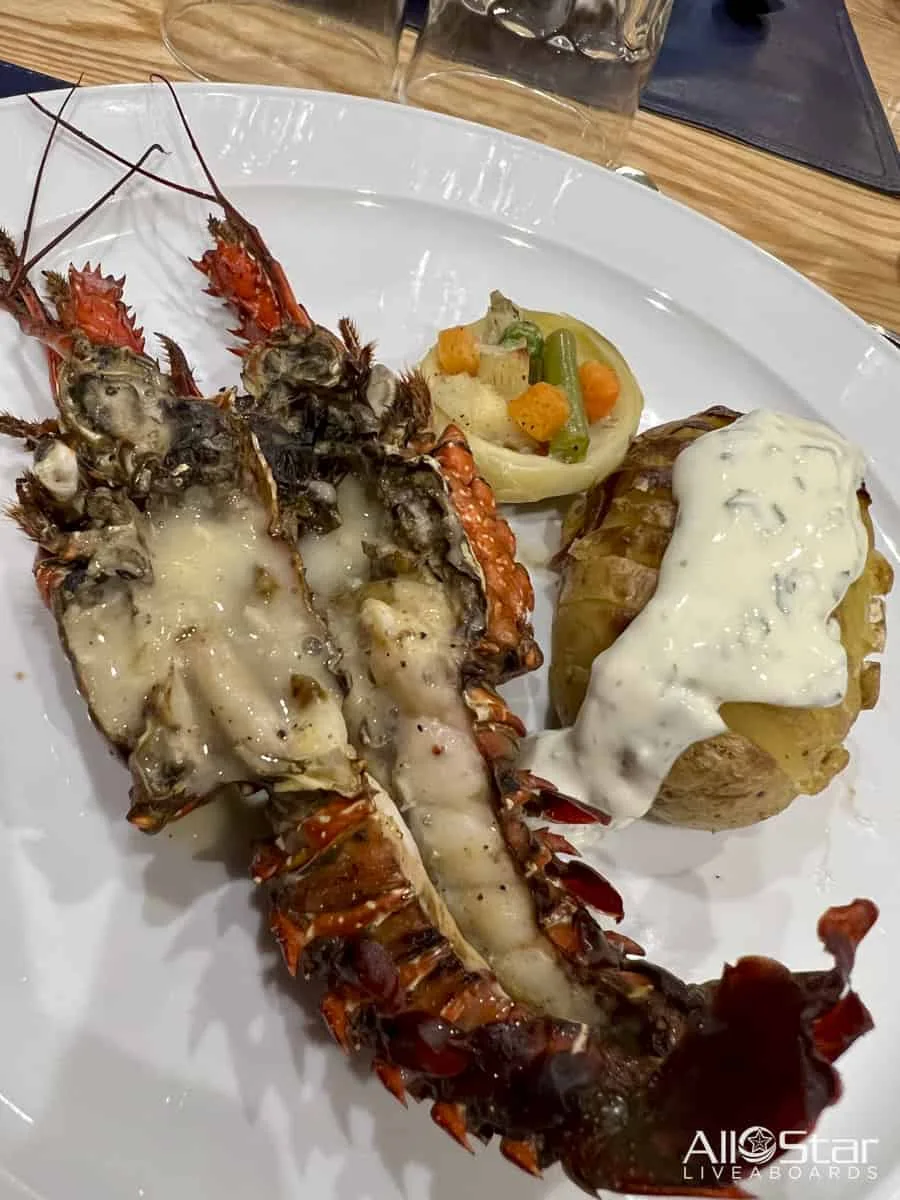
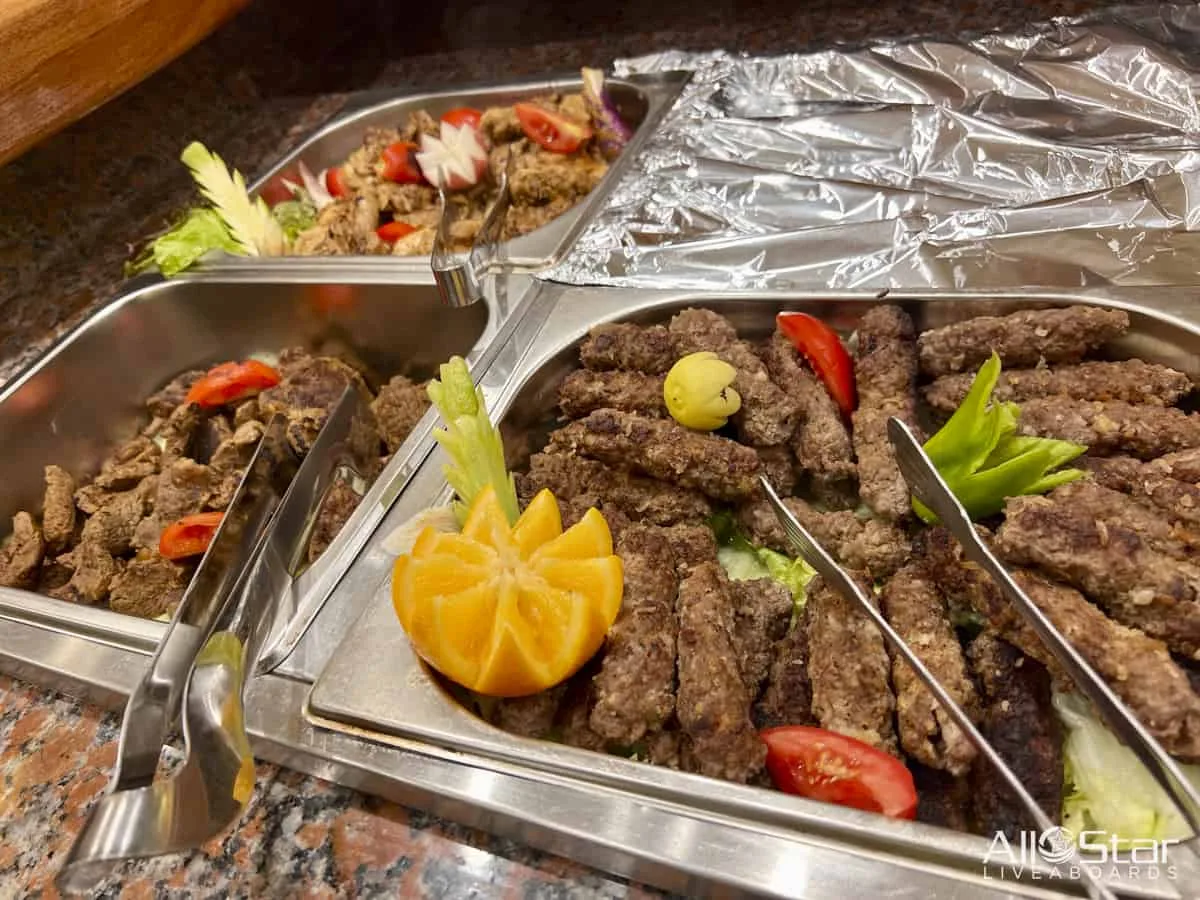
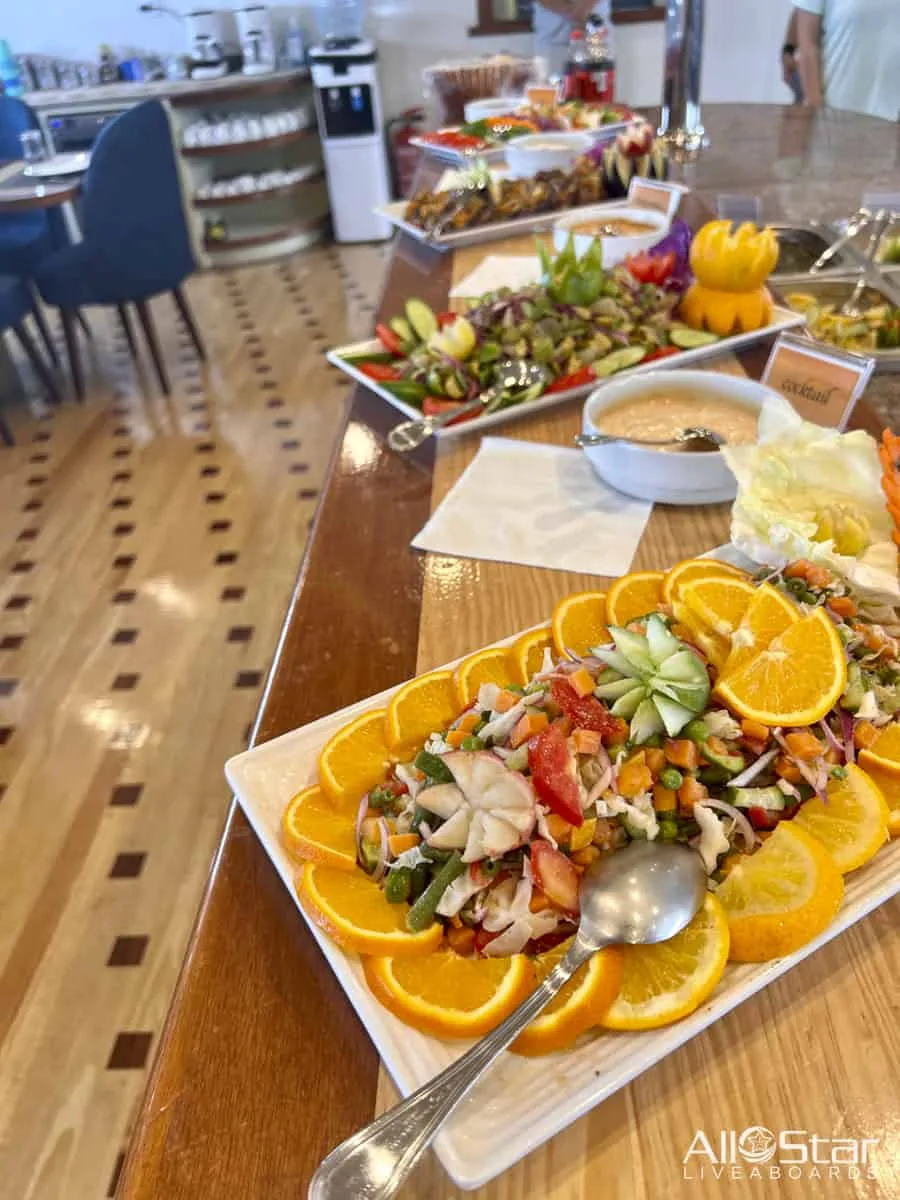
Alcohol is paid for on board: Stella beer $4.50 and Heineken $5.00 per 16 oz can, a bottle of red, white or rose wine $30. You may bring your own spirits. The operator asks that dietary requests be made at booking rather than on board — far from shore, unusual requests are hard to accommodate.
Navigation and safety
Cabins
· 12 cabins
Suite
Beds: Double bed or two singles - convertible
Twelve identical cabins spread over two decks. A large window across the bulkhead, a small seating area with a sofa, a wardrobe, a private bathroom with shower and individually controlled air conditioning. The bed converts between a double and two singles, chosen at booking. 220 V type C sockets and USB ports in the cabin.
· 2 cabins
Single
Beds: 1 single 0.9 x 2 m and 1 double 1.3 x 2 m
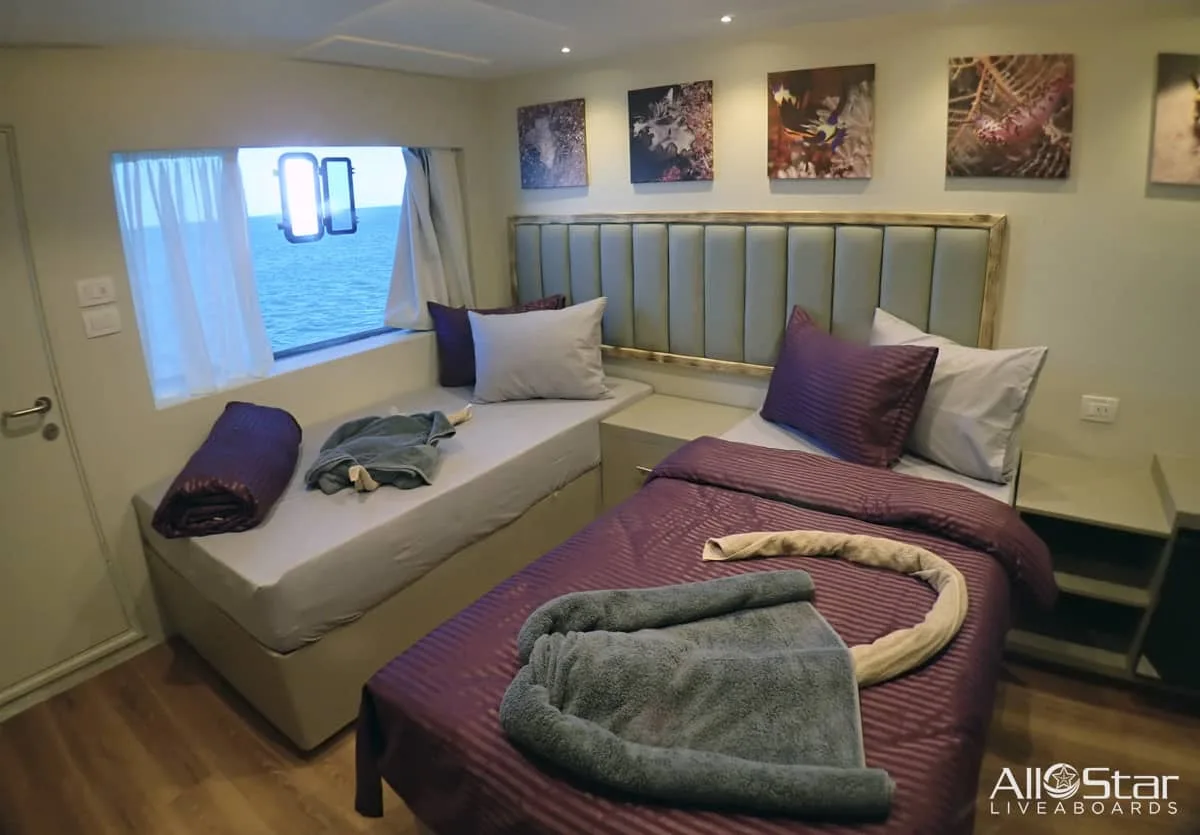
Two slightly smaller cabins aft on the main deck. Inside are a single bed of 0.9 by 2 metres and a double of 1.3 by 2 metres, a desk, a minibar, a private bathroom with shower and individually controlled air conditioning. The operator sells them for single occupancy at a 50% supplement instead of the usual 80%, though two people can share.
Schedule & Pricing
North: reefs and wrecks
The classic northern week: the SS Thistlegorm, a 400-foot British transport sunk in 1941 with a cargo of motorcycles, trucks and locomotives; Abu Nuhas reef with four hulls at recreational depths; Gubal Island with the Ulysses and the Bluff Point wall; and Ras Mohammed, where Shark Reef and Yolanda Reef hold walls of barracuda and trevally. The most accessible itinerary on this vessel — but even here the operator requires Advanced Open Water, with 30 logged dives suggested.
December 2026
1 departureMarch 2027
1 departureApril 2027
1 departureAugust 2027
1 departureFebruary 2028
1 departureMarch 2028
2 departuresApril 2028
2 departuresAugust 2028
1 departureDecember 2028
1 departureWrecks of the North
A week devoted entirely to iron. Abu Nuhas with four hulls: the Carnatic of 1869, a wooden ship crusted in soft coral with penetrations at 18 metres; the Kimon M, which hit the reef in 1978 carrying lentils; the Chrisoula K with Italian tiles still in her holds; and the Giannis D, the most photogenic and the easiest to swim into. Plus the Thistlegorm, the Ulysses and the sites around Gubal. Advanced Open Water required, 30 logged dives suggested.
March 2027
1 departureJuly 2028
1 departureAugust 2028
1 departureSeptember 2028
1 departureNorth and the Strait of Tiran
A northern week with a run into the Strait of Tiran: Jackson, Thomas, Woodhouse and Gordon — four reefs with strong currents that pull in schooling pelagics. Hammerheads pass Jackson in season, Thomas is known for its canyon, Woodhouse makes a fast drift and Gordon is the gentlest, with a shallow plateau and the freighter Louilla sitting on the reef. The Thistlegorm, Abu Nuhas and Ras Mohammed are also on the programme.
March 2027
1 departureApril 2027
2 departuresMay 2027
1 departureAugust 2027
1 departureSeptember 2027
1 departureApril 2028
1 departureJuly 2028
1 departureAugust 2028
1 departureSeptember 2028
1 departureNorth and the Brothers
A compromise between northern iron and the open sea: both Brothers Islands, 60 kilometres offshore, are added to the Thistlegorm, Abu Nuhas and Ras Mohammed. Little Brother is a sheer wall of untouched coral patrolled by grey reef sharks; Big Brother has a working lighthouse, the British cargo ship Numidia of 1901 and the Aida II at thirty metres. From October to November oceanic whitetips appear at both islands.
November 2026
1 departureDecember 2026
1 departureMarch 2027
1 departureApril 2027
1 departureJuly 2027
1 departureNovember 2027
1 departureDecember 2027
2 departuresMarch 2028
2 departuresApril 2028
1 departureMay 2028
1 departureJuly 2028
1 departureAugust 2028
1 departureSeptember 2028
1 departureNovember 2028
1 departureDecember 2028
2 departuresBrothers, Daedalus and Elphinstone
The vessel's signature itinerary and by far the most frequent in the schedule. Brothers, Daedalus and Elphinstone are three exposed offshore sites no day boat can reach. Hammerheads hold at Daedalus year-round and school there from May to August; oceanic whitetips are close to a certainty at Elphinstone from October to December, and mantas pass through from May to August. Currents are strong, dives are deep, and no night dives are allowed inside the marine parks. The operator suggests at least 50 logged dives, preferably a hundred or more.
October 2026
1 departureNovember 2026
4 departuresDecember 2026
1 departureMay 2027
2 departuresJuly 2027
1 departureAugust 2027
1 departureSeptember 2027
1 departureOctober 2027
2 departuresNovember 2027
4 departuresDecember 2027
2 departuresMay 2028
1 departureSeptember 2028
1 departureOctober 2028
3 departuresNovember 2028
3 departuresDecember 2028
1 departureDaedalus and St John's
The deep south, right on the Sudanese border. St John's is a plateau of a dozen separate sites: the caverns and swim-throughs of Habili Ali, the tunnels of Umm Kharerim, walls of soft coral and sea whips. Daedalus and its hammerheads are on the way. The area is out of range for day boats, so the reefs here are noticeably fresher than in the north. Advanced Open Water and at least 50 logged dives.
June 2027
3 departuresMay 2028
1 departureJune 2028
2 departuresDaedalus and Fury Shoal
Daedalus, Fury Shoal and Elphinstone in one week. Fury Shoal is a scatter of shallow reefs and lagoons with turtles and dolphins — a good pause between two exposed offshore sites. Daedalus brings hammerheads and walls of massive hard coral, Elphinstone the oceanic whitetips in season. Advanced Open Water and at least 50 logged dives.
June 2027
1 departureDaedalus, Rocky Island and Zabargad
The furthest of the southern programmes. Rocky Island is considered the hardest dive in the Egyptian south: there is almost no shelter from the wind and the currents run fast, but whale sharks, mantas and leopard sharks come through. Zabargad next door has pinnacles, gentle walls in soft coral, turtles and a Russian freighter on the sand. Daedalus is on the way. Advanced Open Water, at least 50 logged dives and real experience in current.
May 2028
2 departuresJune 2028
2 departuresThe whole Red Sea, 14 nights
Two weeks back to back, from the north down to the Sudanese border: the wrecks of Abu Nuhas and the Thistlegorm, Ras Mohammed, the Brothers, Daedalus, Elphinstone and the deep south. The only 14-night programme in the schedule and the only way to cover the whole Egyptian Red Sea in a single trip.
July 2027
1 departureJuly 2028
1 departurePrices and availability can change. Get in touch and we'll confirm current dates and pricing.
Included in Price
Not Included
Required extras
Optional extras
Extras are shown per person and are paid on board.
from 1620 USD / 7 nights
Estimated wait time — 24 hours
Suite
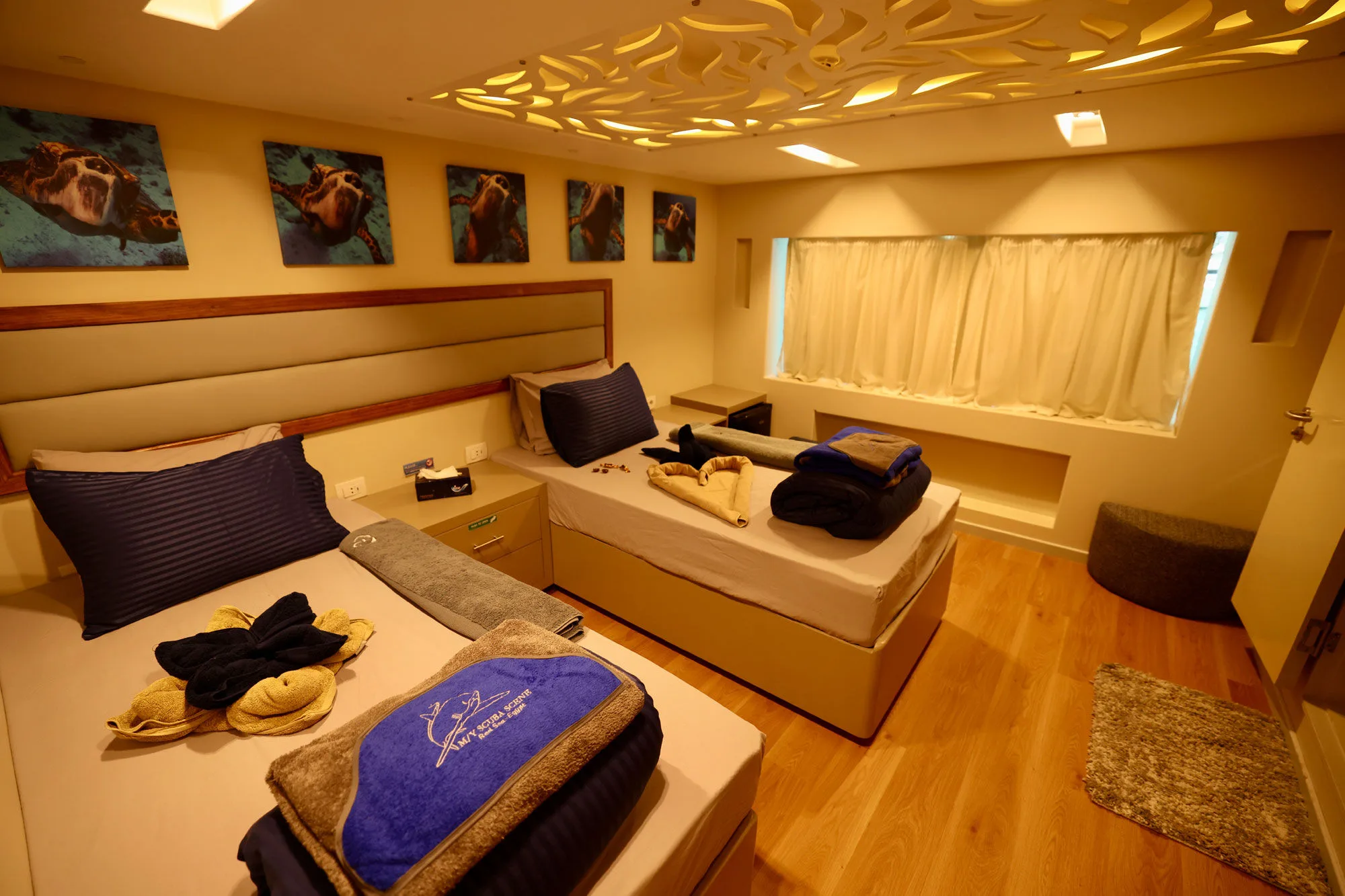
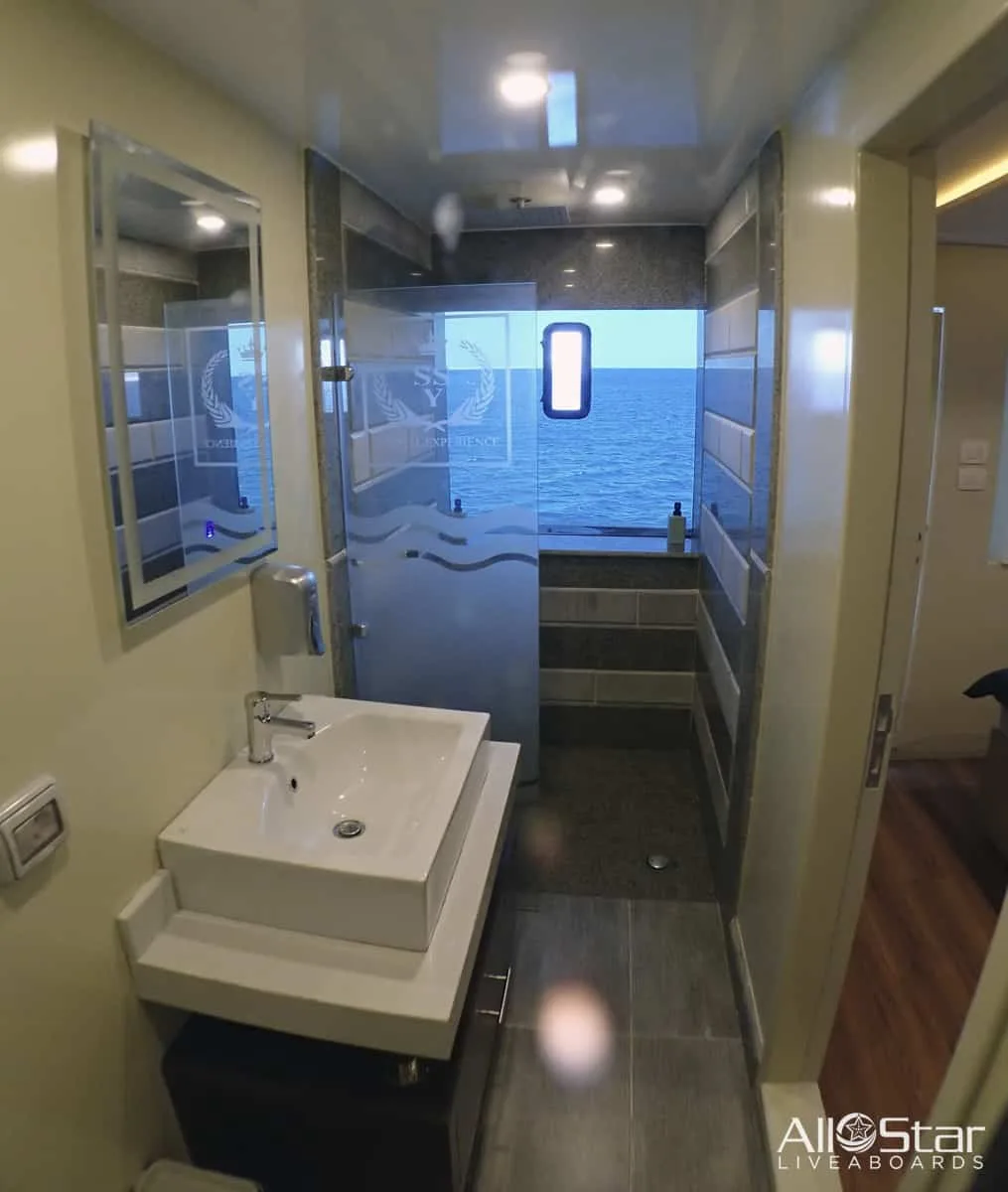
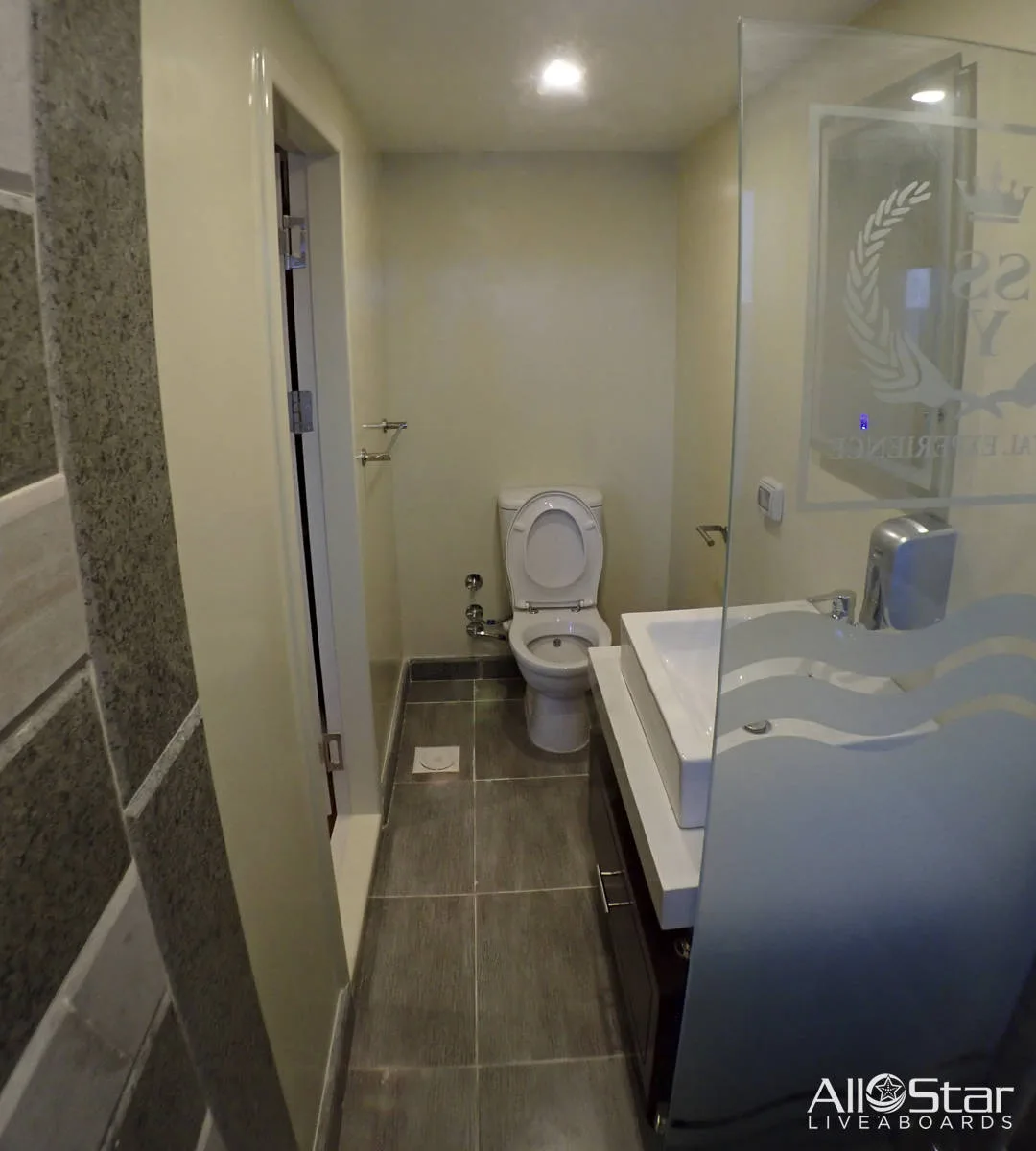
Twelve identical cabins spread over two decks. A large window across the bulkhead, a small seating area with a sofa, a wardrobe, a private bathroom with shower and individually controlled air conditioning. The bed converts between a double and two singles, chosen at booking. 220 V type C sockets and USB ports in the cabin.
- Deck
- main deck (cabins 1-6) and pool deck (cabins 9-14)
- Beds
- Double bed or two singles - convertible
- Windows
- Large ocean-view window
- Cabin numbers
- 1-6, 9-14
- cabins of this type
- 12
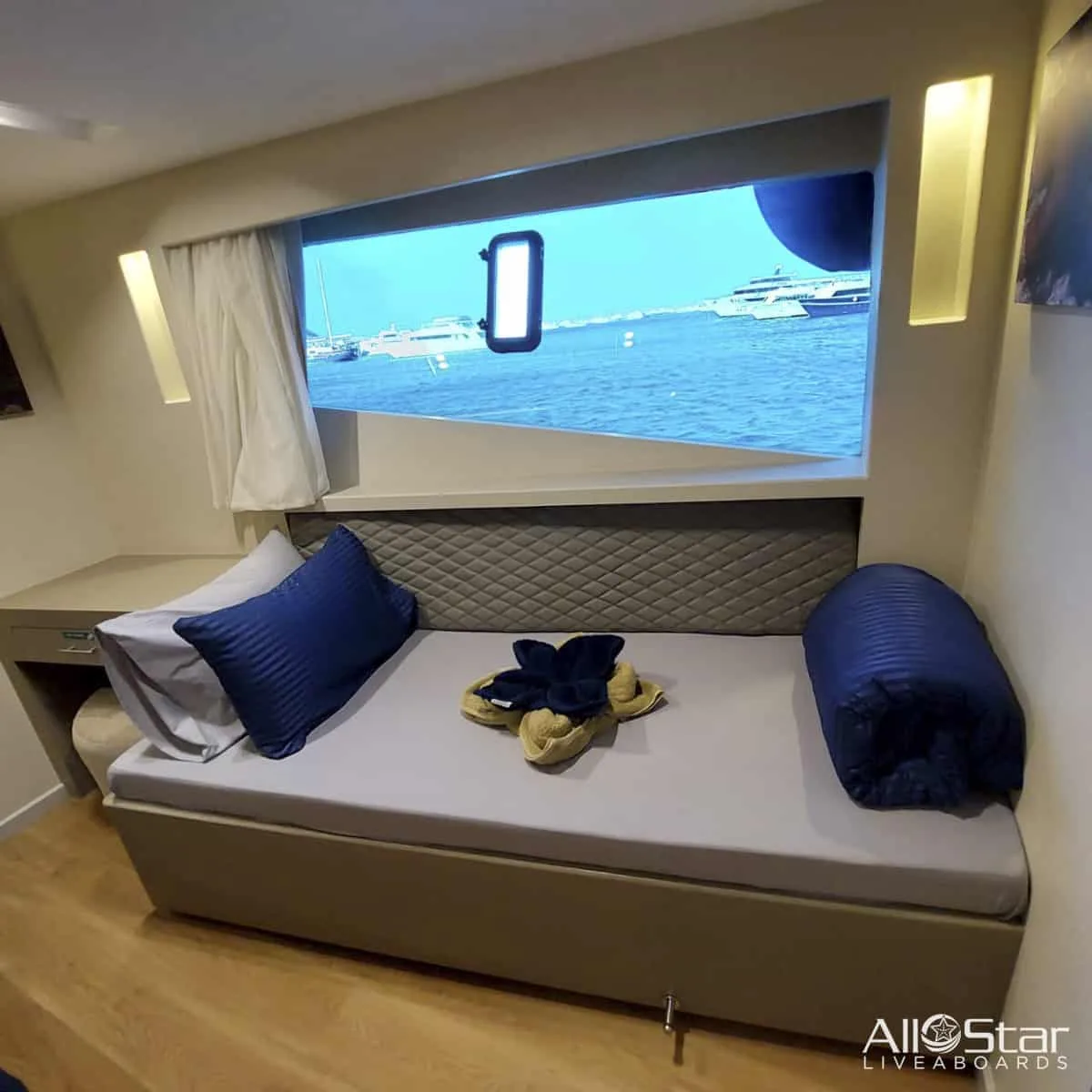
Single
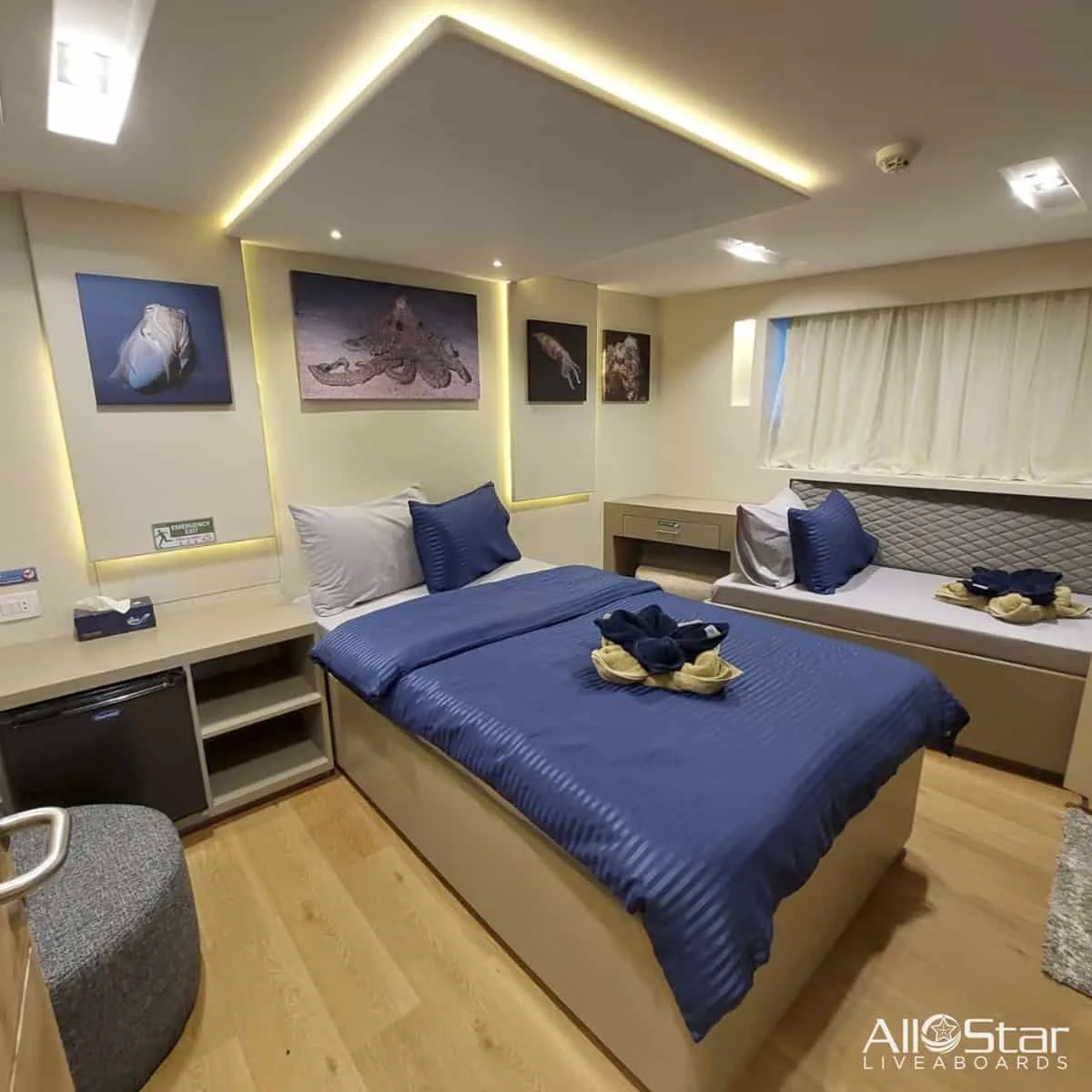
Two slightly smaller cabins aft on the main deck. Inside are a single bed of 0.9 by 2 metres and a double of 1.3 by 2 metres, a desk, a minibar, a private bathroom with shower and individually controlled air conditioning. The operator sells them for single occupancy at a 50% supplement instead of the usual 80%, though two people can share.
- Deck
- main deck
- Beds
- 1 single 0.9 x 2 m and 1 double 1.3 x 2 m
- Windows
- Window
- Cabin numbers
- 7, 8
- cabins of this type
- 2
All Star Red Sea
from 1620 USD