“The world’s aquarium” — that was Jacques Cousteau’s description. Half a century on, the phrase still holds.
The Sea of Cortez is a narrow gulf 1,100 kilometres long between the Baja California peninsula and mainland Mexico. Maps label it two ways: the Gulf of California, or the Sea of Cortez, after the conquistador Hernán Cortés.
From the air it looks like a crack. Essentially it is one: the gulf formed when the San Andreas fault began tearing the peninsula away from the mainland. The process continues — Baja is sliding northwest by a few centimetres a year, and the sea between it and Mexico is slowly widening. It is only about five million years old, which for an ocean is infancy.
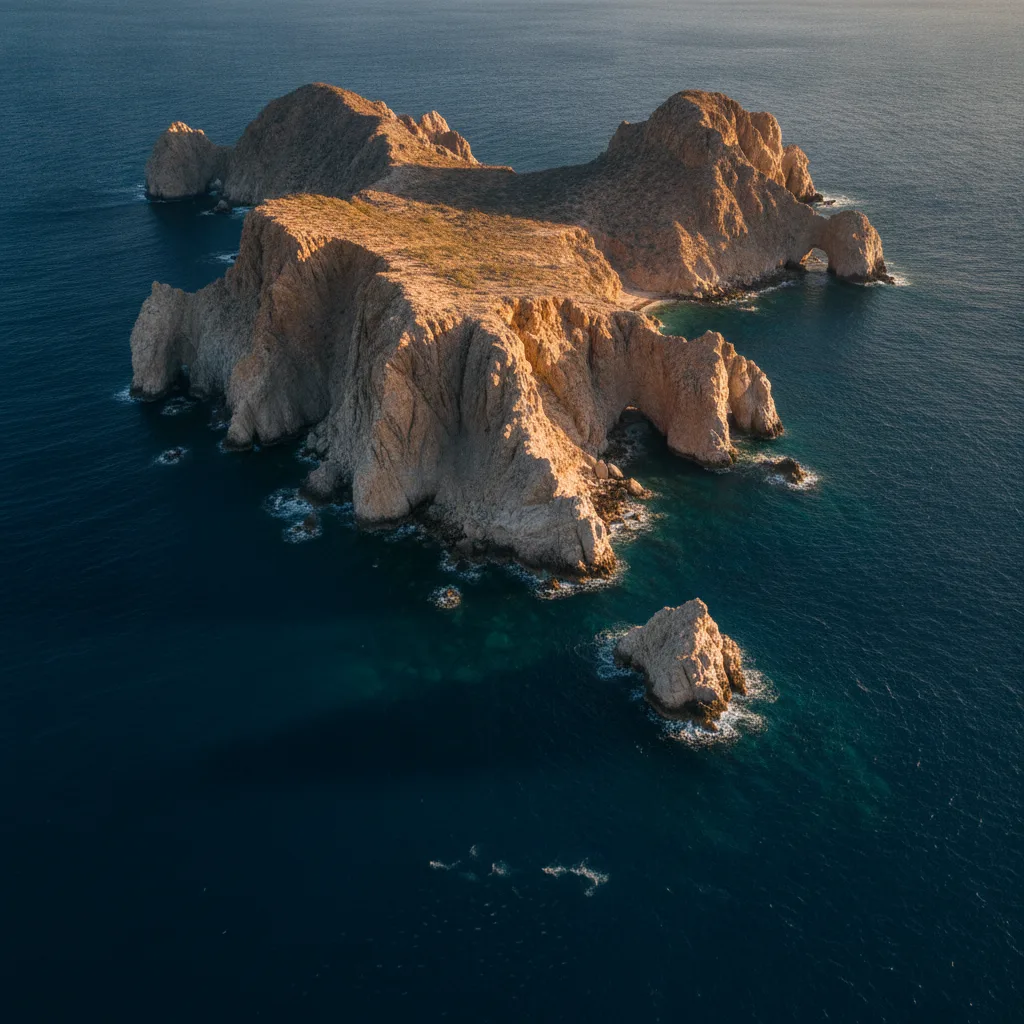
Young, narrow, squeezed between deserts — and one of the most densely populated seas on the planet.
Where all that life comes from
The mechanism is called upwelling. Wind and tides push surface water aside, and cold, nutrient-rich water rises from below to replace it.
Tides in the Sea of Cortez are among the strongest in the world — in the upper gulf the difference between high and low water reaches nine metres. The water mixes constantly, nutrients never settle, and phytoplankton blooms year-round.
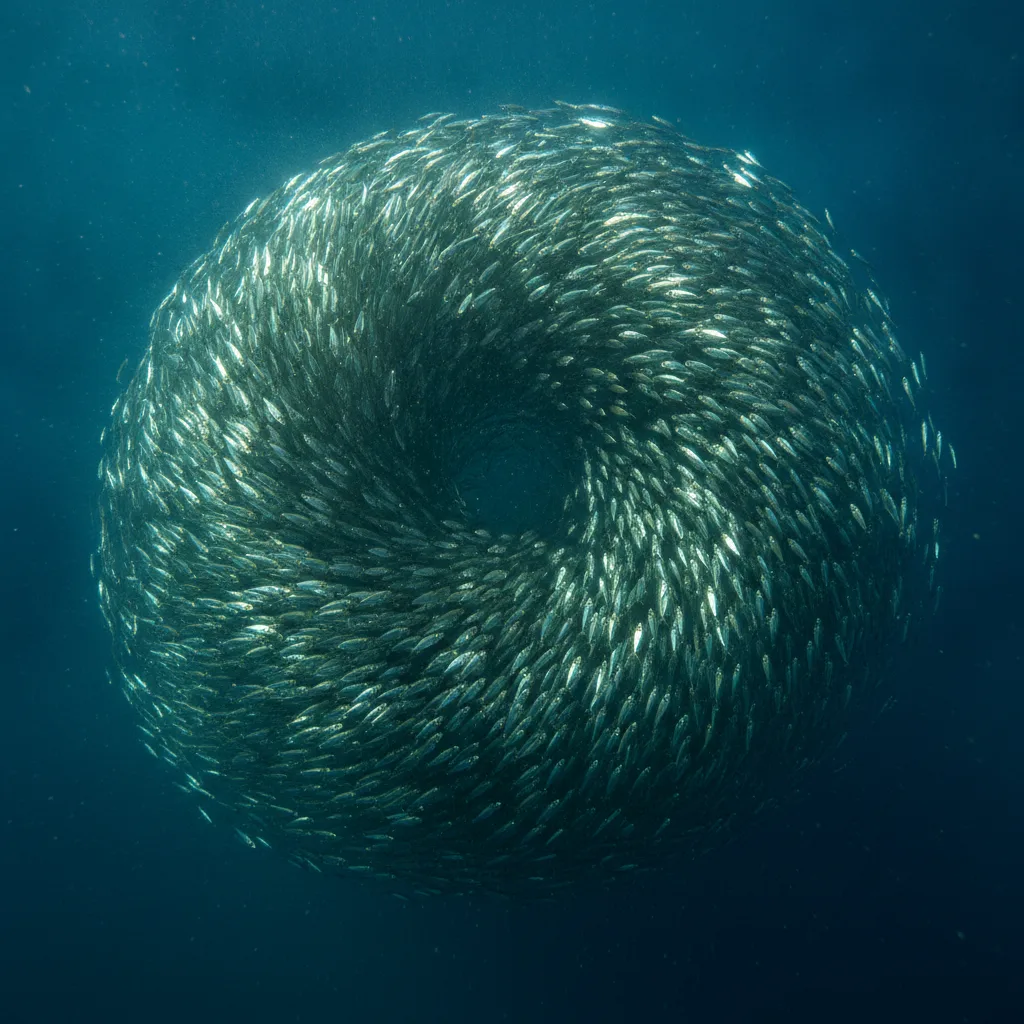
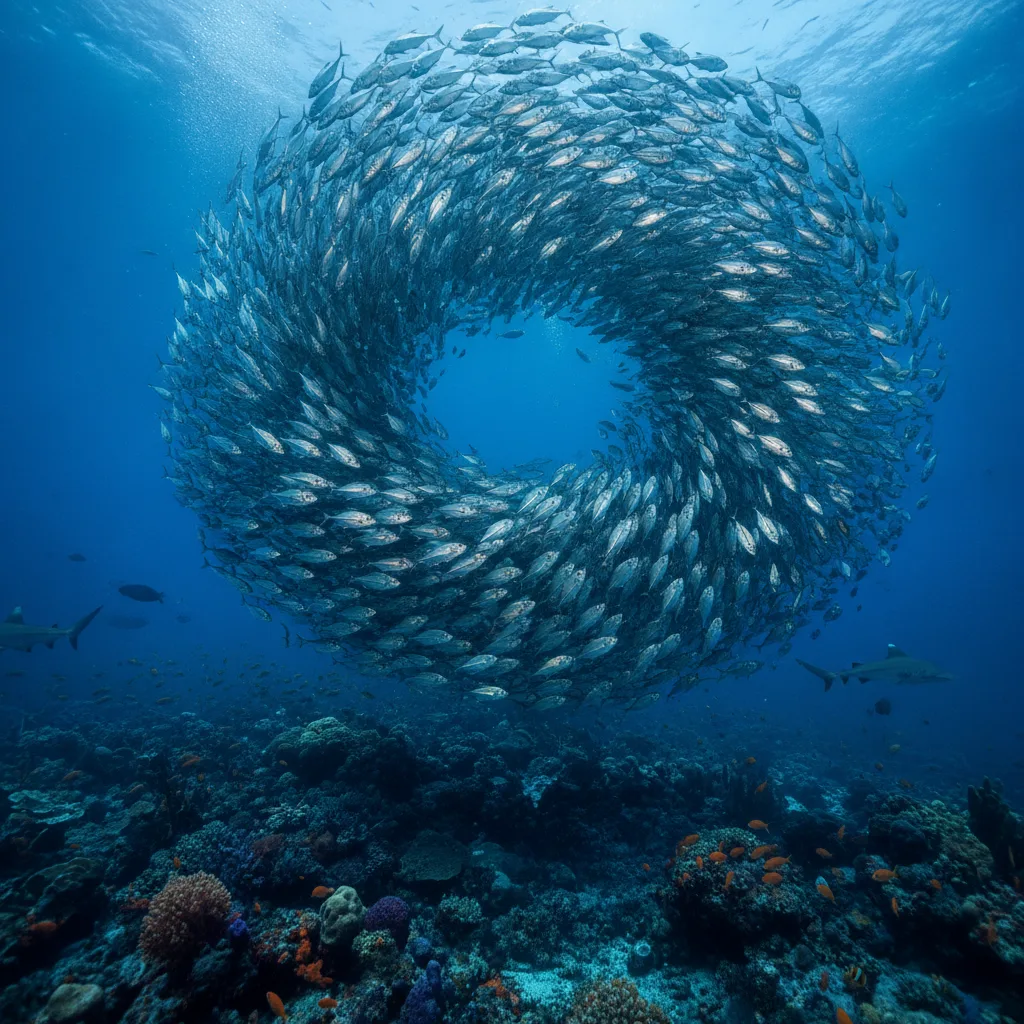
Then the chain: plankton, sardine, squid, tuna, ray, shark, whale. Each link feeds the next.
The numbers come out like this:
- More than 900 fish species, around 90 of them found nowhere else
- Over 4,500 invertebrate species
- About a third of all known cetacean species on the planet — thirty-plus whales and dolphins in one gulf
- More than 200 islands, inscribed on the UNESCO World Heritage list
Cousteau came here in the 1950s and delivered the line about the aquarium. Before him, in 1940, John Steinbeck sailed these waters with the biologist Ed Ricketts, and out of that trip came The Log from the Sea of Cortez, one of the best books ever written about the sea.
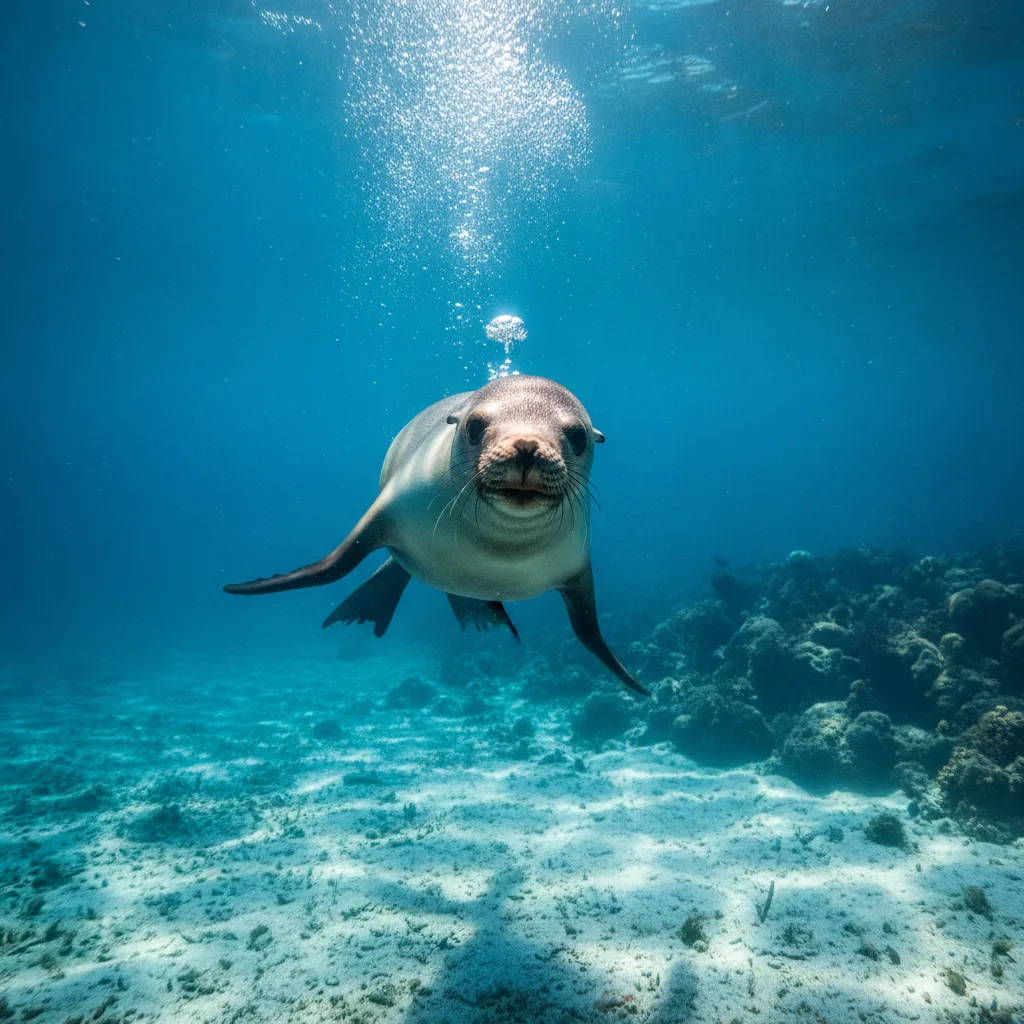
Sea lions that come to you
The gulf’s most famous dive is Los Islotes, a rocky islet two hours from La Paz.
A colony of California sea lions lives here, around four hundred animals. The youngsters treat divers as entertainment: they swim right up, spin around you, tug at fins, hang upside down in front of your mask and look you in the eye.
This is not training and not feeding. Just curious adolescents with a great deal of free time.
Adult males keep their distance and mind the order of things: they have their territory, and you do not enter it. The rules are simple, the guide covers them at the briefing, and over decades the colony has grown used to people.
Depths here are modest — 5 to 15 metres. The dive suits any level, and plenty of people call it the best of their lives.
Rays that fly
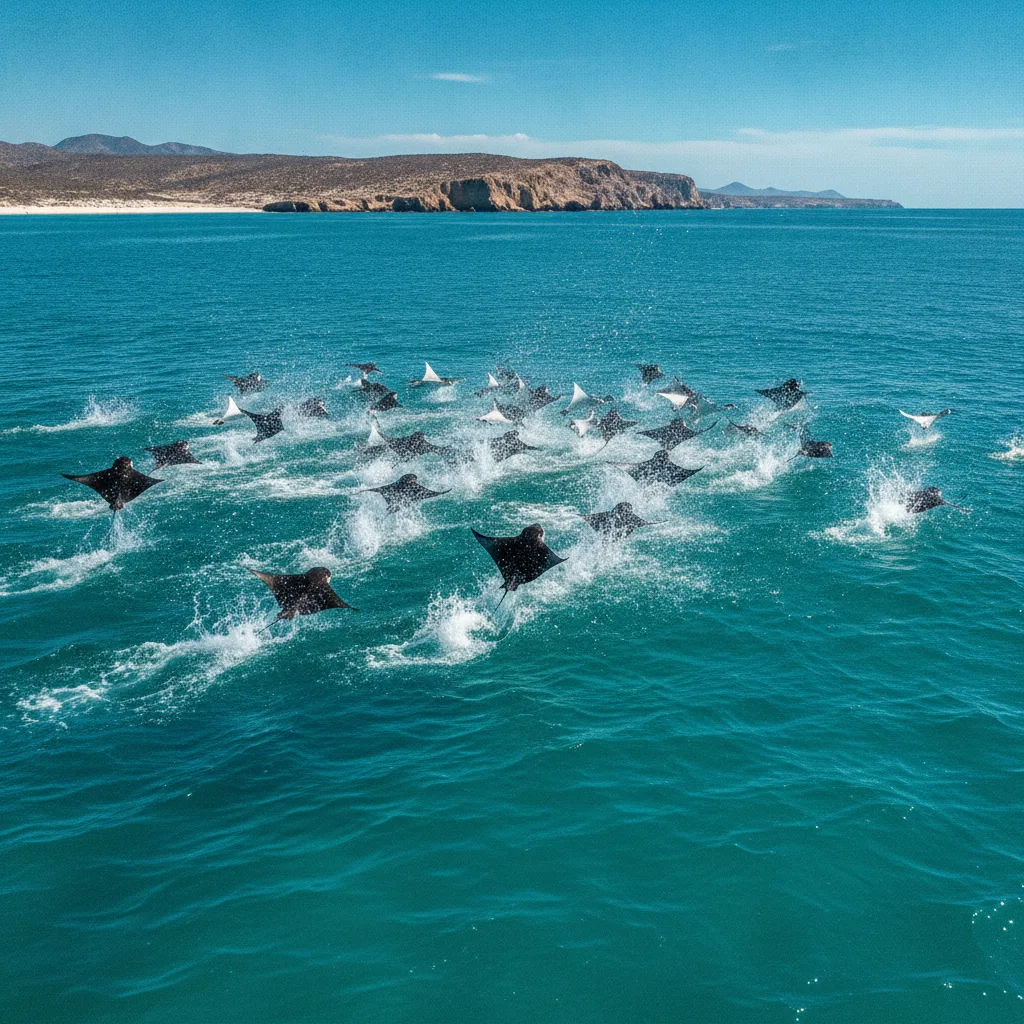
In May and June, mobula rays gather off Baja California — Mobula munkiana, relatives of the manta but smaller, with a wingspan of about a metre.
They gather in the thousands. The school moves as a dense mass while individuals launch out of the water and slap back down with a loud crack. Why is not settled: theories range from shedding parasites to courtship displays to plain communication.
From the surface it looks like boiling water with black-and-white triangles flying out of it. Underwater it looks like a flock of birds, except all around you.
Calendar: who and when
The Sea of Cortez runs on a schedule, and the month of your trip decides practically everything.
| Months | Who | What happens |
|---|---|---|
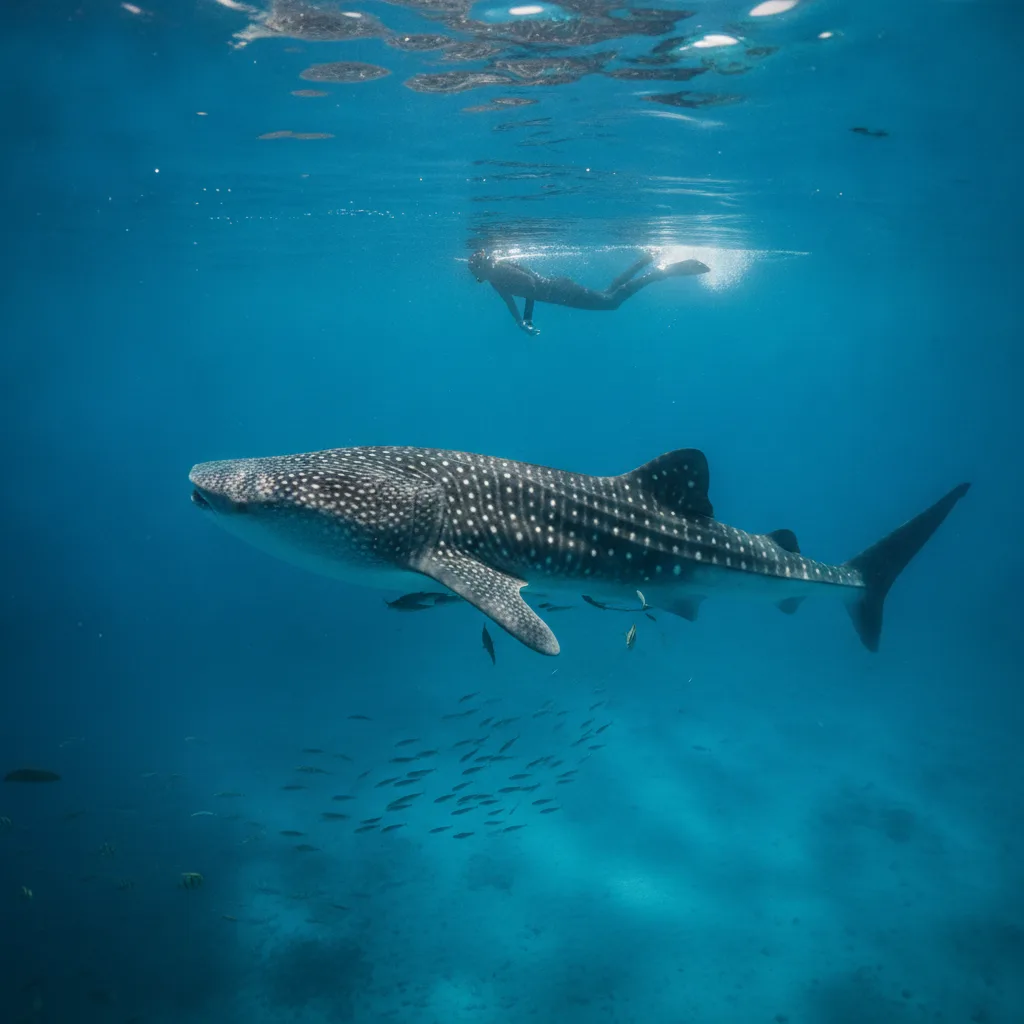
| October — April | Whale sharks | Juveniles feed in the shallows of La Paz Bay |
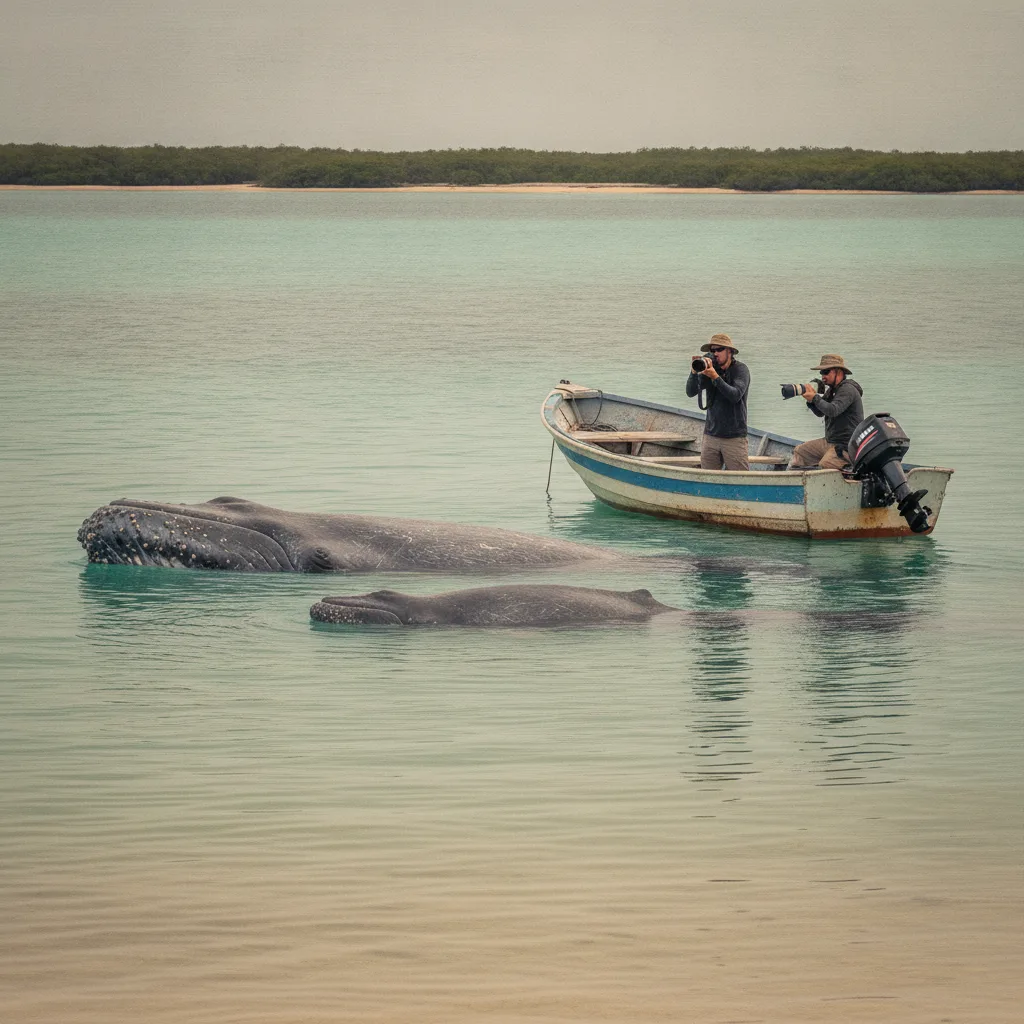
| January — March | Grey whales | On the Pacific side of the peninsula, in the San Ignacio and Magdalena lagoons |
| January — March | Blue whales | The largest animal on the planet arrives to winter |
| May — June | Mobula rays | Mass aggregations and breaching |
| June — November | Warm water | 26–30 °C, best visibility, peak reef activity |
| Year-round | Sea lions | The Los Islotes colony is always there |
The grey whales in the lagoons deserve their own note. They come to calve in the shallow warm bays of the Pacific coast, and there something happens that nobody has fully explained: mothers bring their calves to the boats themselves and let people touch them. These are the so-called friendly whales — whales that seek contact with humans. It happens without bait and without coercion, year after year, in the same lagoons.
Cabo Pulmo: how a reef came back
The most encouraging story in this sea belongs to a fishing village on the south of the peninsula.
By the early 1990s the reef at Cabo Pulmo had been fished almost bare. Local fishermen could see the fish were gone, and made a decision few are capable of: they asked the government to close the water entirely. In 1995 a national marine park was created — 71 square kilometres where all fishing is banned.
The first years were hard on the village. Then the reef began to return.
Ten years later a study recorded a 463% increase in fish biomass — the largest documented recovery of a marine ecosystem anywhere in the world. The big predators came back: groupers, jacks, sharks. Today Cabo Pulmo is one of Mexico’s finest dive sites, and the village lives better on dive tourism than it ever did on fishing.
The case is cited at every ocean conservation conference. It shows that the sea recovers faster than people assume — if it is simply left alone.
What to know before you go
The water is cooler than people expect of Mexico. 18–22 degrees in winter, 26–30 in summer. Winter calls for a 5–7 mm suit, summer for a 3 mm. Thermoclines can be sharp.
Visibility varies. From 10 to 30 metres depending on season and plankton. The paradox: the more plankton, the worse the visibility and the more big animals.
The base is La Paz or Cabo San Lucas. Getting there means a long-haul flight to Mexico City and a domestic connection. Allow a full day each way.
The format is a dive safari. The islands are scattered across the gulf and the best sites are far from shore. A vessel reaches what a day boat simply cannot.
The liveaboards working this area are Rocio Del Mar, Valentina and the Nautilus vessels, which also run to Socorro and Guadalupe. All Mexican routes are collected on the destination page.
The Sea of Cortez rarely makes the top of “where to dive” lists. Undeservedly: for large animals per square kilometre it has few equals anywhere.
If you are curious how a dive safari differs from shore diving, see the full breakdown.