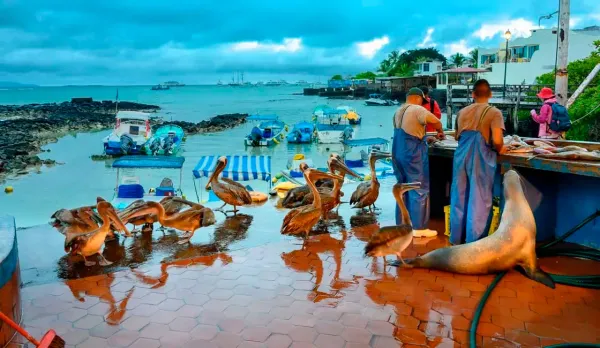
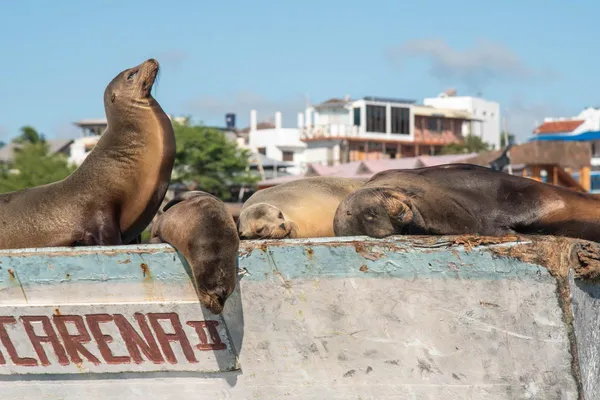
The Galapagos Islands sit on the equator, a thousand kilometres from the nearest mainland. Sea lions sleep on harbour benches here, and hundreds of hammerhead sharks gather around the underwater rocks.
The Galapagos Islands are an Ecuadorian archipelago in the Pacific Ocean, about 1,000 kilometres west of the South American coast. The equator crosses the north of the largest island, Isabela. The archipelago has 13 large islands and many small ones; people live on four of them, and the rest of the land is a national park.
From Moscow you reach the Galapagos via Quito or Guayaquil: two or three flights to Ecuador and one more domestic flight to the islands. Dates and options are on the Galapagos destination page, and our dive safari on the yacht Calipso, 18–25 November 2027, is laid out day by day.
What the Galapagos are famous for
In September 1835 HMS Beagle reached the archipelago with a 26-year-old naturalist, Charles Darwin, on board. He spent about five weeks on the islands and noticed that finches and tortoises differed from one island to the next. Twenty-four years later “On the Origin of Species” came out, and the Galapagos became the textbook example of evolution.
The reason is isolation. The islands rose from the ocean floor as volcanoes, and animals reached them by chance: on floating logs, through the air, carried by currents. Each species adapted to its own island, so most of the land reptiles and a large share of the birds live nowhere else.
What you will see in the Galapagos:
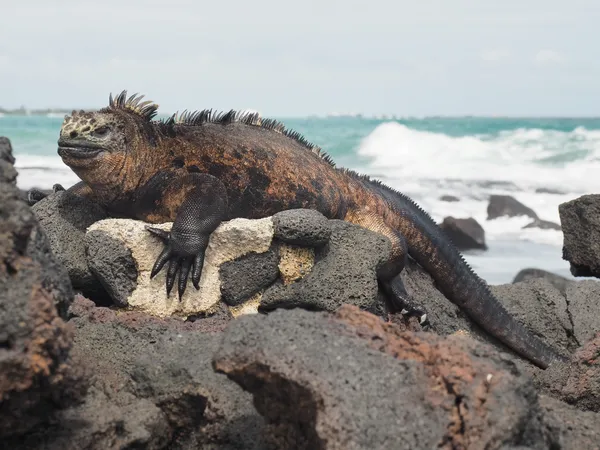
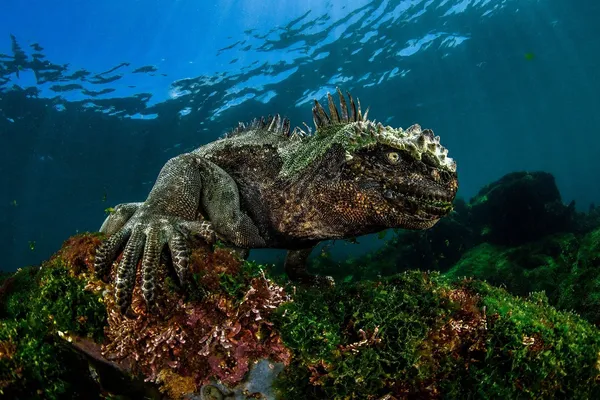
- Marine iguanas are the only lizards in the world that feed in the sea. They dive for algae and then bask for hours on black lava.
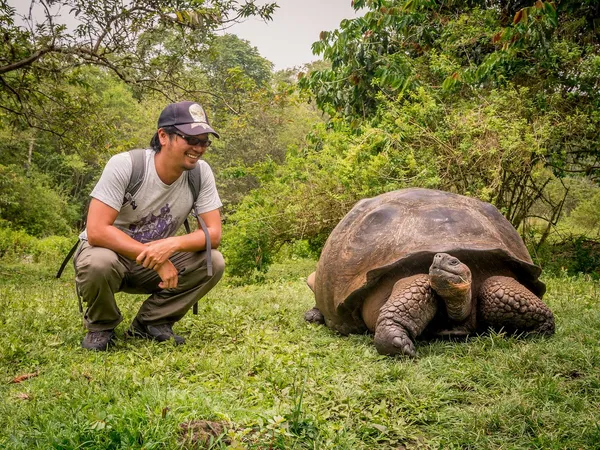
- Giant tortoises: large males weigh over 200 kilograms and live for more than a century. They gave the archipelago its name, as galápago is an old Spanish word for tortoise.
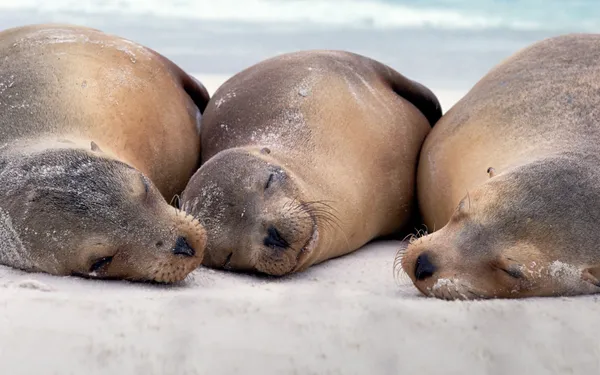
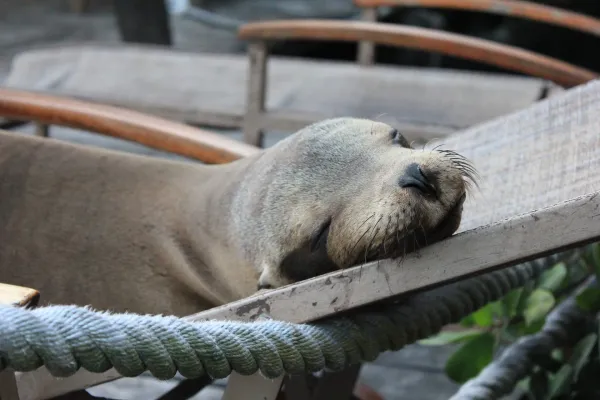
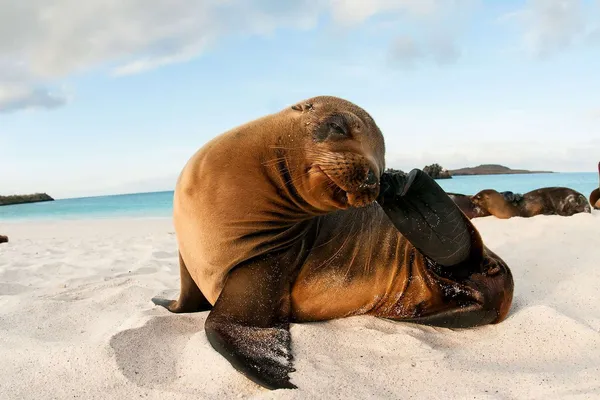
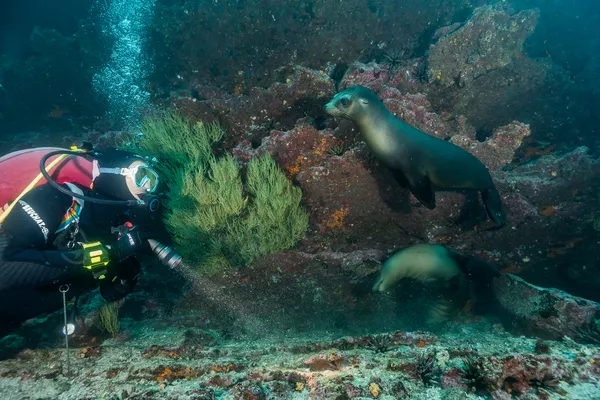
- Sea lions take over beaches, piers and harbour benches, and underwater they swim right up to divers.
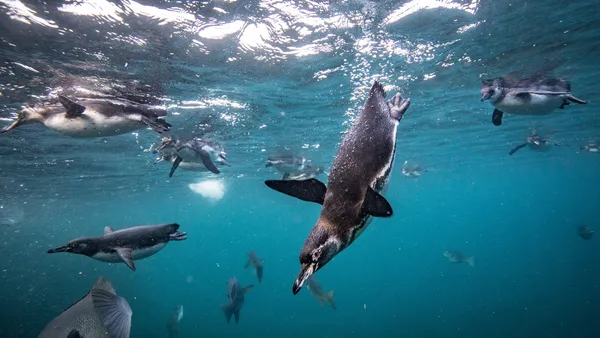
- Galapagos penguins are the only penguin species living on the equator.
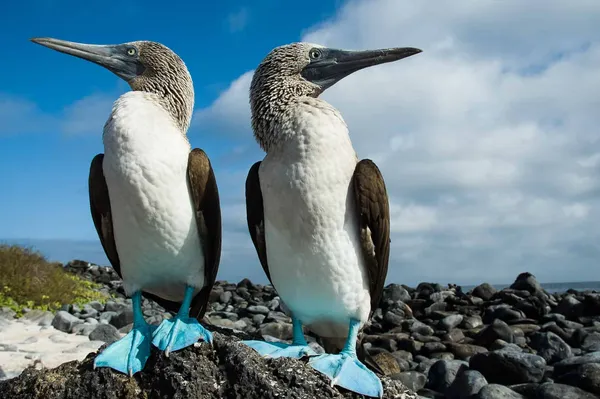
- Blue-footed boobies, frigatebirds and pelicans are unafraid of people and nest right beside the trails.
The animals are fearless because the islands had almost no land predators. Park rules protect that trust: keep two metres away, never feed or touch the animals, and land at protected sites only with a licensed guide.
Galapagos sharks and the hammerheads of Darwin and Wolf
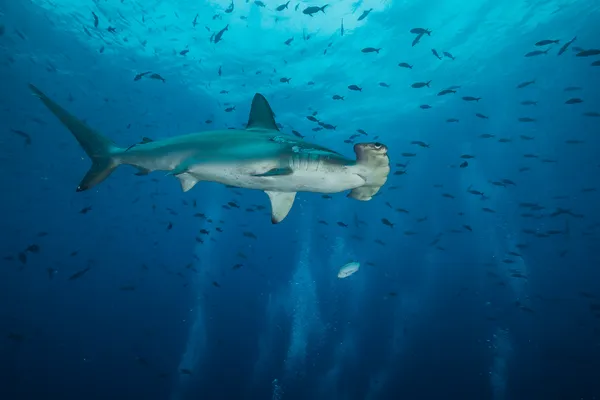
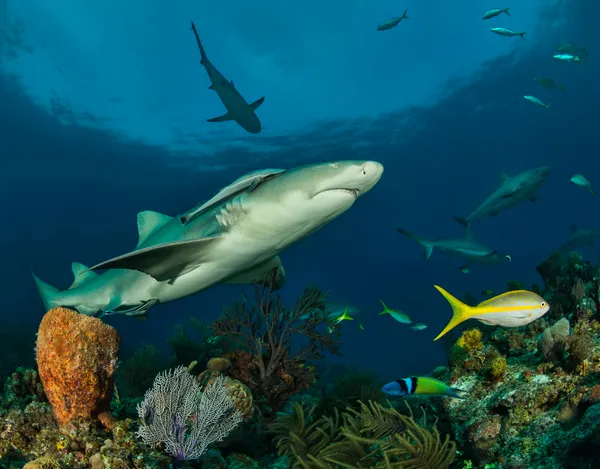
Underwater, the Galapagos are famous for sharks. The Galapagos shark is named after the archipelago, although it lives around oceanic islands all over the world. It grows to about three metres and turns up on almost every dive here.
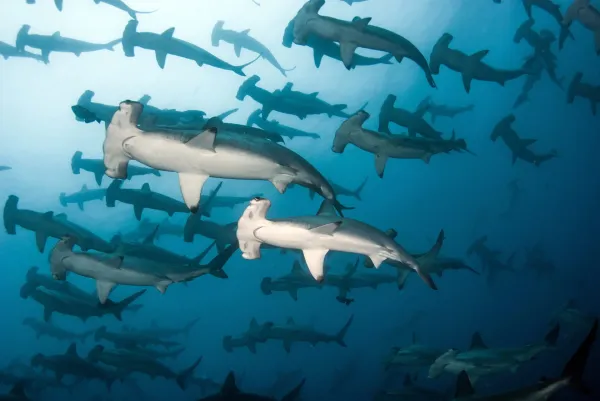
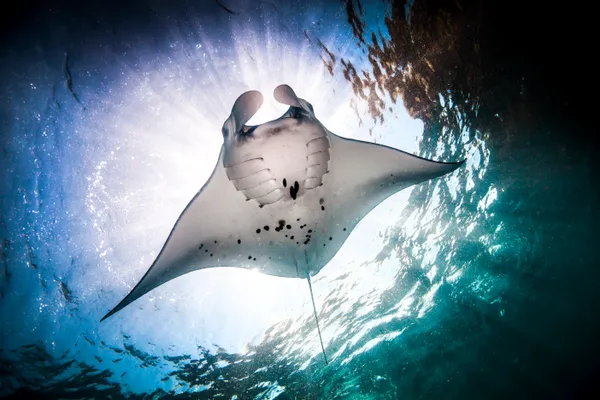
The main goal for divers is Darwin and Wolf islands in the north of the archipelago. Schools of hundreds of hammerhead sharks gather at their underwater rocks, and the currents bring eagle rays, dolphins and tuna. A famous stone arch stood above the dive site at Darwin; its top collapsed in 2021, leaving two pillars. The hammerheads still hold at the reef below them.
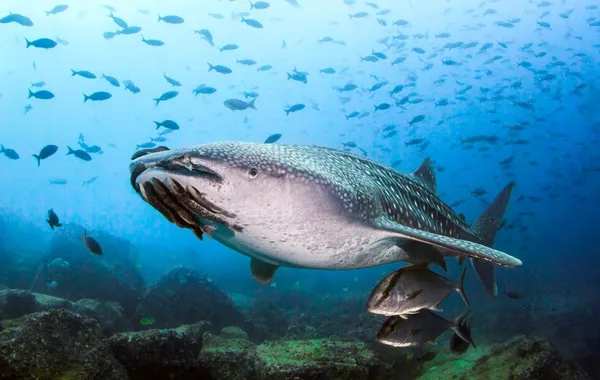
From June to November whale sharks come to Darwin, mostly large females. These dives are for experienced divers: strong currents, open water, depths to 30 metres. Our programme requires Advanced Open Water certification and at least 50 logged dives.
Darwin and Wolf lie far from the inhabited islands, and day boats do not go there. The only way in is a dive liveaboard that travels overnight and stays at the islands for several days.
When to go to the Galapagos
The islands have two seasons, and both work for a trip. The choice depends on what you want to see.
December to May, the warm season. Air warms to 30 °C and water to 24–26 °C. Short tropical showers happen, the sea is calmer and underwater visibility is better. A good time for snorkelling and walks on the islands.
June to November, the cool season. The Humboldt Current brings cold water, 18–23 °C, and colder in the west of the archipelago. Skies are more often overcast, with a fine drizzle locals call “garúa”. The cold water is rich in plankton, so these months bring more pelagic life and the whale sharks. For diving at Darwin and Wolf this season is considered the best, but you need a 7 mm wetsuit.
November is the transition month: the water is warming, and whale sharks are still around. That is why our safari runs 18–25 November.
How to get there from Moscow
There are no direct flights from Moscow to Ecuador. The usual route has two connections: via Istanbul, then via Madrid, Amsterdam, Bogotá or Panama to Quito or Guayaquil. Travel time is 25 to 35 hours. If you connect in Europe on a single booking, you can stay airside; with separate tickets you have to collect your bags and pass border control, which needs a Schengen visa.
Quito sits at about 2,850 metres. After the long flight, a quiet evening and a night in a hotel before flying on to the islands are worth it.
LATAM and Avianca fly from Quito and Guayaquil to the Galapagos. Planes land on Baltra (next to Santa Cruz) or on San Cristóbal. Some flights from Quito stop in Guayaquil. Before departure you buy the transit control card at the airport and have your bags inspected: fresh fruit, seeds, plants and soil may not be brought to the islands.
For our safari the route is: depart Moscow on 16 November, overnight in Quito, and on the morning of 18 November fly to San Cristóbal, where you are met and taken to the yacht.
Documents and money
Visa. Russian citizens do not need a visa for Ecuador for stays of up to 90 days. Your passport must be valid for at least six months from the date of entry. Entry rules change, so check them on the Ecuadorian consulate website before buying tickets.
Currency. Ecuador uses the US dollar. Russian cards do not work there, so bring cash: the park fee is paid in cash, and small expenses in the Galapagos are easier to cover that way too.
Insurance. Divers need a policy that covers diving to the planned depth and medical evacuation: the nearest major hospital on the mainland is more than an hour and a half away by air.
What a Galapagos trip costs
The price has three parts: flights, mandatory fees and the programme on the islands itself, a liveaboard or a hotel.
Mandatory fees. Entry to Galapagos National Park for a foreign adult visitor is $200, paid in cash at the arrival airport. The transit control card is $20, bought at Quito or Guayaquil airport. These are the 2026 figures; Ecuador reviews the fees, so check before you travel.
Flights. Moscow — Quito — Moscow costs about 130,000 roubles, and the domestic flight Quito — San Cristóbal — Quito about 50,000 roubles. The price depends on the season and how early you buy.
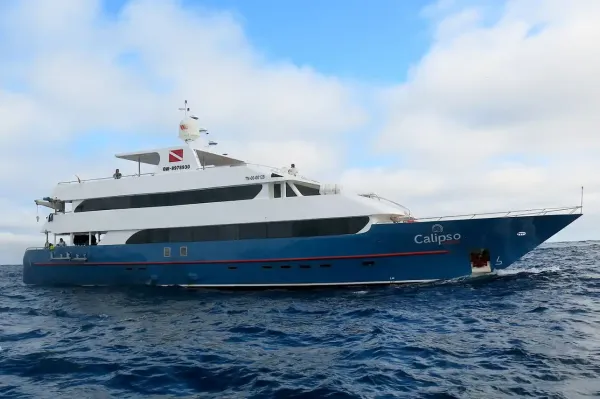
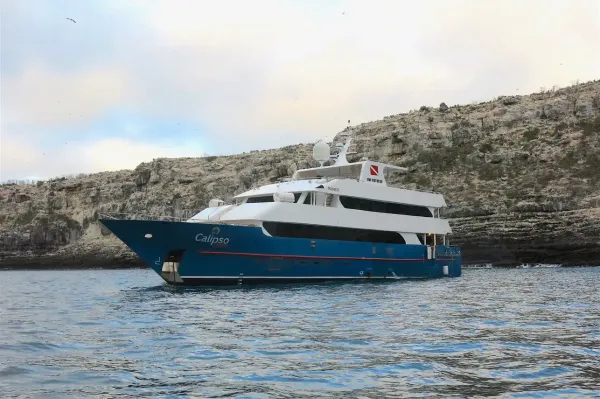
The programme. Our dive safari on the yacht Calipso costs $7,395 per person sharing a twin cabin. The price includes 7 nights on board, three meals a day, 21 dives with weights, tanks and nitrox up to 32%, airport — yacht — airport transfers and tour leader Alexey Tishchenko. Flights, the park fee and transit card, two hotel nights on the mainland (before and after the safari), equipment rental ($275 per set) and a dive computer ($85), insurance and tips are extra.
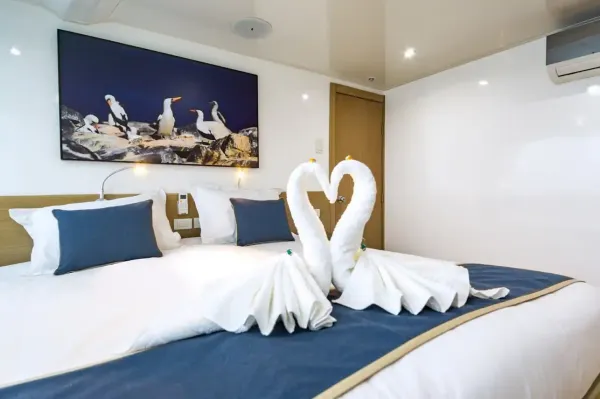
Calipso is a 35-metre yacht fully rebuilt in 2019. Every cabin has its own bathroom, air conditioning and windows, and there is a jacuzzi on the sun deck.

Liveaboard or hotel on land
There are two ways to travel in the Galapagos, and they suit different people.
A hotel on an inhabited island: Santa Cruz, San Cristóbal or Isabela. Every day you take a boat to the neighbouring islands, snorkel or make two dives at nearby reefs, and return to shore in the evening. It is cheaper and more flexible, but the crossings take a lot of time, and the remote islands are out of reach.
A liveaboard moves between islands at night, and each morning you wake up somewhere new. Only a liveaboard reaches Darwin and Wolf. A dive safari means three or four dives a day with almost no travel between them.
Our programme has both: eight days on the yacht, dives at Santa Cruz, Wolf, Darwin, Fernandina and Cousin’s Rock, and on the last evening a landing at the giant tortoise reserve on Santa Cruz and dinner in Puerto Ayora.
A Galapagos trip with a tour leader
In November 2027 we go to the Galapagos as a group of up to 14 with tour leader Alexey Tishchenko: 8 days on the yacht Calipso, 21 dives, hammerhead schools at Darwin and Wolf, the marine iguanas of Fernandina and the giant tortoises of Santa Cruz. The October 2026 departure is already sold out.
The day-by-day programme, cabins, packing list and request form are on the trip page. Other dates and destination details are on the Galapagos Islands page.