Oceania
 1 / 34
2 / 34
3 / 34
4 / 34
5 / 34
1 / 34
2 / 34
3 / 34
4 / 34
5 / 34
 6 / 34
 7 / 34
 8 / 34
 9 / 34
 10 / 34
 11 / 34
 12 / 34
 13 / 34
 14 / 34
 15 / 34
 16 / 34
 17 / 34
 18 / 34
 19 / 34
 20 / 34
 21 / 34
 22 / 34
 23 / 34
 24 / 34
 25 / 34
 26 / 34
 27 / 34
 28 / 34
 29 / 34
 30 / 34
 31 / 34
 32 / 34
 33 / 34
 34 / 34
Book through Tour Leader Club
27 m · 16 guests · 8 cabins · 9 crew members
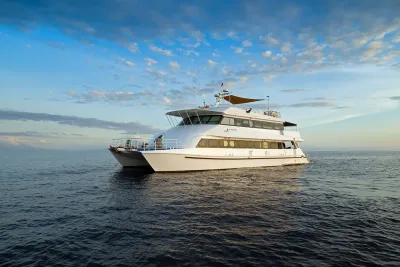
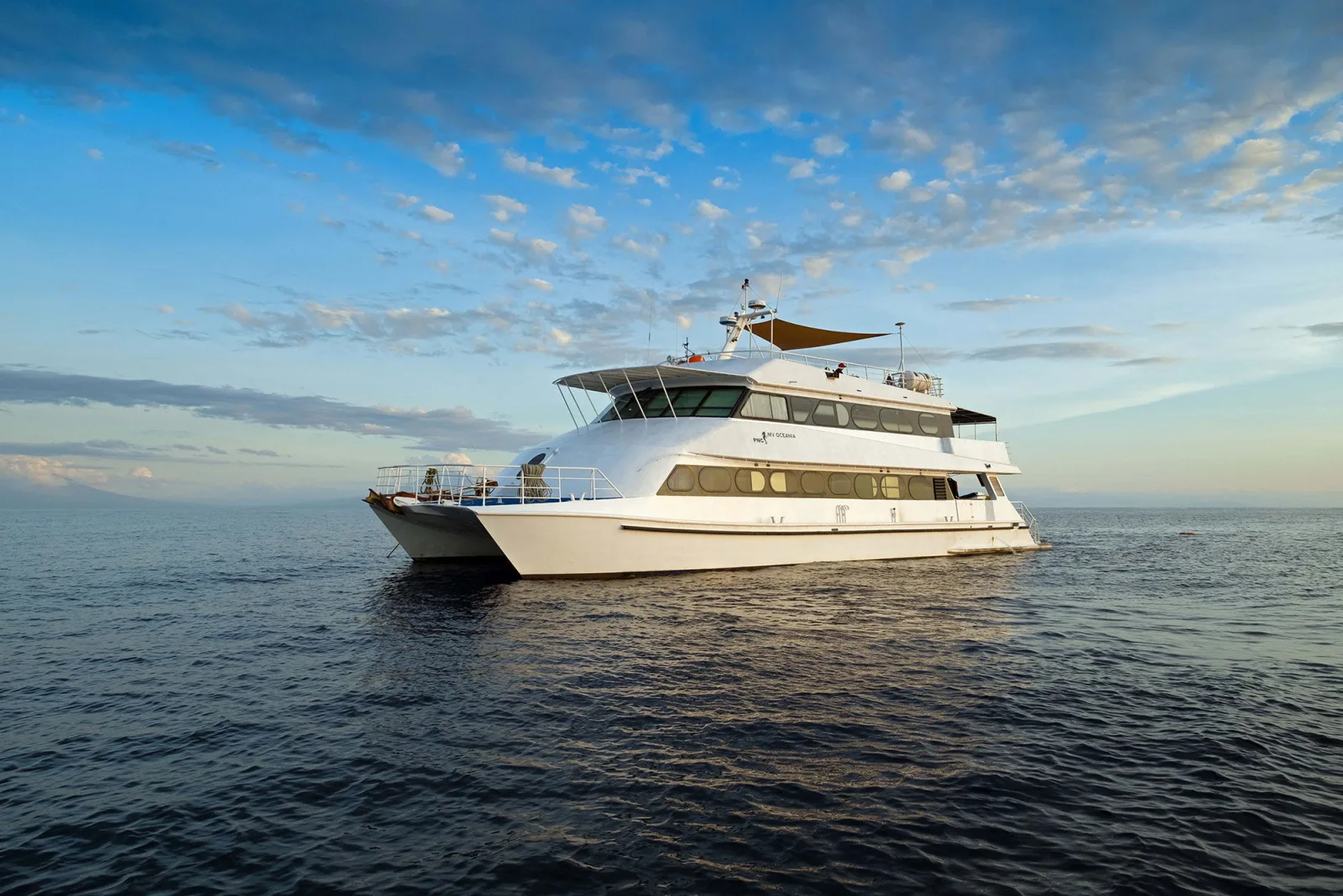
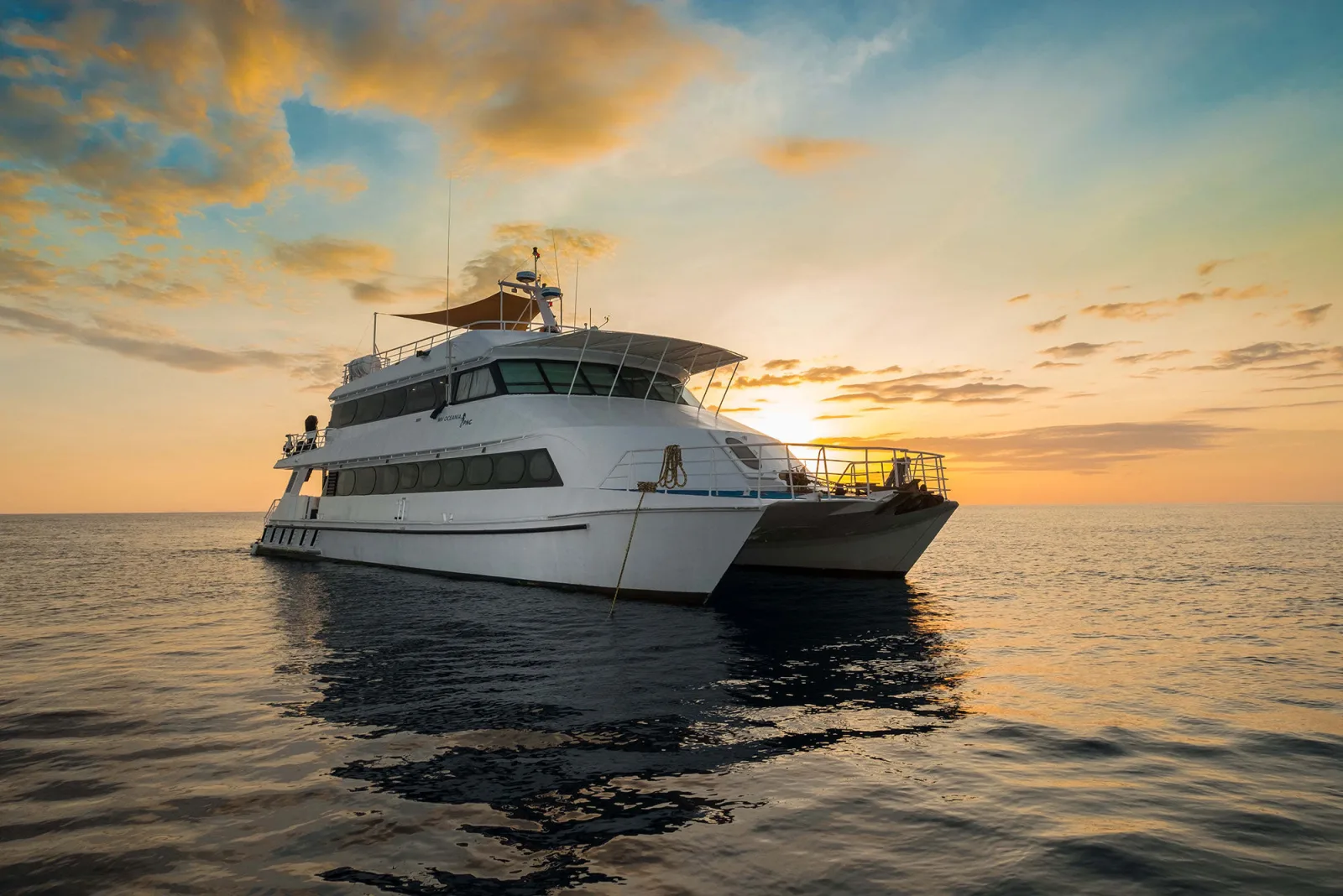
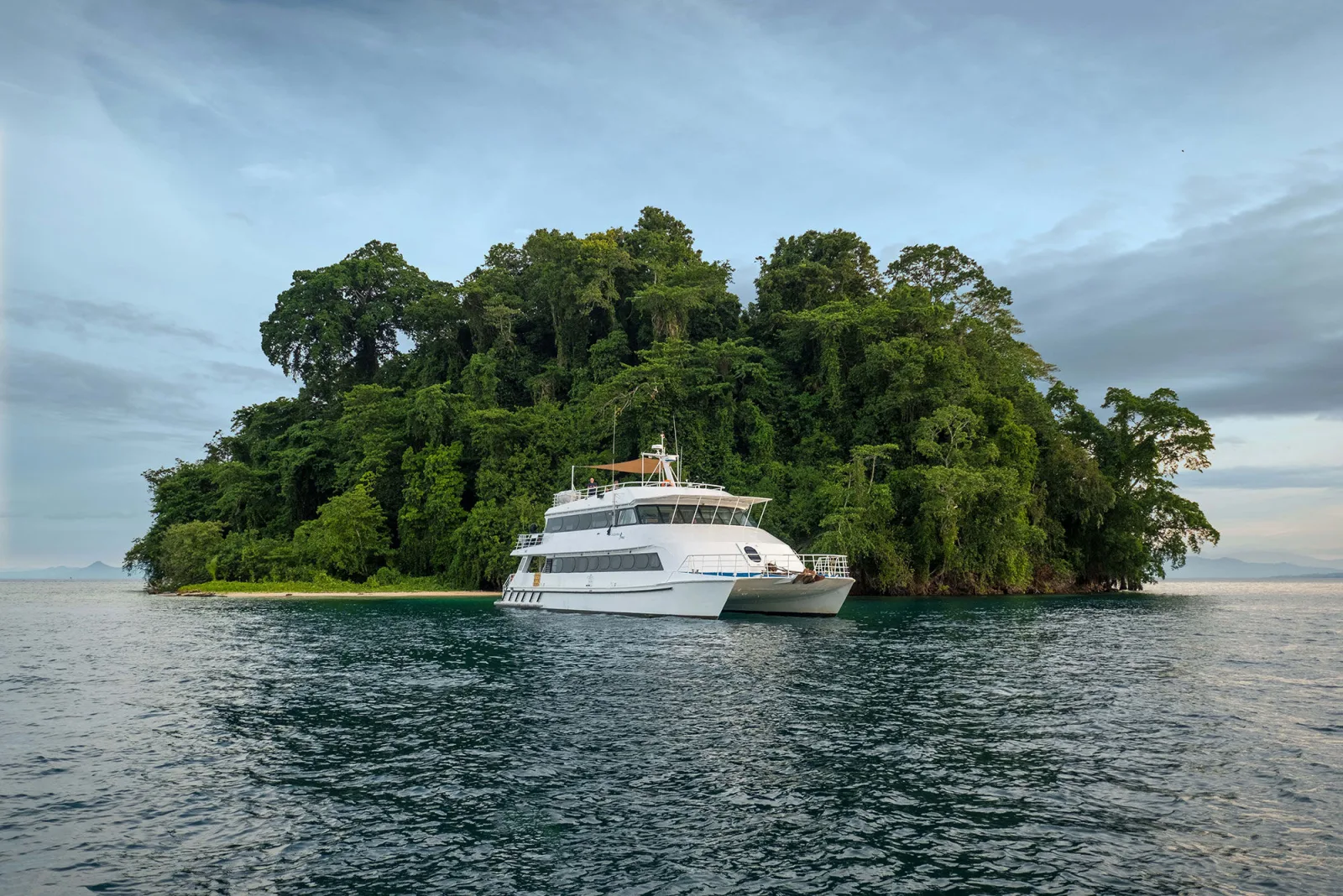
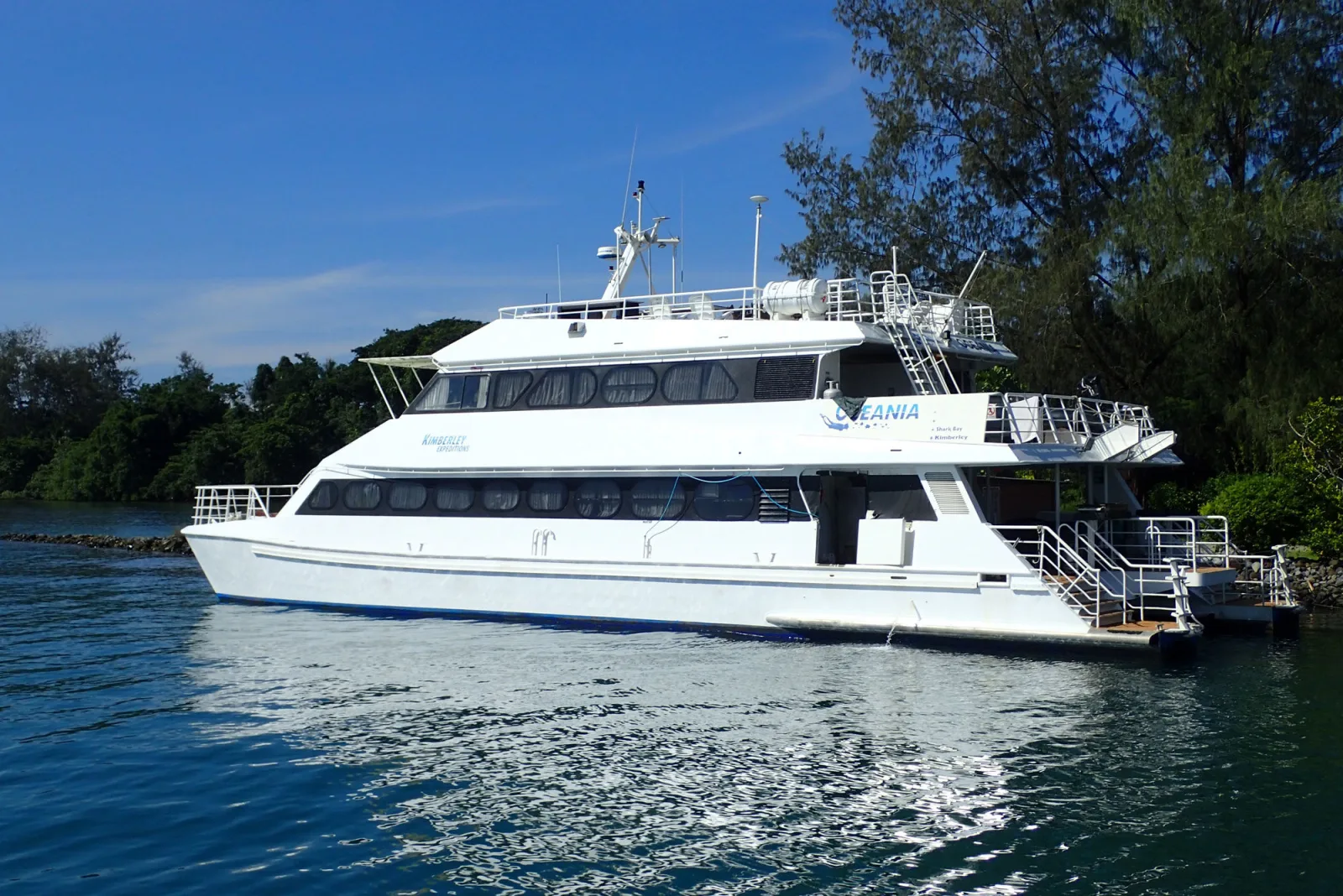
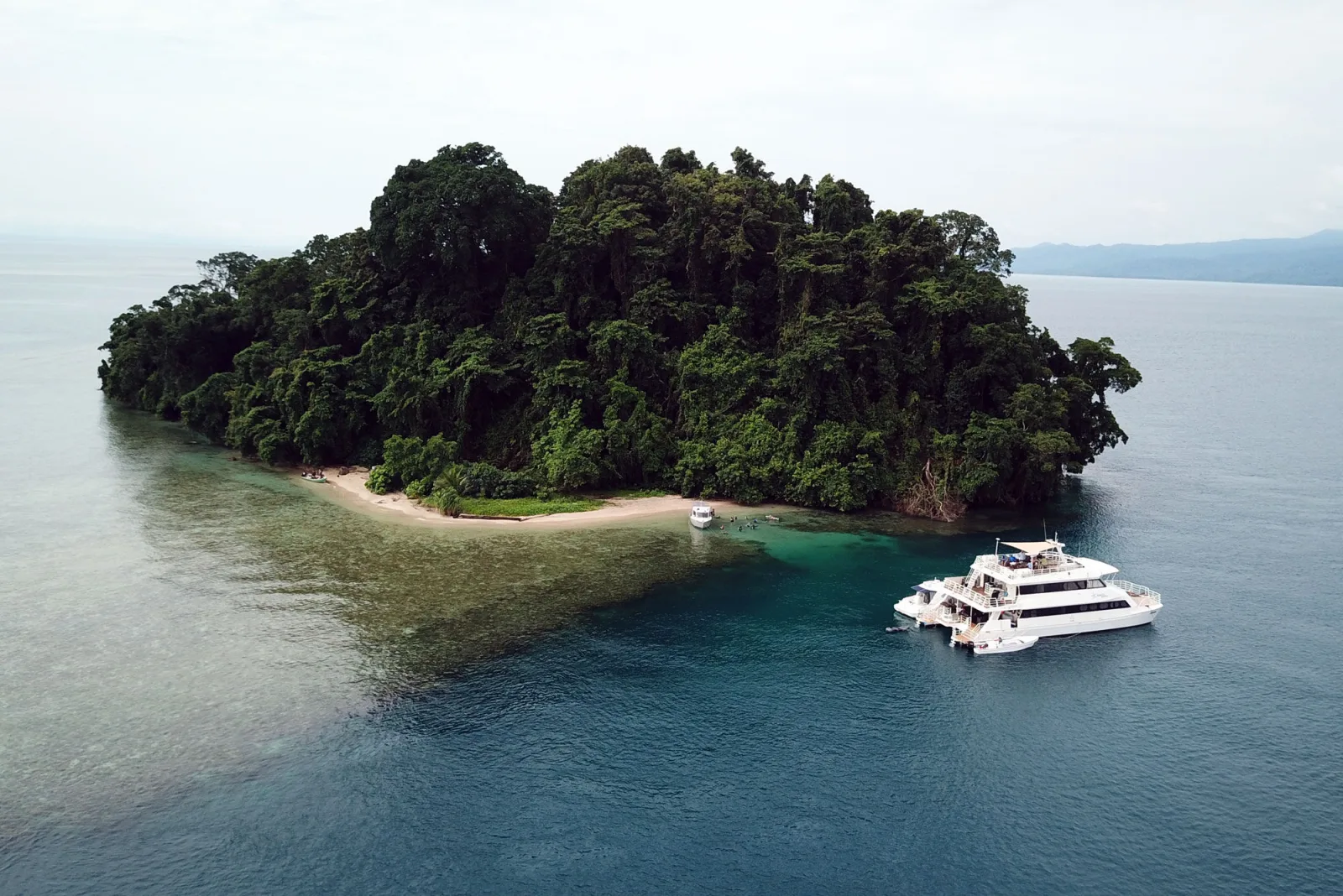
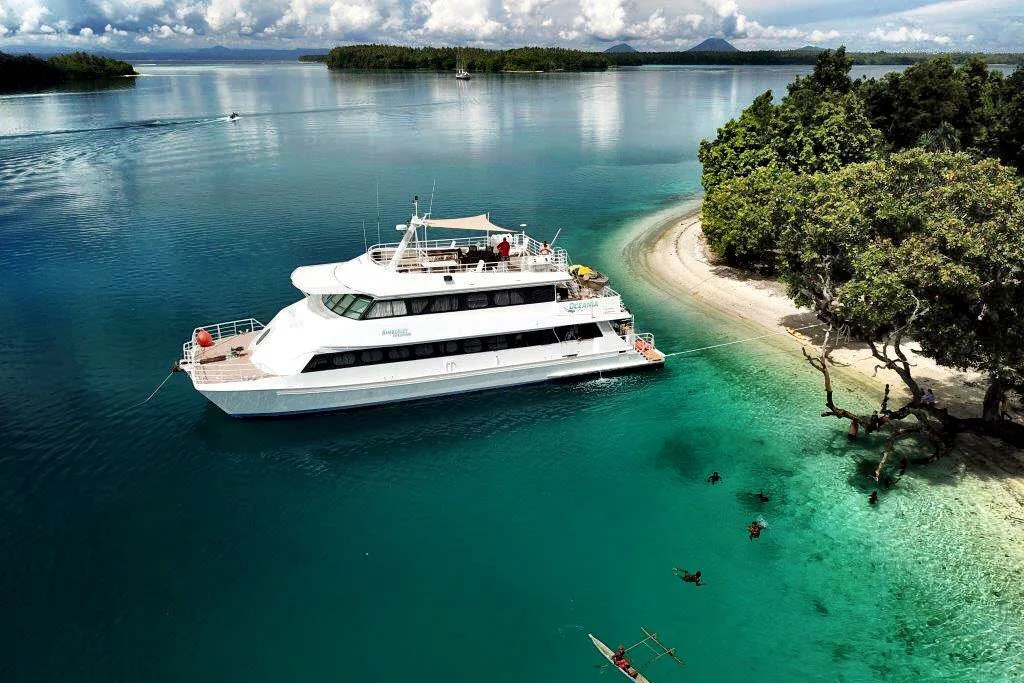
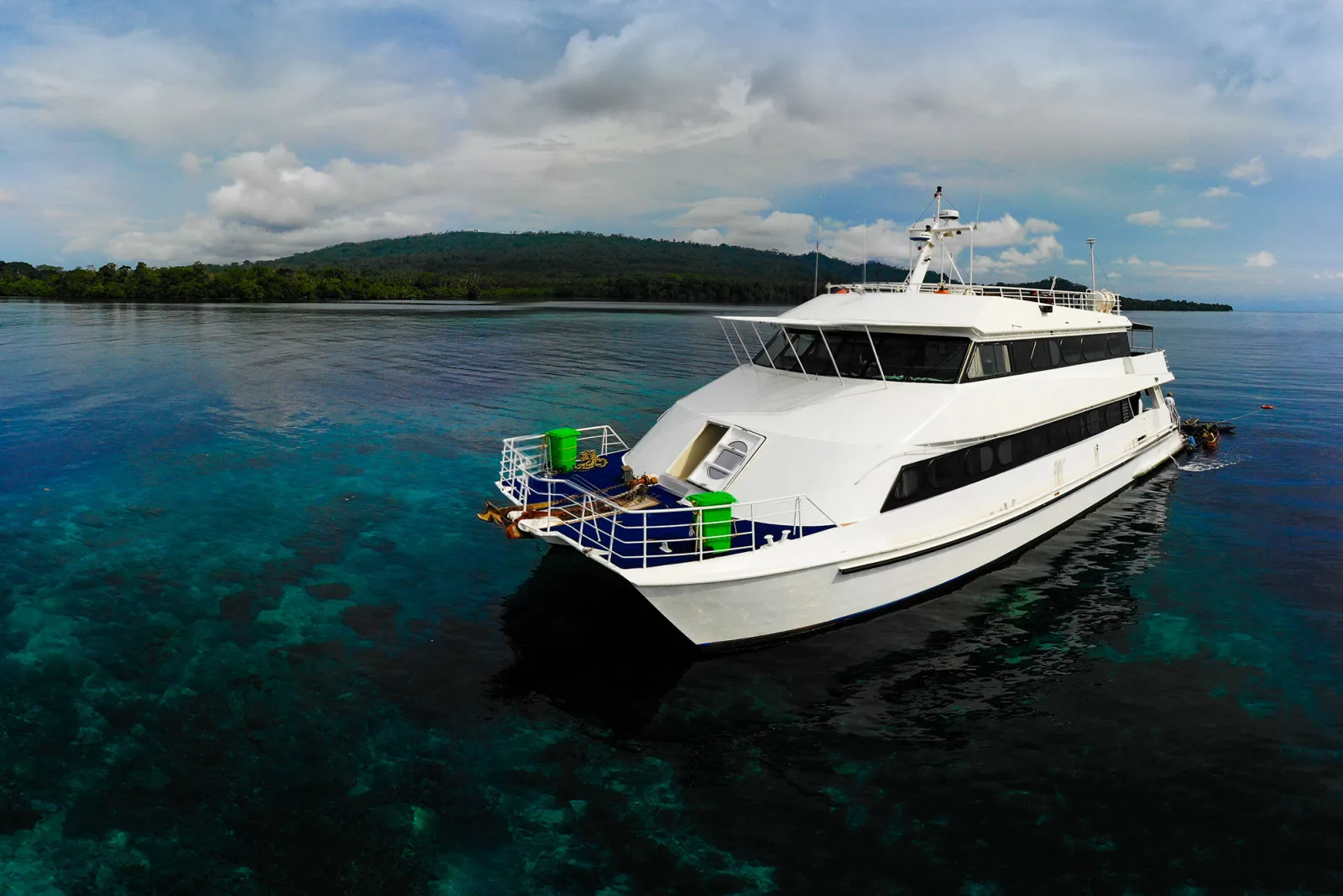
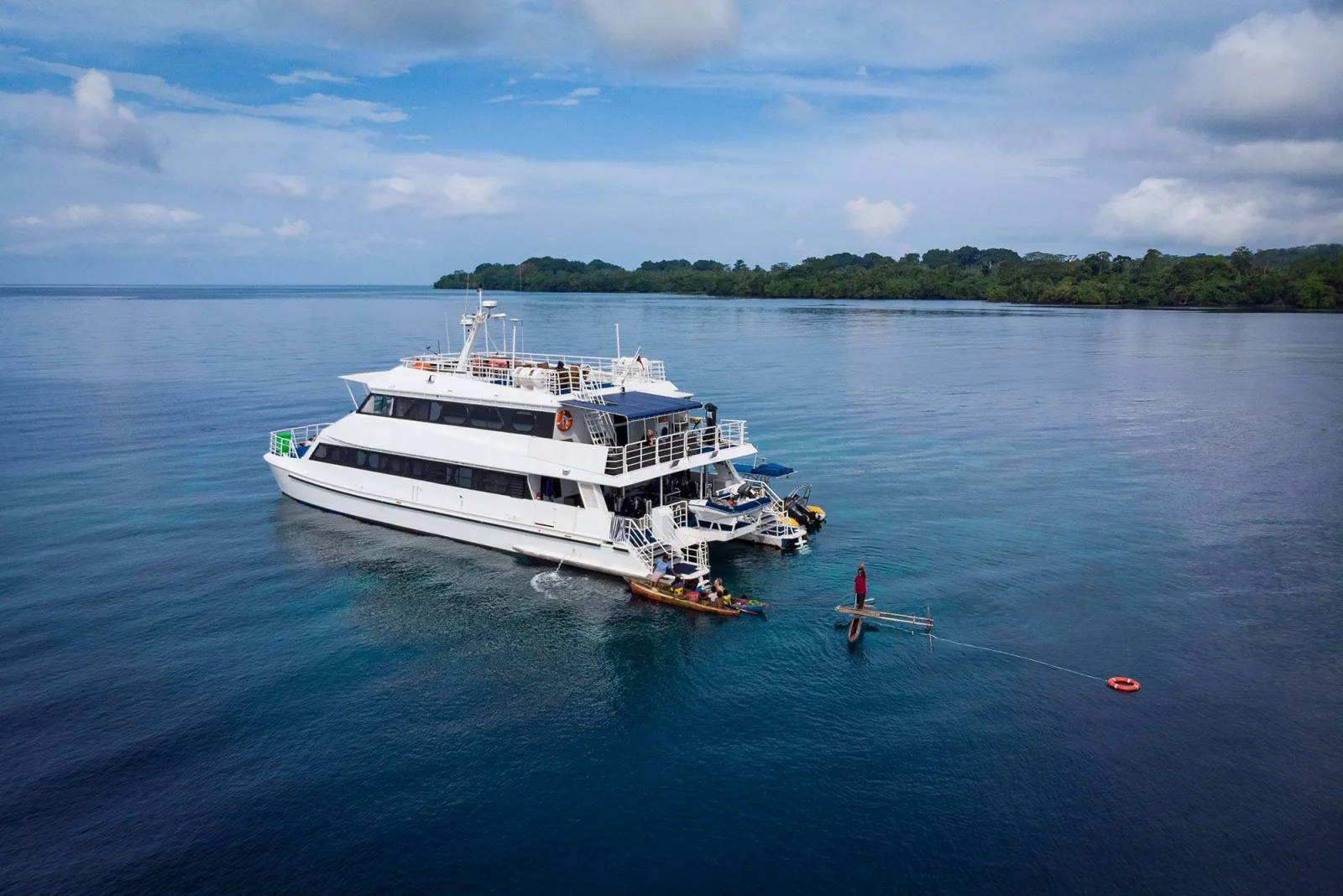
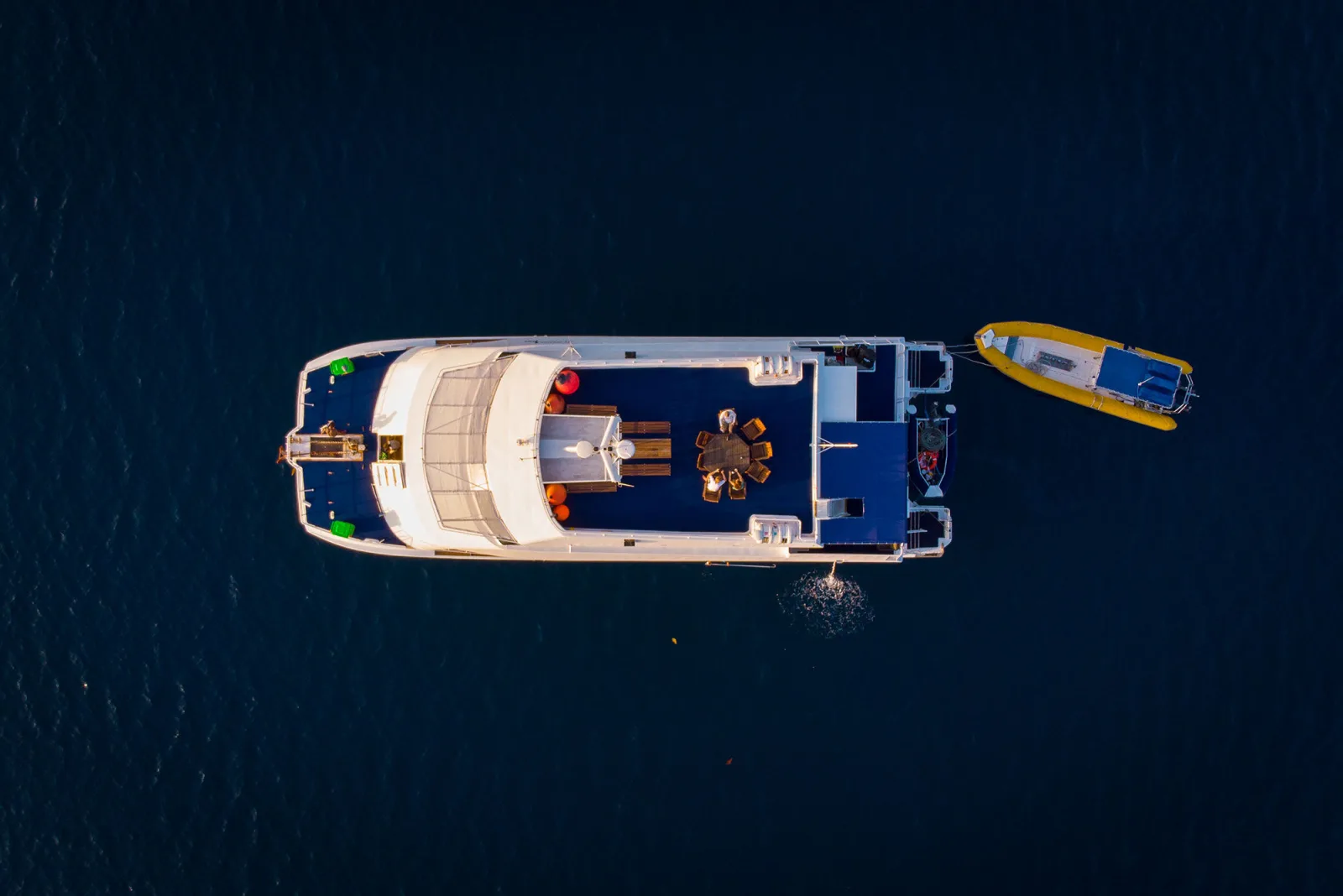
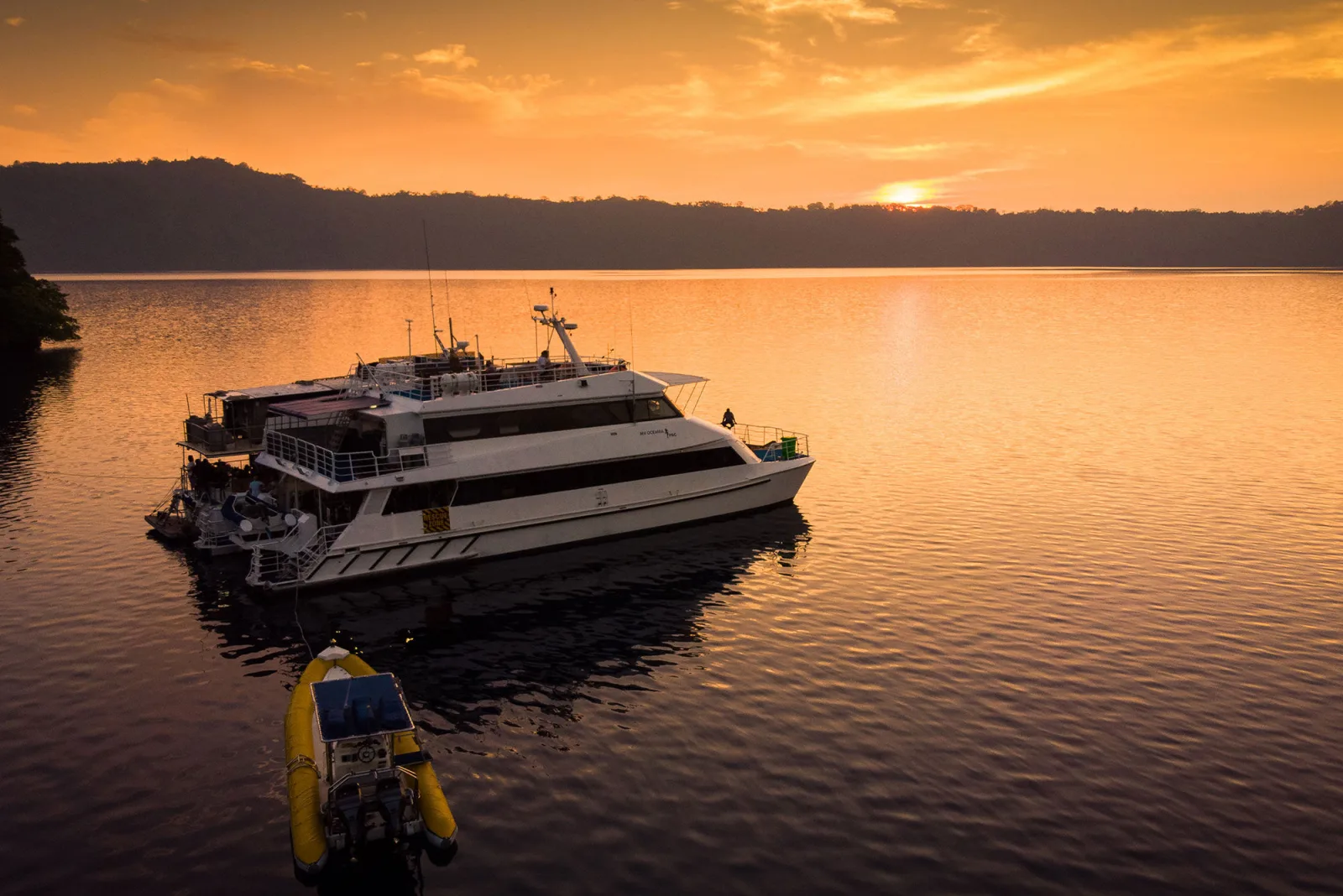
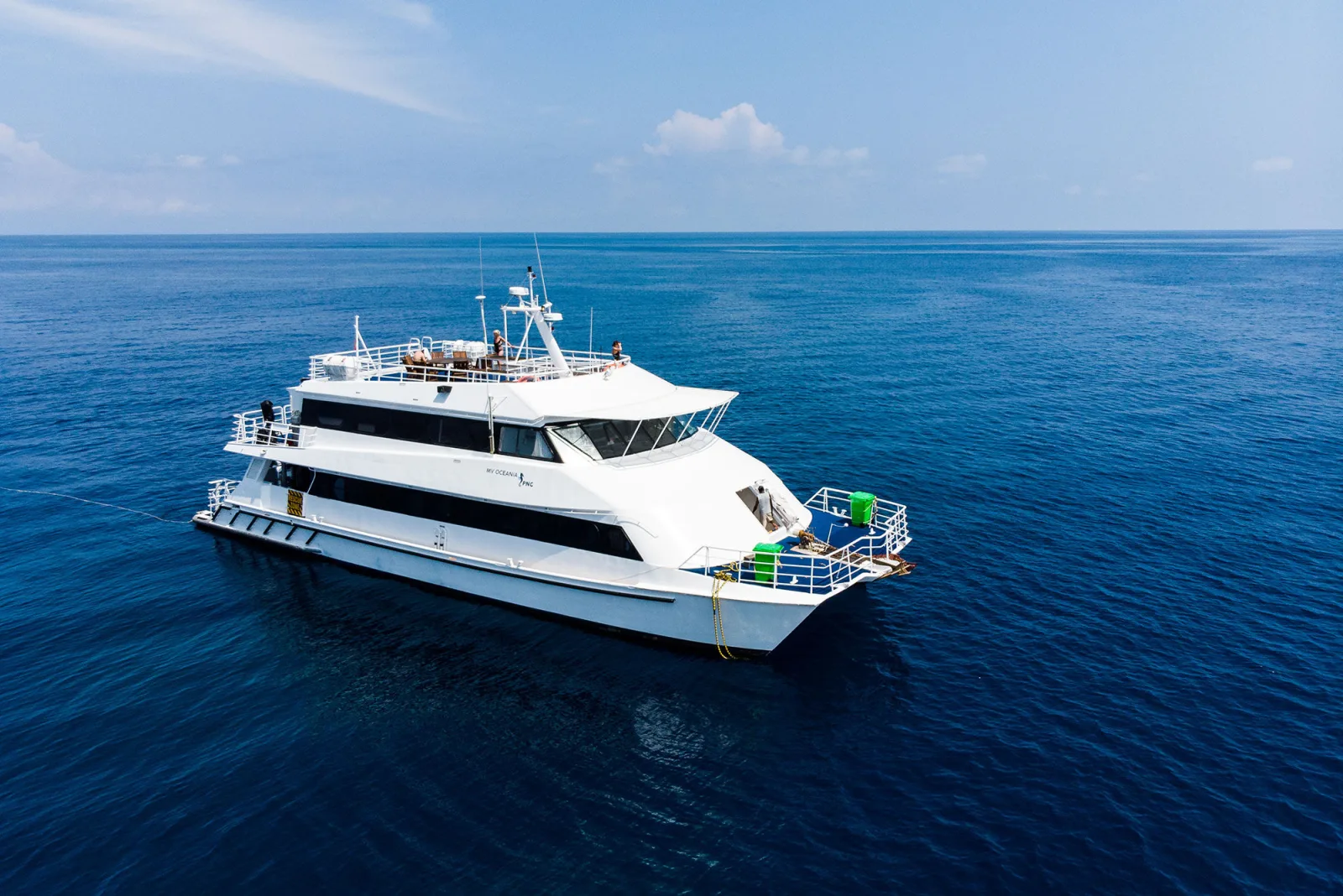
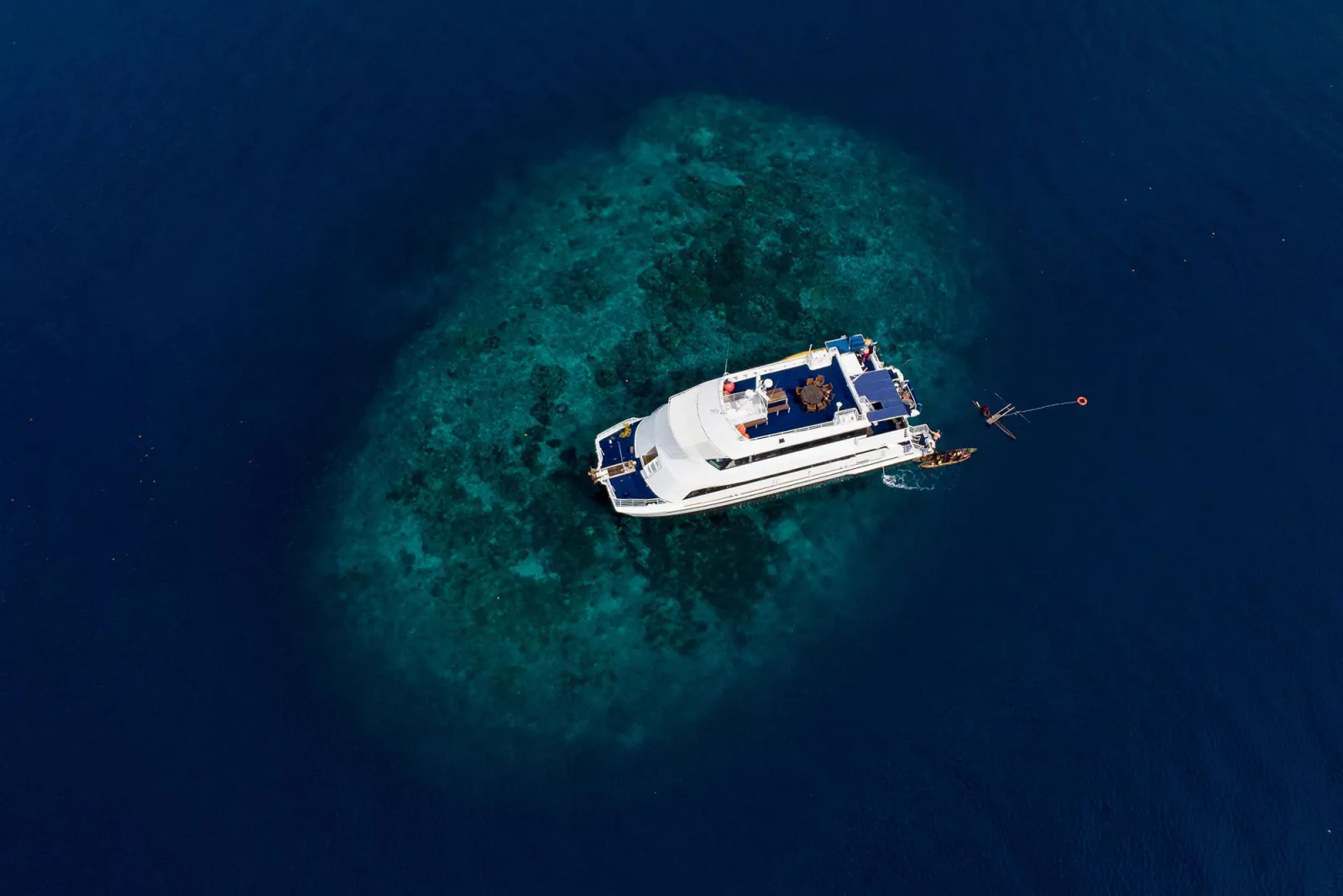
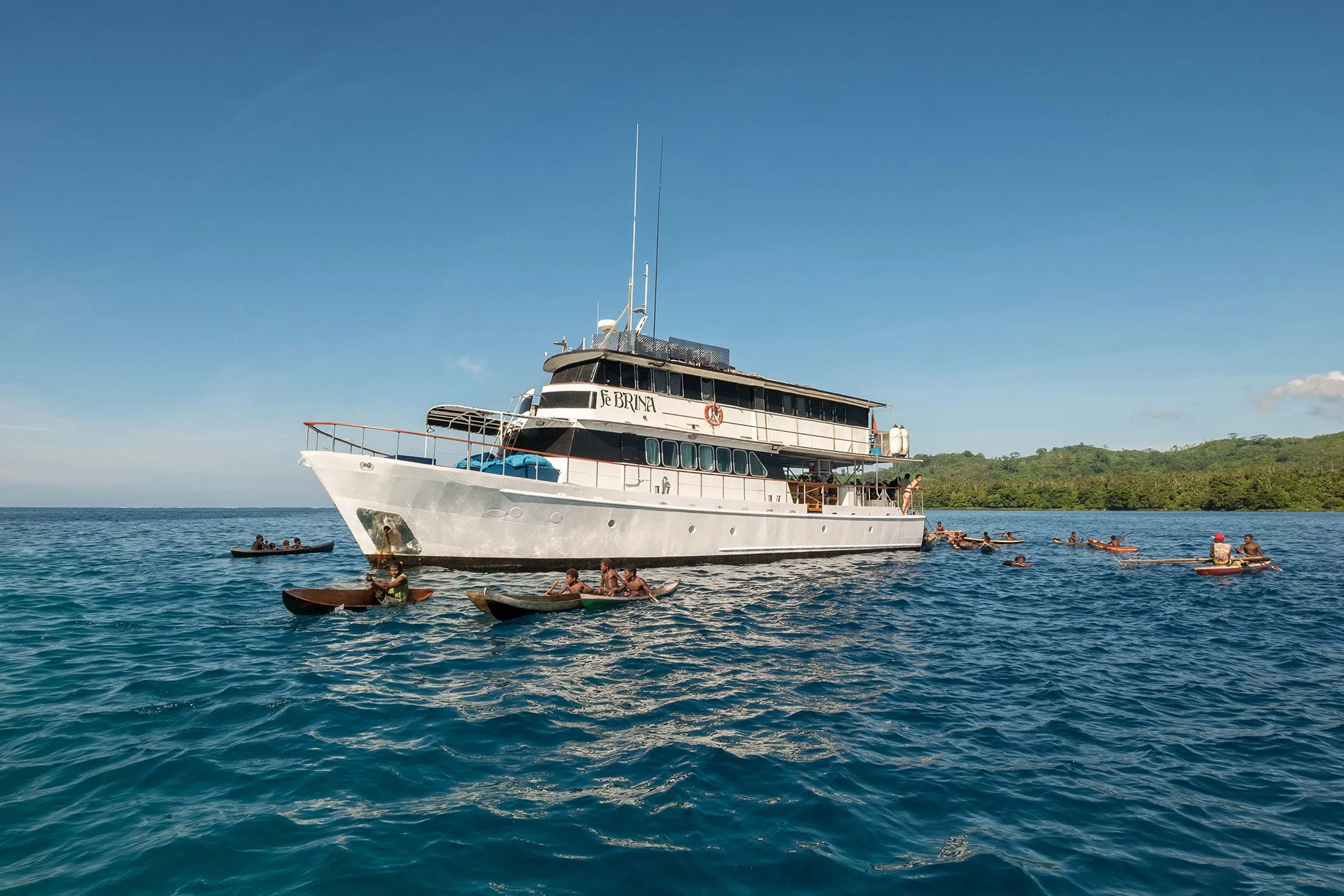
Oceania is a 27-metre aluminium catamaran working the Bismarck Sea out of Walindi Plantation Resort in Kimbe Bay. The hull dates from 2001, but the interior was rebuilt from scratch in 2018 and the boat sailed her first trip under the present name in April 2019. The owner is Kimbe Bay Diving, a local company from West New Britain Province.
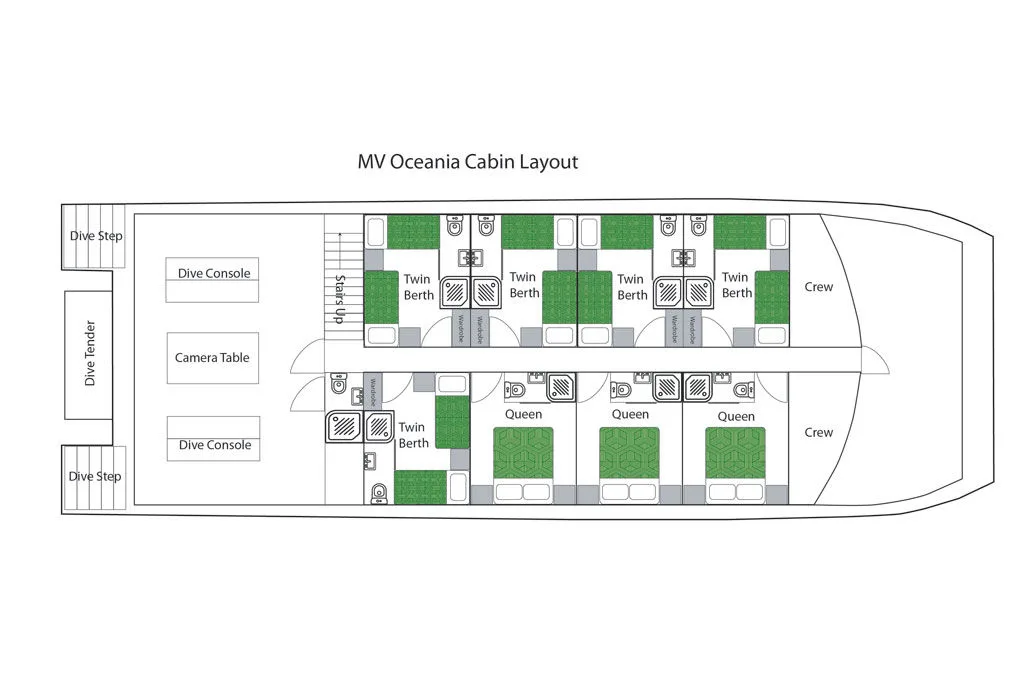
She takes only sixteen guests in eight cabins, and every cabin is above deck, with portholes onto the sea and its own bathroom. The crew is nine people to those sixteen guests — a ratio you do not get on a big monohull. The wide hull gives what catamarans are built for: almost no roll at anchor, and enough deck to keep out of each other’s way.
Papua New Guinea sits at the centre of the Coral Triangle, where the diversity of coral and fish is higher than anywhere else on the planet. Charlie Veron, former chief scientist of the Australian Institute of Marine Science, said of the Kimbe Bay reefs: “They take me back forty years to a time when corals grew in lush profusion, untroubled by the problems that beset them today.”
Where the boat goes. Kimbe Bay — sea mounts rising out of the depths, coral-covered walls and coral gardens: Susan’s Reef with its dense stands of red sea whips, Inglis Shoal, which comes up from very deep water to eleven metres and gathers dogtooth tuna, barracuda and bigeye trevally, Otto’s Reef, Christine’s Reef with its huge barrel sponges, and Restorf Island. The Witu Islands to the north-west mix sea mounts with black sand bays: Krackafat, where the reef top is packed solid with fish, the Goru arches, and the macro bay of Wire Bay. Fathers Reefs is a chain of remote volcanic reefs with dramatic topography, arches and swim-throughs that draw silvertips and grey reef sharks. Rabaul offers jetty and sand dives for macro photographers under the eye of the active Tavurvur volcano. Milne Bay is the home of muck diving: the wall at Deacon’s Reef rising from over three hundred metres, the manta cleaning station off Gona Bara Bara Island, and the B-17 “Black Jack” bomber at fifty metres. Kavieng adds channels and walls with barracuda and trevally, plus wartime aircraft.
Among the larger animals, hammerheads and silvertips are regular, particularly on the offshore reefs, a resident pod of dolphins follows the boat, and orcas, pilot whales and whale sharks pass through from time to time.
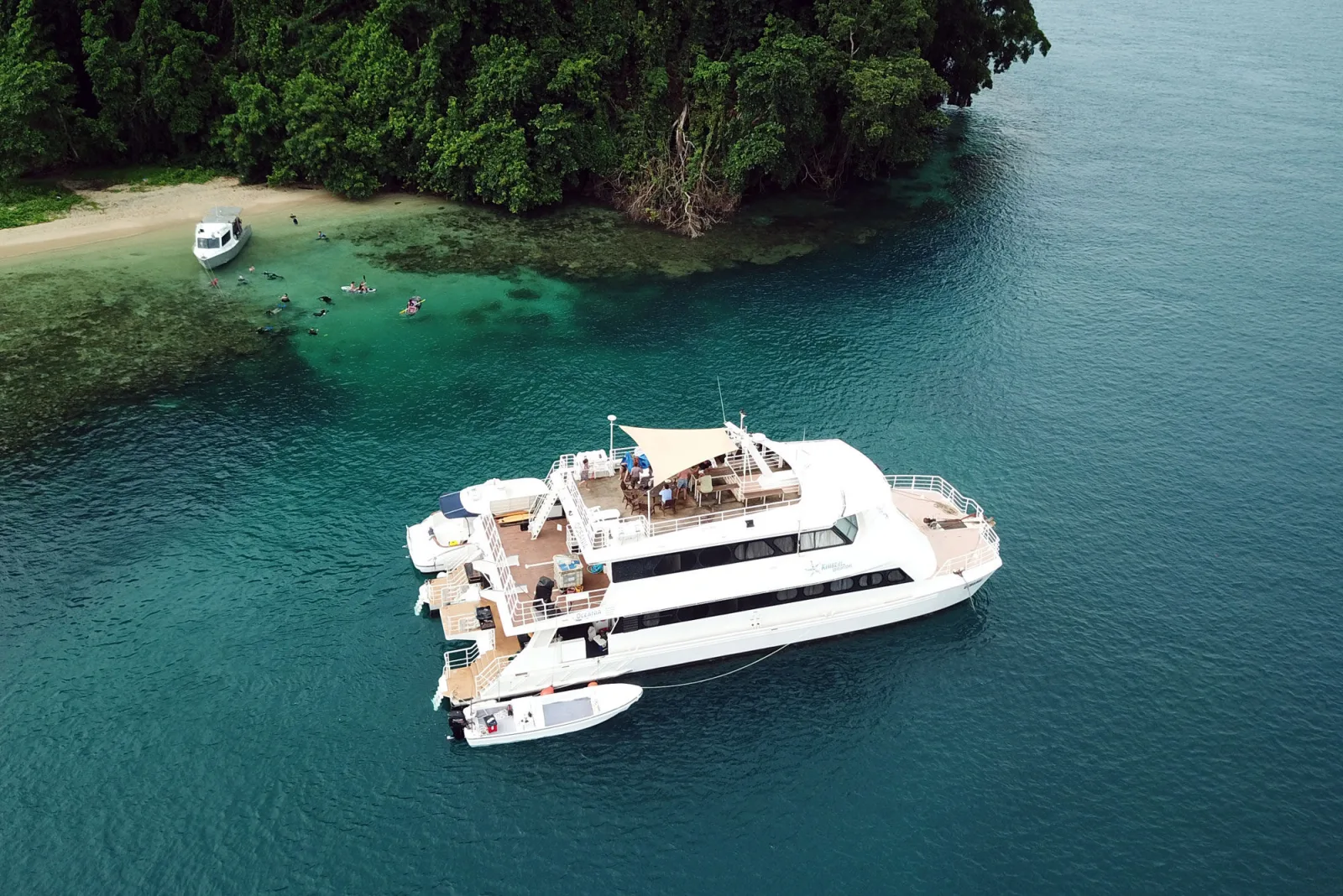
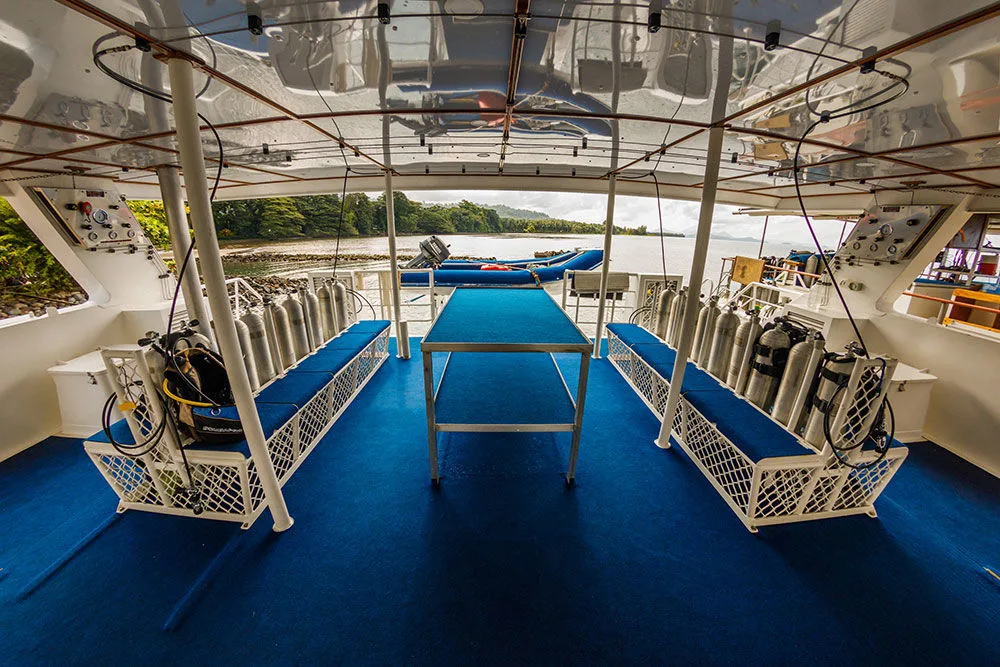
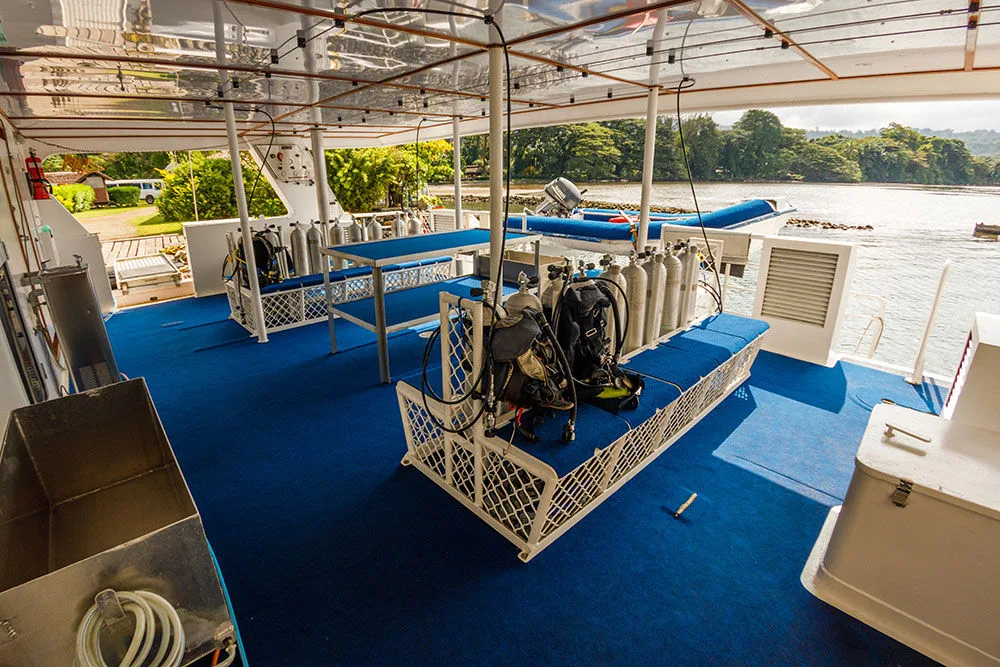
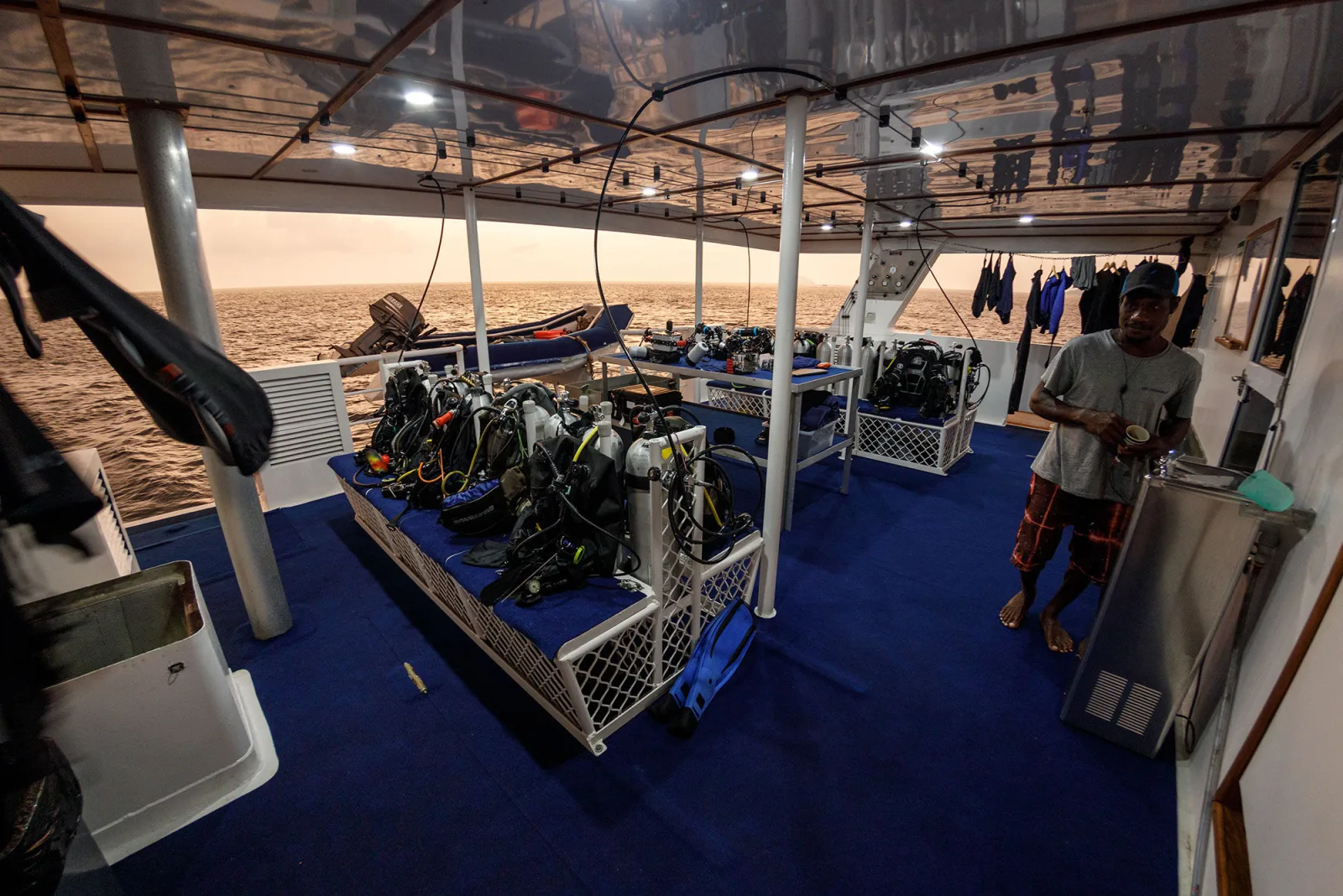
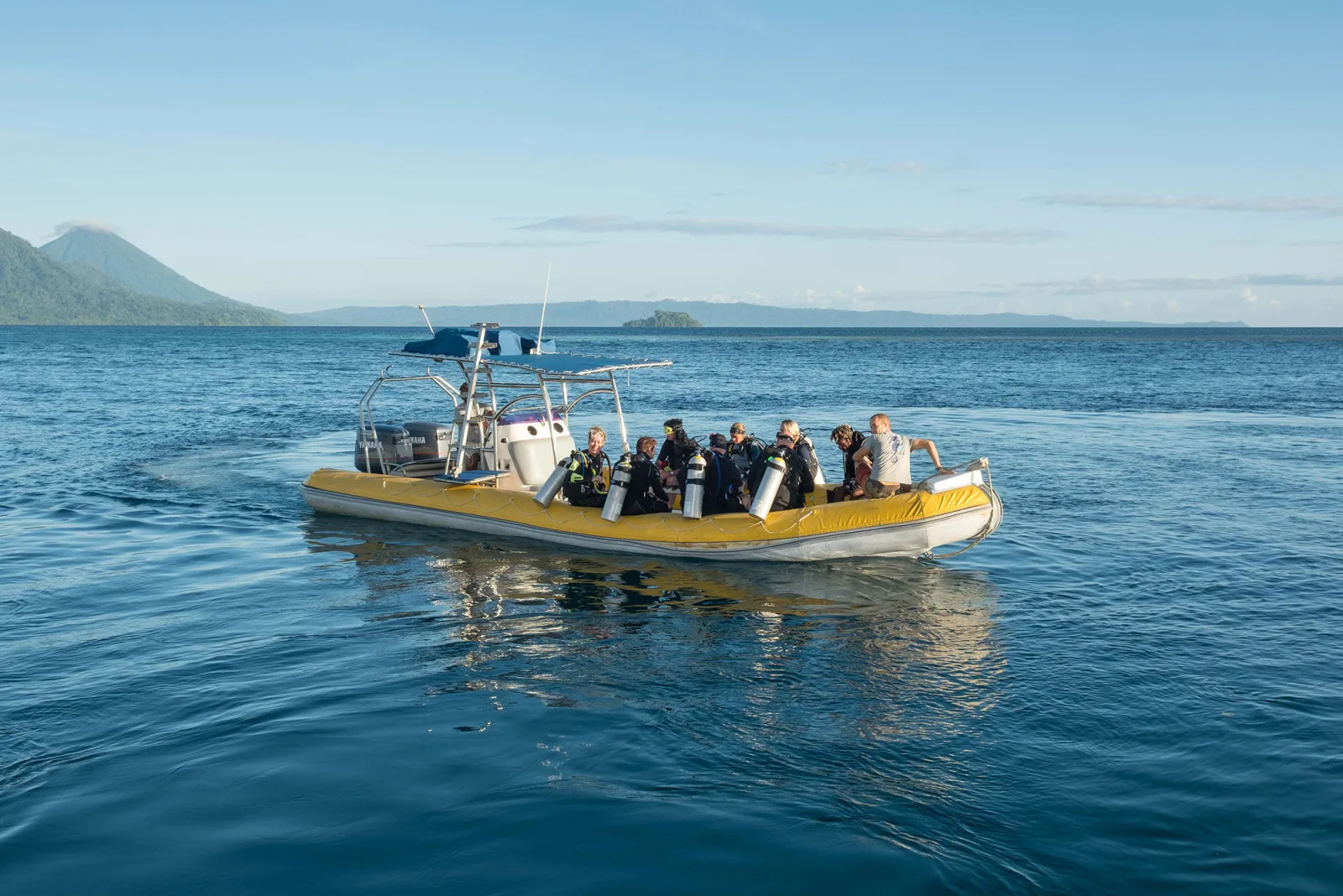
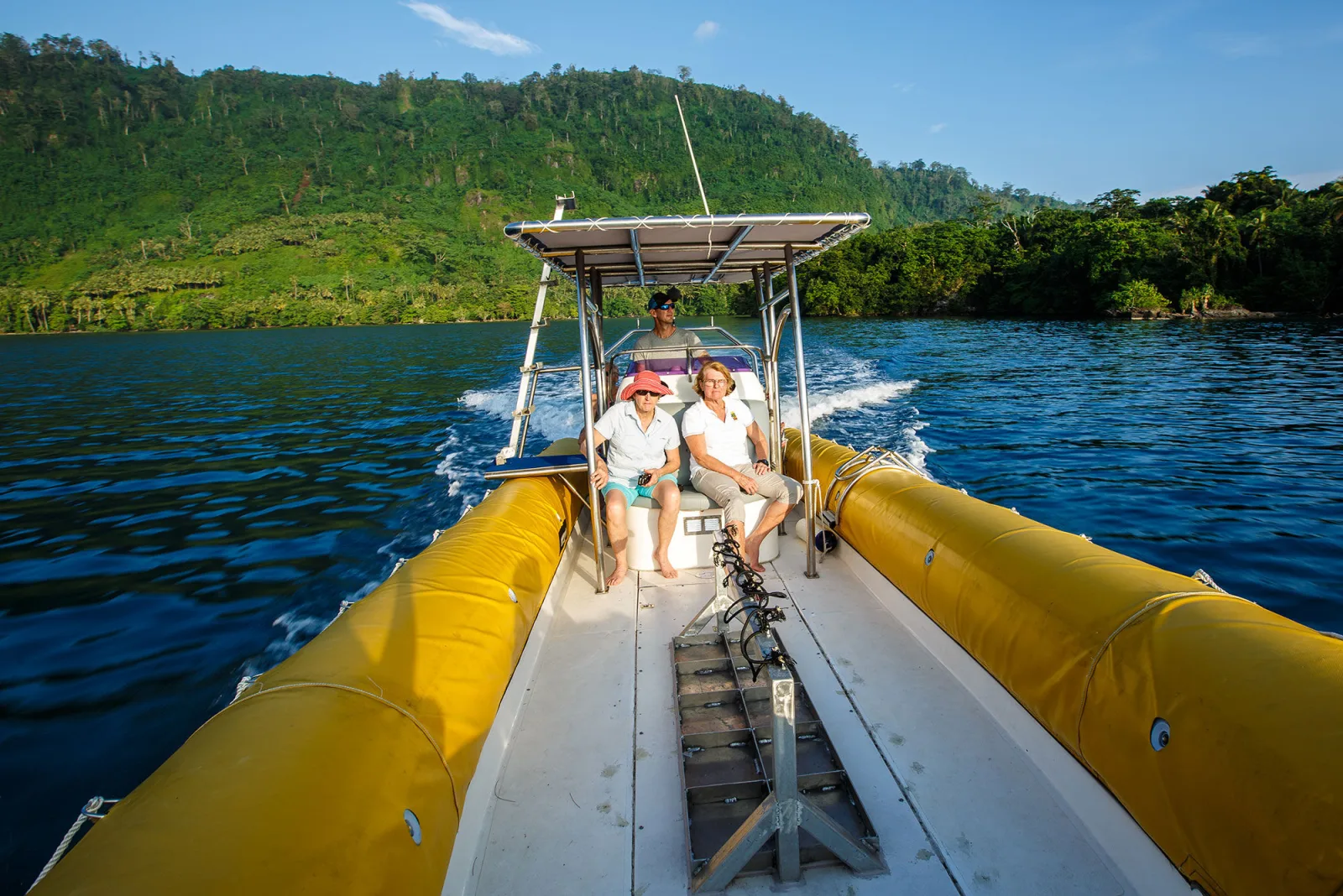
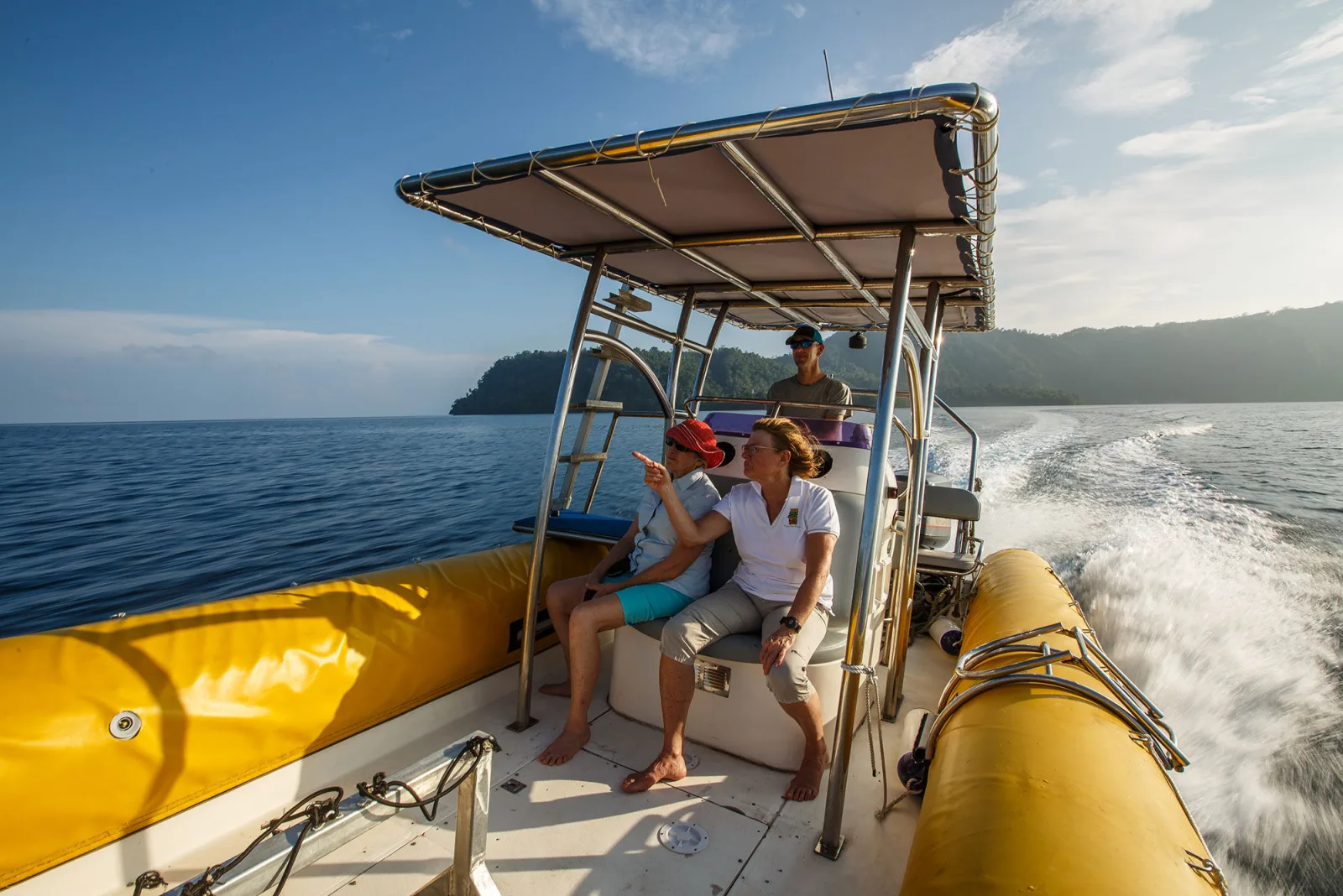
How the day runs. Up to four dives a day; a ten-night trip usually works out at eight and a half diving days, a nine-night trip at seven and a half, an eight-night trip at six and a half. The dive deck is aft, with a personal station for every guest, a camera table, a separate rinse tank for cameras and a warm shower. Entry is off a duck board level with the water, and a purpose-fitted tender runs to the further sites. Tanks are 12-litre only, with multi-fit valves for DIN and yoke; there are no 15-litre tanks on board, but a pony bottle can be hired through Walindi Dive. Nitrox is available for an extra charge — as a package for the whole trip or per fill. Currents on most sites are light and the diving is easy; Kavieng can run stronger, and then a safety line is streamed from the boat to the mooring.
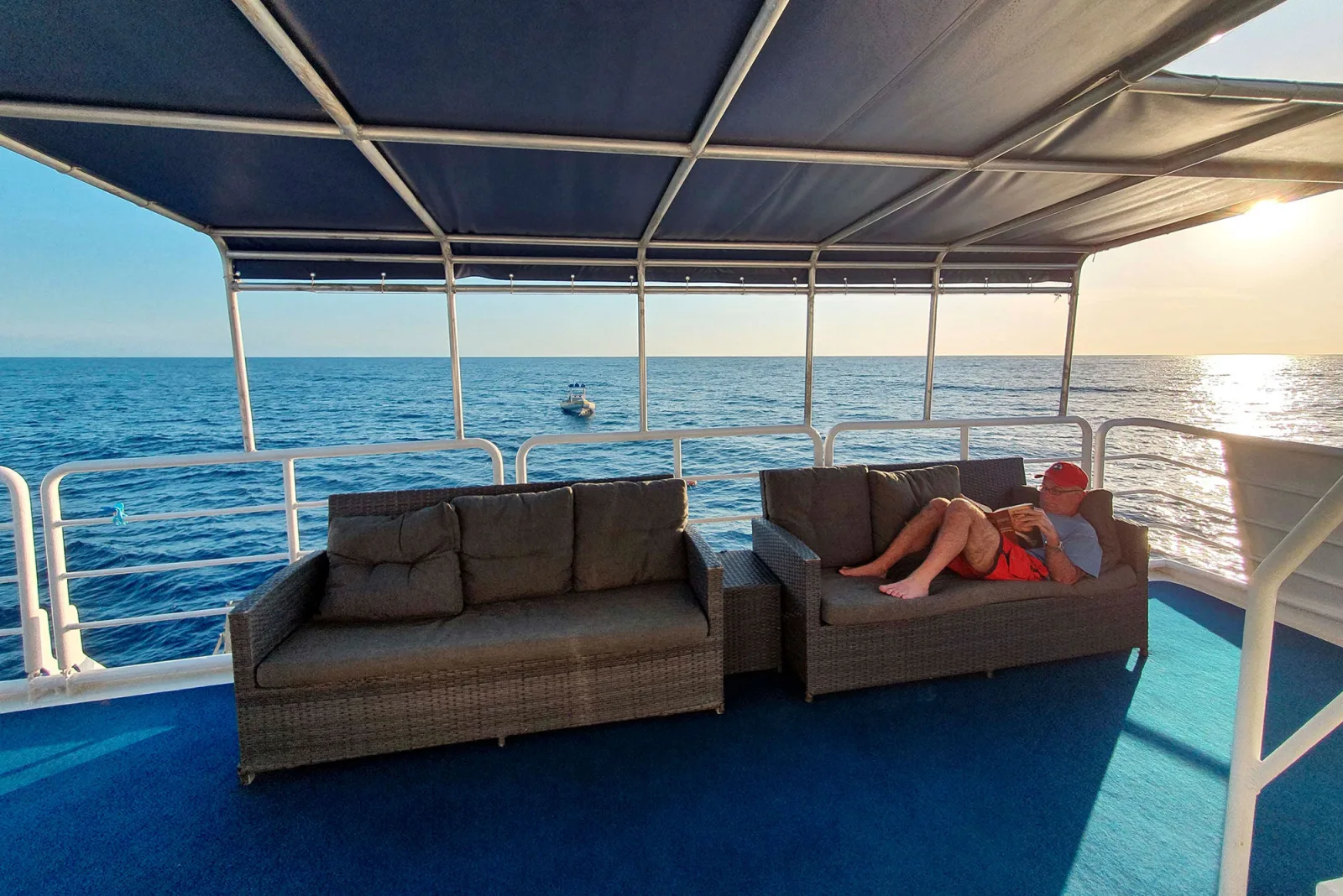
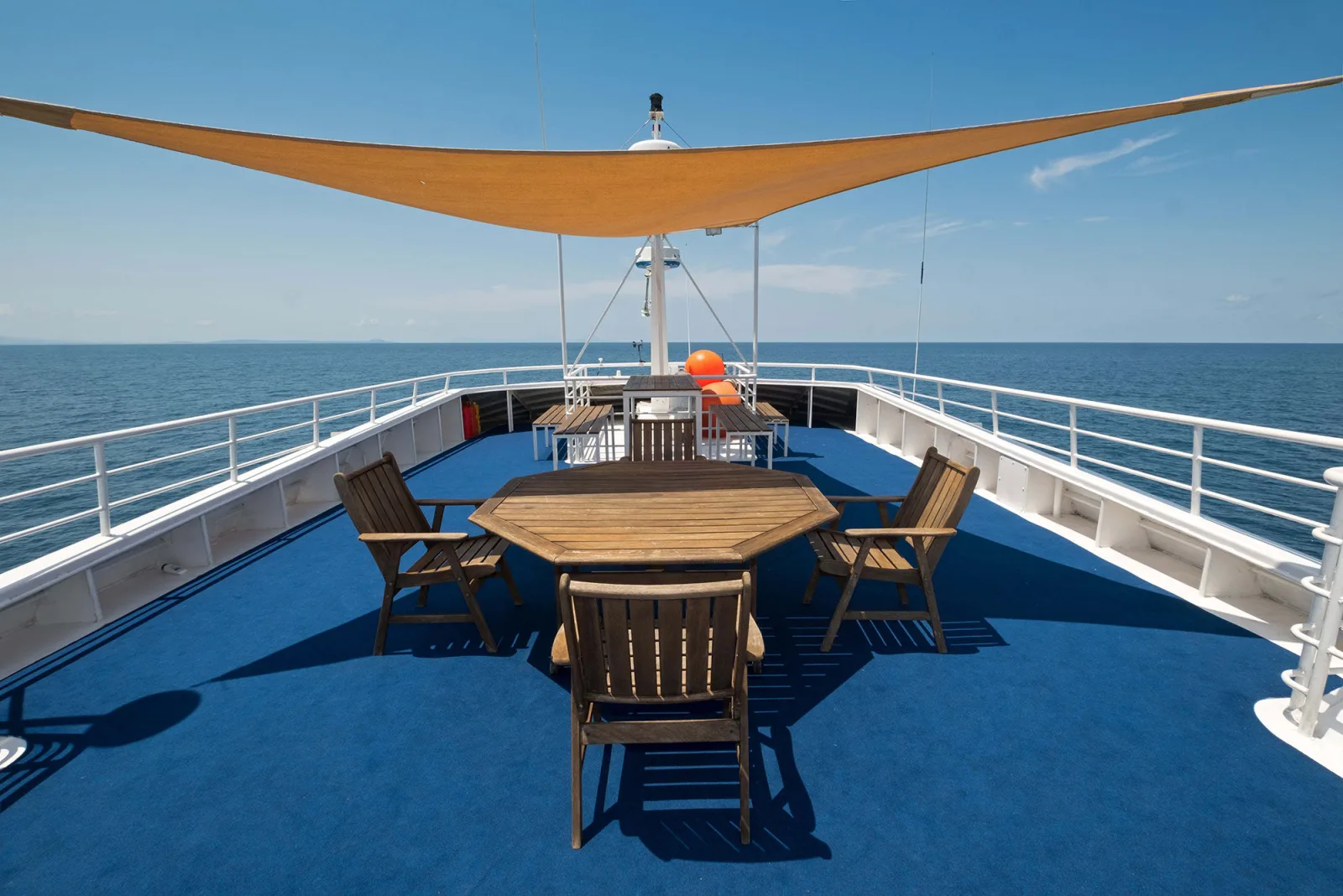
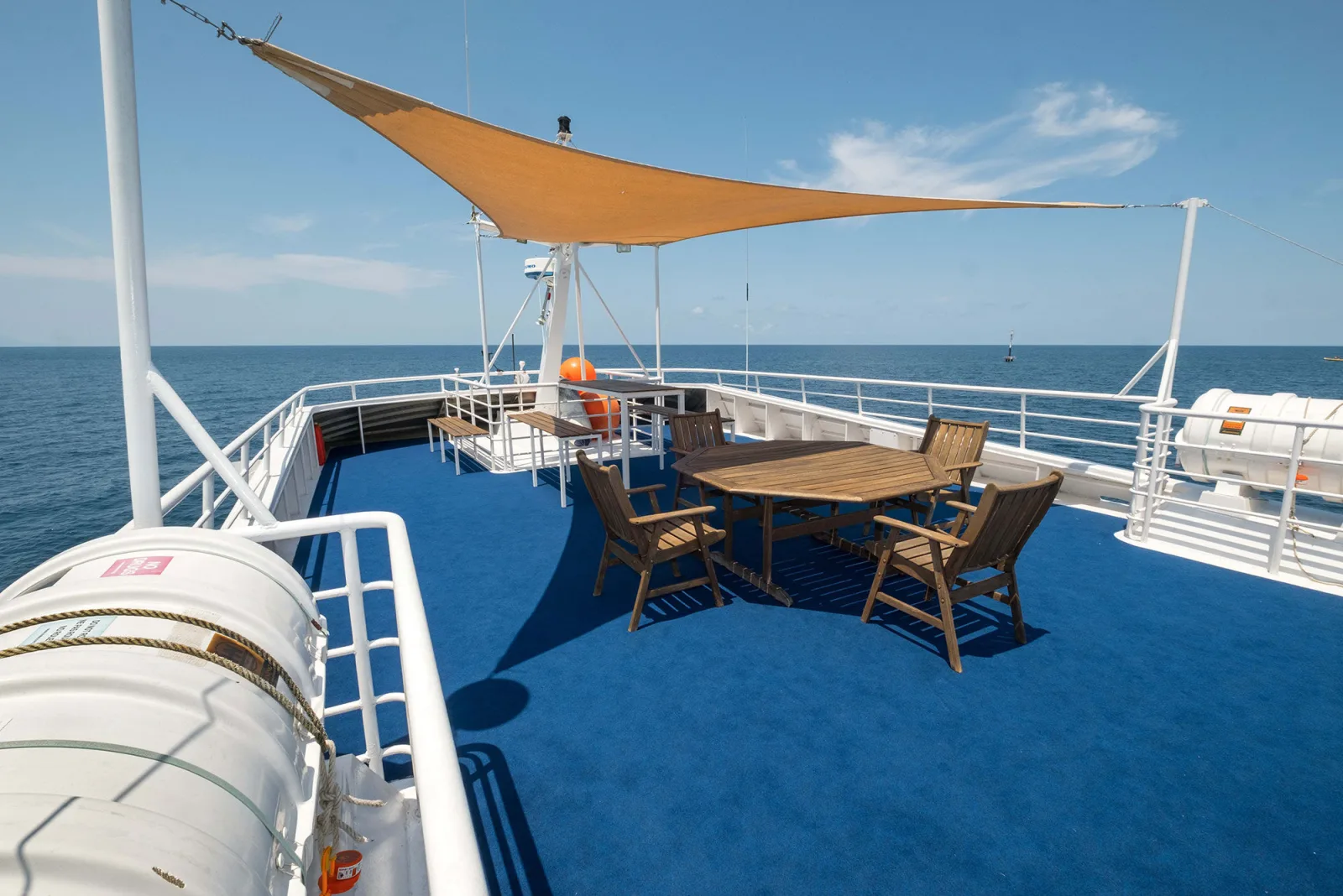
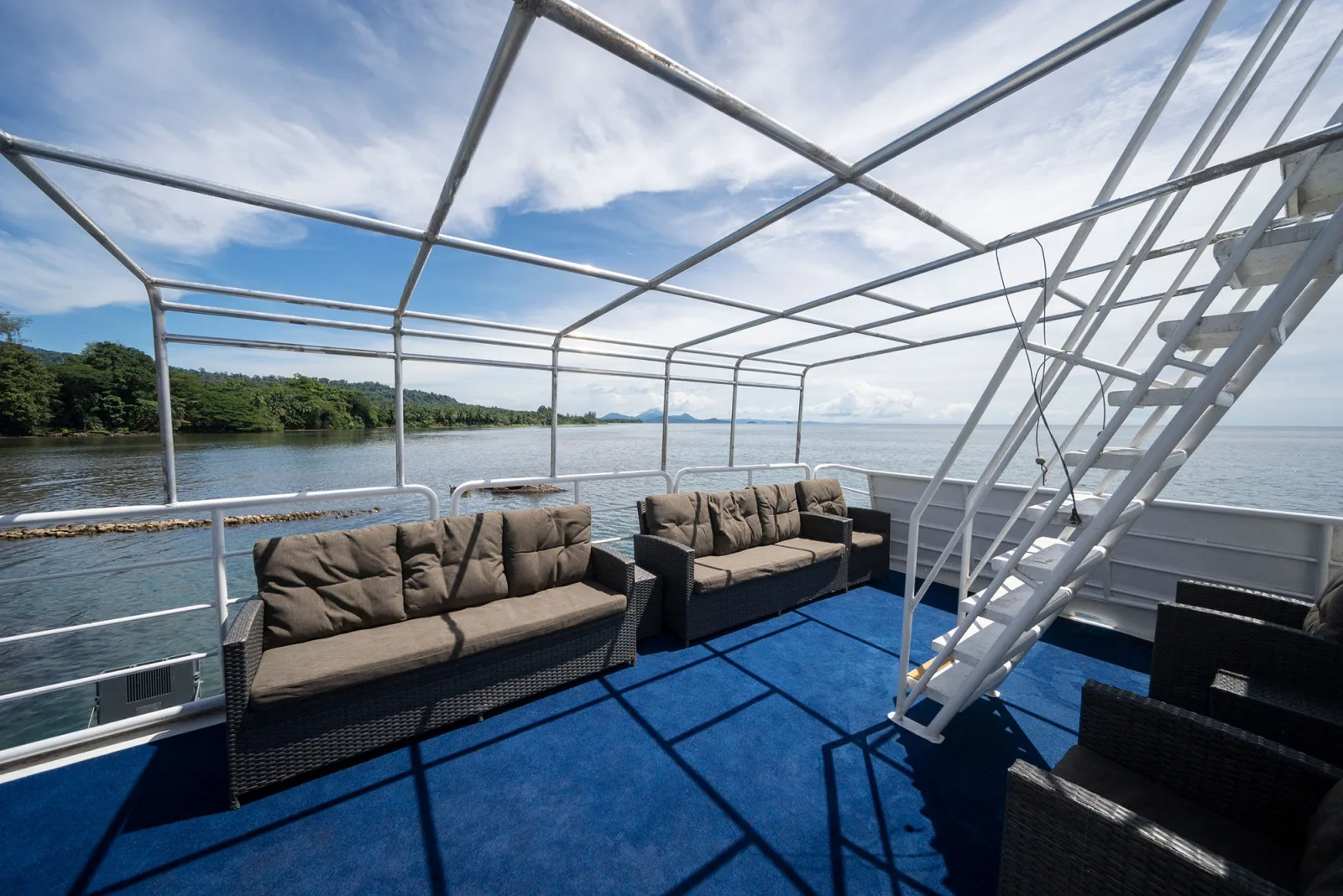
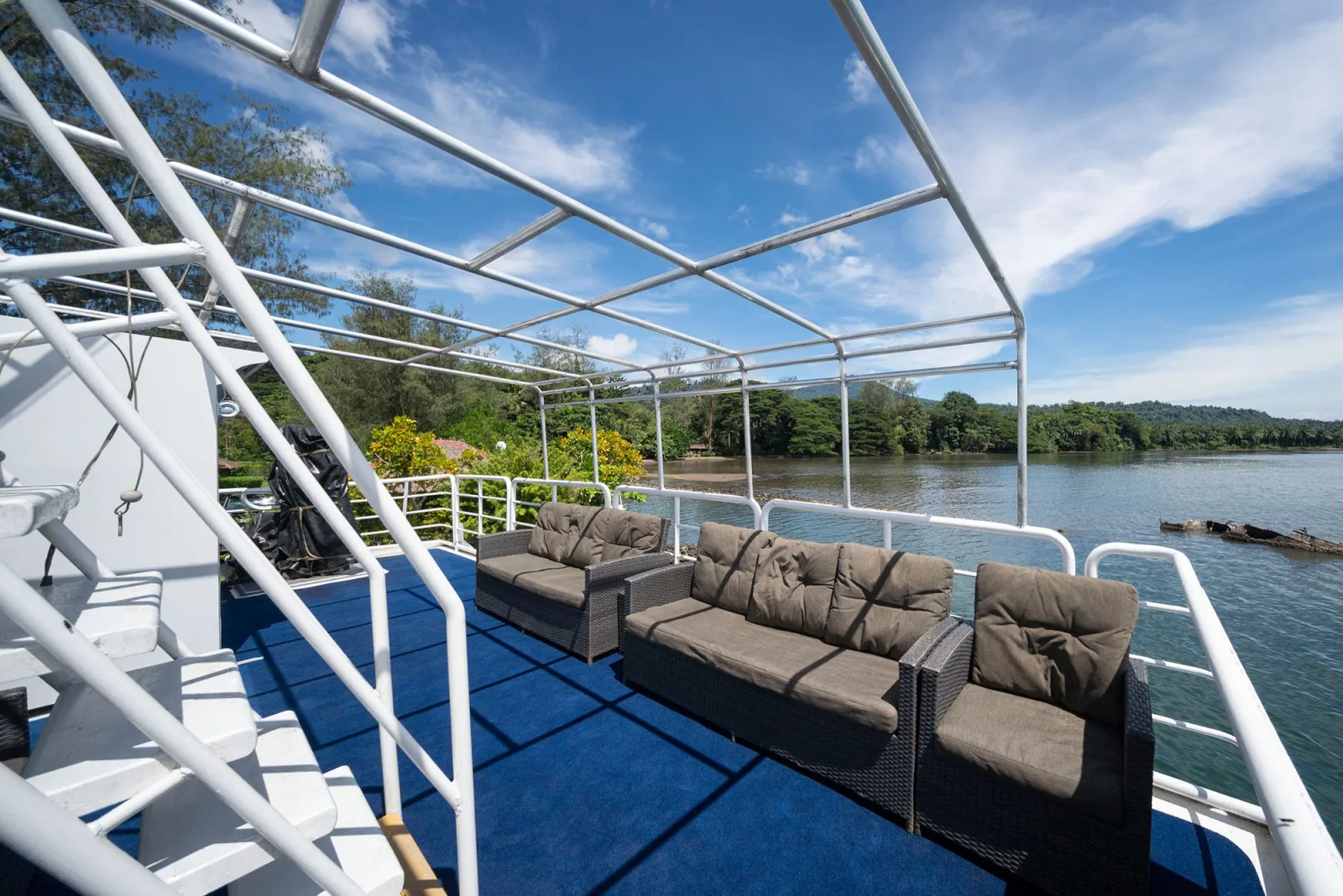
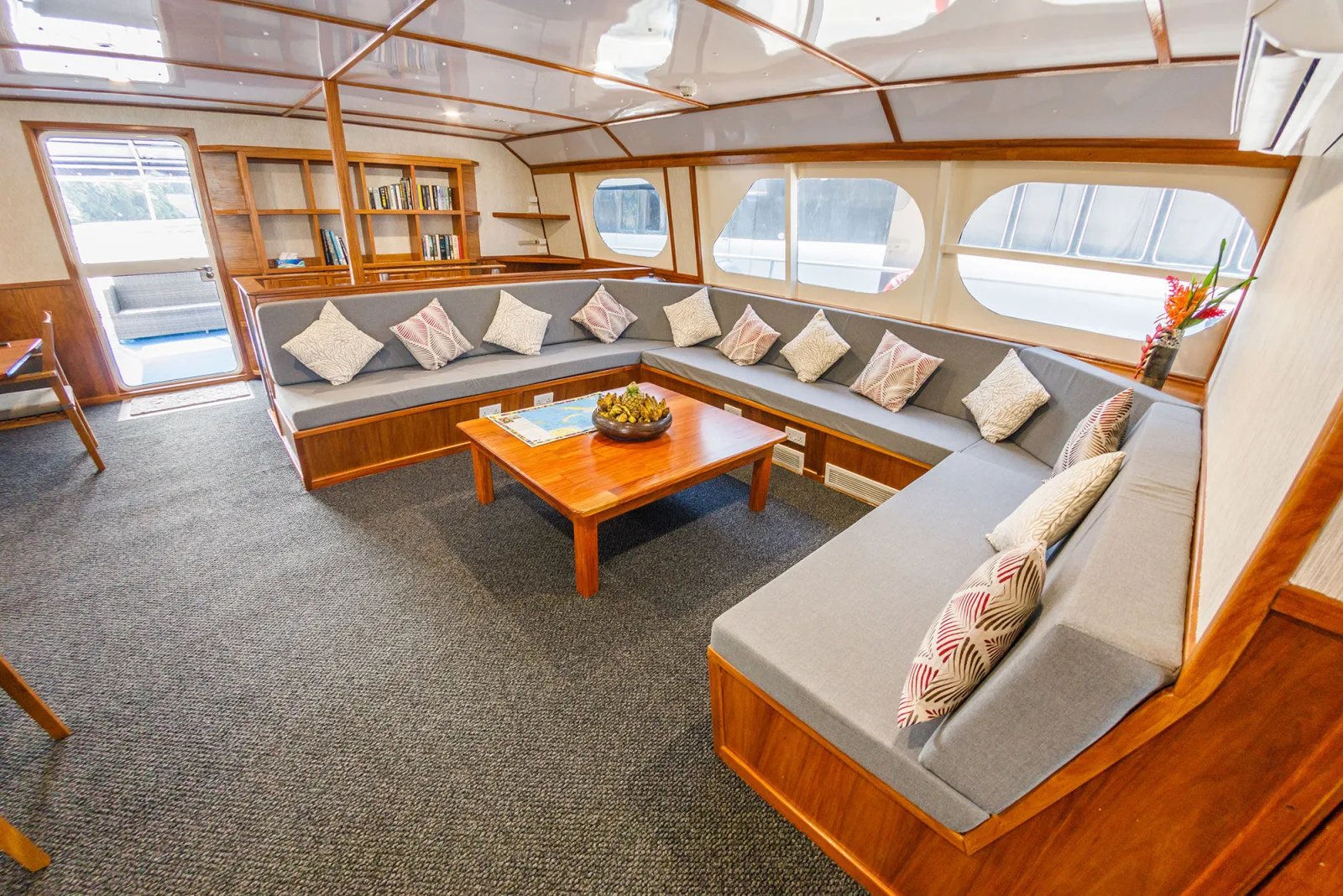
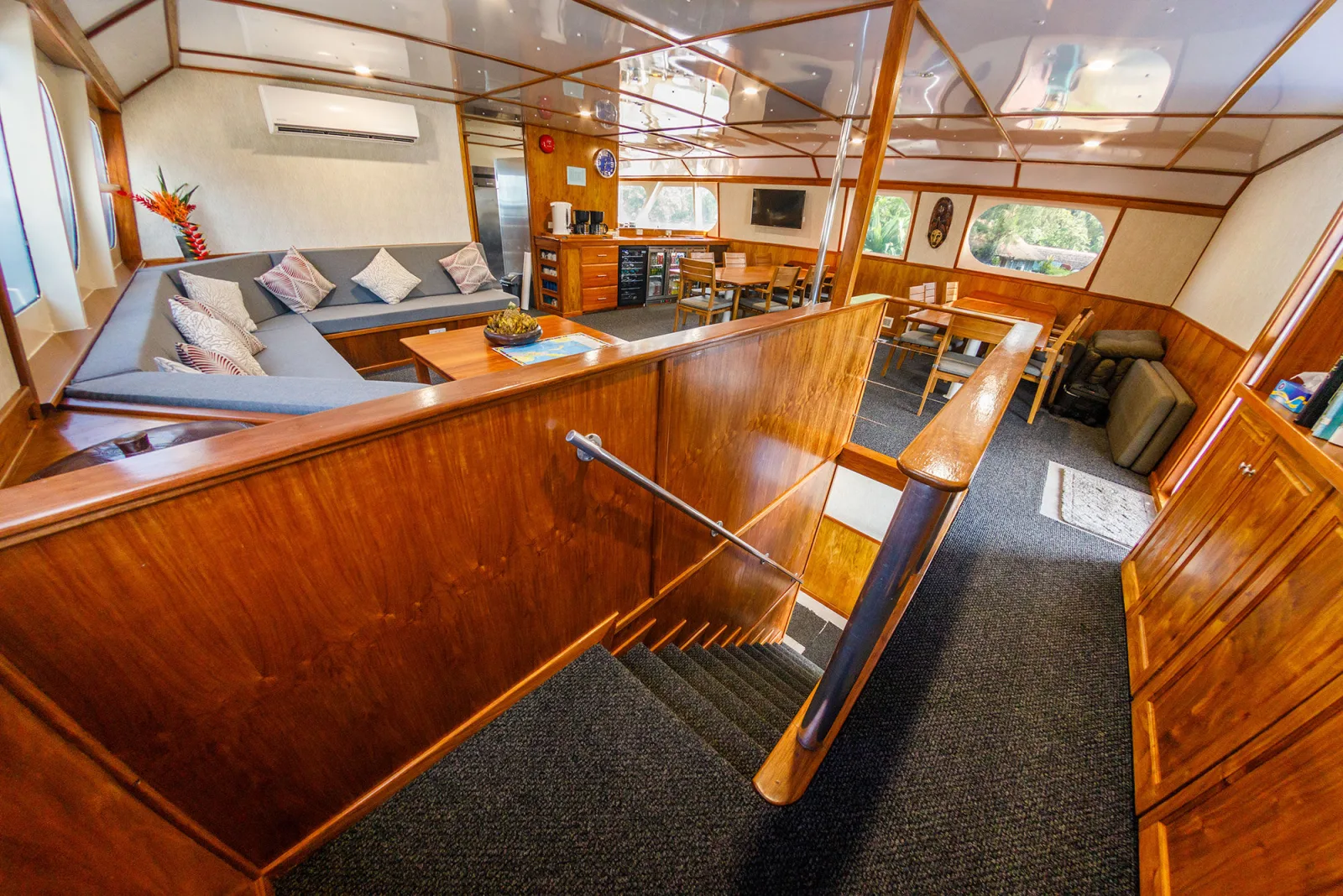
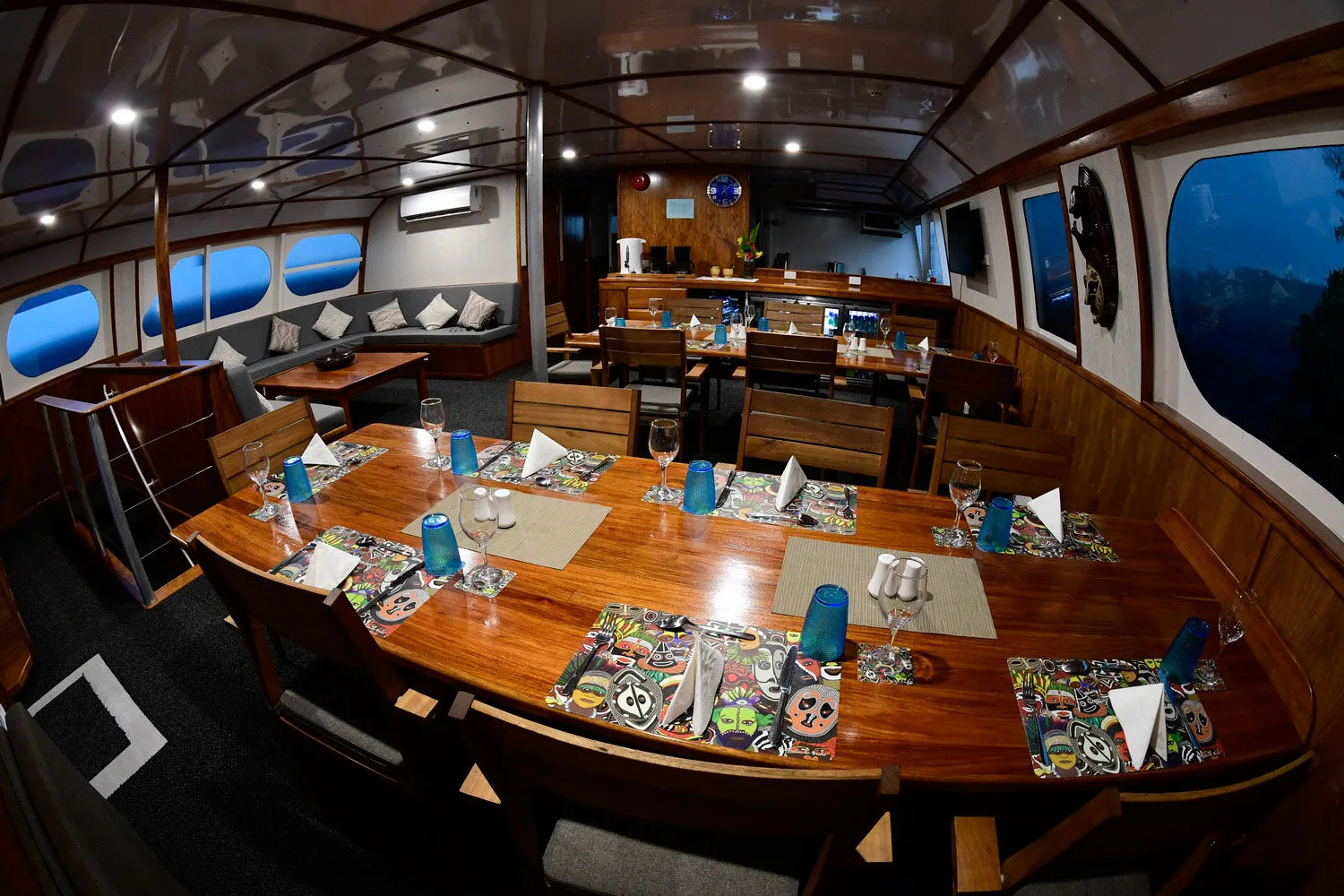
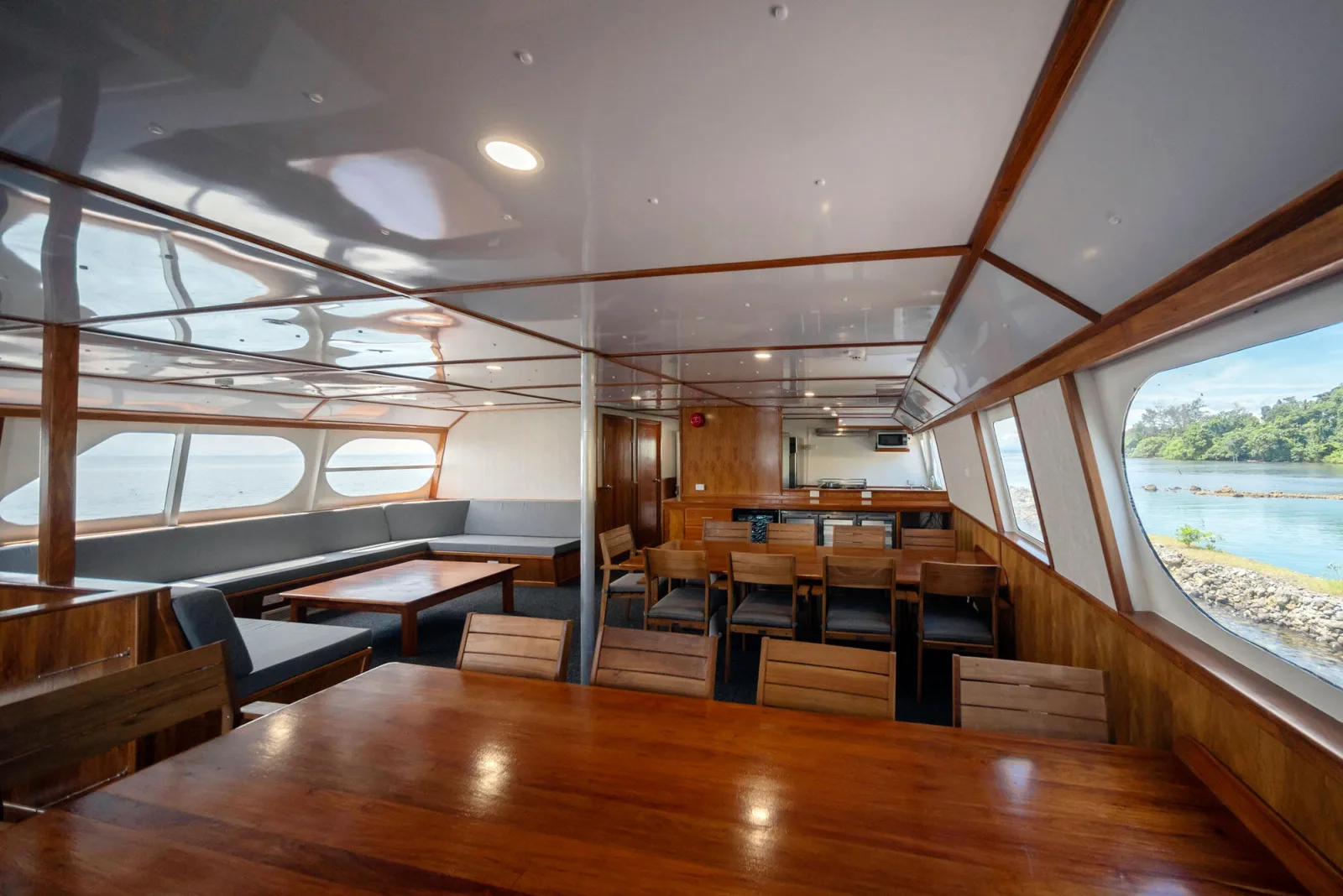
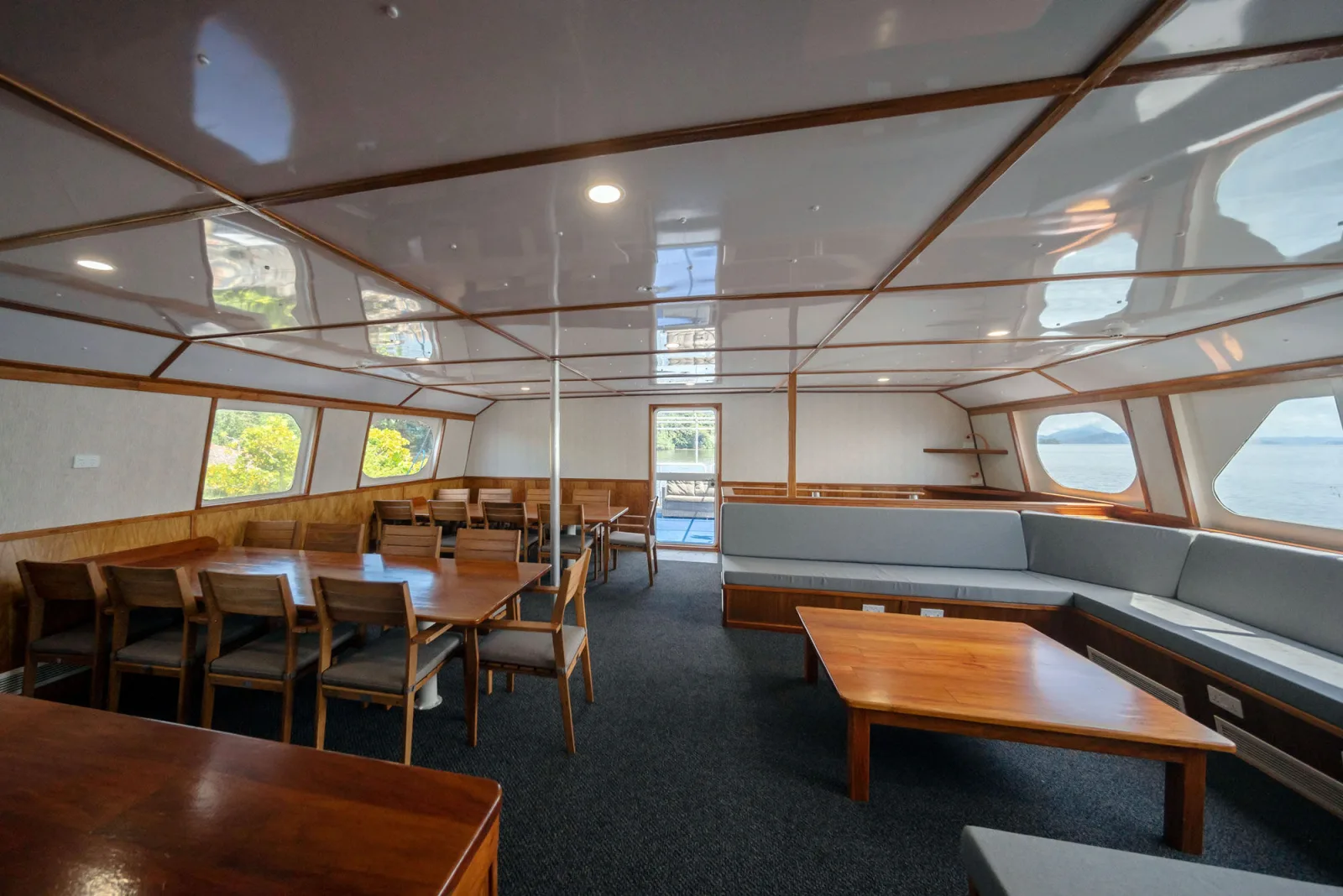
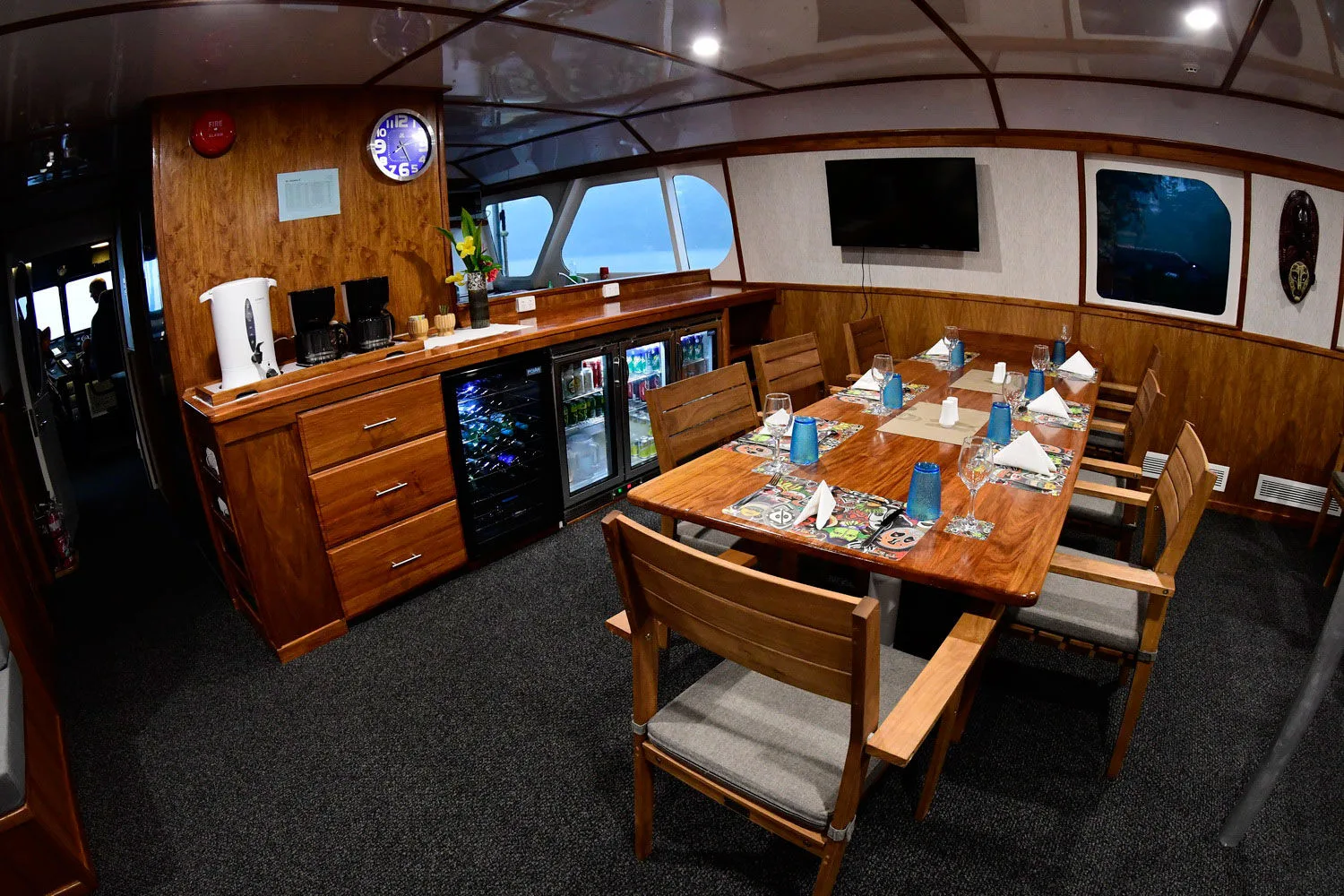
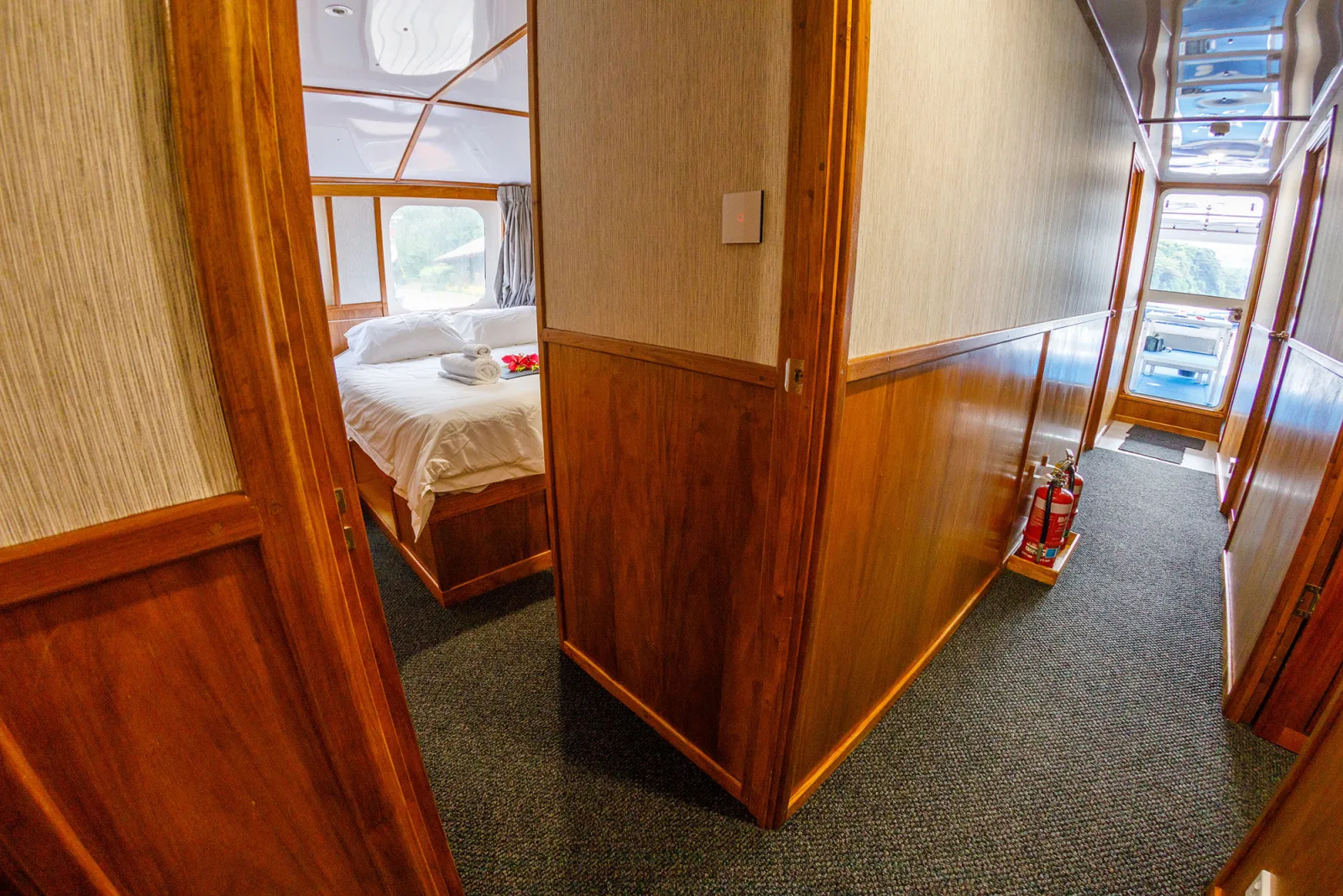
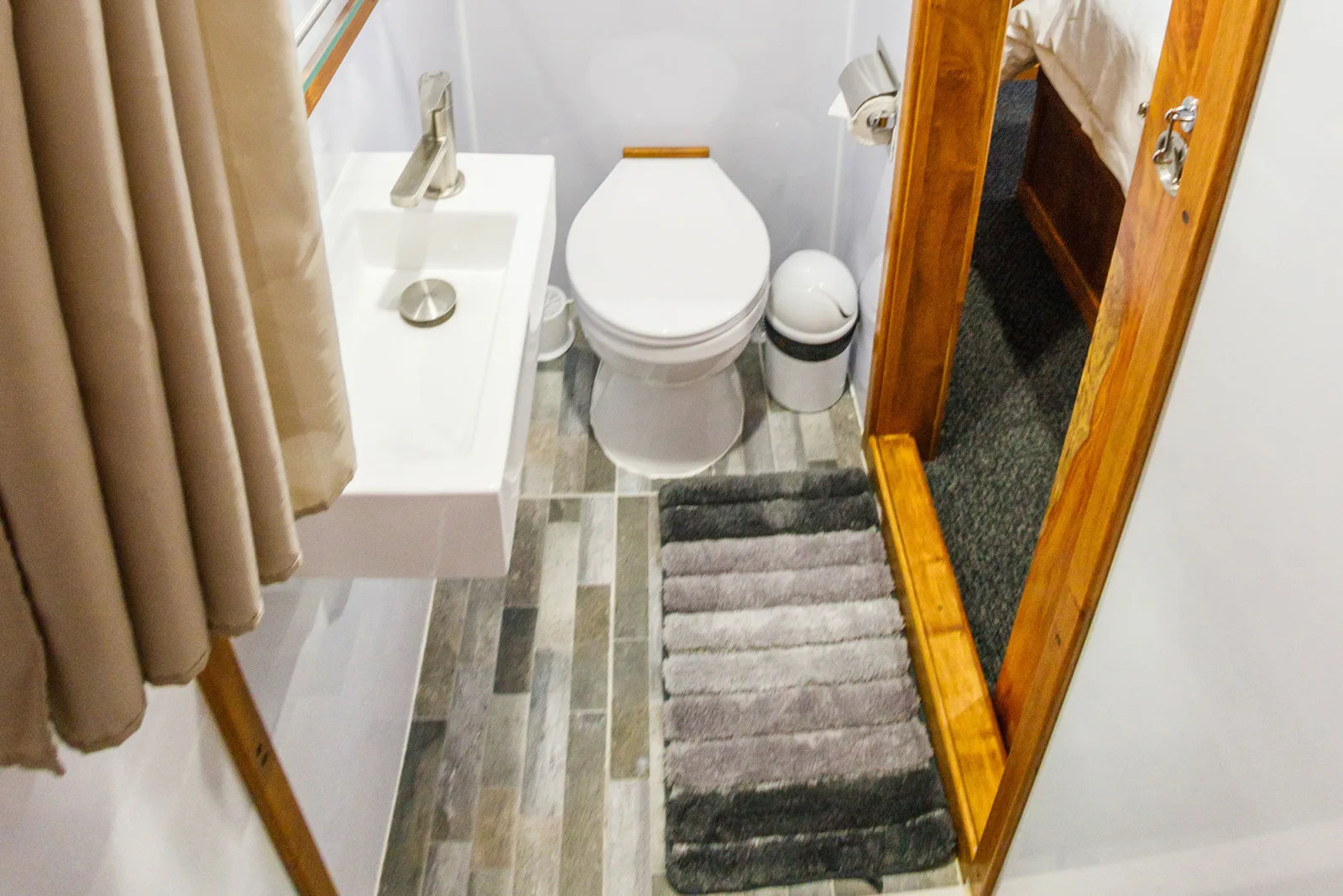
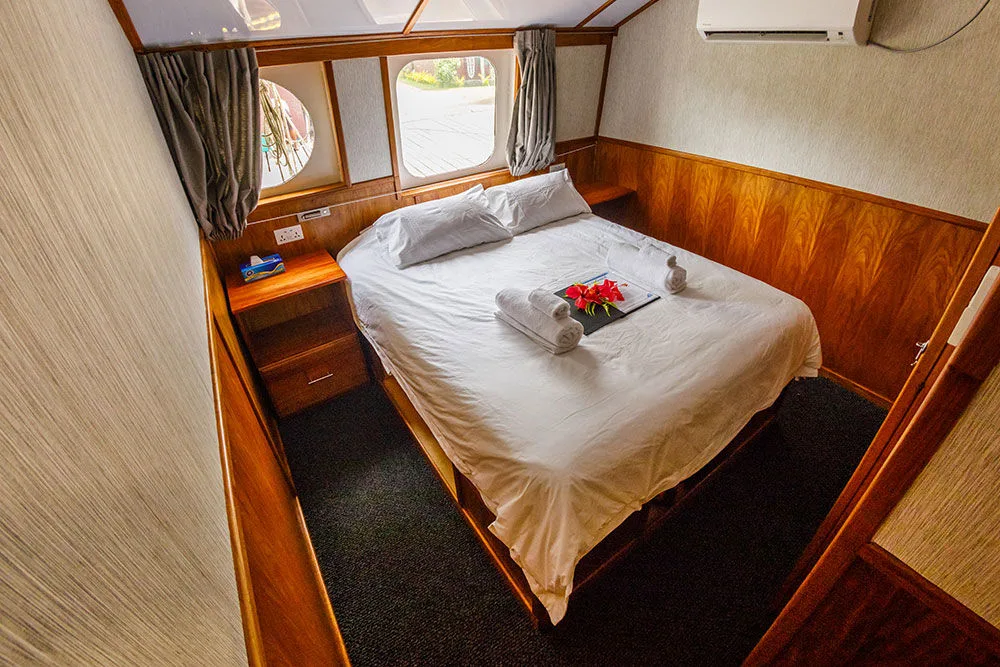
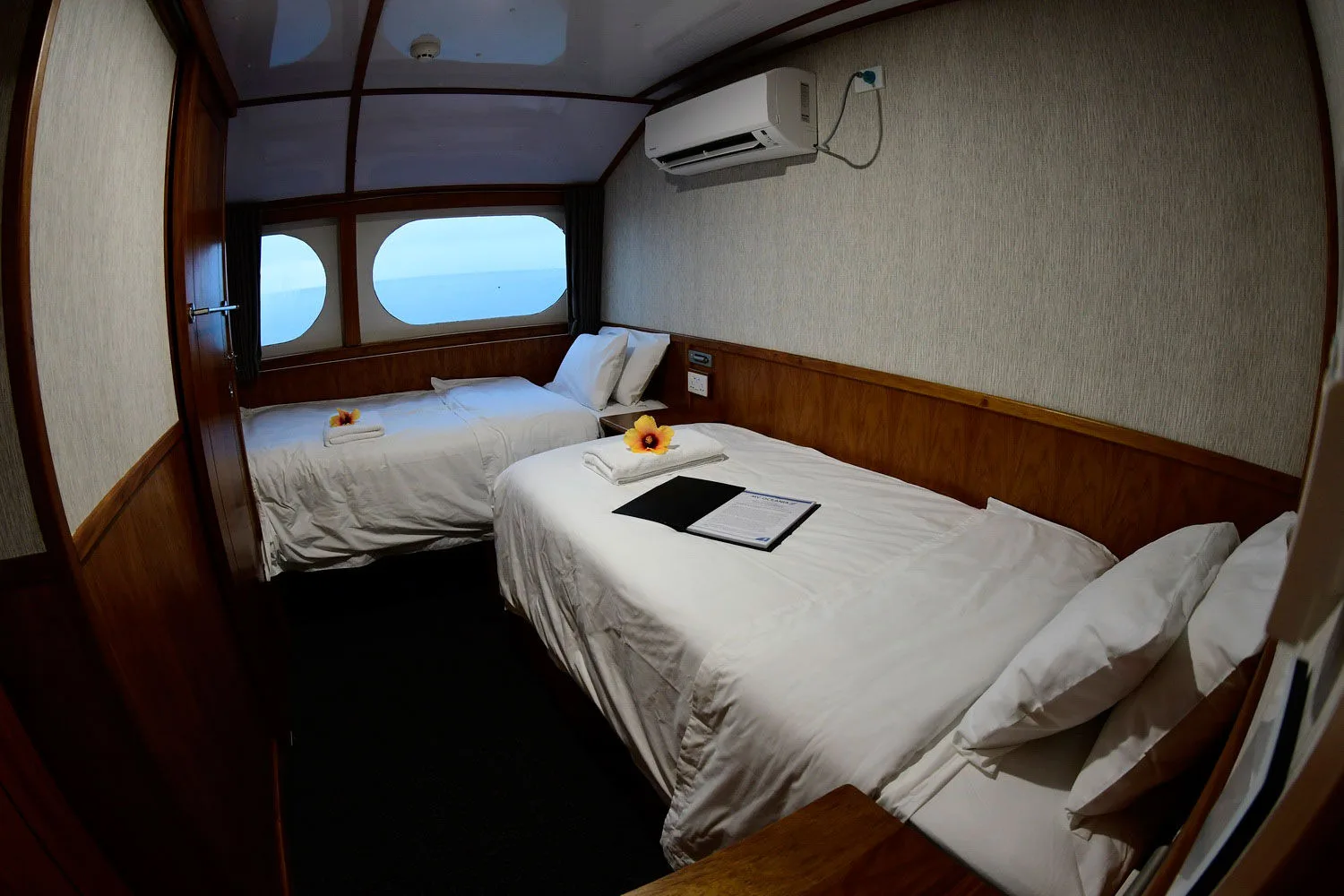
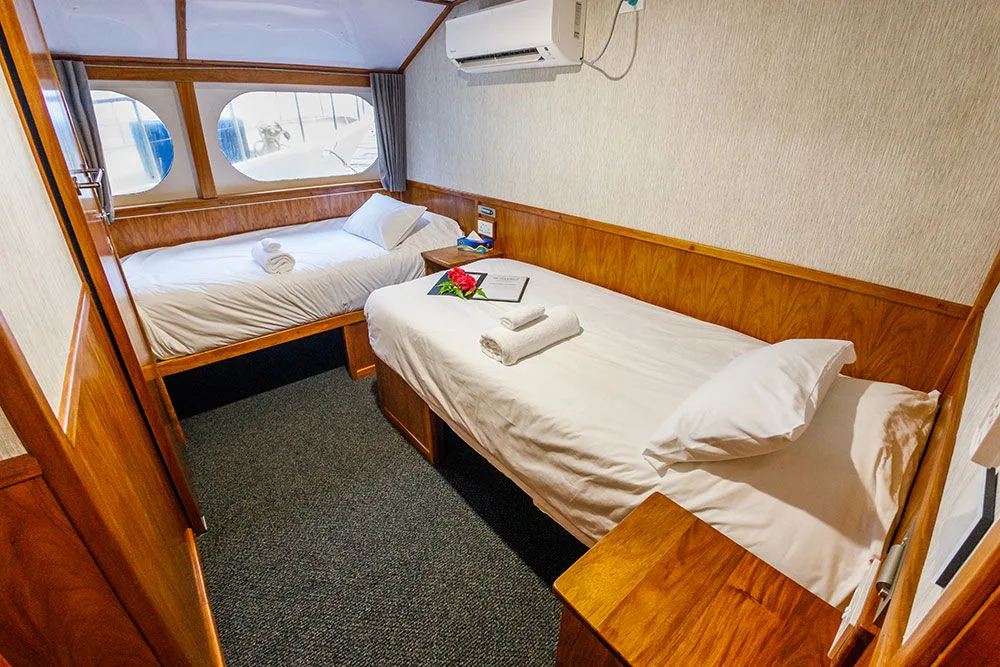
Cabins and common areas. Three cabins have a queen bed and five have two singles; all were refitted in early 2019 with individually controlled split air conditioning, 240-volt international sockets and USB, reading lights at each bed, under-bed storage, a rain shower plus a handheld head, and locally made soap and shampoo. The saloon on the middle deck has a long couch, charging sockets along the footboard, two large tables seating sixteen and mini fridges with drinks. The upper deck is an open area with tables and chairs in both sun and shade, and the aft section of the mid deck has couches under a sunshade.
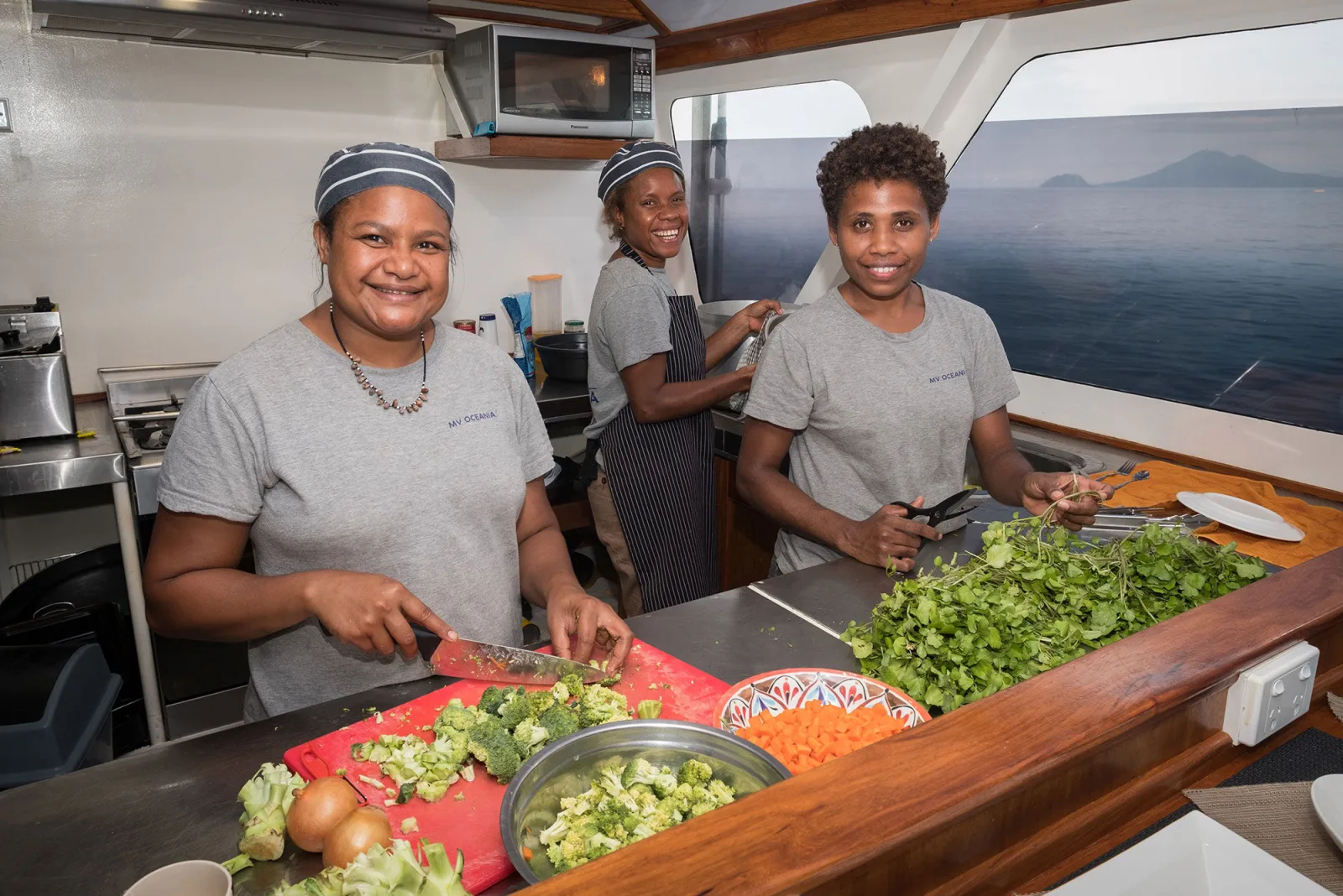
Food. Continental breakfast before the first dive, hot breakfast after it — eggs, pancakes, bacon. A mid-morning snack, buffet lunch, another snack in the afternoon before the last dive. Dinner is à la carte, home-style cooking from local produce and freshly caught fish, with dessert. Fresh fruit and a refillable water station are available all day, tea and coffee are free. Soft drinks, juices, beer and wine are sold on board.
Logistics. Most trips start and finish at Walindi; the nearest airport is Hoskins (HKN), listed as Kimbe by Air Niugini. Some departures run from Rabaul, Alotau and Kavieng, each with a different airport, so the port and date of your own trip need checking twice. Airport transfers both ways are included. Boarding is from 16:00, the last dive is before lunch on the day before disembarkation, the boat spends that final night in port, and disembarkation is by 09:00. The crew works in a remote area with no government rescue service, so insurance covering evacuation is effectively mandatory; the operator recommends DAN.
No mark-up
You pay the rate the operator publishes. The only thing added on top is the actual payment processing cost — no fee of ours.
We run the booking
Correspondence with the operator, holding your places, the contract, confirmation and all paperwork sit on our side. Nothing for you to arrange yourself.
Pay by card
We send you a Stripe invoice — pay by card, in your own currency, from anywhere in the world. The transfer to the operator is handled on our side.
Support in your language
We help you pick the cabin and dates, answer questions on the route and gear, and stay reachable until you are home — in English, in your time zone.
We quote the exact amount when confirming the booking: it covers the operator's rate plus the actual payment processing cost. No hidden charges.
Yacht Specifications
Length
27 m
Beam
9 m
Material
aluminium
Year Built
2001
Capacity
16 guests
Cabins
8
Crew
9 members
Speed
13 knots
Engine
2 × Caterpillar 3306 turbo diesels
Refit
2018
Bathrooms
9
Tender
a dive tender and a dinghy, 600 kg electric davits
Water capacity
3000 litres
Fuel capacity
13,000 litres
Freshwater maker
watermaker on board
On Board
Diving on board
There are no 15-litre tanks on board — the standard is twelve litres, and if you need a smaller one the operator asks to be told in advance. Currents on most sites are light and the diving is easy; the water is 29–31 °C, cooler from September to November, when the reefs hold more of the small and unusual critters, and warmer in April and May. Some Kavieng sites run a strong current, and then a safety line is streamed from the boat to the mooring. The captain reorders the sites according to the weather — an itinerary description is a proposal, not a timetable. This is a remote area with no government rescue service: insurance covering chamber treatment and evacuation is essential, and the operator recommends DAN.
Food on board
The galley is small and the provisions are bought fresh before departure, so the menu depends on what was at the market. The operator covers basic dietary requirements but is honest about it: the area is remote and not every request can be met, so diets and allergies need to be stated at booking. For a serious food allergy the operator asks you to carry an epi-pen and to be insured for evacuation at sea.
Navigation and safety
Cabins
· 3 cabins
Queen bed
Beds: 1 queen bed
Three cabins with one large bed, all above deck and all with a sea view. Rebuilt from scratch in early 2019: individually controlled split air conditioning, a private bathroom with a rain shower and a handheld head, 240-volt international sockets and USB for devices, reading lights at the headboard, storage under the bed, and locally made soap and shampoo.
· 5 cabins
Two single beds
Beds: 2 single beds
The bulk of the boat's accommodation: five cabins with two separate beds. The fittings are the same as in the queen cabins — own air conditioning, a bathroom with a shower, 240-volt sockets and USB, reading lights, under-bed storage, locally made soap and shampoo. All cabins are above deck, with portholes onto the sea.
Schedule & Pricing
Bismarck Sea Signature: Kimbe Bay, the Witus and Fathers Reefs
The boat's main route and the one that fills most of the schedule: nine or ten nights across the three best areas of the Bismarck Sea. Kimbe Bay gives sea mounts rising out of deep water, walls of soft coral and coral gardens — Susan's Reef with its stands of red sea whips, Inglis Shoal, which comes up to eleven metres and gathers dogtooth tuna, barracuda and bigeye trevally, and Christine's Reef with its huge barrel sponges. The Witu Islands to the north-west supply the other half of the picture: sea mounts such as Krackafat, where the reef top is packed solid with fish, the Goru arches, and the black sand bay of Wire Bay for macro. Fathers Reefs is a chain of remote volcanic reefs with arches and swim-throughs that draw silvertips and grey reef sharks. The route is scheduled for the best weather months: mid-September to November, and April to June.
September 2027
1 departureApril 2028
2 departuresMay 2028
2 departuresSeptember 2028
2 departuresWest New Britain: the Kimbe Bay reefs and Fathers Reefs
The short version, eight or nine nights, which the operator schedules mid-year and in late autumn. The boat works two areas instead of three: the Kimbe Bay reefs and, depending on the weather, either Fathers Reefs or the Witu Islands. Fathers gives Normans Reef with its silvertips and balled-up anemones, Jaynes Gully with wall diving and pygmy seahorses, the famous arch draped in soft coral, and the double-headed sea mount of Kilibobs Knob where reef sharks are almost always around. It is the cheapest way onto the same reefs the signature route dives.
November 2026
2 departuresNovember 2027
2 departuresAugust 2028
1 departureThe Witu Islands and the Kimbe Bay reefs
The late autumn and early December route: the Kimbe Bay reefs plus the Witu Islands with their coral reefs and black sand bays. The Witus give pelagics and critters at once — sharks patrol Dickey's Knob in a mild current with schools of barracuda and snapper, trevally and tuna pass over Barney's Reef while the reef itself holds boxer crabs, candy crabs and harlequin shrimp, and a submerged crater hides blue ribbon eels and mantis shrimp. Locals paddle out to the boat in traditional canoes to trade fruit and vegetables, and the children dive down to play in the rising bubbles. The longer version of the route adds sites beyond the usual circuit.
December 2026
1 departureNovember 2027
1 departureDecember 2027
1 departureDecember 2028
1 departureEast and West New Britain: Kimbe Bay and Rabaul
A repositioning run between the two bases, so embarkation and disembarkation are at different ports — eight or nine nights. Rabaul is added to the Kimbe Bay reefs: the town sits in a drowned volcanic caldera, the active Tavurvur smokes over the harbour, and underwater the point is the jetties and sand dives. For a macro photographer this is the best part of the programme — several species of frogfish, harlequin ghost pipefish, bumblebee and harlequin shrimp, mandarin fish, coconut octopus, boxer crabs, leaf scorpionfish and nudibranchs. The outer reefs around Rabaul have a completely different topography, shaped by the volcanoes.
April 2027
1 departureJuly 2028
1 departureMilne Bay, Rabaul and the south coast of New Britain
In February and March the boat goes south-east to Milne Bay Province, the home of muck diving. The programme takes in Dinah's Beach with blue ribbon eels, cuttlefish, seahorses and ghost pipefish; Deacon's Reef, a wall rising from over three hundred metres with intact hard coral, massive barrel sponges and hammerheads out in the blue; Wahoo Point with its schools of barracuda and grey reef sharks, visited by mantas, whale sharks and tigers; the manta cleaning station off Gona Bara Bara Island; the Samarai Island jetty for critters; and the B-17 "Black Jack", lying intact on sand at fifty metres, at the edge of the recreational range. Some departures run from Rabaul to Alotau or the other way and add the south coast of New Britain; those repositioning trips can run to fourteen nights.
February 2027
1 departureMarch 2027
2 departuresFebruary 2028
1 departureMarch 2028
2 departuresMay 2028
1 departureWewak and Madang
The longest trips in the schedule — thirteen and fourteen nights — run once a year in October, along the north coast of mainland New Guinea. The way out goes via the Witu Islands and the Manus group, the way back via Madang. These are specialist expedition trips outside the usual circuit: the reefs along the way are rarely visited, and the programme is built around the weather even more than usual.
October 2028
2 departuresPrices and availability can change. Get in touch and we'll confirm current dates and pricing.
Included in Price
Not Included
Required extras
Optional extras
Extras are shown per person and are paid on board.
from 4092 EUR / 8 nights
Estimated wait time — 24 hours
Queen bed
Three cabins with one large bed, all above deck and all with a sea view. Rebuilt from scratch in early 2019: individually controlled split air conditioning, a private bathroom with a rain shower and a handheld head, 240-volt international sockets and USB for devices, reading lights at the headboard, storage under the bed, and locally made soap and shampoo.
- Deck
- Above deck
- Beds
- 1 queen bed
- Windows
- Portholes with a sea view
- cabins of this type
- 3
Two single beds
The bulk of the boat's accommodation: five cabins with two separate beds. The fittings are the same as in the queen cabins — own air conditioning, a bathroom with a shower, 240-volt sockets and USB, reading lights, under-bed storage, locally made soap and shampoo. All cabins are above deck, with portholes onto the sea.
- Deck
- Above deck
- Beds
- 2 single beds
- Windows
- Portholes with a sea view
- cabins of this type
- 5
Oceania
from 4092 EUR