Febrina
 1 / 22
2 / 22
3 / 22
4 / 22
5 / 22
1 / 22
2 / 22
3 / 22
4 / 22
5 / 22
 6 / 22
 7 / 22
 8 / 22
 9 / 22
 10 / 22
 11 / 22
 12 / 22
 13 / 22
 14 / 22
 15 / 22
 16 / 22
 17 / 22
 18 / 22
 19 / 22
 20 / 22
 21 / 22
 22 / 22
Book through Tour Leader Club
22 m · 10 guests · 7 cabins
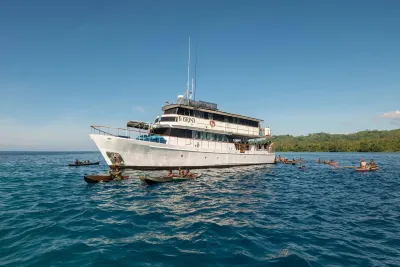
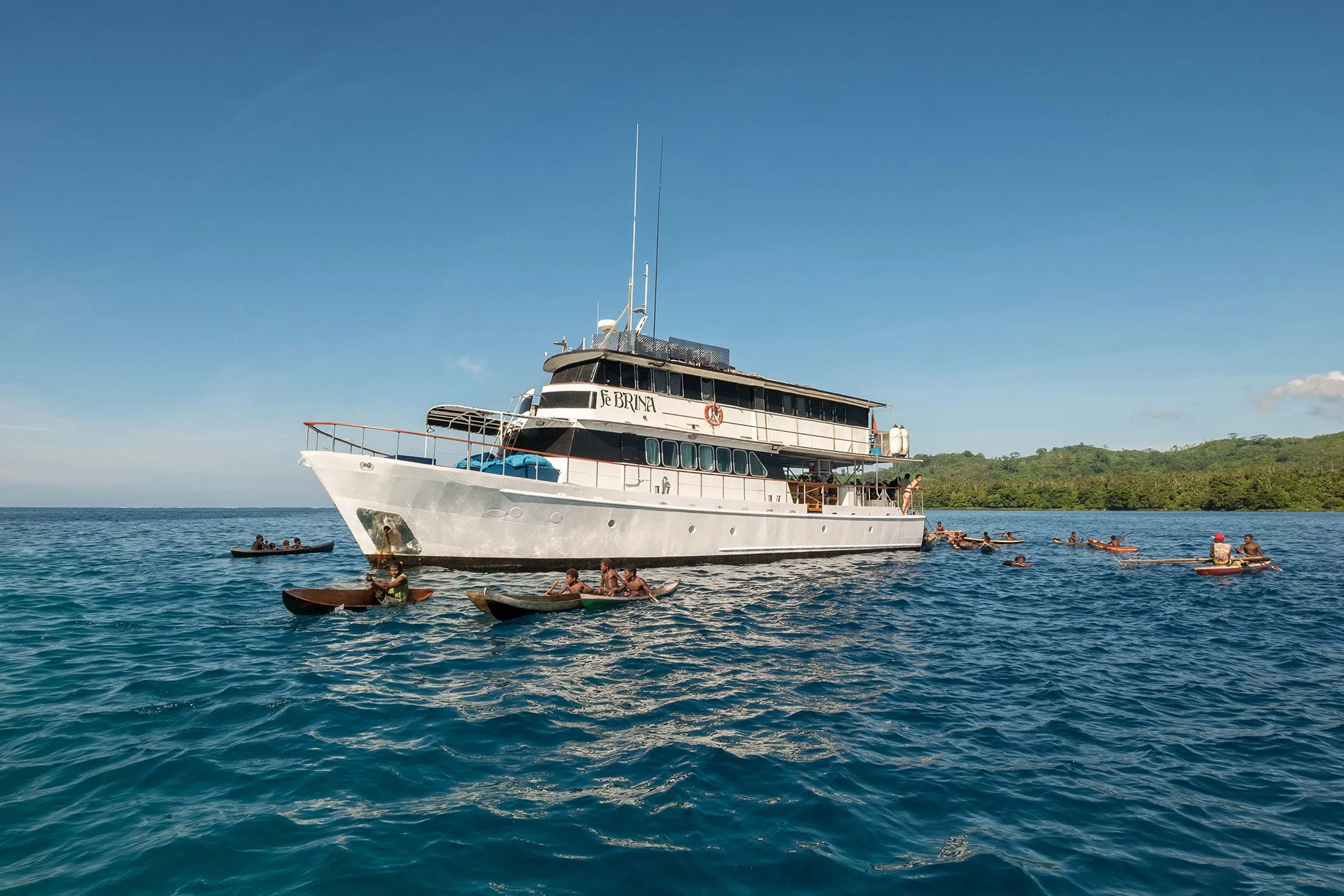
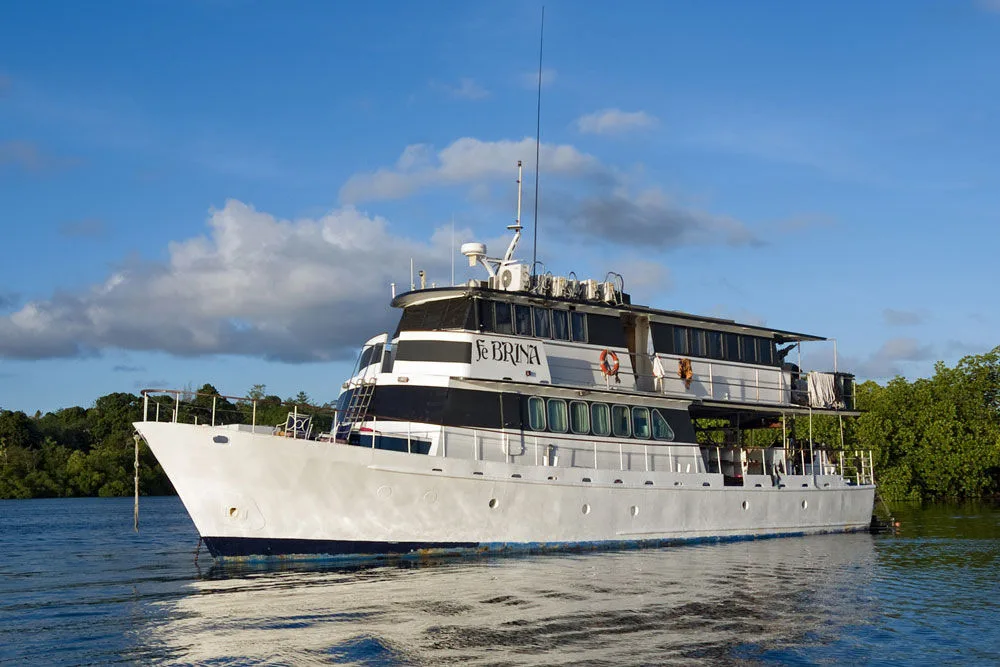
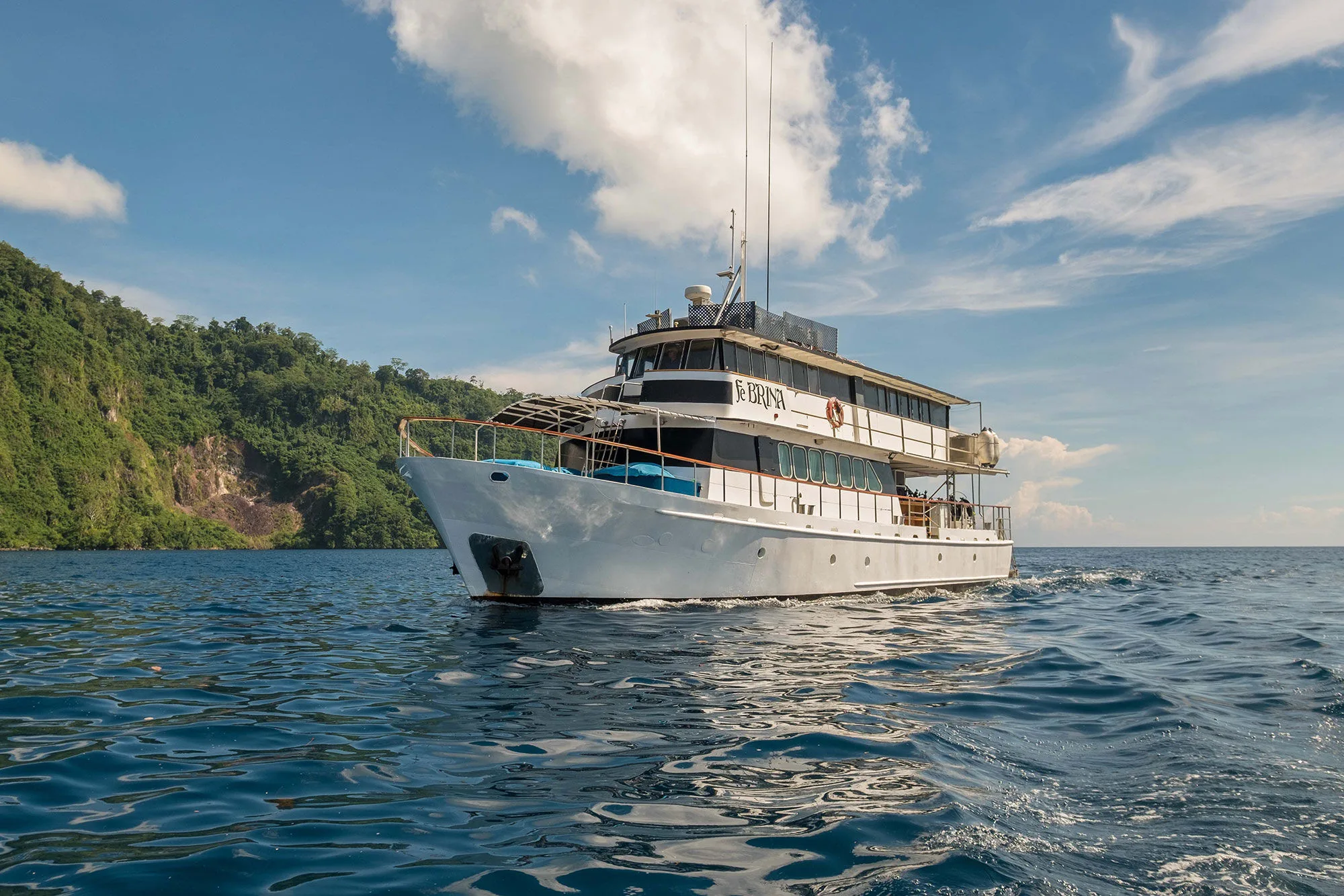
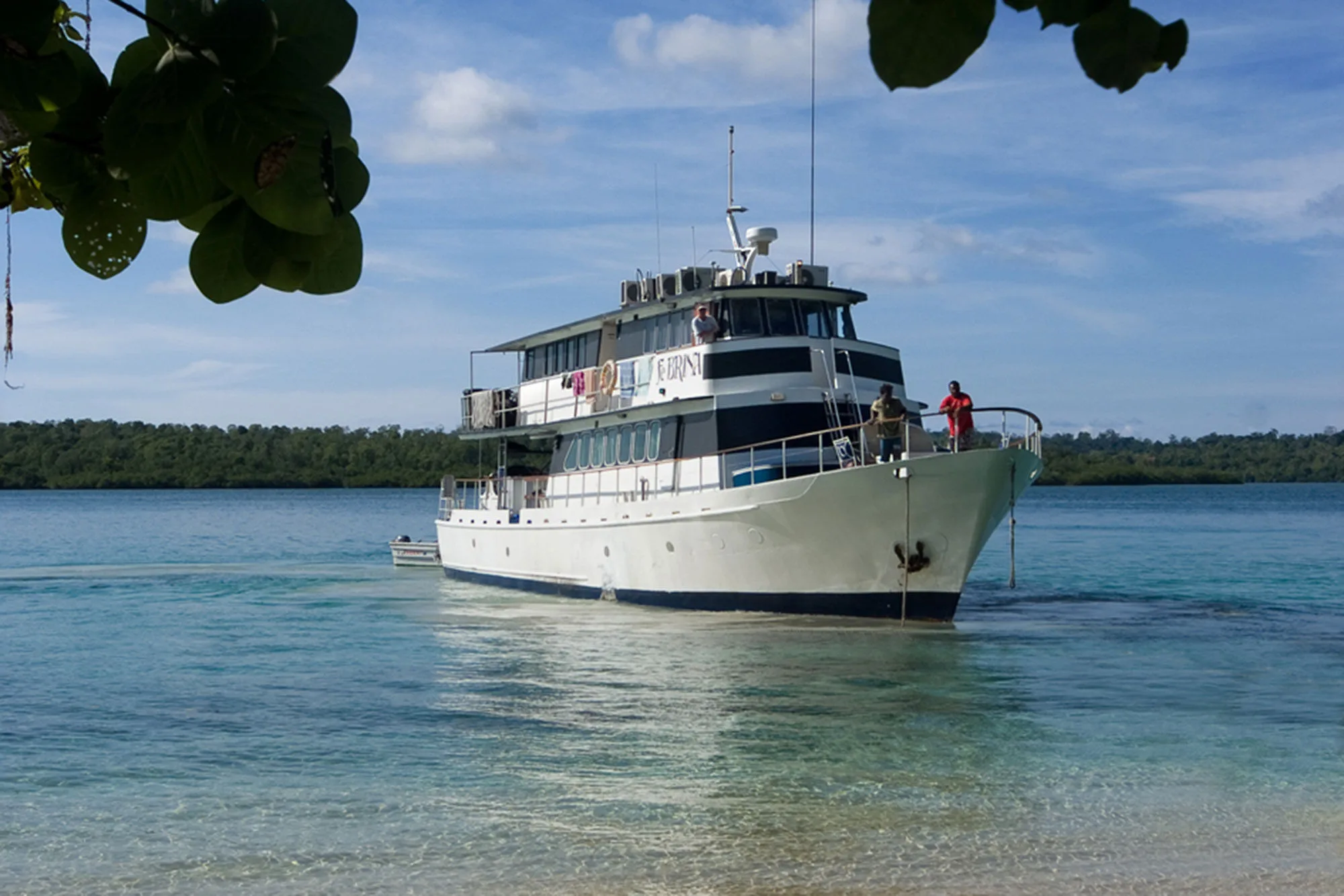
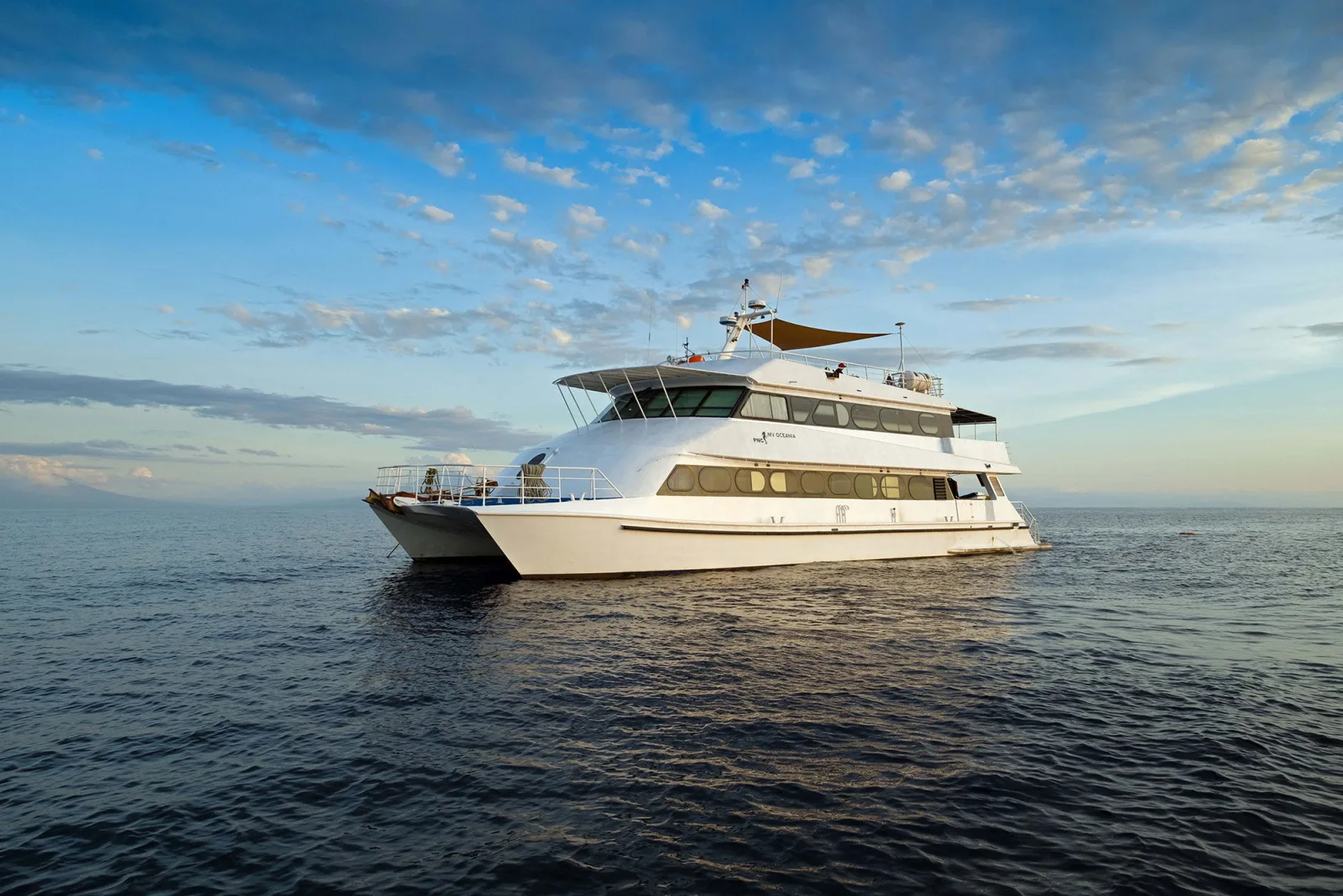
Febrina has been taking divers around the Bismarck Sea since 1991, and her home berth has not moved once in all that time: the jetty of Walindi Plantation Resort in Kimbe Bay, on the island of New Britain. Owners and crew are the same people — skipper Alan Raabe and trip director Josie Wai Wai; the company is Walindi Plantation Dive Cruises. FeBrina is painted in large script along the hull, so there is no mistaking her, even though the hull has changed from dark blue to white with a dark boot stripe over the years.
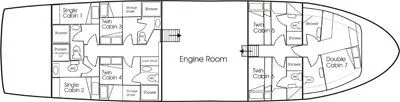
Size is the first thing to know. She is a 22-metre monohull built in 1972 and refitted in 2010, with all seven cabins on one lower deck and the engine room in the middle. The operator says “up to 10 guests”, and almost every departure is sold for ten. On selected dates twelve places open up — that is when the forward cabins 5 and 6 go out as twin share instead of sole use. Places are sold individually, and when one berth is left in a shared cabin the booking system states the gender of the cabin mate; we carry that straight into the schedule. The whole vessel can also be taken: the rate is called “9+1” — you pay for nine places and get ten, minimum group ten people.
The sailing area is wider than “Kimbe Bay” suggests, and it decides which flight you buy. Trips around Kimbe Bay, out to the Witu Islands and to Fathers Reefs start and finish at the Walindi jetty, which means Hoskins airport (HKN). The New Hanover itineraries start or finish at Kavieng (KVG) in northern New Ireland. The East and West New Britain route links Kimbe with Rabaul (Tokua airport, RAB), and the exploratory run along the east coast of New Ireland goes Rabaul to Kavieng — with boarding not at a jetty but by tender from Kokopo Beach Bungalows at 4:00 pm. Flights are the guest’s own; the airport transfers on embarkation and disembarkation day are already in the fare, and guests staying at Walindi before or after get their resort transfers free.
The way in is through Port Moresby, and an overnight there is not obligatory: the international terminal has a domestic transfer check-in desk, so a same-day connection lets you re-lodge your bags without leaving the building. Air Niugini gives an extra 15 kg for dive gear when the international and domestic legs fall on the same day — an arrangement with the national divers association. Everyone leaving Port Moresby pays a 50 kina environment levy at the airport.
The operator is plain about money. The fare covers the cabin, full board with snacks, unlimited tea and coffee, filled 12-litre tanks with belt and weights, a light daily laundry, the transfers on arrival and departure day — and the diving itself, four or five dives a day with the first at 6:30 am, night dives included. There are exactly two compulsory charges, both invoiced in advance: an environmental and safety fee of $9 per night, and a conservation fee of $20 per trip. Nothing else is payable on board as a matter of course — no separate payment to reef owners is published, even though reefs in Papua New Guinea are held under customary title. Nitrox is sold as a whole-trip package: $210 on 6–8 night departures, $270 on 9–10 nights and $300 on 11–12; the price of a casual fill is not published. There is rental gear on board but few sets and sizes, so ask ahead — no price list is published. Anything bought inside the country carries the local 10% tax. No spirits are kept aboard: wine comes with dinner, and you are welcome to bring your own duty free.
The entry bar is higher than on most boats: Advanced Open Water or equivalent and at least 30 logged dives. Diver evacuation insurance is compulsory — the nearest chamber is in Port Moresby, the country has no rescue service, and any evacuation is by private aircraft at the guest’s own cost; cover can be arranged on board if needed.
The year is laid out by the wind, and the skipper explains it himself. The season opens in March with short runs to the Witu Islands and around Kimbe Bay, on light north-westerlies and settled water. April to June the winds stay light and the sea lies down, which is when the longer itineraries come back. July and August bring the south-east trades, so the trips shorten again: Fathers Reefs and Lolobau Island, sheltered by the active volcano Ulawun about a mile high, plus the Walindi to Rabaul crossings. September to December are the best months, and that is when the boat ranges furthest — the Witus, New Hanover, Dyaul Island and the channels off Kavieng. There are no departures in January or February.
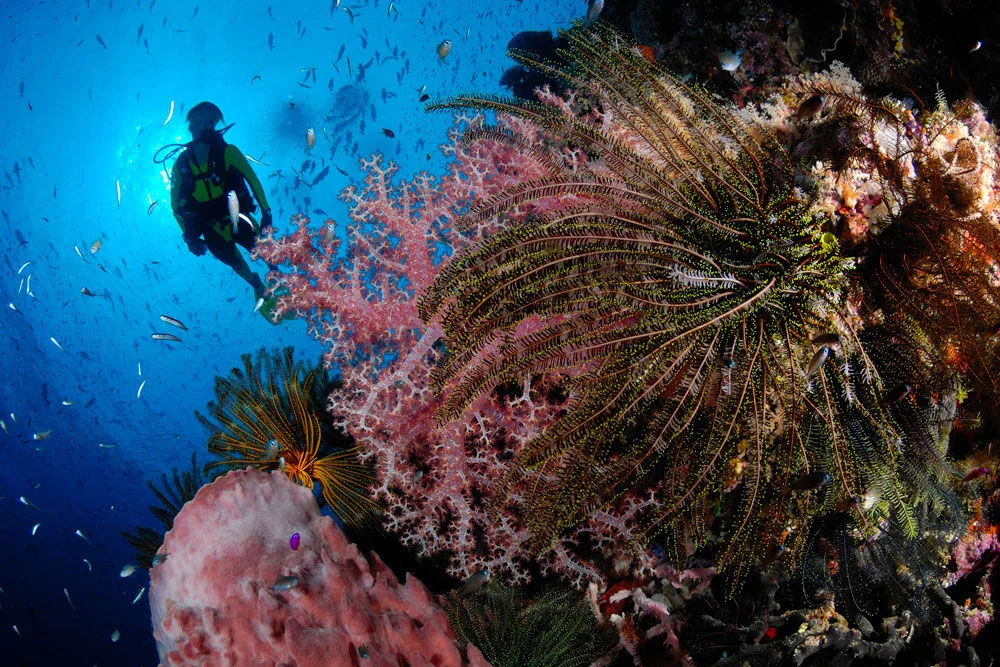
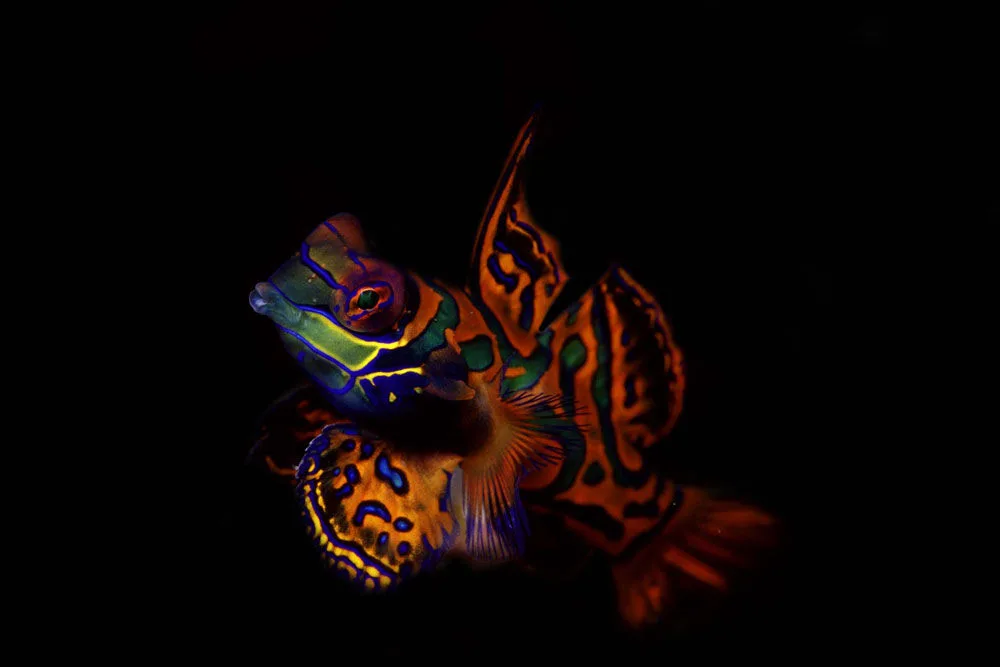
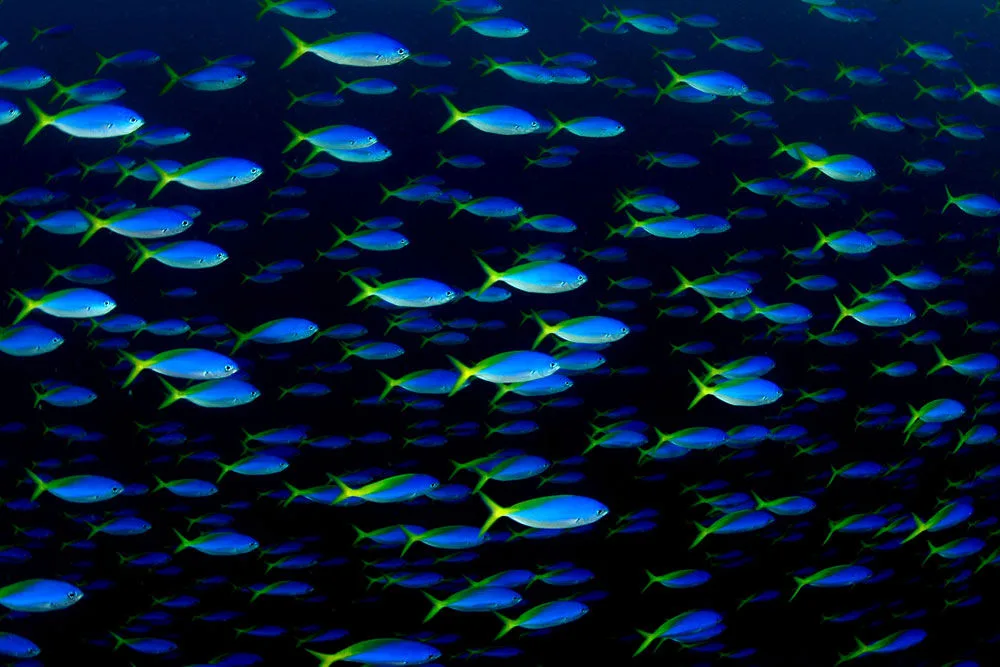
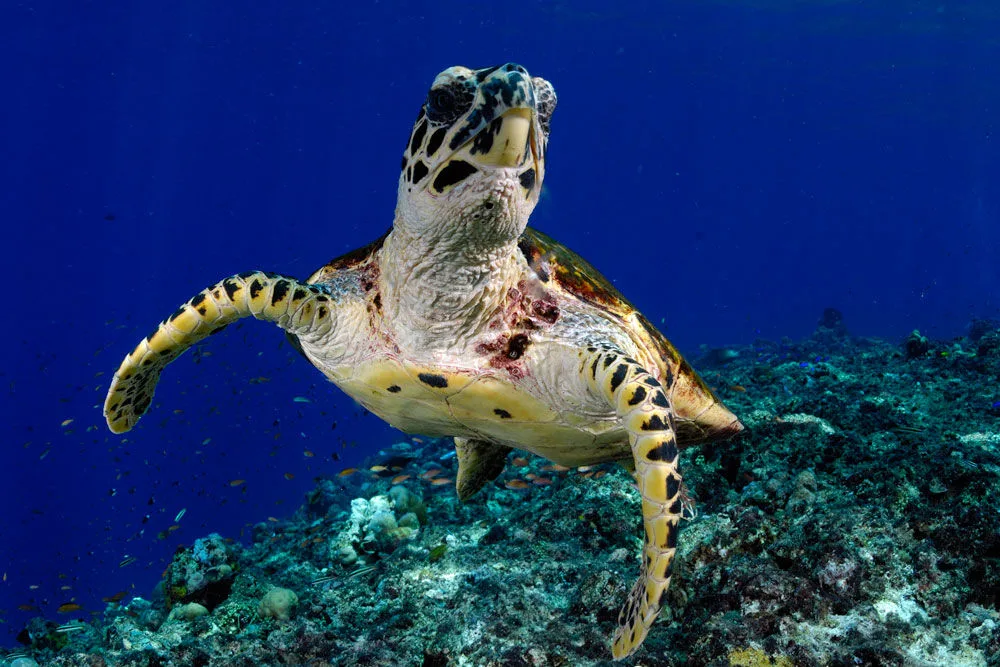
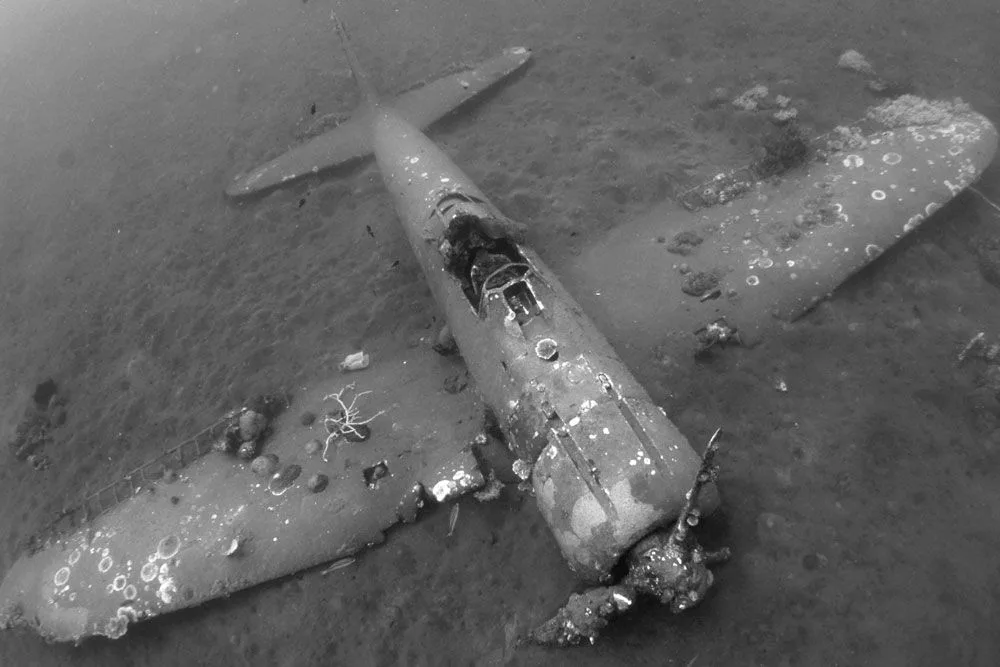
As for the diving: Kimbe Bay means seamounts rising from deep water to just under the surface, coral-covered walls and the gardens everyone knows from the classic Walindi pictures, plus a Japanese Zero fighter lying at fourteen metres. The Witus are volcanic islands with the Lama Shoals seamount, coral arches, black-sand night dives and the flooded caldera of Garove Island; villagers paddle out to trade fruit and vegetables. Fathers Reefs are offshore banks with abrupt topography, arches and swim-throughs that pull in sharks, rays and schooling barracuda and jacks. Rabaul is jetty muck diving: frogfish, ghost pipefish, harlequin and bumblebee shrimp, mandarinfish, coconut octopus. Febrina does not dive the Rabaul wrecks — the operator says outright that these are specialty dives and recommends local operators for them.
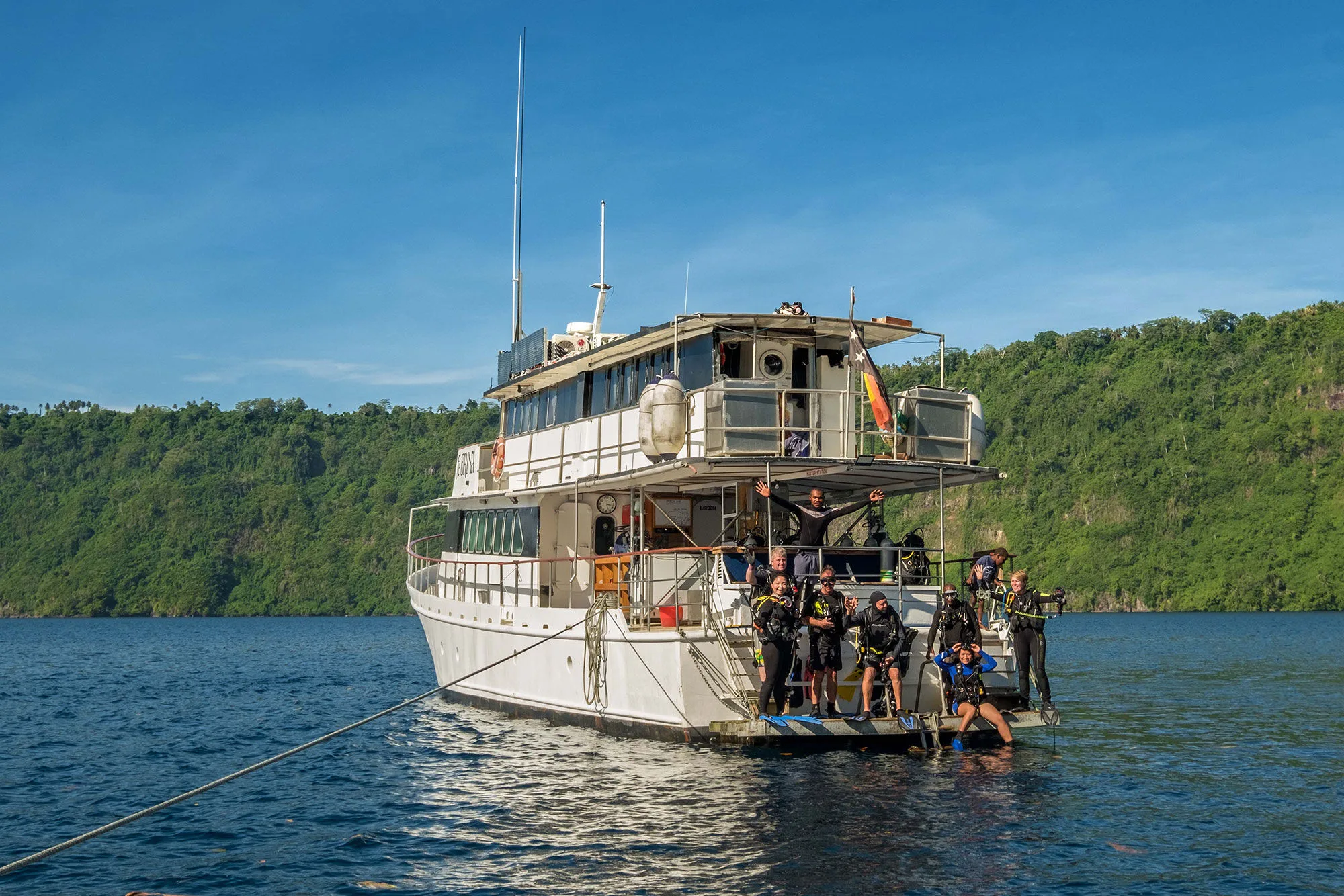
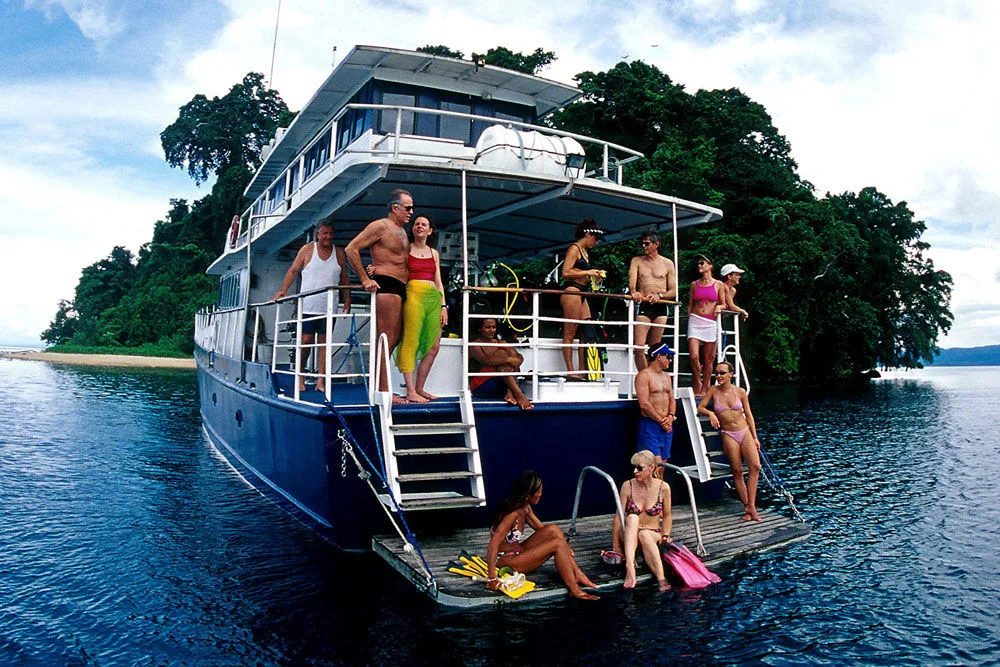
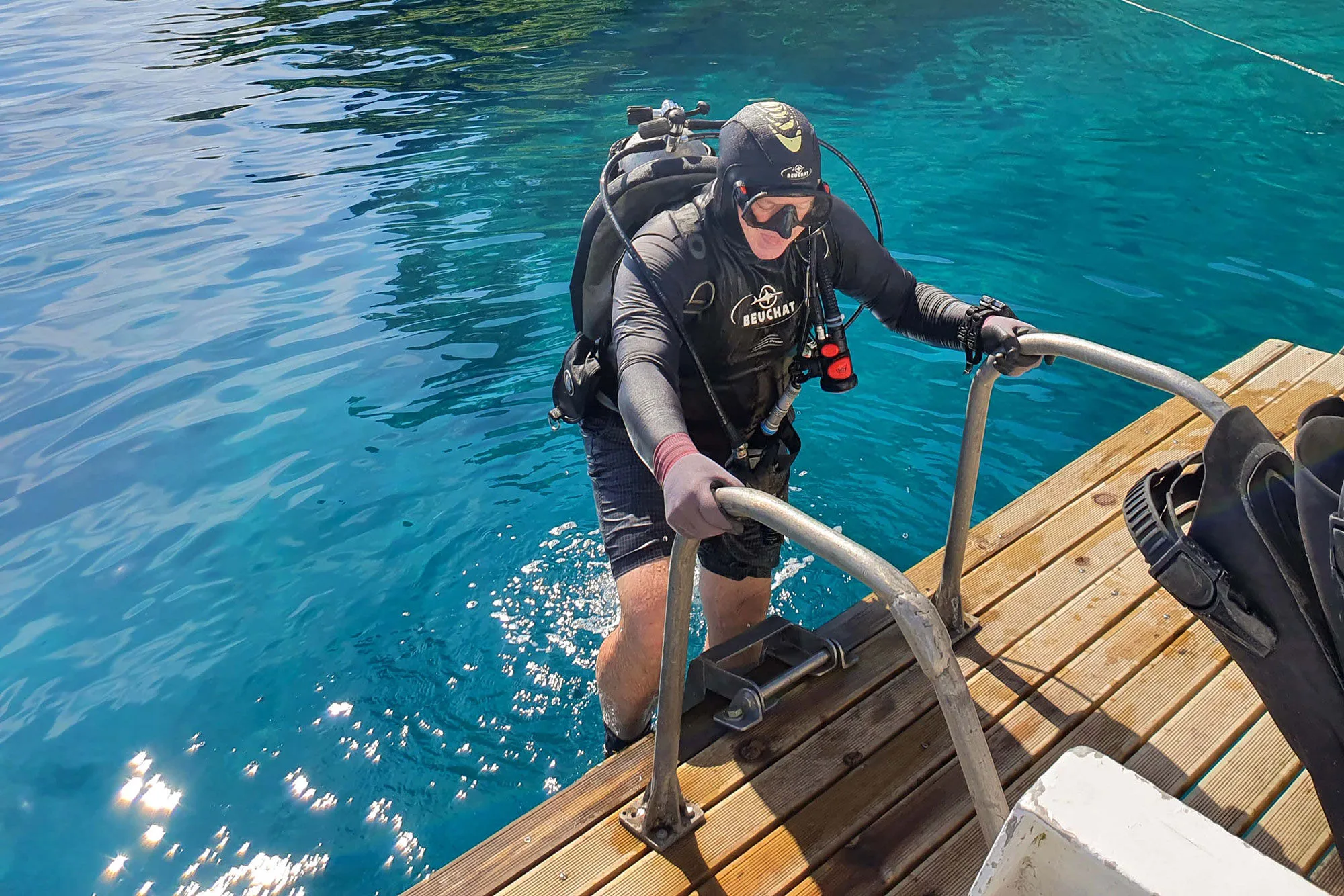
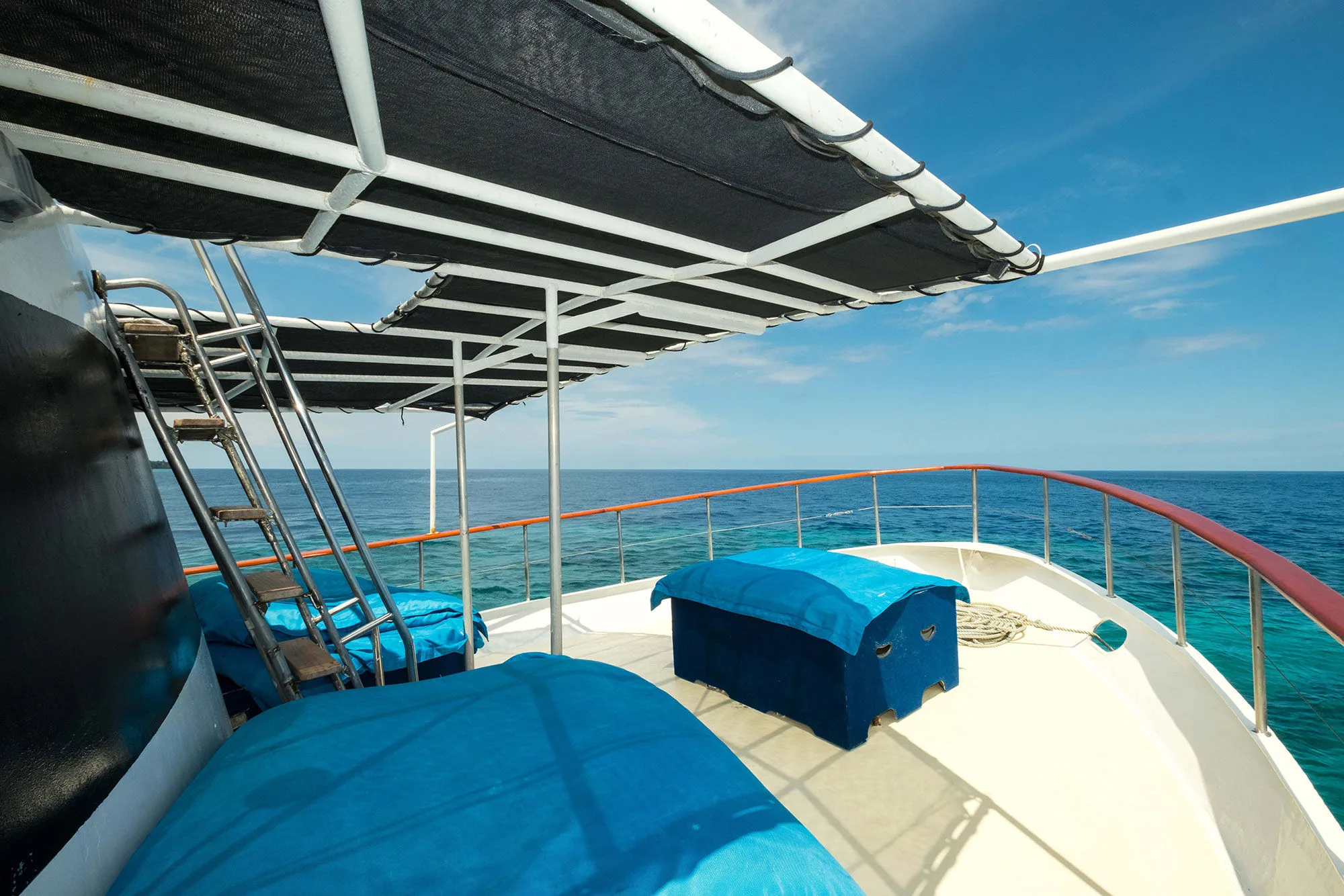
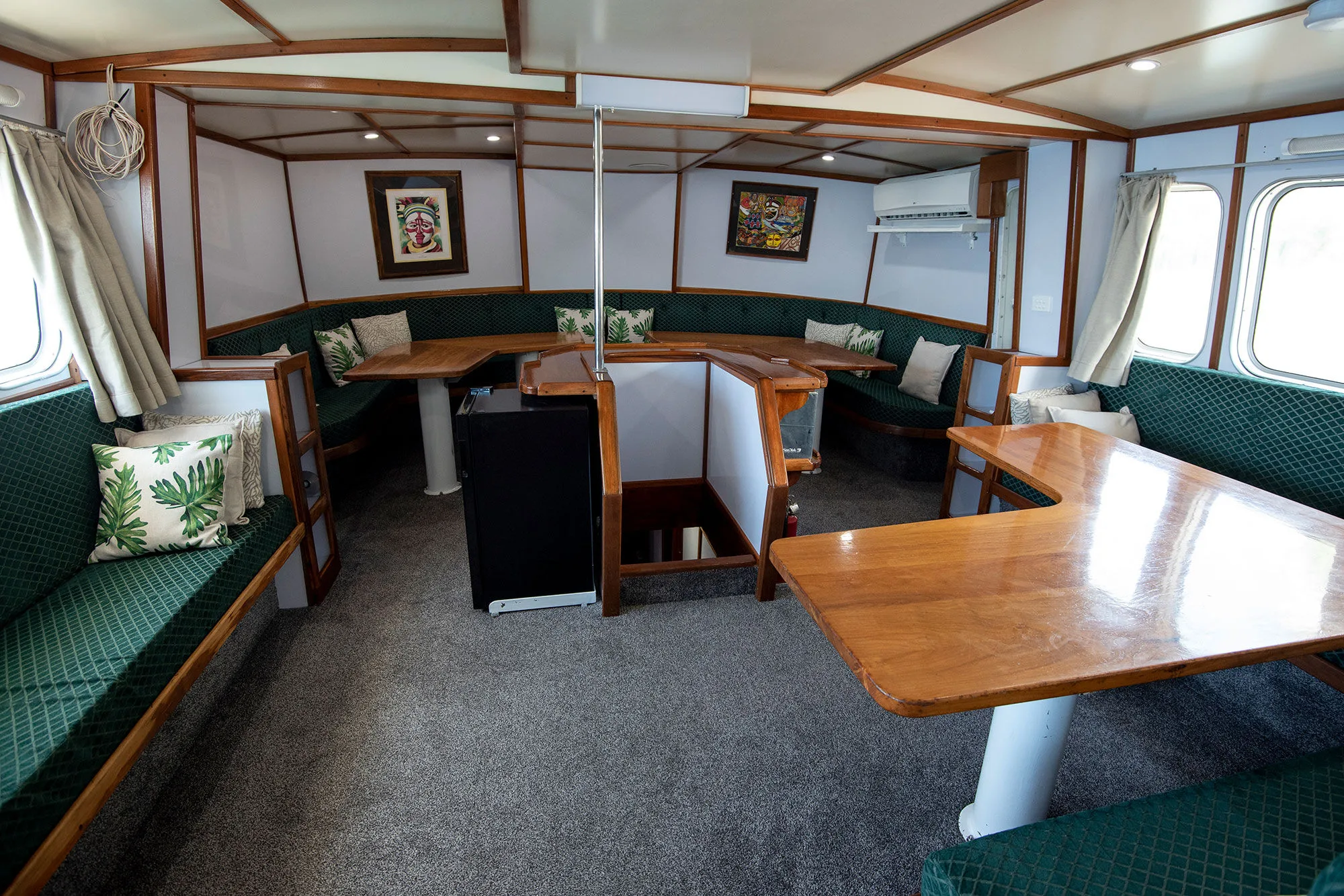
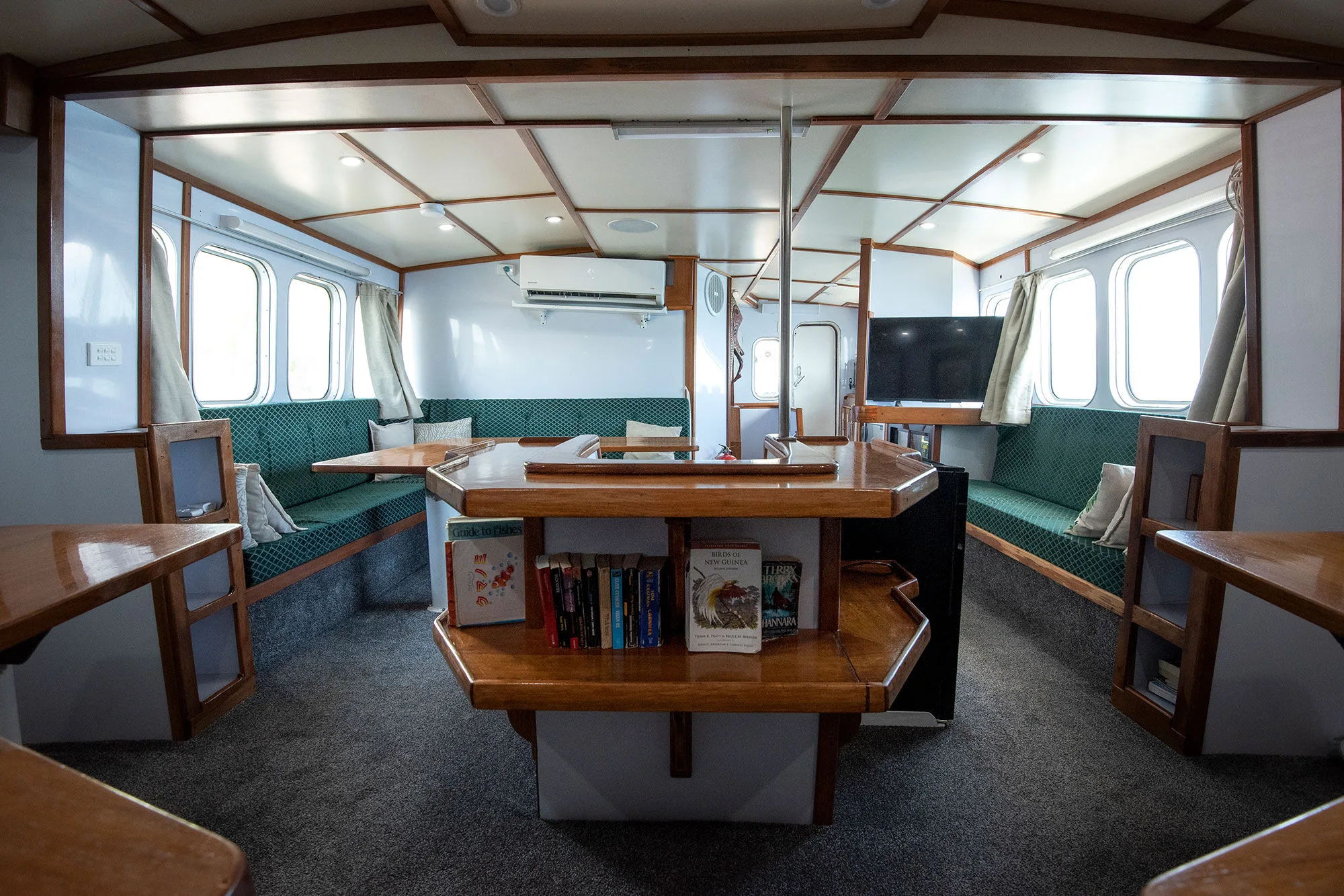
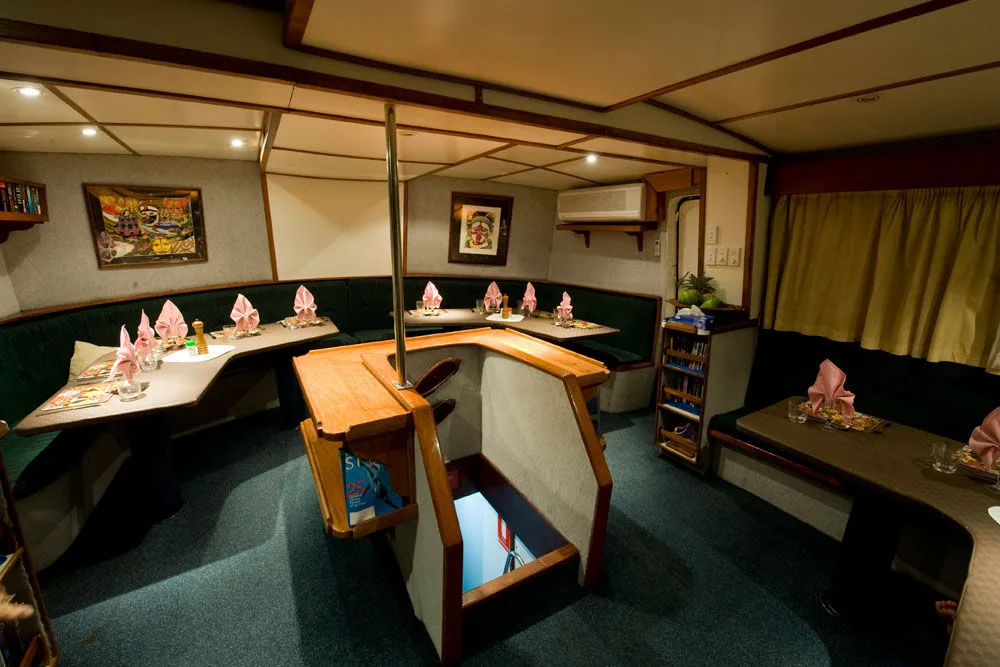
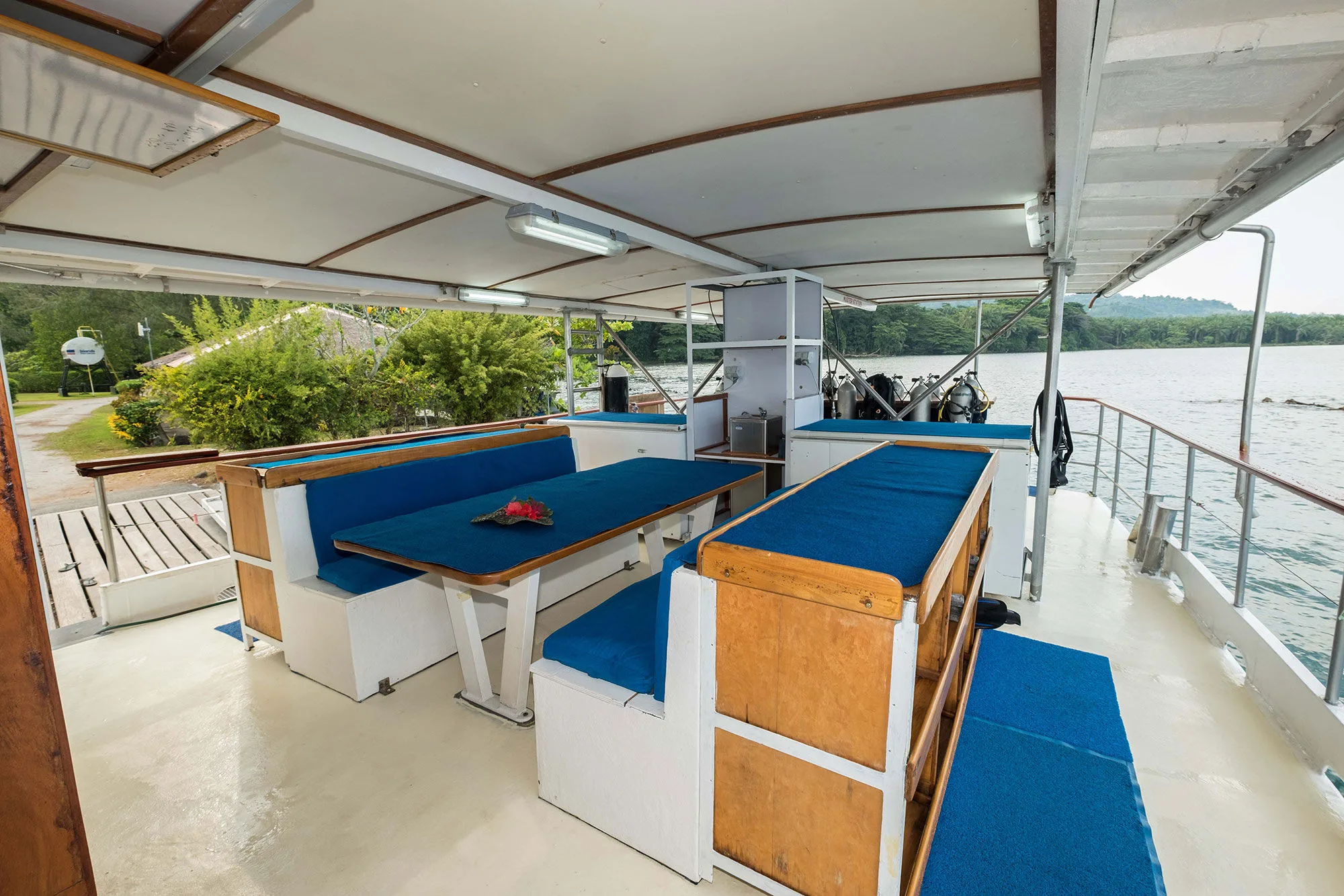
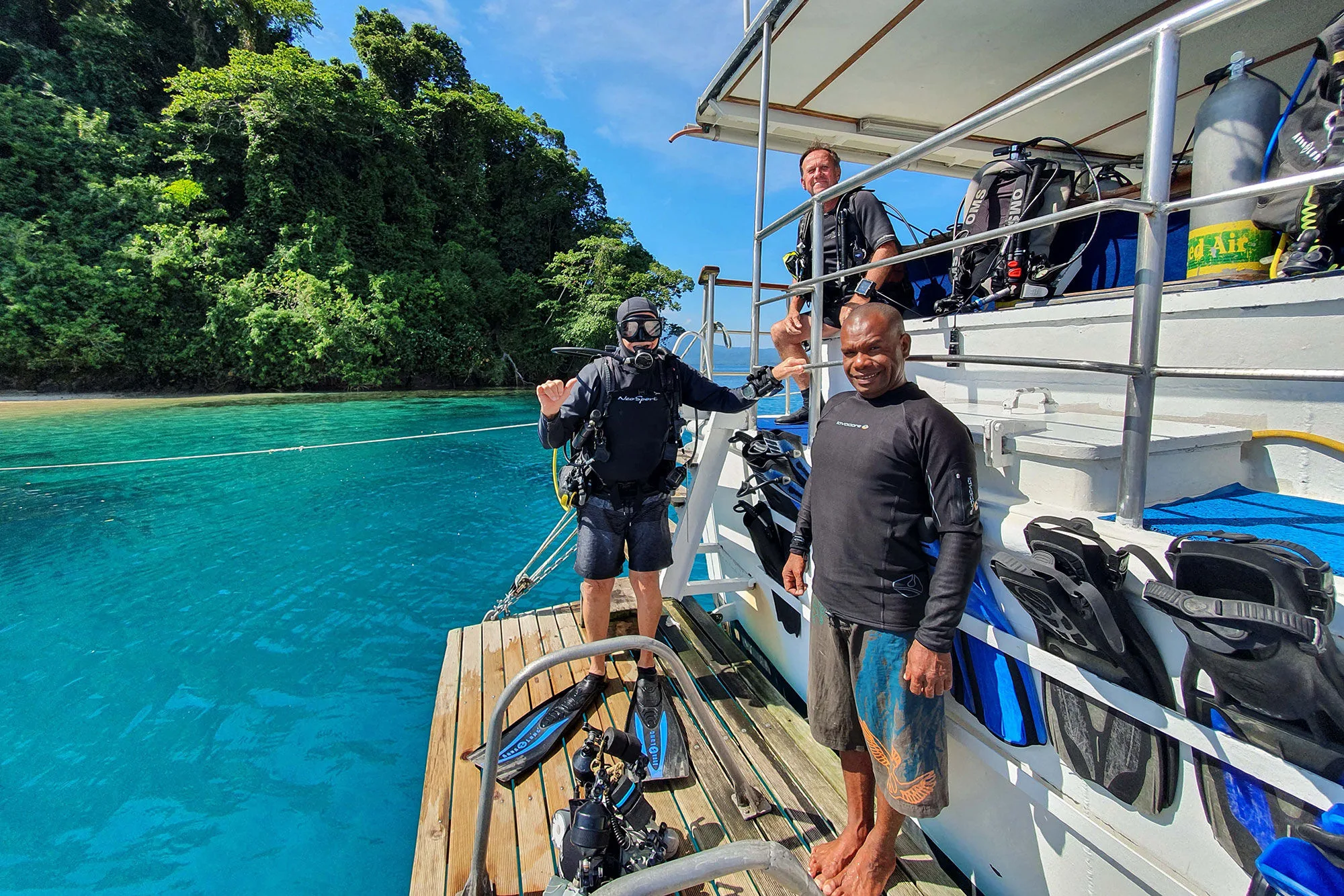
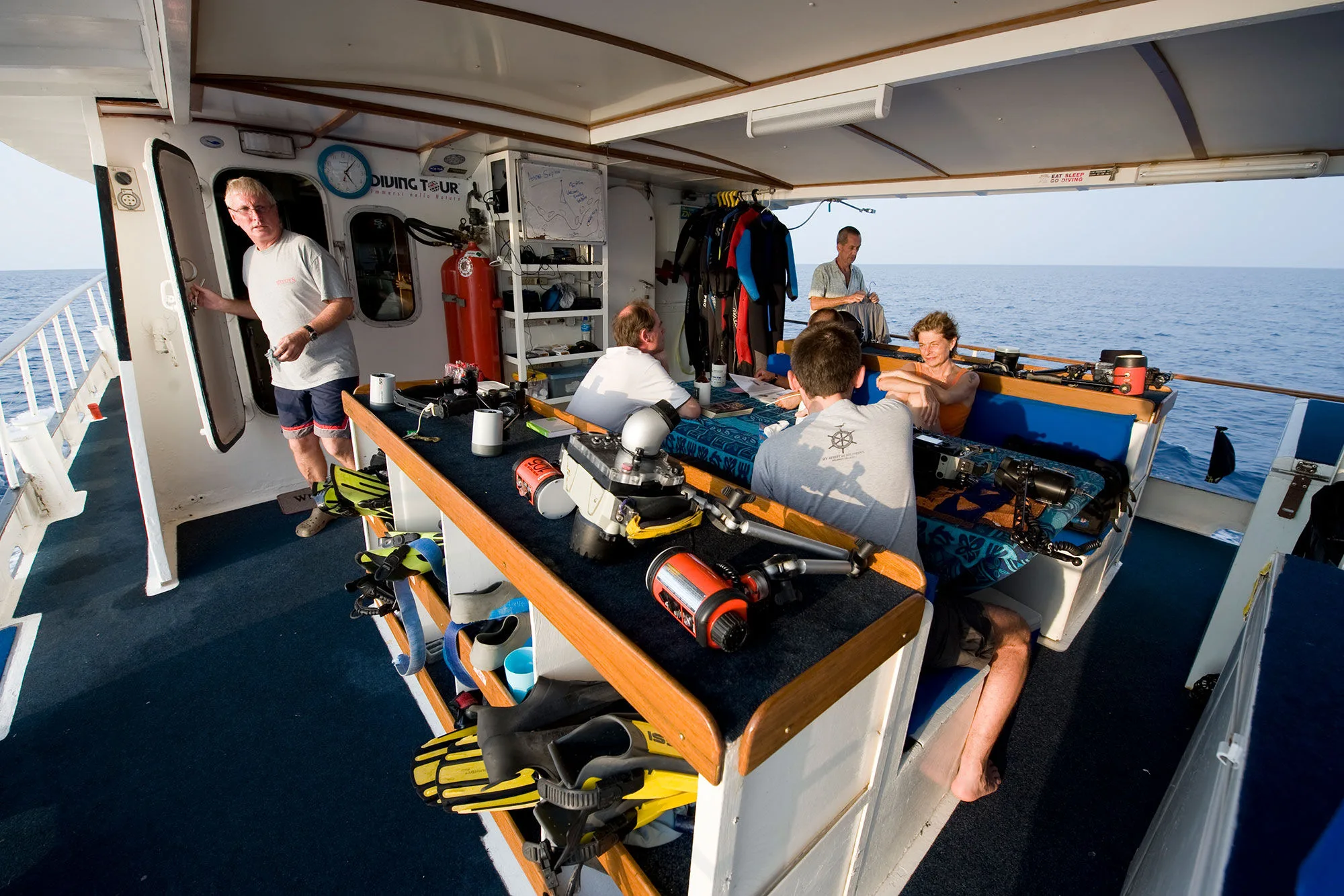
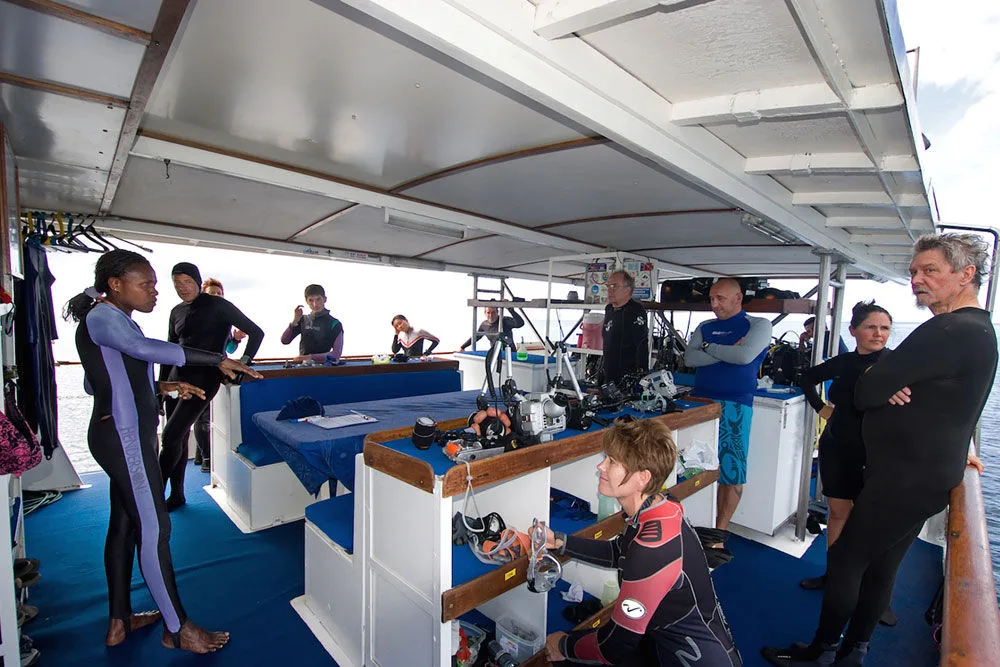
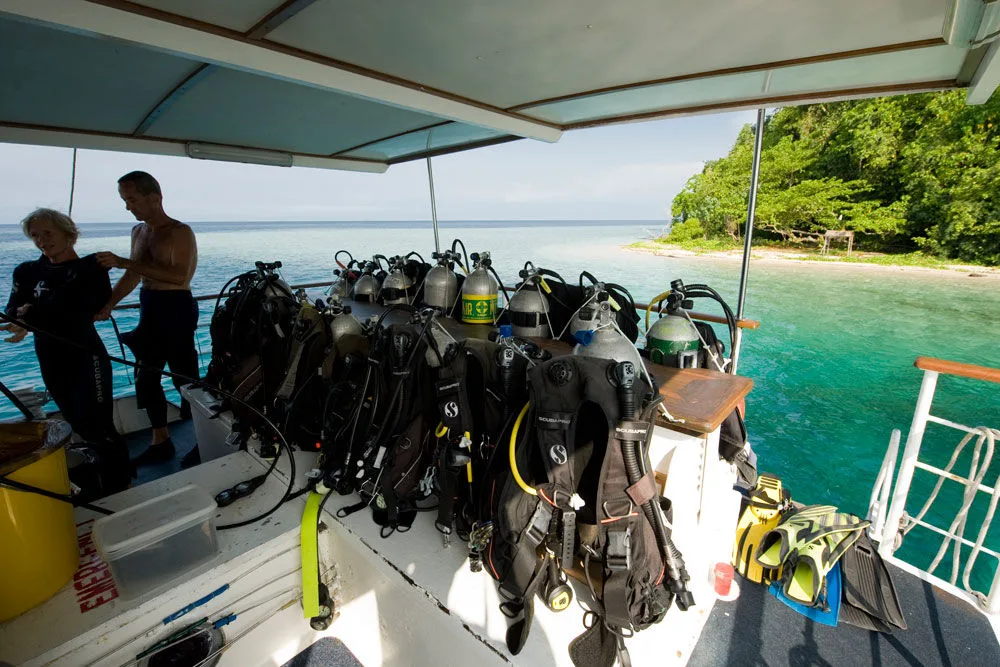
She was not built for diving but she was converted for it properly: a wide dive deck with a camera table, 110 V and 220 V charging outlets, a separate rinse tank for camera gear, and a water-level platform with a ladder for getting in and out. The saloon and lounge are air-conditioned, the sun deck is shaded and cushioned, and the laundry is done every day, so there is little point packing much.
No mark-up
You pay the rate the operator publishes. The only thing added on top is the actual payment processing cost — no fee of ours.
We run the booking
Correspondence with the operator, holding your places, the contract, confirmation and all paperwork sit on our side. Nothing for you to arrange yourself.
Pay by card
We send you a Stripe invoice — pay by card, in your own currency, from anywhere in the world. The transfer to the operator is handled on our side.
Support in your language
We help you pick the cabin and dates, answer questions on the route and gear, and stay reachable until you are home — in English, in your time zone.
We quote the exact amount when confirming the booking: it covers the operator's rate plus the actual payment processing cost. No hidden charges.
Yacht Specifications
Length
22 m
Beam
6.1 m
Year Built
1972
Capacity
10 guests
Cabins
7
Speed
8.5 knots service speed, 11.5 top
Engine
2 × Cummins 250 hp
Refit
2010
Bathrooms
7
Tender
1 × 5.5 m fibreglass tender
Water capacity
12,000 l
Fuel capacity
8,333 l
Freshwater maker
watermaker, 750 l per day
On Board
Diving
Two charges are compulsory and both are invoiced in advance: an environmental and safety fee of $9 per night and a conservation fee of $20 per trip. Nitrox goes by package — $210 on 6–8 night departures, $270 on 9–10 nights, $300 on 11–12. Rental gear on board is limited in sets and sizes, so ask ahead; the operator publishes no rental prices. Dive sites are at the captain's discretion and weather dependent.
Food
No spirits are carried, so bring your own duty free if you want any. Beer, soft drinks and wine by the bottle are sold on board. Special dietary requests should go in at booking, and the operator asks that they be limited to religious requirements and allergies.
Navigation and safety
Cabins
· 1 cabin
Double bed
Beds: 1 double bed
The only cabin with a proper double bed, right in the bow of the lower deck. White bulkheads with timber battens following the curve of the hull, a shelf and reading lights over the head of the bed. The en-suite is split in two: the shower on one side of the door, the toilet and basin on the other — an unusual arrangement on a boat this size. It is normally taken by two; sole use is priced separately.
· 2 cabins
Double lower bed and single upper bunk
Beds: 1 double lower bed and 1 single upper bunk
Two mirror-image cabins in the aft section of the lower deck, port and starboard. A double bed below, a single bunk above. One detail the operator flags separately: the lower double runs across the boat while the upper bunk runs fore and aft, at right angles to it. Sold either as a pair or as a single berth shared with someone of the same gender. Own en-suite and individually controlled air conditioning.
· 2 cabins
Bunk beds, wide lower berth
Beds: 1 wide single lower berth and 1 single upper bunk
Two forward cabins, port and starboard, between cabin 7 and the engine room. Bunk-style: a wide single below, a standard single above. They usually go out as large singles — one guest to the cabin — and this is where solo travellers get a cabin to themselves without paying for a whole double. On some departures the same cabins open as twins, and that is when the boat's capacity rises from ten to twelve. The finish is the same as everywhere on board: white panels with timber battens, a cupboard, a mirror and reading lights, with an en-suite of its own.
· 2 cabins
One wide single bed
Beds: 1 wide single bed
The most compact cabins on board, port and starboard in the aft section. One wide single bed and an en-suite with a shower. The operator says frankly that floor space is minimal and that storage is shelving and hooks rather than a wardrobe. In exchange this is the cheapest berth on the boat, and it is the base figure every other category is priced from.
Schedule & Pricing
Bismarck Sea Signature: Kimbe, the Witus and Fathers Reefs
The vessel's flagship programme, nine or ten nights in a loop from the Walindi jetty. It gathers three different areas into one trip: the reefs of Kimbe Bay with the Bradford, Inglis and Joelle's seamounts and the white sand of Restorff Island; the volcanic Witu Islands with the Lama Shoals seamount, coral arches, black-sand night dives and the caldera of Garove Island; and the north coast of New Britain — Fathers Reefs, the Lolobau Islands and the Bainings under the volcanoes, where banks rise from the floor of the Bismarck Sea and Norman's Knob, Lesley's Knob, Killibob's Knob and The Archway draw rays, turtles, barracuda, jacks and reef sharks. Boarding from 4:00 pm, departure around 6:00 pm, disembarkation by 9:00 am. One airport at both ends — Hoskins (HKN).
June 2027
1 departureOctober 2027
1 departureNovember 2027
1 departureSeptember 2028
1 departureOctober 2028
1 departureNovember 2028
1 departureNew Hanover and the Witu Islands
A ten or eleven night passage between Kimbe Bay and Kavieng, run in either direction — check which before buying tickets, because one end is Hoskins (HKN) and the other Kavieng (KVG). The diving is around New Hanover and at the Witu Islands. New Hanover means coral gardens, bommies and walls in the passages; the channels drift beautifully, with big schools, rays and sharks working along them. On the trips that finish in Kimbe Bay the last diving day is spent there. The operator warns that this itinerary steams more than usual, so a couple of days drop to three dives instead of four or five.
April 2027
1 departureSeptember 2027
1 departureOctober 2027
1 departureApril 2028
1 departureMay 2028
3 departuresSeptember 2028
1 departureOctober 2028
1 departureWest New Britain
Eight nights out of the Walindi jetty and back. The programme takes in the Kimbe Bay reefs plus — weather depending — either Fathers Reefs or the Witu Islands; the captain decides once the trip is under way, and it is not fixed in advance. This is the cheapest programme on the boat and the one she runs most often in November and December.
November 2026
1 departureNovember 2027
2 departuresDecember 2027
1 departureNovember 2028
2 departuresDecember 2028
1 departureWitu Islands
Eight nights focused on the volcanic Witu group north-west of Kimbe Bay, returning for a couple of dives in the bay itself on the last day. Seamounts that climb from deep water almost to the surface, coral arches, black sand for night dives and the caldera of Garove Island. Villagers paddle out to the anchorages with fruit and vegetables — that is part of the trip, not an accident. These are the departures the operator opens the season with in March, on light north-westerly winds.
March 2027
3 departuresApril 2027
1 departureMarch 2028
1 departureApril 2028
1 departureFathers Reefs and Kimbe Bay
Eight nights on the offshore banks of Fathers Reefs along the north coast of New Britain and on the outer reefs of Kimbe Bay. The terrain is sharper than inside the bay: drop-offs, arches and swim-throughs, and being offshore it brings in sharks, rays, turtles and schooling barracuda and jacks. The programme is scheduled for July and August, when the south-east trades blow: Fathers sits in the lee of the active volcano Ulawun and stays calmer than the open sea.
June 2027
1 departureAugust 2027
2 departuresJune 2028
1 departureJuly 2028
1 departureAugust 2028
2 departuresEast and West New Britain
A crossing along the north coast of New Britain between Kimbe Bay and Rabaul, eight or nine nights, run in both directions. On the way come the outer Kimbe Bay reefs, Fathers Reefs and the Bainings, and at Rabaul the jetty muck diving starts: frogfish, ghost pipefish, harlequin and bumblebee shrimp, mandarinfish, coconut octopus, boxer crabs, leaf scorpionfish and nudibranchs. One important note from the operator: Febrina does not dive the Rabaul wrecks — those are specialty dives and they recommend doing them with local operators. Two different airports: Hoskins (HKN) at one end, Tokua near Rabaul (RAB) at the other.
July 2027
2 departuresJuly 2028
2 departuresSiassi exploratory itinerary
Ten or eleven nights from Walindi to the Siassi Islands in the Vitiaz Strait, between New Britain and the mainland. The operator schedules this one as exploratory and deliberately publishes no dive site list: the route is put together on the spot. The skipper keeps a couple of trips like this in the calendar every year — by his own account there is still plenty up here to find.
May 2027
2 departuresJune 2028
1 departureEast coast of New Ireland, exploratory itinerary
Eleven nights along the east coast of New Ireland from Cape St George up to Kavieng, taking in the Feni Islands, Lihir Island and the Tabar group. The itinerary is billed as exploratory. A logistics note: boarding is not at a jetty — guests staying in Rabaul are asked to make their way to Kokopo Beach Bungalows, where the tender collects them at 4:00 pm; you fly into Rabaul (RAB) and out of Kavieng (KVG).
April 2027
1 departurePrices and availability can change. Get in touch and we'll confirm current dates and pricing.
Included in Price
Not Included
Required extras
Optional extras
Extras are shown per person and are paid on board.
from 3810 USD / 8 nights
Estimated wait time — 24 hours
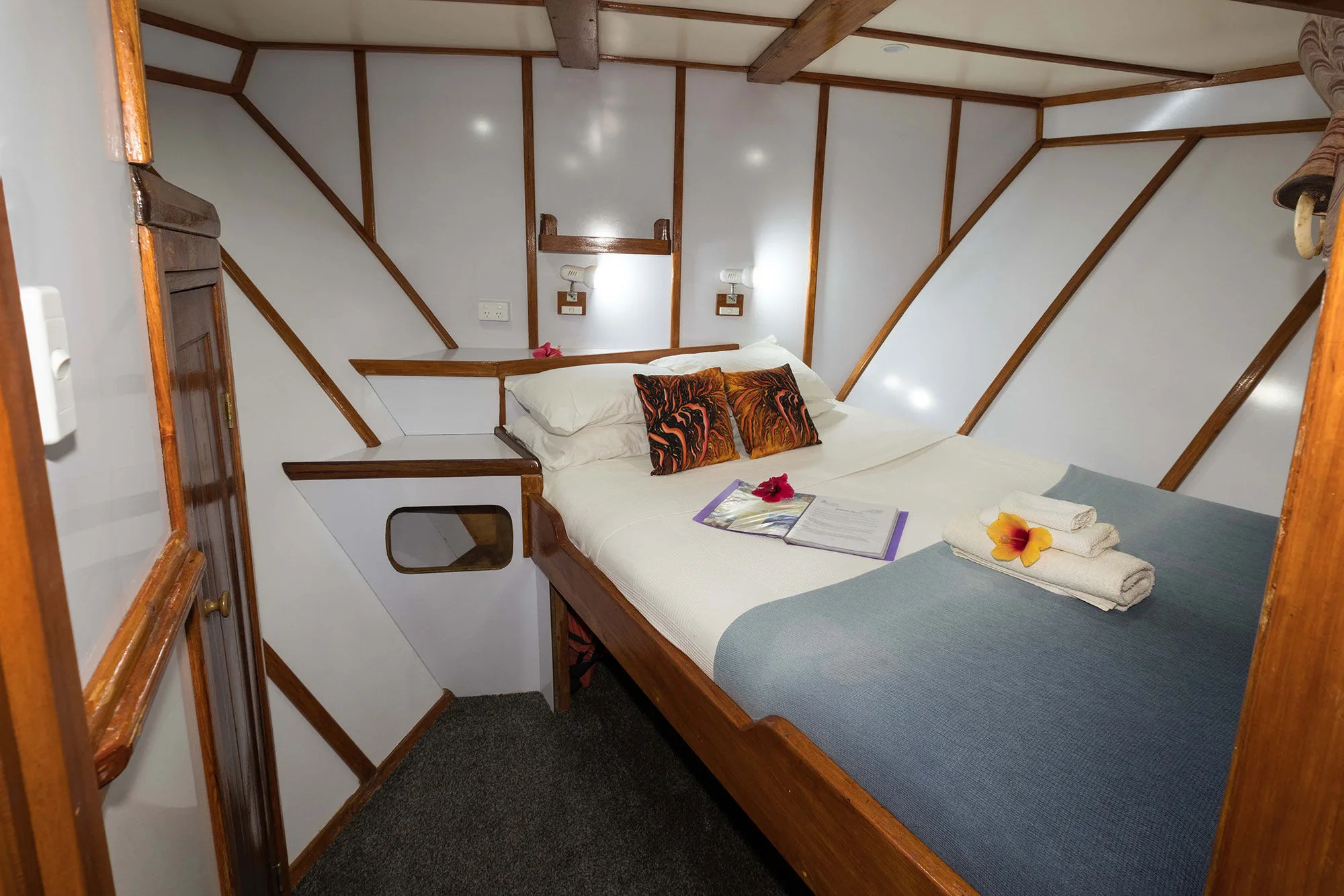
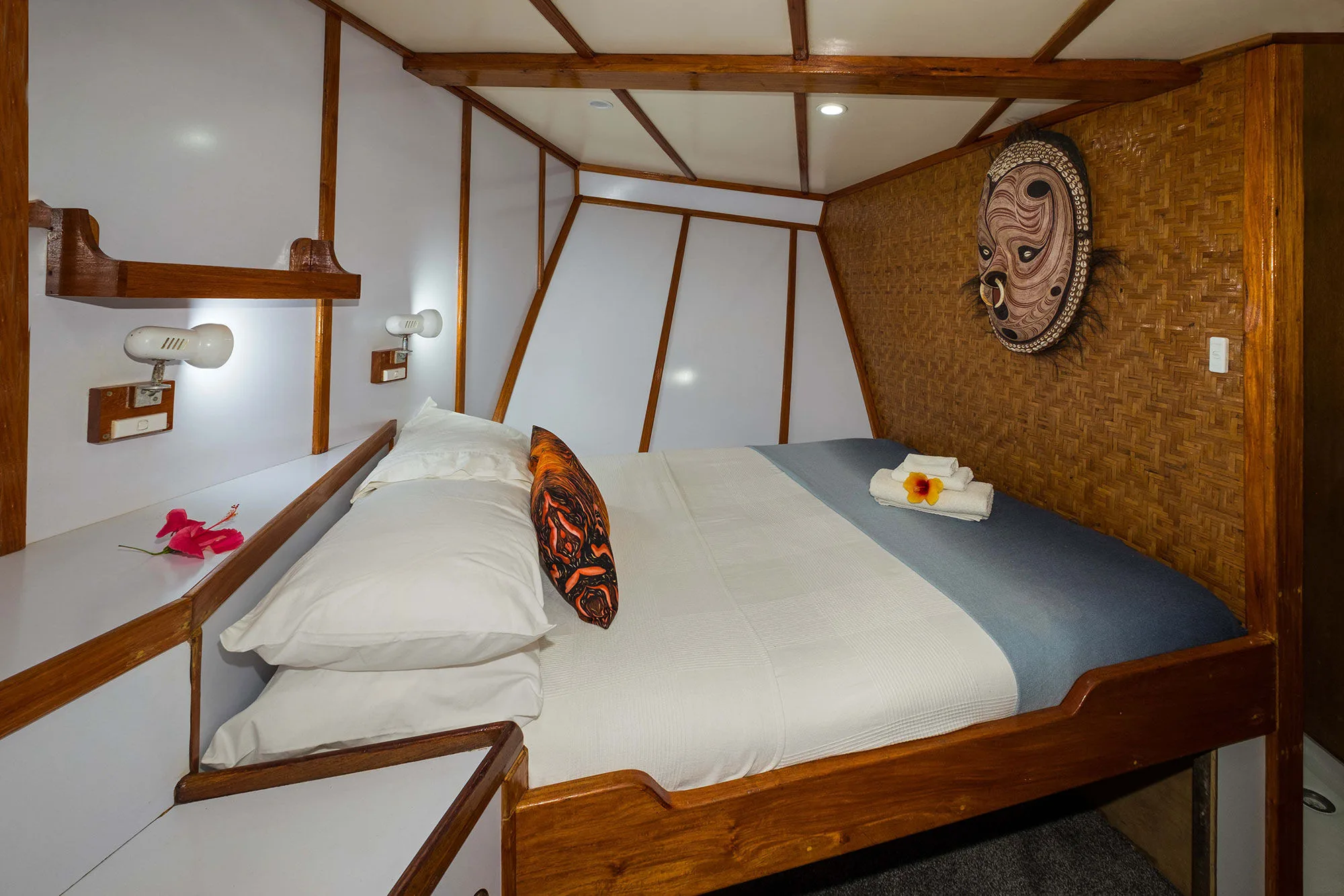
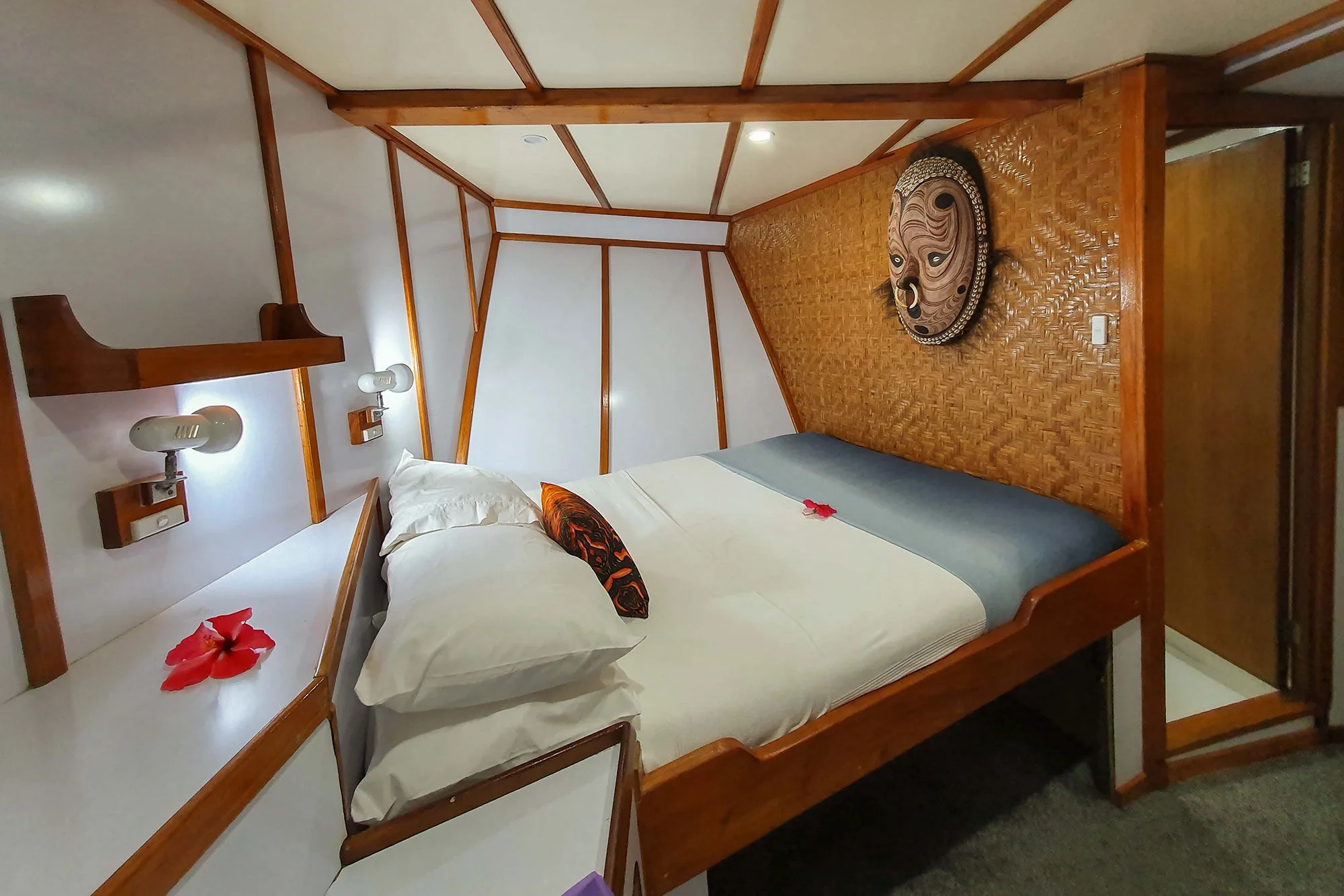
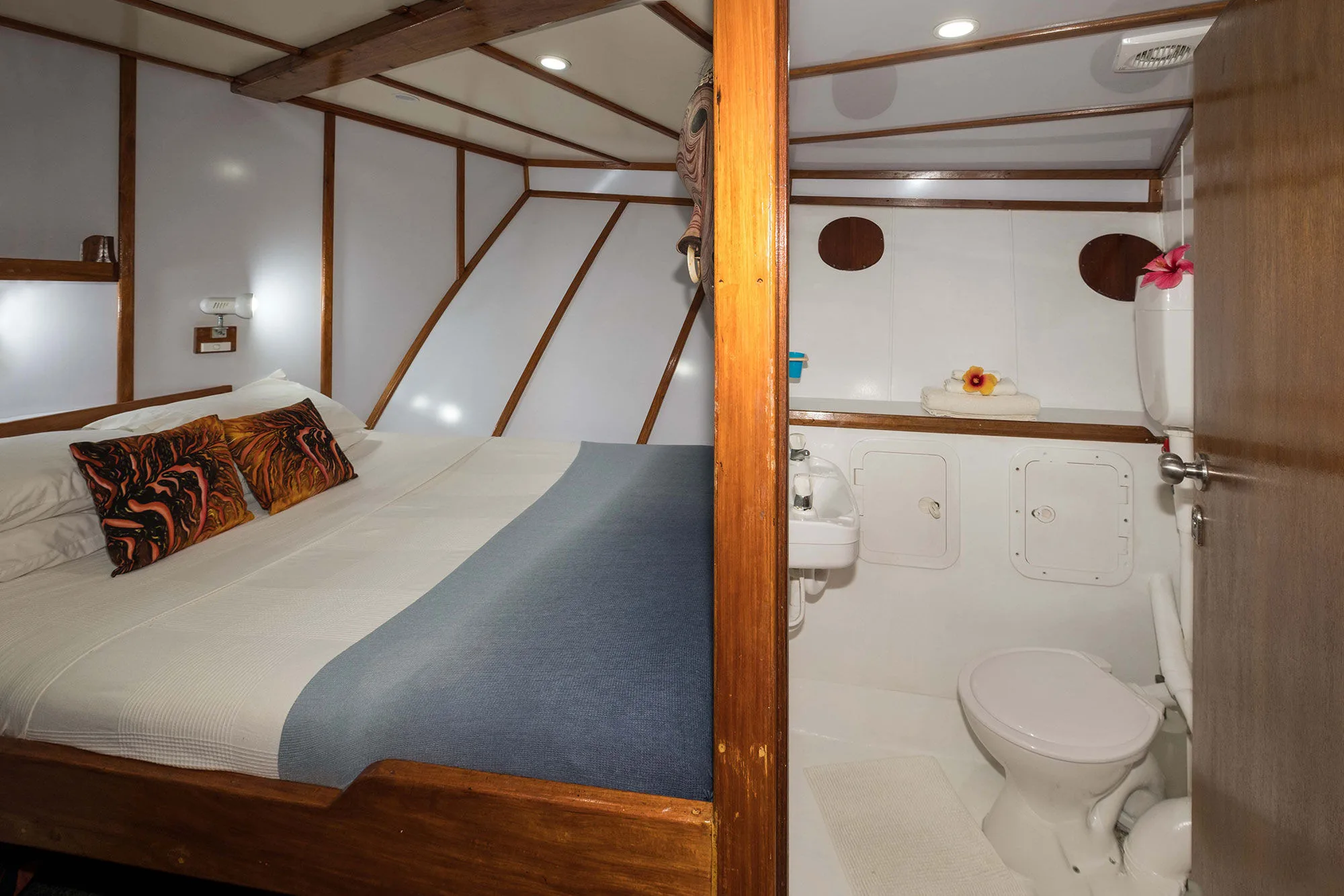
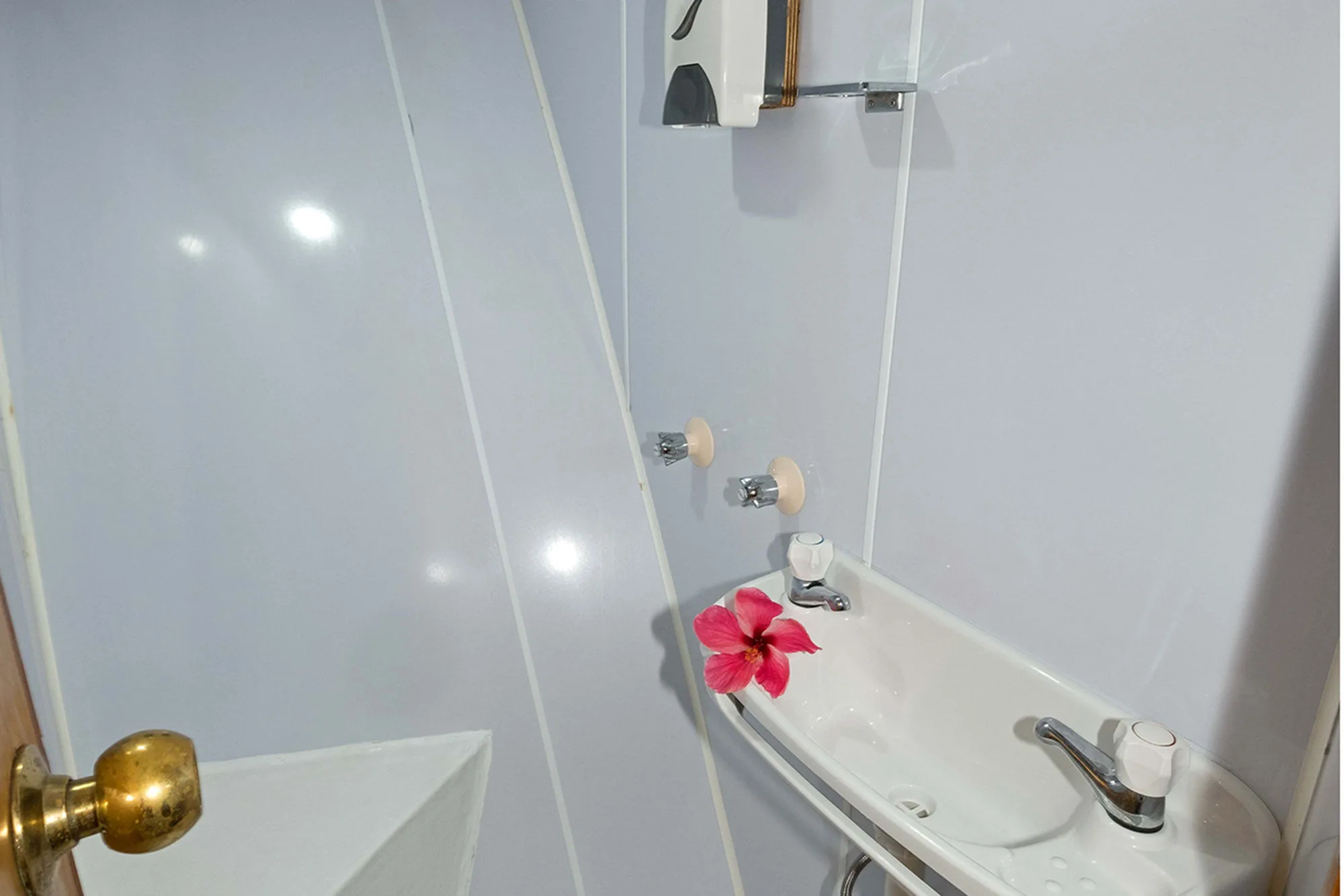
Double bed
The only cabin with a proper double bed, right in the bow of the lower deck. White bulkheads with timber battens following the curve of the hull, a shelf and reading lights over the head of the bed. The en-suite is split in two: the shower on one side of the door, the toilet and basin on the other — an unusual arrangement on a boat this size. It is normally taken by two; sole use is priced separately.
- Deck
- lower deck, bow
- Beds
- 1 double bed
- Windows
- Porthole
- Cabin numbers
- 7
- Yacht Specifications
- the roomiest cabin on board
- cabins of this type
- 1
- from
- from $3,970 per person on a twin-share basis
Double lower bed and single upper bunk
Two mirror-image cabins in the aft section of the lower deck, port and starboard. A double bed below, a single bunk above. One detail the operator flags separately: the lower double runs across the boat while the upper bunk runs fore and aft, at right angles to it. Sold either as a pair or as a single berth shared with someone of the same gender. Own en-suite and individually controlled air conditioning.
- Deck
- lower deck, aft
- Beds
- 1 double lower bed and 1 single upper bunk
- Windows
- Porthole
- Cabin numbers
- 3, 4
- cabins of this type
- 2
- from
- from $3,970 per person
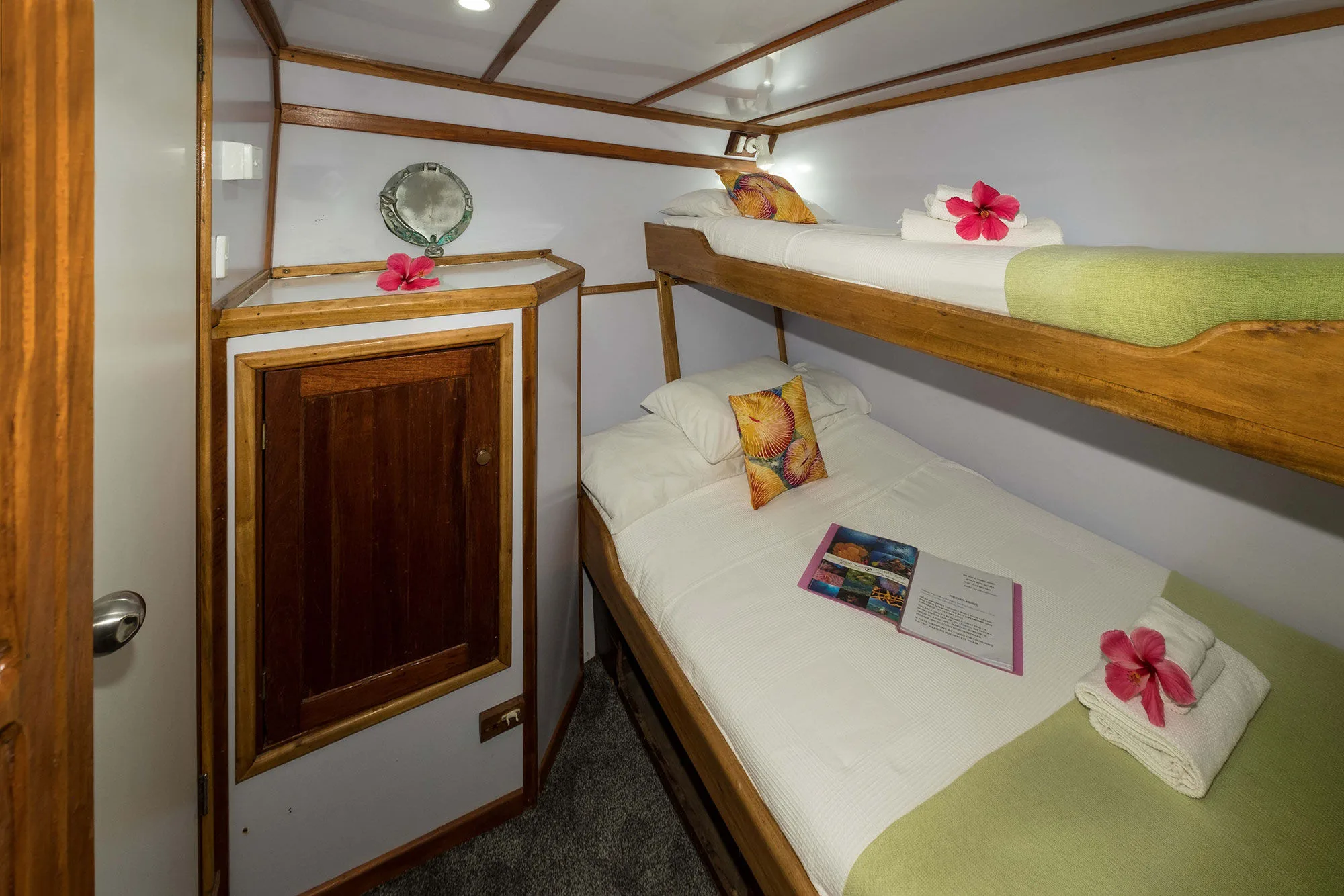
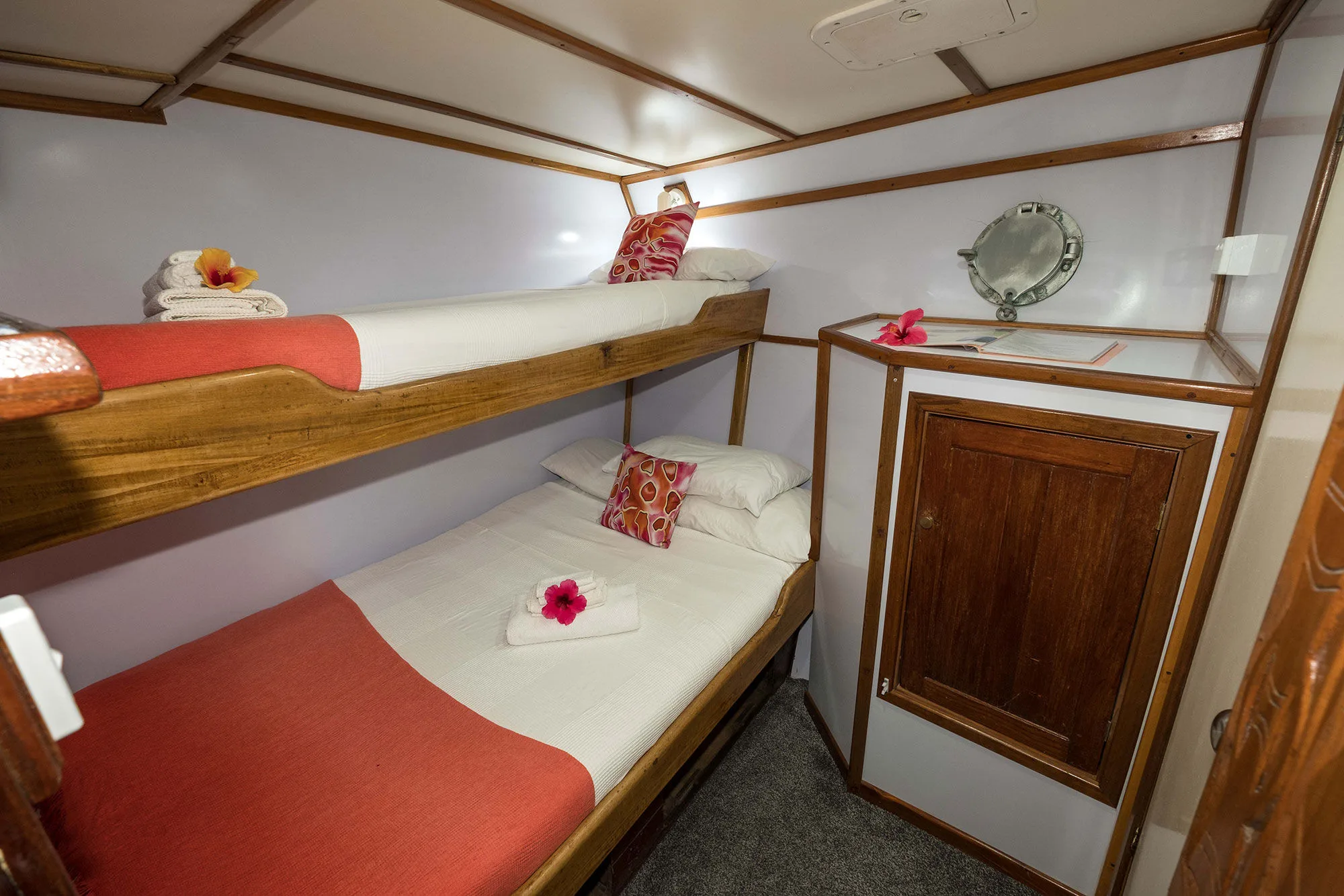
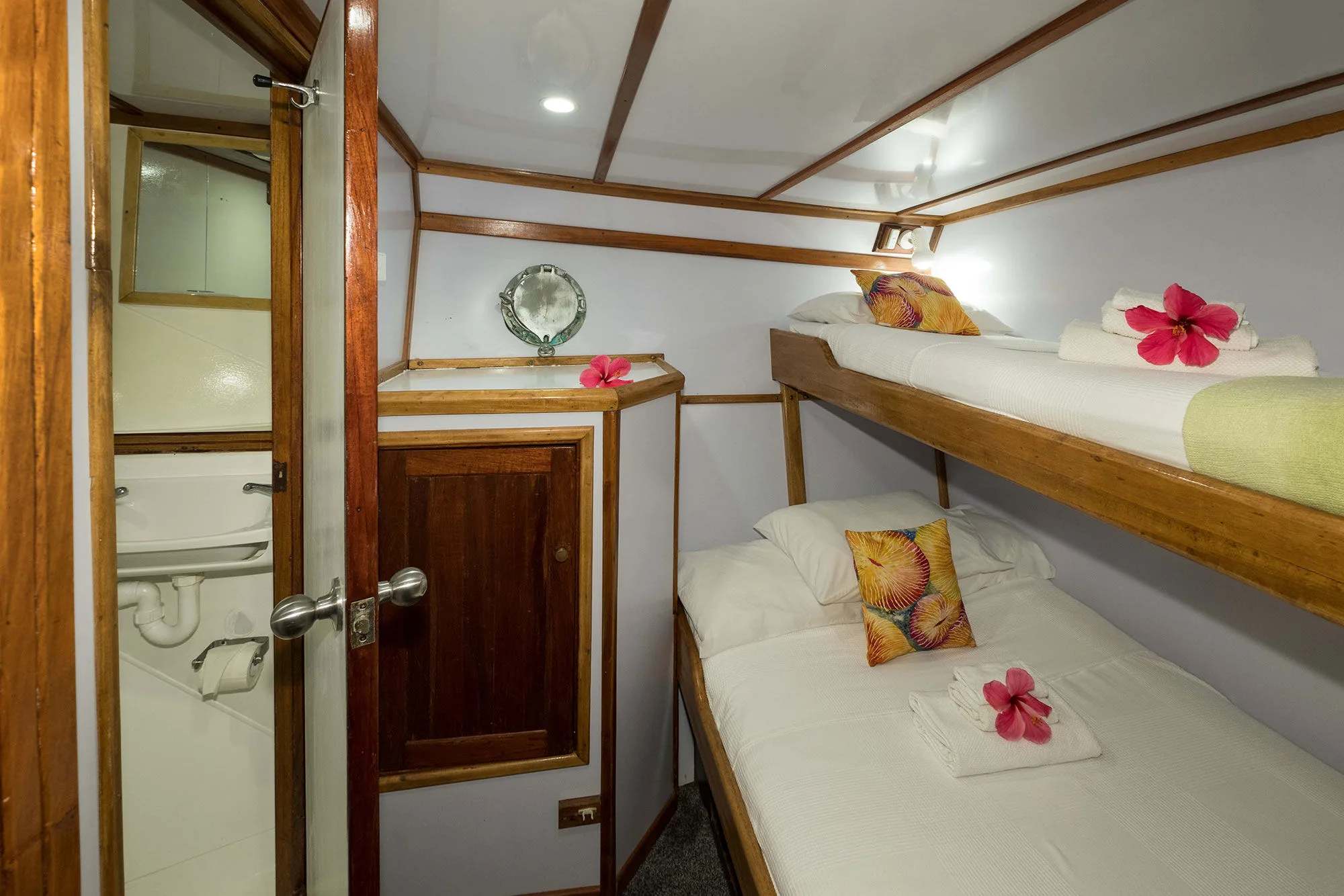
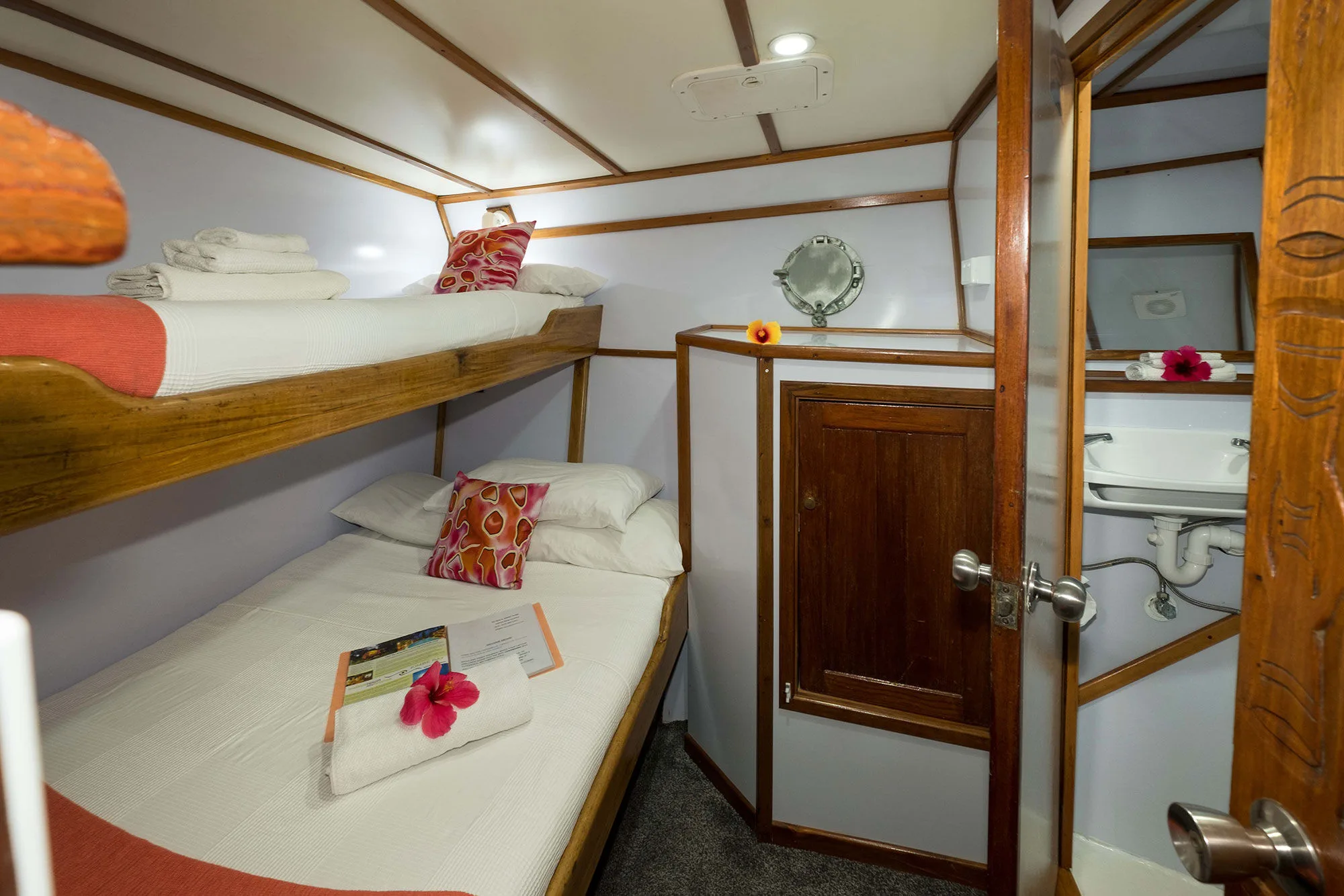
Bunk beds, wide lower berth
Two forward cabins, port and starboard, between cabin 7 and the engine room. Bunk-style: a wide single below, a standard single above. They usually go out as large singles — one guest to the cabin — and this is where solo travellers get a cabin to themselves without paying for a whole double. On some departures the same cabins open as twins, and that is when the boat's capacity rises from ten to twelve. The finish is the same as everywhere on board: white panels with timber battens, a cupboard, a mirror and reading lights, with an en-suite of its own.
- Deck
- lower deck, bow
- Beds
- 1 wide single lower berth and 1 single upper bunk
- Windows
- Porthole
- Cabin numbers
- 5, 6
- cabins of this type
- 2
- from
- from $3,970 per person twin share, from $4,845 for sole use
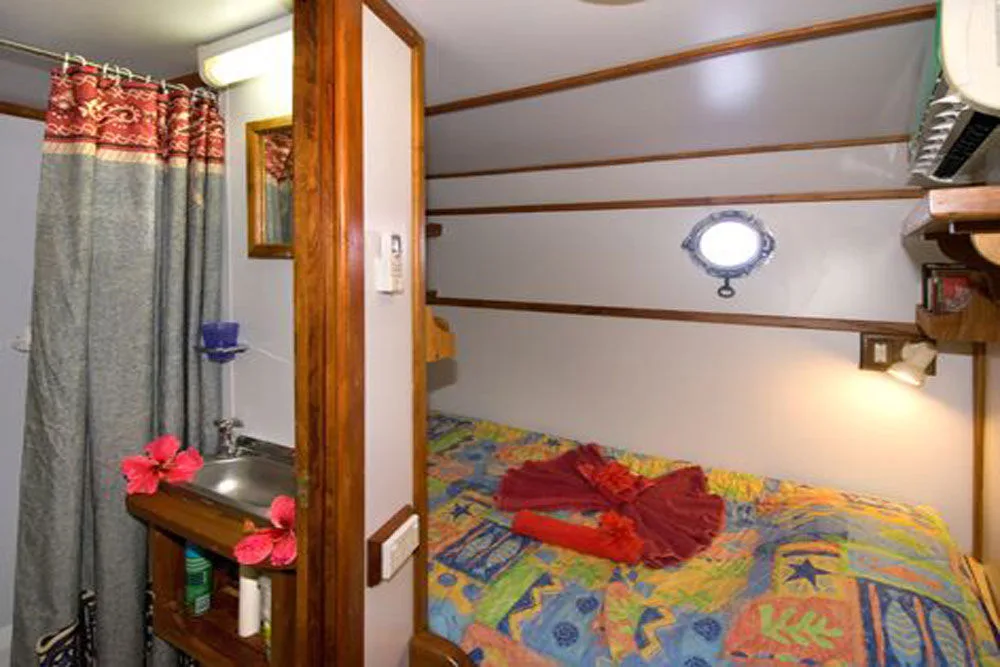
One wide single bed
The most compact cabins on board, port and starboard in the aft section. One wide single bed and an en-suite with a shower. The operator says frankly that floor space is minimal and that storage is shelving and hooks rather than a wardrobe. In exchange this is the cheapest berth on the boat, and it is the base figure every other category is priced from.
- Deck
- lower deck, aft
- Beds
- 1 wide single bed
- Windows
- Porthole
- Cabin numbers
- 1, 2
- cabins of this type
- 2
- from
- from $3,850 — the base fare of the trip
Febrina
from 3810 USD