Nautilus Under Sea
 1 / 25
2 / 25
3 / 25
4 / 25
5 / 25
1 / 25
2 / 25
3 / 25
4 / 25
5 / 25
 6 / 25
 7 / 25
 8 / 25
 9 / 25
 10 / 25
 11 / 25
 12 / 25
 13 / 25
 14 / 25
 15 / 25
 16 / 25
 17 / 25
 18 / 25
 19 / 25
 20 / 25
 21 / 25
 22 / 25
 23 / 25
 24 / 25
 25 / 25
Book through Tour Leader Club
32 m · 19 guests · 9 cabins · 9 crew members
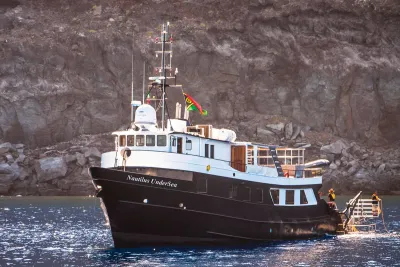
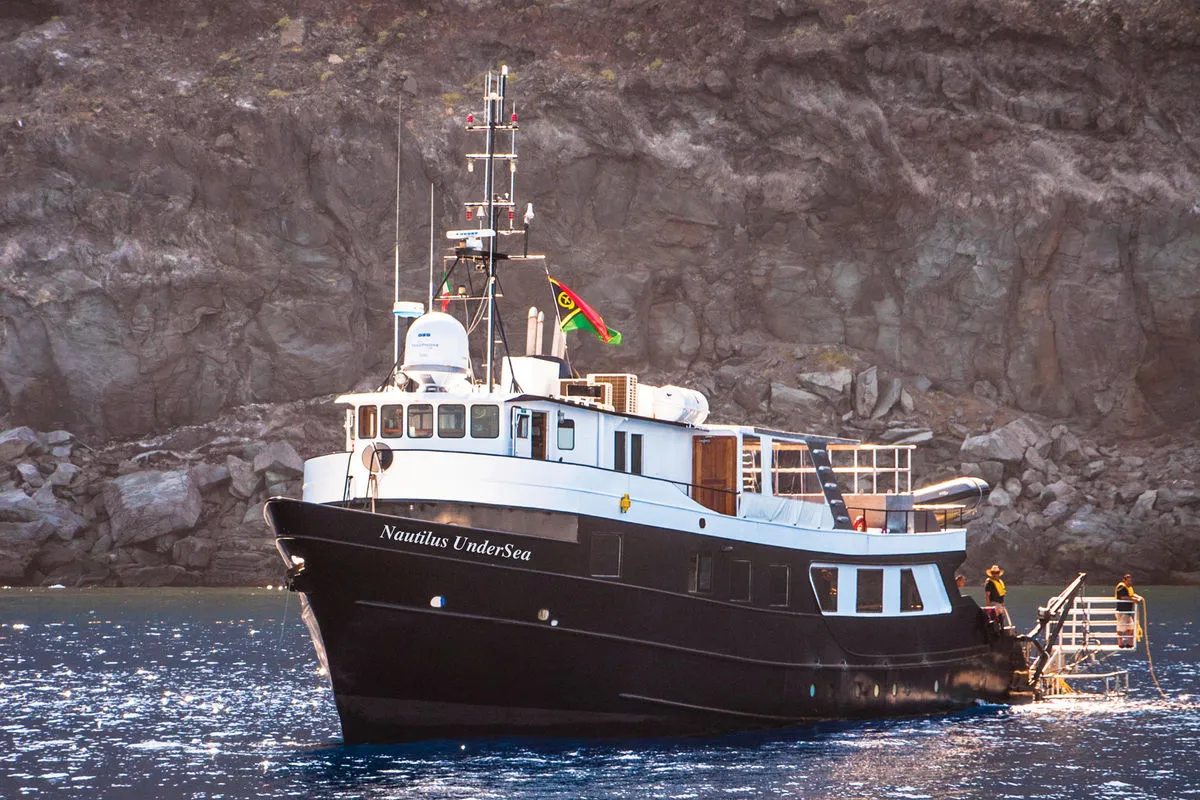
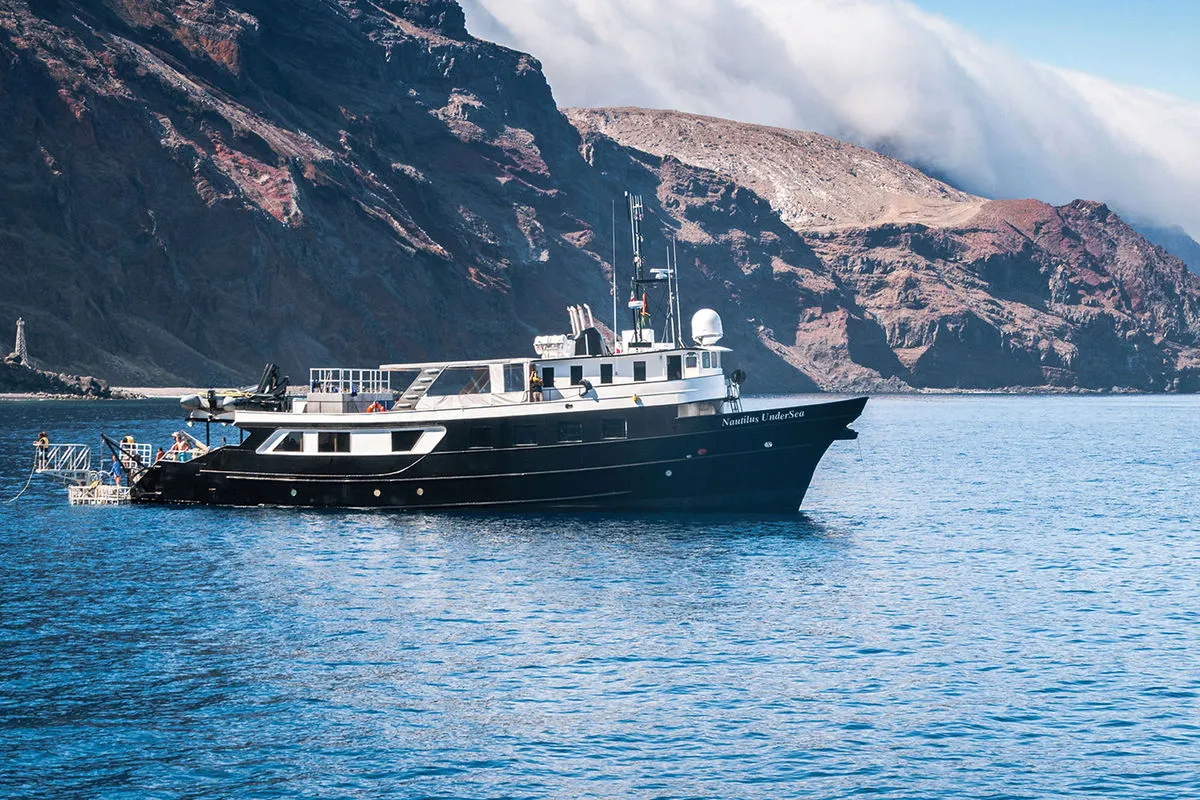
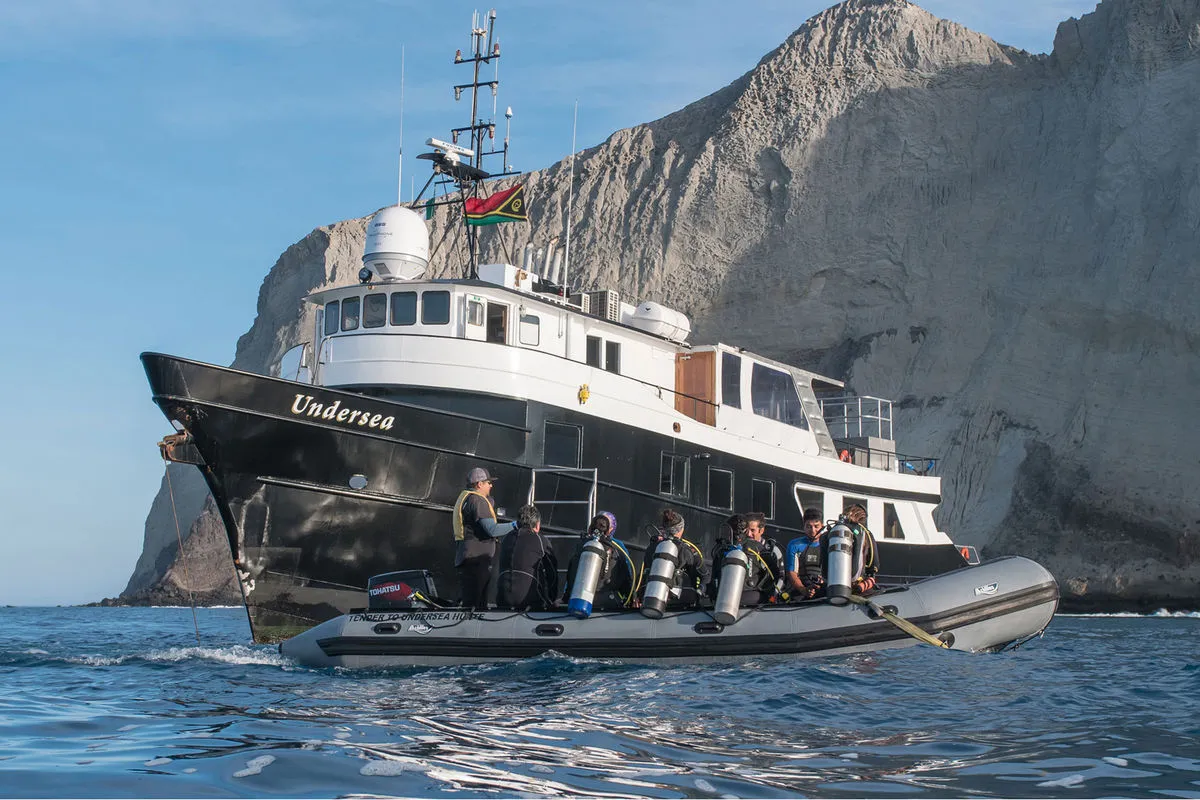
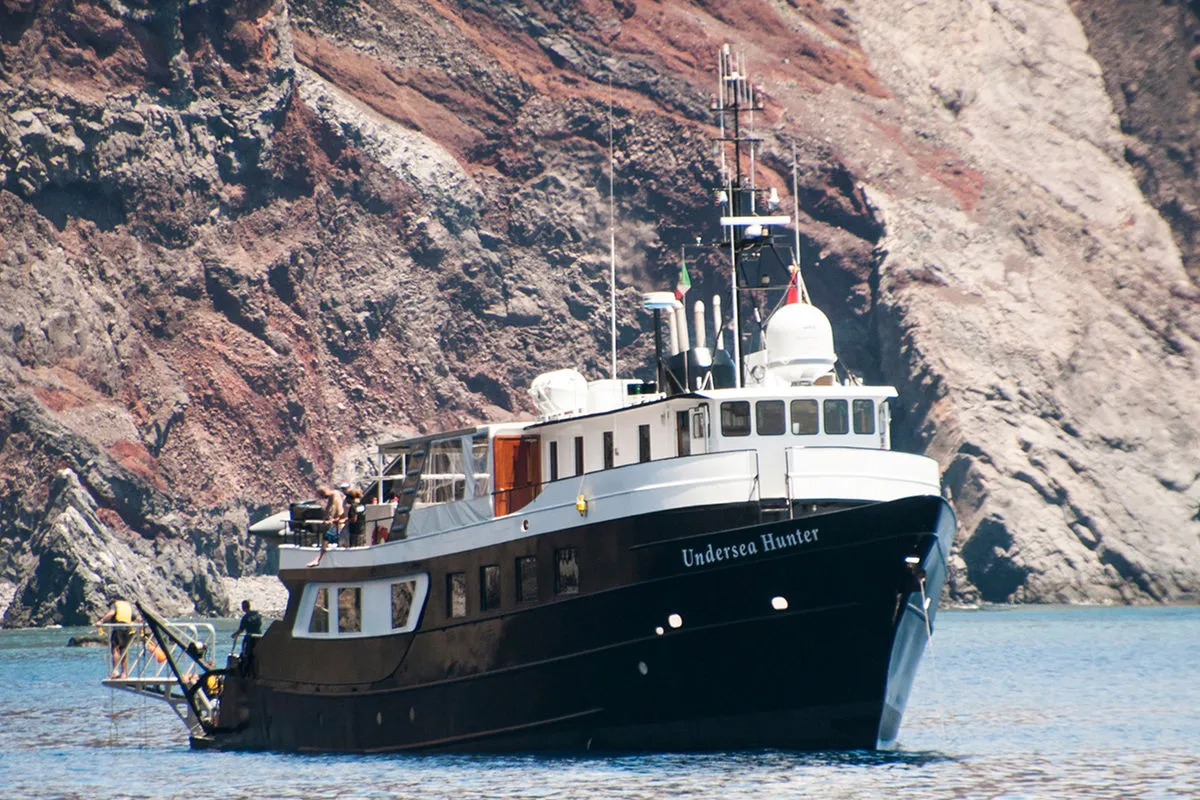
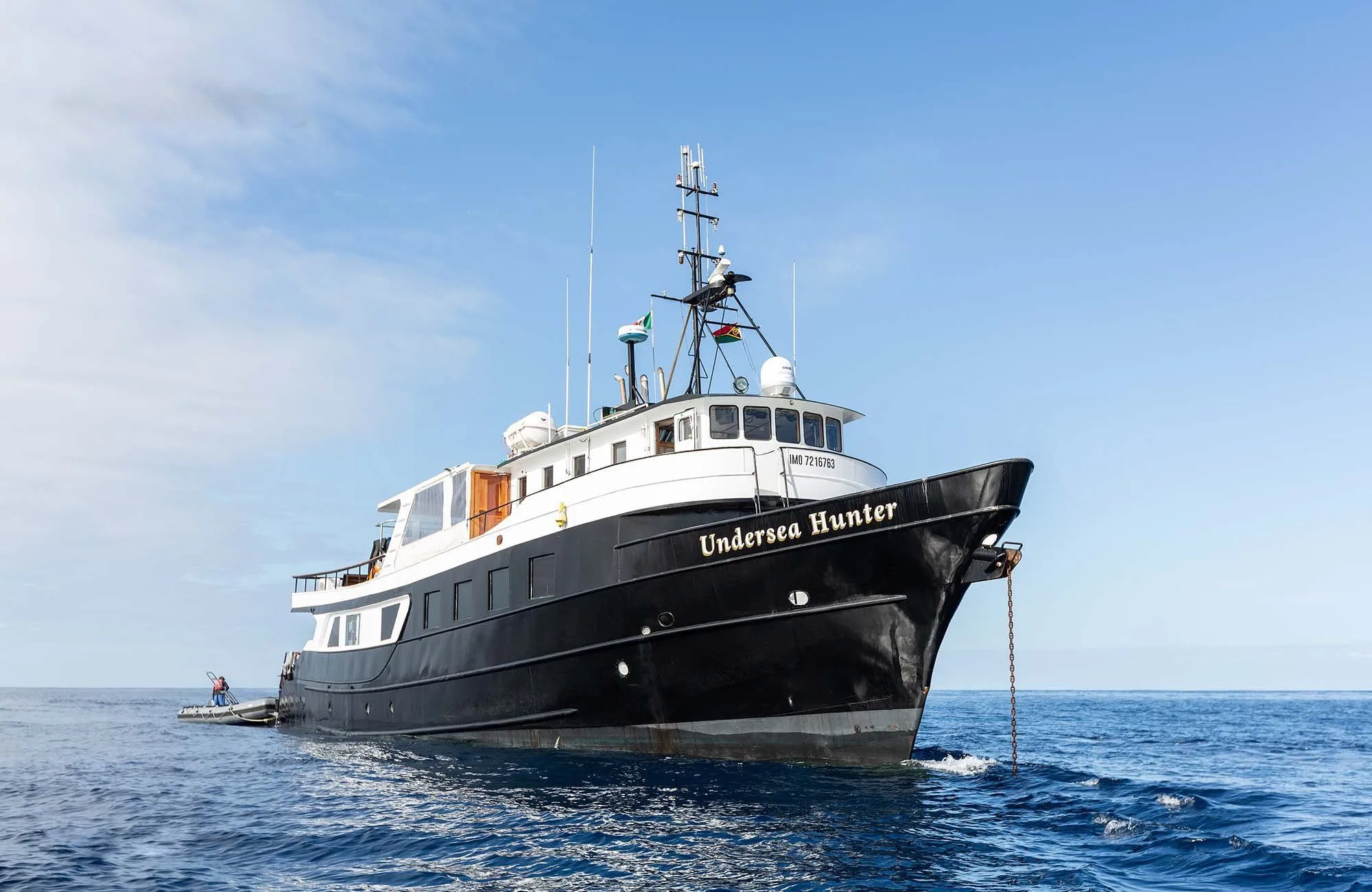
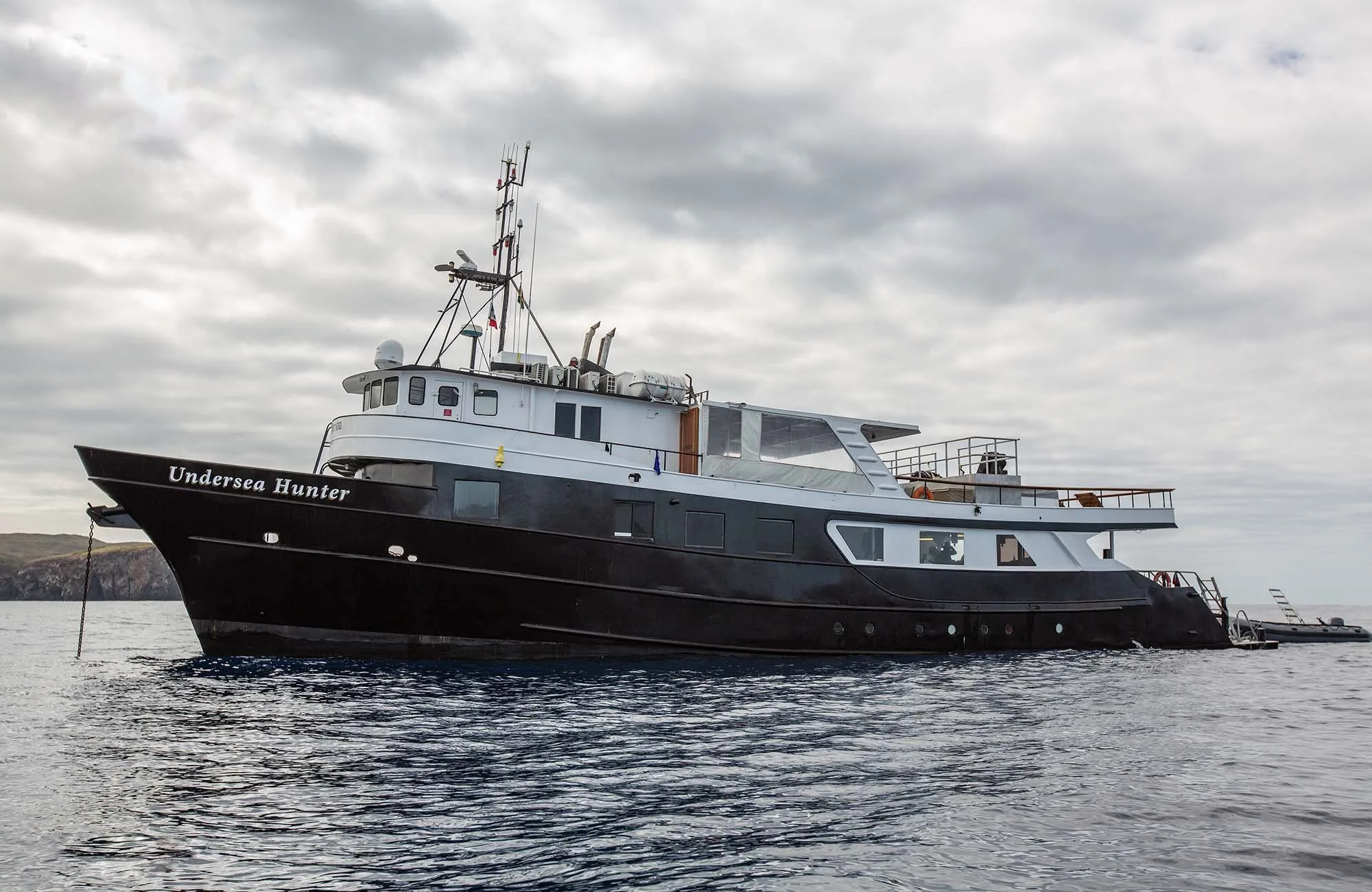
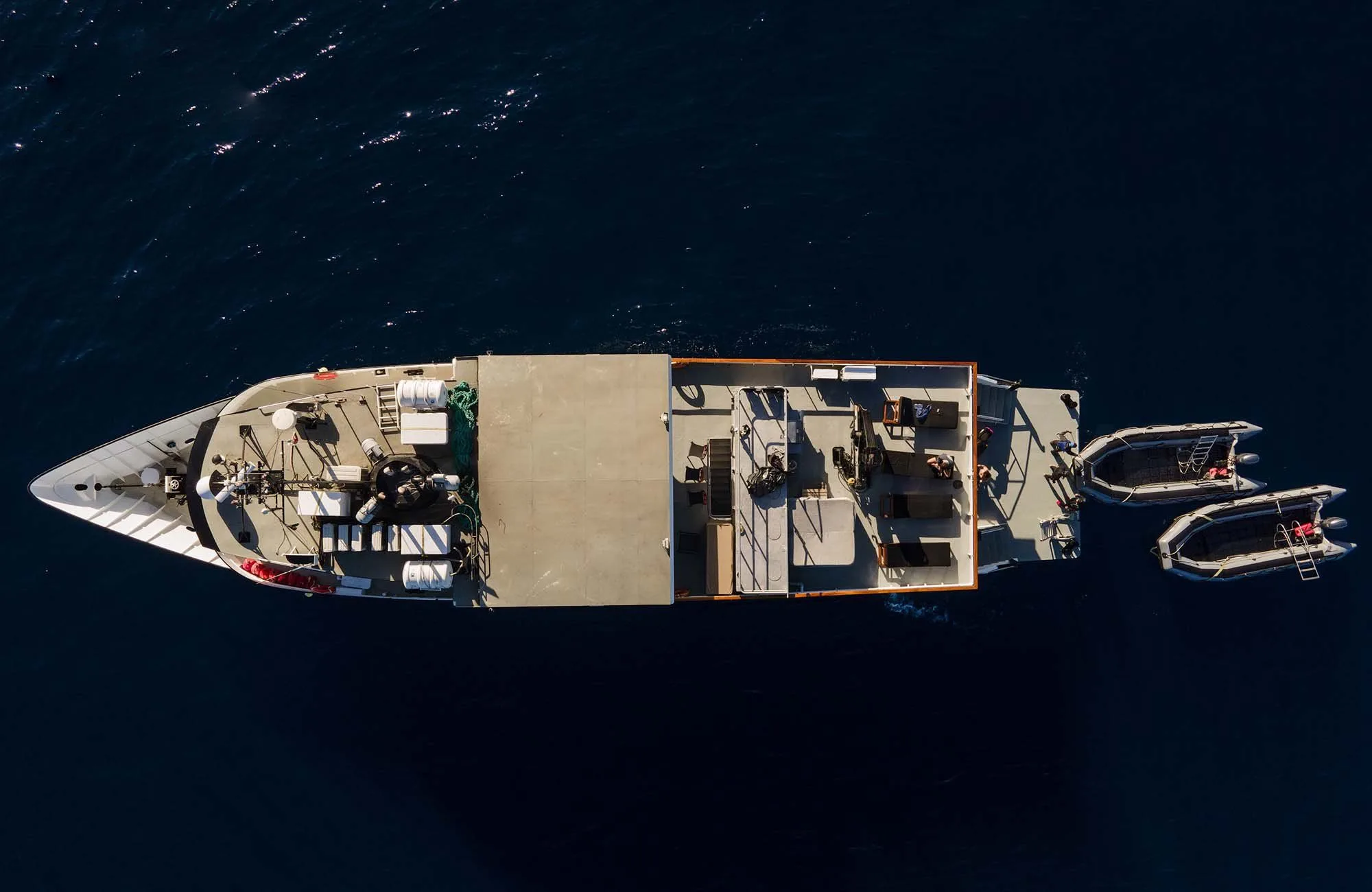
Nautilus Under Sea is the smallest and most characterful vessel in the Mexican fleet of Nautilus Adventures. The hull went into the water in 1968 as the submarine tender for Dr. Perry of Perry Oceanographic, and later became the legendary Undersea Hunter, carrying expeditions to Cocos Island and appearing in IMAX shoots across the Pacific. A shipyard refit stretched the hull to 32 metres and added a new superstructure, an extended sun deck, a bulbous bow and a stabilisation system. The name on the bow changed; the character did not.
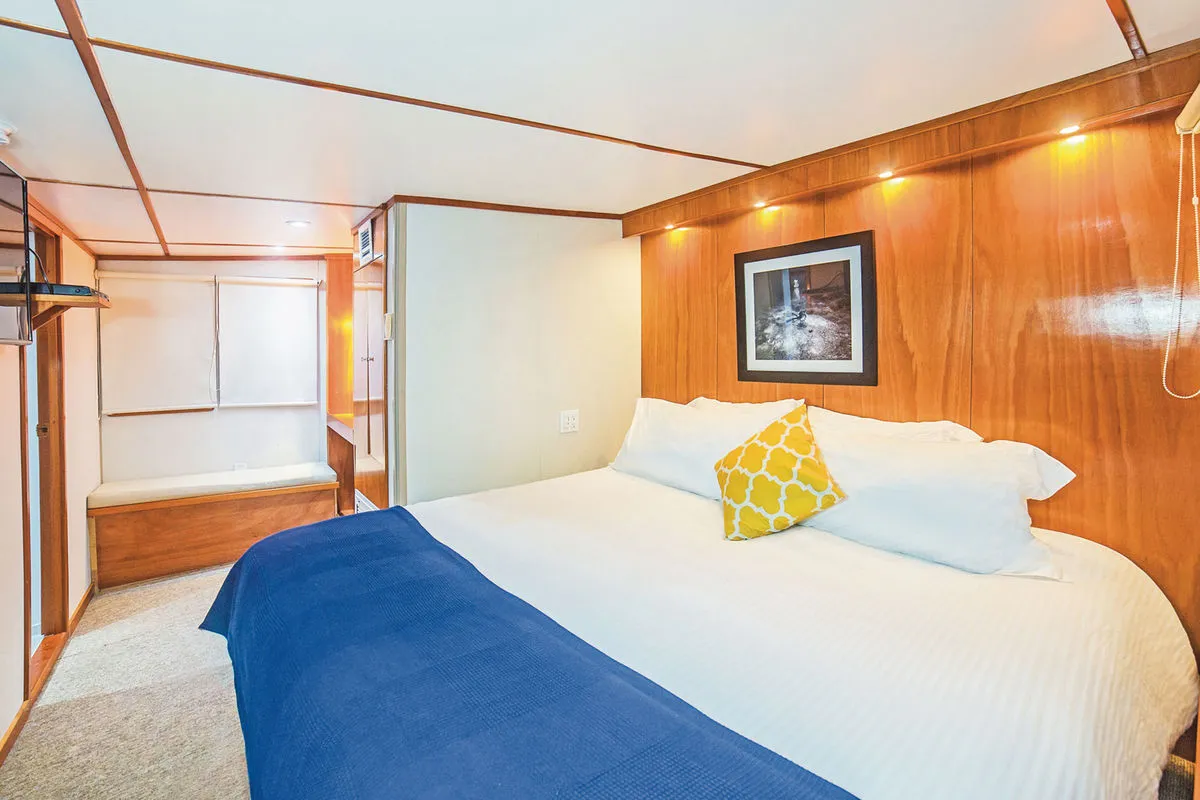
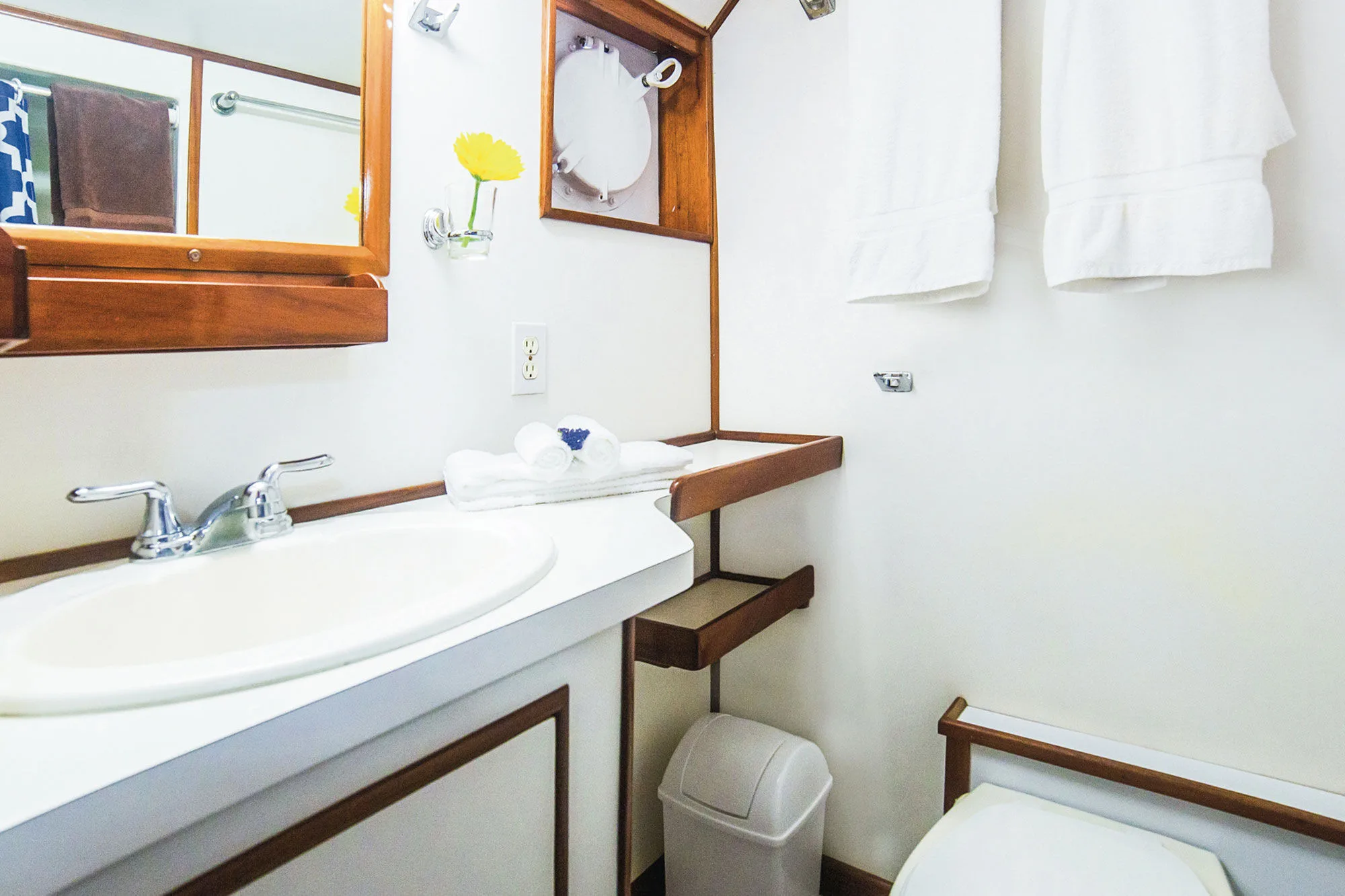
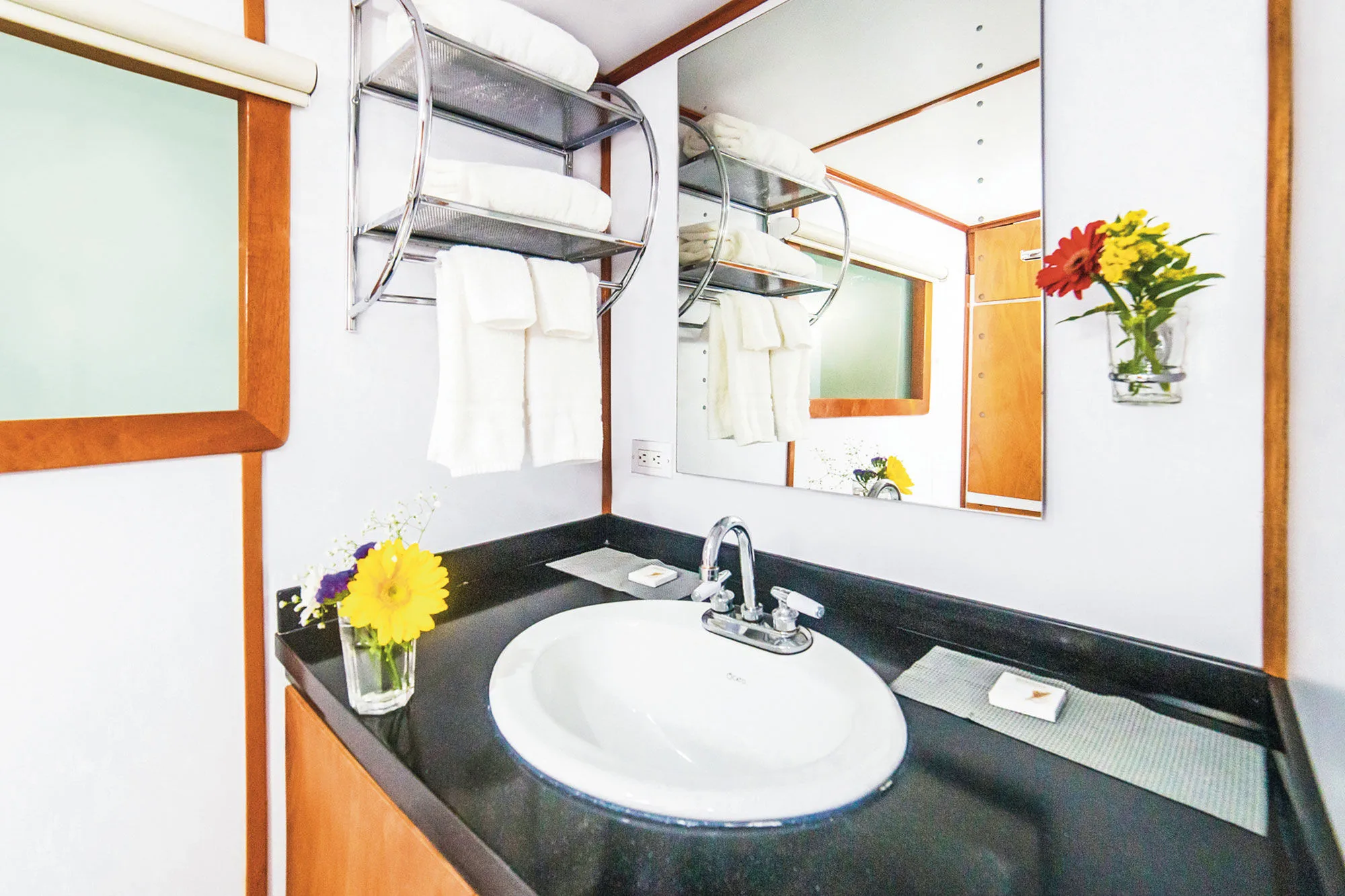
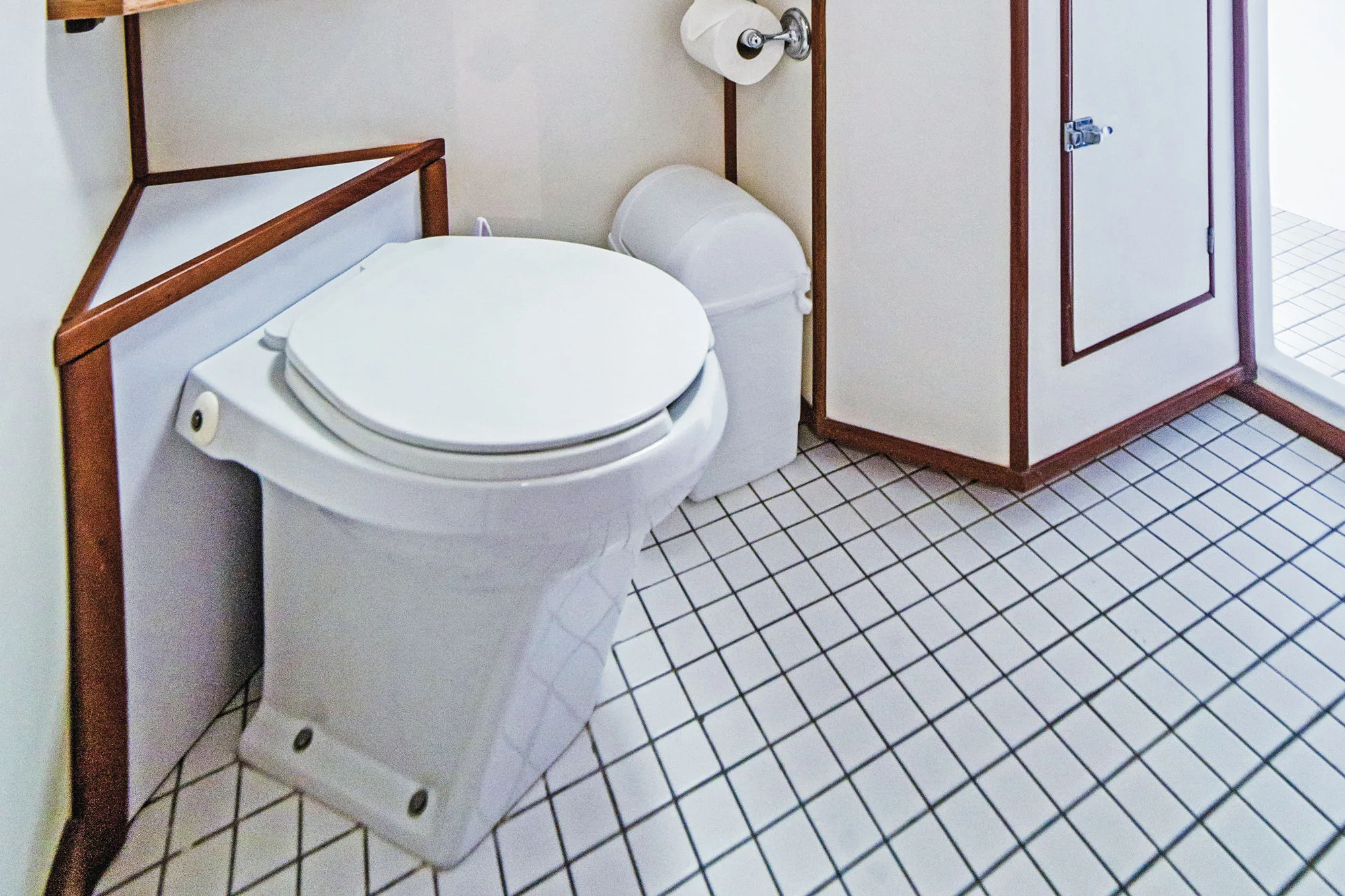
There are just 19 guests and nine staterooms, each with its own bathroom and shower and its own climate control. The crew numbers nine — roughly one crew member for every two guests. The lower deck cabins still wear the polished woodwork of the original ship, the Emerald premium suite sits on the sun deck next to the hot tub, and the Rosario stateroom beside the dive deck is wheelchair accessible, which is rare on a dive vessel.
The ship works out of Cabo San Lucas and La Paz on two big themes. The first is the Revillagigedo archipelago, which everyone simply calls Socorro: 235 nautical miles into the open Pacific, a day of crossing and five full diving days at El Canyon, The Boiler, Roca Partida, Cabo Pearce and Punta Tosca. The draw is the friendliest giant oceanic mantas in the world, with wingspans up to seven metres, up to twelve species of shark — hammerhead, silvertip, silky, Galapagos, whitetip reef — and bottlenose dolphins that come to divers of their own accord. The second theme is the Sea of Cortez, the “aquarium of the world” in Jacques Cousteau’s phrase: Las Animas with its hammerheads, La Reina with its baitballs, the sea lion colony at Los Islotes, wrecks, the Loreto and Cabo Pulmo national parks, summer whale shark gatherings in Bahia de los Angeles and the autumn sardine run in Magdalena Bay.
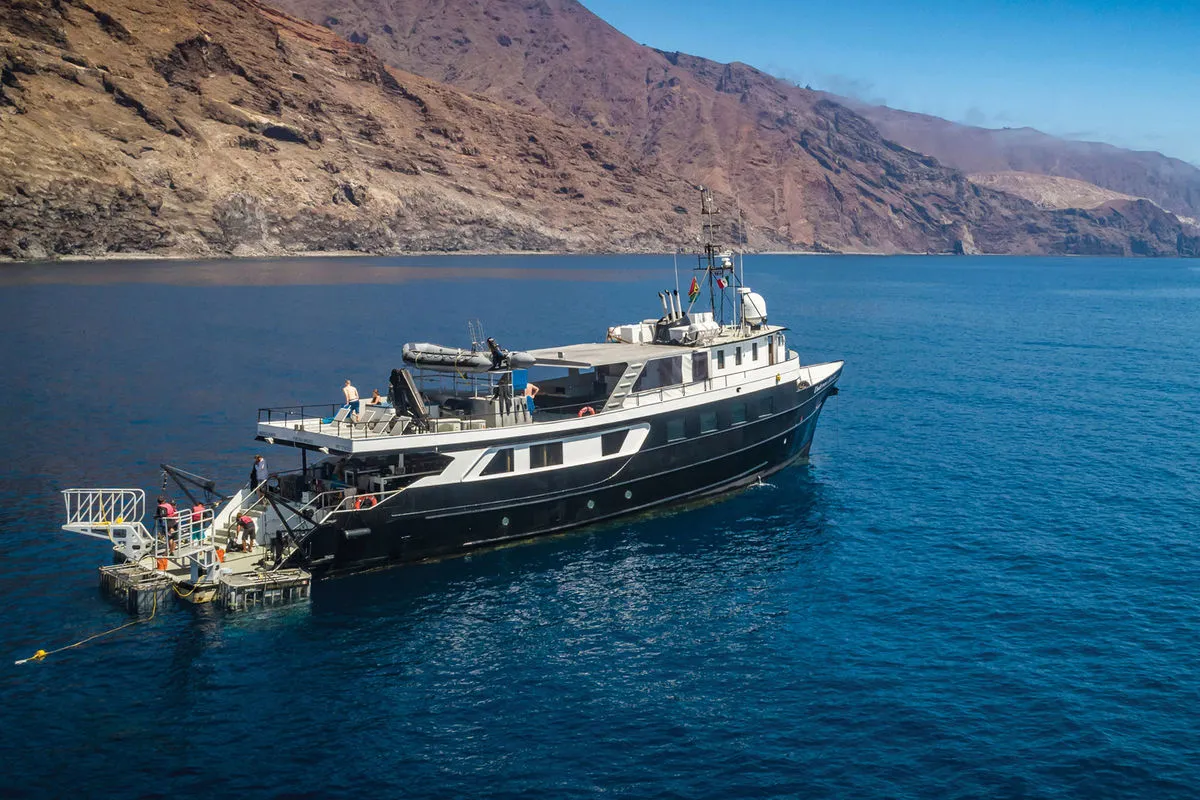
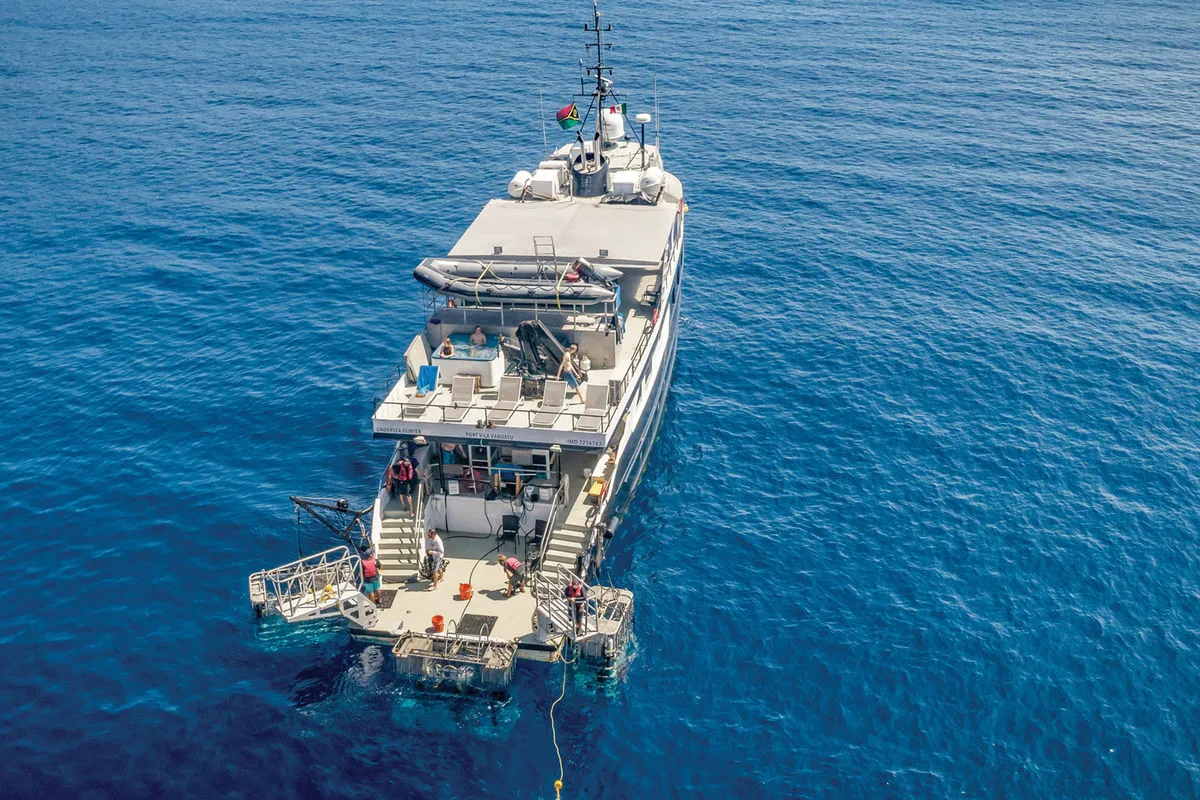
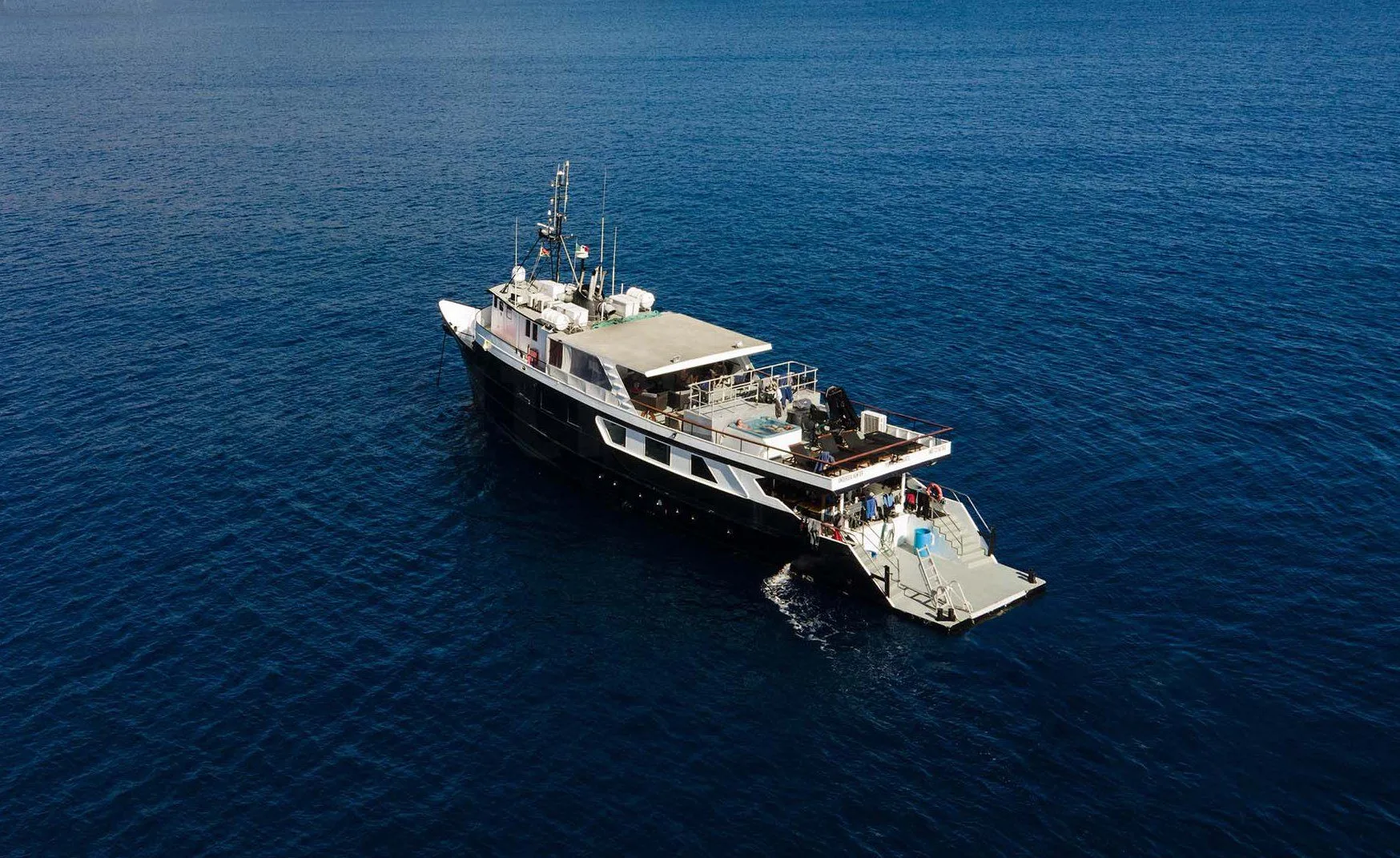
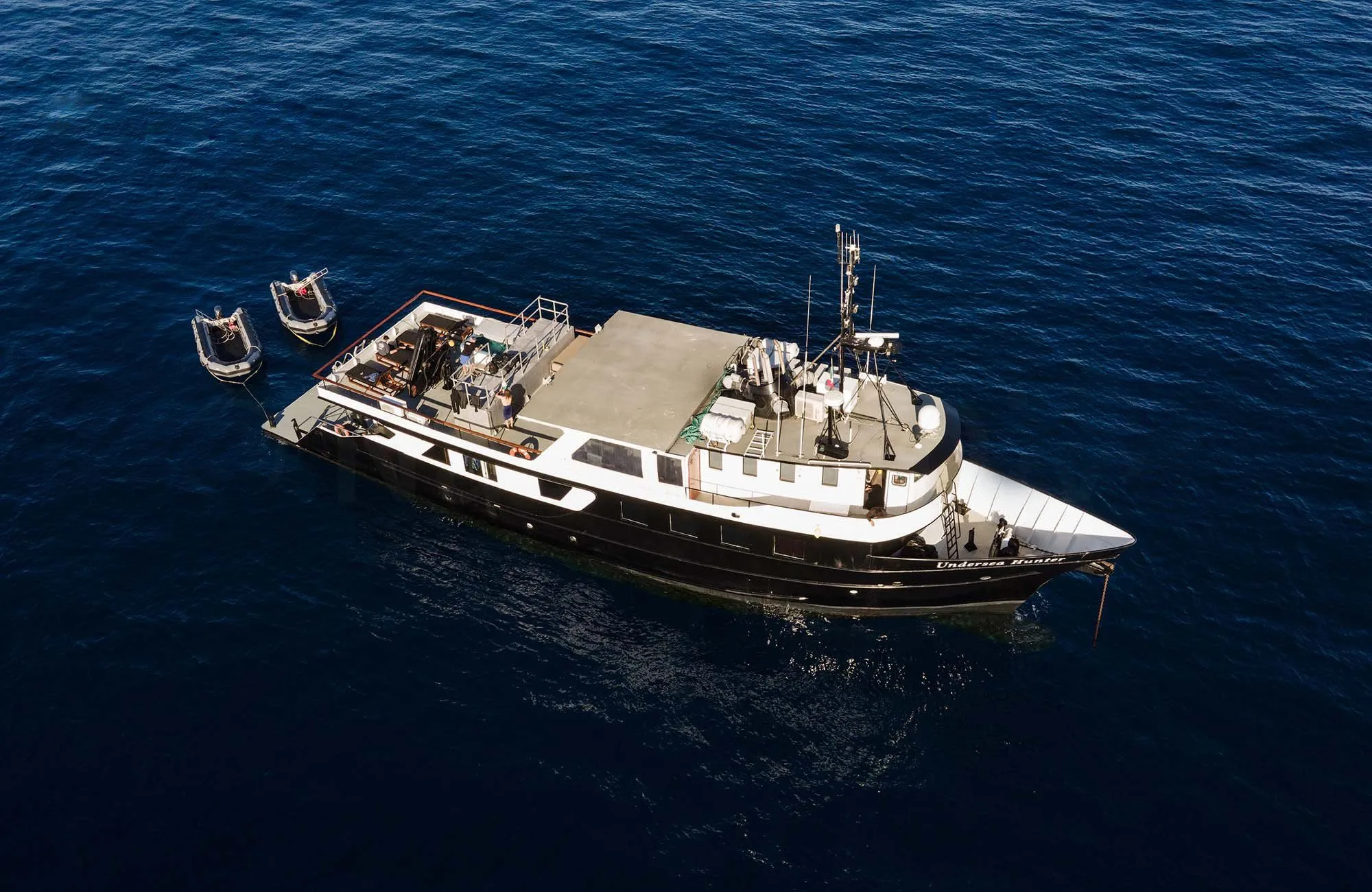
The dive deck is generous, with large camera tables and personal camera storage; dives are made from tenders, with a water-level platform. Nitrox is available but charged separately. The operator has been running trips here since 1978 and holds a certified ISM safety management system — the only dive operator that does.
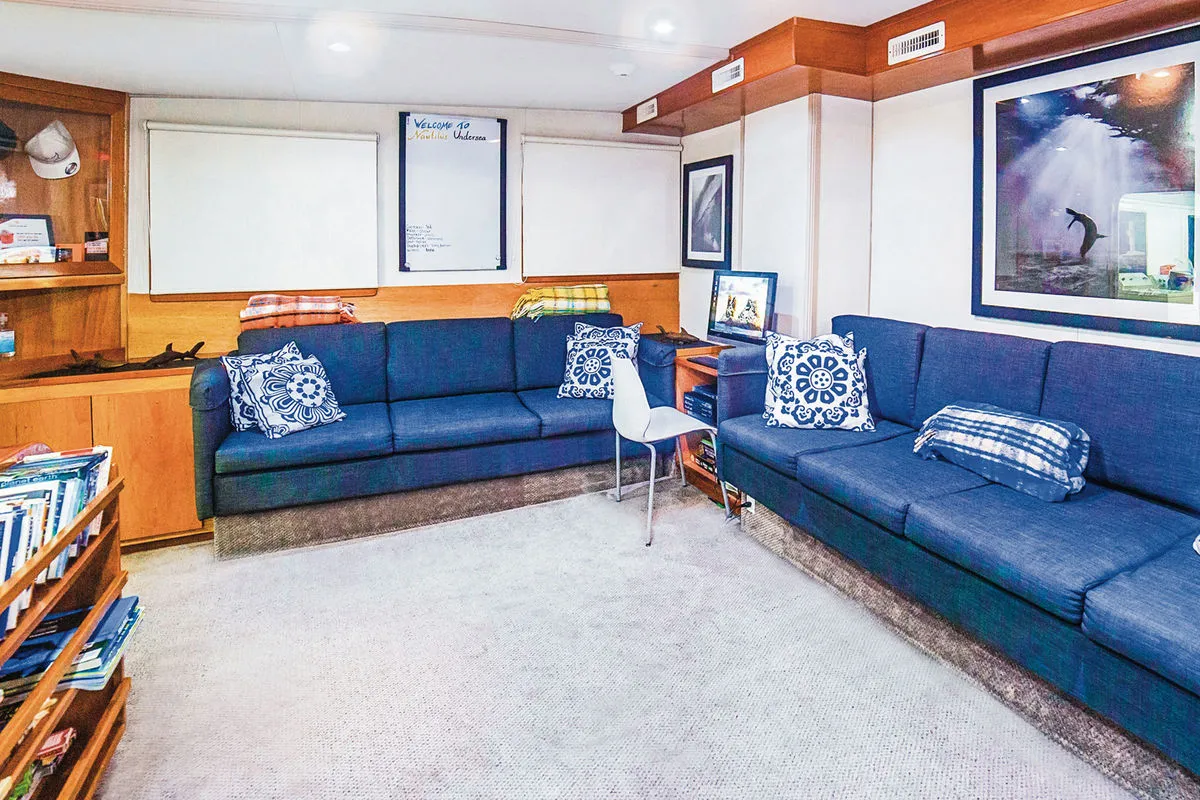
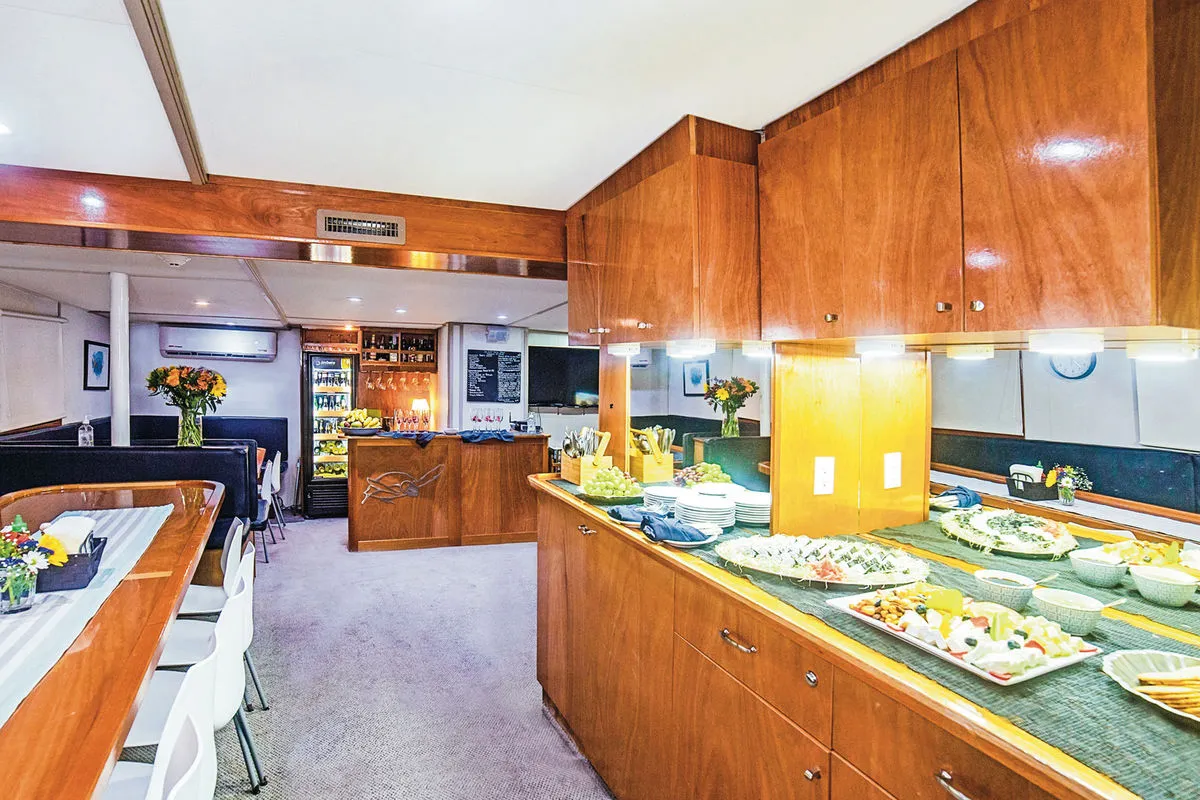
On board there is an air-conditioned salon with a library and media collection, a dining room, two bars, a freshwater hot tub, loungers on the sun deck, kayaks and paddleboards. The kitchen is a mix of Mexican and North American: an early continental breakfast before the first dive, a hot breakfast after it, lunch, snacks after every time in the water, and dinner served plated or family style.
No mark-up
You pay the rate the operator publishes. The only thing added on top is the actual payment processing cost — no fee of ours.
We run the booking
Correspondence with the operator, holding your places, the contract, confirmation and all paperwork sit on our side. Nothing for you to arrange yourself.
Pay by card
We send you a Stripe invoice — pay by card, in your own currency, from anywhere in the world. The transfer to the operator is handled on our side.
Support in your language
We help you pick the cabin and dates, answer questions on the route and gear, and stay reachable until you are home — in English, in your time zone.
We quote the exact amount when confirming the booking: it covers the operator's rate plus the actual payment processing cost. No hidden charges.
Yacht Specifications
Length
32 m
Beam
7.3 m
Material
Steel
Year Built
1968
Capacity
19 guests
Cabins
9
Crew
9 members
Speed
9 knots service speed, 9.5 knots top
Engine
Twin Caterpillar 240 hp (480 hp total)
Refit
2017
Bathrooms
9
Tender
A 6.7 m fibreglass dive tender and a 5.2 m rigid-bottom inflatable
Water capacity
22,700 l
Fuel capacity
30,300 l
Freshwater maker
6,800 l per day
On Board
Diving on board
Decompression diving is prohibited at Socorro under park rules and the depth limit is 40 m. On the day of the mandatory Mexican navy check-in there are usually three dives instead of four. Some dives are in current and call for confident experience. The nearest recompression chambers: a navy chamber on Socorro Island and civilian ones in Cabo San Lucas and La Paz. Dive insurance with evacuation cover is mandatory for every guest. The crew speaks English and Spanish.
Food and drinks
Special dietary requests — vegetarian, vegan, lactose-free, gluten-free, low sugar — should reach the operator at least 30 days before departure. Guests may not bring their own alcohol on board; the bar is the ship's. The rule is simple: once the drinking starts, the diving stops for the day.
Navigation and safety
Cabins
· 1 cabin
Premium Suite
Beds: One large double bed or two separate beds, configurable
A spacious suite on the sun deck, the only cabin of its class on board. The beds convert into one large bed or split into two. Flat-screen TV, multiple windows, plenty of storage, en-suite bathroom with shower and individually controlled air conditioning. The hot tub and the lounge are two steps from the door.
· 6 cabins
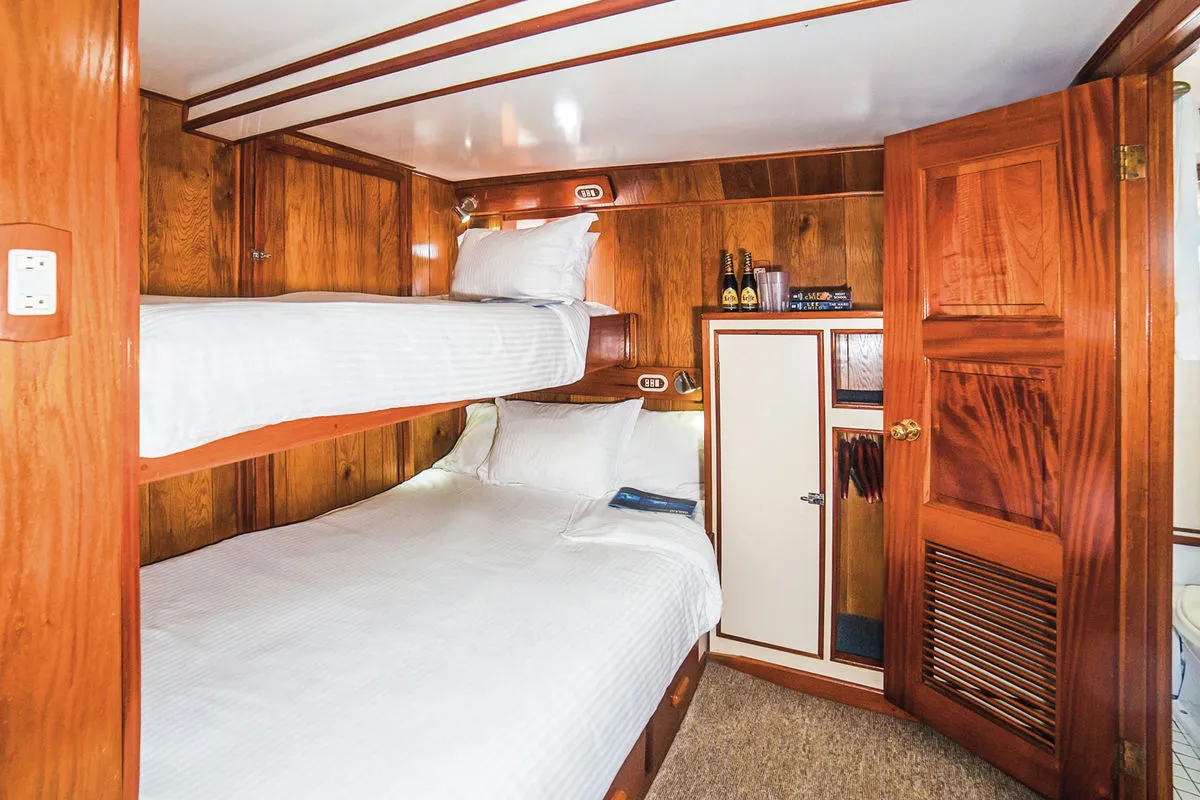
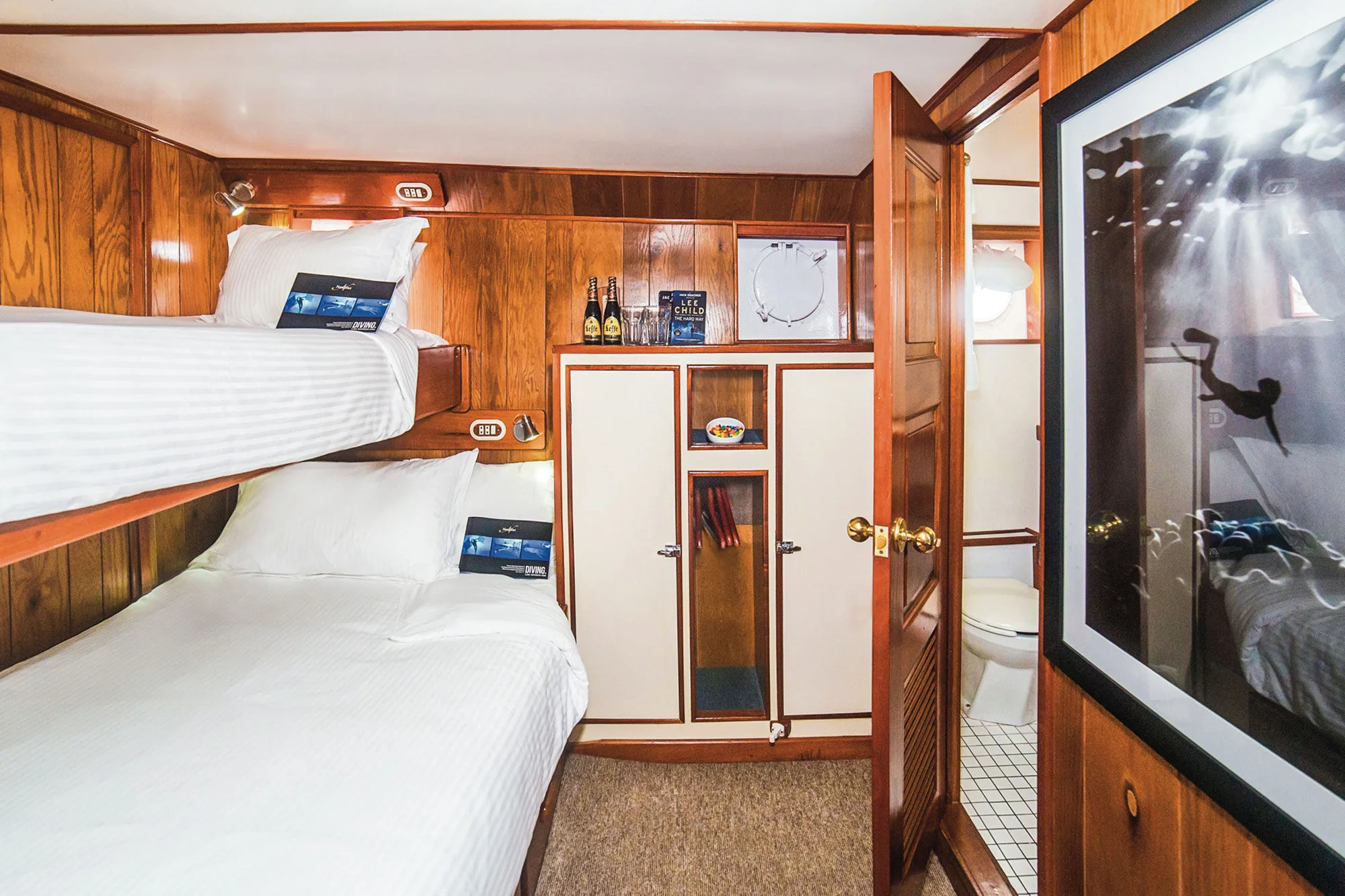
Stateroom
Beds: Upper and lower beds, configuration varies between cabins
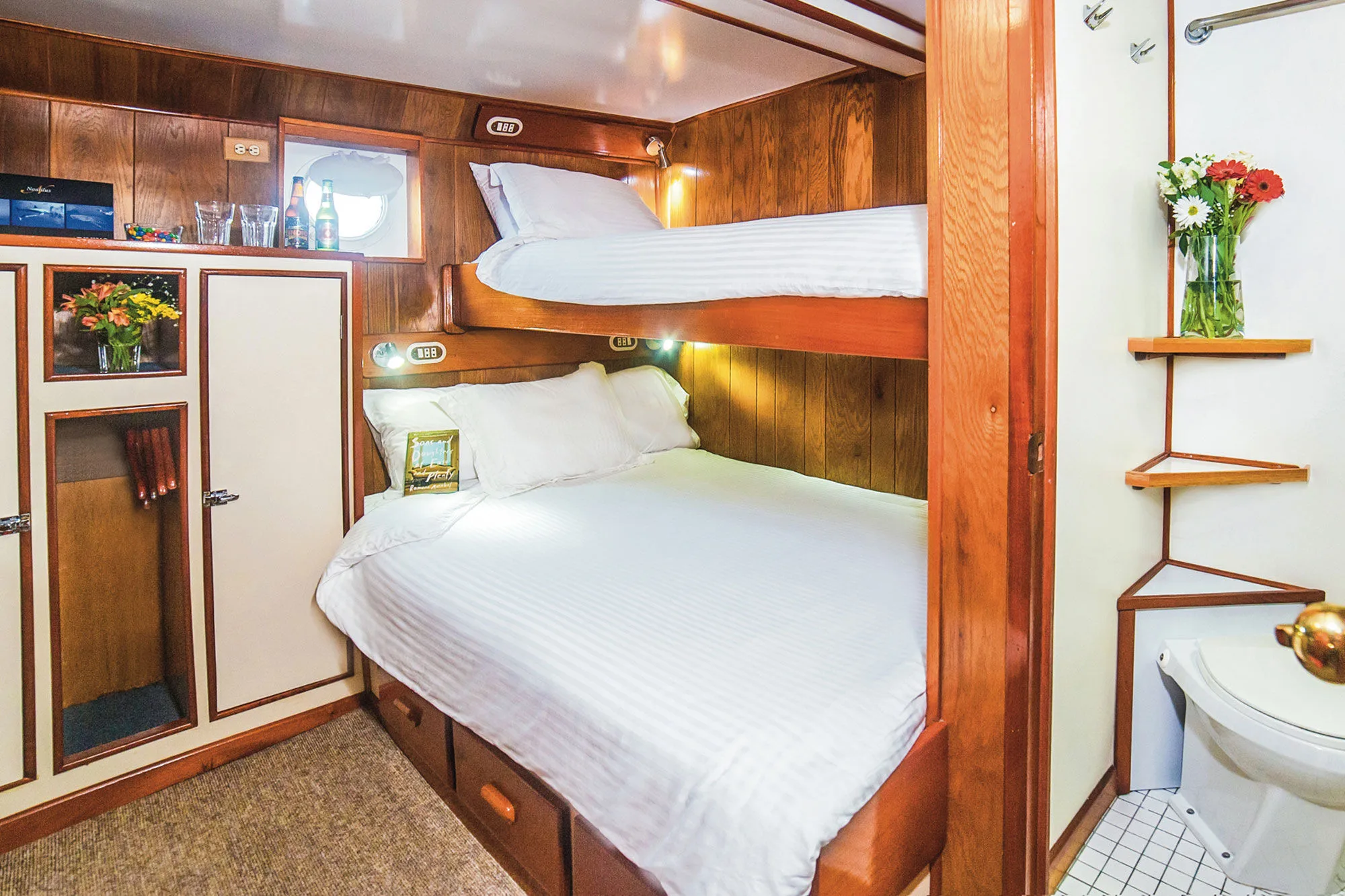
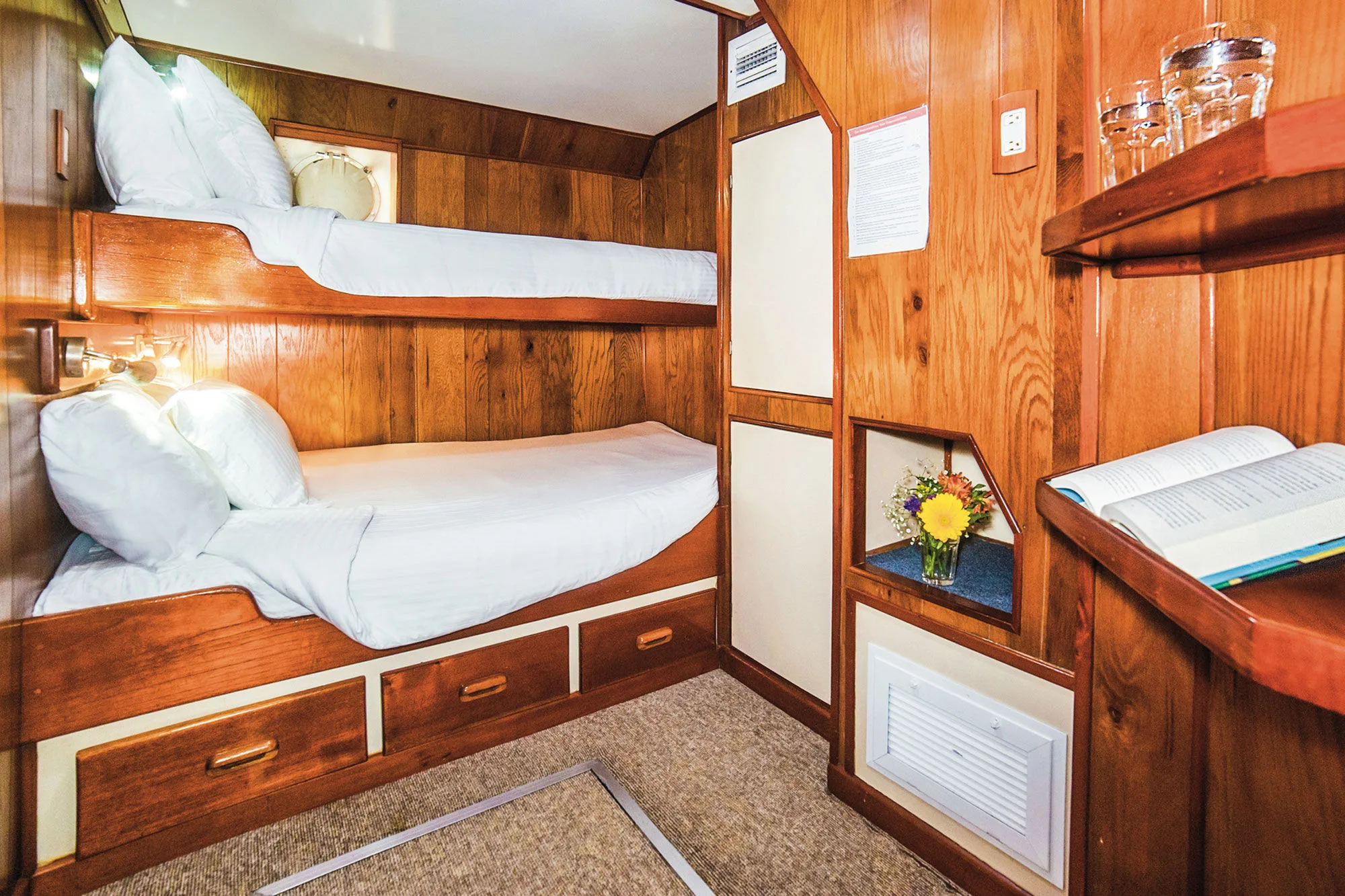
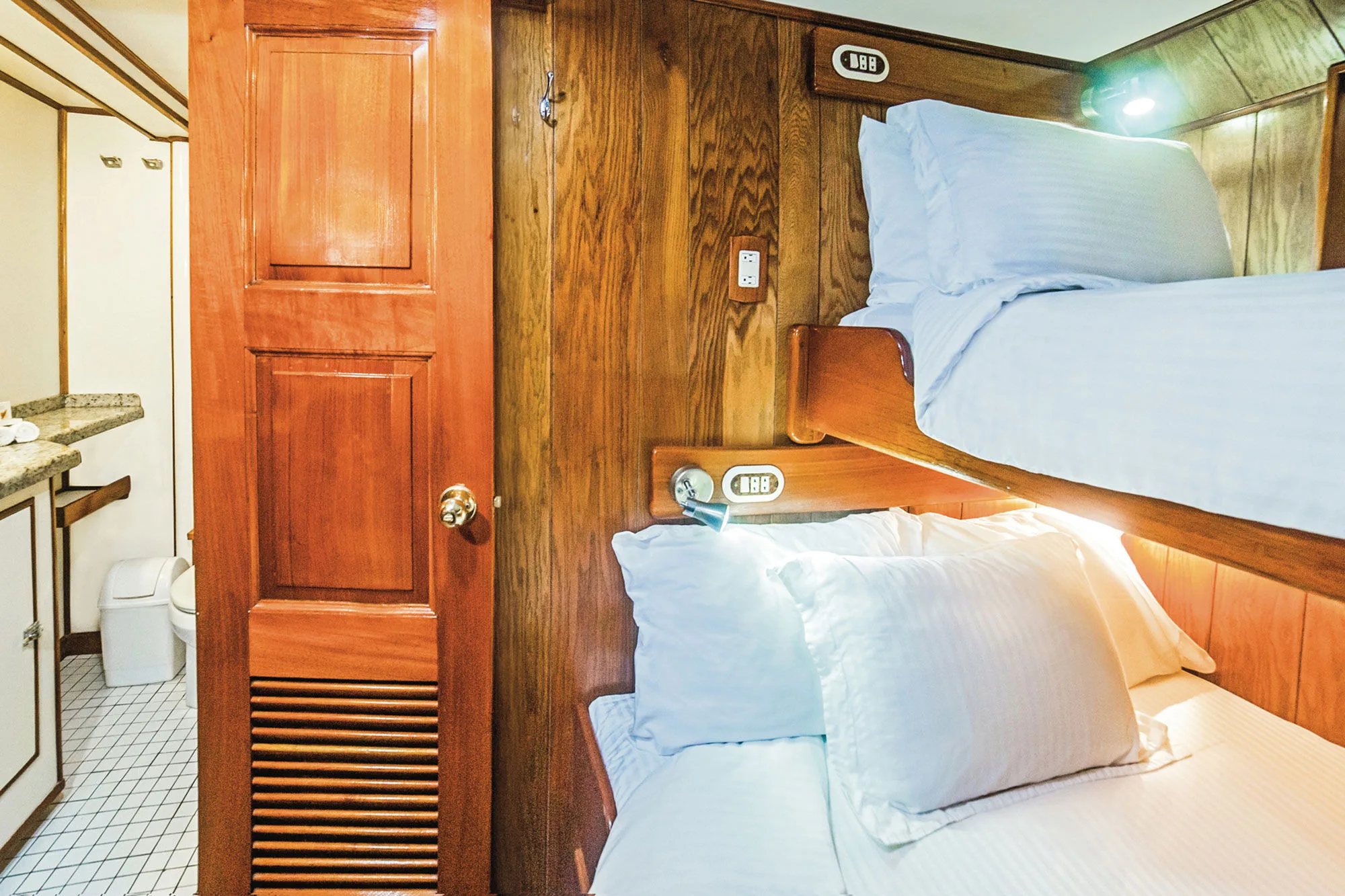
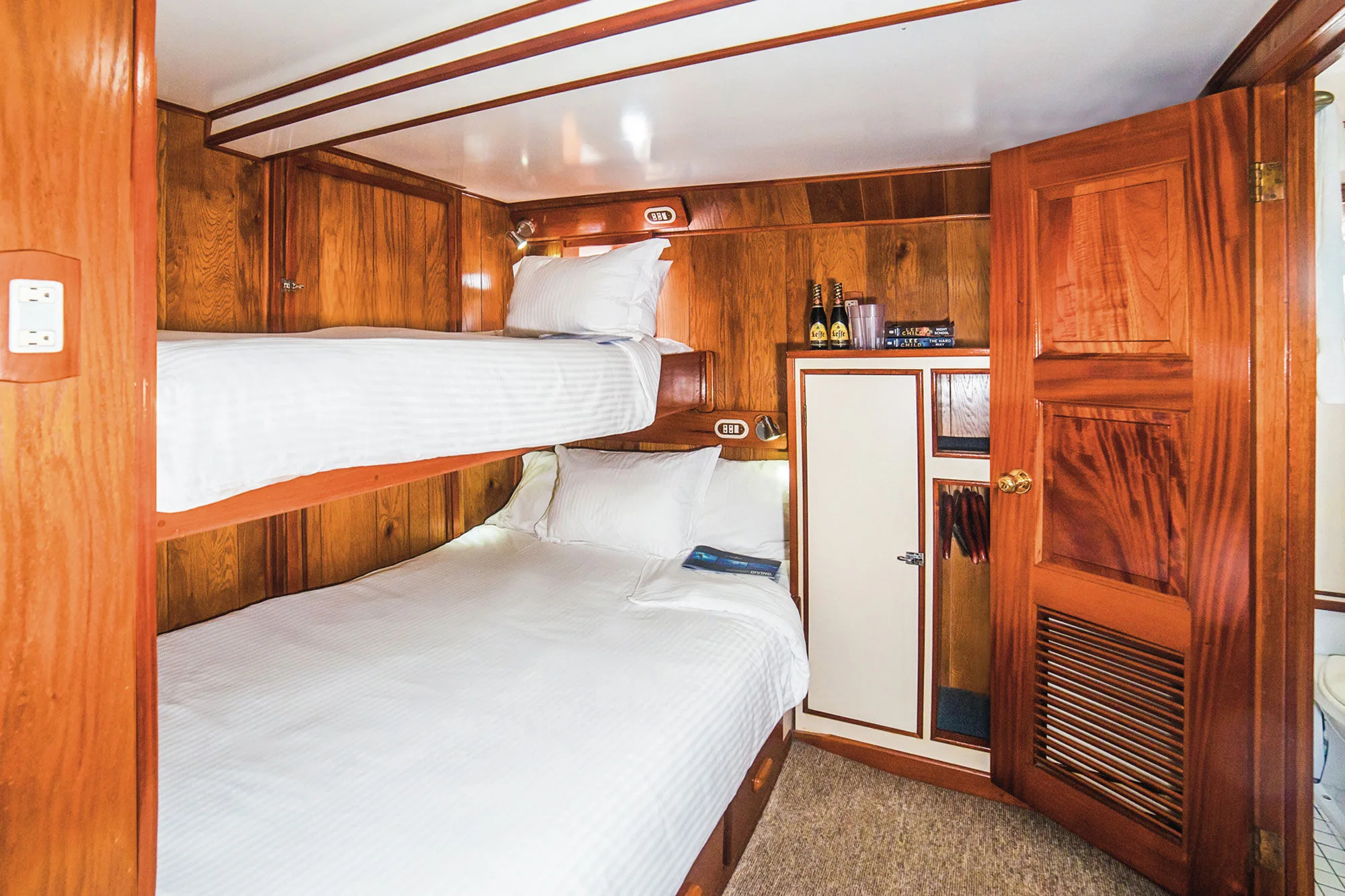
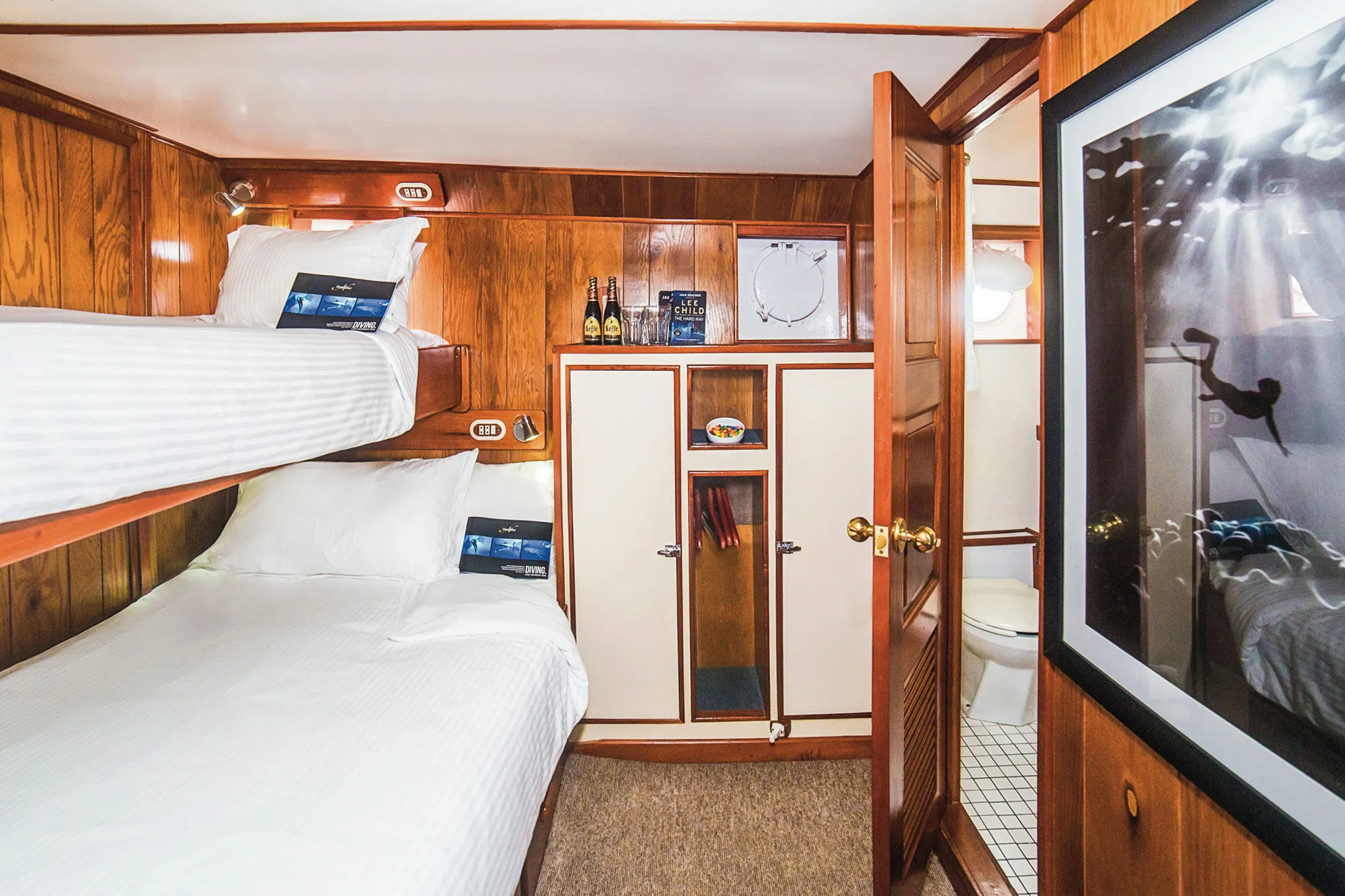
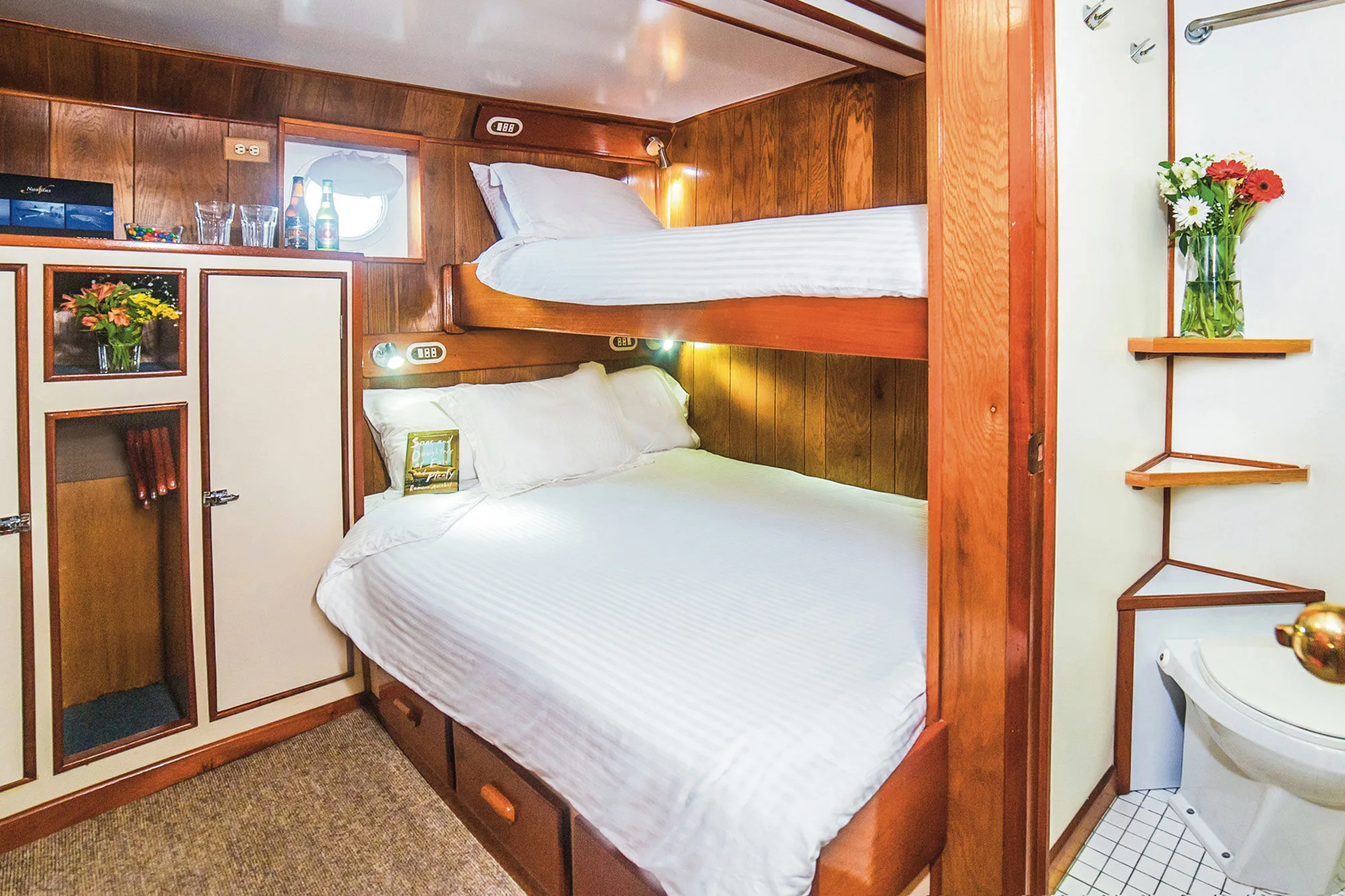
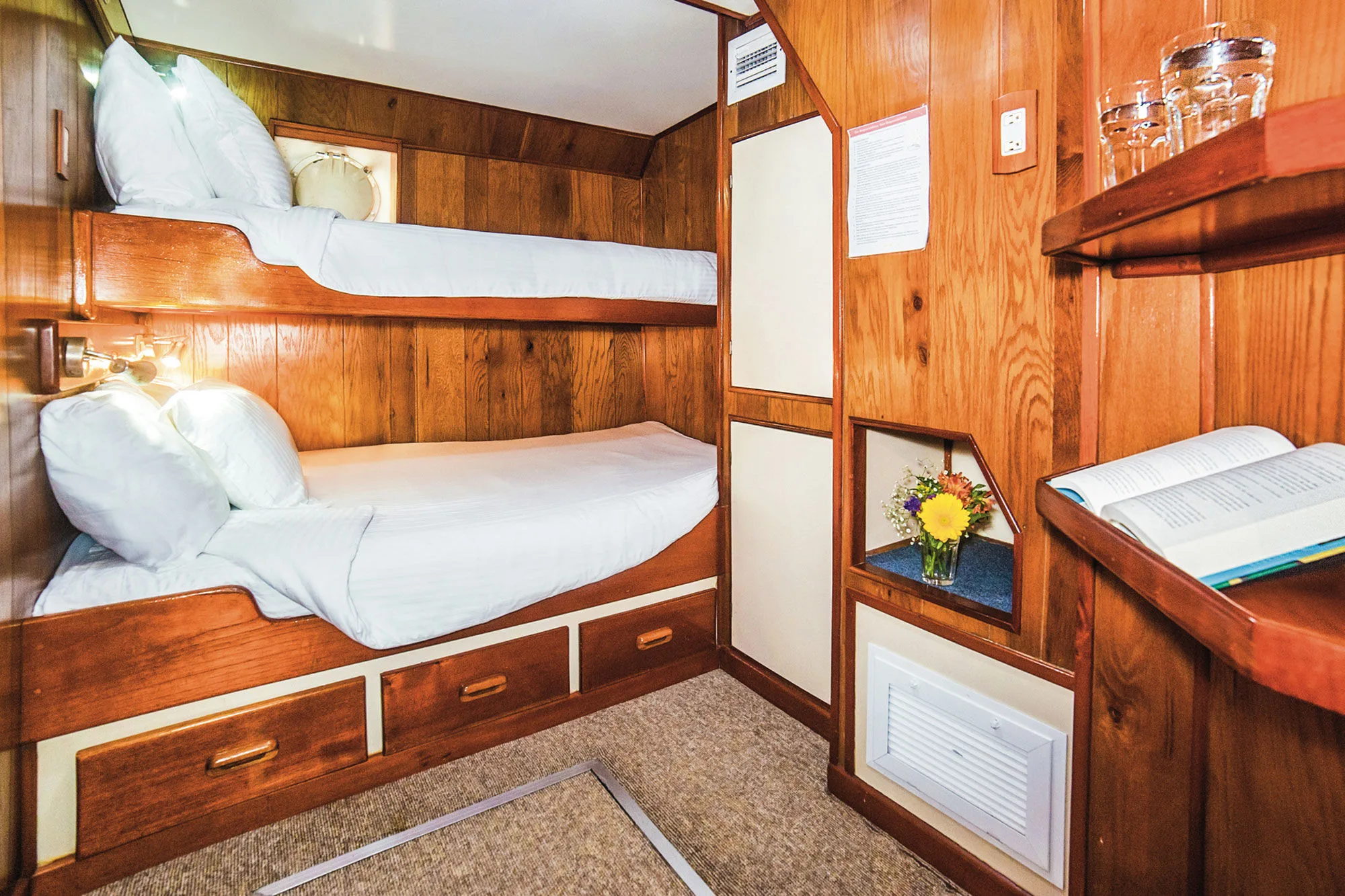
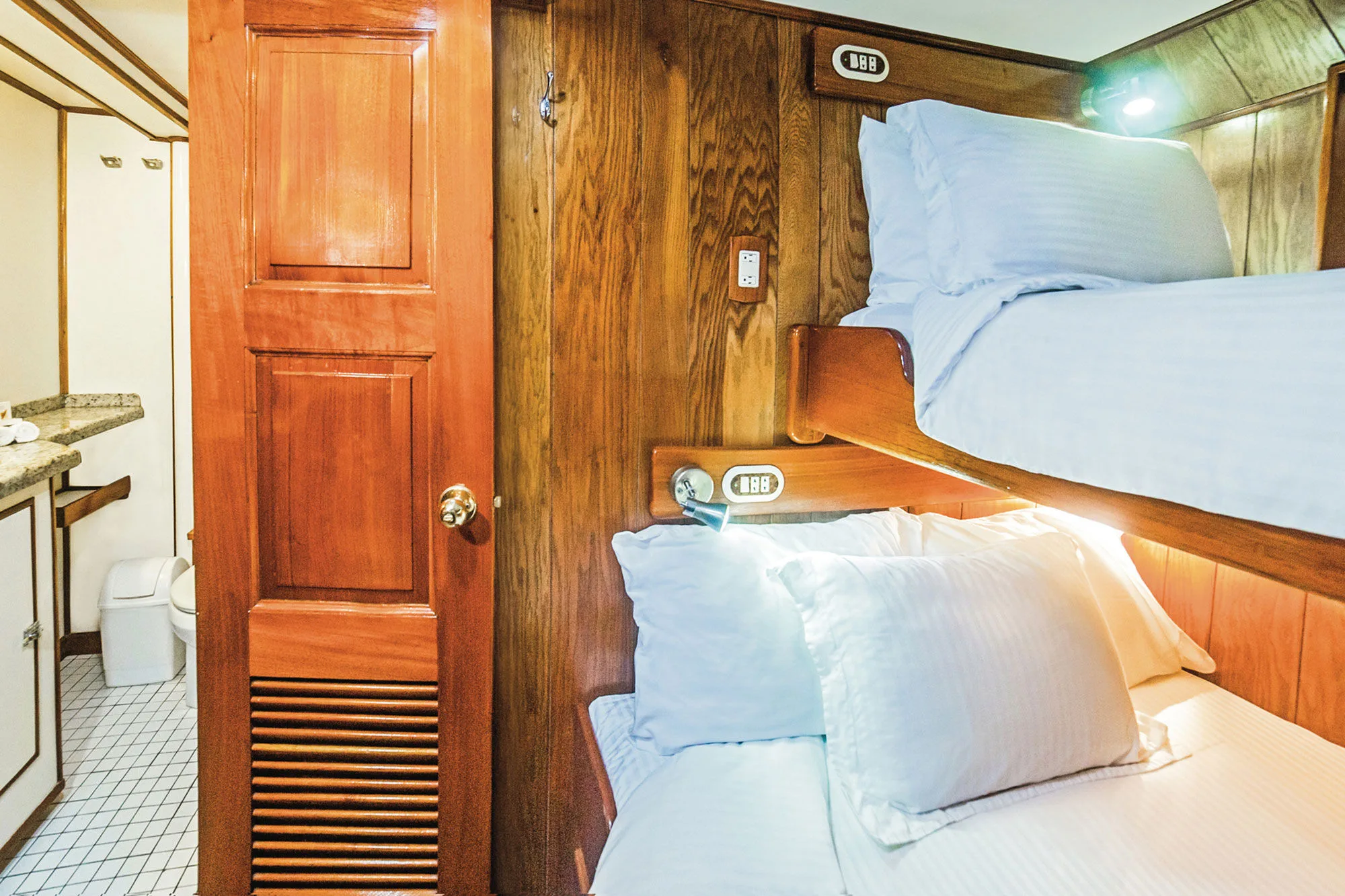
Six cabins on the lower deck — the heart of the original hull, finished in polished wood. Upper and lower beds, with the furniture arranged a little differently in each cabin. En-suite bathroom with private shower, individually controlled air conditioning, porthole.
· 1 cabin
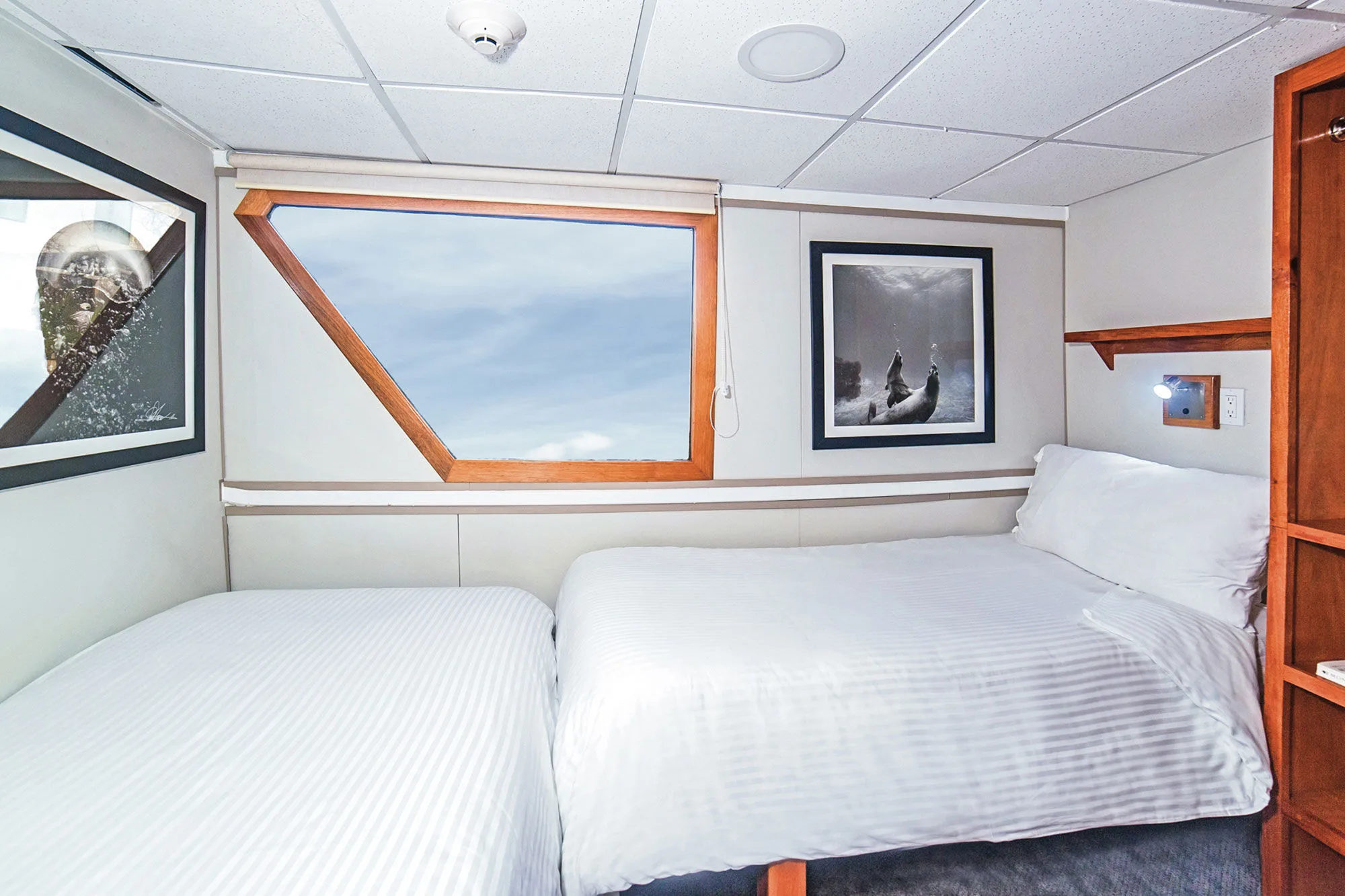
ADA Compatible Stateroom
Beds: Two single beds
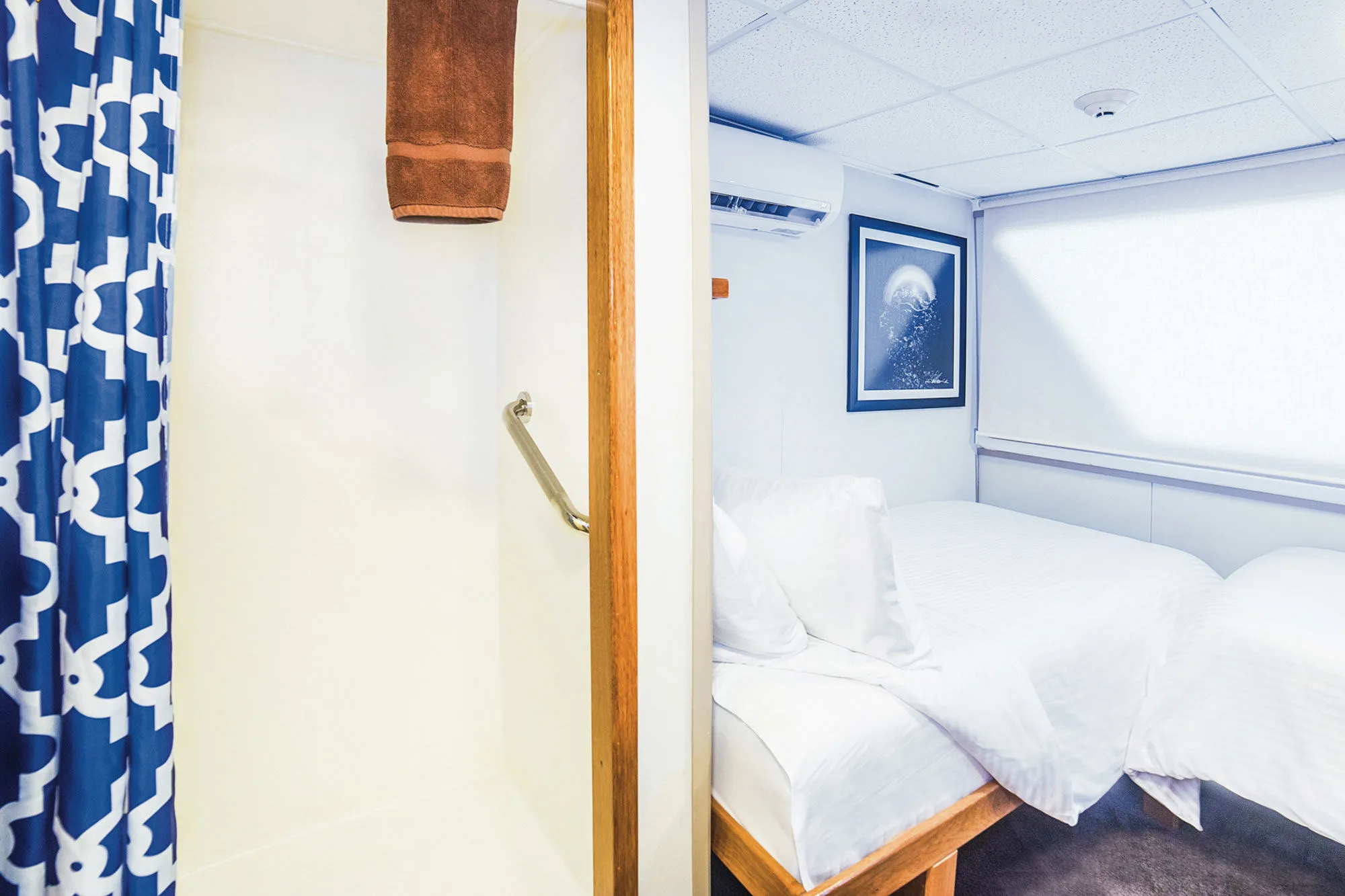
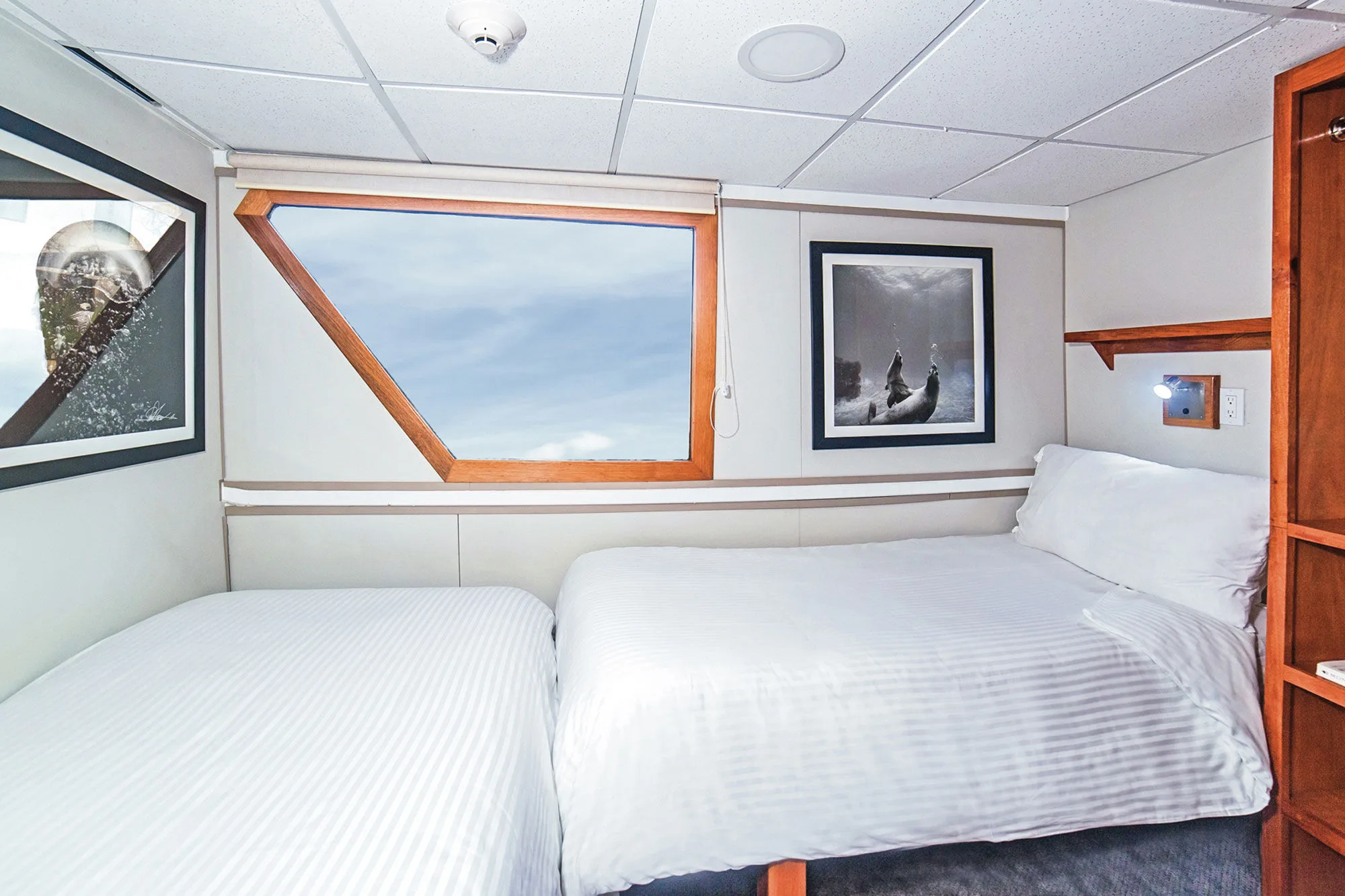
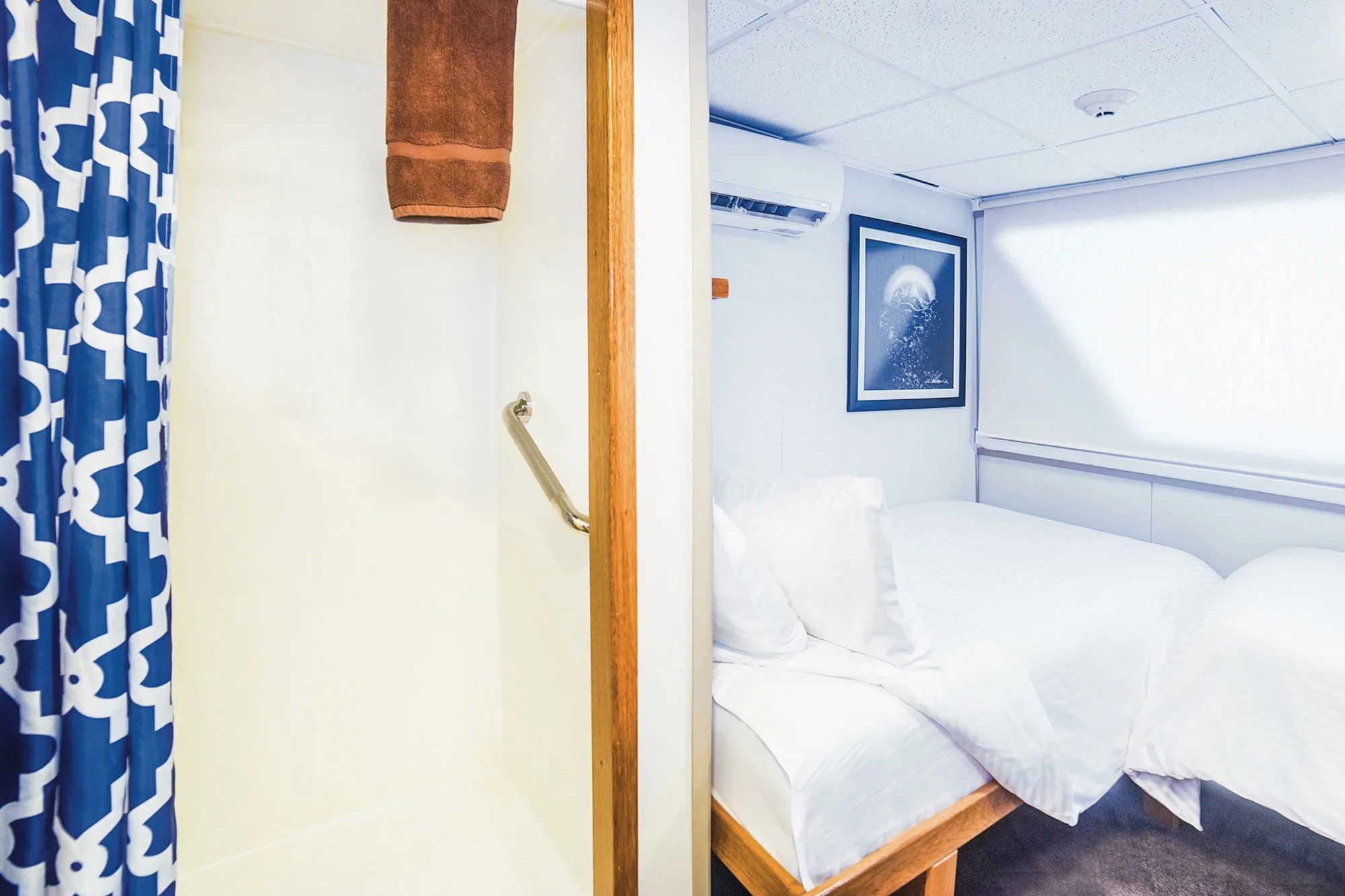
A cabin next to the dive deck, laid out for guests using a wheelchair — a wide passage, a large window and two single beds. En-suite bathroom with shower and individually controlled air conditioning, as in every cabin on board.
· 1 cabin
Triple Stateroom
Beds: Two bunk beds, one berth given over to luggage
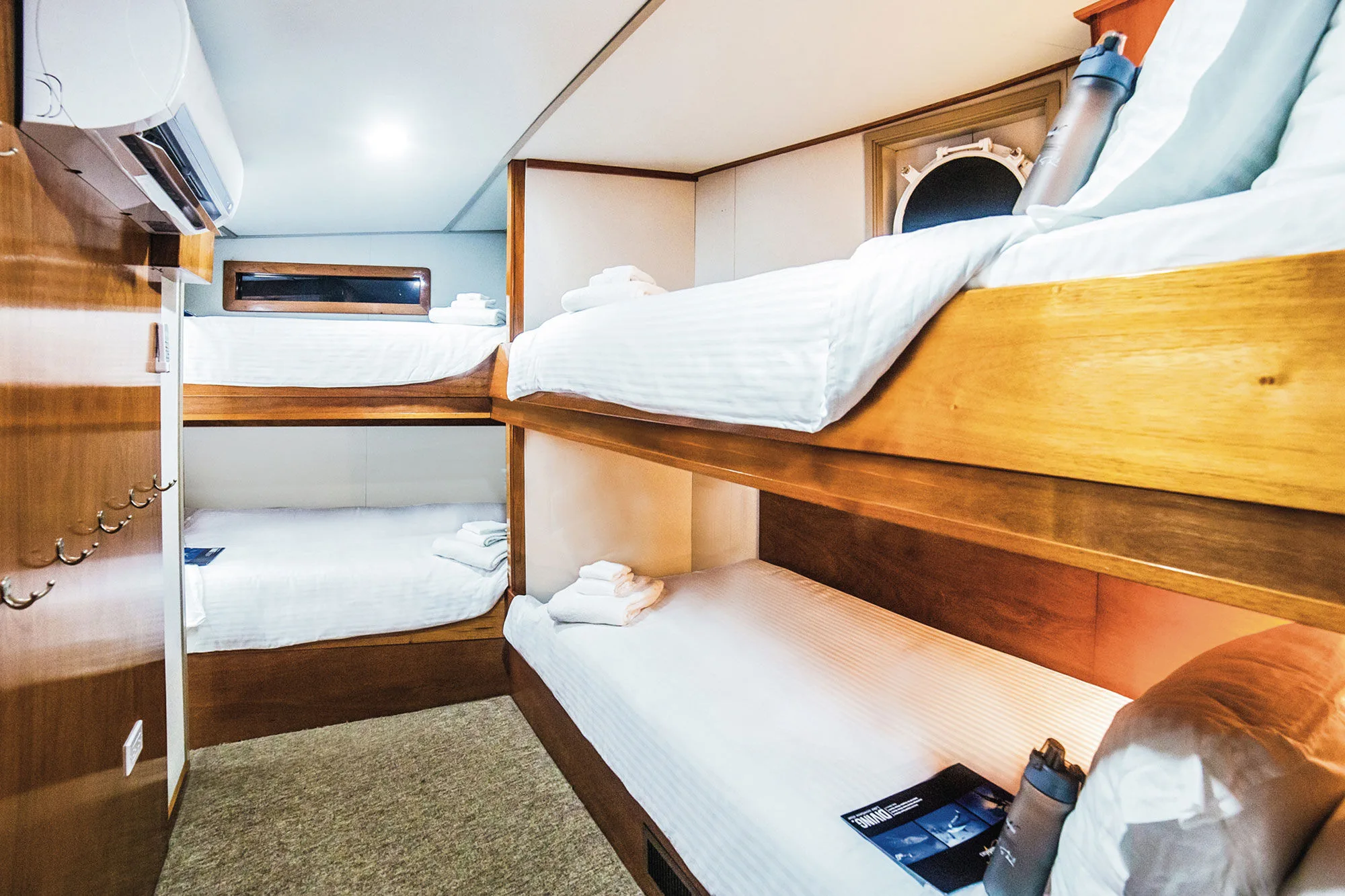
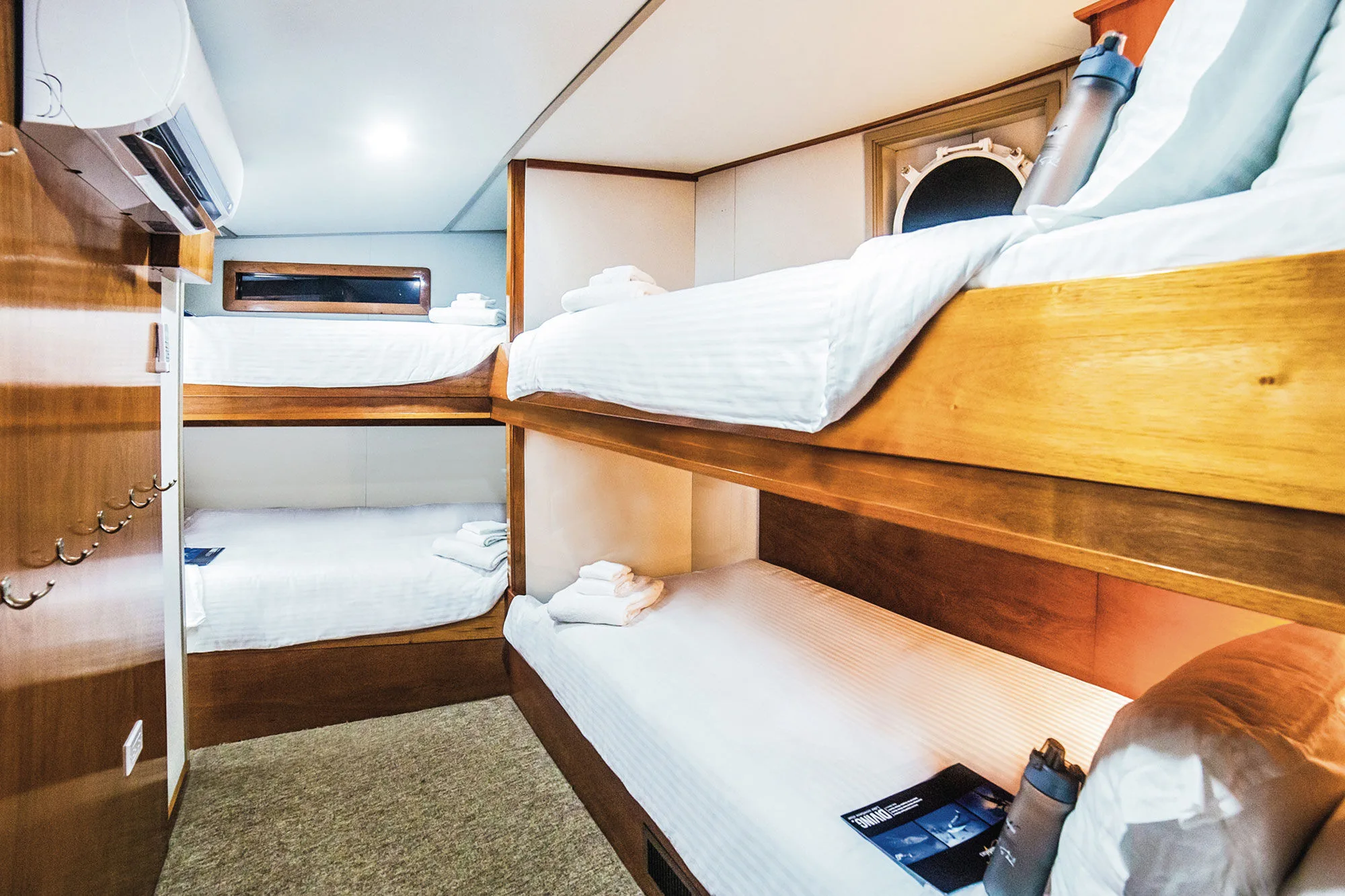
The most affordable berth on the ship. Two bunk beds, one of the four berths used for gear, which is why it sleeps three. The cabin is mixed gender. En-suite bathroom with shower and individually controlled air conditioning. The operator is honest about it: space in the triple is tight.
Schedule & Pricing
Socorro — giant mantas, sharks and dolphins
The vessel's flagship route, out of Cabo San Lucas and back, eight nights (ten-night departures appear in high season). A full day's crossing 235 nautical miles into the open Pacific, then five full diving days in the Revillagigedo archipelago — a UNESCO World Heritage site and a tightly guarded national park. Dive sites: El Canyon and The Boiler at San Benedicto, Roca Partida, Red Rocks, Cabo Pearce, Punta Tosca and Roca Oneal. Giant oceanic mantas here actively seek contact with divers; add up to twelve shark species, including schooling hammerheads and silvertips, bottlenose dolphins, tuna, and humpback whales in winter. Up to four dives a day, except on the day of the mandatory check-in at the naval base. Currents can be strong and some dives suit confident divers only.
December 2027
2 departuresJanuary 2028
2 departuresMay 2028
1 departureJune 2028
1 departureNovember 2028
1 departureDecember 2028
2 departuresSea of Cortez — La Paz and Loreto
Seven nights across the "world's aquarium", as Jacques Cousteau called the Sea of Cortez. The route is assembled from the best of the southern and middle gulf: Las Animas with its vertical walls and schooling hammerheads from June to November, La Reina with summer baitballs and giant mantas in July and August, Los Islotes on Espiritu Santo with its California sea lion colony, the Fang Ming and La Salvatierra wrecks, the El Bajo seamounts, and Loreto National Park with the islands of Coronado, Danzante and Carmen. Up to four dives a day including night dives, with kayaks, paddleboards, white-sand beach landings and island walks in between. Departures from Cabo San Lucas, San Jose del Cabo or La Paz.
September 2027
2 departuresOctober 2027
1 departureWhale sharks of the Sea of Cortez
Seven nights, a summer-to-autumn route built around the largest whale shark gathering in Mexico. The vessel leaves Cabo San Lucas, works its way up the gulf and finishes in La Paz. The main target is Bahia de los Angeles, a deserted bay inside a national park where 80 to 220 whale sharks turn up between May and October; there are almost no boats there, and the sharks behave quite differently from the busier sites. Along the way: dives at Las Animas and around Isla San Ildefonso and San Pedro Martir, a landing on a desert island holding the world's largest blue-footed booby colony, and on the last day the operator's secret spot near Mulege, where pilot whales and dolphins are often found. Water is 25–29 °C at this time of year and the sea is usually calm.
August 2027
1 departureJuly 2028
2 departuresAugust 2028
5 departuresSeptember 2028
1 departureShort Sea of Cortez getaways
Five or six nights out of Cabo San Lucas — the most affordable format on this vessel and a good way to meet the gulf without carving out a week and a half. The programme is drawn from the gems closest to Cabo: sea lions at Los Islotes and Swanee Reef, the wrecks off La Paz, the baitballs of La Reina, and on some departures Cabo Pulmo National Park, home to one of the healthiest coral reefs in North America and walls of jacks dense enough to blot out the sun. Up to four dives a day, night dives, kayaks and shore landings. Some departures end in La Paz with a complimentary transfer back to Cabo or to the airport.
August 2027
2 departuresMagdalena Bay sardine run
Six nights from mid-October to December — the second-largest sardine run in the world, in the open Pacific off Magdalena Bay. From Cabo San Lucas the vessel runs about fifteen hours up the Baja coast and anchors for the night behind the barrier islands. This is not a scuba programme but a snorkelling and freediving one: striped marlin hit the baitballs at 50 km/h, Bryde's and humpback whales feed alongside, and sea lions, mahi-mahi and seabirds work the same water. There is a warm-up day at the south end of Margarita Island with sea lion snorkelling and the remains of an old wreck, and on the final day a walk through Margarita's giant sand dunes. The operator's spotter plane helps find the baitballs.
October 2026
1 departureOctober 2027
2 departuresCombo — mobulas, orcas and whale sharks
The vessel's longest trips, ten to eleven nights. A summer combination of everything the Sea of Cortez is famous for: colossal schools of mobula rays leaping clear of the water from late March to early July, orcas at the "cafes" off Cerralvo and San Jose islands with a July–August peak, mega-pods of bottlenose dolphins, California sea lions and whale sharks. A separate evening attraction is snorkelling in a quiet bay under submerged lights that draw the mobulas in. The main activity is snorkelling and freediving from a fast skiff, though divers are given dives at local sites. The Unique Combo version adds a leg out to Socorro.
July 2027
3 departuresPrices and availability can change. Get in touch and we'll confirm current dates and pricing.
Included in Price
Not Included
Required extras
Optional extras
Extras are shown per person and are paid on board.
from 2328 EUR / 7 nights
Estimated wait time — 24 hours
Similar Yachts
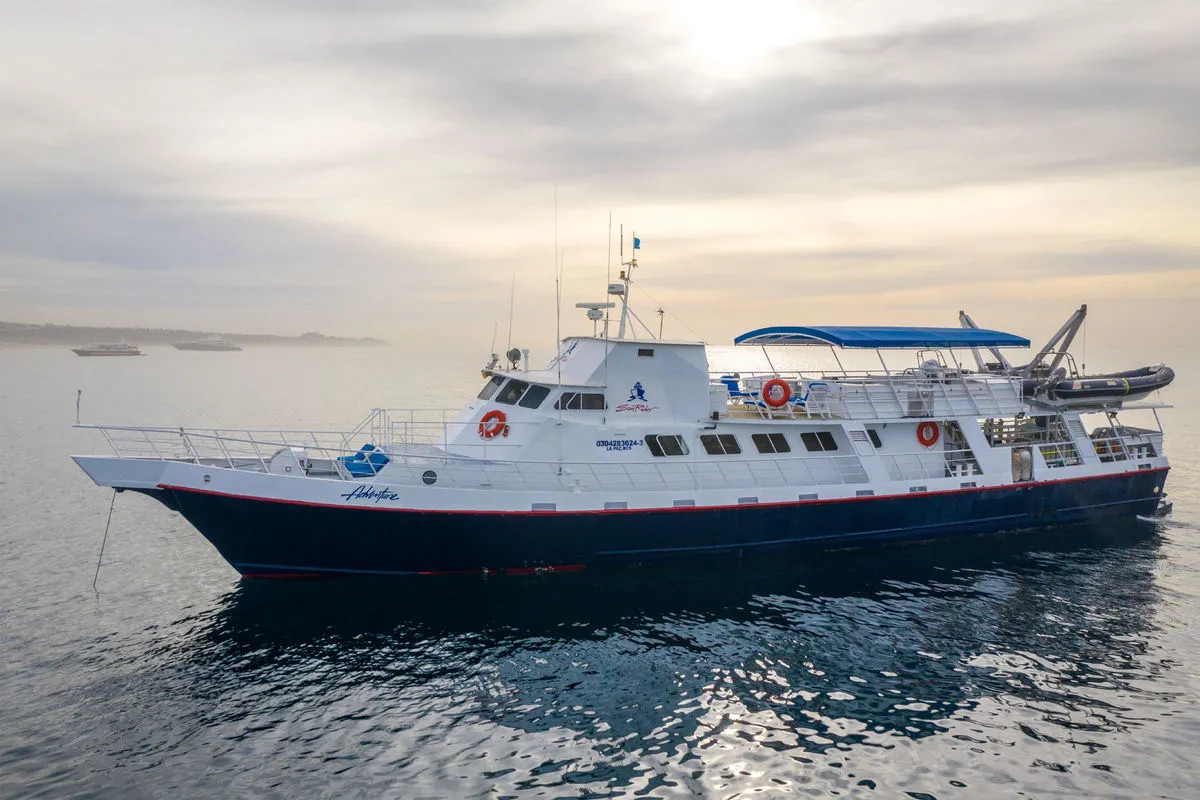
Adventure
Liveaboard · Mexico
30.5 m · 19 guests · 10 cabins
from 2824 EUR
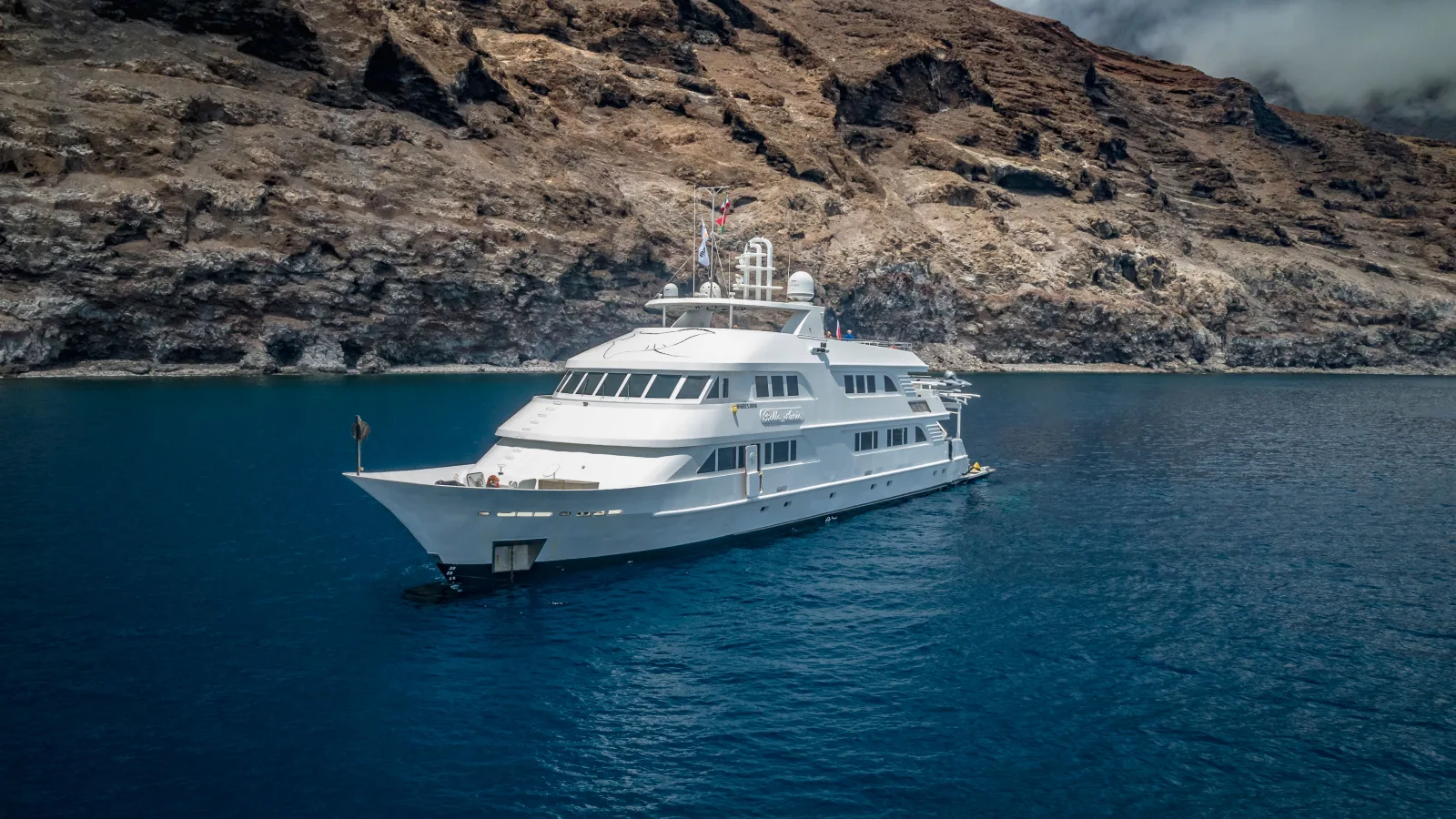
Nautilus Belle Amie
Liveaboard · Mexico
45 m · 32 guests · 17 cabins
from 2328 EUR
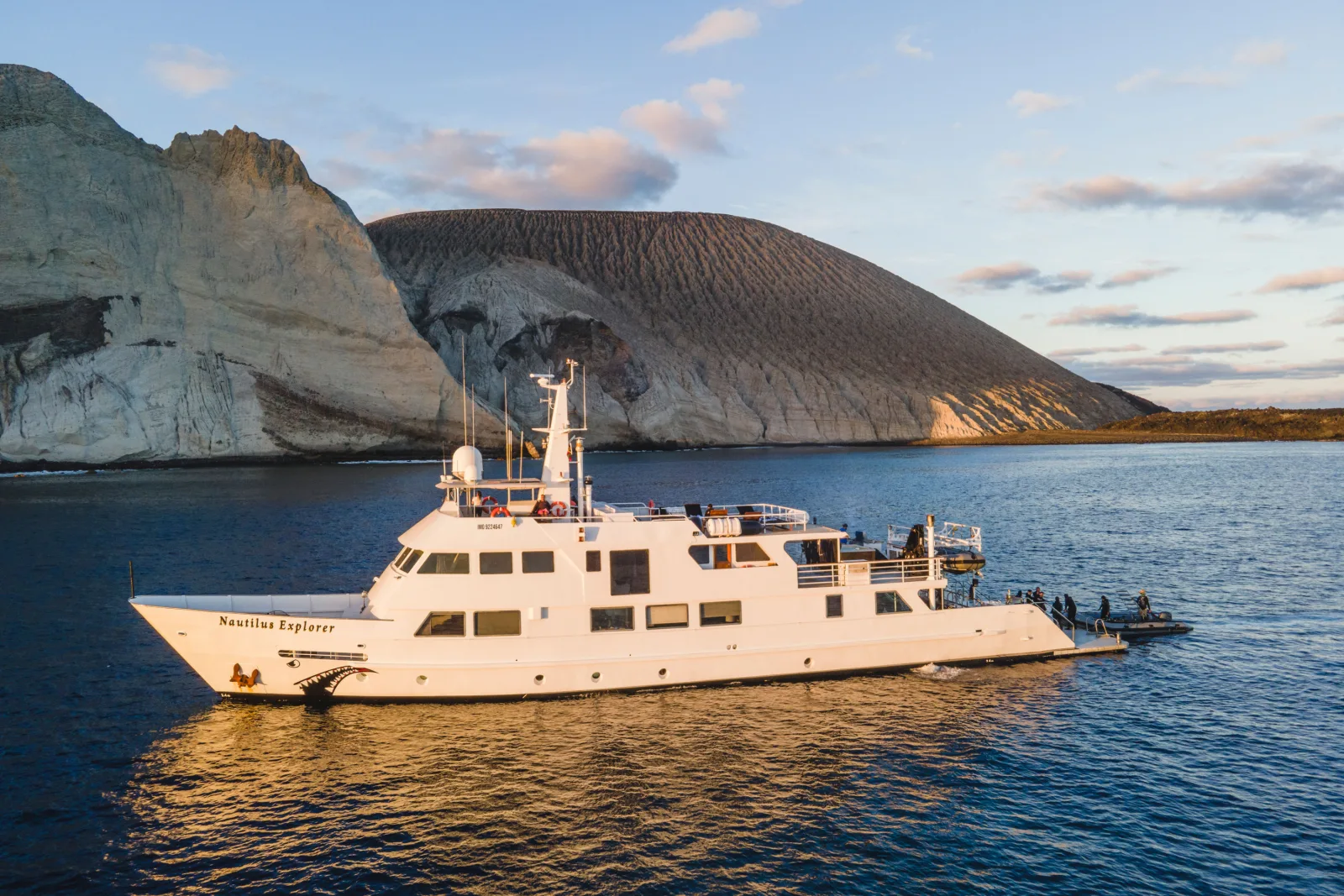
Nautilus Explorer
Liveaboard · Mexico
40 m · 25 guests · 13 cabins
from 2328 EUR
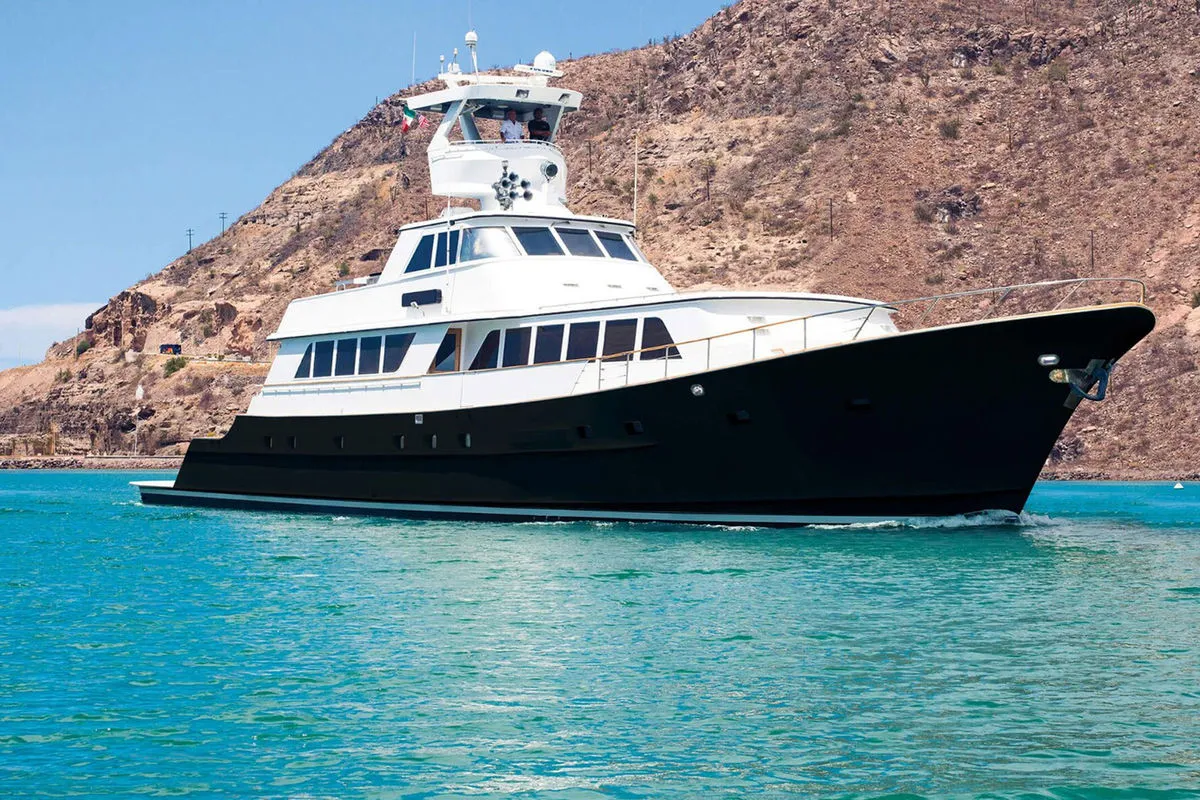
Nautilus Gallant Lady
Liveaboard · Mexico
35 m · 12 guests · 6 cabins
from 2587 EUR
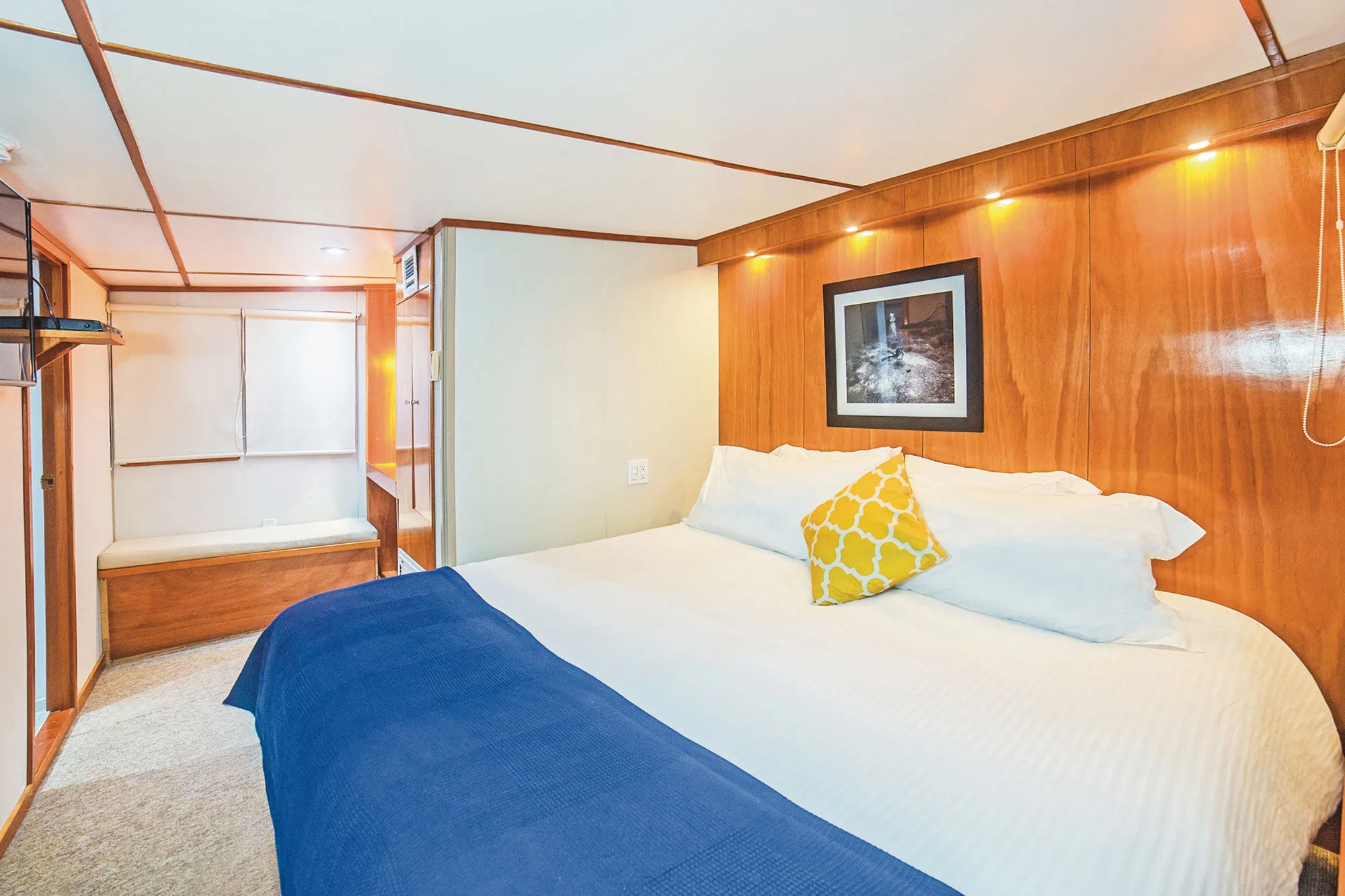
Premium Suite
A spacious suite on the sun deck, the only cabin of its class on board. The beds convert into one large bed or split into two. Flat-screen TV, multiple windows, plenty of storage, en-suite bathroom with shower and individually controlled air conditioning. The hot tub and the lounge are two steps from the door.
- Deck
- sun deck
- Beds
- One large double bed or two separate beds, configurable
- Windows
- Multiple windows
- cabins of this type
- 1
Stateroom
Six cabins on the lower deck — the heart of the original hull, finished in polished wood. Upper and lower beds, with the furniture arranged a little differently in each cabin. En-suite bathroom with private shower, individually controlled air conditioning, porthole.
- Deck
- lower deck
- Beds
- Upper and lower beds, configuration varies between cabins
- Windows
- Porthole
- Cabin numbers
- A, B, C, D, E, F
- cabins of this type
- 6
ADA Compatible Stateroom
A cabin next to the dive deck, laid out for guests using a wheelchair — a wide passage, a large window and two single beds. En-suite bathroom with shower and individually controlled air conditioning, as in every cabin on board.
- Deck
- main deck
- Beds
- Two single beds
- Windows
- Large window
- Cabin numbers
- Rosario
- cabins of this type
- 1
Triple Stateroom
The most affordable berth on the ship. Two bunk beds, one of the four berths used for gear, which is why it sleeps three. The cabin is mixed gender. En-suite bathroom with shower and individually controlled air conditioning. The operator is honest about it: space in the triple is tight.
- Deck
- main deck
- Beds
- Two bunk beds, one berth given over to luggage
- Windows
- Porthole
- cabins of this type
- 1
Nautilus Under Sea
from 2328 EUR