Diving in Papua New Guinea
The heart of the Coral Triangle: the sea mounts of Kimbe Bay, the muck diving of Milne Bay and wartime wrecks
2 yachts for liveaboard diving, 4 resorts
Papua New Guinea — the heart of the Coral Triangle: the sea mounts of Kimbe Bay, the muck diving of Milne Bay, Fathers Reefs and the Witu Islands, wartime wrecks. Dive resorts and liveaboards.
Why divers come here
- Kimbe Bay — sea mounts rising out of deep water and corals scientists describe as “the way things were forty years ago”
- Milne Bay — the birthplace of muck diving: black sand, frogfish, ghost pipefish and a manta cleaning station
- Fathers Reefs — remote volcanic reefs with arches, swim-throughs and silvertip sharks
- The Witu Islands — sea mounts and black sand bays on the same itinerary
- Wartime wrecks: the B-17 Black Jack on the sand in Milne Bay and the Japanese aircraft of Kavieng
- Rabaul — jetty diving for macro under the eye of the active Tavurvur volcano
What you'll meet underwater
Practical information
- Best season
- All year. The best weather in the Bismarck Sea runs from mid-September to November and from April to June; Milne Bay is scheduled in February and March. From September to November the water is slightly cooler and the reefs hold more of the small stuff
- Water temperature
- 27–30 °C
- Visibility
- 15–40 m
- Wetsuit
- 3 mm year-round, a shorty is enough; 5 mm for four dives a day
- Experience level
- Open Water for the reefs and muck diving; Advanced and drift experience for the sea mounts, the Kavieng channels and the deeper wrecks
- Getting there
- There are no direct flights from Russia. Fly to Port Moresby (POM) via Singapore, Manila, Hong Kong, Sydney or Brisbane; from Moscow the journey takes 24–32 hours. From there Air Niugini or PNG Air run domestic flights: Hoskins (HKN) for Kimbe Bay and Walindi, Alotau (GUR) for Milne Bay, Rabaul (RAB) and Kavieng (KVG) for the eastern routes. Check the embarkation port against your own itinerary — it differs from trip to trip.
- Airports
- Port Moresby (POM) — international, Hoskins, listed as Kimbe (HKN), Tokua, Rabaul (RAB), Gurney, Alotau (GUR), Kavieng (KVG)
- Visa
- A visa is required. A tourist visa is applied for online before departure or at a consulate; the rules for Russian citizens change, so check the current requirements before booking flights. Transit is almost always through Australia or Singapore — an Australian transit visa is a separate matter.
- Climate
- Equatorial, air 24–31 °C year-round, humid always, heaviest rain December to March
- Currency
- Kina (PGK); resorts and boats take US dollars and cards
- Language
- Tok Pisin, English, Hiri Motu; more than eight hundred living languages
- Time zone
- UTC+10


Yachts & liveaboards — Papua New Guinea
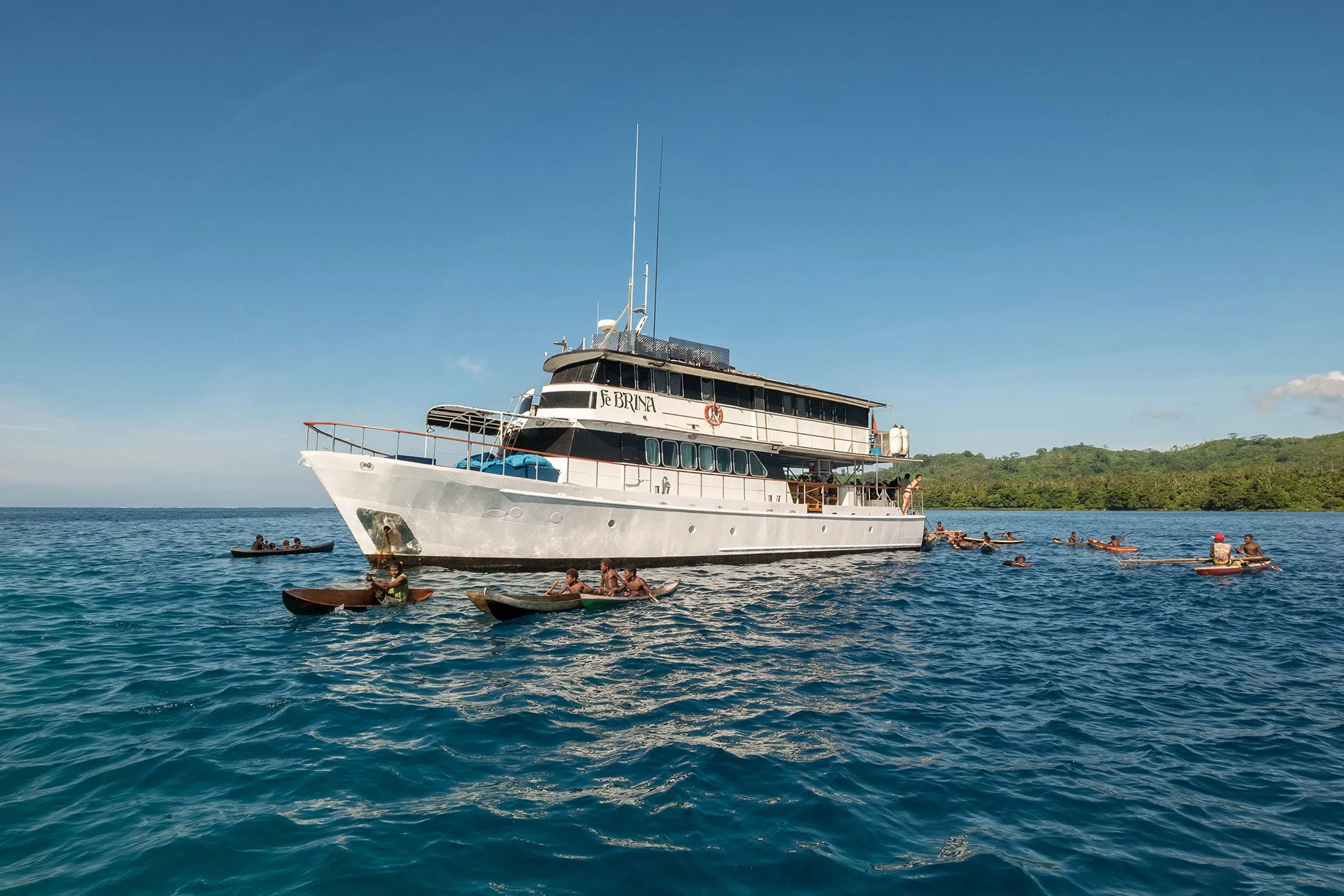
Febrina
Liveaboard · Papua New Guinea
22 m · 10 guests · 7 cabins
from 3810 USD
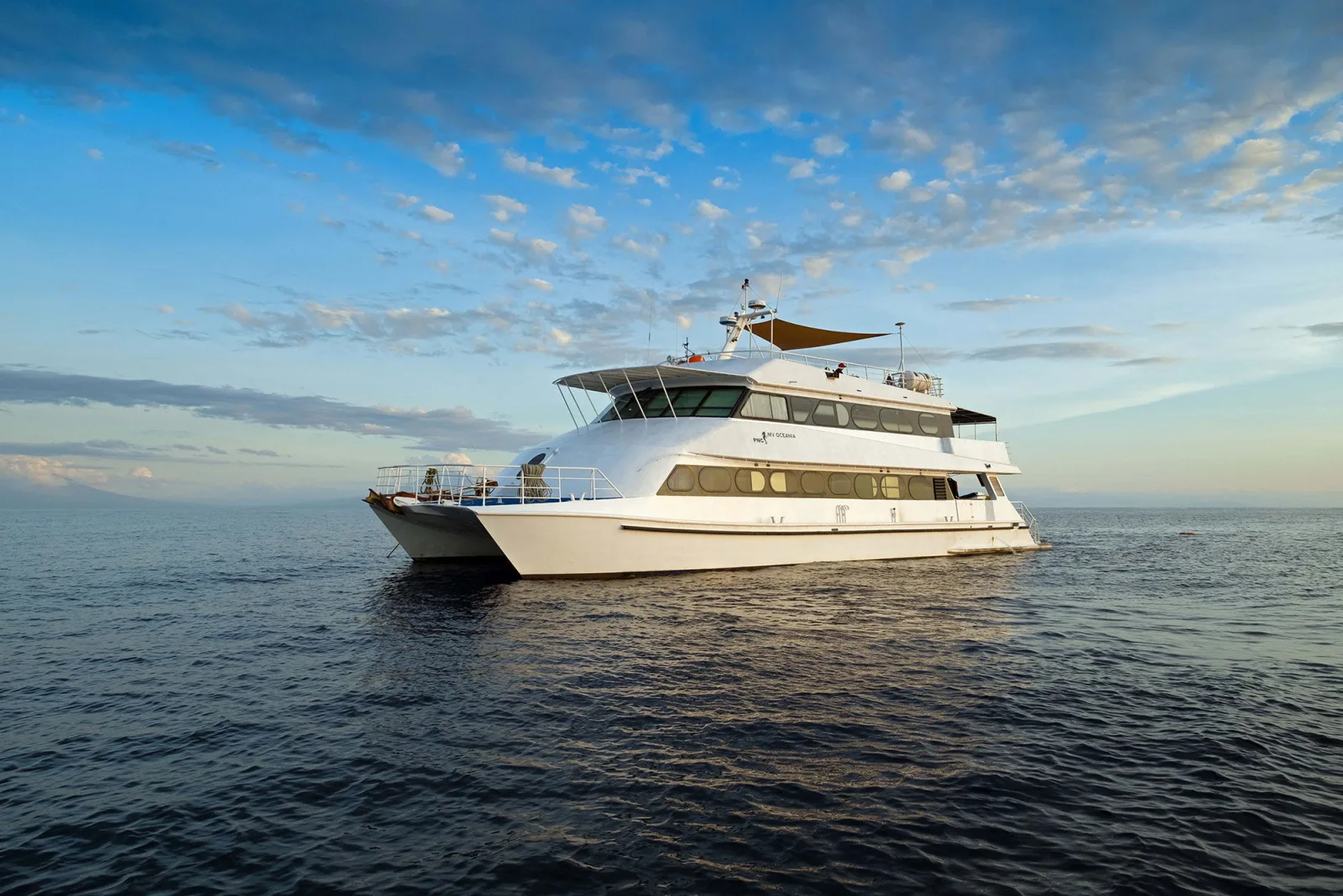
Oceania
Liveaboard · Papua New Guinea
27 m · 16 guests · 8 cabins
from 3367 EUR
Yachts for this destination are coming soon — get in touch and we'll find one for you.
Dive resorts — Papua New Guinea
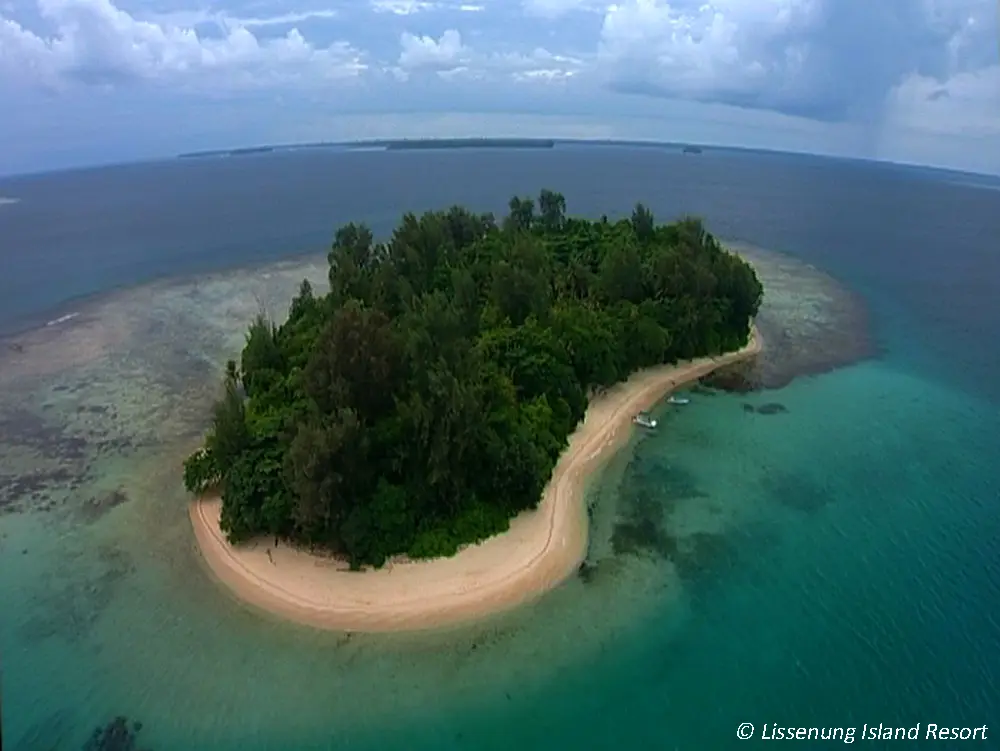
Lissenung Island Resort
Dive resort · Papua New Guinea
Kavieng, New Ireland
from 700 PGK per person per night, double occupancy in a Budget room, all meals included
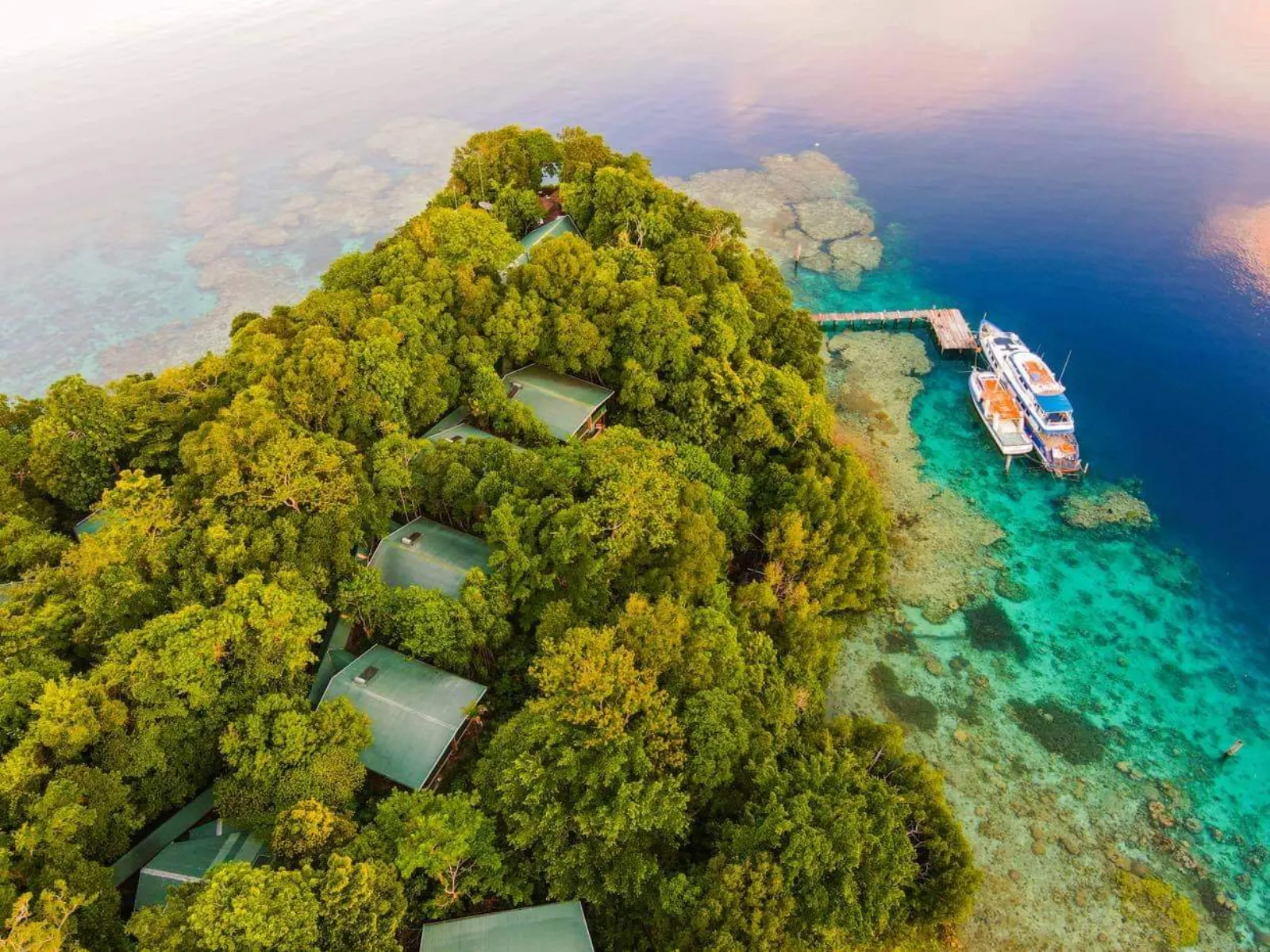
Tawali Leisure & Dive Resort
Dive resort · Papua New Guinea
Milne Bay
from 2900 USD per person for 7 nights with 15 dives
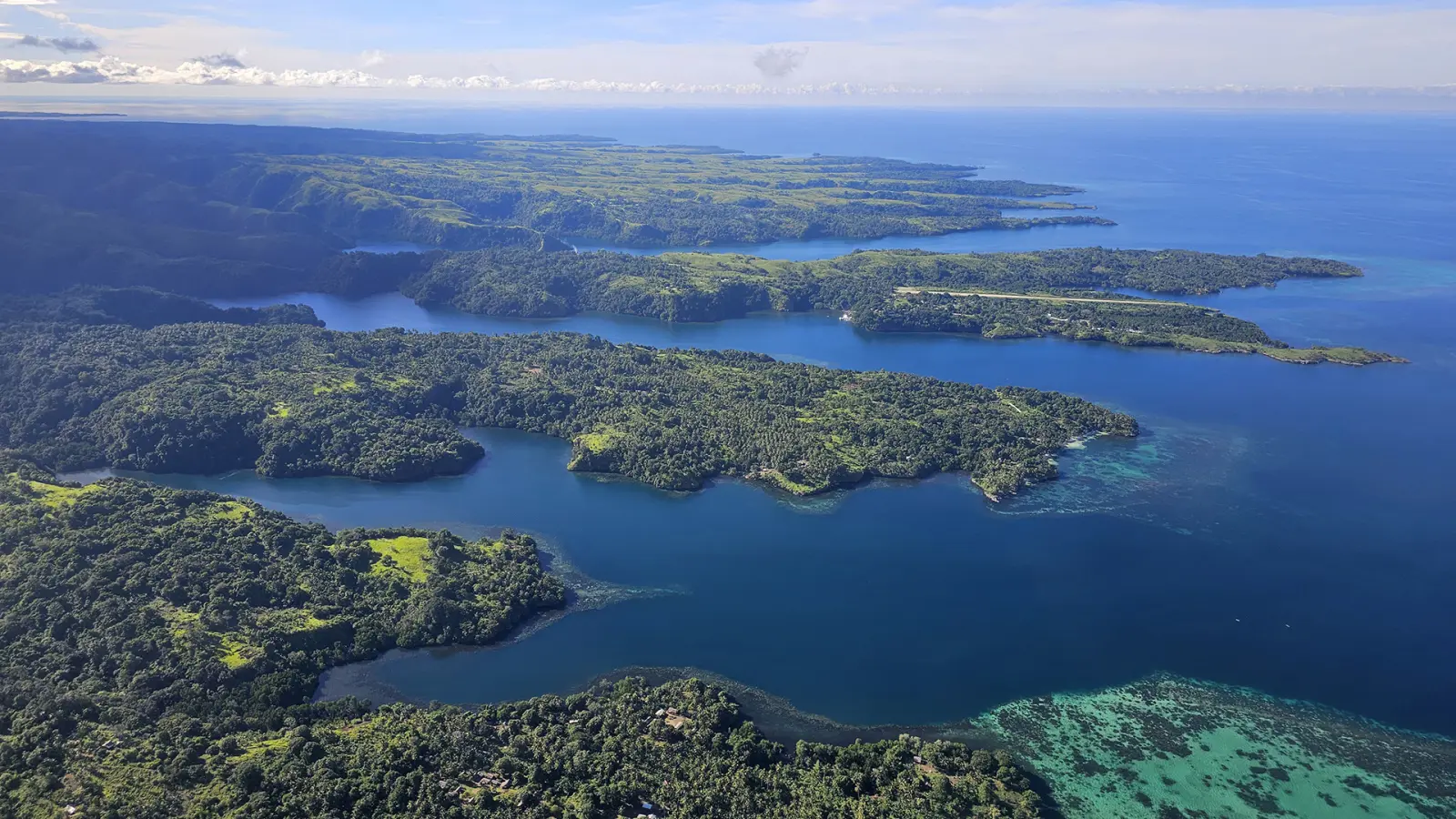
Tufi Resort
Dive resort · Papua New Guinea
Cape Nelson, Oro Province
from 175 USD per person per night, double occupancy in a Standard Room, meals included
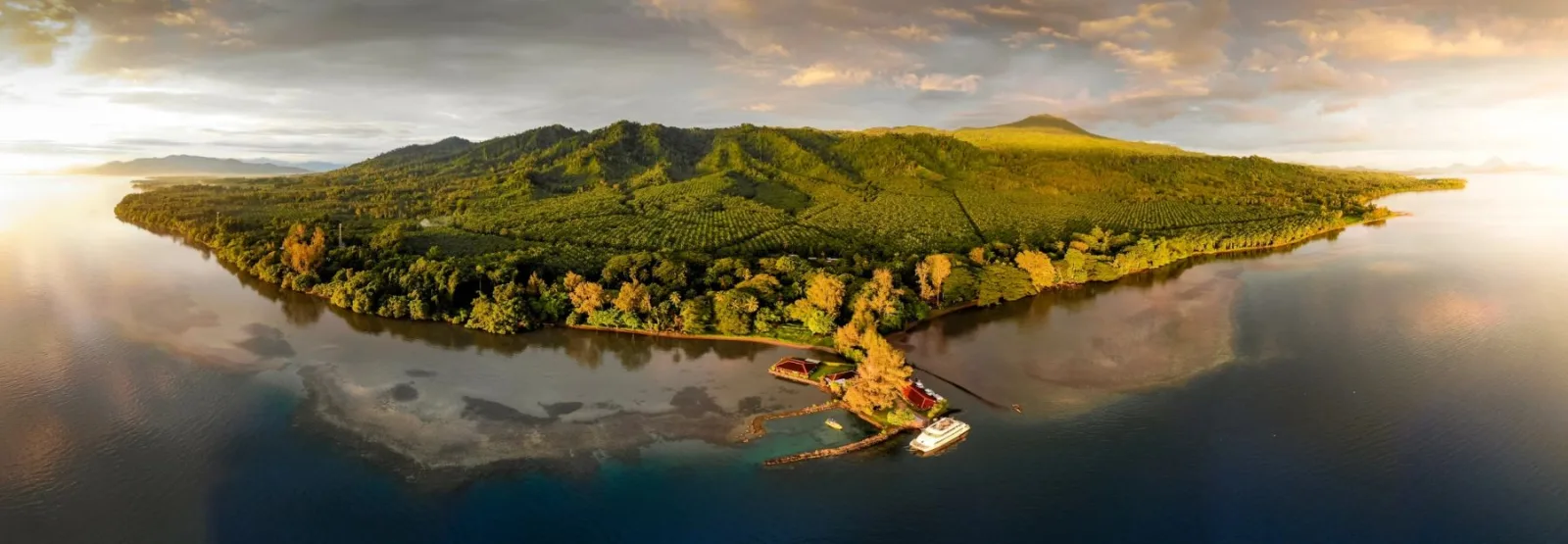
Walindi Plantation Resort
Dive resort · Papua New Guinea
Kimbe Bay, New Britain
from 175 USD per person per night, two sharing, all meals included
Other destinations
Haven't found the right yacht?
Get in touch — we'll find the best option for your dates and budget