There is no degree for this job, no university and no tidy job title. There are, however, people who spend two hundred days a year on the road and have no intention of changing that.
“Tour leader” is often confused with “guide”. The difference matters.
A guide explains. A tour leader leads.
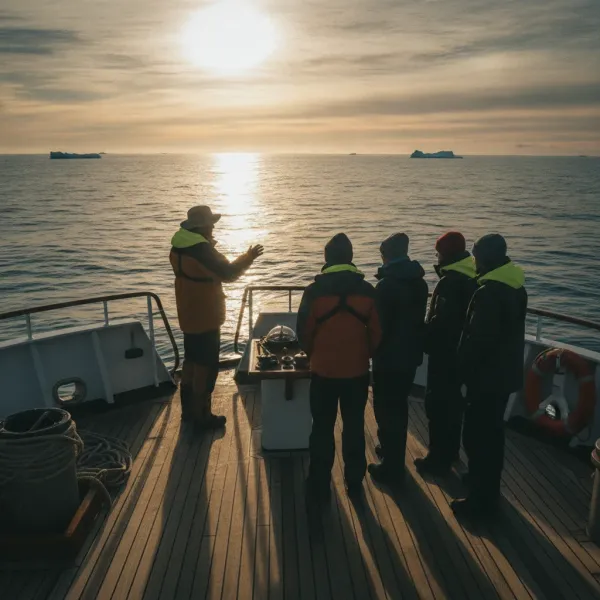
A guide works in one place: a city, a museum, a reef, a volcano. They know their site inside out and hand the group on. A tour leader flies out with the group, lives with them for two weeks and is responsible for everything — from flight connections to making sure the person putting on scuba gear for the first time comes out of the water happy.
What the job actually involves
From outside it looks like a paid holiday. Partly it is — but the shape of the day is nothing like a holiday.
Before departure. Check that everyone’s visas are in order and nobody’s passport expires too soon. Collect forms, insurance, dive certifications. Call the receiving side. Set up the group chat and answer seventy questions, forty of them about baggage.
In transit. Assemble sixteen people at an airport where two are late and one cannot check in. Count the group at the connection. Count again.
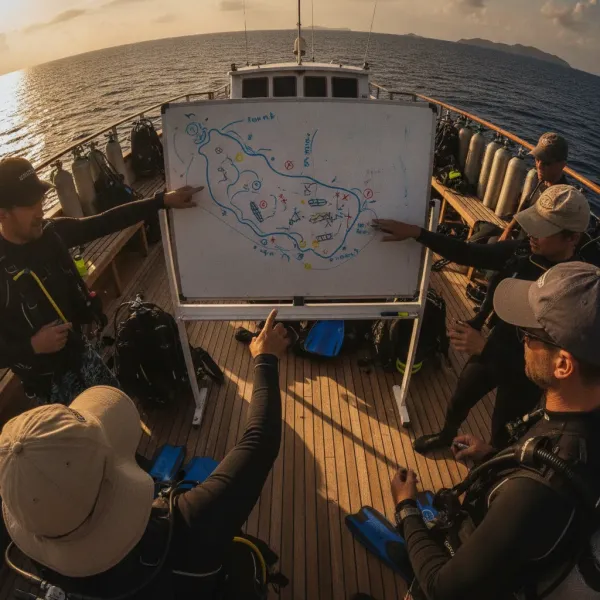
On site. Check-in, briefings, equipment, dive schedules, dinners, transfers. Daily confirmation that every person is healthy, content and clear on what happens tomorrow.
When something breaks. A cancelled flight, lost luggage, a storm instead of the planned crossing, a sprain on a hike, a conflict between two people over snoring in a shared cabin. The tour leader is the person who fixes those things while everyone else is on holiday.
Atmosphere. The most underrated part of the work. Sixteen strangers either become a company within the first forty-eight hours or fragment into cliques. It is fairly clear who influences which way it goes.
A good tour leader works so that the group never notices the work. Everything just “somehow worked out”.

What the profession genuinely gives
Geography you cannot buy with annual leave. Twenty or thirty days off a year buys two or three trips. A tour leader makes ten to twenty departures in the same year: Egypt, the Maldives, Indonesia, the Philippines, Mexico, Antarctica. Not as a dash through, but two weeks at a time.
Skills worth more than the flights. Within a few seasons you accumulate a set that takes years to build in an office: logistics, conflict handling, public speaking, first aid, languages, negotiating with suppliers on three continents. These are portable and work outside travel too.
The people. Groups carry entrepreneurs, doctors, engineers, filmmakers. Two weeks in one boat bonds people faster than years in one office. Many tour leaders say the real asset of the job is not the countries but the contacts that stay.
Diving as part of the work. For dive routes this is its own line item: dives are built into the itinerary and experience accumulates by itself. A tour leader with five seasons behind them has thousands of dives in places an ordinary diver reaches once in a lifetime.
And what it does not
Honesty matters more than advertising here.
It is not a holiday. While the group rests, the tour leader works. They get up earliest and go to bed last, eat last, and spend the free hour handling things the group will never hear about.
Responsibility. For other people’s documents, health, money and mood. A calm face when the plan falls apart is part of the job, and not everyone has it.
An irregular calendar. The work is project-based: a dense season, an empty off-season. Not everyone can plan a personal life around it.
Home becomes a transit point. Two hundred days on the road sounds romantic right up to the moment you have to explain to the people close to you why you are away again.
The profession filters people quickly. Those who stay, stay for a long time.
How the money works
The model is nearly universal: a fee per trip plus full coverage of expenses. Flights, accommodation, meals, dives, entry fees — the organiser pays. A tour leader’s costs on a trip are zero, and the fee is clear.
The rate depends on the destination, the length and the experience. Simple mass-market destinations pay less; expedition and remote routes pay considerably more. On top of that, tour leaders with a name build an audience that travels specifically with them — which changes the conversation with an organiser.
A separate income stream on dive routes is teaching: a tour leader at instructor level can run courses during the trip.
How people get in
There is no straight road. But there is a route most people follow.
Step 1. Become a local in your subject. A dive tour leader is a diver with hundreds of dives. A trekking tour leader has walked those routes. Expertise comes first, everything else follows.
Step 2. Certification. For dive travel that means PADI Divemaster or above — the minimum professional rung that allows you to accompany certified divers. Then Assistant Instructor, Instructor. Training takes anywhere from a few weeks to a season and costs about as much as a good holiday.
Step 3. First aid. An EFR course or equivalent, and for diving, competence with an oxygen kit. Almost every organiser requires it, and rightly.
Step 4. Language. Conversational English — not “I read with a dictionary” but “I can sort this out with the captain, the doctor and the airline representative”. A second language is an advantage.
Step 5. Experience with people. Any kind: volunteering, camp leadership, running a club, organising trips for friends. The ability to hold a group is tested faster than any CV.
Step 6. A first trip as an assistant. The standard way in is to travel as second in command with an experienced tour leader. Watch, help, do the unglamorous work. One or two of those trips teach more than any course.
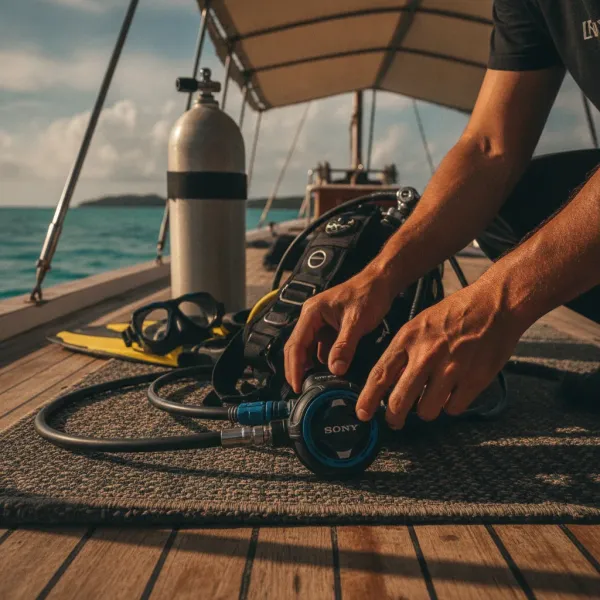
What to look for in an offer
- Are expenses fully covered. If flights are “at your own cost”, that is not a job, it is a discounted trip.
- Is the scope of responsibility written down. A tour leader is responsible for the group and the route, not for sales, marketing and cleaning cabins.
- Is there insurance from the organiser for the duration of the trip.
- Who decides in an emergency, and how quickly that person can be reached from another time zone.
Where to start, if the job appeals
The order is much the same for everyone, and the first two steps need nobody’s permission.
Build experience in your own subject. Diving, trekking, sailing — anything where you are already better than average. The profession starts with expertise, not with a CV.
Reach a professional level of certification. For dive routes that means Divemaster and above; for mountain routes, the corresponding qualification. It is the formal threshold below which no organiser will start the conversation.
Travel as an assistant. Second in command to an experienced tour leader is the fastest way to find out whether this is for you. Many people change their minds after that first trip — in both directions.
Watch the industry from inside. Dive clubs, communities, people who already lead groups. Openings in this profession almost never appear on general job boards — people arrive by recommendation.
To picture the kind of routes involved, look at the travel calendar — these are the programmes somebody runs from start to finish.