Open a bottle of soda quickly and it foams over. Open it slowly and nothing happens. All of decompression in diving works exactly like that.
Decompression sickness sounds alarming and has collected a fair amount of mythology. In practice it is one of the best understood and most predictable problems in diving: the mechanism comes straight out of school physics, the probability can be calculated in advance, and the rules for avoiding it fit into a single paragraph.
The incidence in recreational diving is one to three cases per ten thousand dives. For an average diver making a hundred dives a year, that is roughly one chance in thirty to a hundred years of active diving.
Let’s look at where that number comes from and what stands behind it.
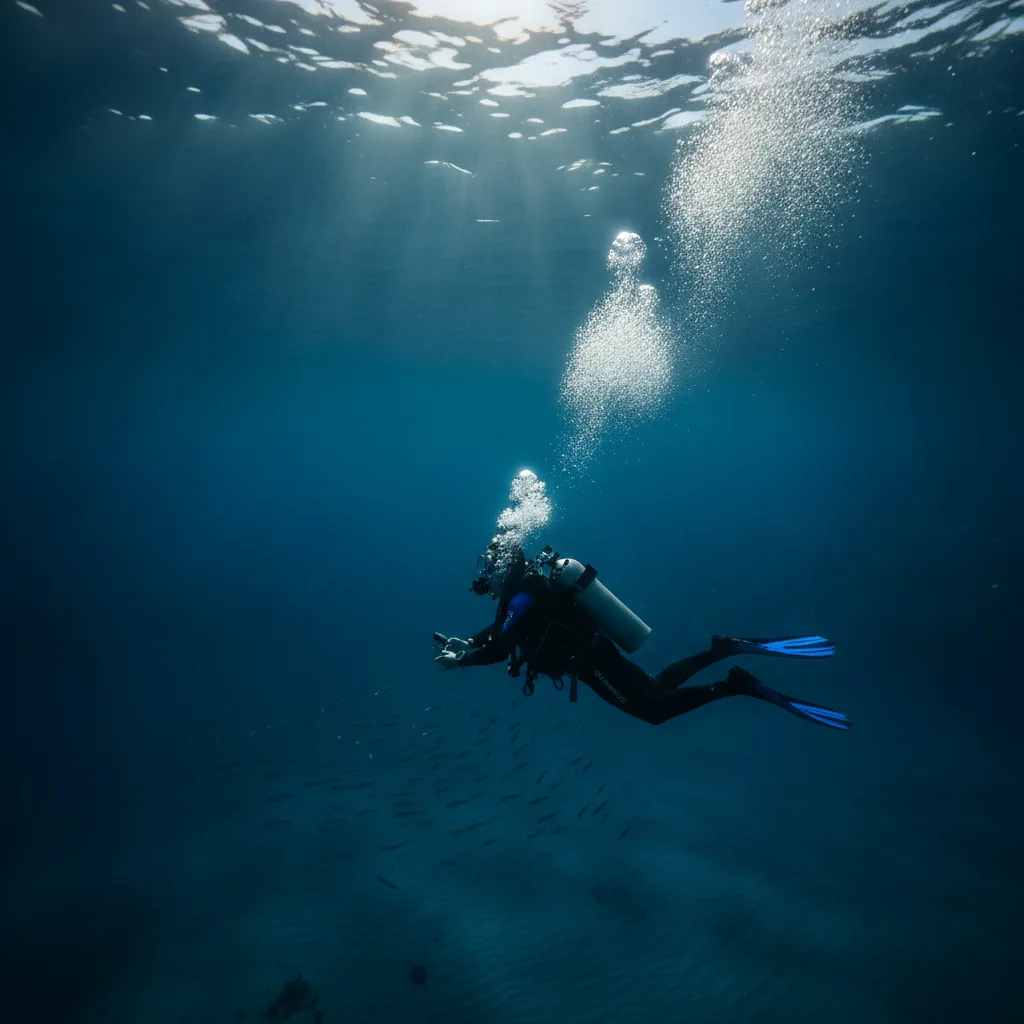
Where the nitrogen comes from
The air we breathe is 78% nitrogen. At the surface it simply passes through the lungs: the body does not use it and barely dissolves any of it.
Under pressure everything changes. Henry’s law says that the higher the pressure of a gas above a liquid, the more of that gas dissolves into it. A diver’s body is about 70% liquid.
At 20 metres the pressure is three times that at the surface, and nitrogen starts moving into the blood and tissues. It does not interfere, cannot be felt and gives no sign of itself. It simply accumulates: the deeper and the longer, the more.
Then the diver begins to ascend, the pressure drops, and the dissolved nitrogen has to come back out.
If the ascent is slow, nitrogen moves calmly from tissue to blood, from blood to lungs, and is exhaled. Invisibly and completely.
If the ascent is fast, nitrogen cannot clear through the lungs in time and comes out of solution inside the tissues as microbubbles. That is decompression sickness.
The same bottle of soda: opened slowly it releases gas through the neck, opened abruptly it foams over entirely.
Why “caisson disease”
The name is older than diving.
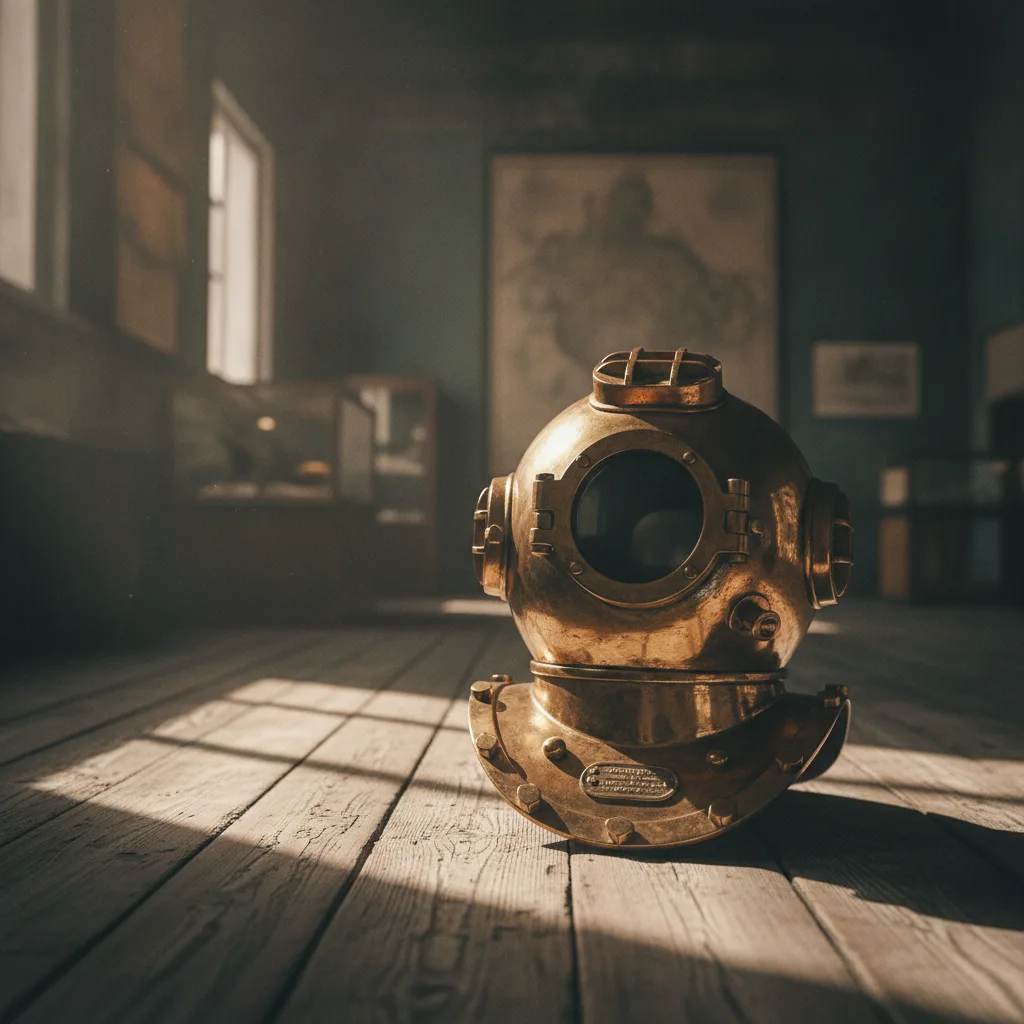
In the nineteenth century, bridge builders used caissons — sealed chambers lowered to a riverbed and filled with compressed air to push the water out. Workers inside dug the ground for the bridge piers, spending hours under raised pressure.
Coming up, they left the chamber in a minute — and some time later felt joint pain that doubled them over. English-speaking workers called it the bends. Hundreds of men on the Brooklyn Bridge and the Eads Bridge in St. Louis experienced it, and nobody understood the cause.
The answer came in 1878, when the French physiologist Paul Bert showed that nitrogen was responsible. In 1908 the Scot John Scott Haldane, commissioned by the Royal Navy, produced the first decompression tables — a schedule for bringing a diver up at a rate that lets nitrogen escape.
Every modern dive computer is a descendant of those tables.
How it is solved today
Recreational diving is arranged so that decompression is not required at all.
The no-decompression limit. For every depth there is a time you can stay and then ascend directly, with no mandatory stops. At 18 metres that is about an hour; at 30 metres about twenty minutes; at 12 metres, practically your entire tank. Recreational dives are planned inside those limits with margin to spare.
Ascent rate — no faster than 9–10 metres per minute. Slower than your own exhaled bubbles. It is a simple, reliable reference: never overtake your bubbles.
Safety stop — three minutes at five metres. Formally optional, in practice always done. Three minutes in the shallows removes a meaningful share of residual nitrogen and turns a routine dive into a dive with double the margin.
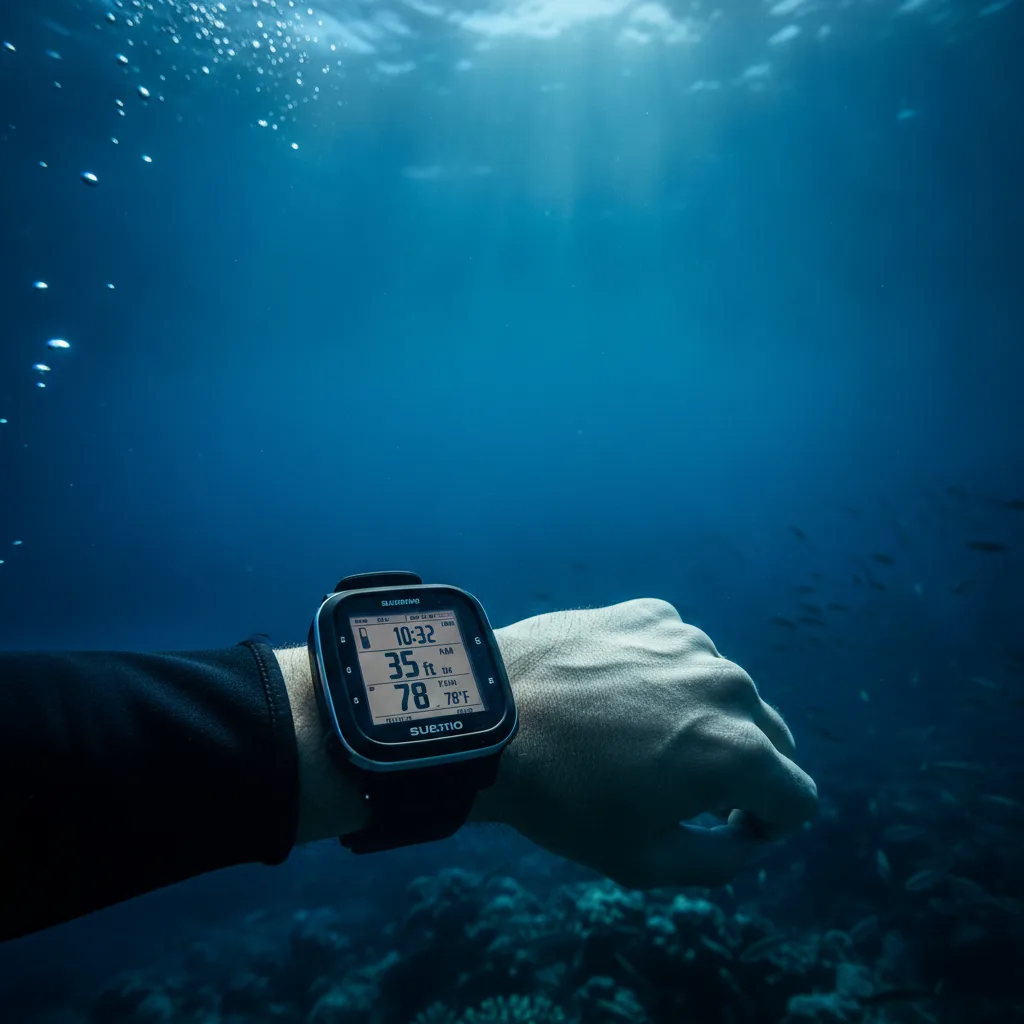
A dive computer. It tracks tissue loading in real time across the whole profile, not just the maximum depth. It costs from €200 and stopped being a luxury long ago — today it is basic kit, on a par with a mask.
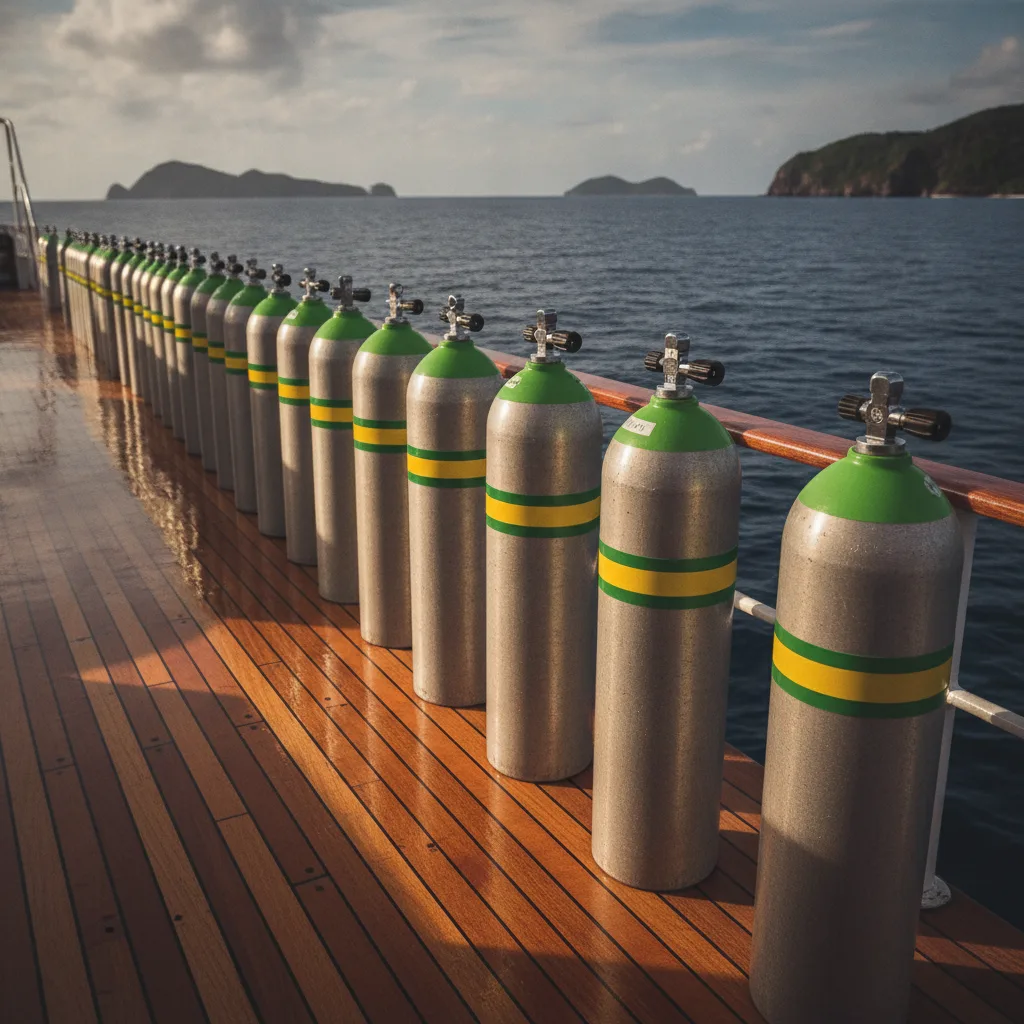
Nitrox. A breathing mix with more oxygen (32% or 36% instead of 21%) and correspondingly less nitrogen. Less nitrogen means less loading, more time at depth and less residual gas after the dive. On liveaboards, where people dive three or four times a day, almost everyone uses it.
The rules that work
A short list that covers nearly the whole risk:
Ascend slowly and make the stop. That is the main one. Everything else is a supplement.
Deepest dive first. Across a day the profile should run from deep to shallow, not the other way round.
Drink water. Dehydration thickens the blood and slows nitrogen clearance. In heat and salt air it arrives faster than you would expect.
Do not fly straight after diving. Cabin pressure is lower than at ground level, and residual nitrogen behaves as if you were ascending further. The rule: 12 hours after a single dive, 18–24 hours after several days of diving. On a dive safari the last day is always left dry — that is not the operator being stingy, it is a required interval.
No alcohol before diving — for the same reason as water: dehydration.
Leave margin. Do not surface on the edge of the no-decompression limit or squeeze the last minute out of your computer. A conservative profile costs precisely nothing.
Rest. Fatigue, poor sleep and a flight the day before all affect how well the body copes.
Dive within your training. Below 18 metres with the matching certification, below 30 only with an advanced level and experience.
If something does go wrong
The signs watched for in the first hours after a dive: unusual fatigue, joint or muscle pain, tingling and numbness, dizziness, marbled skin, shortness of breath.
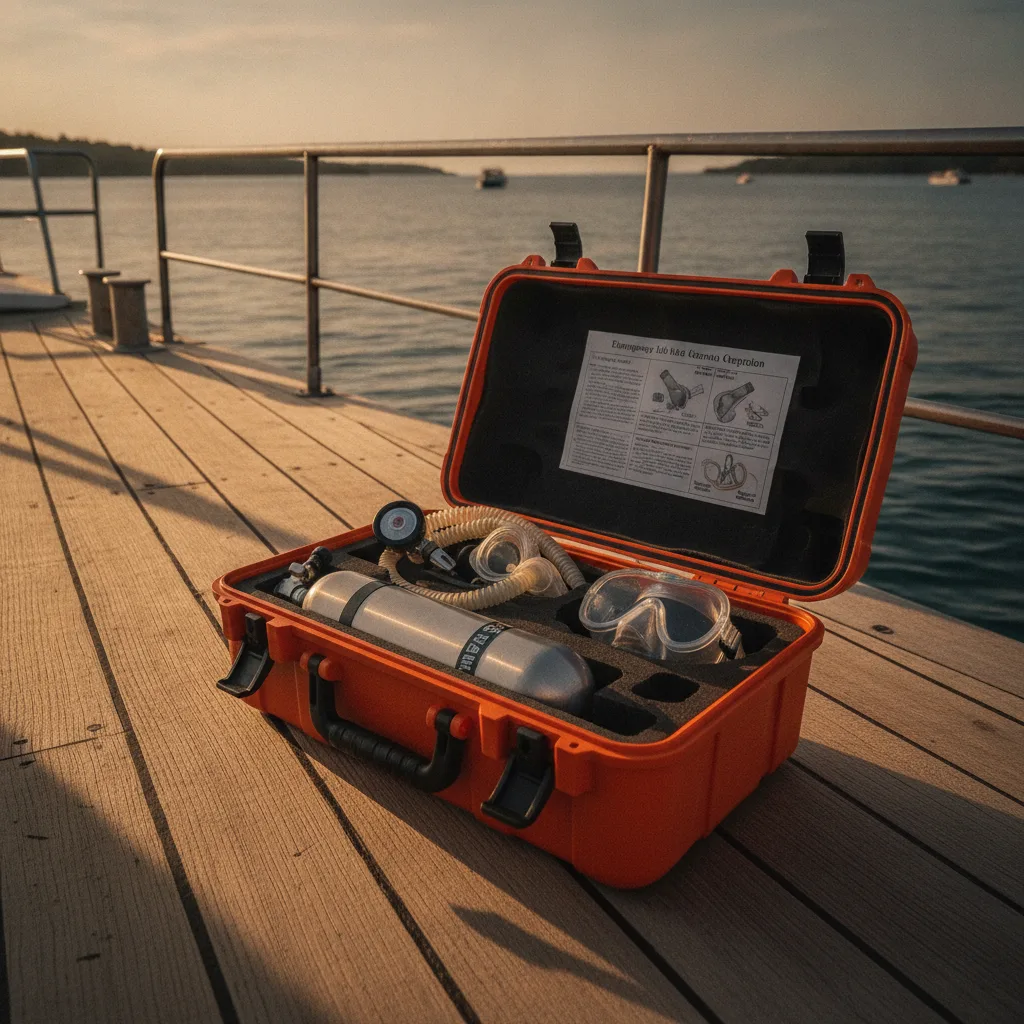
What is done: pure oxygen to breathe, the person laid down, fluids, and a call to medical support. Every dive safari and every decent dive centre carries an oxygen kit and has a line to the nearest chamber — that is a standard requirement, not an option.
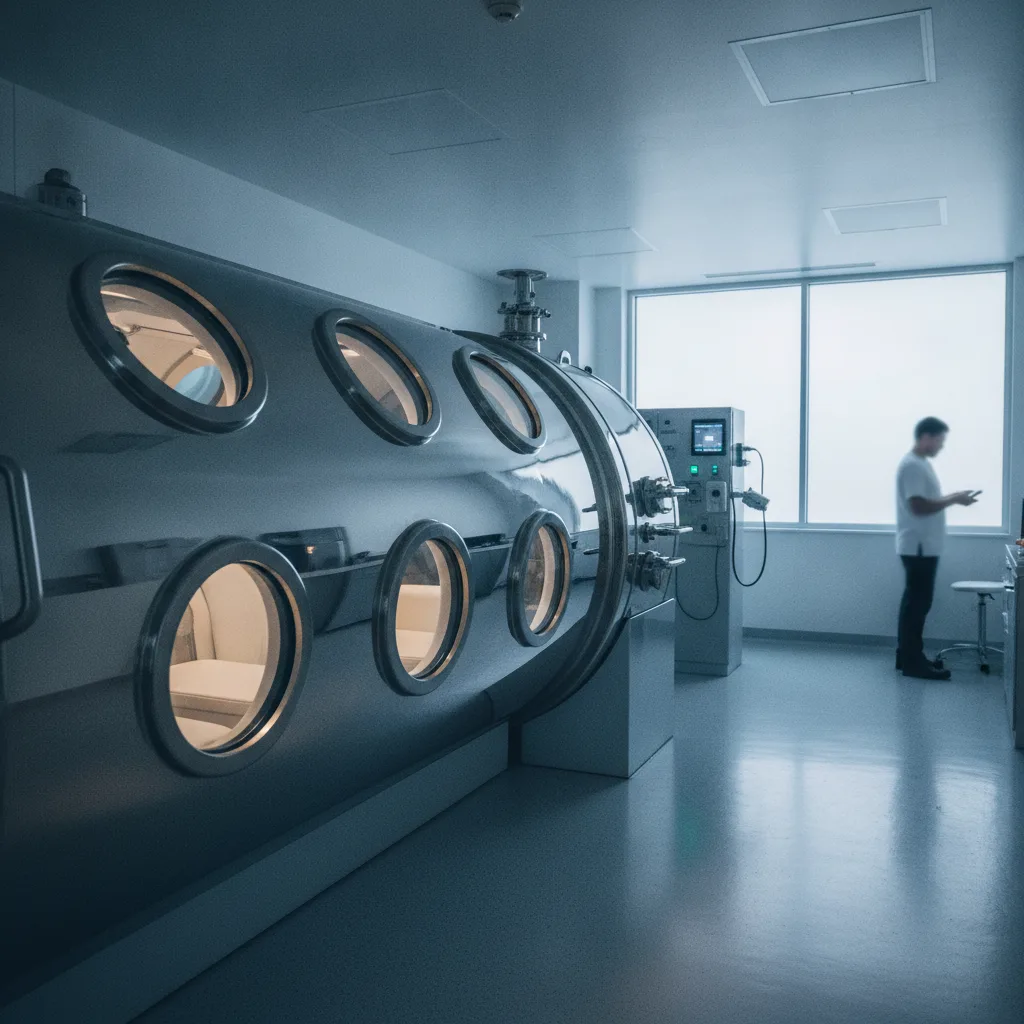
Treatment is recompression in a hyperbaric chamber: the person is put back under pressure, the bubbles redissolve, and the pressure is then reduced on a schedule, over hours instead of minutes. With prompt treatment the overwhelming majority of cases resolve completely and without consequences.
The main rule: do not wait and do not tough it out. Symptoms named out loud within the first hour mean a standard treatment protocol. Symptoms someone kept quiet about for a day out of embarrassment are harder work.
What follows from all this
Decompression sickness is not a curse of the deep or a lottery. It is the consequence of one specific error: ascending too fast, or staying too long at depth without accounting for time.
In both cases the solution has been known for a century and is built into the equipment, the training and the way dives are organised. A diver with a computer on the wrist, ascending slower than their own bubbles and spending three minutes at five metres, sits in a zone measured in tenths of a percent.
What is genuinely worth doing: never skip the safety stop, drink water, keep the last day of a safari dry — and dive regularly, because skill, like everything else, is held together by practice.
For how the physics works underwater in detail, see The Physics of Diving. For how far a human can go down, How Deep Can a Human Dive. And if you have never dived at all — Diving into the Unknown, on what the first time is like.