A pot of meat, vegetables, and sausage is buried in the ground. Six hours later, it is dug up. The meat melts on the tongue. The earth cooked lunch.
Cozido das Furnas — the “cozido from Furnas” — is a dish that cannot be prepared in any restaurant in the world. Because instead of a stove, there is a volcano.
In the Furnas Valley, on the island of São Miguel, steam rises from the ground. Hot springs gush from fissures. Mud pots bubble with sulfur. The soil temperature in some spots exceeds 100 degrees Celsius. And the local residents use this heat for cooking. Literally.
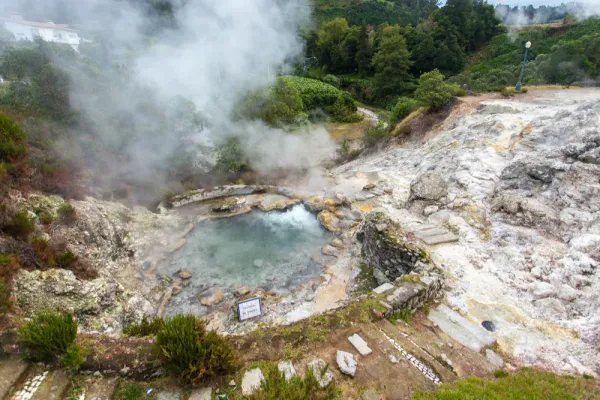
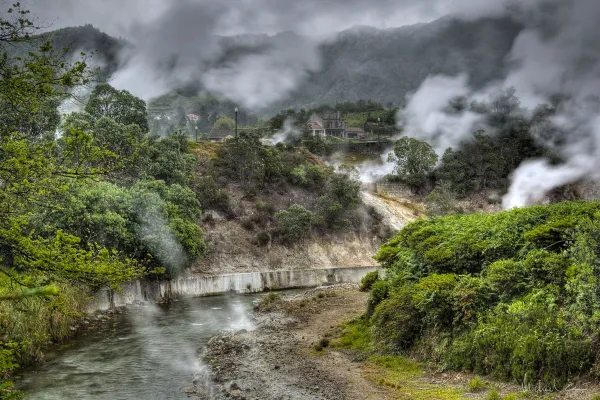
Each morning, a cook buries a large pot in the ground — filled with beef, pork, chicken, blood sausage, regular sausage, cabbage, carrots, potatoes, and sweet potato. He covers it with earth, marks the spot, and walks away. Five to six hours later, he digs it up. The meat has been slowly braised in its own juices, at a temperature sustained not by fire, but by the Earth’s core. The flavor is different: tender, deep, with a faint mineral undertone. It cannot be replicated in an oven. This is volcanic cuisine.
São Miguel is the largest and greenest island in the Azores. If Faial is blue (hydrangeas line every road) and Pico is black (solidified lava, vineyards hemmed in by lava walls), then São Miguel is green. So green that the first seafarers who spotted it from their ships thought it was a continent — too much greenery for an island.
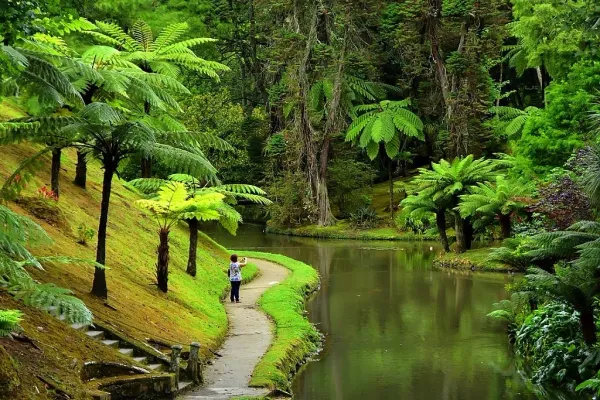
Every shade imaginable: from emerald to lime, from deep conifer-green to the fresh apple-green of spring. Cryptomerias — Japanese cedars brought here in the 19th century — have grown into towering giants and now drape the mountains in dark-green velvet. Hydrangeas — the same as on Faial, but here lining every path, every fence, every stream. Ferns — tree-sized, like something from the Jurassic, with fronds two meters long. Moss covers rocks, trunks, fences — anything that stays still for more than a week gets swallowed by moss. São Miguel is an island that has never heard the word “drought.”
Sete Cidades — a twin lake sitting in a volcanic crater. One half is blue. The other is green. They are divided by a narrow bridge. The legend: a princess with blue eyes fell in love with a shepherd with green eyes. The king forbade the marriage. They wept — and their tears filled the crater: blue from her, green from him.
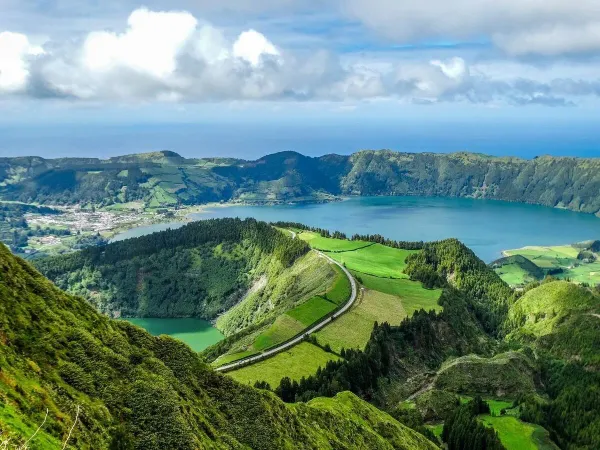
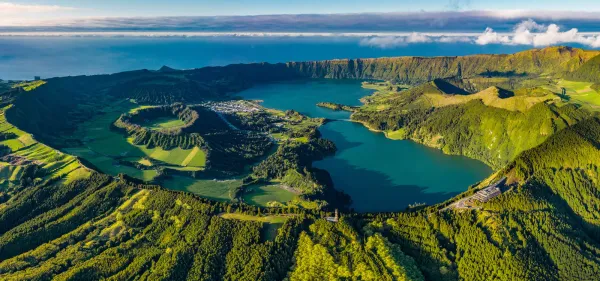
The reality is more prosaic: the different colors come from different depths (the blue lake is deeper and reflects the sky more intensely) and different algae compositions (the green lake is shallower, and algae lend it its hue). But standing on the rim of the caldera — at the Vista do Rei viewpoint, the “King’s View” — looking down at the two lakes divided by a thin bridge, surrounded by green slopes, with clouds crawling along the crater’s ridge like white serpents — you choose the legend. Because the legend is more beautiful. And because in the Azores, legends are no less real than geology.
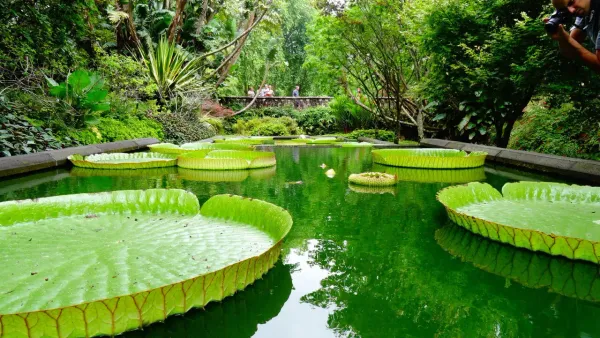
Terra Nostra Park is a botanical garden with a thermal pool. The water is rust-colored (iron), 35–40 degrees Celsius. You lie in the warm mineral water while all around you rise giant ferns, palms, ginkgo trees, and camellias. Victoria lily pads — floating platters up to two meters in diameter — cover the ponds.
The Gorreana tea factory is the only one in Europe. Founded in 1883 — when the orange plantations that had fed the island for centuries were wiped out by disease, farmers began searching for an alternative. They tried tea — and it took root. The damp oceanic climate, acidic volcanic soil, constant rain, mild winters — the same conditions as in Sri Lanka or Darjeeling. Except in the middle of the Atlantic.
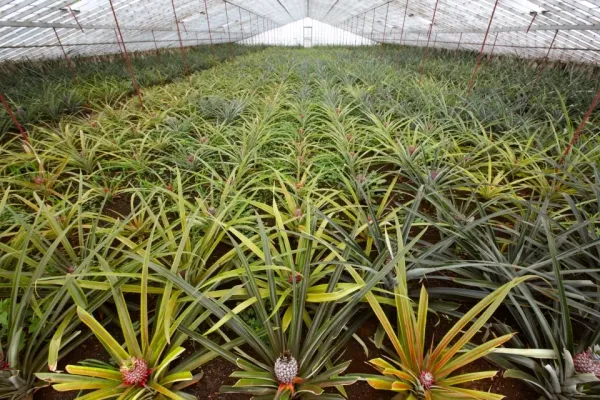
The factory is still running — a family business, now in its fifth generation. Tea bushes cover the hills in neat rows. The harvest is partly done by hand. The processing uses equipment that is decades old (and still outperforms newer machinery). Tasting — black, green, pineapple-flavored (pineapples are also grown here — the only industrial greenhouse cultivation in the world, because Azorean sunshine is insufficient for open fields).
São Miguel is an island that feeds you. It feeds you through its volcano (cozido — six hours in hot earth). Through its soil (tea — the only kind in Europe, pineapples — the only greenhouse-grown ones in the world). Through its water (thermal pools — rust-colored water, 38 degrees, giant ferns all around). Through your eyes (Sete Cidades — the twin lake, the legend of the princess, the view from the King’s Lookout that takes your breath away). And through its air — clean, humid, oceanic, smelling of moss and cryptomeria.
An island where nature is not merely beautiful — it is useful. It works. It cooks. It warms. It grows. It nourishes. It heals: the thermal waters of Furnas are rich in minerals, and locals visit them the way others visit a doctor.
Lagoa do Fogo — “Fire Lake” — sits at 900 meters altitude, in a crater along a mountain ridge. A nature reserve, endemic plants, a path winding through moss and ferns. The lake is turquoise, encircled by green slopes, often wrapped in clouds. When the clouds part, a breathtaking view opens: water and sky are the same color, the boundary between them erased.
The pineapple greenhouses are yet another Azorean peculiarity. The only place in the world where pineapples are grown industrially under glass. Not because it is cold (the Azores are warm) — but because there is not enough sun: clouds, humidity, Atlantic overcast. The greenhouses compensate. A pineapple takes 18–24 months to ripen — three times longer than in the tropics. But the flavor is different: sweeter, more fragrant, with a hint of tartness. Trying the pineapple liqueur is a must.
And then — Lisbon. The last night. The 25 de Abril Bridge lit up, the Christ the King statue on the far bank of the Tagus, roasted chestnuts on Rossio square. And pastel de nata — the real ones, from Belém, flaky, hot, with a caramel crust.