Naia
 1 / 22
2 / 22
3 / 22
4 / 22
5 / 22
1 / 22
2 / 22
3 / 22
4 / 22
5 / 22
 6 / 22
 7 / 22
 8 / 22
 9 / 22
 10 / 22
 11 / 22
 12 / 22
 13 / 22
 14 / 22
 15 / 22
 16 / 22
 17 / 22
 18 / 22
 19 / 22
 20 / 22
 21 / 22
 22 / 22
Book through Tour Leader Club
36.6 m · 18 guests · 9 cabins · 14 crew members
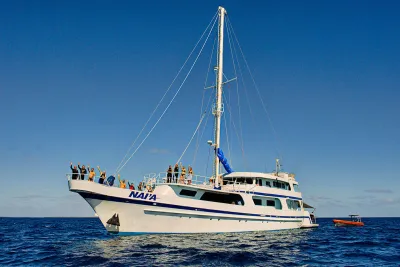
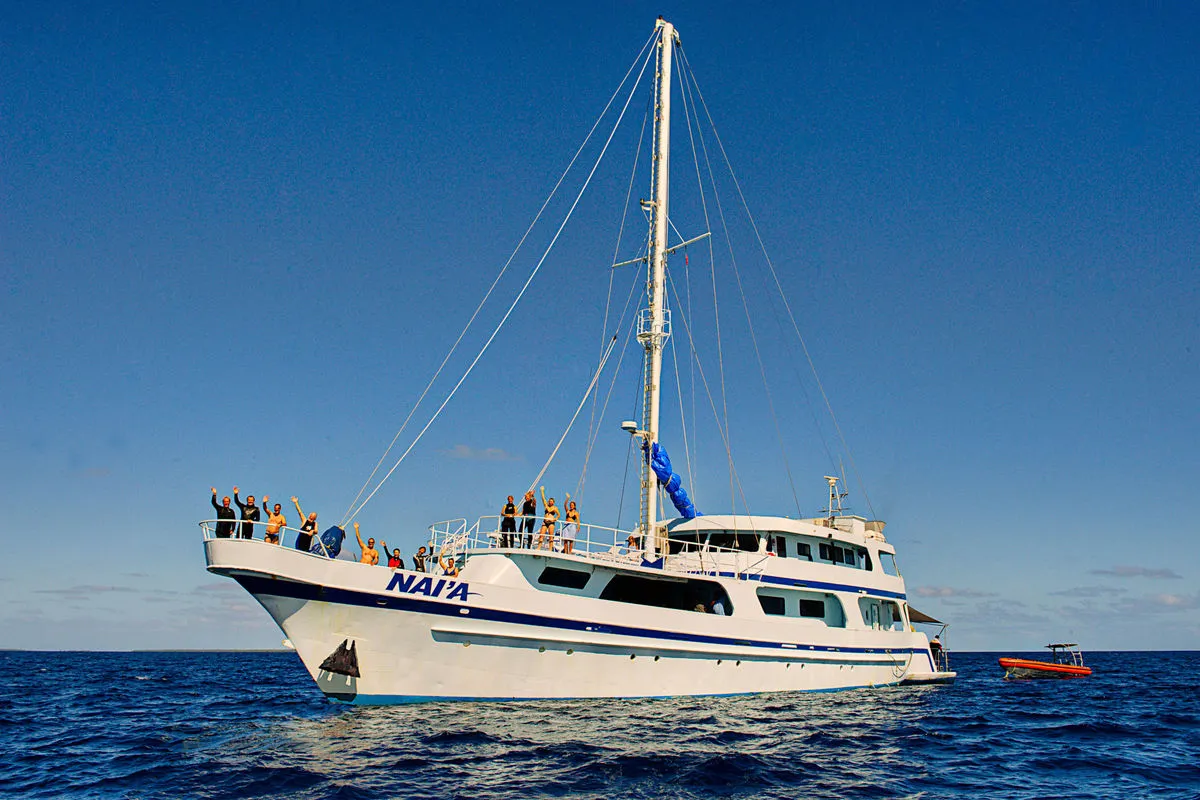
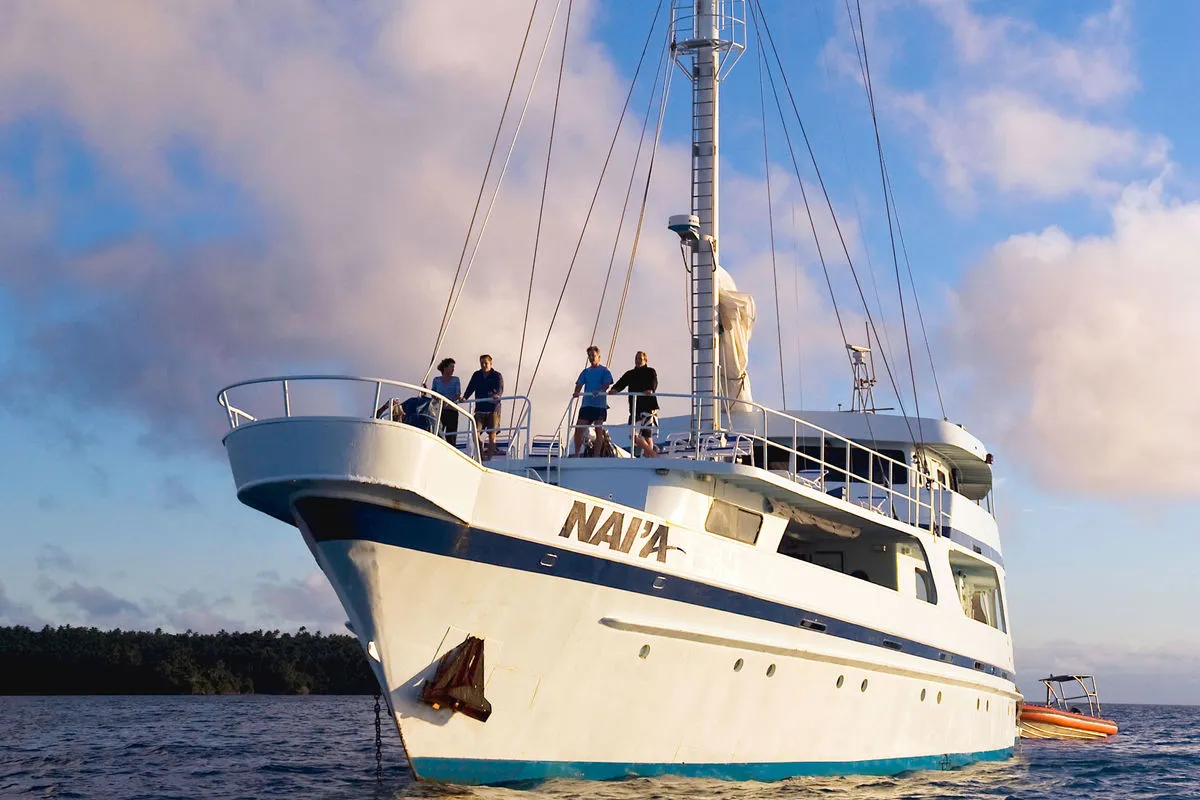
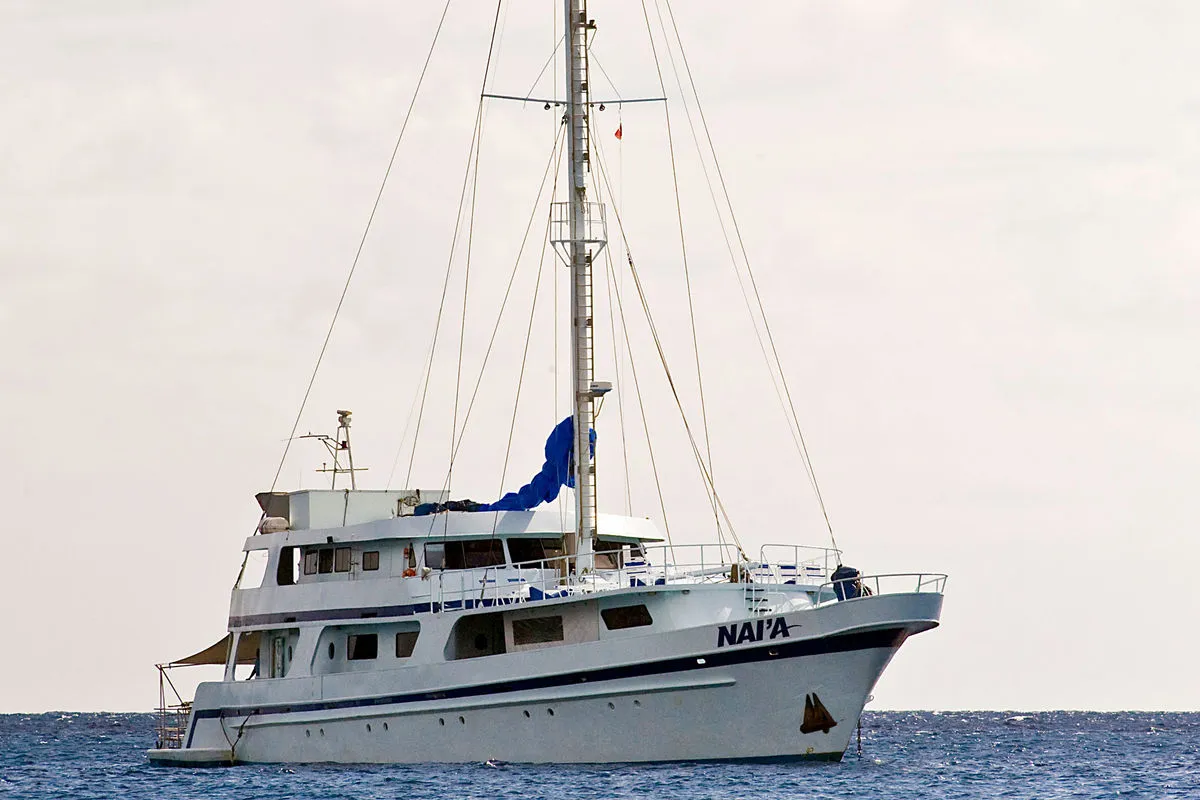
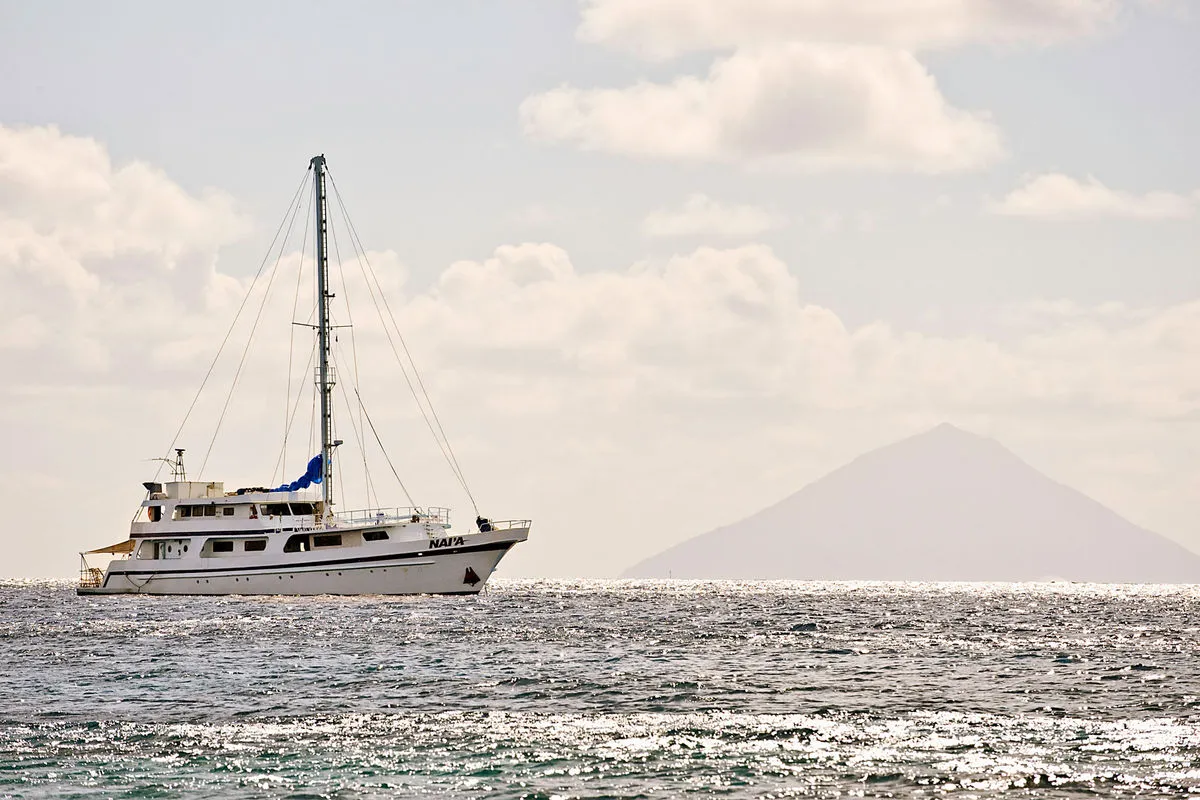
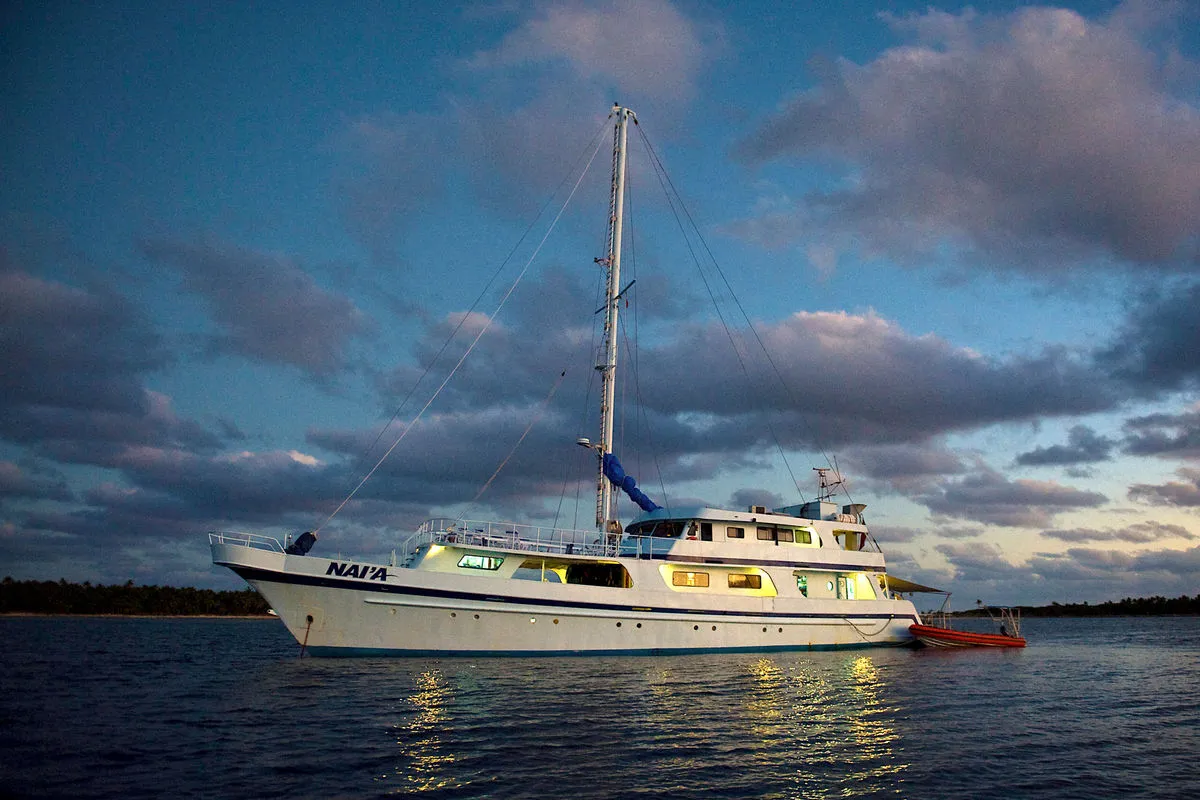
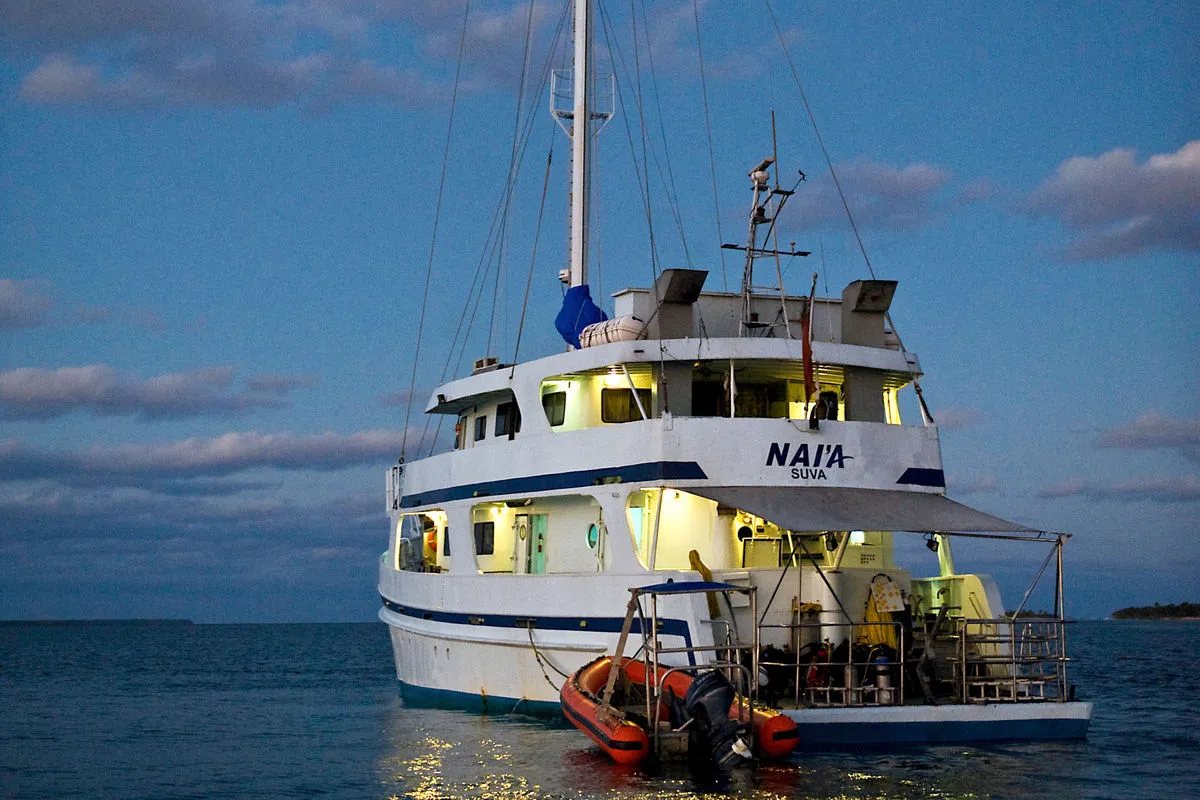
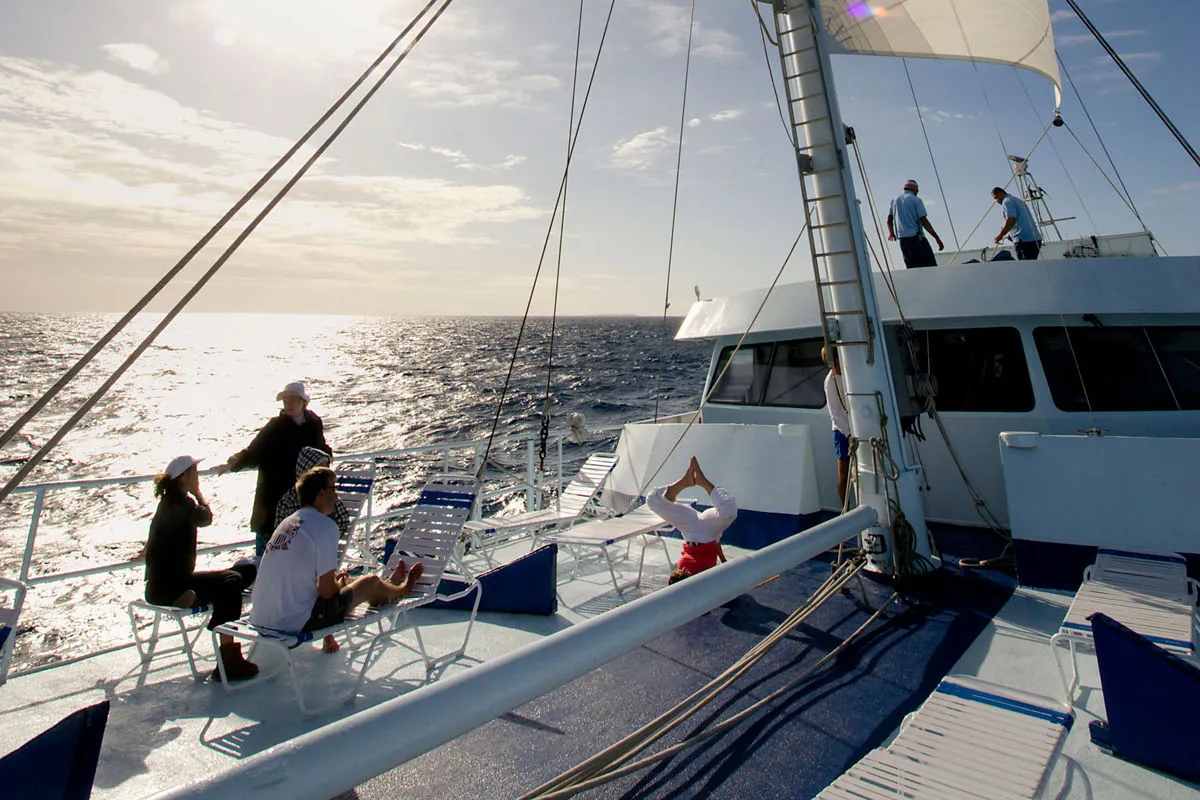
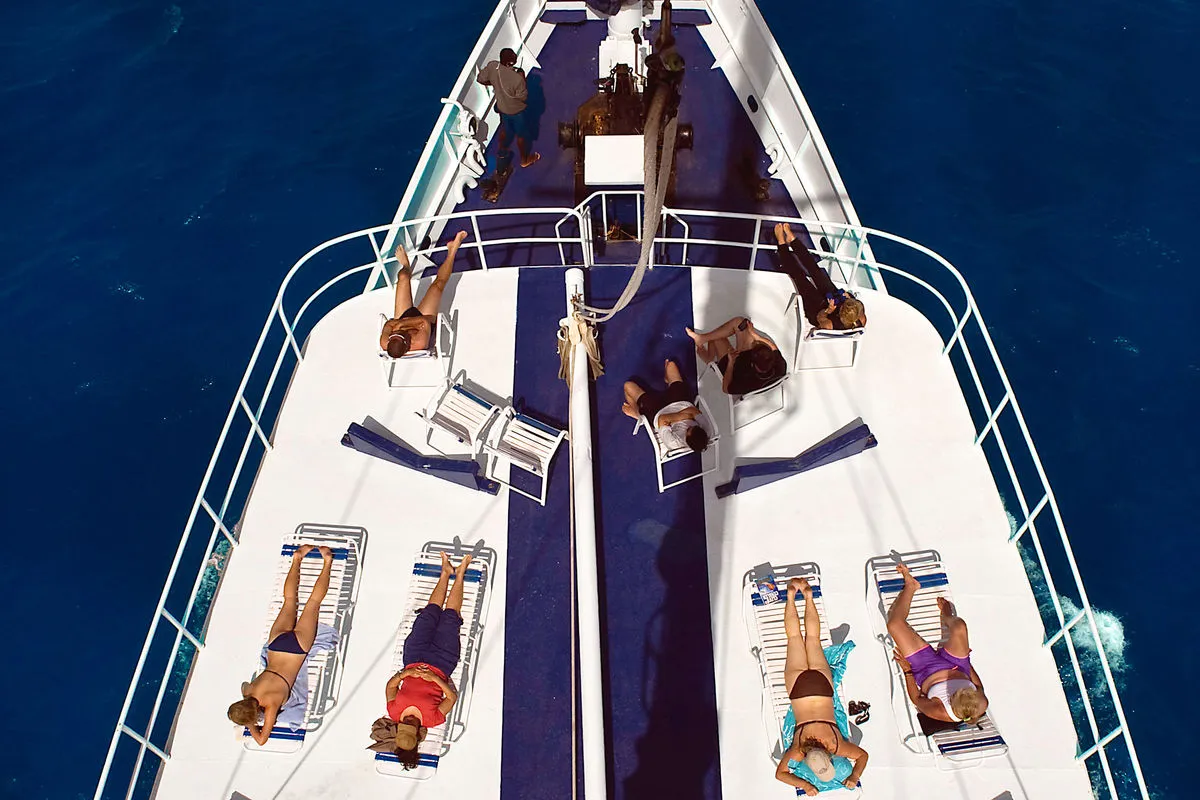
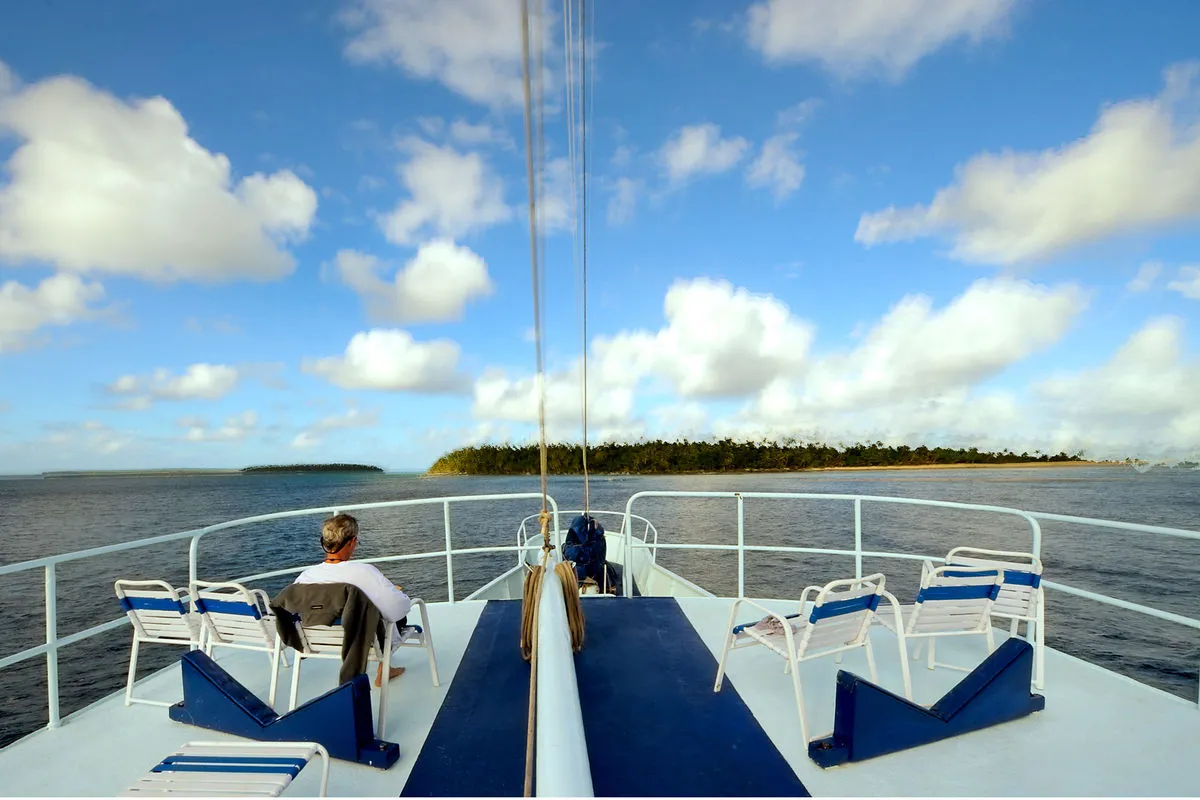
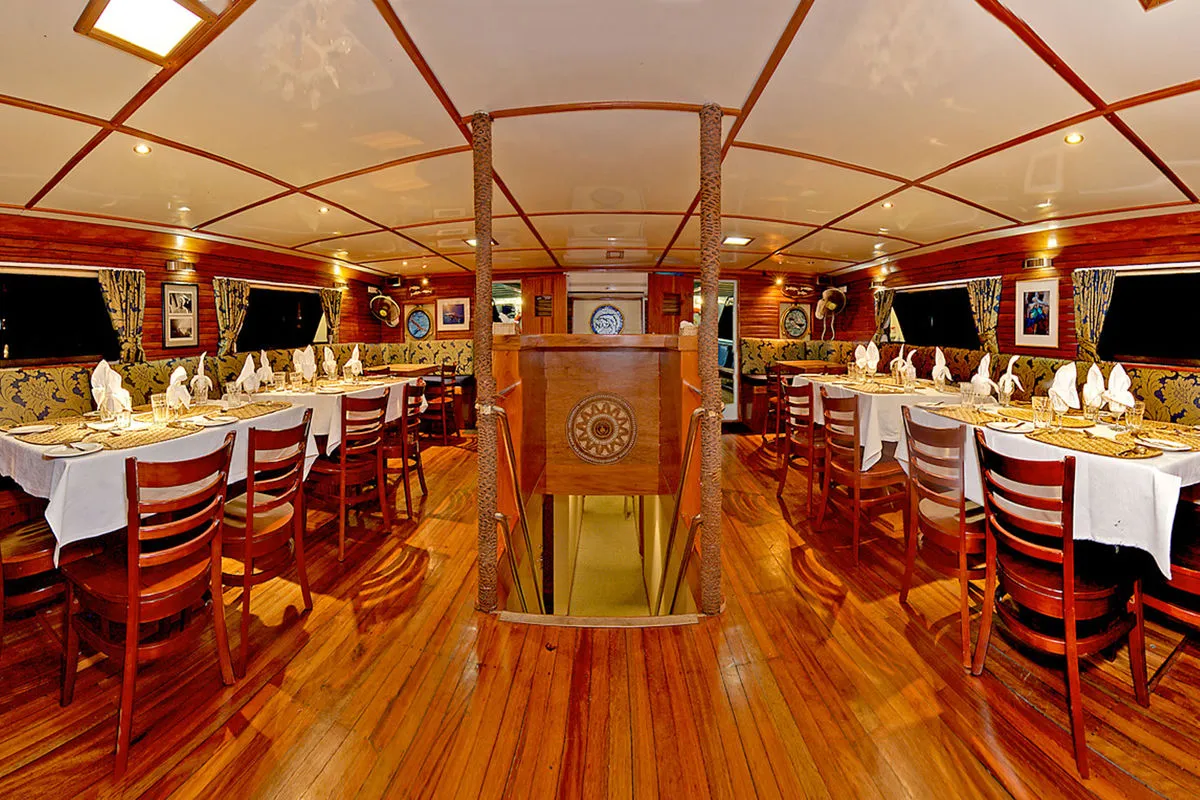
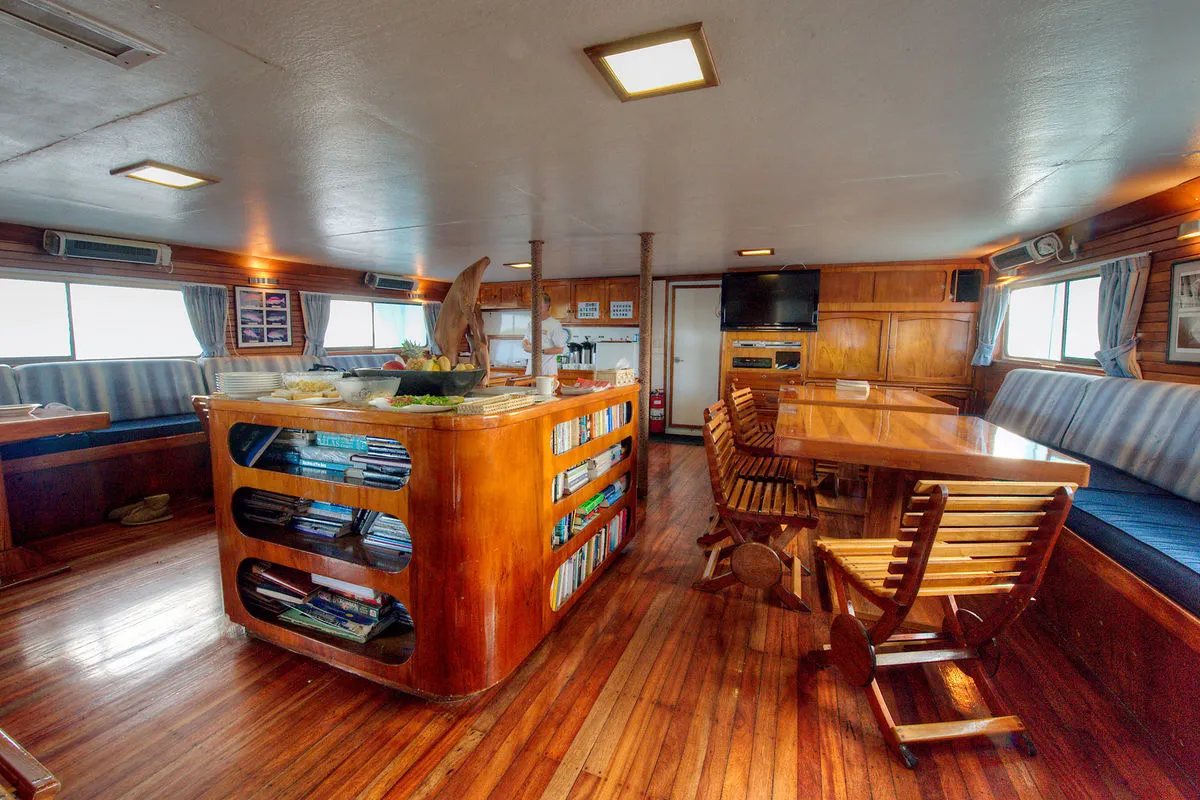
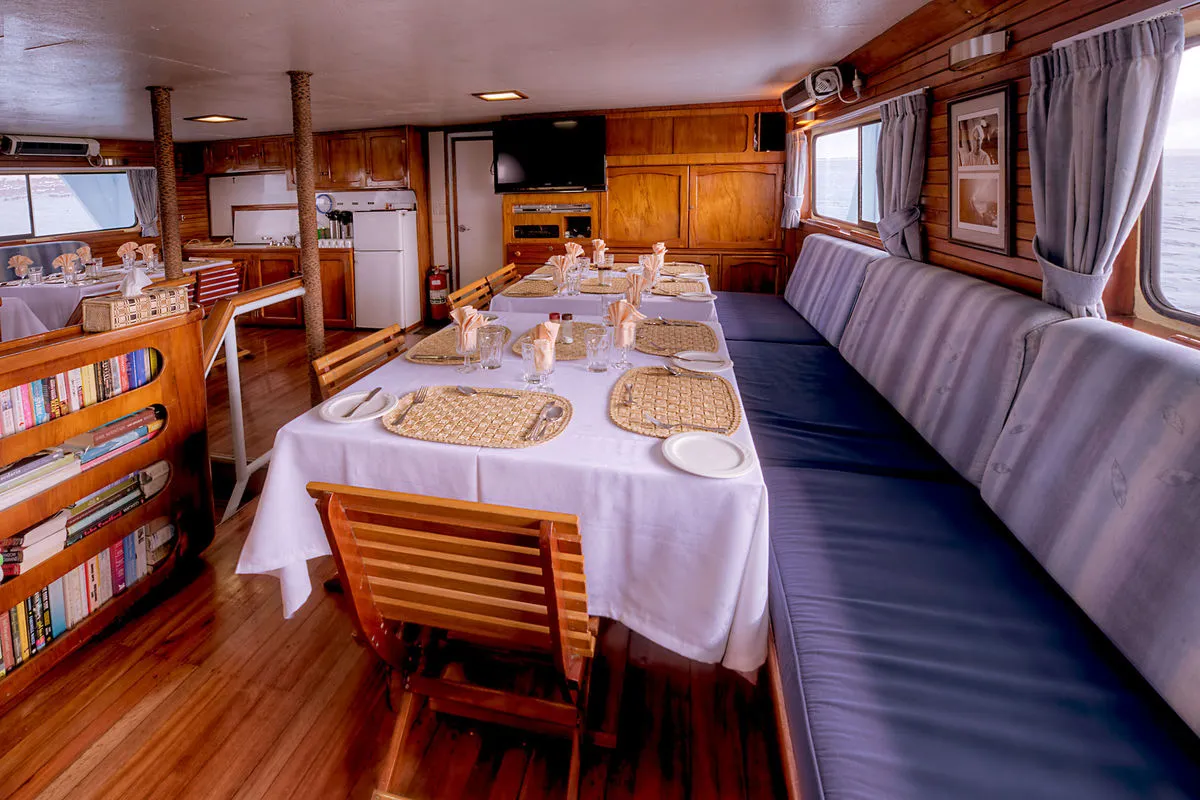
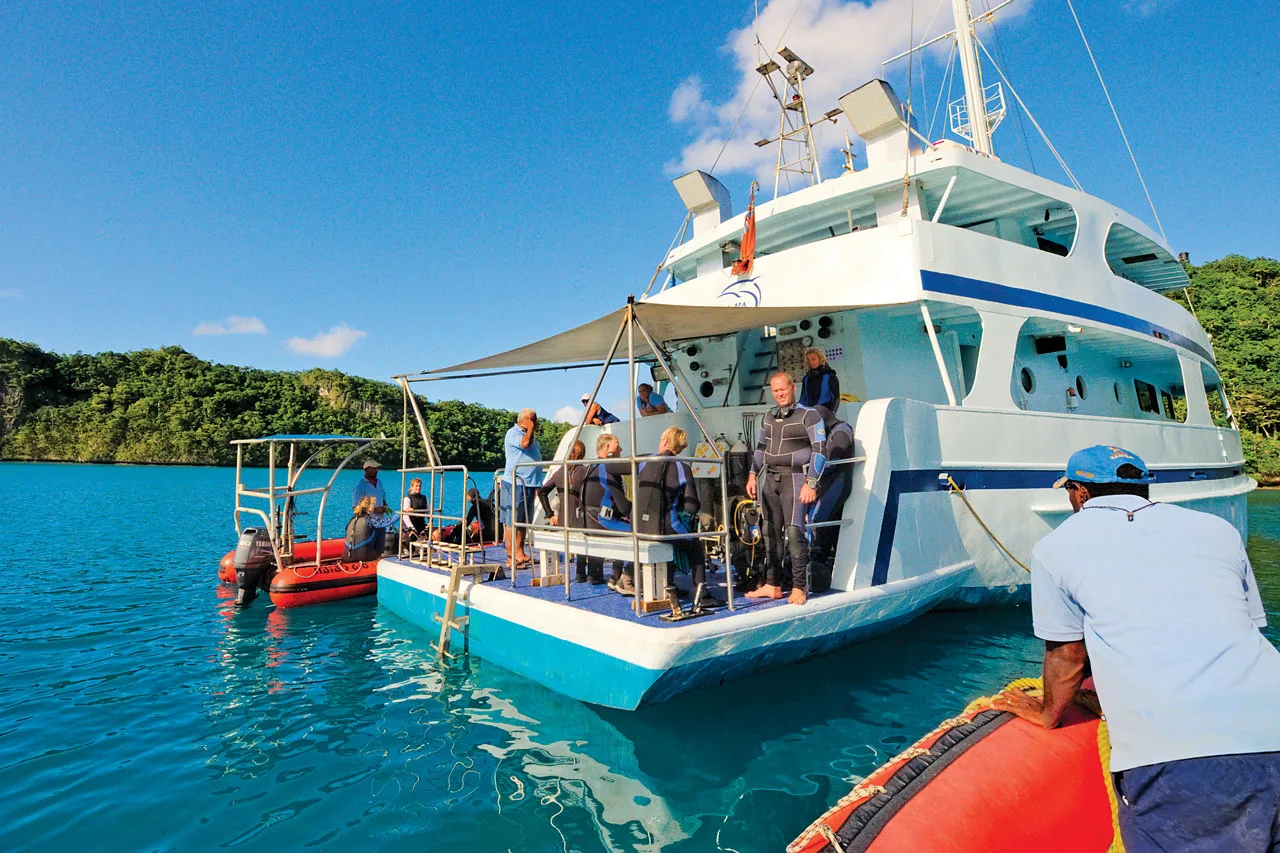
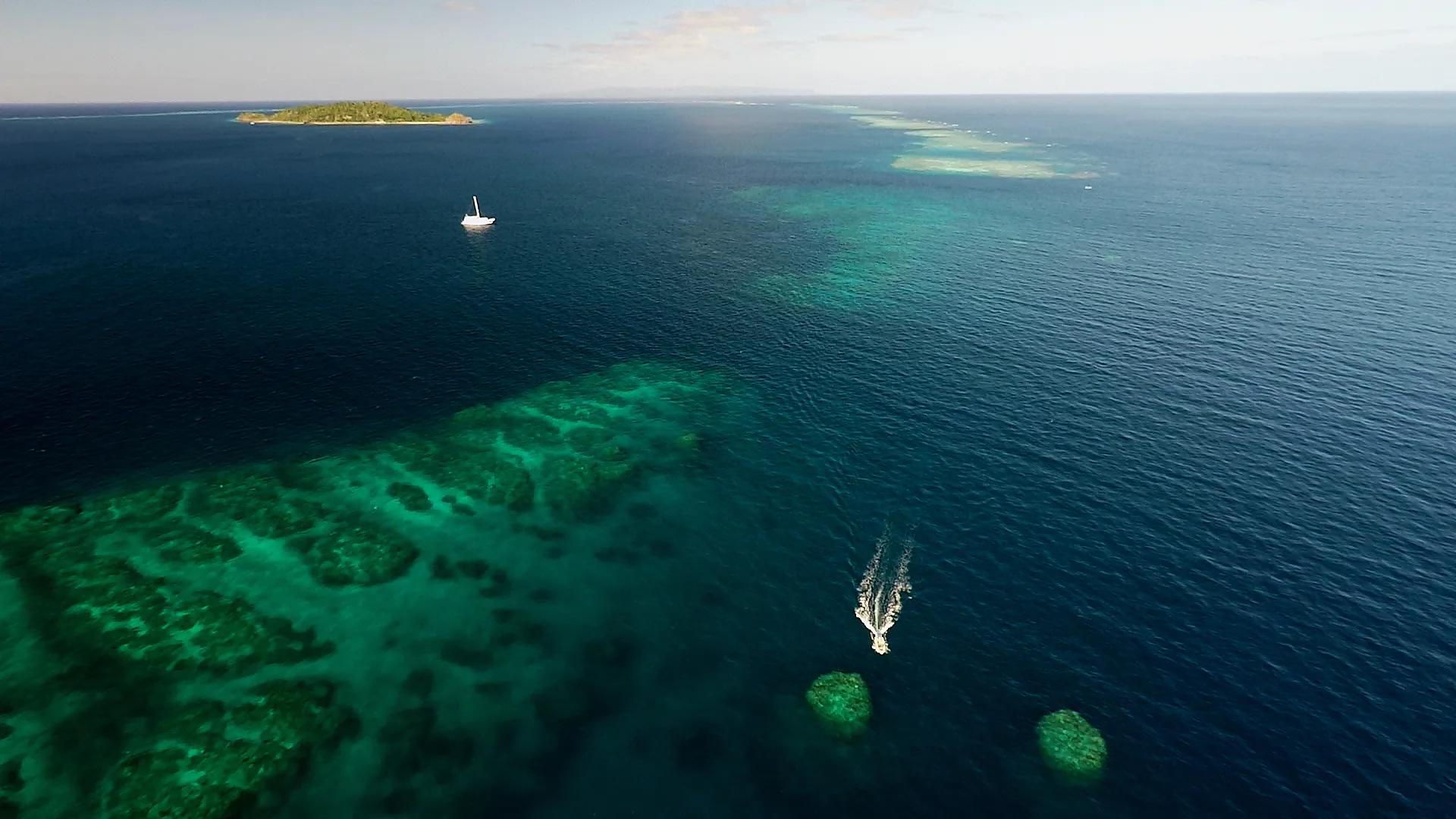
NAI’A is a 36-metre steel ship built in Holland and working in Fiji since 1993. She began as a research vessel: founder Rob Barrel, a marine mammal biologist, wanted to carry divers alongside scientists studying dolphins. The economics never worked, but what remained is a ship with the range and stability of a real expedition vessel — one that has sailed from Fiji to Vanuatu, New Caledonia, Tonga, Samoa, Tuvalu and the Phoenix Islands in Kiribati. NAI’A is painted in large letters on the bow and the stern; under the stern name is her port of registry, SUVA.
Inside there are nine passenger staterooms for 18 guests, all at the waterline, all with portholes that do not open and all with private en-suite heads. The staterooms were rebuilt from scratch in 2010: warm timber panelling, 110 V and 240 V sockets, a hairdryer in every cabin. You reach them down a steep companionway — the ship is not wheelchair accessible and the operator says so plainly. The crew is fourteen, almost all Fijian, plus two trip leaders; in the water there are two divemasters and two instructors, eight divers per guide.
Both itineraries cover the same compact ground, and that is the point. The ship leaves from Lautoka main wharf and works central Fiji: the Vatu-i-Ra barrier reef and the E-6 and Mount Mutiny seamounts in Bligh Water, the Namena Marine Reserve, and Gau, Wakaya and Makogai in the Koro Sea. No domestic flights to distant airstrips: Lautoka is a thirty-minute bus ride from Nadi airport and the transfer is in the price. NAI’A does not run to Kadavu or the Great Astrolabe — that is a different part of Fiji and different operators.
Berths are sold individually: each departure in the operator’s own booking system reads either “space available” or “full”. A solo traveller can buy a whole cabin for a 75 per cent supplement; otherwise solo guests share with the same gender, which the operator guarantees. The ship is also taken whole: with 16 divers two more come free and the nitrox is on the house, and on a half-boat charter of 8 divers one comes free. Some dates are given over entirely to private charter — the twelve-day Lau Islands expeditions in October and November 2028, for example — and carry no berths for sale.
The biggest departure from usual liveaboard arithmetic is that nothing is compulsory on board. The operator states it directly: the listed price includes all transfers and government taxes, and NAI’A pays the marine park fee for you. In the two protected areas guests are invited to make a voluntary donation, and declining changes nothing. The village visit carries no levy either: dress modestly (the ship provides sulus) and, if you wish, bring balls or children’s clothing as a gift. The only mandatory surcharge the operator publishes is fuel — $187 on a seven-night trip and $249 on a ten-night one — paid in advance with the final payment and reviewed monthly. The FAQ page, meanwhile, says no surcharge is being collected at present, so confirm the figure when you book.
The season is written into the schedule: trips run from mid-February to mid-December, and the ship does not work in January or early February — the peak of the cyclone season. The water is warm all year but not equally: about 29 °C in February and March, 24–26 °C from August to October. The operator recommends 5 mm plus a hooded vest — at four or five dives a day even people who never feel cold do. Visibility is best in the cool season, May to October.
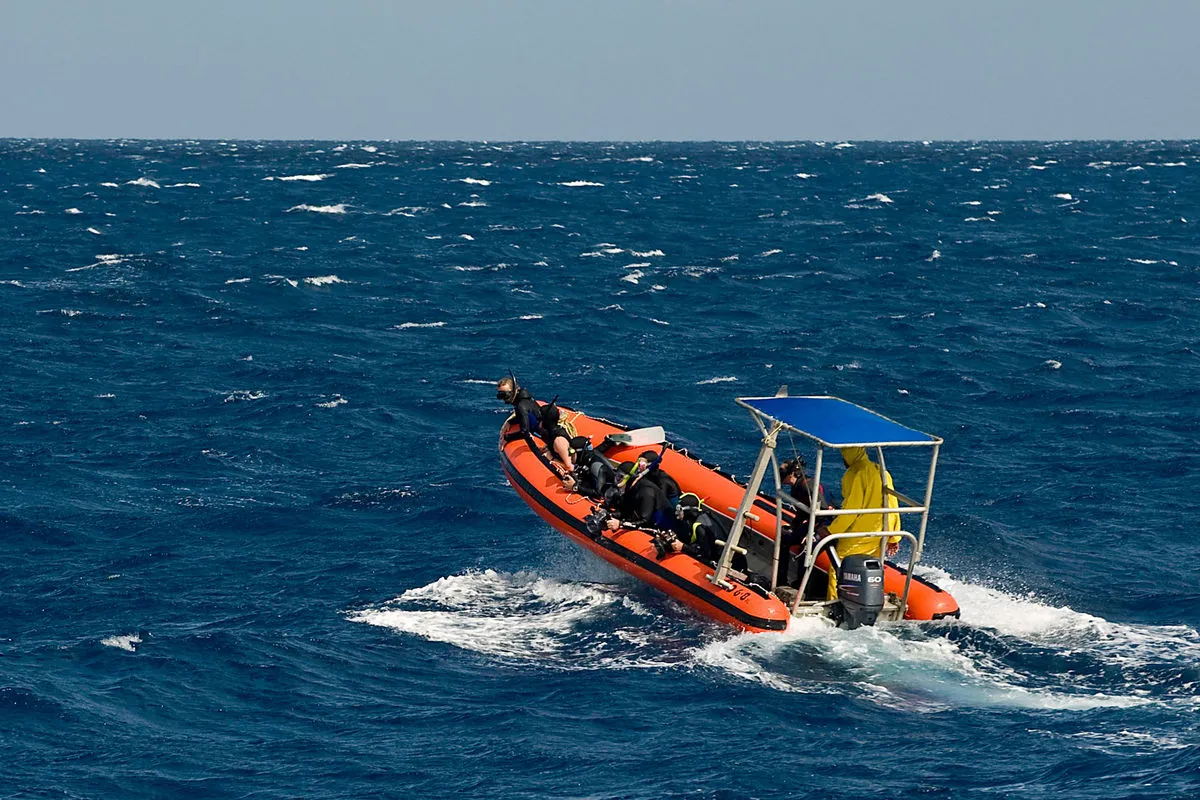
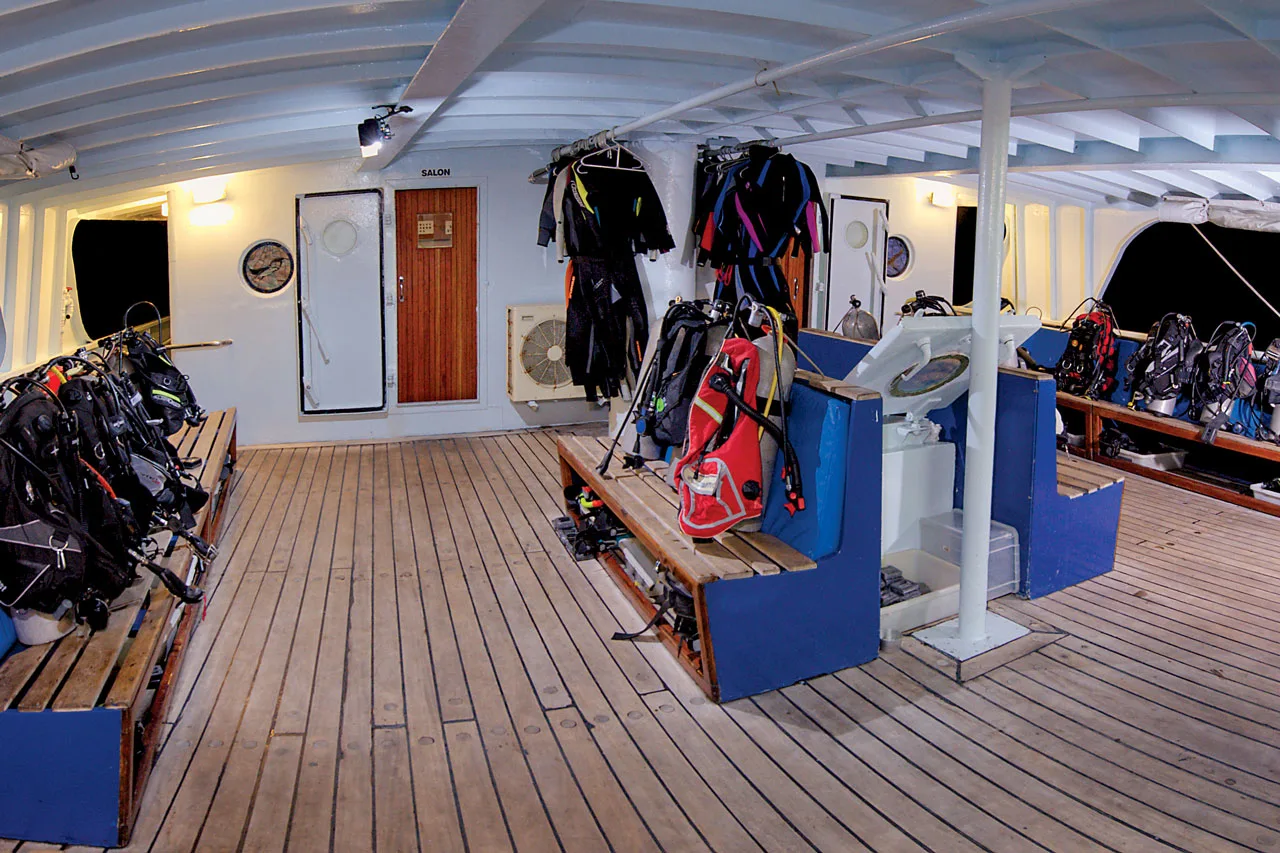
Diving is from skiffs: two 6.8-metre rigid inflatables built for the lobster grounds off the south of New Zealand pick divers up wherever they surface, so there is no swimming back to the entry point. Tanks are aluminium 11.1 L (80 cu ft); the ship no longer carries 15-litre cylinders. Nitrox is membrane-mixed, 32 per cent as standard and anything from 21 to 100 per cent on request — including for rebreathers, for which 2 and 3 litre cylinders are available to rent along with oxygen fills to 200 bar. A dive computer is compulsory for every diver, your own or rented. The first dive is a check dive on the afternoon you board, on a shallow calm site close to Lautoka.
There is no formal certification floor: the operator says a brand-new diver may come. But it adds in the same breath that it would much rather see Advanced Open Water with the Deep and Navigation dives, strongly encourages Drift and Buoyancy, and asks for 30 dives within the previous calendar year — Fiji’s currents are strong and the walls drop away fast. Children are welcome from age 10 with a parent present at all times.
No mark-up
You pay the rate the operator publishes. The only thing added on top is the actual payment processing cost — no fee of ours.
We run the booking
Correspondence with the operator, holding your places, the contract, confirmation and all paperwork sit on our side. Nothing for you to arrange yourself.
Pay by card
We send you a Stripe invoice — pay by card, in your own currency, from anywhere in the world. The transfer to the operator is handled on our side.
Support in your language
We help you pick the cabin and dates, answer questions on the route and gear, and stay reachable until you are home — in English, in your time zone.
We quote the exact amount when confirming the booking: it covers the operator's rate plus the actual payment processing cost. No hidden charges.
Yacht Specifications
Length
36.6 m
Beam
9.1 m
Material
Steel
Year Built
1979
Capacity
18 guests
Cabins
9
Crew
14 members
Refit
2010
Bathrooms
9
Tender
2 rigid inflatables, 6.8 m each
On Board
Diving
The operator sets no formal certification floor but asks for Advanced Open Water with the Deep and Navigation dives, recommends Drift and Buoyancy, and would like to see 30 dives within the previous calendar year. Nitrox is sold as a package for the whole trip: $150 for seven nights, $210 for ten, $300 for fourteen. The PADI Enriched Air course on board is $225 including the gas used during the course, and nitrox is cheaper afterwards. Courses offered on board are Advanced Open Water and Deep Diver, eLearning format only and by prior arrangement. There are no 15-litre cylinders on board.
Food and drink
The operator asks for dietary requirements well in advance so the galley can stock up before sailing. It does not promise a full bar — bring anything unusual yourself or buy it in duty free. Guests are asked to bring their own water bottle to cut down on plastic.
Navigation and safety
Cabins
· 9 cabins
Double bed, split singles or bunks
Beds: up to 2 guests
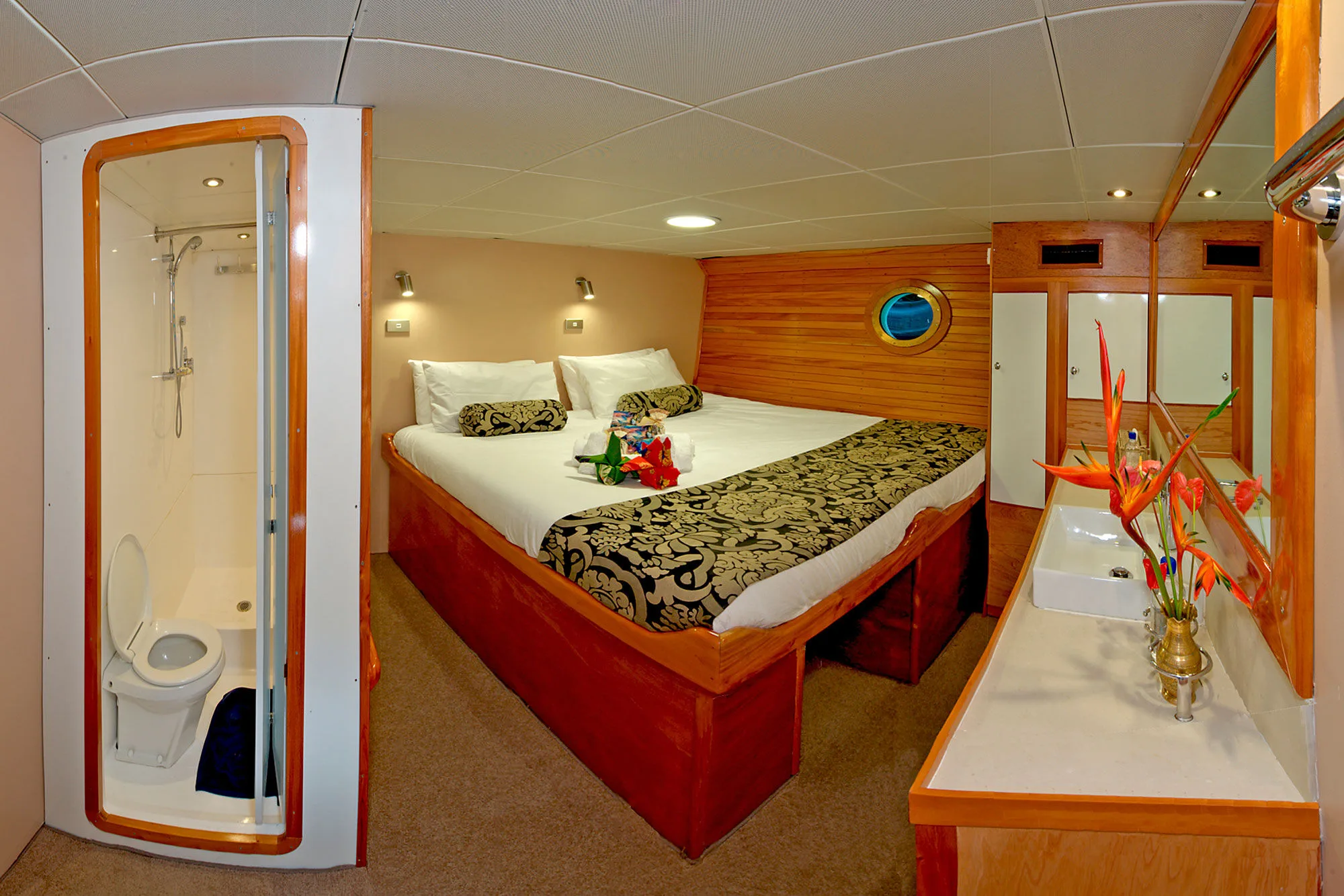
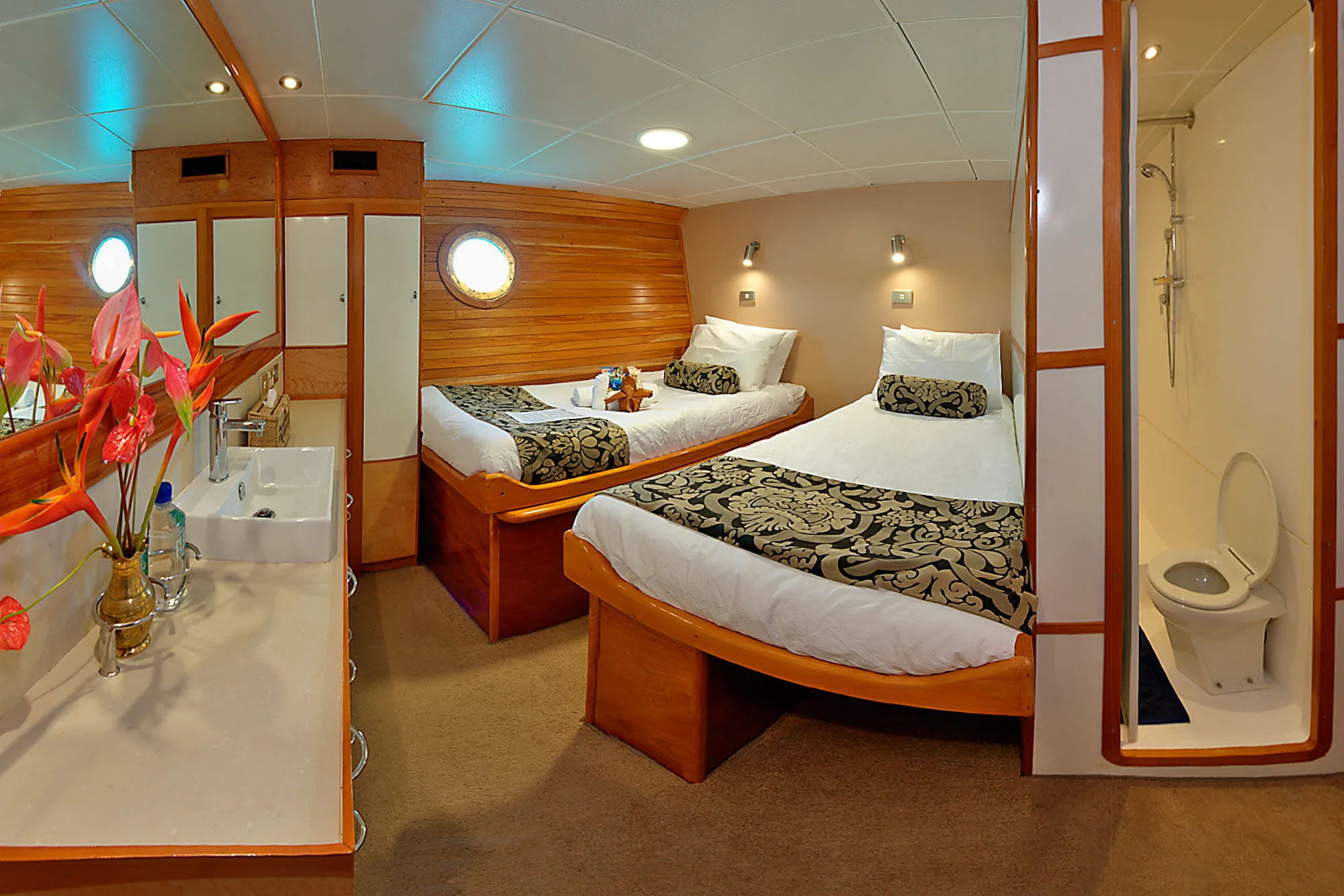
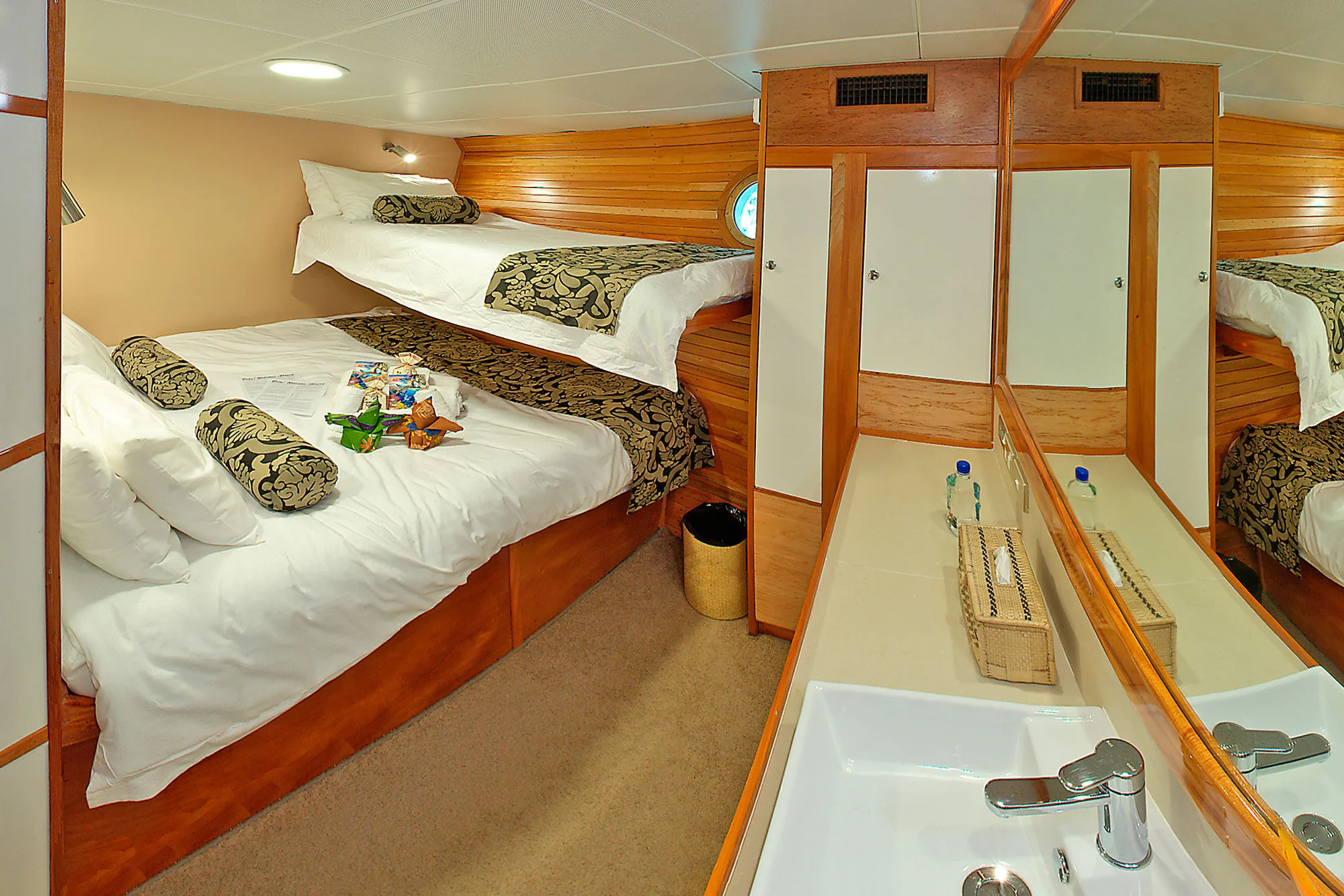
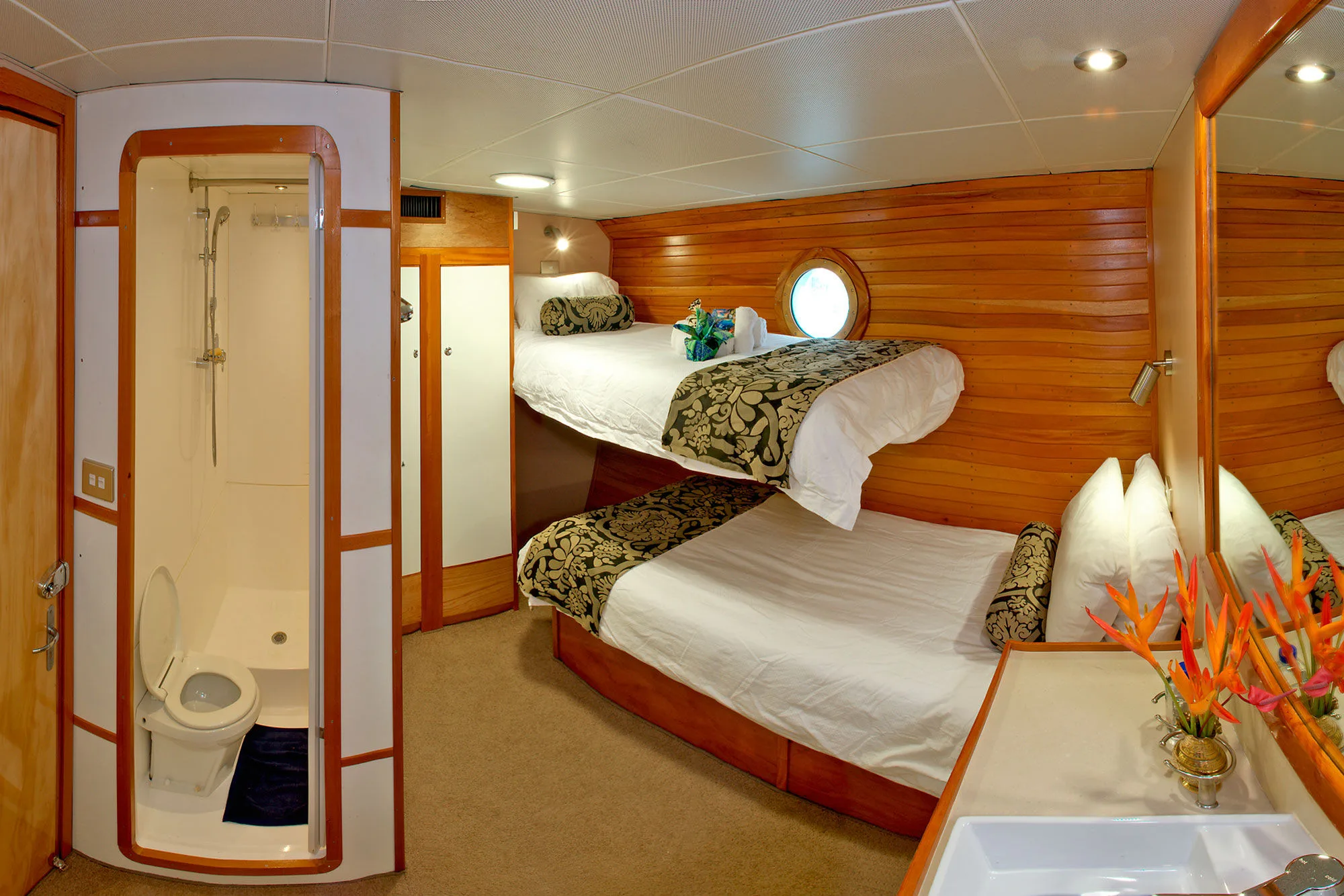
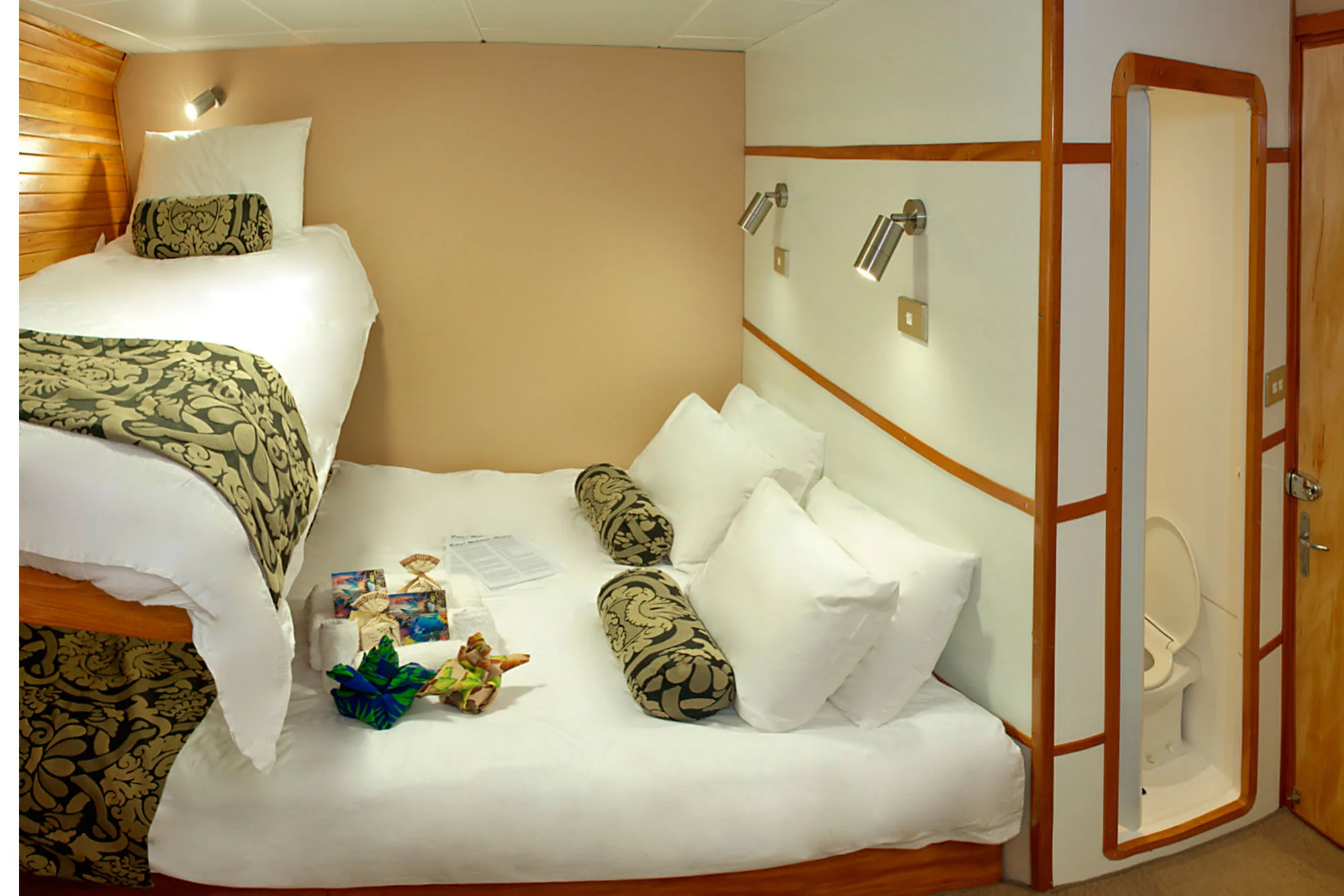
All nine staterooms on NAI'A are one class and were rebuilt from scratch in 2010. The finish is warm timber panelling on the hull sides and bulkheads, a round porthole, reading lights over the bedhead, a vanity with a basin, full-height mirrors and lockers. The en-suite is your own, with the shower and the heads as separate modules by the door. The bed layout varies from cabin to cabin: a large double for couples, a double with a single bunk above its foot, two beds that split into singles, and two singles feet-over-feet. You cannot pick your cabin: a request will be noted, but the operator makes the final assignment once the trip is full or a few days before departure, because the balance of couples and solo travellers is not settled until then. Every cabin is at the waterline, the portholes do not open, and the companionway down is steep. Sockets are 110 V and 240 V; there is a hairdryer and Pure Fiji toiletries.
Schedule & Pricing
Bligh Water and the Koro Sea: seven nights
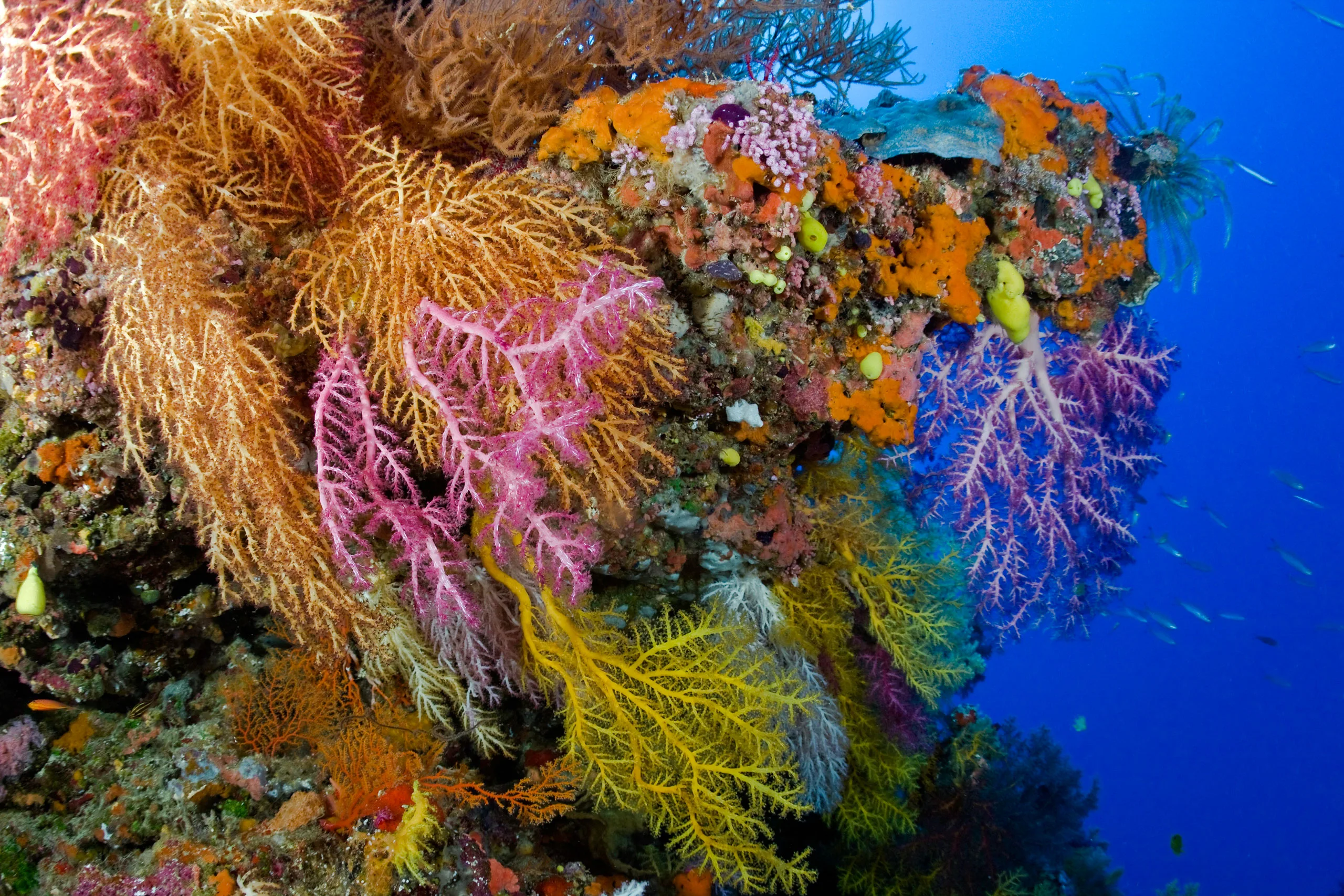
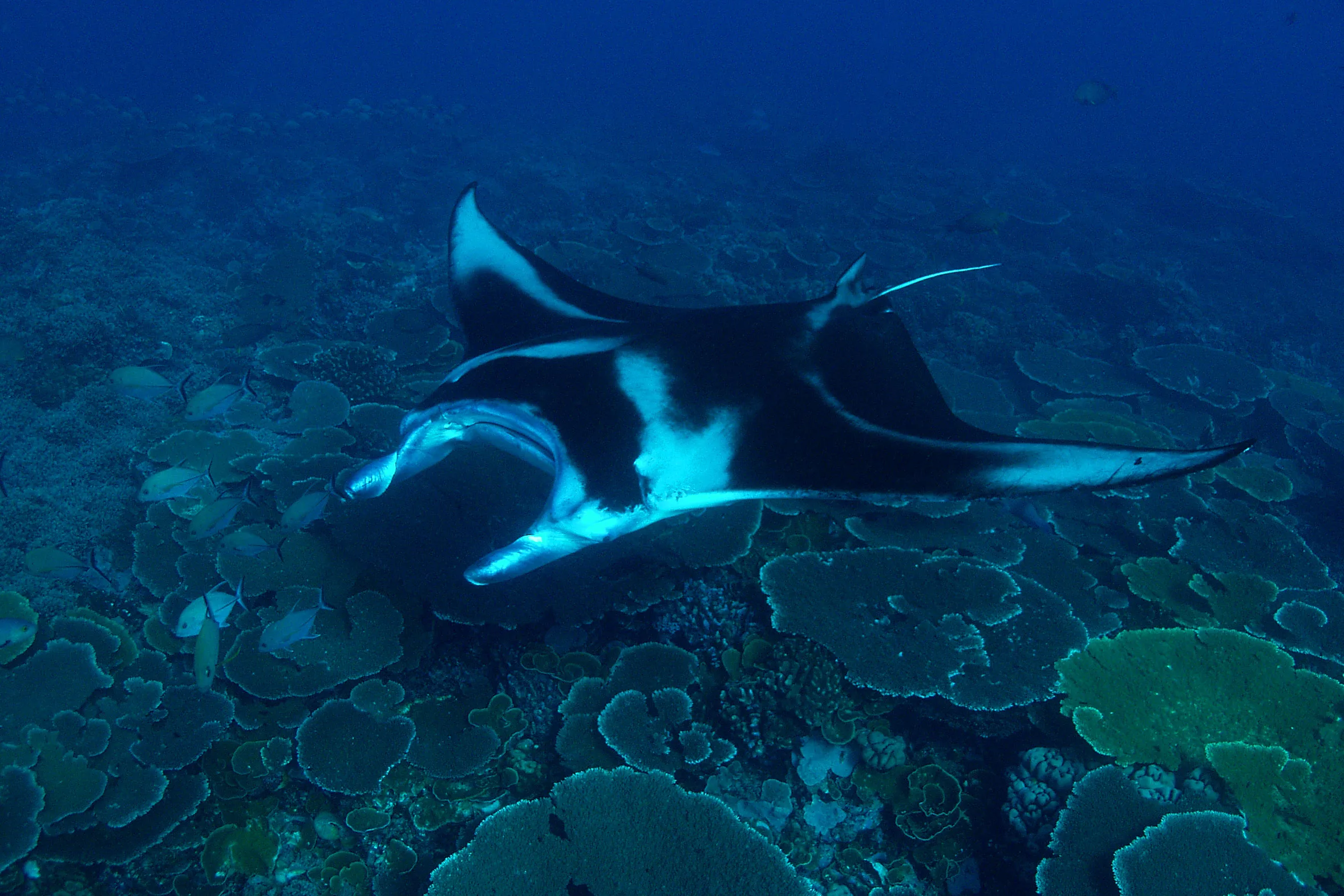
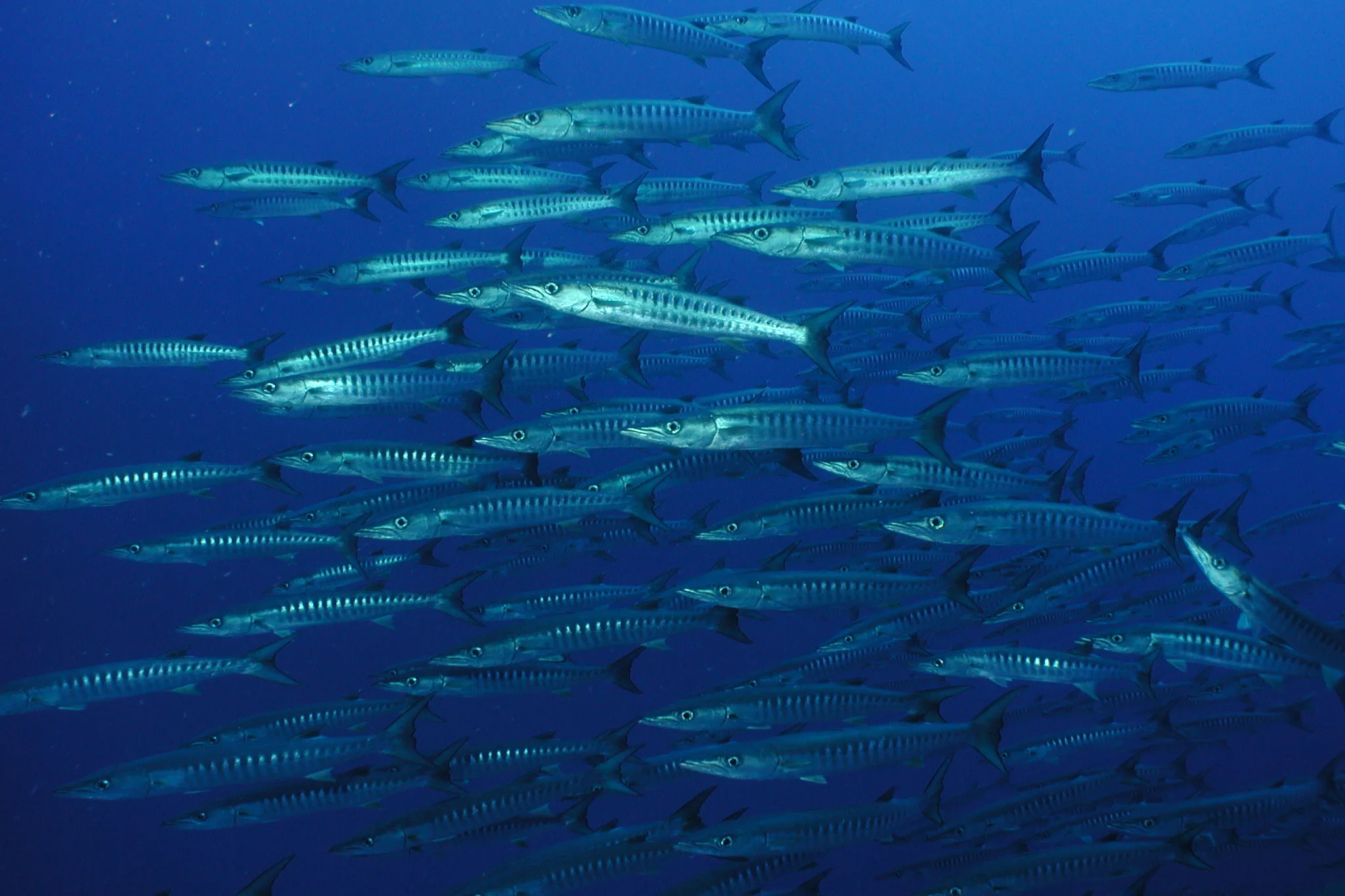
The ship's core programme: seven nights and six and a half dive days, a loop from Lautoka main wharf covering the pick of central Fiji. The Vatu-i-Ra barrier reef pushes north from Viti Levu into the channel, narrowing it to seven kilometres — the currents flush the reef, which is why the coral is among the healthiest anywhere, and there are seven distinct dives on the one reef. Two seamounts sit nearby: E-6 rises sheer from 900 metres in the narrowest part of Bligh Water, and Mount Mutiny four miles away is known for the flank blanketed in thin-stalked Chironephthya soft coral in every colour. North of Bligh Water are UndeNAI'Able, with schooling trevally and barracuda and several Fijian endemics, and Cat's Meow behind the Vuya barrier reef, filmed for an IMAX feature. In the Koro Sea the ship works the Namena Marine Reserve — North Save-a-tack Passage, where sharks, dogtooth tuna and barracuda circle over a sandy plateau at thirty metres — Nigali Passage off Gau with its resident grey reef sharks, and Wakaya, where manta cleaning stations line the wall of a 900-metre channel and hammerheads come up to look. Boarding is at 14:00 on Saturday, the bus leaves Nadi around 13:00, and the trip ends at 08:00.
November 2026
2 departuresFebruary 2027
1 departureMarch 2027
2 departuresApril 2027
2 departuresAugust 2027
1 departureDecember 2027
1 departureFebruary 2028
1 departureMarch 2028
2 departuresApril 2028
1 departureMay 2028
1 departureJune 2028
2 departuresJuly 2028
2 departuresAugust 2028
1 departureSeptember 2028
1 departureBligh Water, Namena and the outer Koro Sea: ten nights
The same circuit stretched to ten nights and nine and a half dive days, and the extra three days buy reefs in the Koro Sea that a week cannot reach: some of them near Namena, some of them near nothing at all. At this length there is usually time to give the Namena Marine Reserve two full days — North Save-a-tack Passage with its plateau at thirty metres, the arch between the bommies and the Kansas soft-coral field that sways like wheat, plus the Two Thumbs Up, Tetons and Mushrooms pinnacles on the southern barrier, where a single dive offers fans and soft coral for a wide-angle lens and jawfish, shrimp gobies, fire dartfish and nudibranchs for macro. Makogai is added too: rubble bottom at ten metres with small bommies, home to ghost pipefish, dragonets, octopus and pygmy seahorses on the gorgonians. The exact running order is chosen by the weather each time.
October 2026
1 departureFebruary 2027
1 departureMarch 2027
1 departureNovember 2027
2 departuresFebruary 2028
1 departureMarch 2028
1 departureApril 2028
1 departureJuly 2028
1 departureSeptember 2028
1 departureNovember 2028
1 departureDecember 2028
1 departurePrices and availability can change. Get in touch and we'll confirm current dates and pricing.
Included in Price
Not Included
Required extras
Optional extras
Extras are shown per person and are paid on board.
from 4926 USD / 7 nights
Estimated wait time — 24 hours
Double bed, split singles or bunks
All nine staterooms on NAI'A are one class and were rebuilt from scratch in 2010. The finish is warm timber panelling on the hull sides and bulkheads, a round porthole, reading lights over the bedhead, a vanity with a basin, full-height mirrors and lockers. The en-suite is your own, with the shower and the heads as separate modules by the door. The bed layout varies from cabin to cabin: a large double for couples, a double with a single bunk above its foot, two beds that split into singles, and two singles feet-over-feet. You cannot pick your cabin: a request will be noted, but the operator makes the final assignment once the trip is full or a few days before departure, because the balance of couples and solo travellers is not settled until then. Every cabin is at the waterline, the portholes do not open, and the companionway down is steep. Sockets are 110 V and 240 V; there is a hairdryer and Pure Fiji toiletries.
- Deck
- lower deck, at the waterline
- Beds
- up to 2 guests
- Windows
- Porthole, does not open
- cabins of this type
- 9
- from
- from $4,926 per person on a shared basis
Naia
from 4926 USD