Blue Manta
 1 / 17
2 / 17
3 / 17
4 / 17
5 / 17
1 / 17
2 / 17
3 / 17
4 / 17
5 / 17
 6 / 17
 7 / 17
 8 / 17
 9 / 17
 10 / 17
 11 / 17
 12 / 17
 13 / 17
 14 / 17
 15 / 17
 16 / 17
 17 / 17
Book through Tour Leader Club
46 m · 22 guests · 14 cabins · 20 crew members
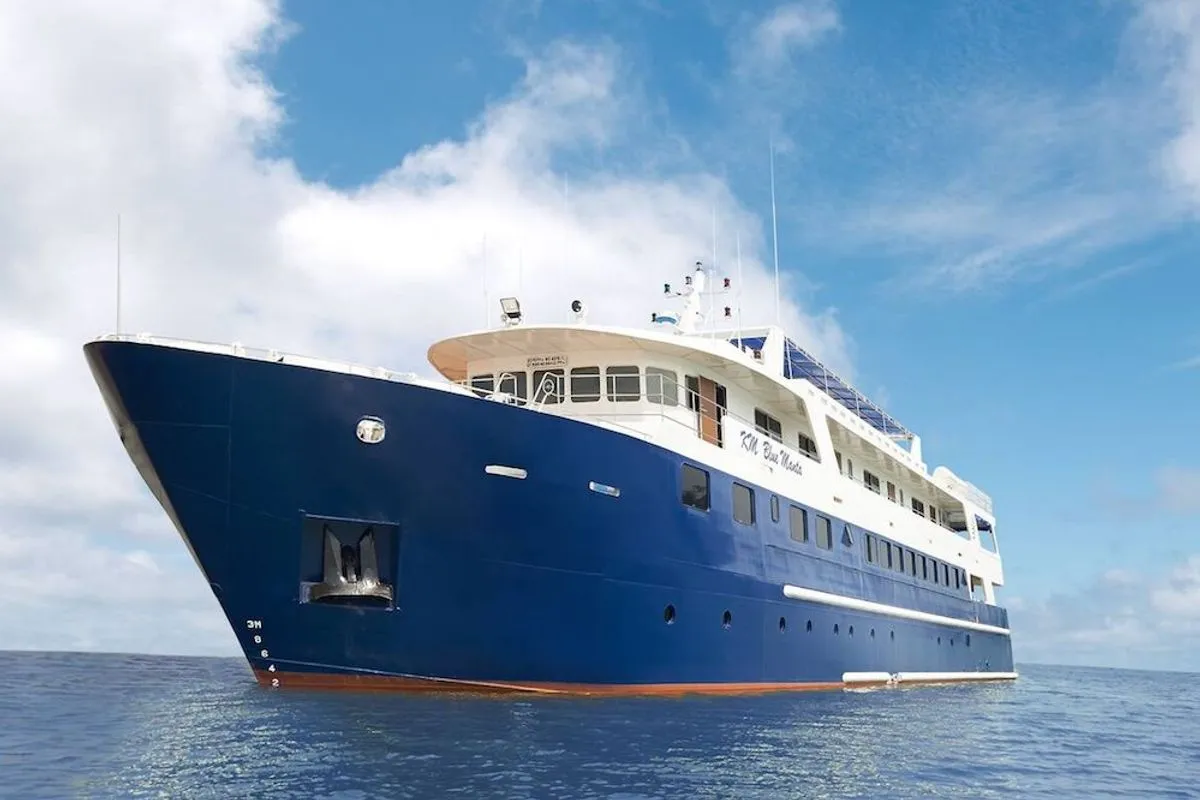
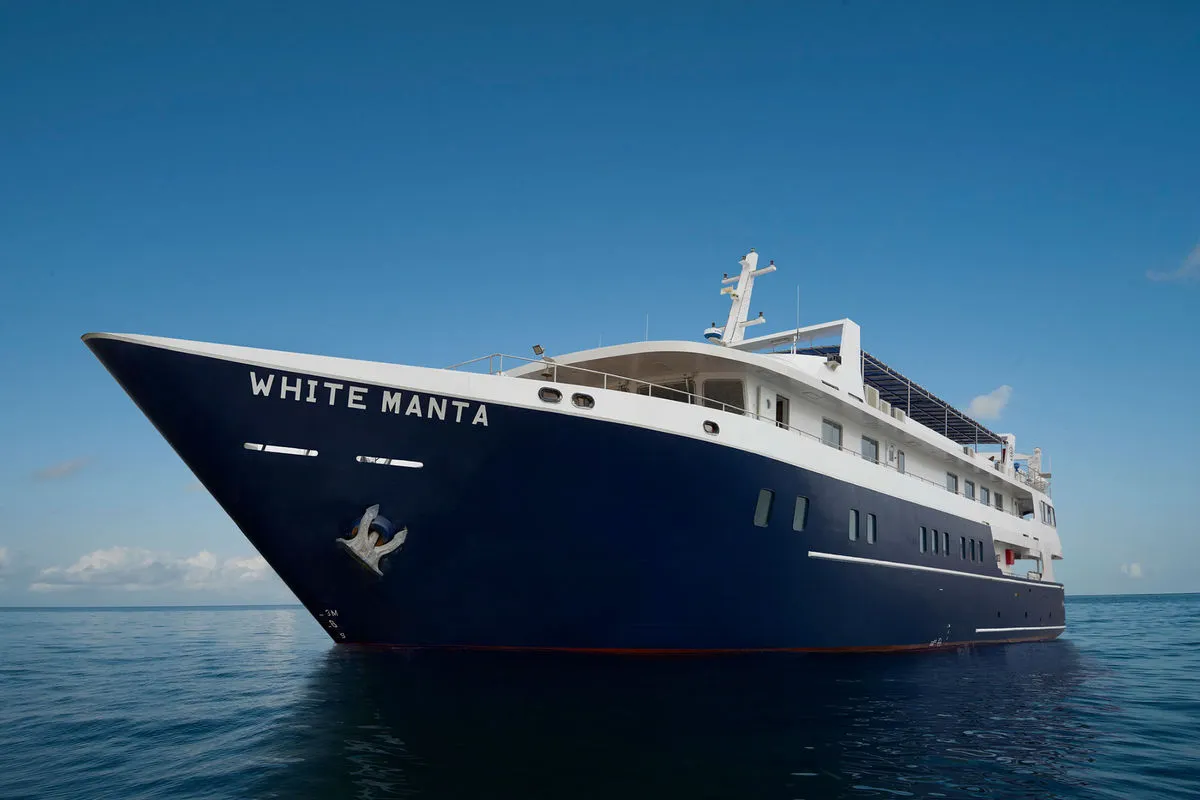
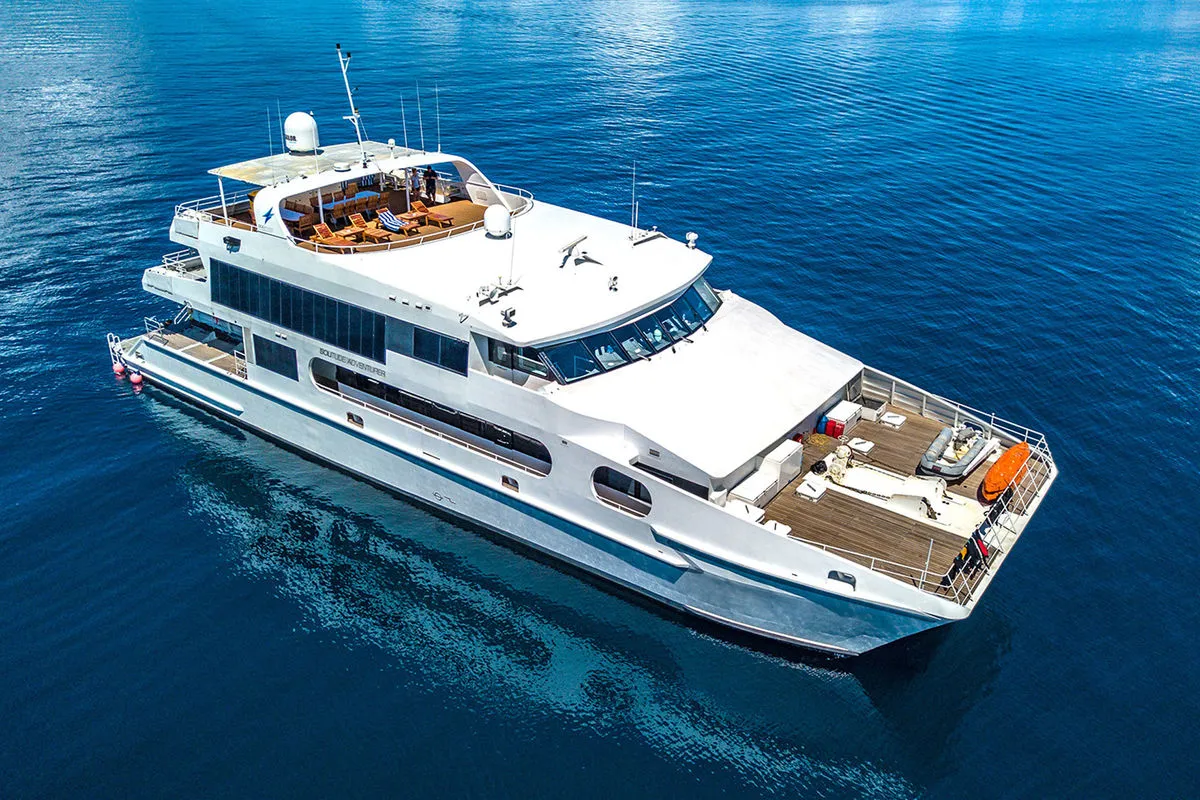
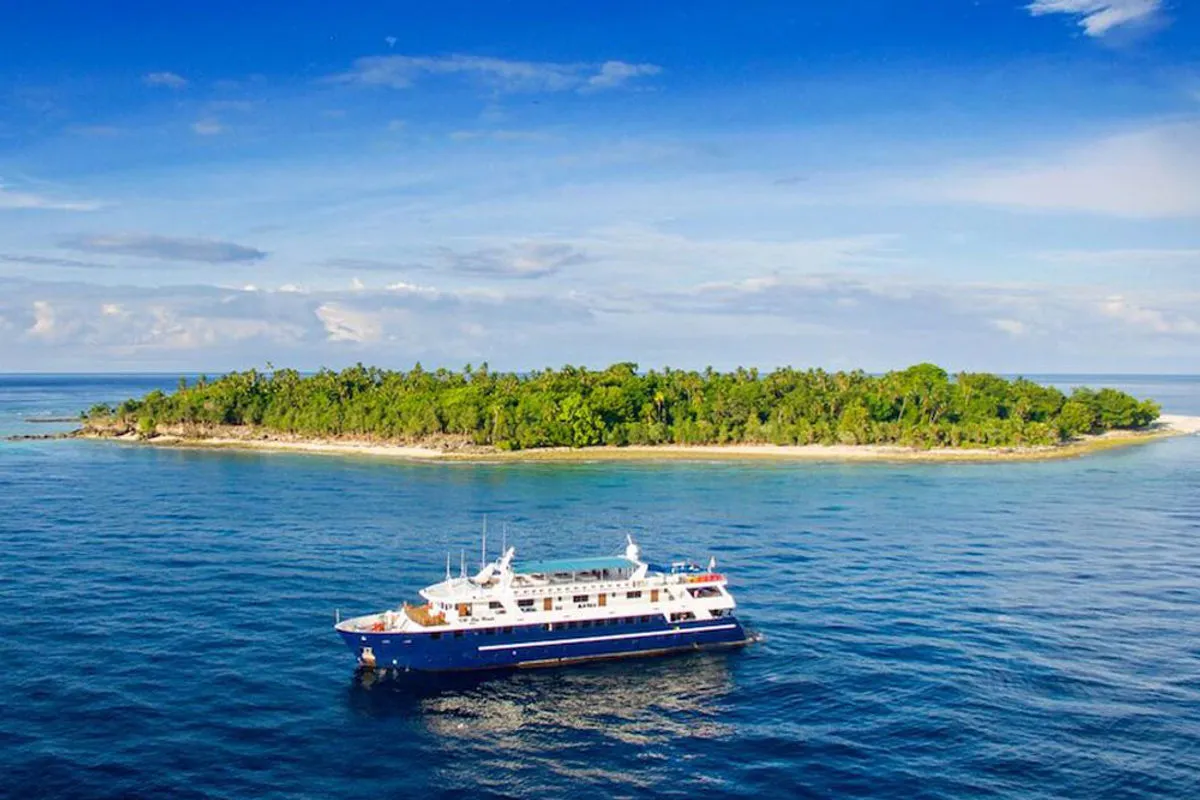
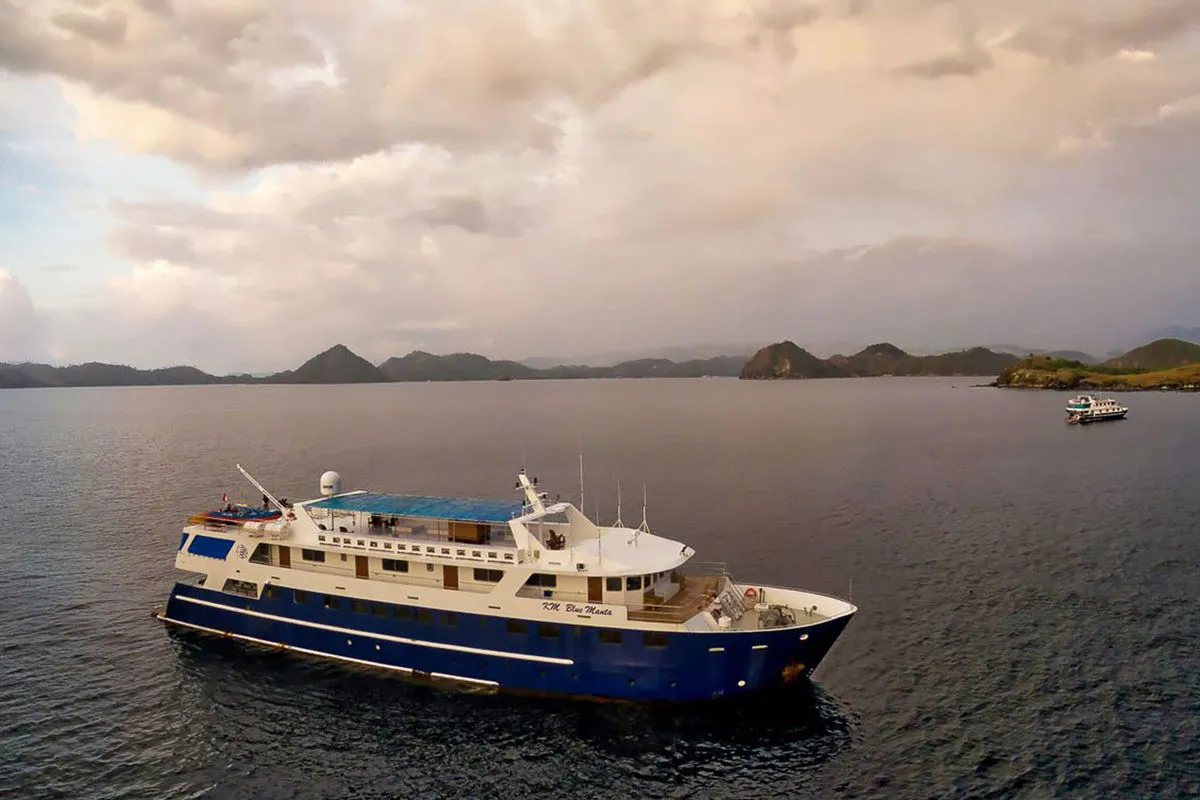
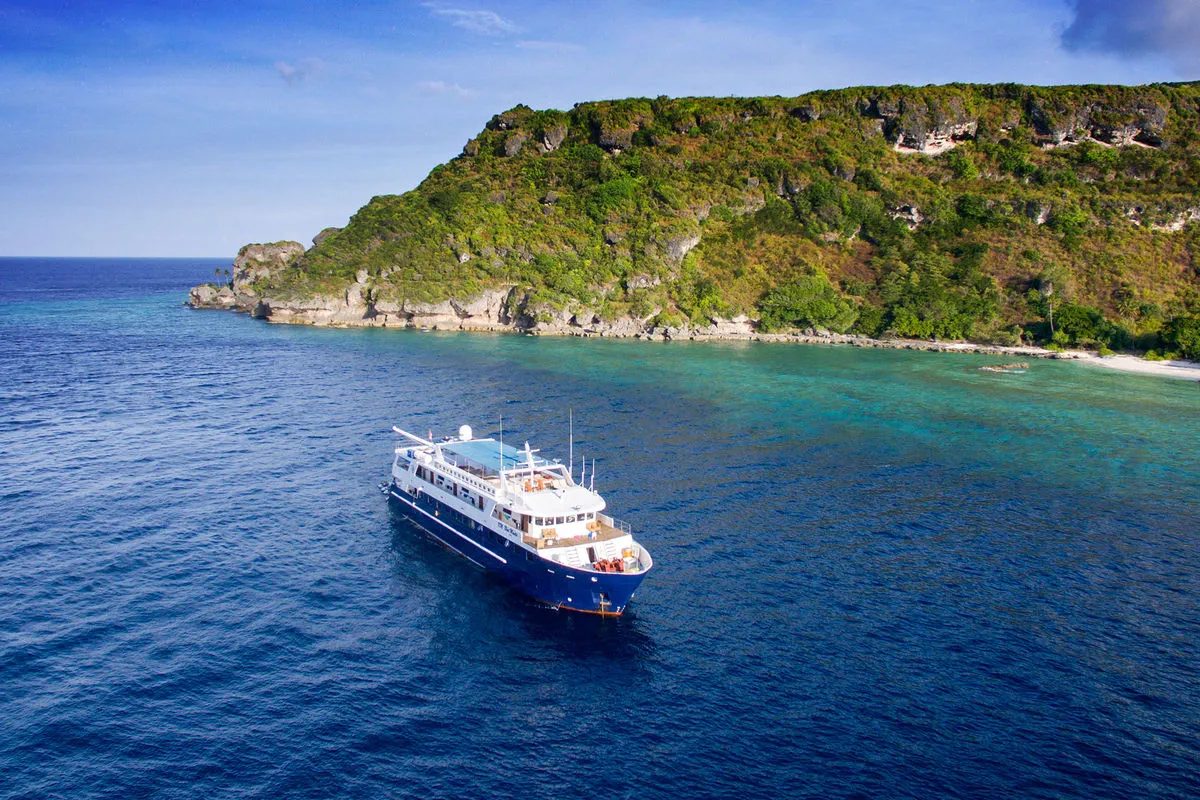
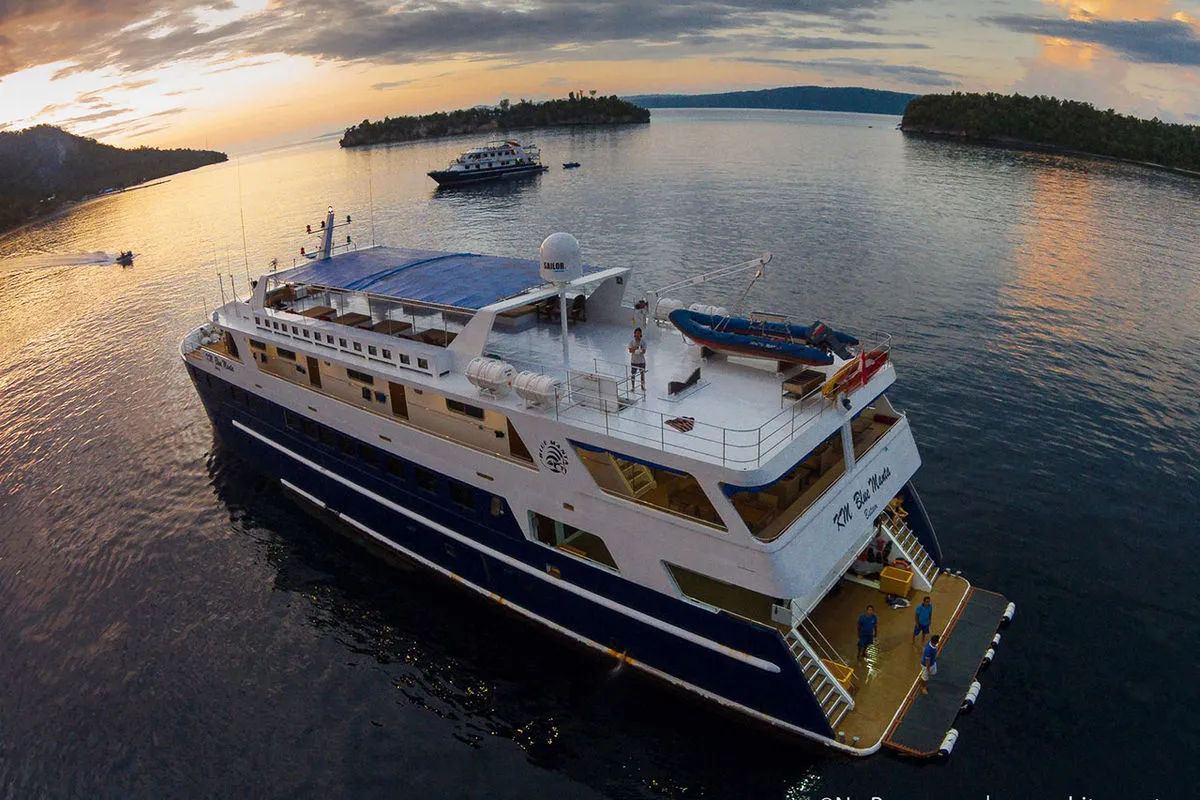
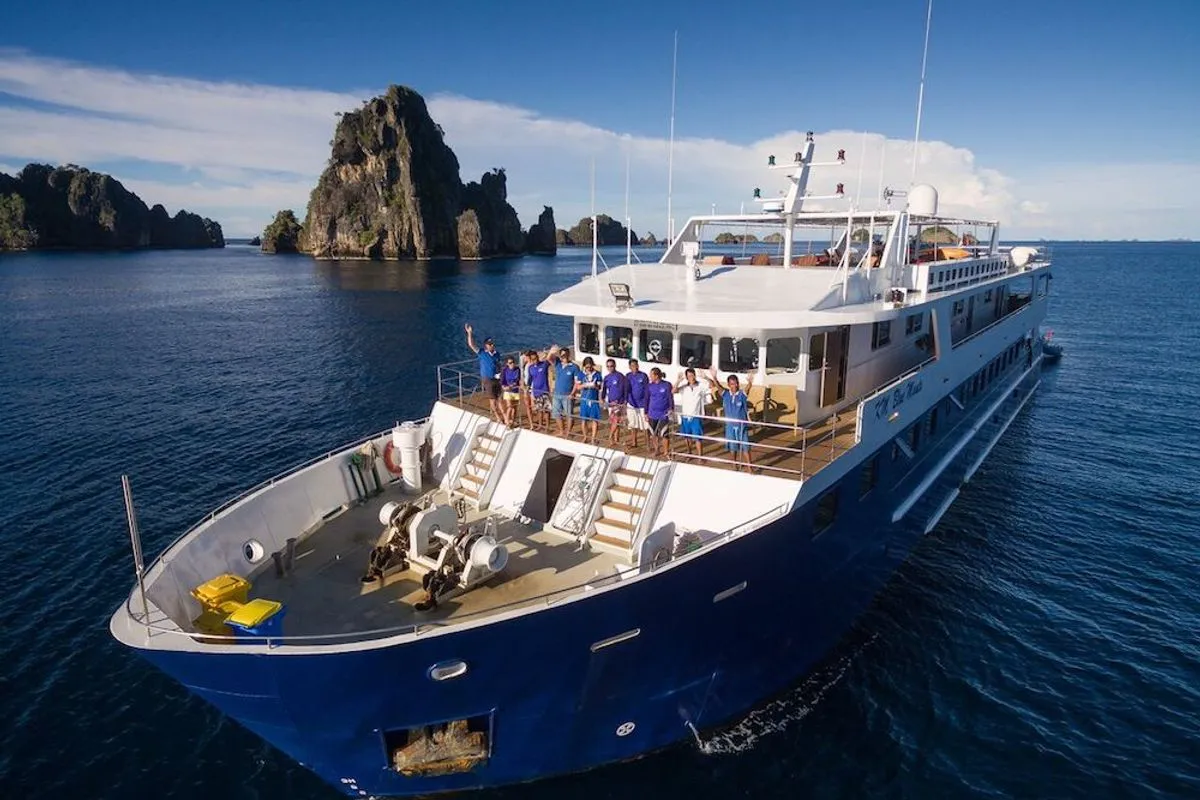
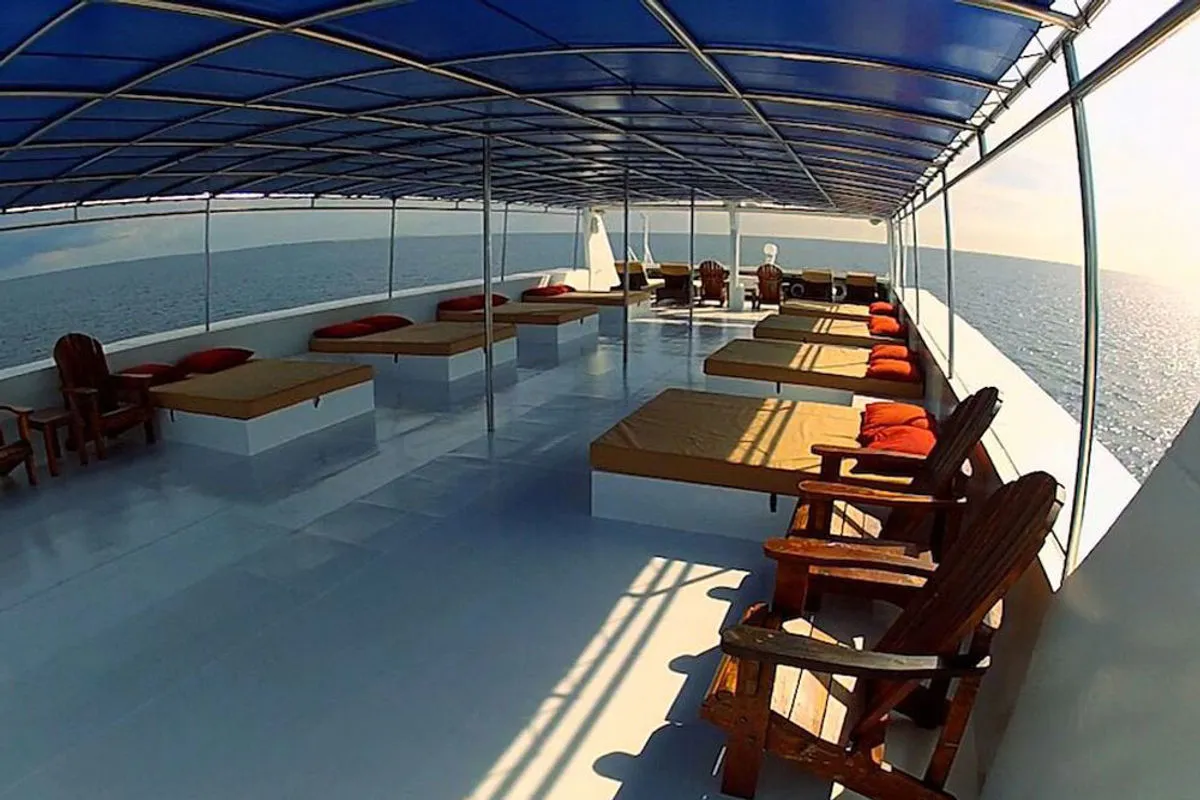
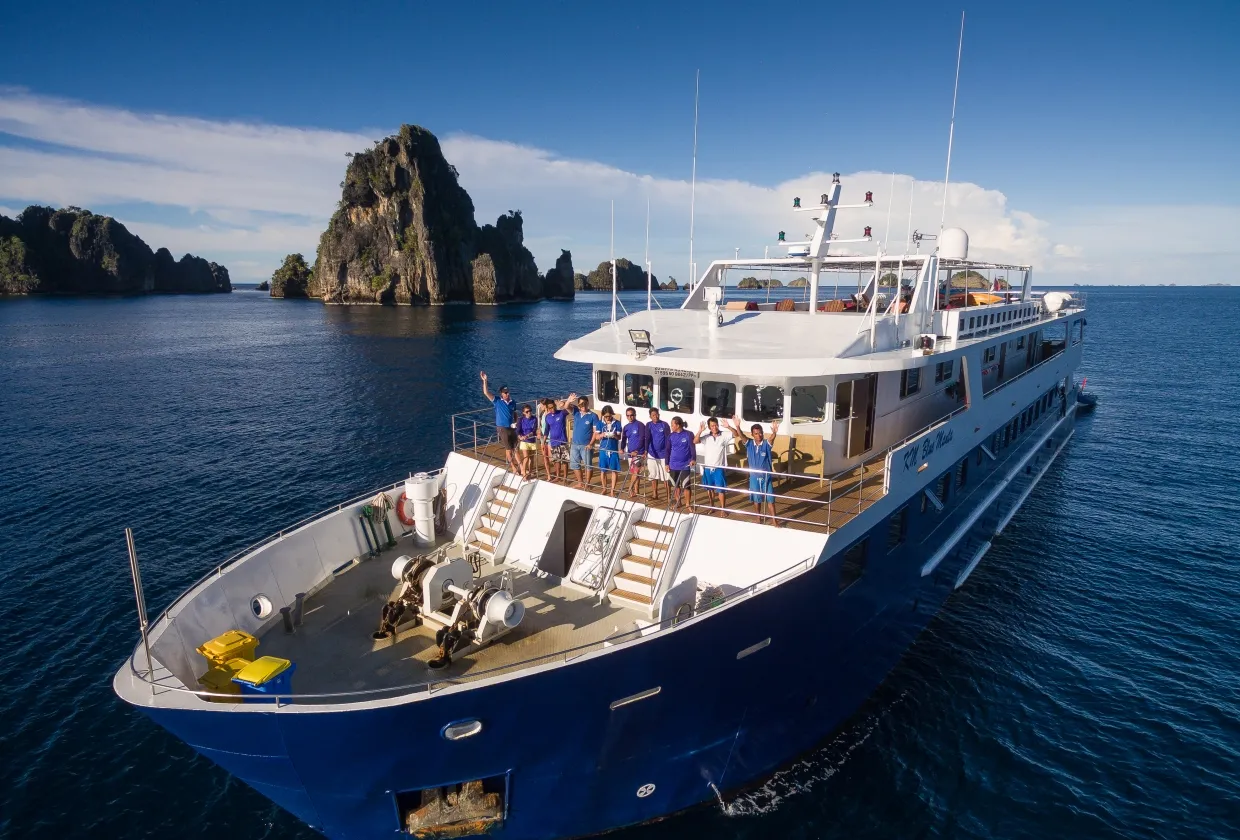
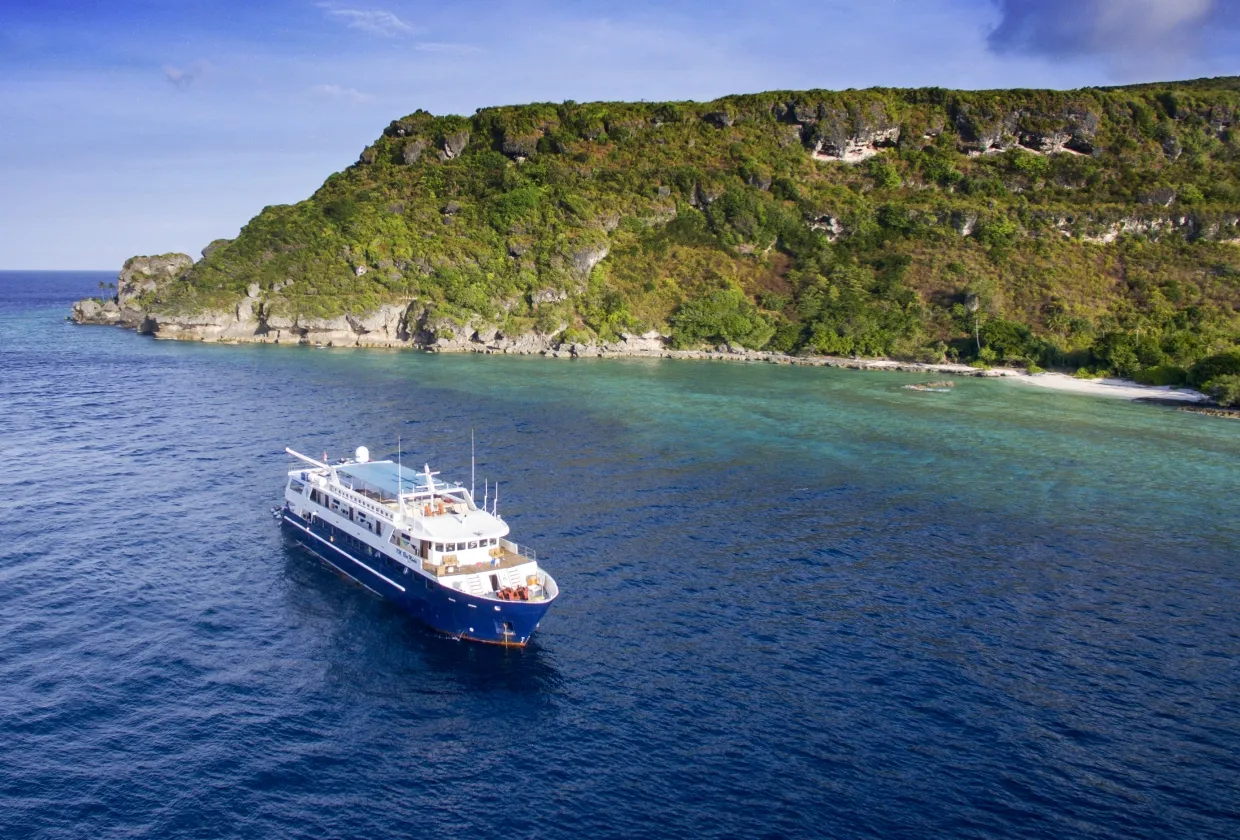
Blue Manta is a 46-metre steel liveaboard that works the eastern half of Indonesia all year round. The operator is White Manta Diving, a Singapore company whose fleet also includes the New White Manta and the Manta X — easy to mix up on the water. Blue Manta is the one with the blue hull, white superstructure and the script “KM Blue Manta” on the side; her port of registry is Batam.
The hull was built for crossings, not for looks. Heavy steel, a 10-metre beam, around 580 tonnes displacement, twin 450 hp Cummins engines, three gensets, two watermakers producing 10 tonnes of fresh water a day each and a 3,000-nautical-mile range. Hence the geography: she crosses the Banda Sea and the Ring of Fire, runs Sorong to Kaimana and Alor to Ambon — the legs wooden phinisis do not do. Cruising speed is 10 knots.
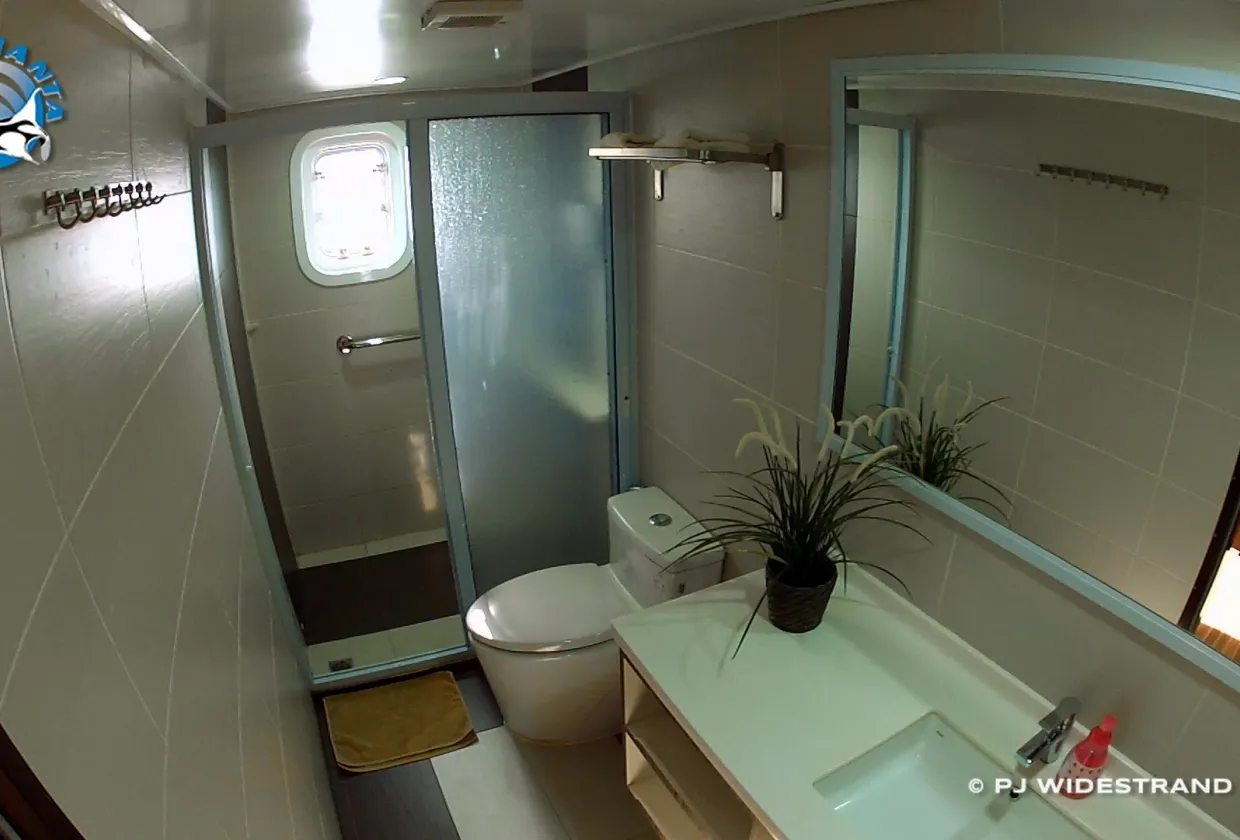
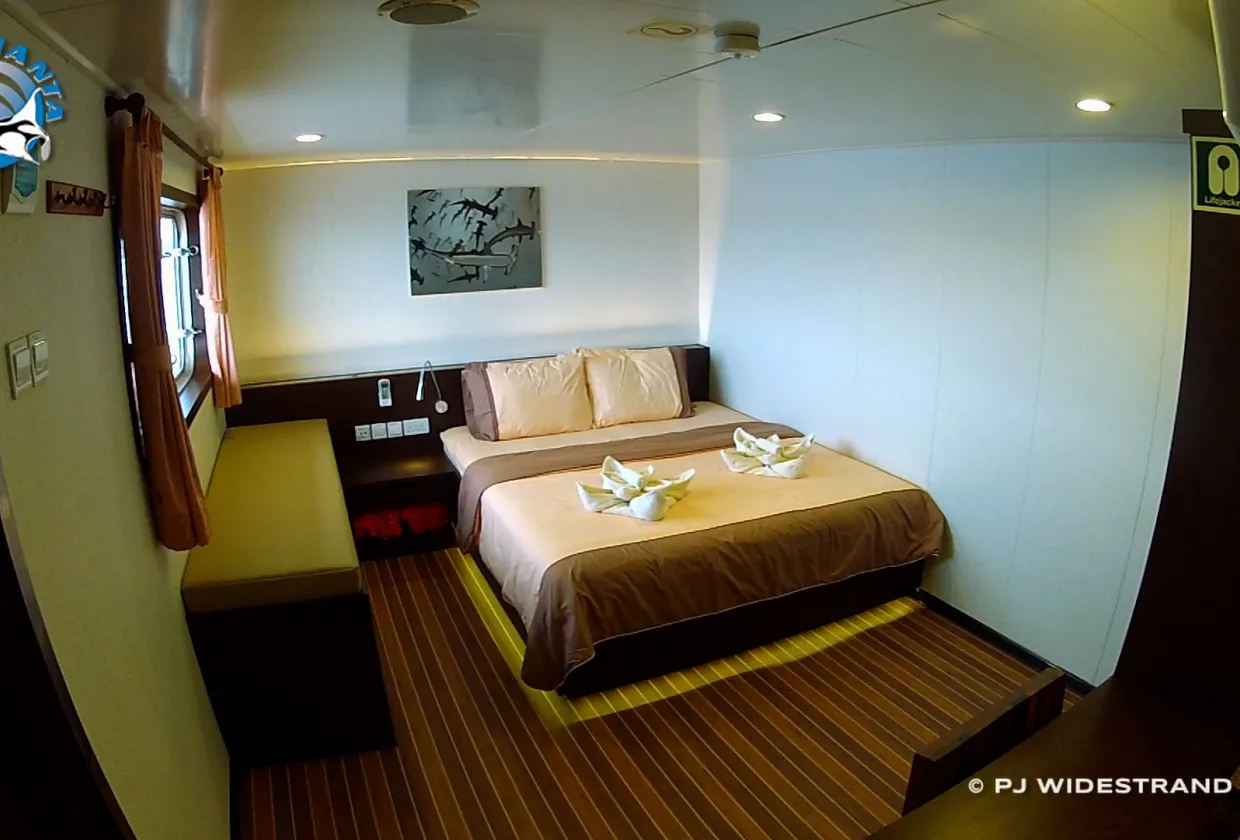
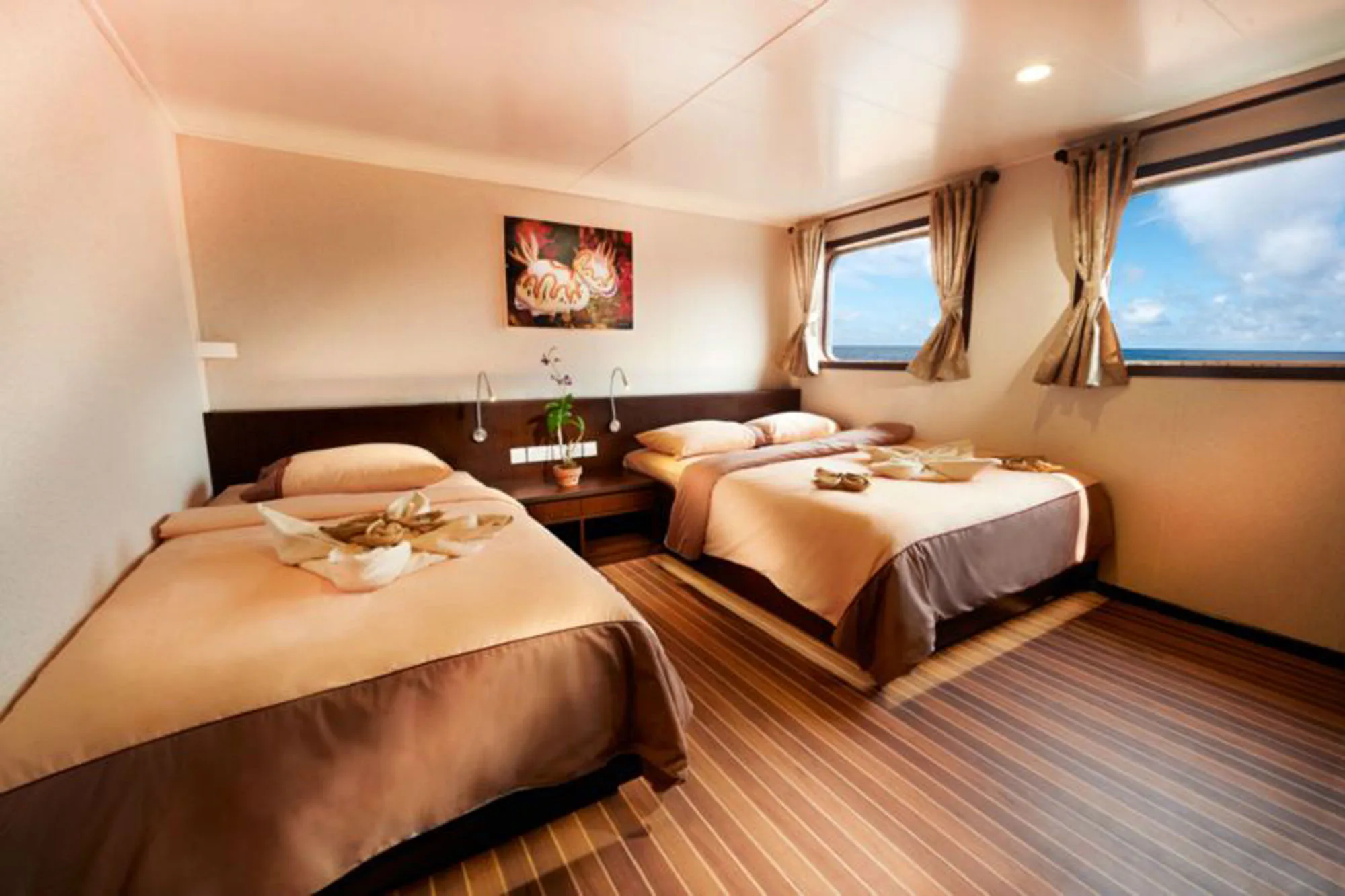
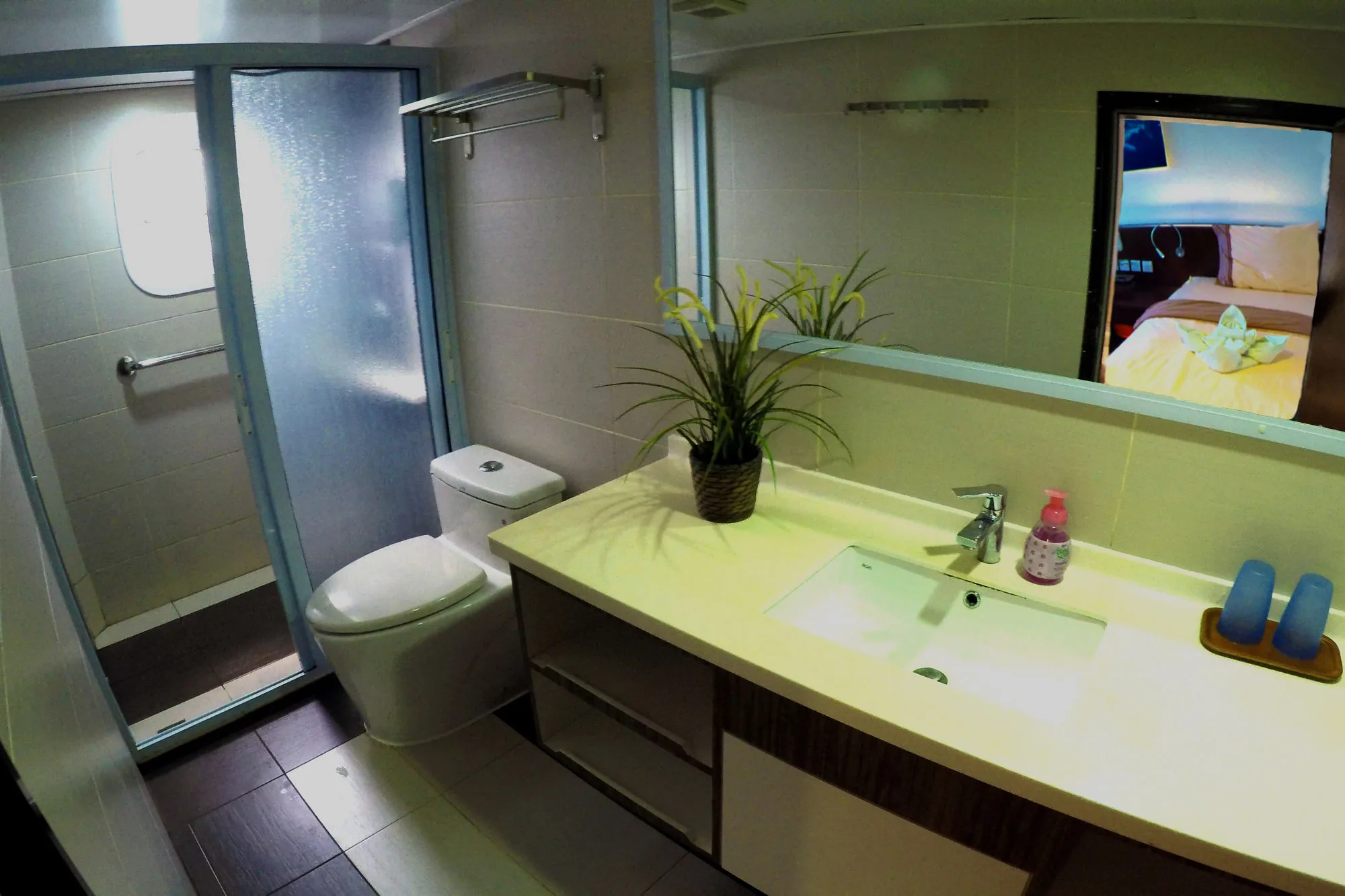
There are fourteen cabins, all en-suite, all with individually controlled air conditioning and all around 20 sqm — generous by liveaboard standards. Six sit on the upper deck with proper windows (C1–C4 with a 1.8 × 2.0 m double bed, C5–C6 with two singles), four on the main deck also with windows (C7–C8 twins, C9–C10 with a 1.5 × 2.0 m queen plus a single) and four on the lower deck with portholes (C11–C14, twins). Beds are fixed in wooden frames and cannot be moved. Up to 22 places are sold, and a full charter is the same 22.
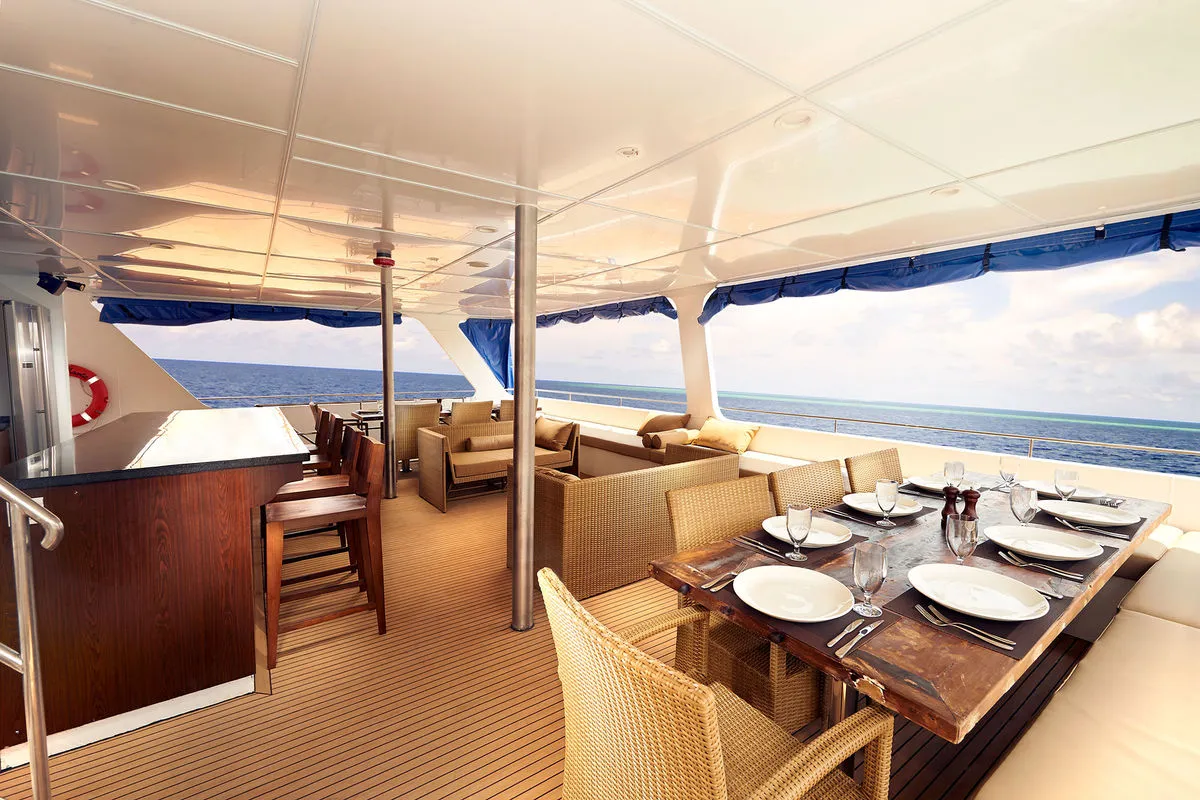
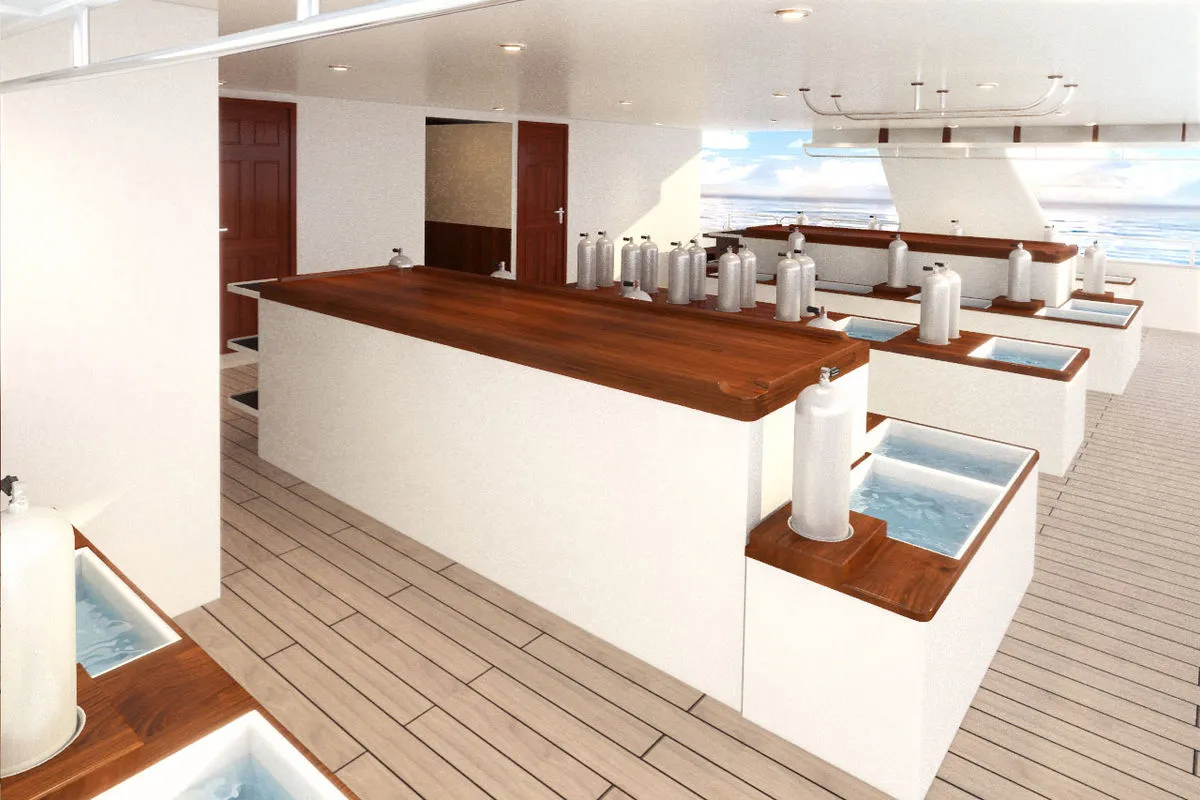
The crew numbers 20: three captains and deck officers, three engineers, five dive guides, three chefs, a masseuse, two hostesses, a cruise leader with an instructor rating and two tender drivers. There are four tenders of 5.8 m with 60 hp outboards, so groups go in small batches. Photographers get a dedicated set-up: an enclosed air-conditioned camera room, a wide outdoor work table, blow-dry stations and a personal rinse tank for every diver — rare even on expensive boats. The ratio on a group is four photographers to one guide.
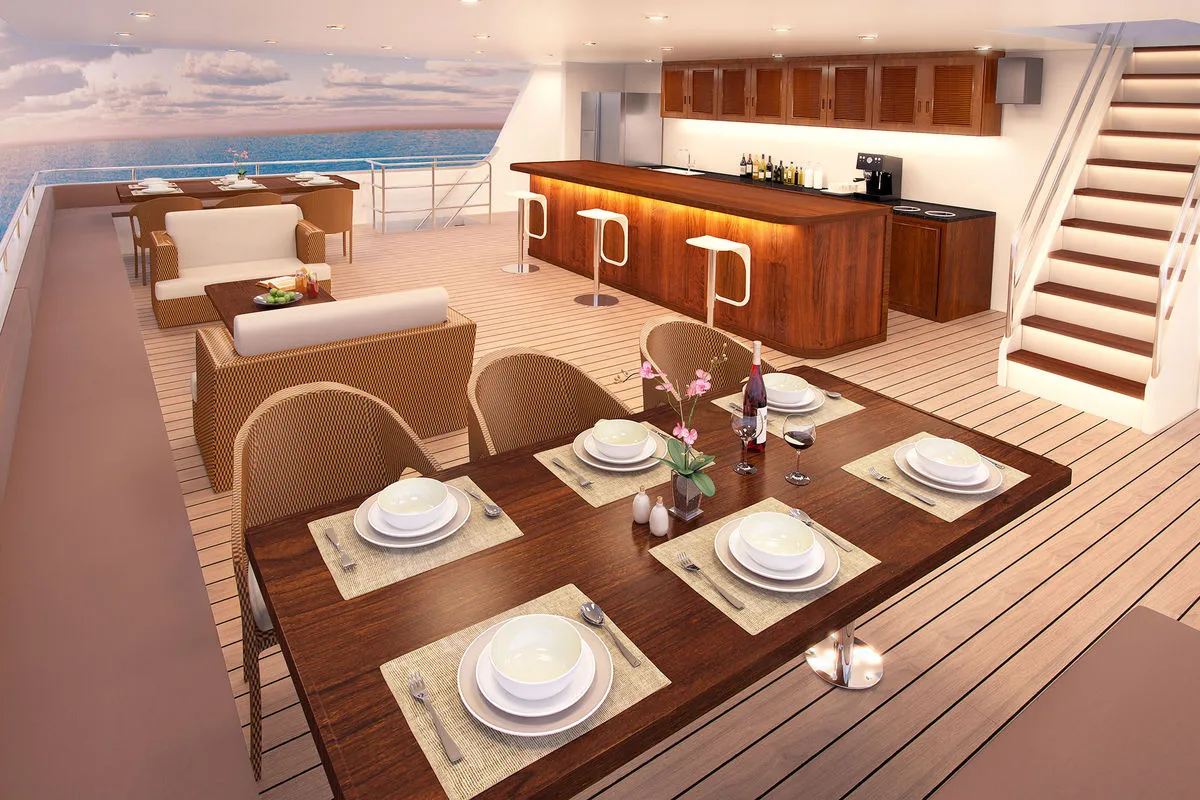
Meals come five times a day: a light breakfast before the first dive, a full one after, lunch, an afternoon snack and dinner. Bread is baked on board, the kitchen is Western and Indonesian, buffets and plated dinners both. Starlink satellite Wi-Fi runs around the clock but is paid — $35 for a 10 GB card. There is massage, laundry and a satellite phone.
About money, know this in advance: the trip price excludes two compulsory payments the operator collects before departure — the marine park and harbour fee, and the fuel surcharge. Together they run $400 to $620 per person and depend on the itinerary: Komodo and Triton Bay are cheapest, the Raja Ampat to Triton Bay crossings the most expensive. The operator states plainly that the rates are dynamic and can change. Two more compulsory items are dive insurance and travel insurance: without both you are not taken on board. Nitrox, gear rental, alcohol, massage and internet are settled on board at the end of the trip.
The operator describes the experience level the same way for all its itineraries — intermediate to advanced — and publishes no formal minimum number of logged dives. The rules are strict elsewhere, though: a dive computer is compulsory for every diver, the boat runs a no-decompression policy, maximum depth is 35 m, and guests are asked to stay at 20–25 m and always shallower than their guide. In the Banda Sea it is three dives a day rather than four — deeper dives, longer passages. Anyone treated for decompression illness in the past twelve months, or with a condition affecting fitness to dive, needs a doctor’s clearance letter before boarding. The nearest recompression chambers are on Bali, in Kalimantan, Makassar, Manado, Waisai and Jakarta, and from much of the route that is a long way.
The vessel takes long yard periods and announces them well ahead: 6 to 29 January 2027, 4 May to 27 August 2027 (nearly four months) and 6 to 21 January 2028. No trips run in those windows. Single occupancy costs 20% on top of the trip price; on Blue Manta no more than two twin cabins on the upper and main decks are sold single, and any further single occupancy goes to the lower deck. Non-divers get a 10% discount.
No mark-up
You pay the rate the operator publishes. The only thing added on top is the actual payment processing cost — no fee of ours.
We run the booking
Correspondence with the operator, holding your places, the contract, confirmation and all paperwork sit on our side. Nothing for you to arrange yourself.
Pay by card
We send you a Stripe invoice — pay by card, in your own currency, from anywhere in the world. The transfer to the operator is handled on our side.
Support in your language
We help you pick the cabin and dates, answer questions on the route and gear, and stay reachable until you are home — in English, in your time zone.
We quote the exact amount when confirming the booking: it covers the operator's rate plus the actual payment processing cost. No hidden charges.
Yacht Specifications
Length
46 m
Beam
10 m
Material
Steel
Capacity
22 guests
Cabins
14
Crew
20 members
Speed
10 knots cruising
Engine
2 × 450 hp Cummins
Bathrooms
14
Tender
4 tenders of 5.8 m with 60 hp outboards
Water capacity
30,000 l
Fuel capacity
45,000 l
Freshwater maker
2 watermakers, 10 tonnes of fresh water per day each
On Board
Diving
A dive computer is compulsory for every diver — without your own it is $15 a day to rent. The boat runs a no-decompression policy, maximum depth 35 m, and guests are asked to stay at 20–25 m and always shallower than their guide. The operator describes the level as intermediate to advanced on every itinerary and publishes no formal minimum number of logged dives. Dive insurance and travel insurance are both compulsory. Rental exposure suits are 3 mm shorties only — for Alor and southern Komodo, where the water is 22–26 °C, bring your own 5 mm full suit and hood. Anyone treated for decompression illness in the past twelve months, or with a condition affecting fitness to dive, needs a doctor's clearance letter before boarding.
Food
Beer ($4 a can), wine ($40–50 a 0.75 l bottle) and Nespresso coffee ($3 a capsule) are extra and settled at the end of the trip. The operator asks for dietary requirements at booking and would rather they were limited to religious restrictions and allergies.
Navigation and safety
Cabins
· 4 cabins
Double bed
Beds: 1 double bed 1.8 × 2.0 m
Four identical cabins forward on the upper deck. A 1.8 × 2.0 m double bed, a dark headboard running the width of the wall, a desk-shelf along the side and a soft bench beside it. A proper window, not a porthole. En-suite with shower, individually controlled air conditioning. Beds are fixed in wooden frames and cannot be moved. They sell at the upper and main deck rate, which is $200–500 above the lower deck depending on the itinerary.
· 2 cabins
Two single beds
Beds: 2 single beds 1.0 × 2.0 m
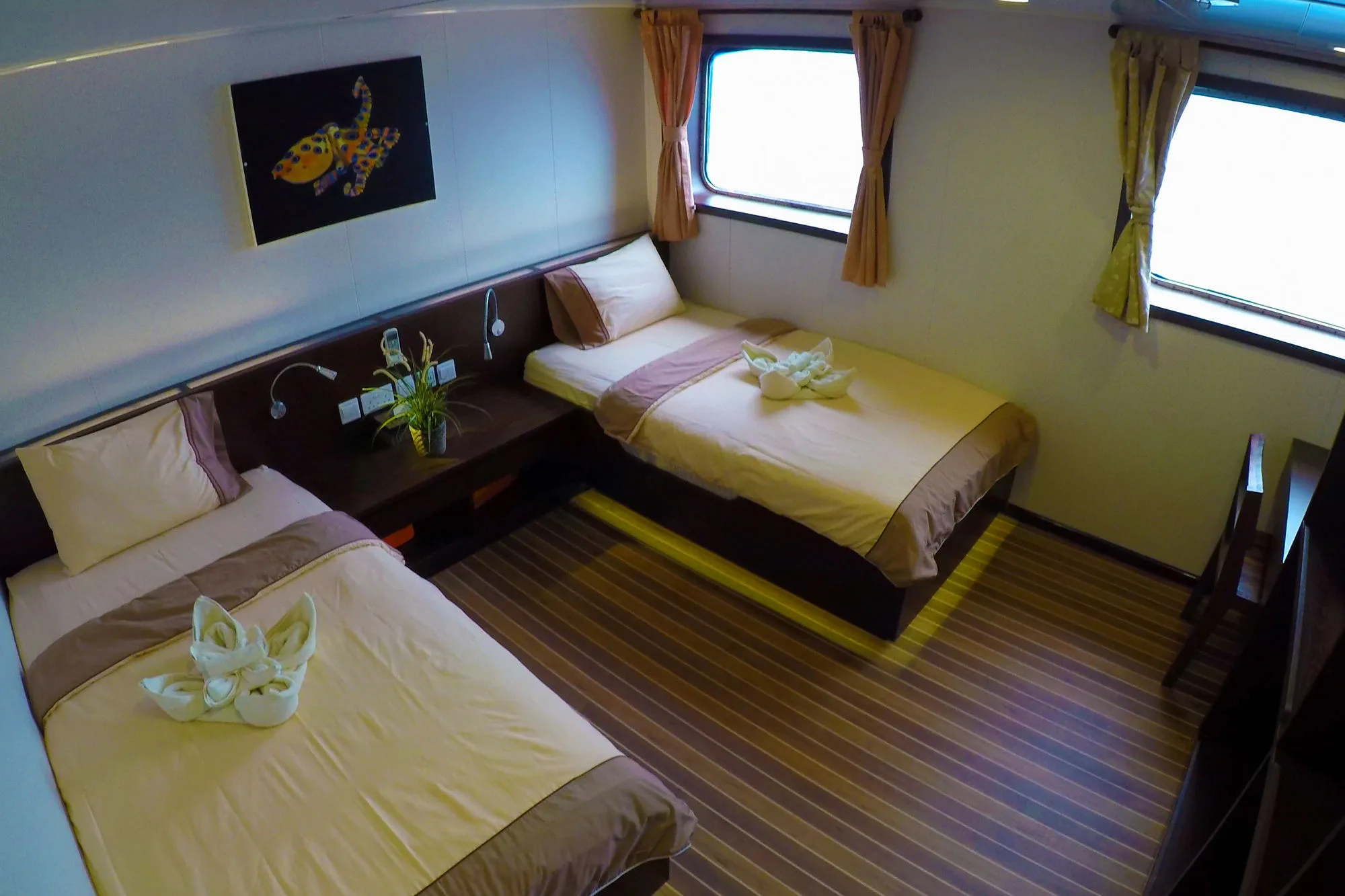
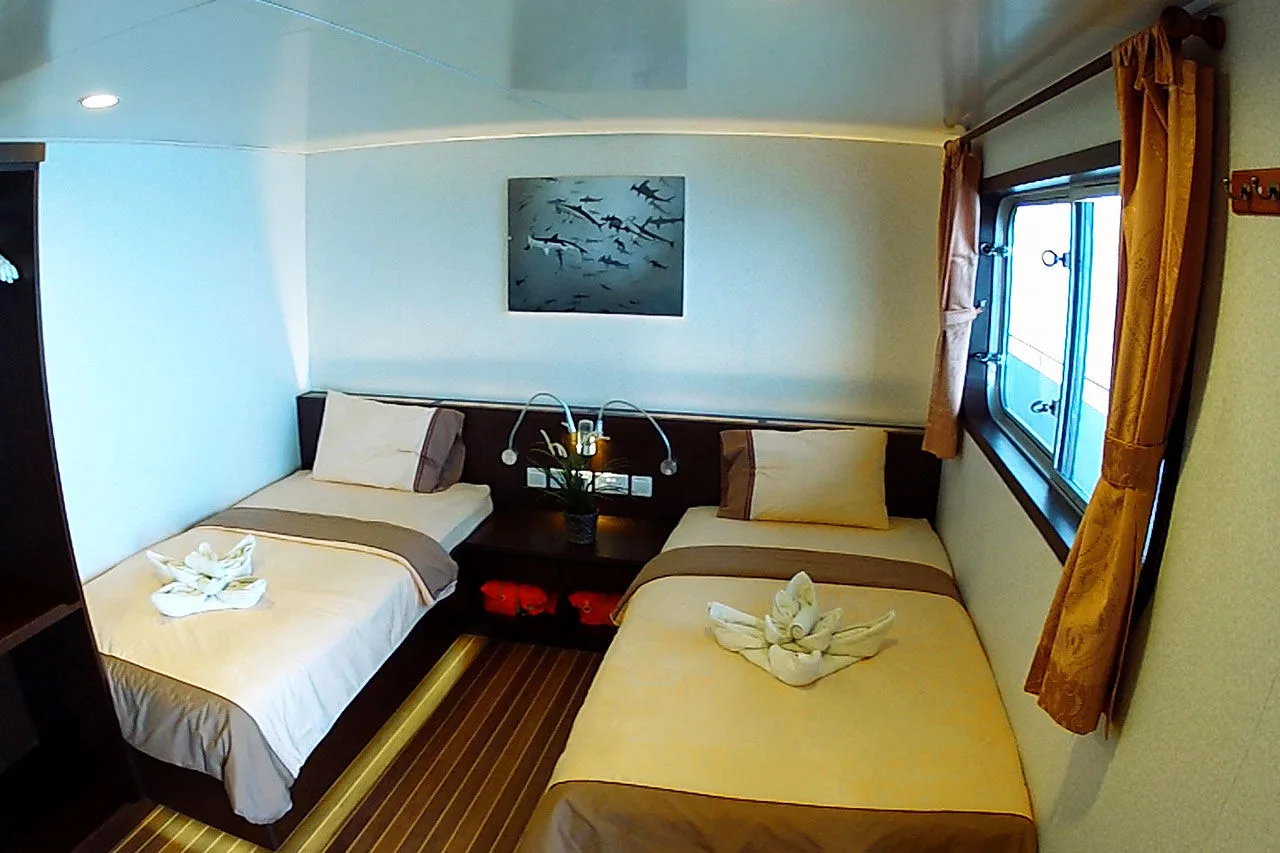
Two upper deck cabins with separate 1.0 × 2.0 m beds set against opposite sides, a bedside unit with reading lights between them. En-suite with shower, individually controlled air conditioning, a window. The beds are in wooden frames and cannot be pushed together. These are the cabins the operator usually offers for single occupancy on the upper deck — but no more than two such cabins across the upper and main decks together.
· 2 cabins
Two single beds
Beds: 2 single beds 1.0 × 2.0 m
Two cabins on the main deck next to the saloon and the indoor dining area — the shortest walk to the dive deck. Two 1.0 × 2.0 m single beds, a unit between them, a window in the side. En-suite with shower and a basin on a wide counter, individually controlled air conditioning. The aggregator's cabin sheet puts these on the upper deck; the operator's own deck plan puts them on the main deck, and that is where they are.
· 2 cabins
Queen and single beds
Beds: 1 queen bed 1.5 × 2.0 m and 1 single 1.0 × 2.0 m
Two main deck cabins with mismatched beds: a 1.5 × 2.0 m queen and a 1.0 × 2.0 m single. Handy for a couple who want a bed each, or for two people who would rather not share. Two windows in the side, en-suite with shower, individually controlled air conditioning. The beds are fixed and cannot be moved.
· 4 cabins
Two single beds
Beds: 2 single beds 1.0 × 2.0 m
Four cabins on the lower deck — the cheapest rate on the boat, $200–500 below the upper and main decks depending on the itinerary. Two 1.0 × 2.0 m single beds, a unit with reading lights, and a round porthole instead of a window. En-suite with shower, individually controlled air conditioning. Motion is felt least down here. Single occupancy beyond the two upper-deck twins is placed on this deck by default. The lower deck has two emergency escape hatches — forward through the crew cabins and aft through the engine room; everyone berthed here is shown them at the safety briefing.
Schedule & Pricing
Raja Ampat and Misool
The vessel's main winter programme and the most frequent line in the schedule: in and out of Sorong, 7 to 10 nights. Northern Raja Ampat means the Dampier Strait with schools of sweetlips, trevally, bumphead parrotfish and barracuda, reef sharks and mantas; the Fam islands with hard coral and wobbegongs; Batanta with sandy slopes for muck diving. On trips of seven nights or more the operator also promises Misool in the south — walls, manta cleaning stations, sharks, and limestone islands and lagoons above water. Water 27–30 °C, visibility 15–30 m, currents mild to strong. Best from October to April. The 25 April 2027 departure ends not in Sorong but in Nabire.
December 2026
1 departureJanuary 2027
1 departureFebruary 2027
3 departuresMarch 2027
2 departuresApril 2027
3 departuresNovember 2027
2 departuresDecember 2027
3 departuresJanuary 2028
1 departureFebruary 2028
3 departuresOctober 2028
2 departuresKomodo North and South
The summer base: round trips of 6 to 7 nights from Labuan Bajo. The north of the park is clear water, mantas, sharks, turtles, eagle rays and dolphins; the south is colder and richer in nutrients, and that is where the macro lives. Ashore, the dragon on Rinca or Komodo. Water 26–28 °C in the north and centre, 22–26 °C in the south, visibility 20–40 m, currents medium to strong. The season runs from early May to the end of October; for the southern sites the operator advises a full wetsuit.
May 2028
1 departureJune 2028
3 departuresJuly 2028
4 departuresAugust 2028
3 departuresSeptember 2028
1 departureTriton Bay
A seven-night round trip from Kaimana. Triton Bay is a rare destination: soft coral as dense as Misool's, huge untroubled schools of trevally and jacks, squadrons of bumphead parrotfish, turtles and forests of black coral. At night the walking epaulette shark comes out. The bagan fishing platforms near Namatota village often draw whale sharks and dolphins. Water 27–30 °C, air 28–35 °C, visibility 10–30 m, currents medium to strong. Best from November to April. Departure is at 17:00, and Kaimana is reached only via Sorong.
October 2027
1 departureMarch 2028
2 departuresApril 2028
1 departureDecember 2028
2 departuresAmbon — Banda Sea — Ambon
The autumn Ring of Fire programme: start and finish in Ambon, 6 to 8 nights. It opens with muck diving in Ambon Bay, then crosses the Banda Sea along the chain of islands — walls, drop-offs, sea snakes, macro critters, mantas and reef sharks, and from September to November a chance at scalloped hammerheads. At least one Spice Islands village is visited. In the Banda Sea it is three dives a day: deeper, with long passages between islands. Water 26–28 °C, though autumn upwellings bring 25 °C; visibility 15–30 m, currents medium to strong.
September 2027
4 departuresMisool — Fak Fak — Triton Bay
A ten-night crossing from Sorong to Kaimana. First southern Raja Ampat and Misool — pelagics, barracuda, snapper, grouper, manta cleaning stations, wobbegongs; then the rarely visited Fak Fak coast with a stop at the Kiti-Kiti waterfall; and finally Triton Bay with its soft coral and schooling trevally. Water 27–30 °C, visibility 10–30 m, currents medium to strong. Best from November to April.
March 2028
1 departureNovember 2028
1 departureTriton Bay — Fak Fak — Misool
The same ten-night crossing the other way round: board in Kaimana, disembark in Sorong. It starts in Triton Bay, runs along the Fak Fak coast and the Kiti-Kiti waterfall, and finishes in southern Raja Ampat at Misool. Convenient if you would rather fly through Sorong only on the way home.
November 2027
1 departureApril 2028
1 departureNovember 2028
1 departureDecember 2028
1 departureAmbon — Banda Sea — Raja Ampat
A 9- or 10-night crossing from Ambon to Sorong. It opens with muck diving in Ambon Bay, then traces the perimeter of the Banda Sea islands: drop-offs, sea snakes, macro, mantas, sharks and a chance at hammerheads. It ends in Raja Ampat, the most biodiverse diving on the planet. Different airports at each end — book flights accordingly.
October 2027
1 departureOctober 2028
1 departureRaja Ampat — Banda Sea — Alor
A ten-night crossing from Sorong to Alor. It starts in southern Raja Ampat including Misool, continues across the Banda Sea with critters, sea snakes, mantas and sharks, and finishes in Alor far from the crowds: macro, healthy reefs, schooling pelagics. The cooler southern water brings mola mola, thresher and hammerhead sharks, and surface intervals sometimes bring dolphins and pilot whales. Alor is 22–26 °C, so a full wetsuit is needed.
April 2028
1 departureAlor — Maumere — Komodo
A ten-night crossing from Alor to Labuan Bajo. First the reefs of Alor and the Pantar Strait — macro, schooling fish, and in the cold water mola mola and thresher sharks; then Maumere under its volcanoes with outer reefs and walls; and finally Komodo with its currents, mantas and dragon. Water in Alor and southern Komodo is 22–26 °C. The season runs from early May to the end of October.
May 2028
1 departureAlor — Ring of Fire — Banda Sea — Ambon
A ten-night crossing from Alor to Ambon. It opens on the reefs of Alor and the Pantar Strait, where surface intervals bring pilot whales and dolphins; then the Ring of Fire with almost untouched reefs and drop-offs; and it finishes with muck diving off Ambon. Water 22–26 °C in Alor and 26–28 °C in the Banda Sea, with autumn upwellings down to 25 °C; visibility 20–30 m. Best in March, April and from mid-September to early December.
September 2028
1 departurePrices and availability can change. Get in touch and we'll confirm current dates and pricing.
Included in Price
Not Included
Required extras
Optional extras
Extras are shown per person and are paid on board.
from 3540 USD / 7 nights
Estimated wait time — 24 hours
Similar Yachts
Dewi Nusantara
Liveaboard · Indonesia
57 m · 18 guests · 9 cabins
from 6202 EUR
Emperor Harmoni
Liveaboard · Indonesia
48 m · 24 guests · 12 cabins
from 4205 EUR
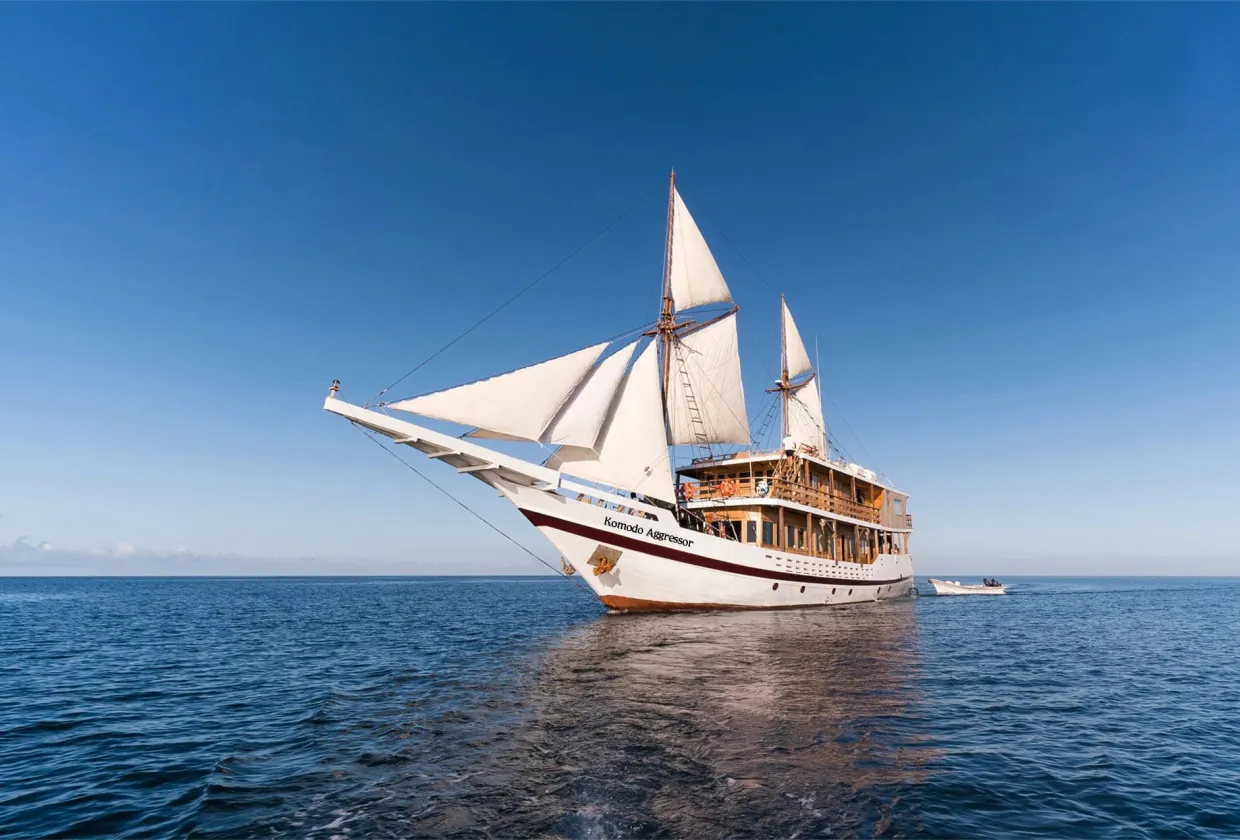
Komodo Aggressor
Liveaboard · Indonesia
29 m · 16 guests · 8 cabins
from 2494 USD
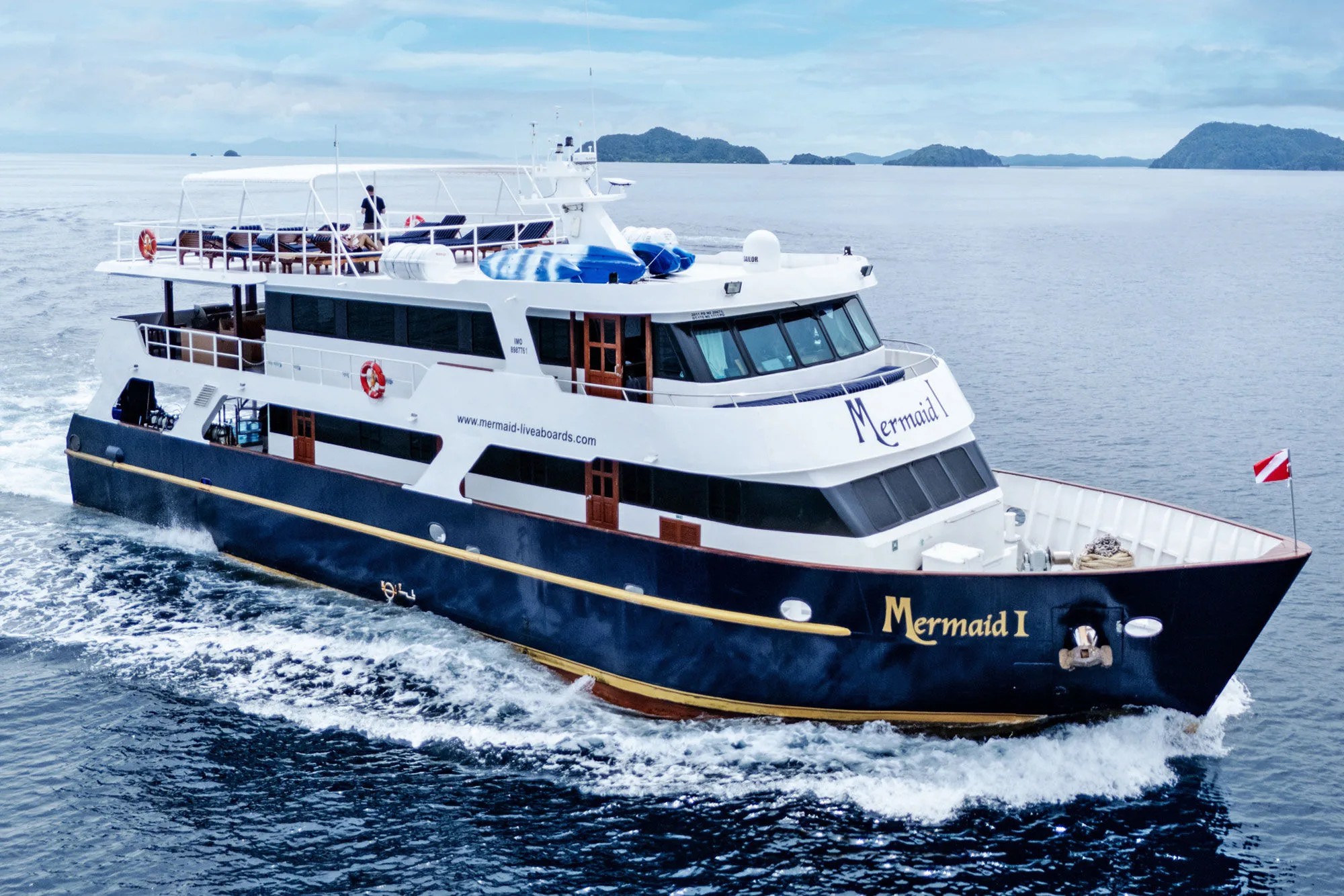
Mermaid I
Liveaboard · Indonesia
28 m · 15 guests · 8 cabins
from 4500 EUR
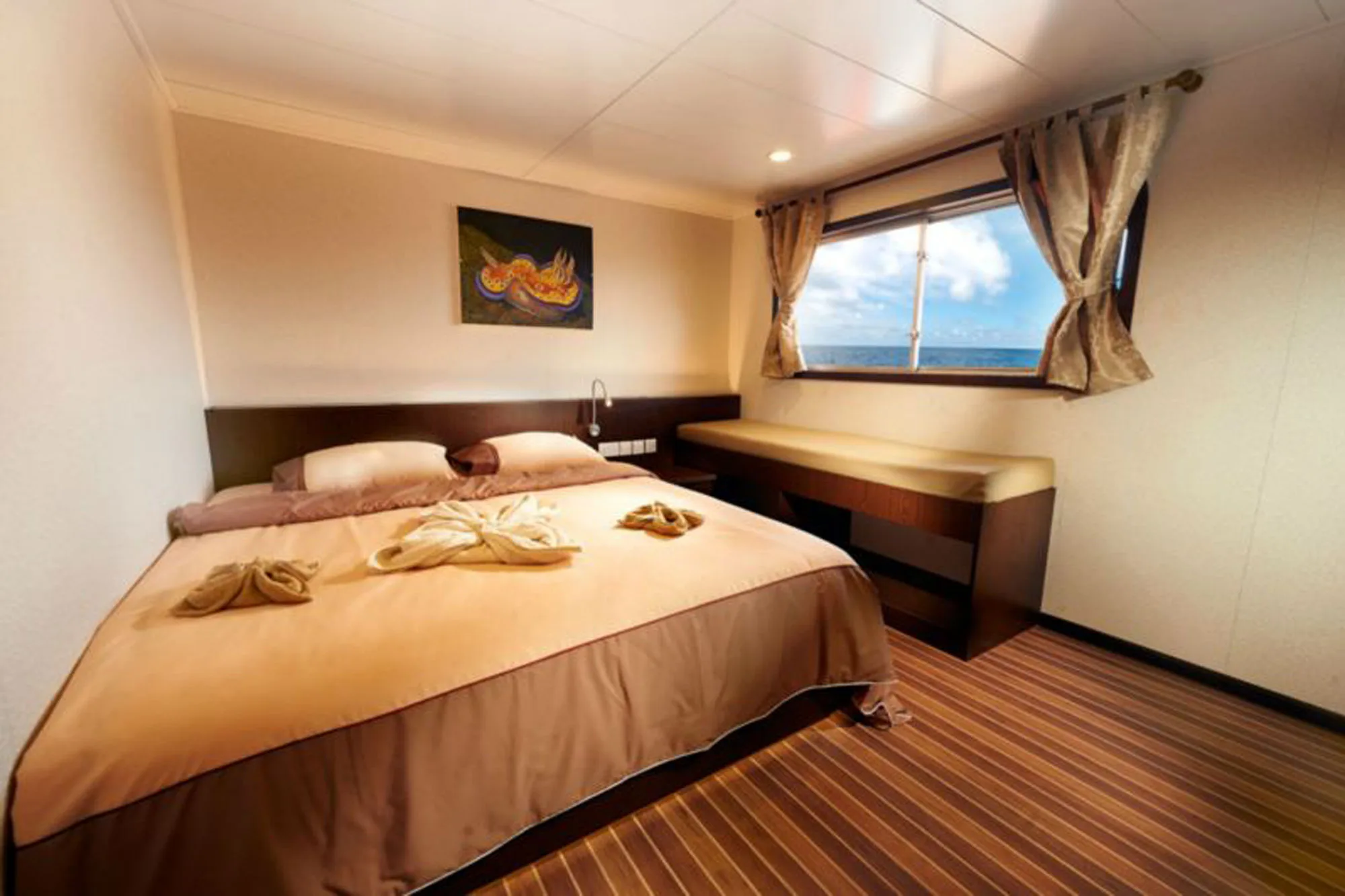
Double bed
Four identical cabins forward on the upper deck. A 1.8 × 2.0 m double bed, a dark headboard running the width of the wall, a desk-shelf along the side and a soft bench beside it. A proper window, not a porthole. En-suite with shower, individually controlled air conditioning. Beds are fixed in wooden frames and cannot be moved. They sell at the upper and main deck rate, which is $200–500 above the lower deck depending on the itinerary.
- Deck
- upper deck
- Beds
- 1 double bed 1.8 × 2.0 m
- Windows
- Window
- Cabin numbers
- C1, C2, C3, C4
- Yacht Specifications
- about 20 sqm
- cabins of this type
- 4
- from
- from $3,740 per person (upper and main deck rate)
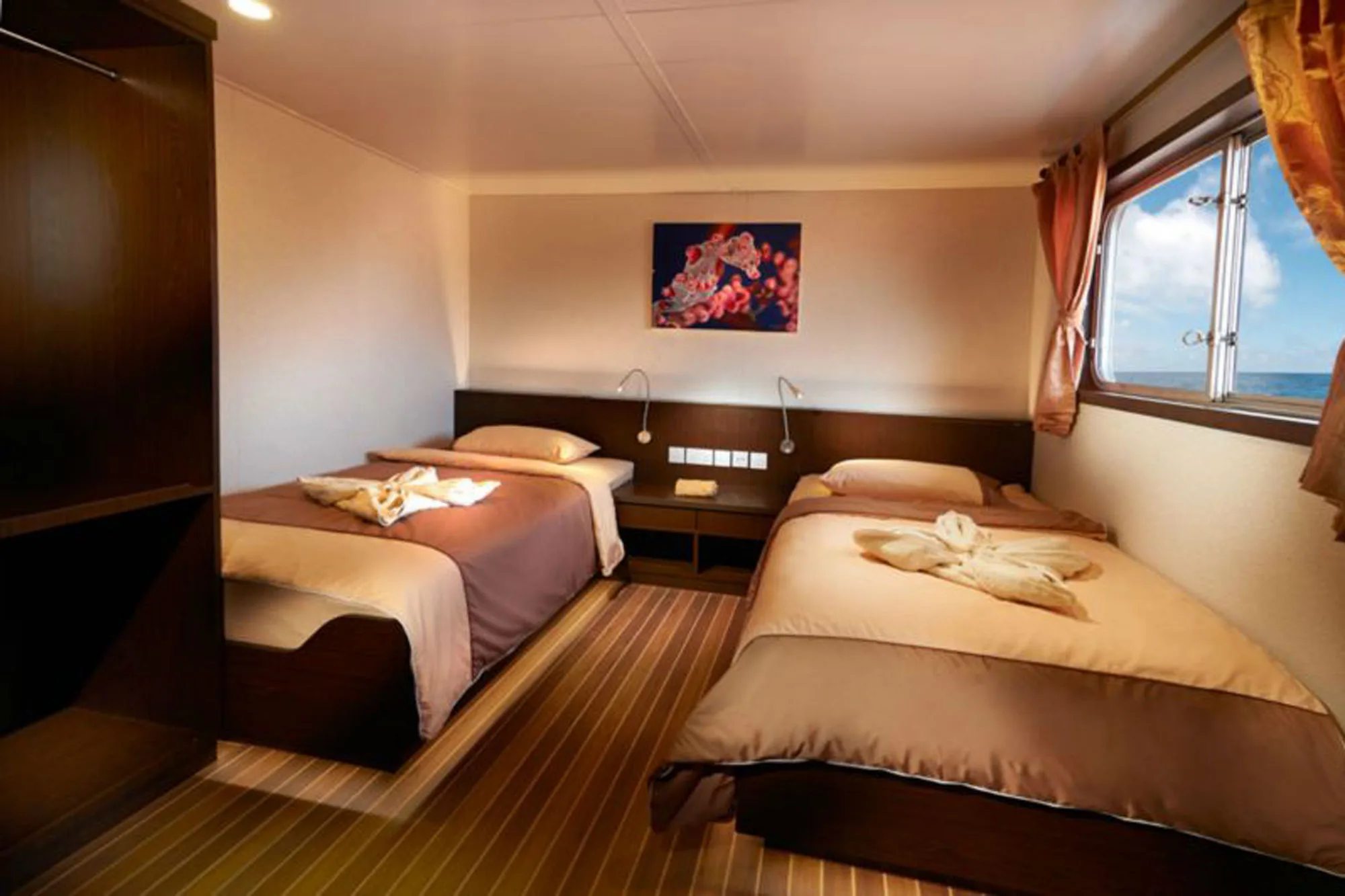
Two single beds
Two upper deck cabins with separate 1.0 × 2.0 m beds set against opposite sides, a bedside unit with reading lights between them. En-suite with shower, individually controlled air conditioning, a window. The beds are in wooden frames and cannot be pushed together. These are the cabins the operator usually offers for single occupancy on the upper deck — but no more than two such cabins across the upper and main decks together.
- Deck
- upper deck
- Beds
- 2 single beds 1.0 × 2.0 m
- Windows
- Window
- Cabin numbers
- C5, C6
- Yacht Specifications
- about 20 sqm
- cabins of this type
- 2
- from
- from $3,740 per person (upper and main deck rate)
Two single beds
Two cabins on the main deck next to the saloon and the indoor dining area — the shortest walk to the dive deck. Two 1.0 × 2.0 m single beds, a unit between them, a window in the side. En-suite with shower and a basin on a wide counter, individually controlled air conditioning. The aggregator's cabin sheet puts these on the upper deck; the operator's own deck plan puts them on the main deck, and that is where they are.
- Deck
- main deck
- Beds
- 2 single beds 1.0 × 2.0 m
- Windows
- Window
- Cabin numbers
- C7, C8
- Yacht Specifications
- about 20 sqm
- cabins of this type
- 2
- from
- from $3,740 per person (upper and main deck rate)
Queen and single beds
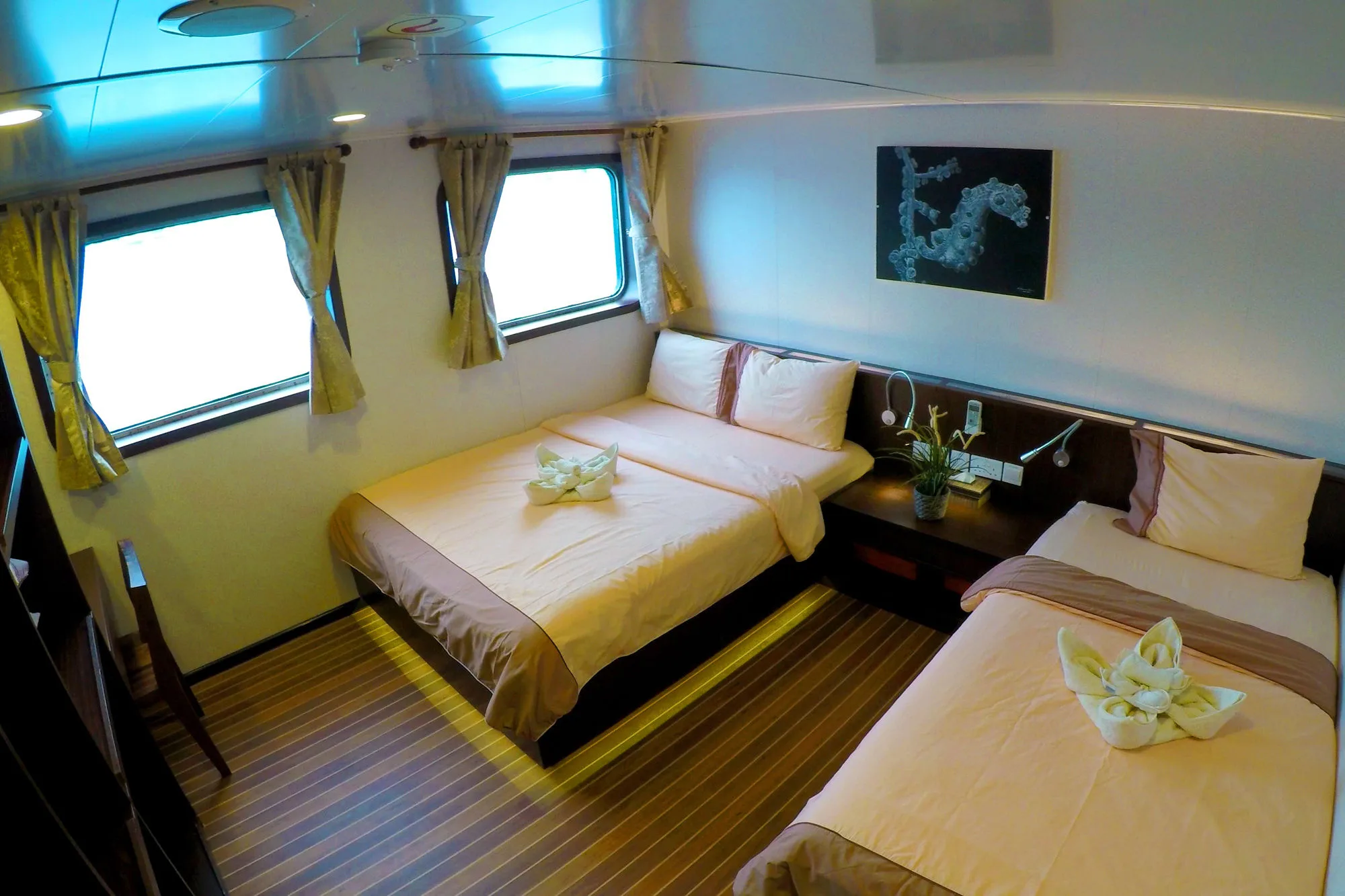
Two main deck cabins with mismatched beds: a 1.5 × 2.0 m queen and a 1.0 × 2.0 m single. Handy for a couple who want a bed each, or for two people who would rather not share. Two windows in the side, en-suite with shower, individually controlled air conditioning. The beds are fixed and cannot be moved.
- Deck
- main deck
- Beds
- 1 queen bed 1.5 × 2.0 m and 1 single 1.0 × 2.0 m
- Windows
- Window
- Cabin numbers
- C9, C10
- Yacht Specifications
- about 20 sqm
- cabins of this type
- 2
- from
- from $3,740 per person (upper and main deck rate)
Two single beds
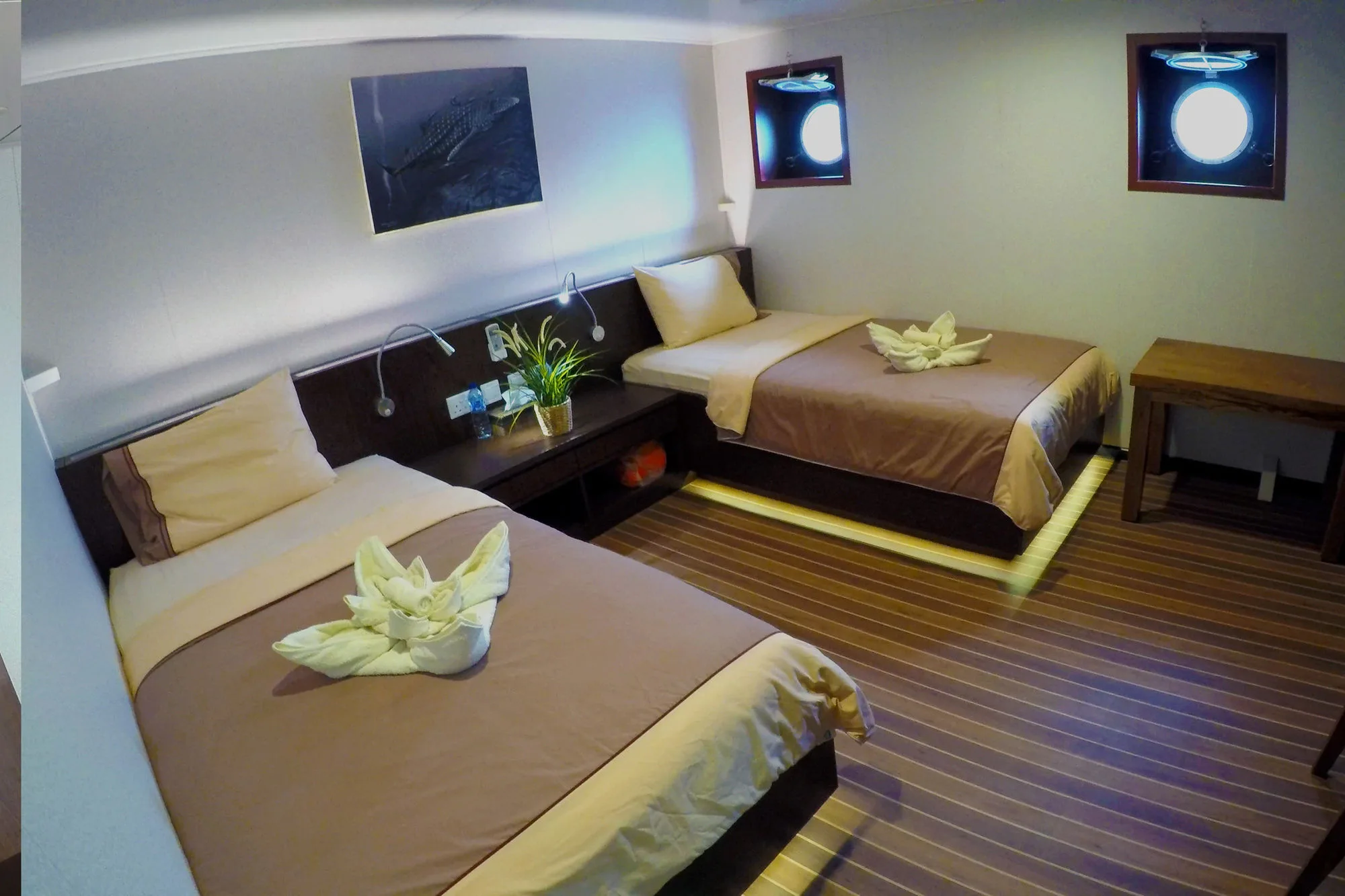
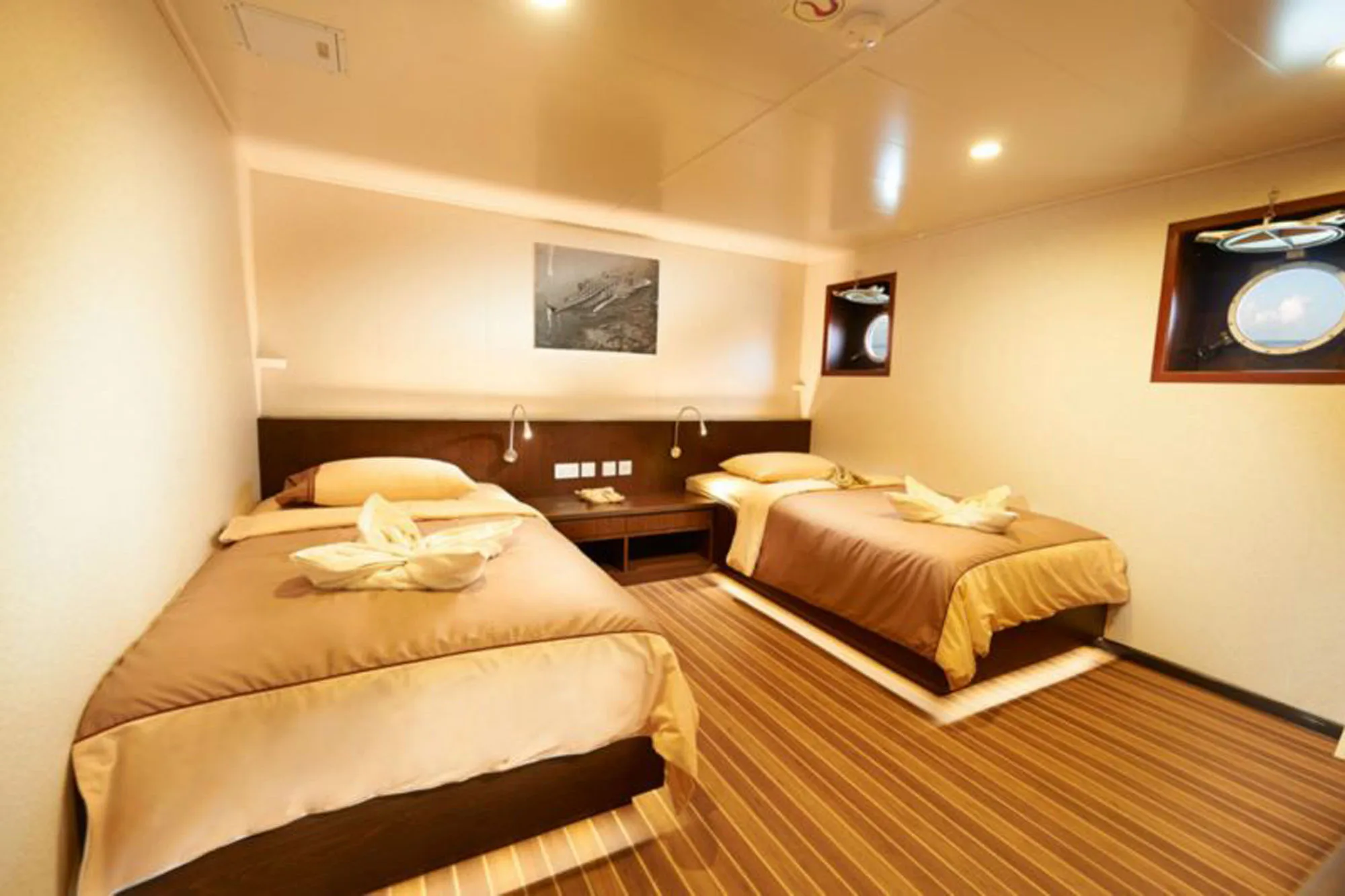
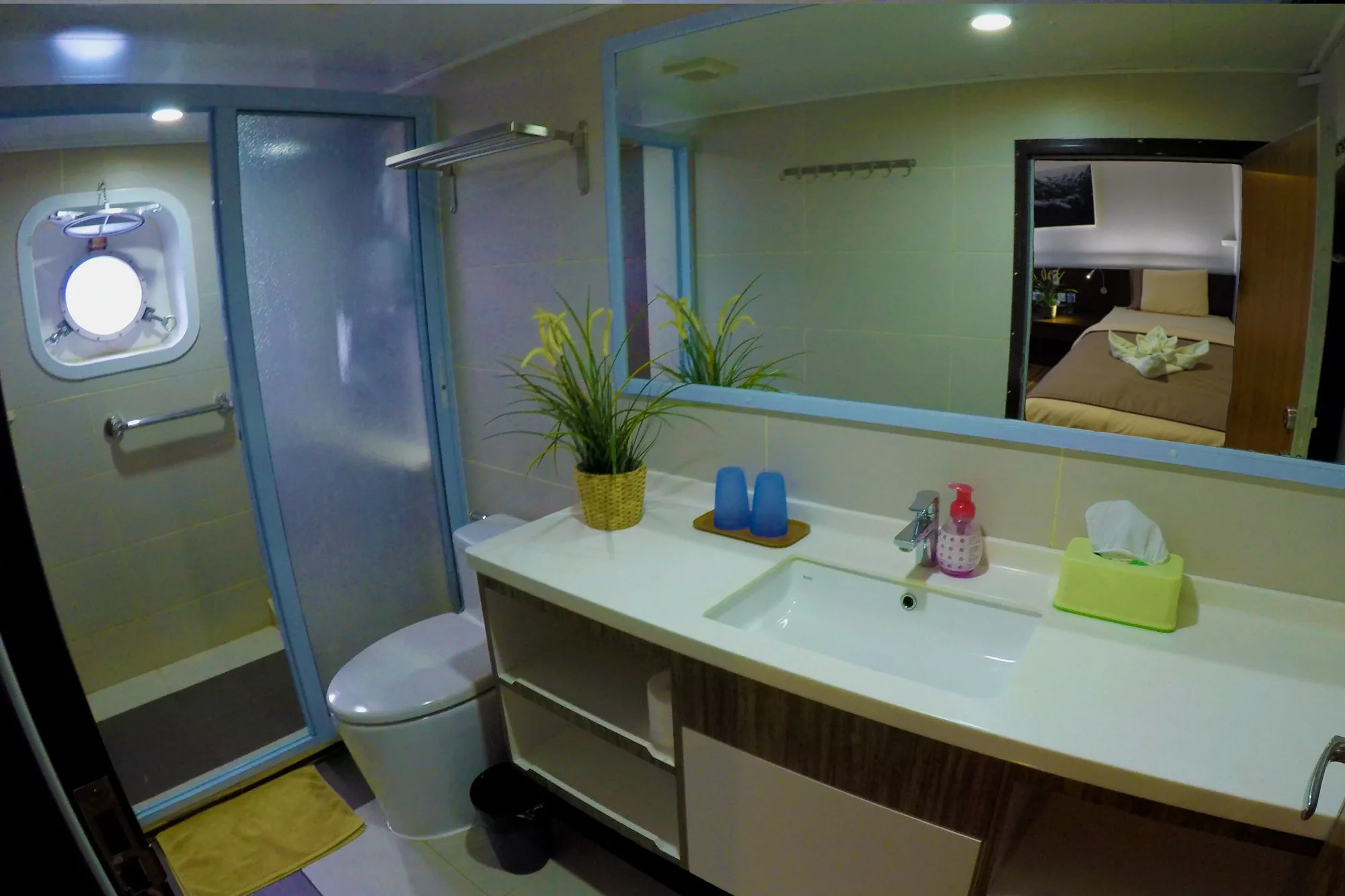
Four cabins on the lower deck — the cheapest rate on the boat, $200–500 below the upper and main decks depending on the itinerary. Two 1.0 × 2.0 m single beds, a unit with reading lights, and a round porthole instead of a window. En-suite with shower, individually controlled air conditioning. Motion is felt least down here. Single occupancy beyond the two upper-deck twins is placed on this deck by default. The lower deck has two emergency escape hatches — forward through the crew cabins and aft through the engine room; everyone berthed here is shown them at the safety briefing.
- Deck
- lower deck
- Beds
- 2 single beds 1.0 × 2.0 m
- Windows
- Porthole
- Cabin numbers
- C11, C12, C13, C14
- Yacht Specifications
- about 20 sqm
- cabins of this type
- 4
- from
- from $3,540 per person (lower deck rate)
Blue Manta
from 3540 USD