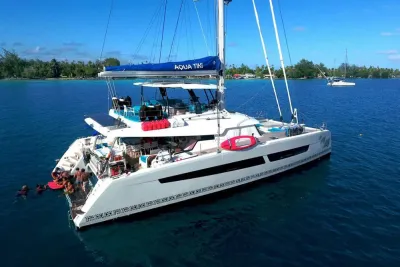
Aqua Tiki III
 1 / 32
2 / 32
3 / 32
4 / 32
5 / 32
1 / 32
2 / 32
3 / 32
4 / 32
5 / 32
 6 / 32
 7 / 32
 8 / 32
 9 / 32
 10 / 32
 11 / 32
 12 / 32
 13 / 32
 14 / 32
 15 / 32
 16 / 32
 17 / 32
 18 / 32
 19 / 32
 20 / 32
 21 / 32
 22 / 32
 23 / 32
 24 / 32
 25 / 32
 26 / 32
 27 / 32
 28 / 32
 29 / 32
 30 / 32
 31 / 32
 32 / 32
Book through Tour Leader Club
20 m · 10 guests · 5 cabins · 4 crew members
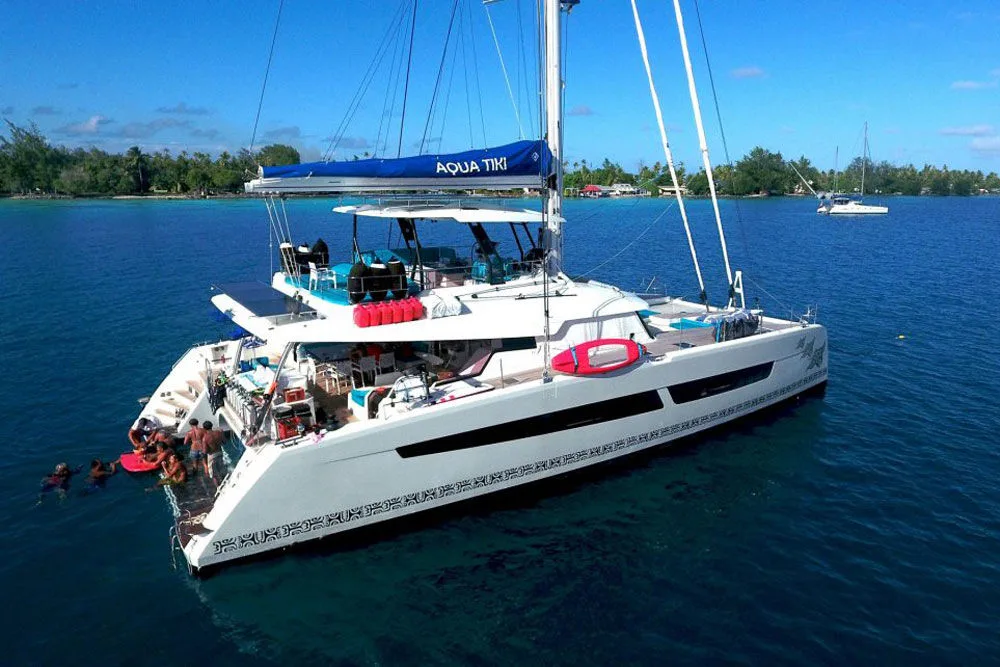
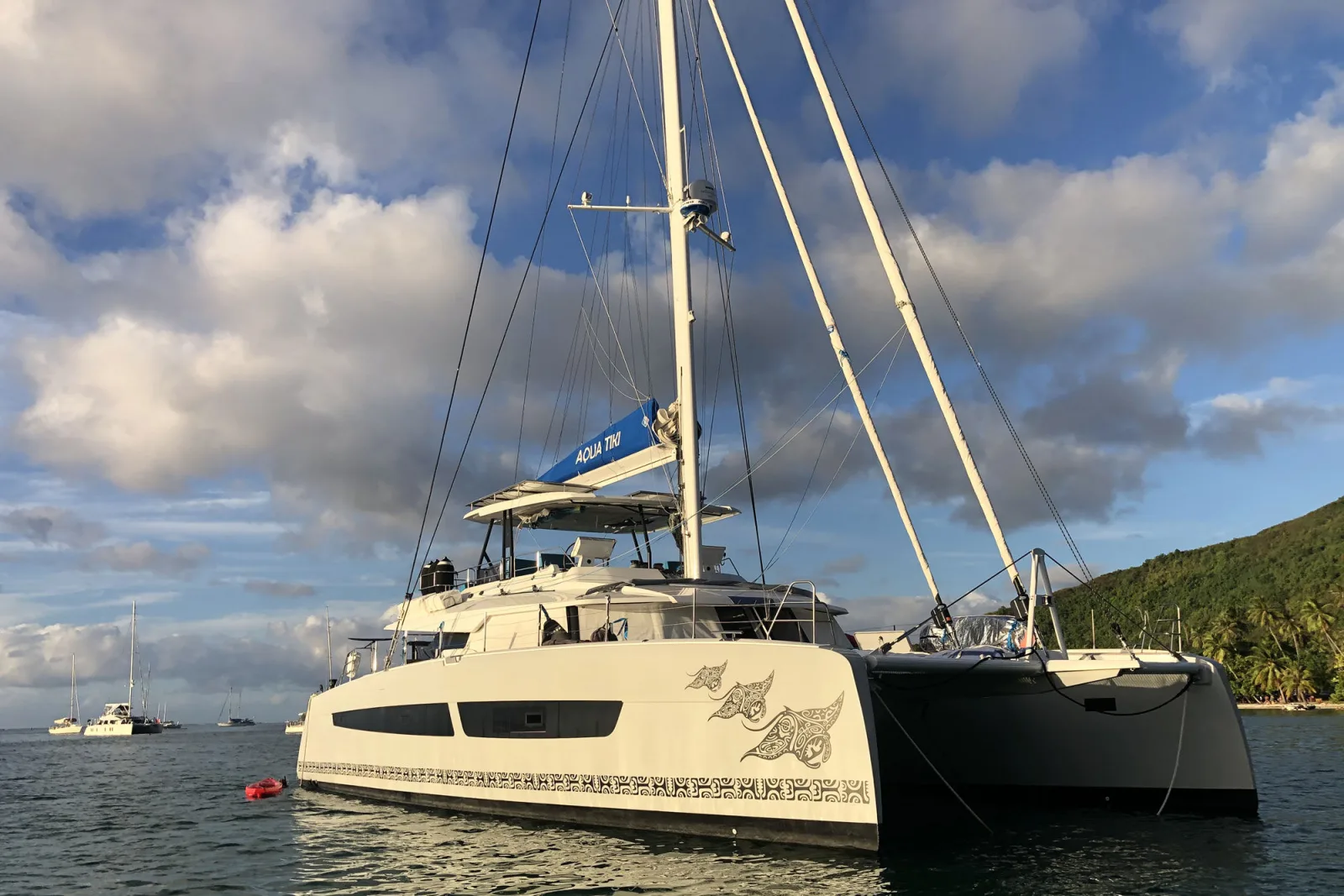
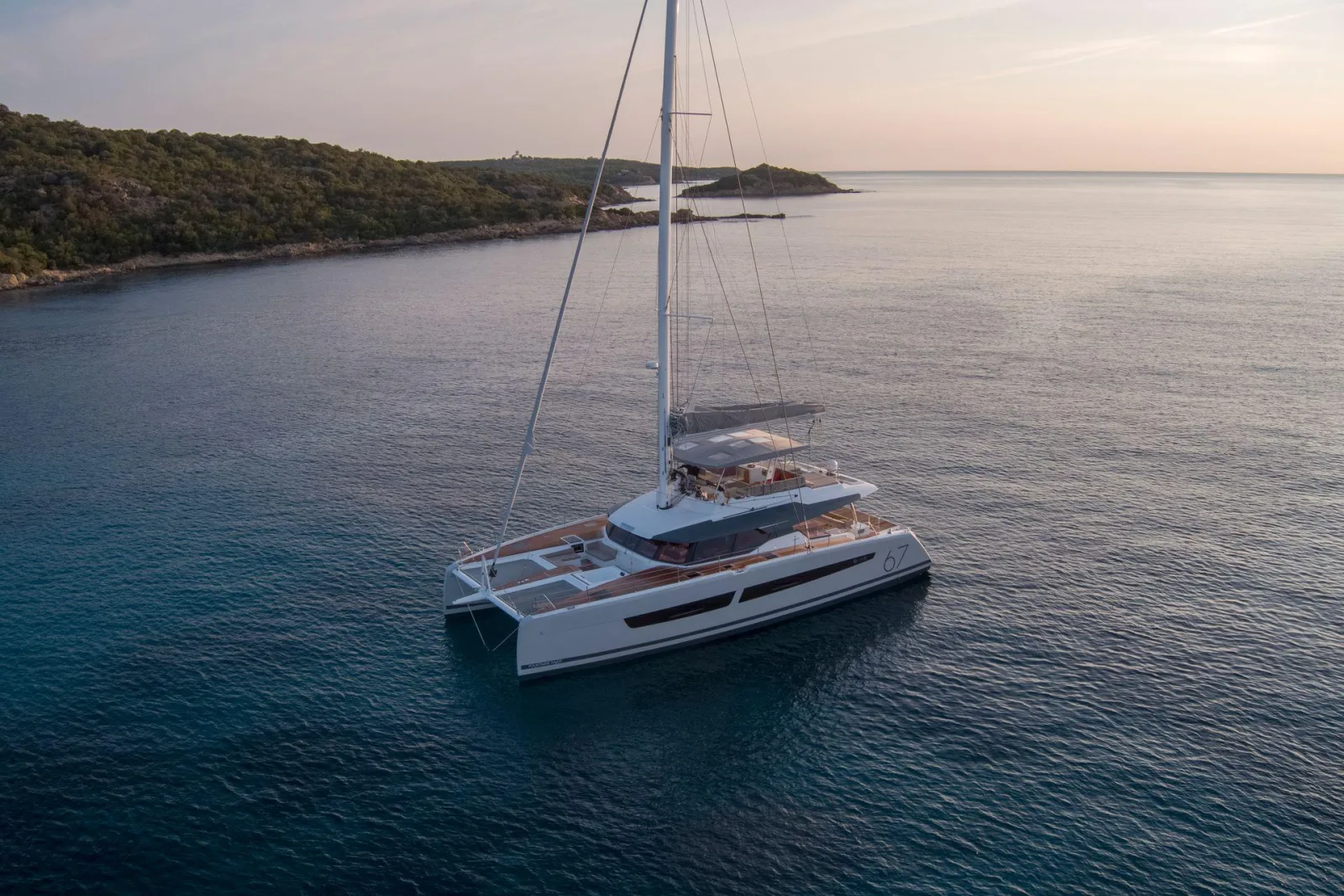
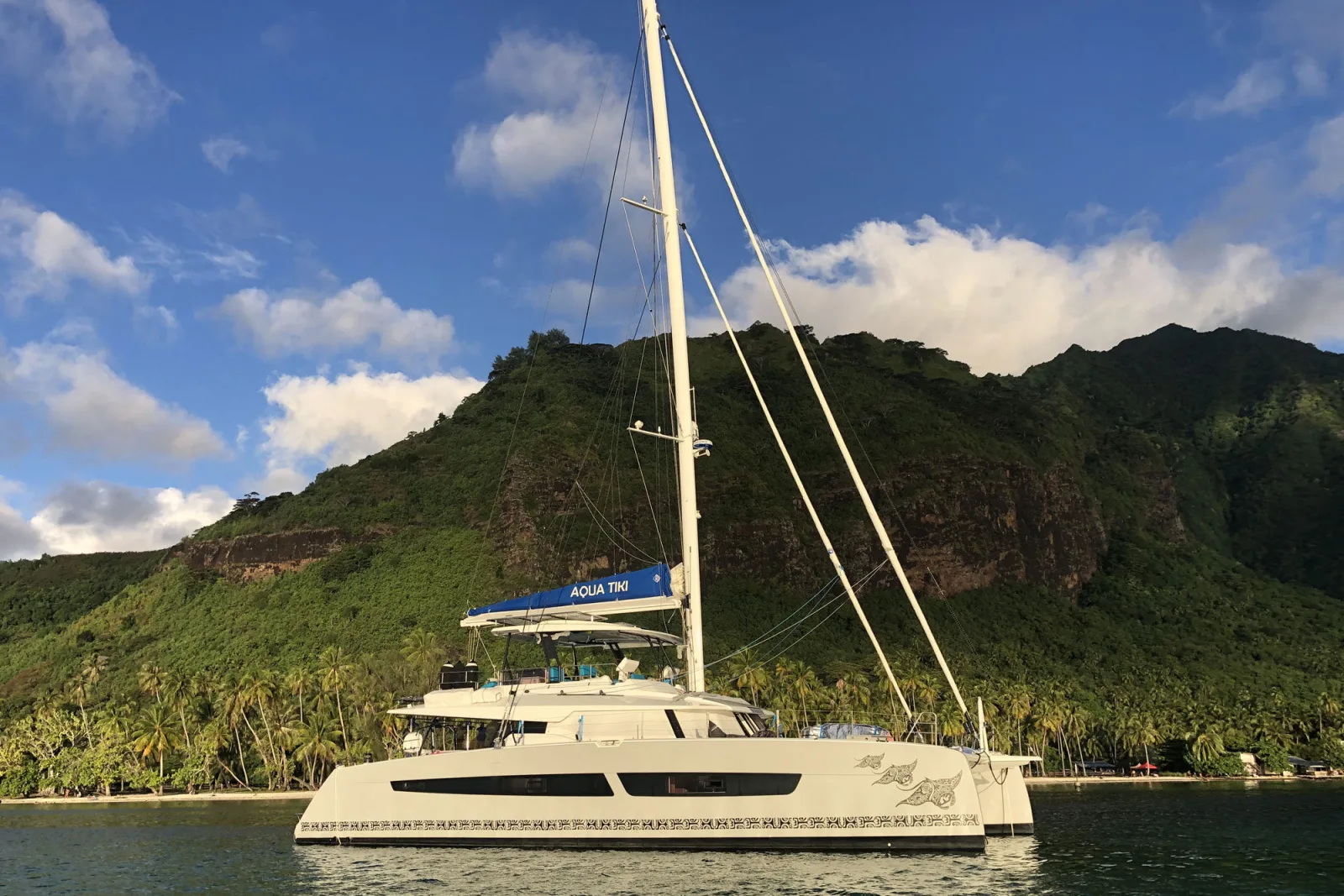
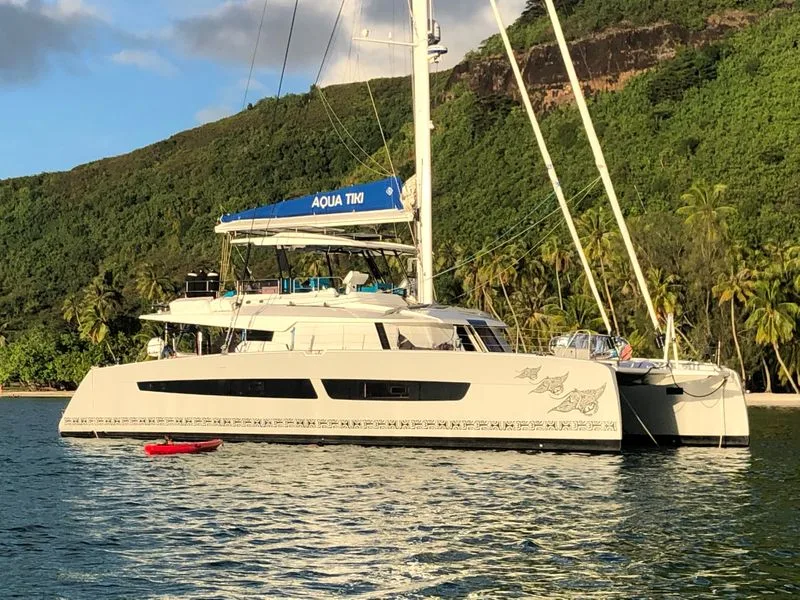
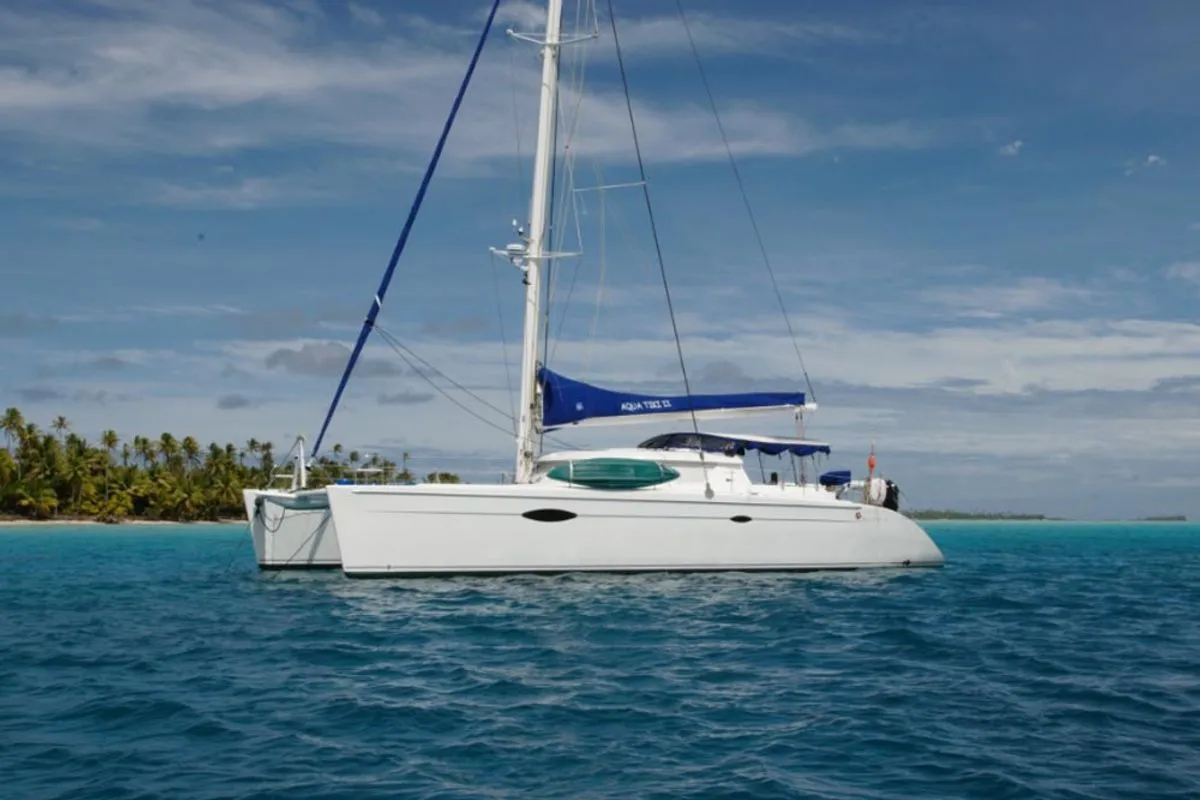
Aqua Tiki III is a Fountaine Pajot Alegria 67 sailing catamaran, built in La Rochelle and launched in 2019. She is the second and larger vessel of the Polynesian company Aqua Polynésie: alongside her runs Aqua Tiki II, an eighteen-metre Eleuthera for eight guests where a single berth can be bought on its own. Aqua Tiki III works differently. The operator says it plainly: the boat goes out on full charter, crewed and with the full dive setup, for a group of up to ten divers. Individual berths appear rarely — on departures the operator or a partner dive club puts together itself, and there are only a couple of those dates a year.
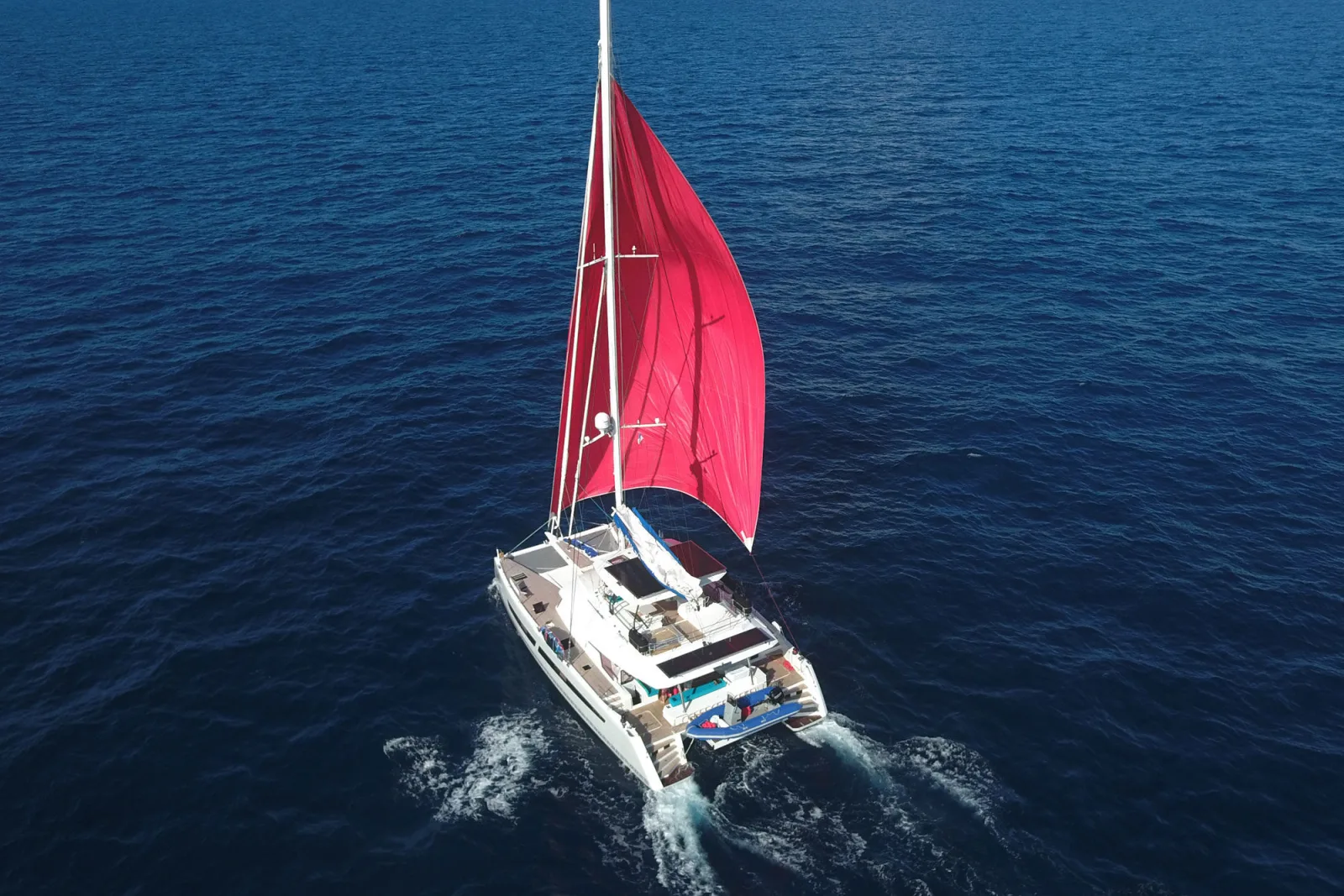
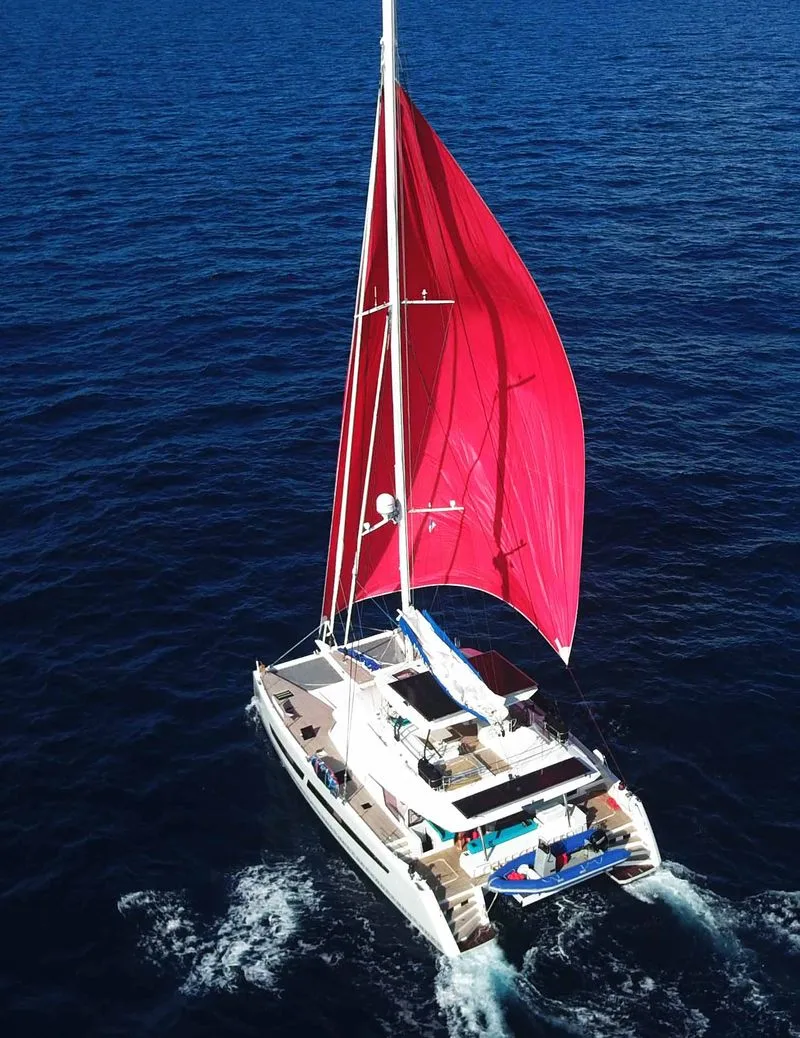
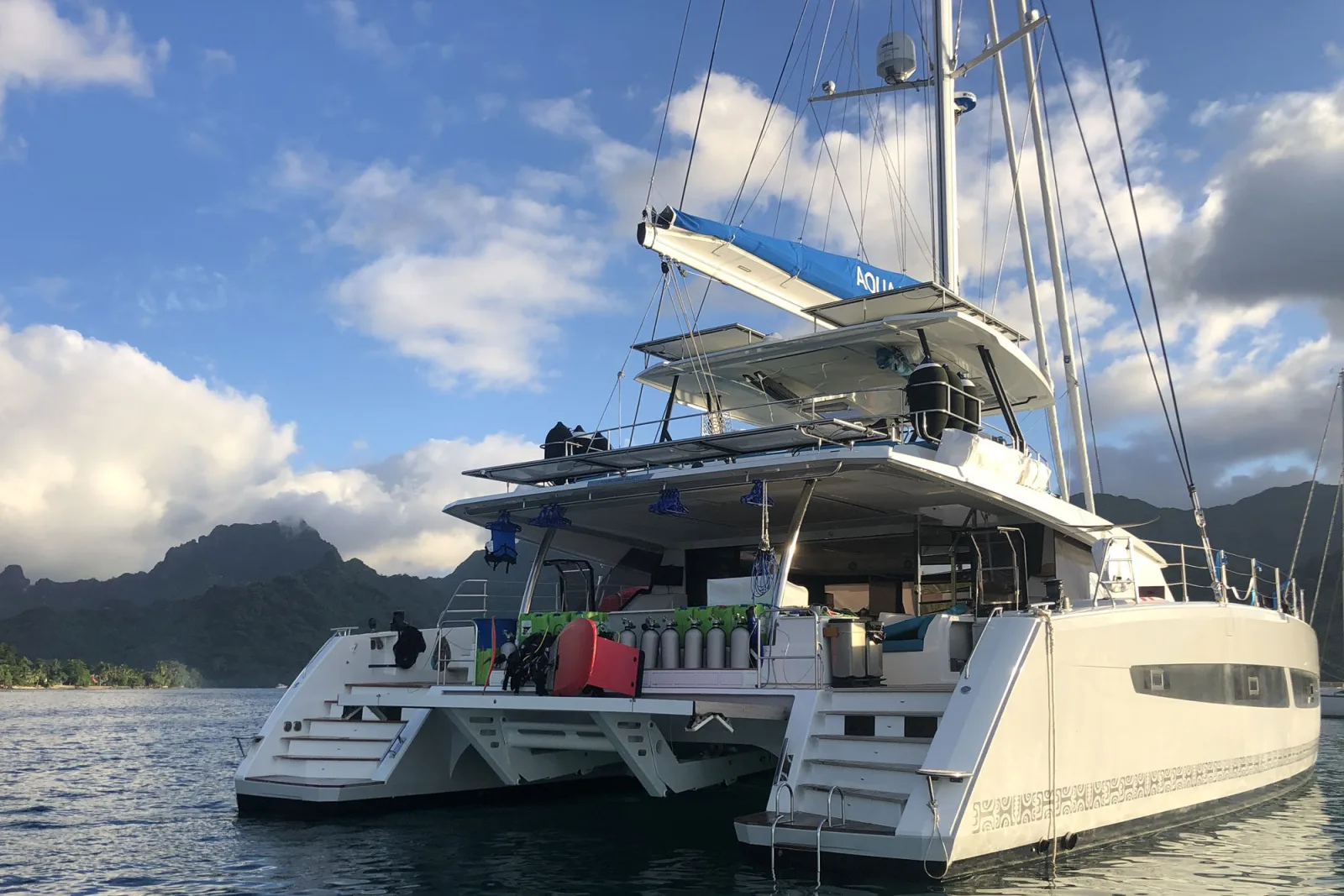
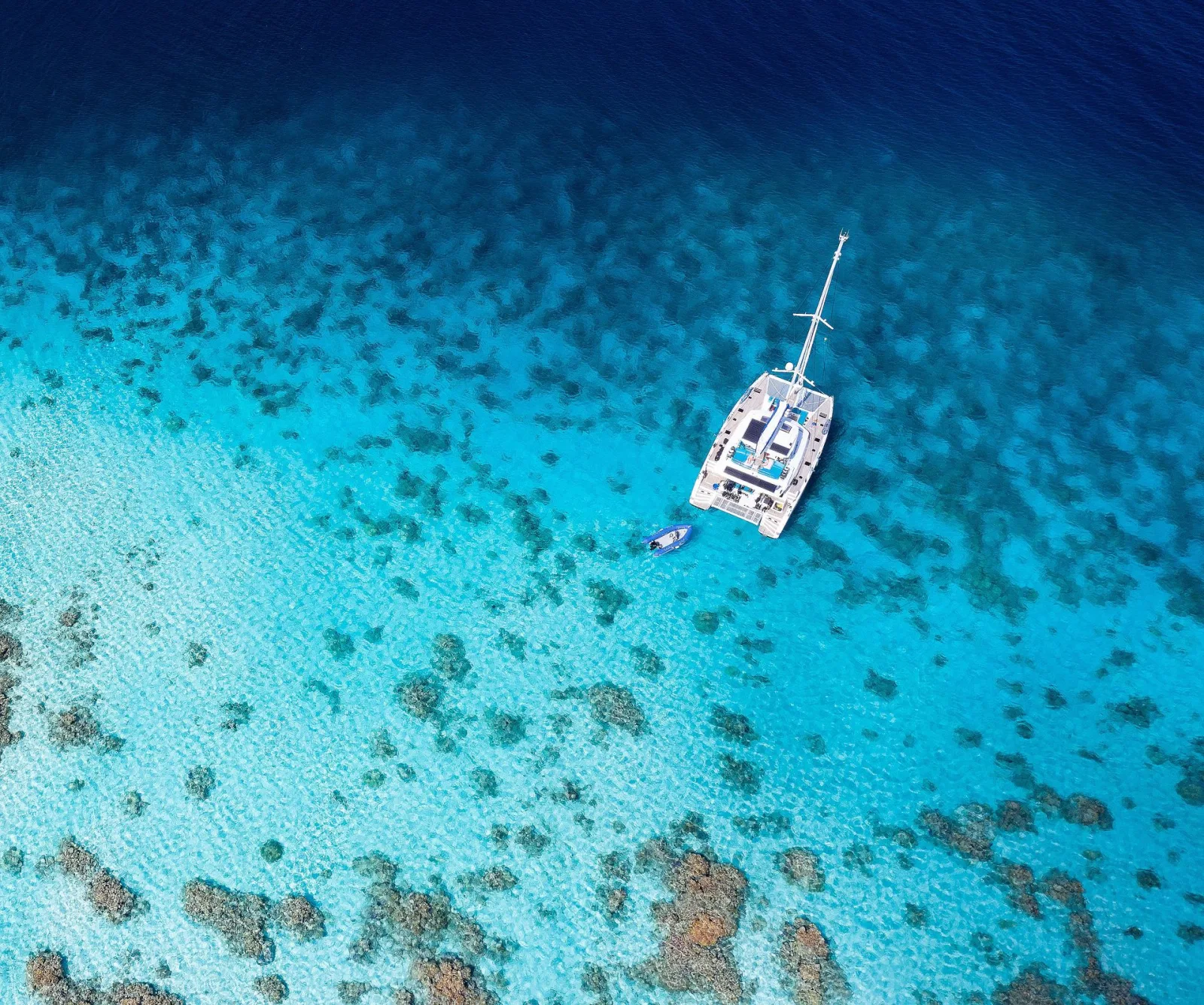
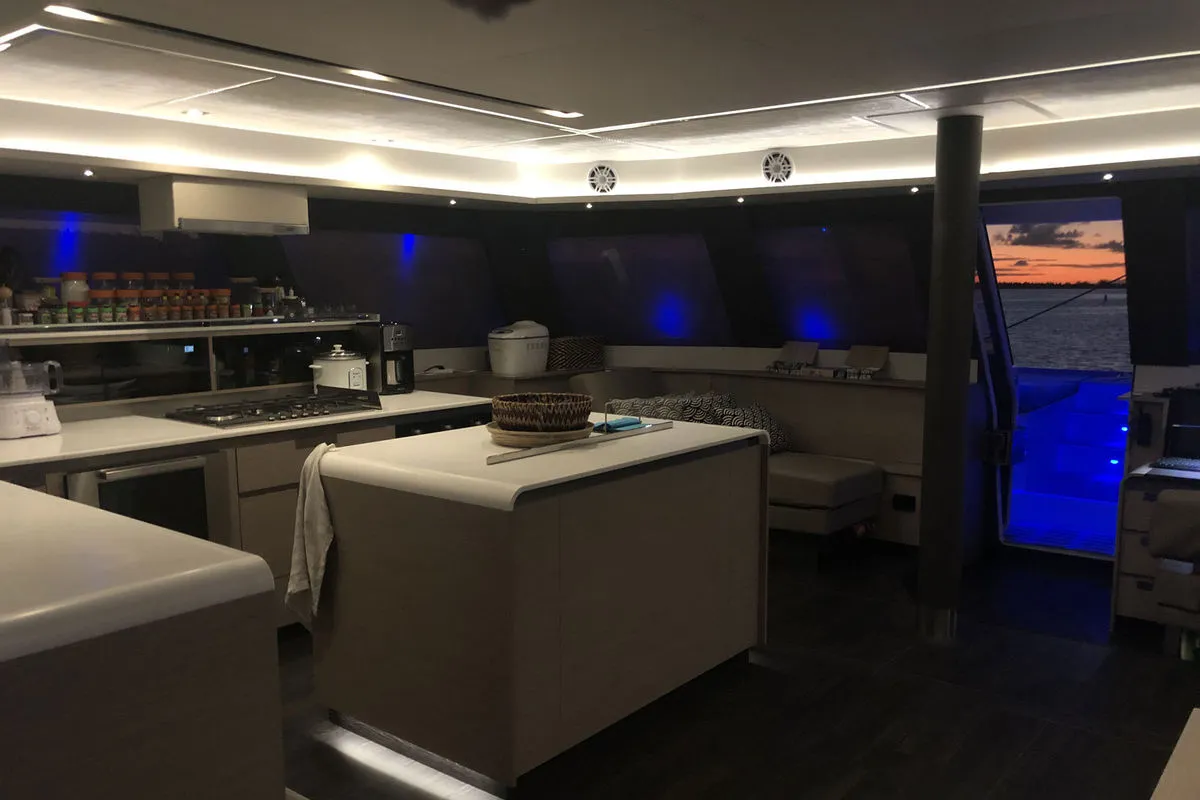
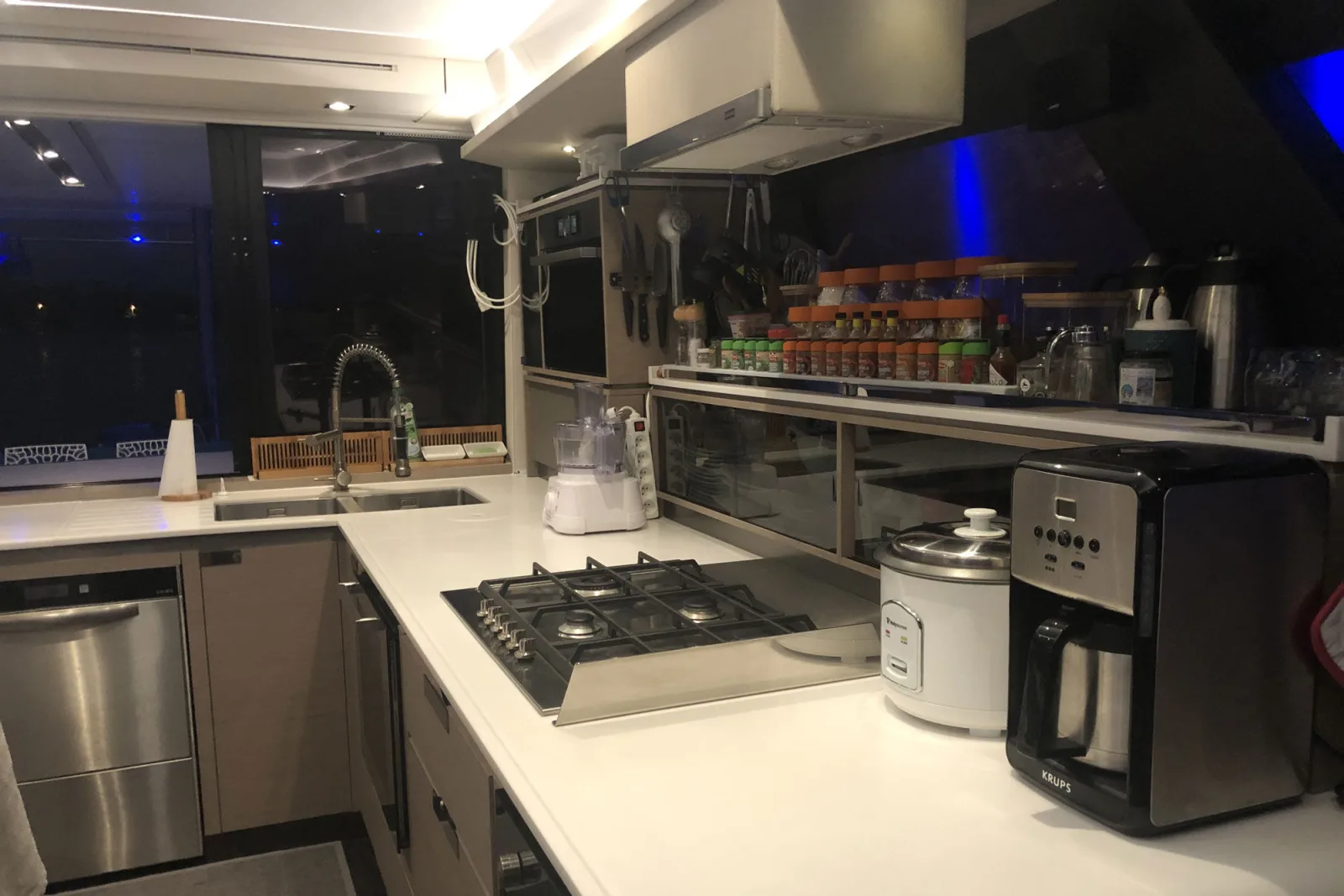
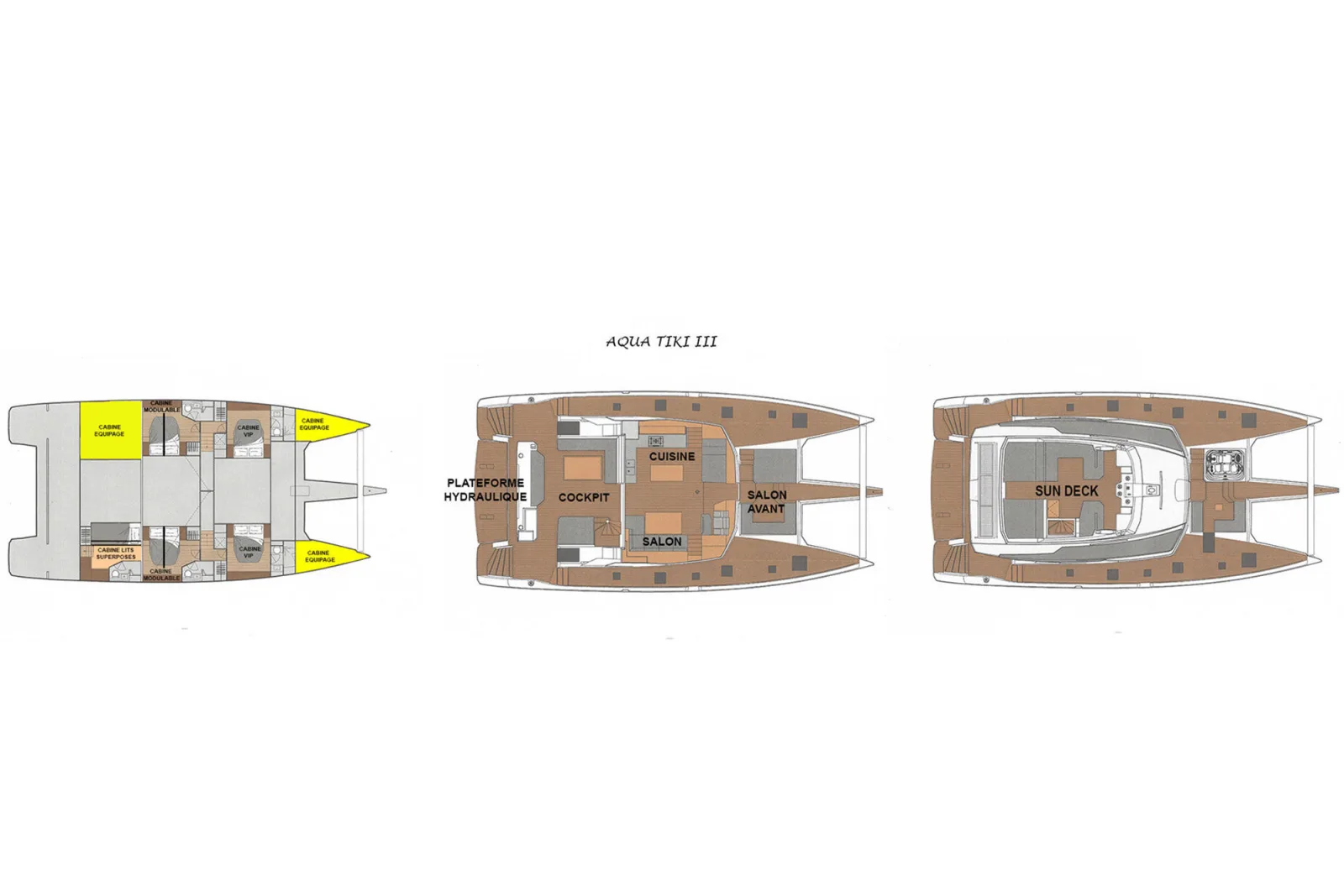
Twenty metres long, nine wide, 230 m² of sail and two 150 hp engines. The saloon, with its video corner and library, opens straight into the cockpit, where the dining table sits under an awning; forward there is a separate lounge and two trampoline nets, and above, a large sun deck with an all-round view of the lagoon. Outside stand a cocktail bar with a fridge and an ice maker, and a plancha grill. A generator and an inverter hold 220 V around the clock, and every cabin has its own socket. Fresh water comes from two 190 l/hour watermakers on top of a tonne of tankage — there is no mains water on the Tuamotu atolls, so this is not luxury but the condition of being self-sufficient.
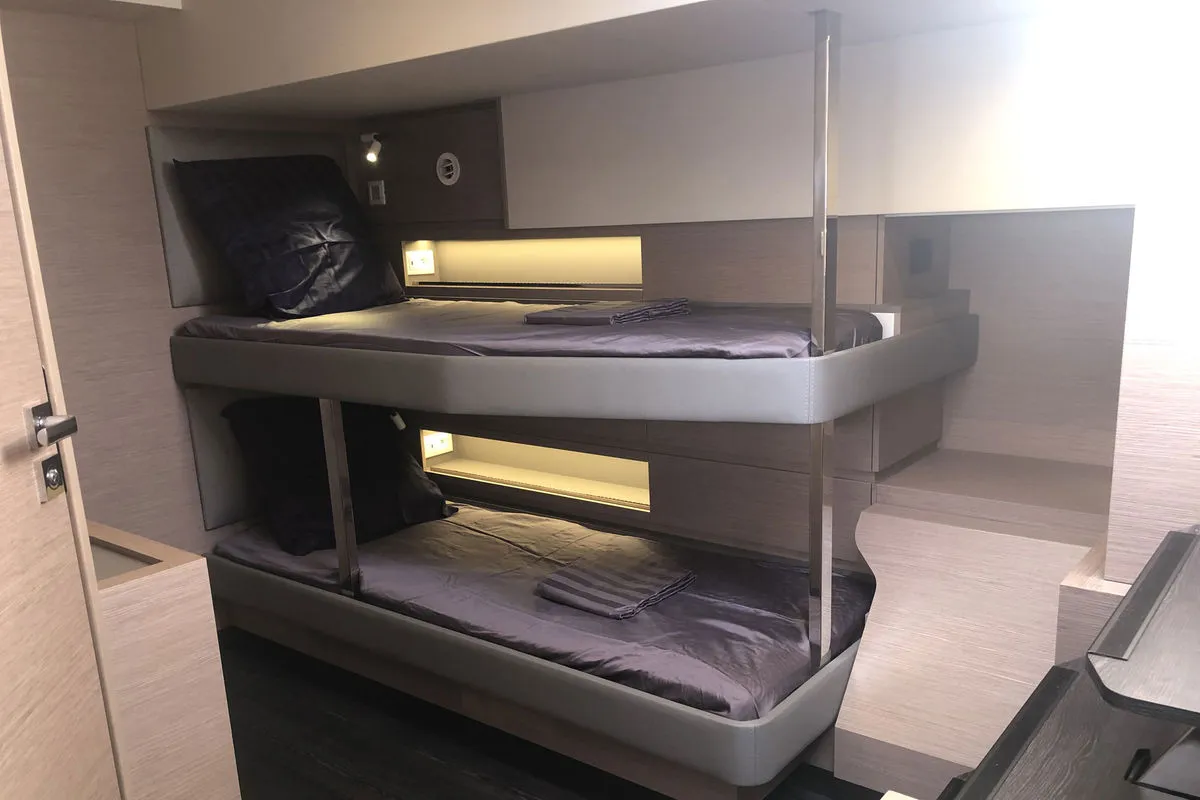
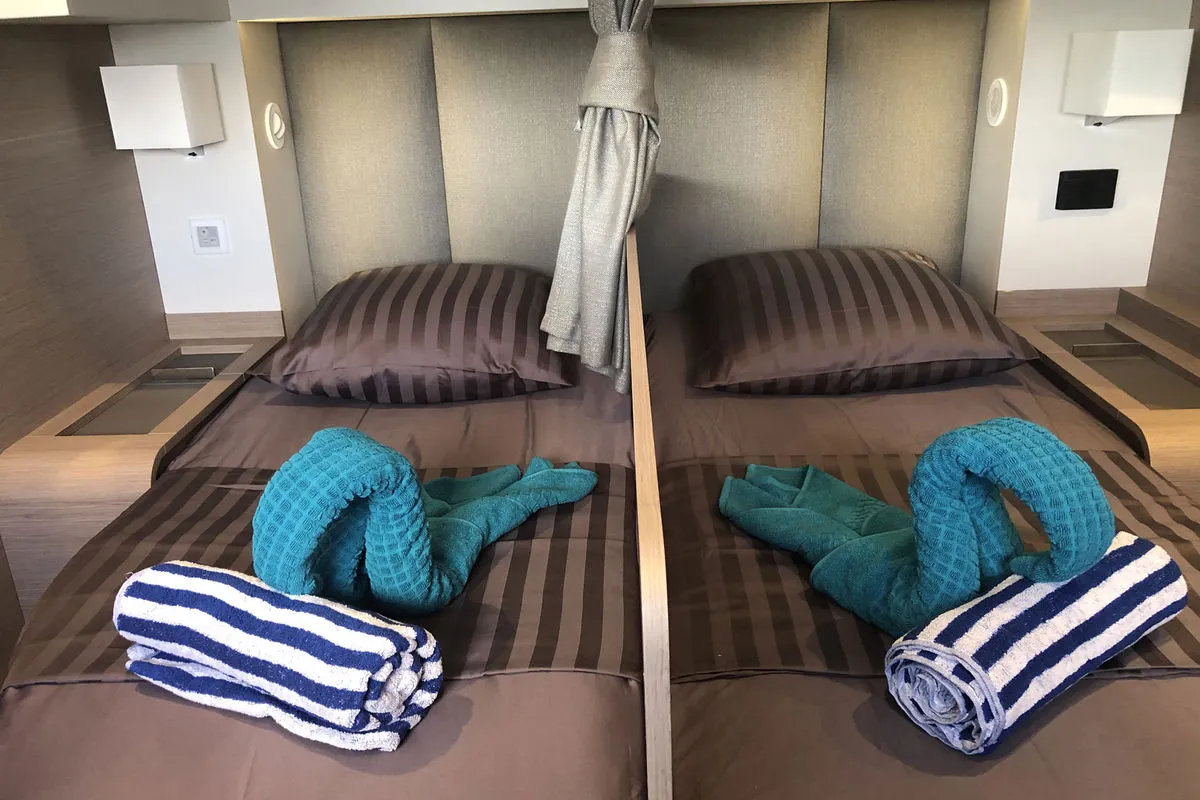
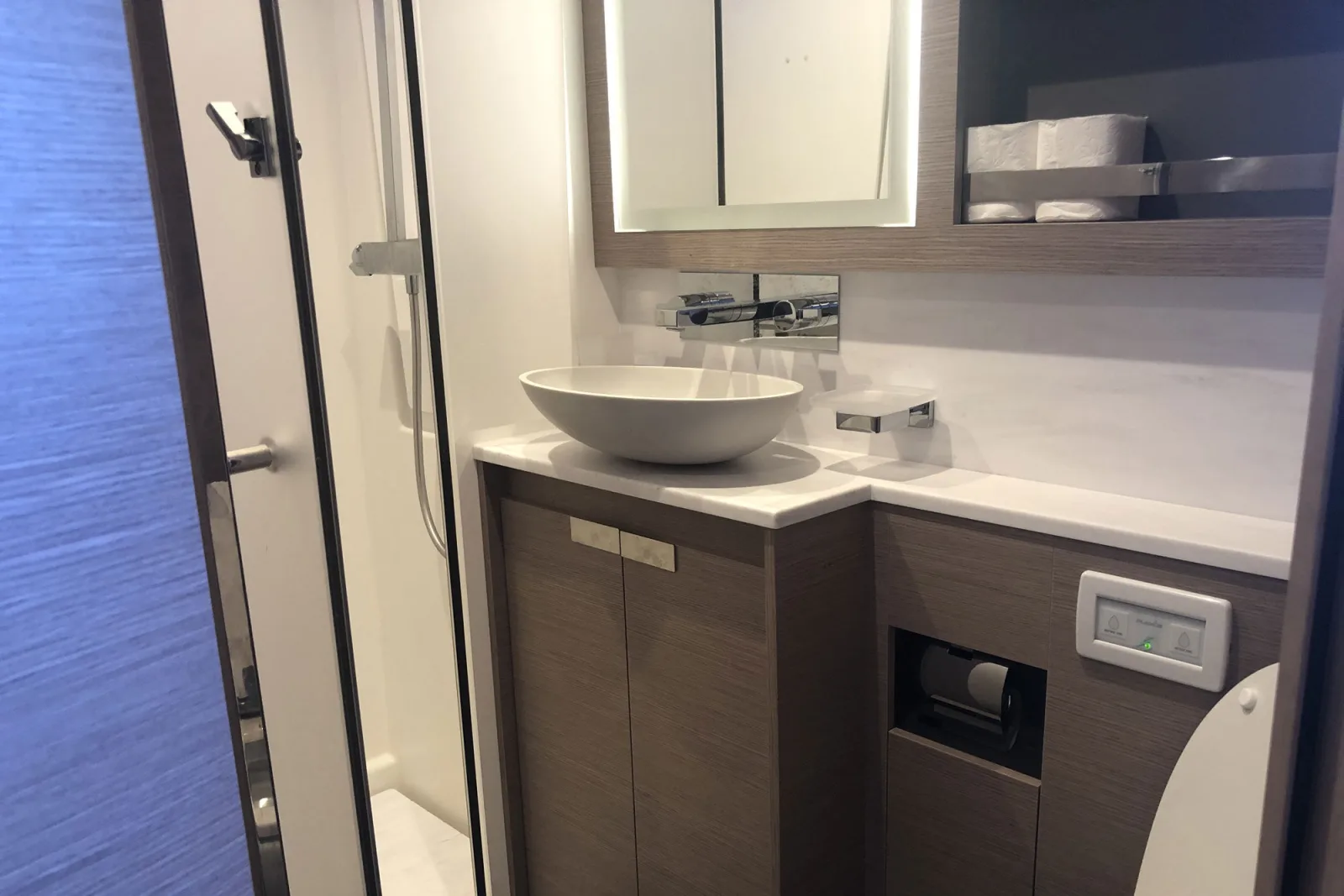
There are five cabins, all with an en-suite bathroom, hot and cold water and an automatic freshwater WC. Two are “modular” — the beds join into a double or split into two singles; one has bunk beds; two are VIP cabins with an island bed, a TV and a DVD player and, uniquely on this boat, a real window onto the water. The air conditioning runs for three hours in the evening — a detail worth knowing rather than a quibble: on an overnight passage the hatches stay shut and the cabins can get warm.
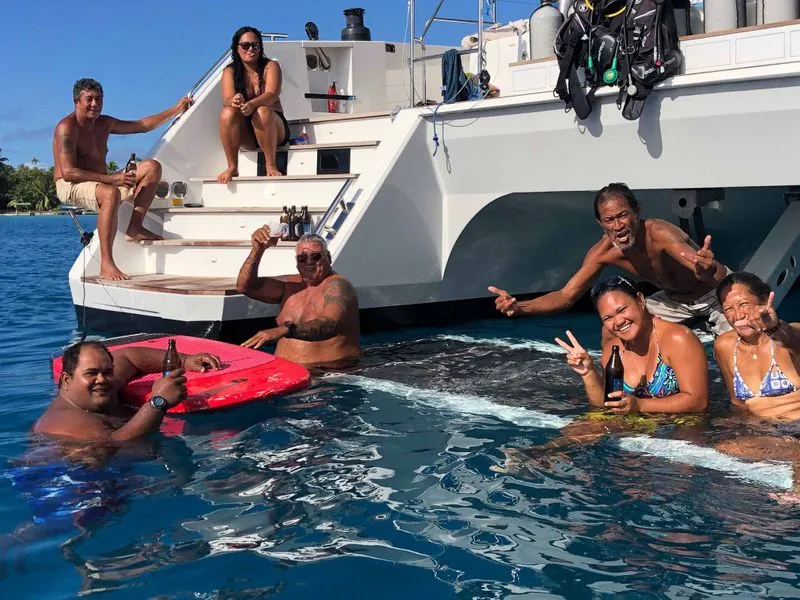
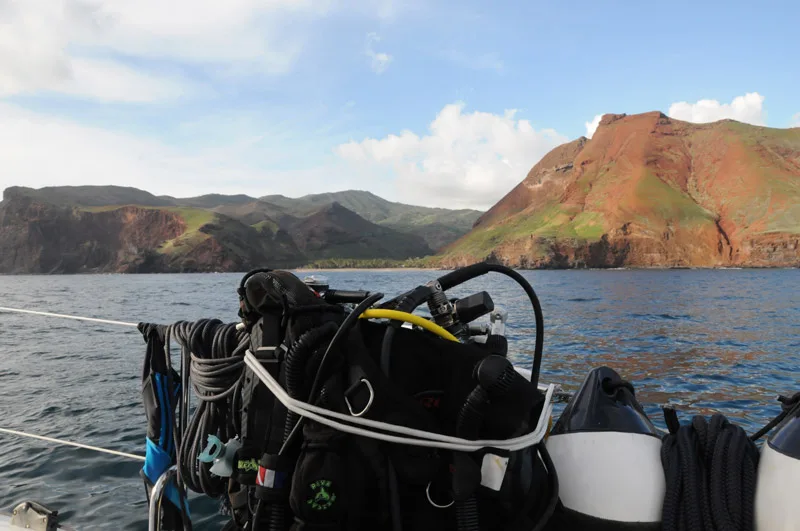
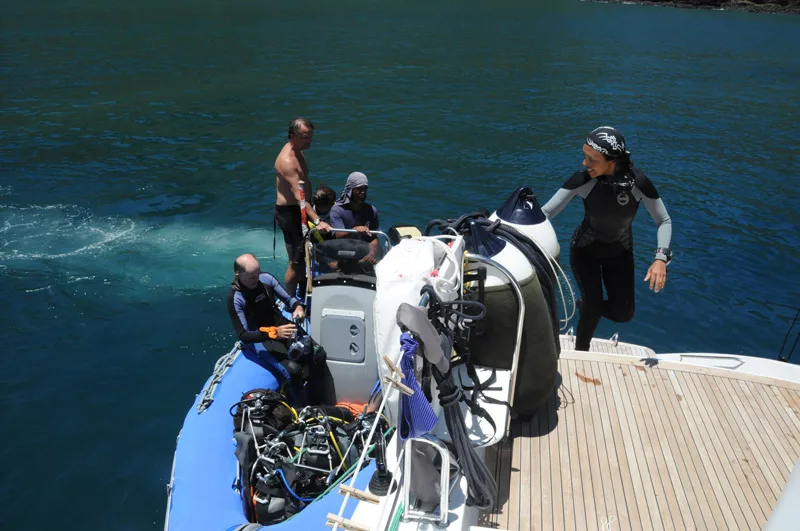
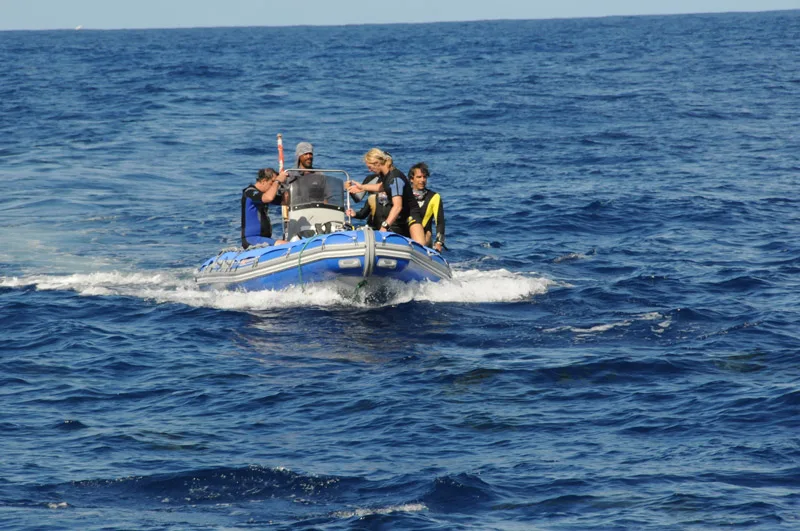
The diving here means passes. The dives are drift dives, the current can be very strong, and the operator says so in plain words. Two dives a day every day except the arrival and departure days, when there is no diving at all. Night dives are not part of the programme. The group is led by an instructor holding the French state BEES diploma, with a second person permanently on the surface watching the bubbles. The water stays between 25 °C in September and 29 °C in March, with no thermocline and consistently excellent visibility. On board there are two 19 m³/hour Bauer compressors, a nitrox filling station and a 100 hp RIB on a hydraulic platform — convenient both for getting into the water and for passing tanks up.
The operator sets the entry bar in writing, in the terms of sale: CMAS level 2 or the equivalent and at least 50 logged dives at boarding. A beginner will be taken on board — there is always an instructor — but level 1 and Open Water divers will not be allowed on some sites because of current and depth, and the instructor decides that on the spot. Dives missed for reasons of certification or weather are not refunded. Bring your certification card, your logbook and a medical certificate of fitness to dive.
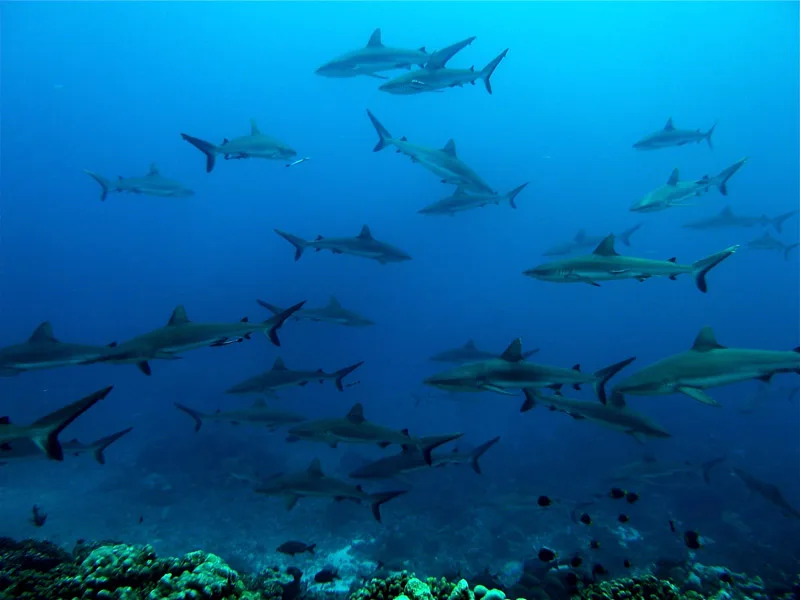
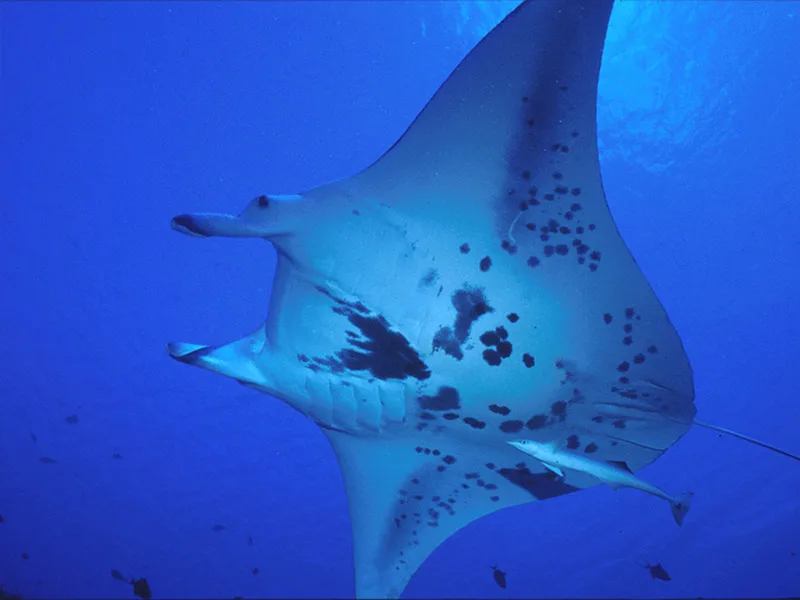
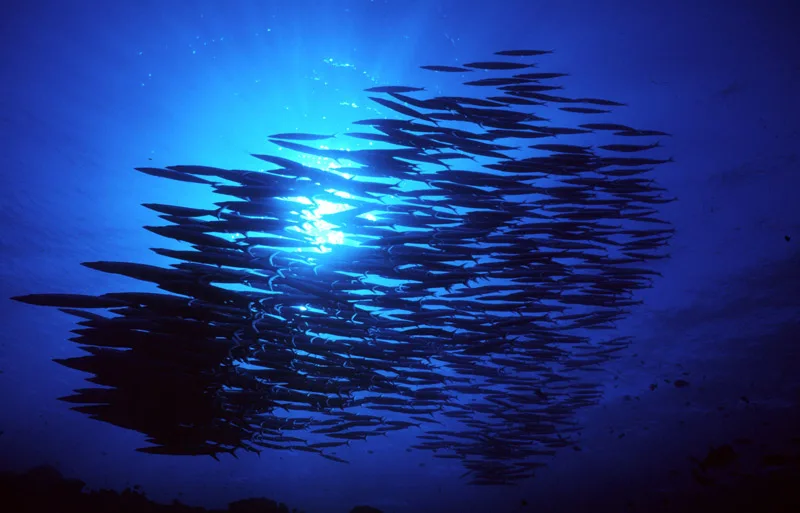
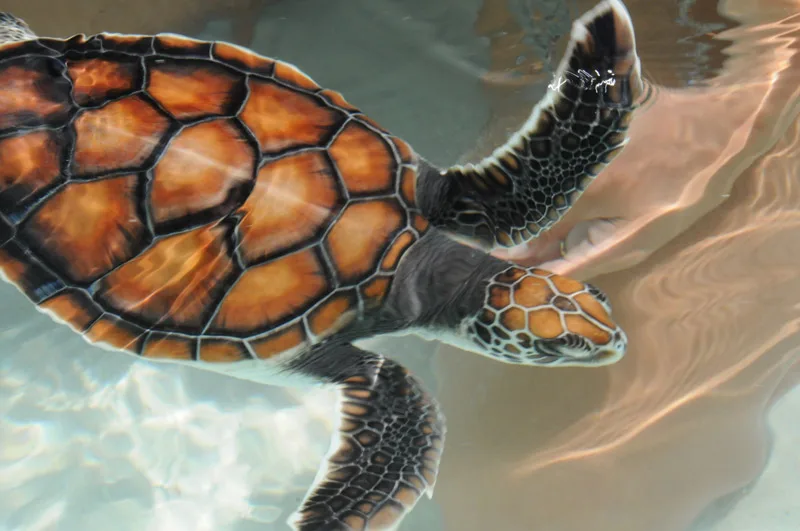
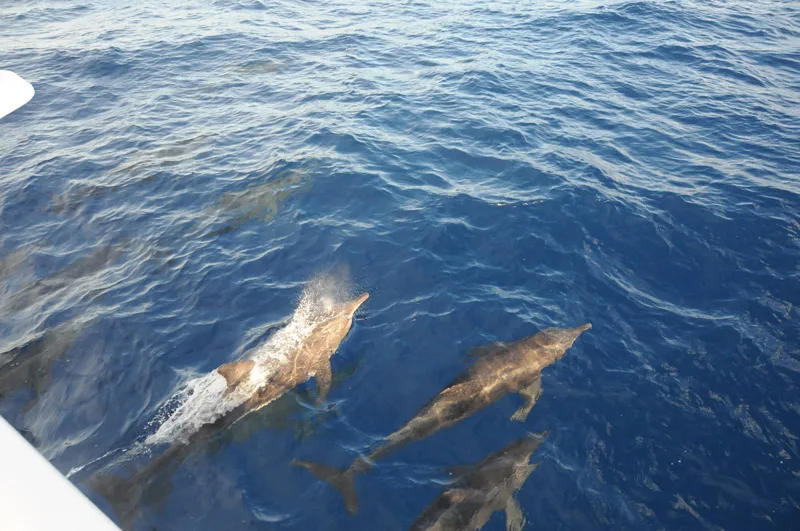
What you see underwater. The Tuamotus are one of the most reliable places in the world for pelagics: blacktip, whitetip reef, grey, nurse and hammerhead sharks, manta and leopard rays, two species of dolphin, melon-headed whales, sailfish, and occasionally whales and whale sharks. Then tuna, several species of trevally, walls of barracuda, turtles, napoleon wrasse, morays, groupers, lionfish and the whole ordinary coral cast. A seasonal story of its own is the grouper spawning in June and July: the operator runs a dedicated itinerary for it at the high-season rate, and places go a year ahead.
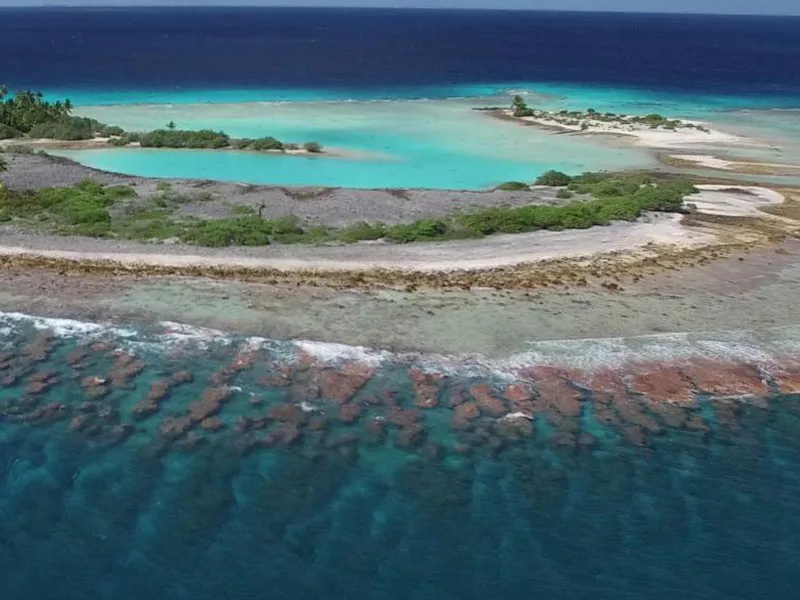
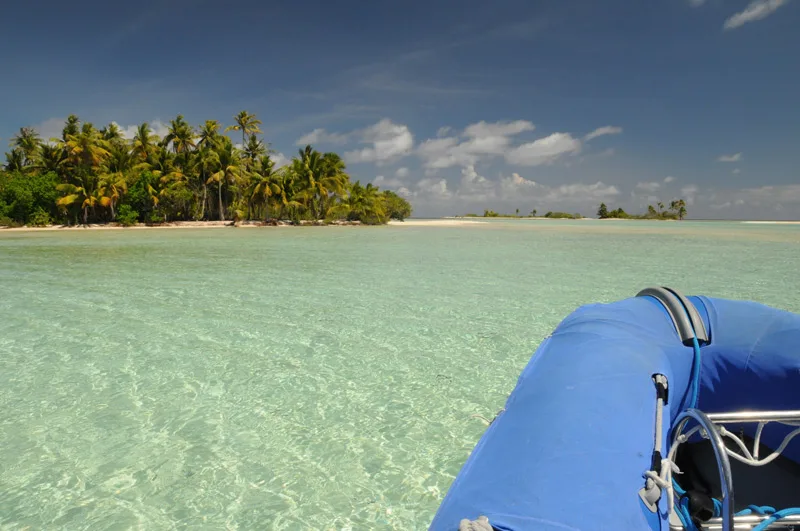
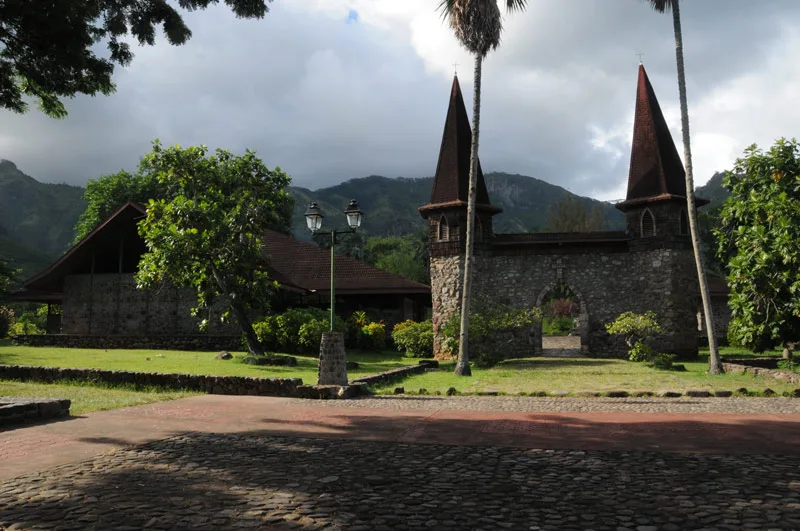
Itineraries are counted from Fakarava. The core one is Northern Tuamotu: the southern Tumakohua pass by the village of Tetamanu, Kauehi atoll, Toau atoll with its narrow Otugi pass, and — depending on the length of the programme — Tahanea and Aratika, then on the way back the vast Garuae pass at the north of Fakarava, over a kilometre wide and the widest in Polynesia. Programmes run from eight to sixteen nights. Beyond that the operator schedules the central Tuamotus starting from Hao, the Marquesas, dedicated grouper-spawning departures and a New Year cruise. The boat does not sail every day: passages are made early in the morning and mostly under sail, and the free days go to the atolls, the shore and the water — the village of Tetamanu with its old coral church, the pink sand on the motus, the pearl farm off Rotoava.
The money is counted by the night. On the 2026 tariff a berth in a standard cabin costs €620 a night in low season and €670 in high season, a VIP cabin is €50 a night more and a non-diver €50 a night less. High season means the grouper spawning, July, August, September, Christmas and New Year. Hence the trip prices: eight nights — €4,960 and €5,360, ten — €6,200 and €6,700, fourteen — €8,680 and €9,380. In 2028 the rate is €640 and €690 a night, in 2029 €660 and €710. A full charter is priced roughly as ten berths with about 15 % off. Payment comes in two parts: 30 % on booking and the remaining 70 % sixty days before departure. Cancelling more than 60 days out costs 30 % of the price, later than that the whole price.
Worth knowing in advance. You get yourself to Fakarava: Air Tahiti flies from Papeete and there are direct flights from Rangiroa. Flight numbers go into the booking form, boarding time is fitted around the plane, and the transfer from the airport to the boat by inflatable is included. Being more than 12 hours late means losing your place with no refund, so personal travel insurance is not a formality here. And one more thing: the terms of sale contain a clause allowing a cruise to be moved, exceptionally, from Aqua Tiki III to Aqua Tiki II and back — a different boat with different cabins. The operator publishes no compulsory on-board fees at all: no port dues, no park fees, no tourist tax.
No mark-up
You pay the rate the operator publishes. The only thing added on top is the actual payment processing cost — no fee of ours.
We run the booking
Correspondence with the operator, holding your places, the contract, confirmation and all paperwork sit on our side. Nothing for you to arrange yourself.
Pay by card
We send you a Stripe invoice — pay by card, in your own currency, from anywhere in the world. The transfer to the operator is handled on our side.
Support in your language
We help you pick the cabin and dates, answer questions on the route and gear, and stay reachable until you are home — in English, in your time zone.
We quote the exact amount when confirming the booking: it covers the operator's rate plus the actual payment processing cost. No hidden charges.
Yacht Specifications
Length
20 m
Beam
9 m
Material
fibreglass
Year Built
2019
Capacity
10 guests
Cabins
5
Crew
4 members
Speed
8 knots cruising, 11 knots top
Engine
2 × 150 hp plus 230 m² of sail
Bathrooms
5
Tender
100 hp RIB on a hydraulic platform
Water capacity
over 1000 l
Fuel capacity
over 1000 l
Freshwater maker
two watermakers, 190 l per hour each
On Board
Diving on board
The operator requires CMAS level 2 or the equivalent and at least 50 logged dives at boarding — that is written into the terms of sale, not into the marketing. A diver should be in good physical shape, comfortable in current and stay with the guide at all times. A beginner will be taken on board, since there is always an instructor, but level 1 and Open Water divers will not be allowed on some sites because of current and depth; the instructor decides on the spot, and dives that did not happen are not refunded. The water runs from 25 °C in September to 29 °C in March with no thermocline and excellent visibility; for the winter months bring your own 3 mm full suit — the shorties on board are only enough in summer. Nitrox 50 for decompression stops costs €50 per 7 l / 200 bar tank, paid on board: the nearest chamber is in Papeete, and the operator recommends the option strongly. Bring your certification card, logbook and a medical certificate.
Food on board
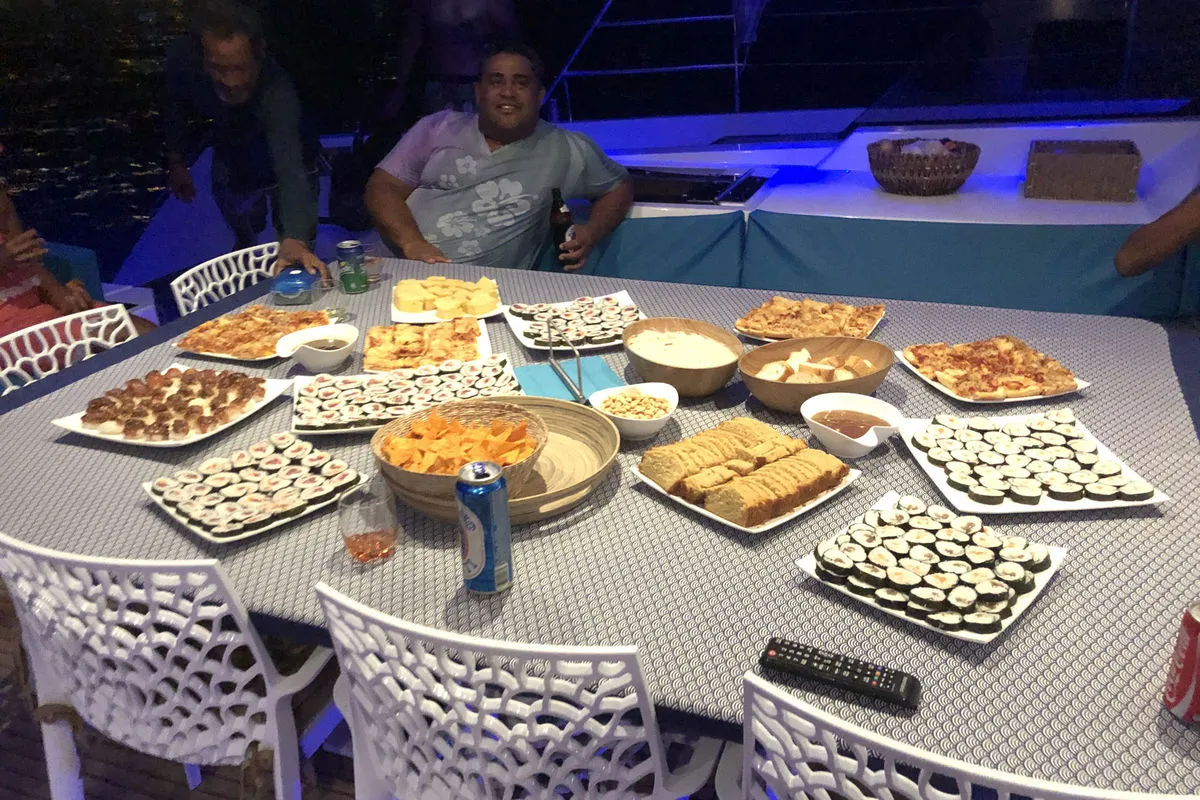
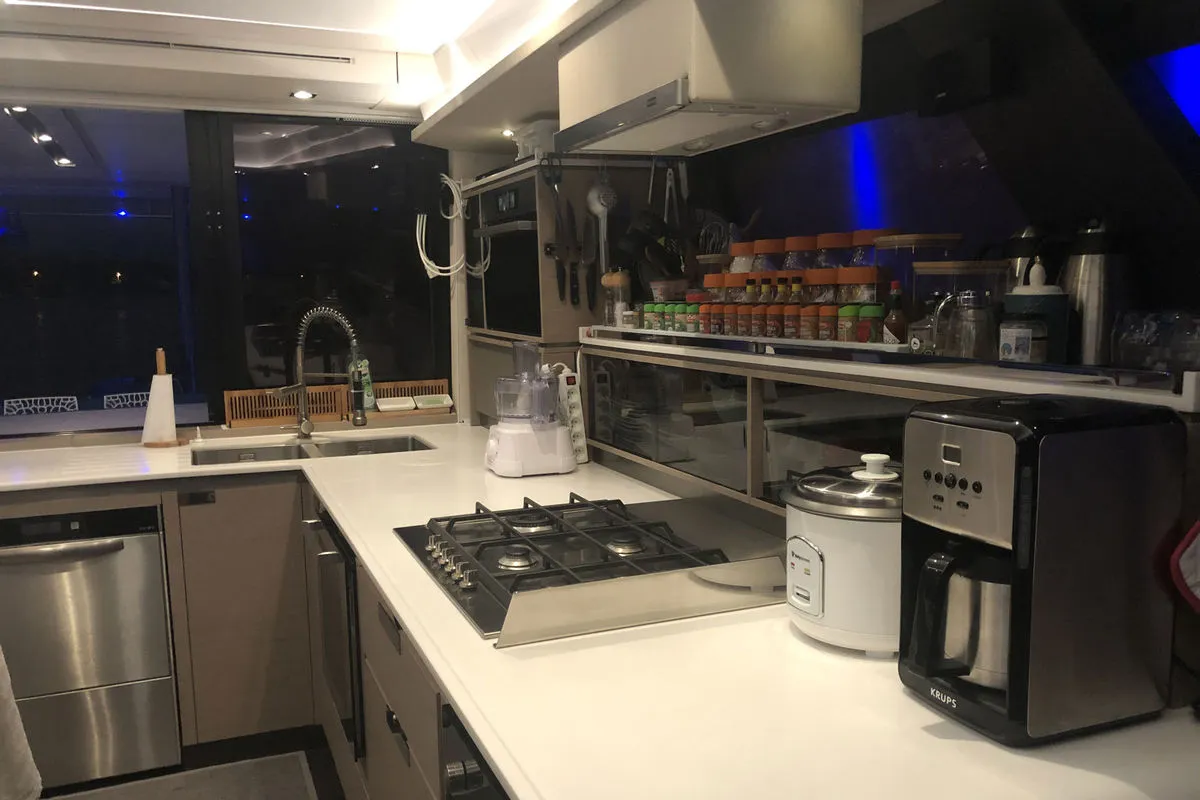
Supply in the Tuamotus is a story in itself: fresh fruit and vegetables are scarce on the atolls, so the menu is built around the fish caught along the way and around rice. Baking, bread and yoghurt are made on board. The hostess runs both the galley and the house. The operator asks for allergies and special diets at booking and suggests keeping such requests to religious requirements and genuine intolerances.
Navigation and safety
Cabins
· 2 cabins
Double bed or two singles
Beds: 1 double bed or 2 singles
Two identical cabins, one in each hull, marked on the boat's plan as modular. The beds join into a single double or split into two singles, and that is settled at booking. Private bathroom with a shower, hot and cold water and an automatic freshwater WC. The air conditioning runs three hours in the evening, there is a Bluetooth radio and a 220 V socket around the clock. The cabin has no windows — daylight comes through the hatch. On the 2026 tariff a berth costs €620 a night in low season and €670 in high: €4,960 and €5,360 for eight nights, €8,680 and €9,380 for fourteen.
· 1 cabin
Bunk beds
Beds: 1 bunk bed, 2 single berths
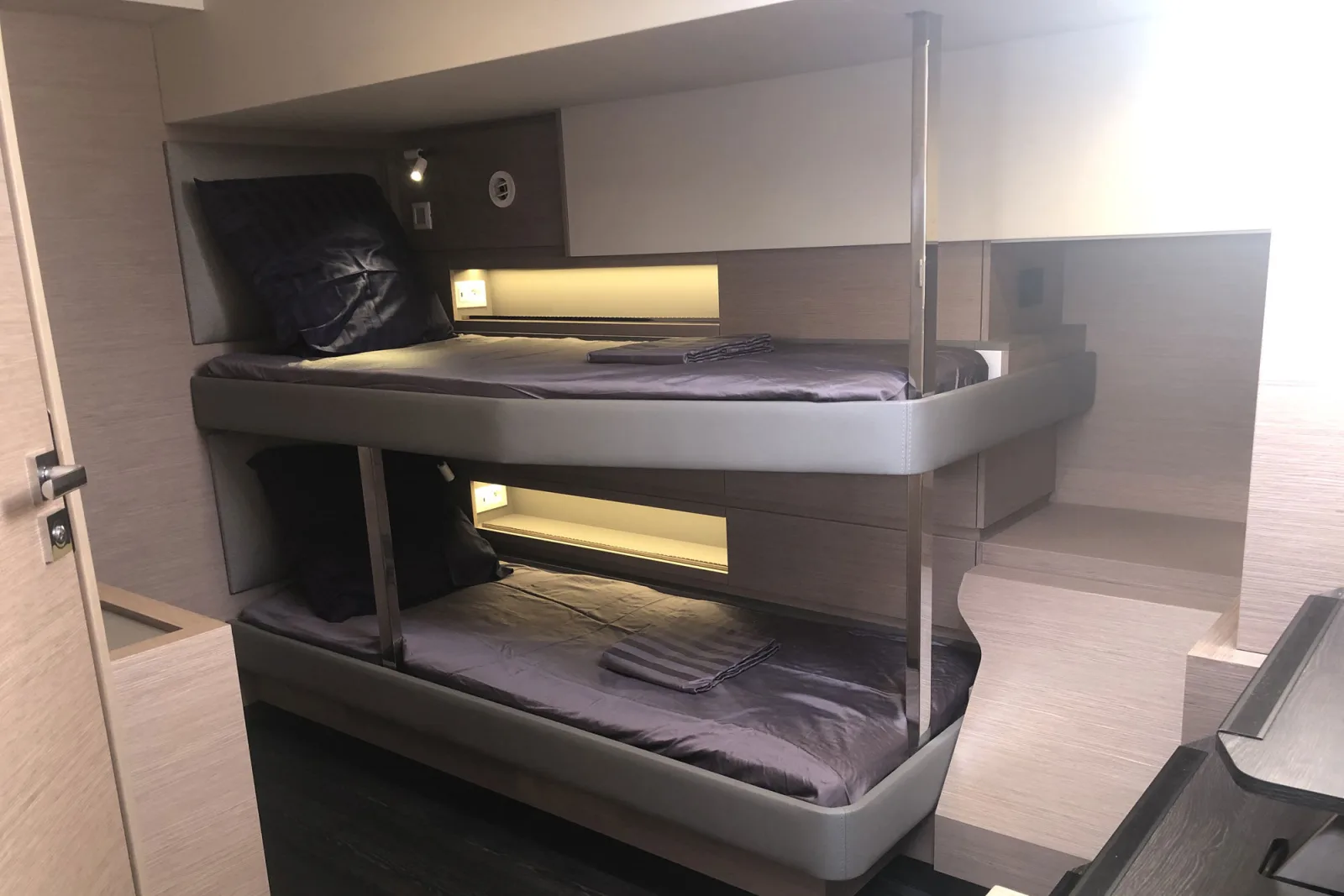
The only cabin of its kind on board, set forward in the hull. Two single beds one above the other, a private bathroom with a shower and hot water, an automatic freshwater WC, air conditioning for three hours in the evening and a radio with a player jack. No windows. This is the cabin the operator offers to solo guests, matching a same-sex cabin mate — and on the rare departures sold by the berth, the one place still free is usually here. The price is the same as the modular cabin.
· 2 cabins
Island double bed
Beds: 1 double bed with access on three sides
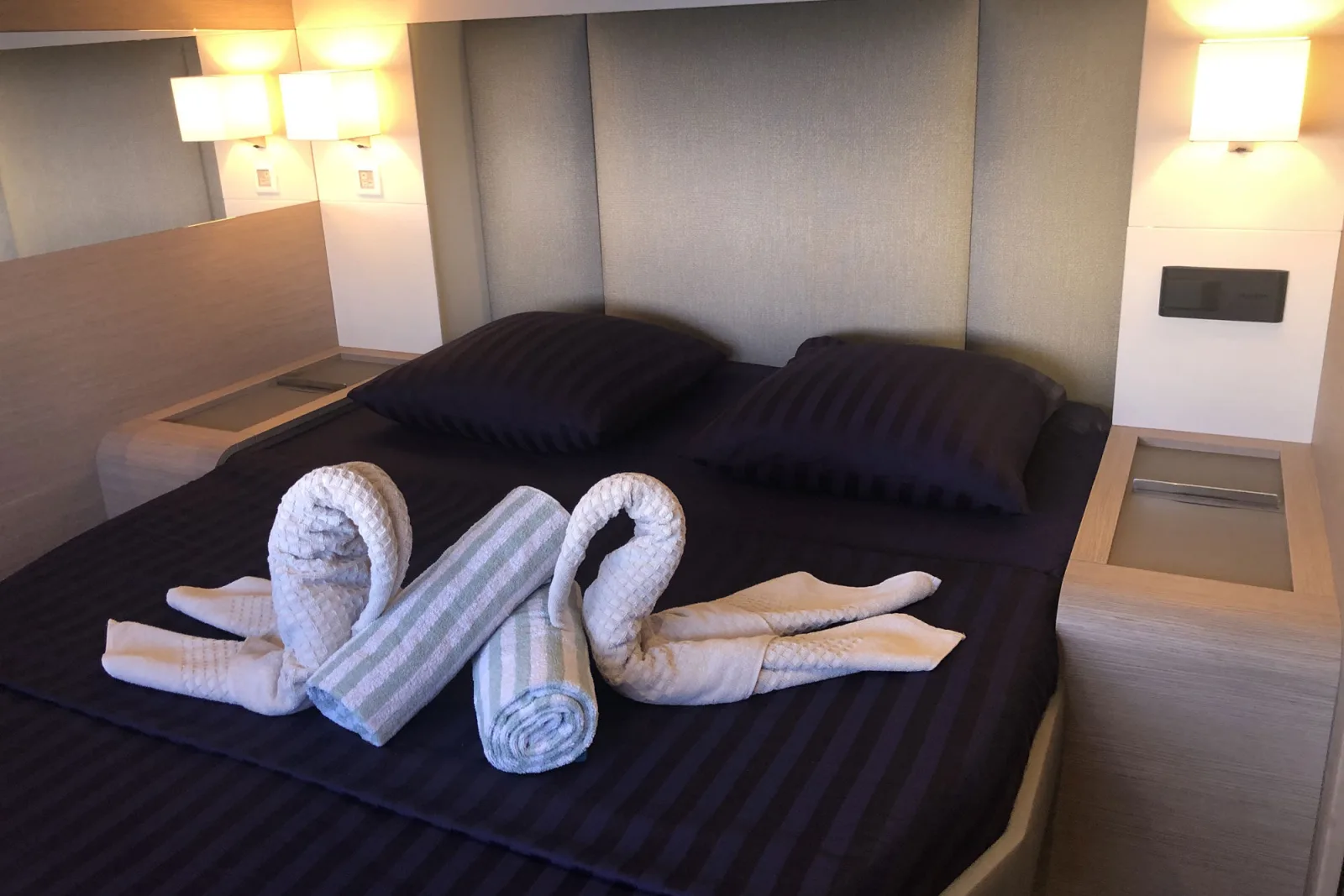
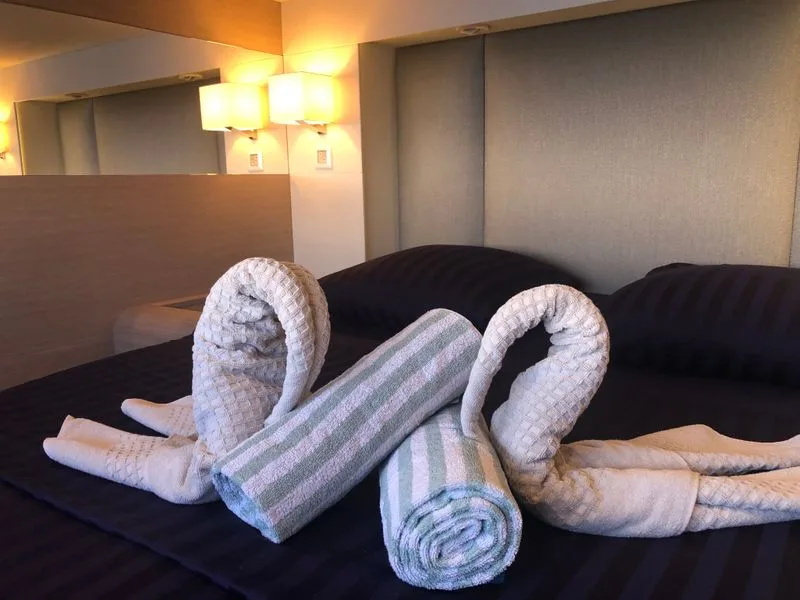
The best cabins on the boat and the only ones with a real window: the bed stands as an island with access on three sides, and the window looks straight onto the water. TV with DVD, Bluetooth radio, private bathroom with hot and cold water, automatic freshwater WC, air conditioning for three hours in the evening. There are two of them, one in each hull. They cost €50 a night more than a modular cabin: €5,360 and €5,760 for eight nights on the 2026 tariff, €9,520 and €10,080 for fourteen.
Schedule & Pricing
Northern Tuamotu: departures sold by the berth
Aqua Tiki III sails on full charter almost all year, so what is open here is not a calendar but a handful of dates: departures the operator or a partner dive club puts together itself and sells by the berth. The itinerary is the same on all of them — a loop through the northern Tuamotus, boarding and disembarking at Fakarava: the southern Tumakohua pass by the village of Tetamanu, Kauehi atoll, Toau atoll with its narrow Otugi pass, Tahanea and Aratika depending on the length of the programme, and on the way back the vast Garuae pass at the north of Fakarava, over a kilometre wide and the widest in Polynesia. The shape of the day is simple: an early morning passage under sail, then an eco mooring right at the dive site, two dives and time ashore. The boat does not sail every day, so it is not a race. The skipper announces the exact plan — it depends on the wind, the current in the passes and the make-up of the group. Free dates for a full charter run through almost the whole calendar to 2030; they are matched to the group on request.
December 2026
1 departureAugust 2028
1 departurePrices and availability can change. Get in touch and we'll confirm current dates and pricing.
Included in Price
Not Included
Optional extras
Extras are shown per person and are paid on board.
from 6210 EUR / 9 nights
Estimated wait time — 24 hours
Double bed or two singles
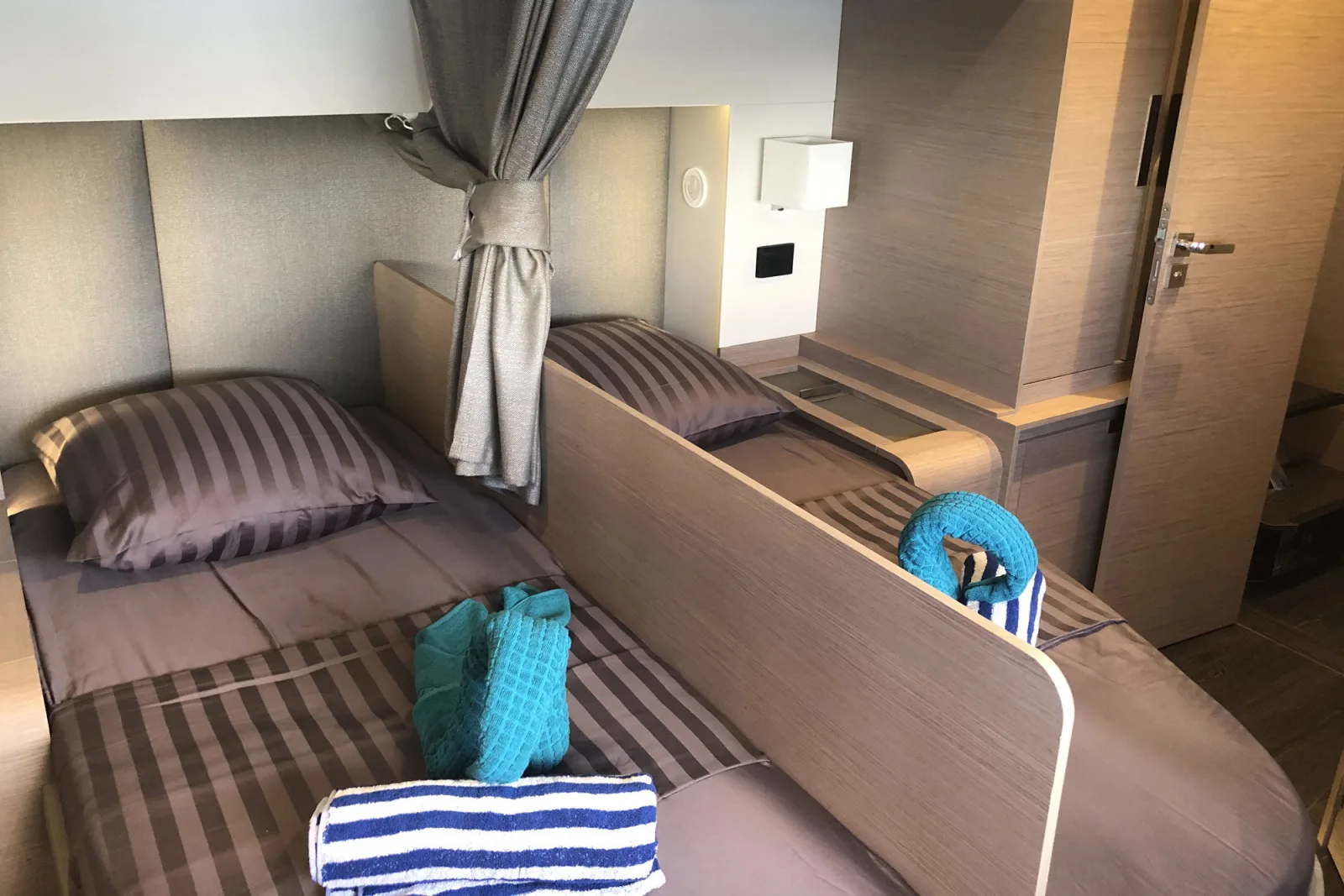
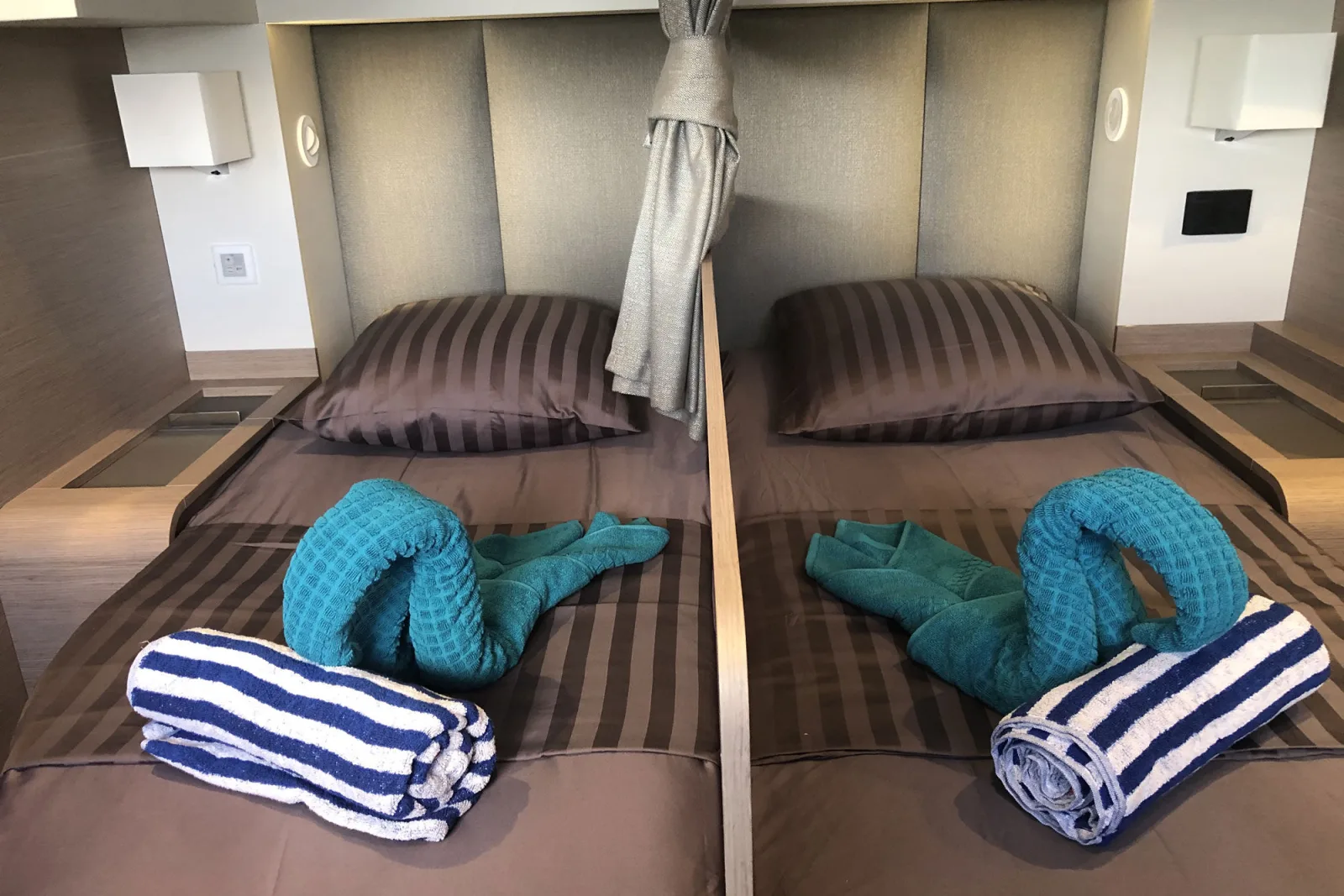
Two identical cabins, one in each hull, marked on the boat's plan as modular. The beds join into a single double or split into two singles, and that is settled at booking. Private bathroom with a shower, hot and cold water and an automatic freshwater WC. The air conditioning runs three hours in the evening, there is a Bluetooth radio and a 220 V socket around the clock. The cabin has no windows — daylight comes through the hatch. On the 2026 tariff a berth costs €620 a night in low season and €670 in high: €4,960 and €5,360 for eight nights, €8,680 and €9,380 for fourteen.
- Deck
- in the hulls of the catamaran
- Beds
- 1 double bed or 2 singles
- Windows
- No windows
- cabins of this type
- 2
Bunk beds
The only cabin of its kind on board, set forward in the hull. Two single beds one above the other, a private bathroom with a shower and hot water, an automatic freshwater WC, air conditioning for three hours in the evening and a radio with a player jack. No windows. This is the cabin the operator offers to solo guests, matching a same-sex cabin mate — and on the rare departures sold by the berth, the one place still free is usually here. The price is the same as the modular cabin.
- Deck
- forward in the hull
- Beds
- 1 bunk bed, 2 single berths
- Windows
- No windows
- cabins of this type
- 1
Island double bed
The best cabins on the boat and the only ones with a real window: the bed stands as an island with access on three sides, and the window looks straight onto the water. TV with DVD, Bluetooth radio, private bathroom with hot and cold water, automatic freshwater WC, air conditioning for three hours in the evening. There are two of them, one in each hull. They cost €50 a night more than a modular cabin: €5,360 and €5,760 for eight nights on the 2026 tariff, €9,520 and €10,080 for fourteen.
- Deck
- in the hulls of the catamaran
- Beds
- 1 double bed with access on three sides
- Windows
- Window with a sea view
- cabins of this type
- 2
Aqua Tiki III
from 6210 EUR