Mexico — Socorro and Guadalupe
 1 / 1
1 / 1
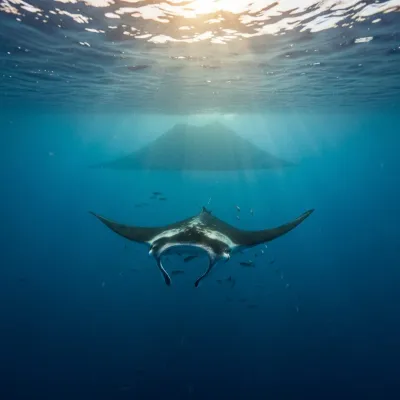
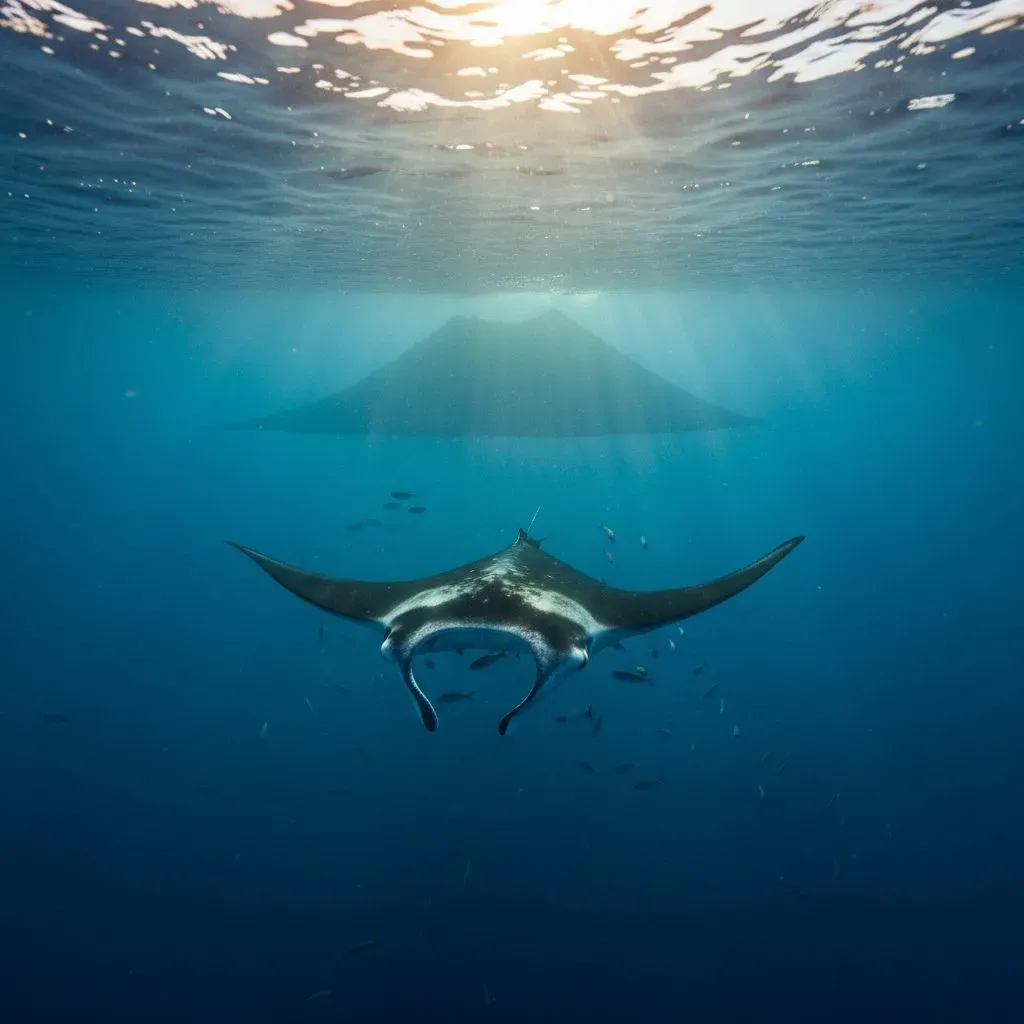
The Socorro Islands (Revillagigedo Archipelago) are one of the few places on the planet where giant oceanic mantas allow divers to approach closely. Hammerhead shark schools patrol here, humpback whales pass through, and whale sharks appear in season. The archipelago is located 400 km offshore and accessible only by liveaboards from Cabo San Lucas — 24 hours across the open ocean.
Guadalupe Island off the Pacific coast of Baja California is the world capital of cage diving with great white sharks. Visibility here reaches 40 meters, and sharks approach within arm’s reach. In the Sea of Cortez (Gulf of California), which Cousteau called “the world’s aquarium,” divers encounter sea lions, schools of mobula rays, whale sharks, and incredible reef life diversity.
The Yucatan Peninsula offers cenotes: thousands of underwater caves with crystal-clear freshwater, stalactites, and haloclines. The Dos Ojos, Sac Actun, and Cenote Angelita systems attract cave divers from around the world. Warm water, mystical light, and unique geology make cenotes one of the most unusual diving destinations on the planet.
What You'll See
Conditions
Season
November–May (Socorro), June–October (whale sharks in La Paz)
Visibility
15–40 meters
Water Temperature
21–28°C
Level
Advanced
Duration
7–10 nights
Min. Dives
30
Useful Information
Best Season
November–May (Socorro), June–October (whale sharks in La Paz)
Visa
Electronic authorization (SAE) for Russian citizens
How to Get There
Flights via Mexico City or direct charters. To Socorro — from Cabo San Lucas (24 hours by liveaboard).
Climate
Tropical to desert, 25–35°C
Currency
Mexican Peso (MXN), USD accepted
Time Zone
UTC-6 to UTC-8