St. Helena is one of the most remote and mysterious places on the planet. Getting there is no easy feat, which is precisely what makes it so compelling. We set out to experience untouched nature, dive in crystal-clear waters among shipwrecks, and see with our own eyes the home where Napoleon spent his final years. The journey was full of unexpected discoveries — from rugged cliffs and tropical valleys to warm conversations with the locals. Here are our impressions and a detailed account of our adventure.
In January 2025 we finally made our long-planned trip to one of the most remote corners of the world — the island of St. Helena. The island is best known as the place where Napoleon Bonaparte spent his last years. Until 2019, the only way to reach it was by mail ship, which called just 14 times a year. The opening of the airport changed all that, and after years of anticipation we finally made it to the island.
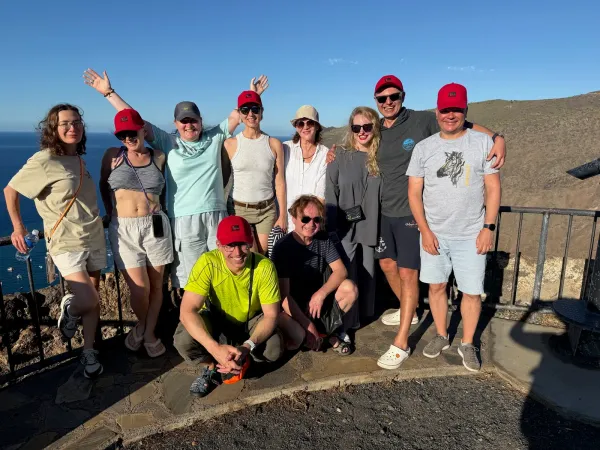
Before departure we had to obtain a visa through the island's local authorities. The application process turned out to be fairly involved: insurance documents, booking confirmations, and evacuation paperwork were all required. The island uses its own currency — the St. Helena pound (on par with the British pound) — and we had been told that other currencies and bank cards were barely accepted anywhere. In practice, exchange was possible not only at the airport but also at a local bank, though with long queues.
The only way to reach the island is on flights from Johannesburg or Cape Town. We chose the Johannesburg route, with a brief stopover there. Only one airline operates the service, and just a handful of pilots are cleared to land at St. Helena's airport, since the runway is extremely short and demands exceptional skill.
Our first flight was cancelled due to bad weather, so we spent the day exploring Johannesburg. The second day brought another cancellation — we actually took off, but after an hour and a half in the air the plane turned back because of poor visibility over the island. The airline fortunately put us up in a comfortable hotel with full board.
On the third day we finally got airborne, and after five hours — including a refuelling stop in Namibia — we arrived on St. Helena.

The landing was thrilling: nothing but ocean in every direction, and then suddenly a tiny patch of land — our destination. At the airport we exchanged money at the small bureau de change and headed for the island's capital, Jamestown. Along the way the scenery was striking in its contrasts: arid landscapes reminiscent of Mexico's Sonora giving way to tropical forest with pine trees crowning the hilltops.
Jamestown turned out to be a tiny but wonderfully charming town with beautifully preserved colonial architecture. We stayed in a hotel housed in an 18th-century building that had been converted into a guesthouse.
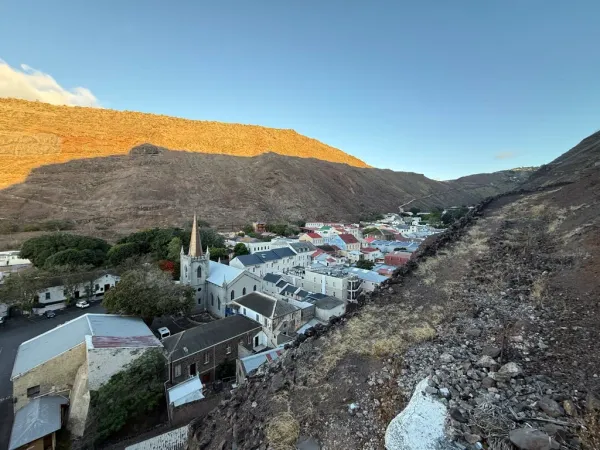
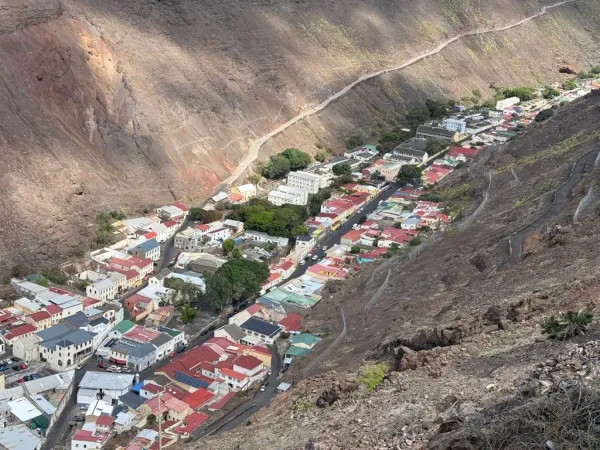
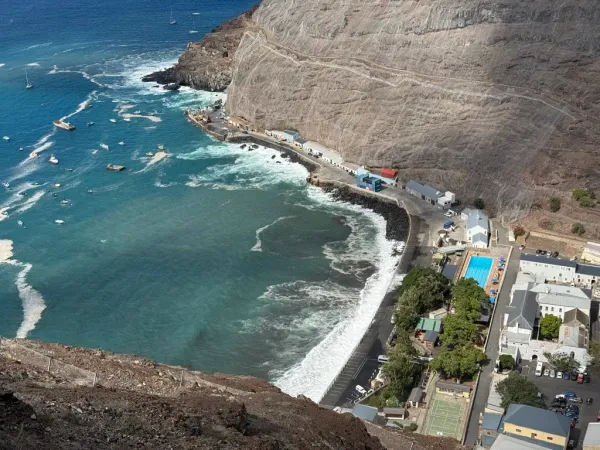
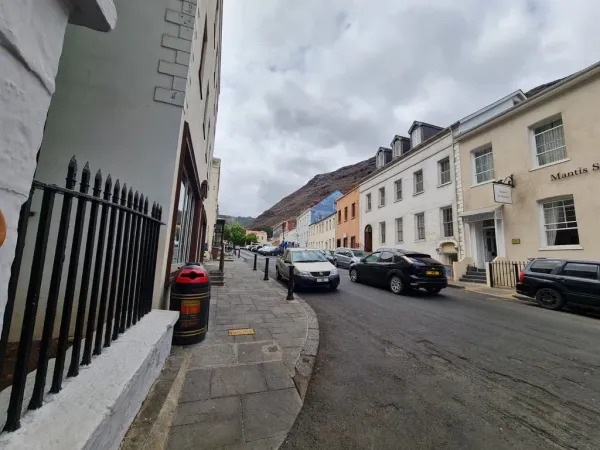
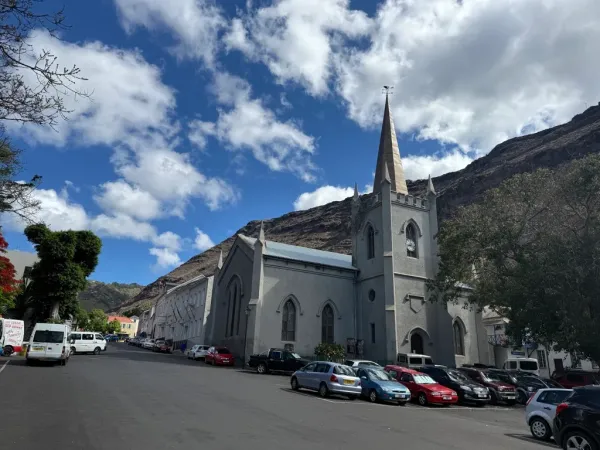
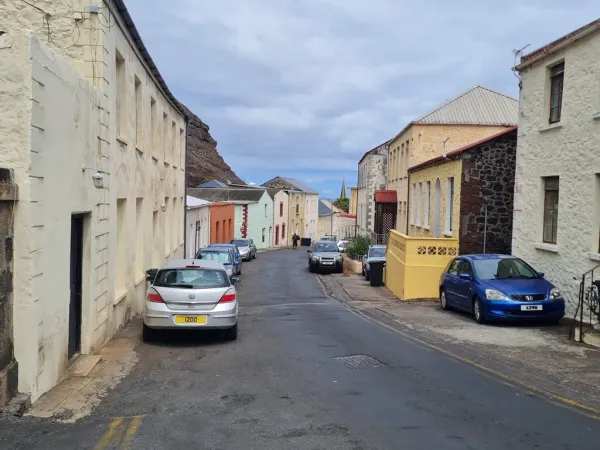
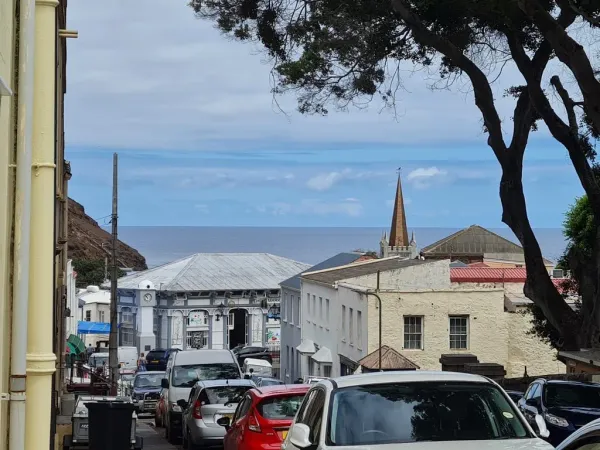
The islanders are descendants of settlers from all over the world. We were struck by how everyone spoke excellent English while their appearance reminded us of Malaysians or Indonesians — something we found genuinely surprising. White residents were few: mostly tourists or people who had relocated from South Africa.
Life on the island moves at an unhurried pace. In the evenings the townspeople gathered along the waterfront for street festivals with grilled fish, dancing, and music. Sometimes everyone would wait for a cruise ship to arrive, though in practice the passengers rarely came ashore because of the difficulties involved in landing.
Diving on St. Helena was one of the highlights of the trip. The island sits in the open ocean, which means the water is crystal clear and the dives are extraordinarily rich. The logistics were straightforward: all dive sites are close to shore and we reached them by small inflatable. The rocky coastline drops steeply, so depth begins right at the shoreline. Average dive depth was 20–30 metres.
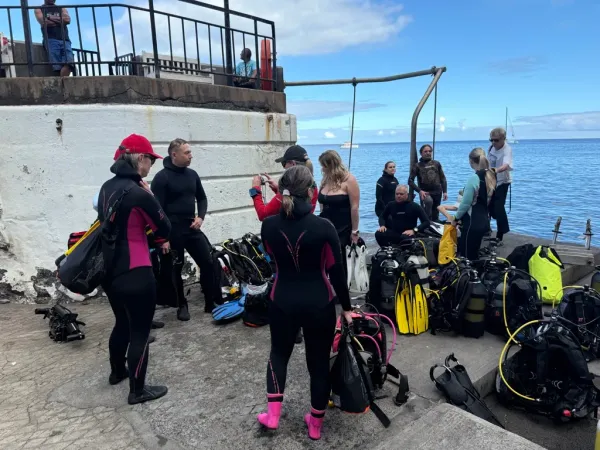
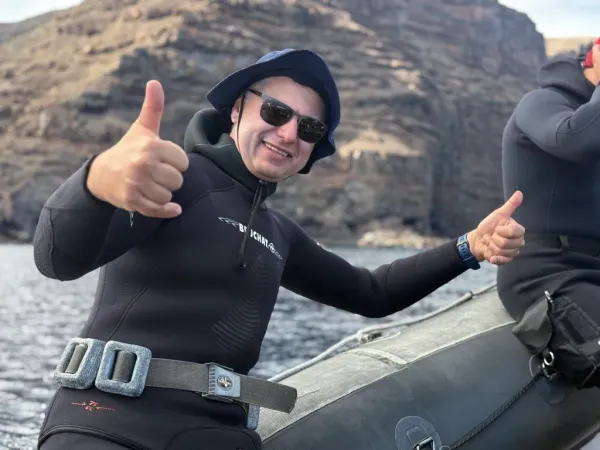
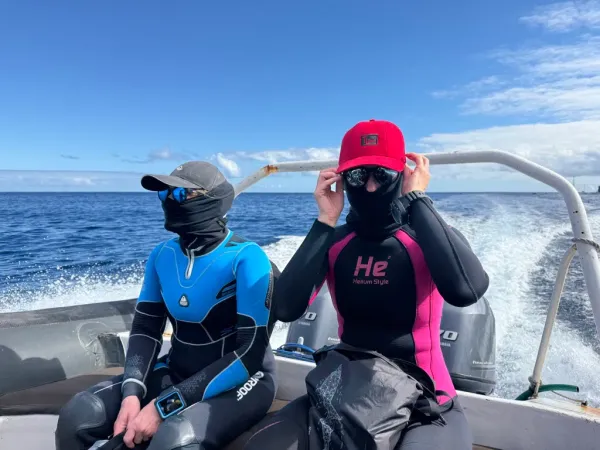
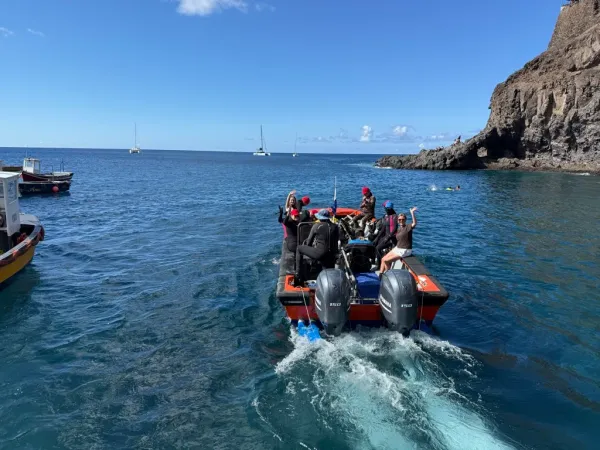
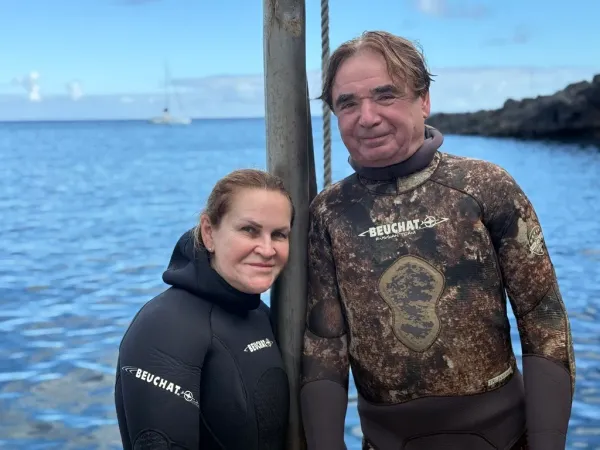
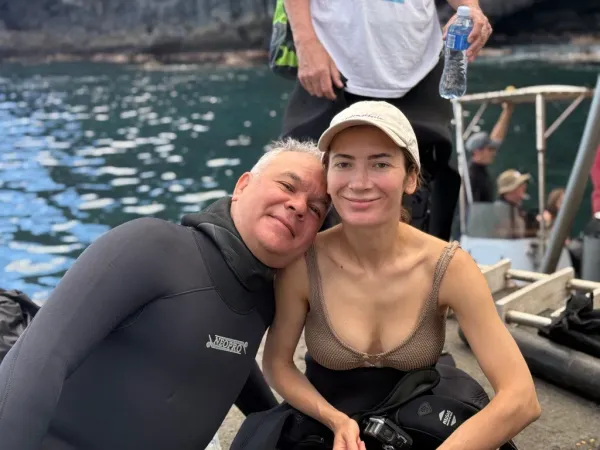
Almost all dives take place on the island's leeward side, which guarantees good visibility and calm water — the wind in this region is steady for most of the year. In January, however, the wind direction can shift. We were slightly unlucky: on our last day the wind changed and visibility dropped. But on the other days the water was astonishingly clear, and combined with the dramatic underwater rock formations the scenery was like nothing else.
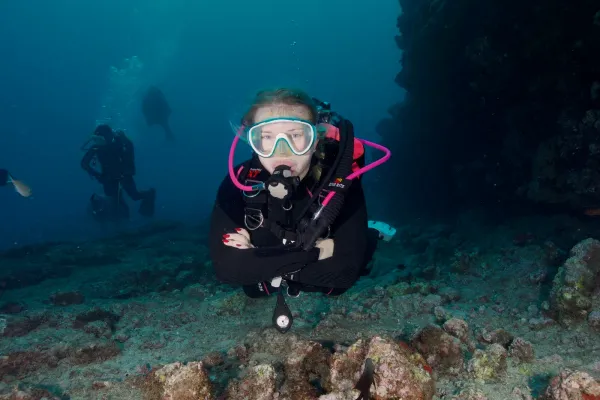
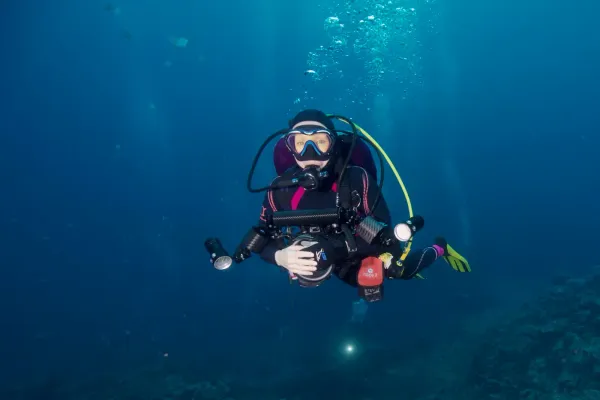
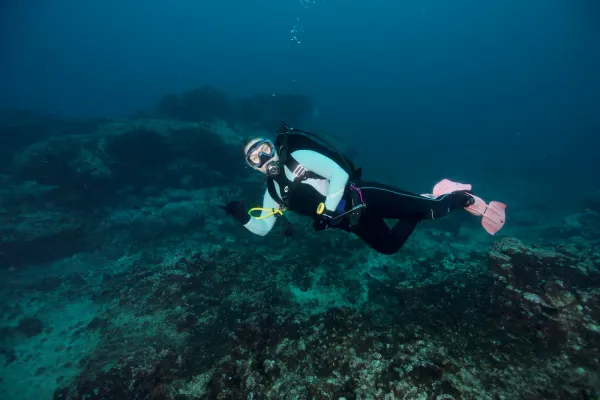
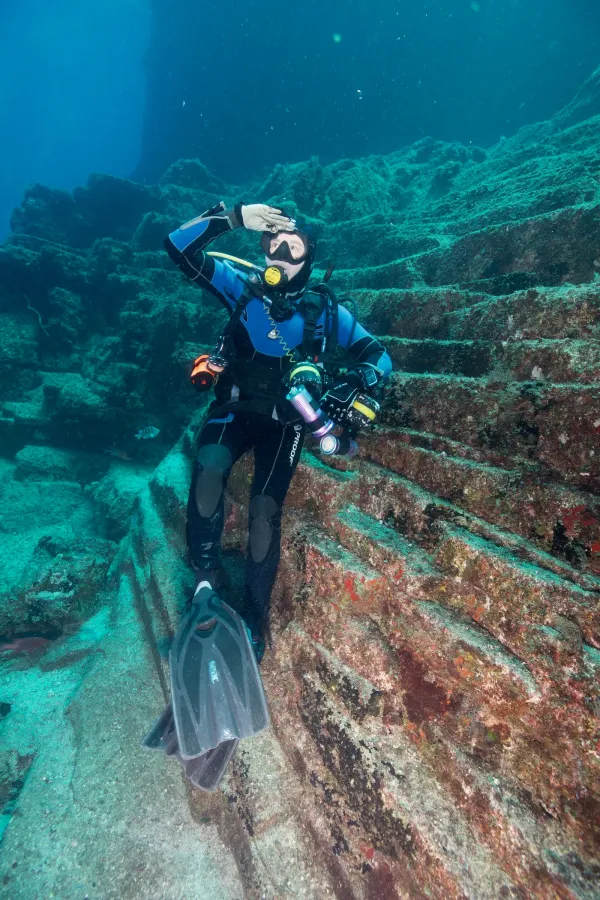
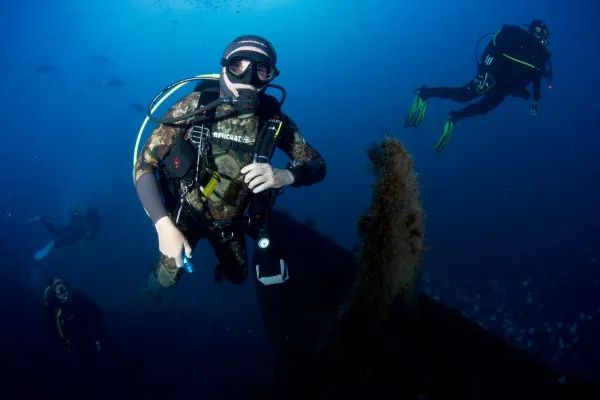
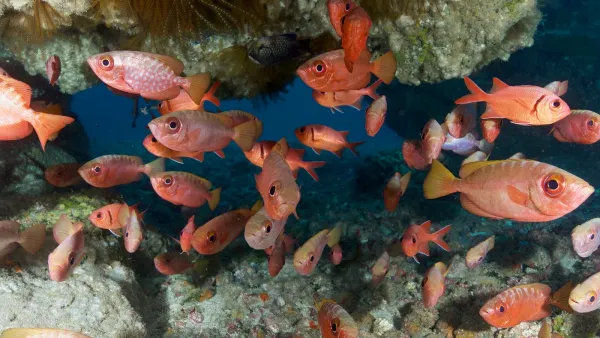
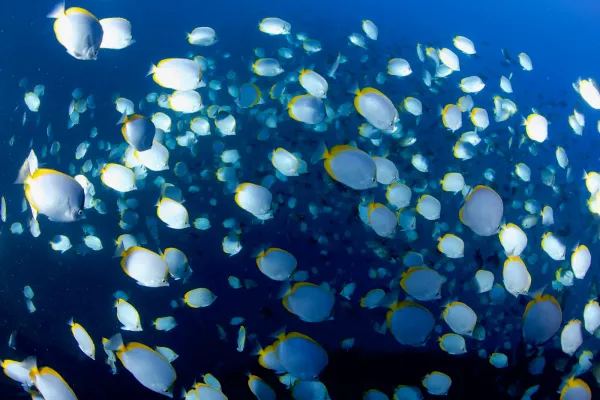
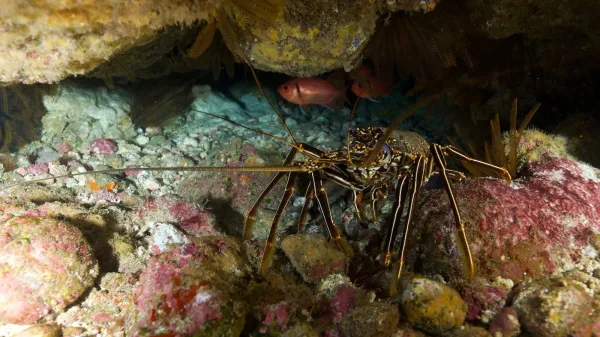
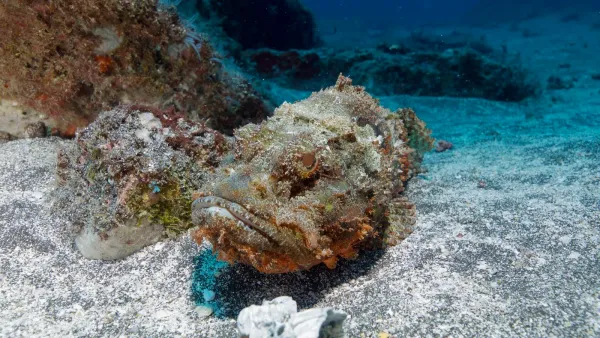
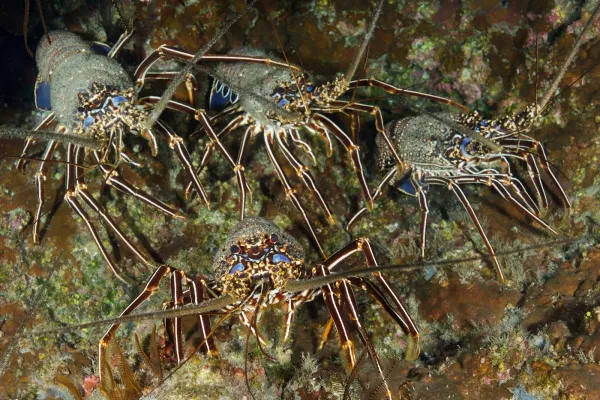
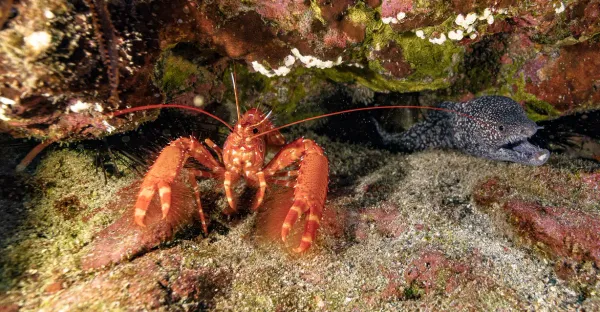
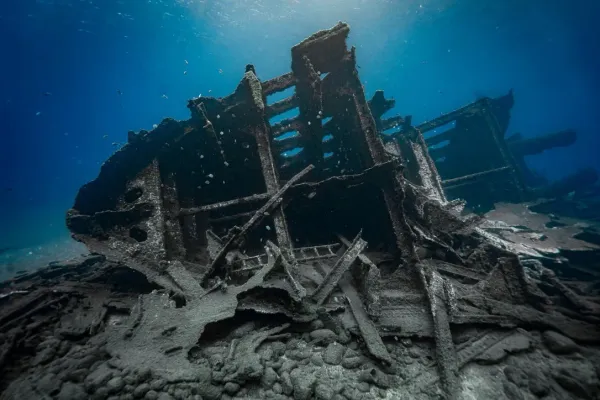
One of St. Helena's great points of pride is its abundance of shipwrecks. Many of the wrecks in the surrounding waters are historically significant, including several from World War II. Some remain remarkably well preserved and have literally become home to thousands of fish. Diving among them is spellbinding: life teems everywhere — enormous shoals of jacks, clouds of butterflyfish, and on one particular rock we found a genuine "city" of lobsters. Most striking of all was encountering vast swarms of squirrelfish — a spectacle of that scale that is rarely seen anywhere else.
Another highlight is the chance to encounter giant mobula rays — resembling small mantas — with wingspans reaching up to 2.5 metres.
Unfortunately, we did not manage to see the whale sharks for which the island is famous. They visit the waters around St. Helena from January through May. We arrived right at the start of the season and the sharks had apparently not yet made their appearance, so our paths never crossed. But we were not disappointed in the least — the diving was excellent even without them!
In our short stay we managed 6–7 dives in total. Water temperature was comfortable — around 25–26 °C. The diving left a deep and lasting impression, even though we had less time than originally planned.
The sightseeing programme on St. Helena was no less captivating. The main attraction is, of course, Napoleon's House — the historic site where the French emperor spent his final years in exile.
A brief history: after his defeat at Waterloo in 1815, Napoleon was exiled by the British to St. Helena. The choice of location was deliberate: its remoteness from any continent, harsh climate, and complete absence of escape routes made it a perfect prison. Napoleon lived here for six years until his death in 1821. His original grave was also on the island before his remains were transferred to Paris in 1840.
The house in which he lived — Longwood House — has survived almost unchanged from two centuries ago. It is now a museum administered by France. Inside, the life of that era has been meticulously recreated: furniture, Napoleon's personal effects, original documents, and paintings. Walking through these rooms is like stepping back in time. There is a quiet, melancholy atmosphere of solitude: you sense how small the rooms are, how modestly they are furnished, and how oppressive the existence must have been for a man who had known greatness and ruin alike.
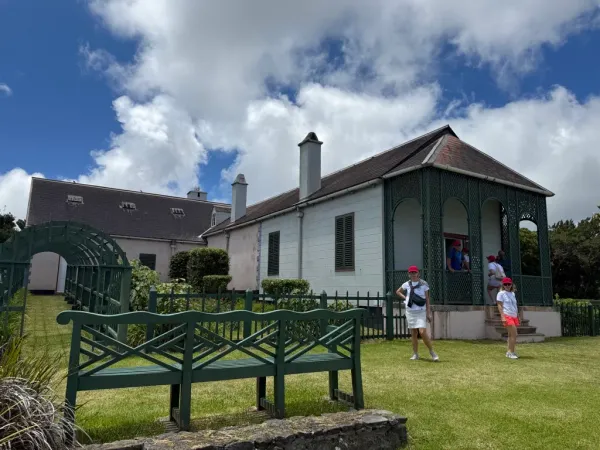
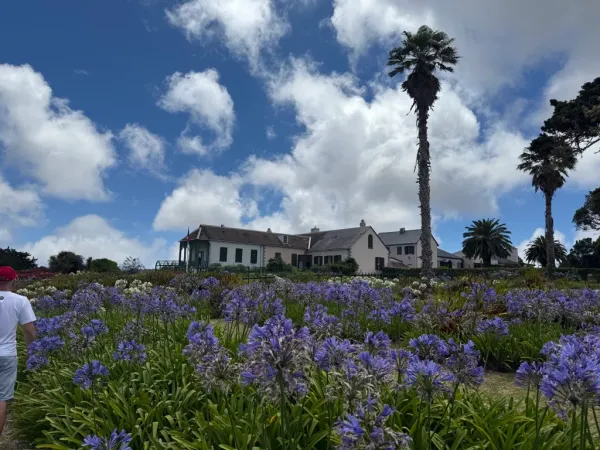
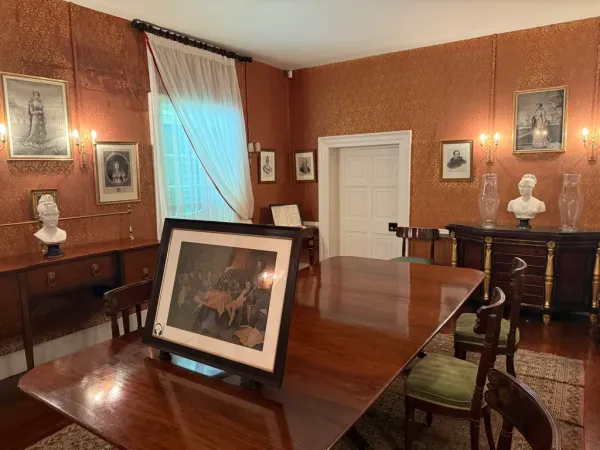
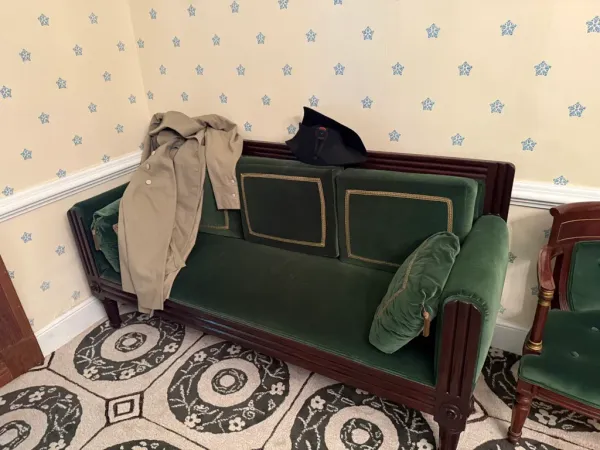
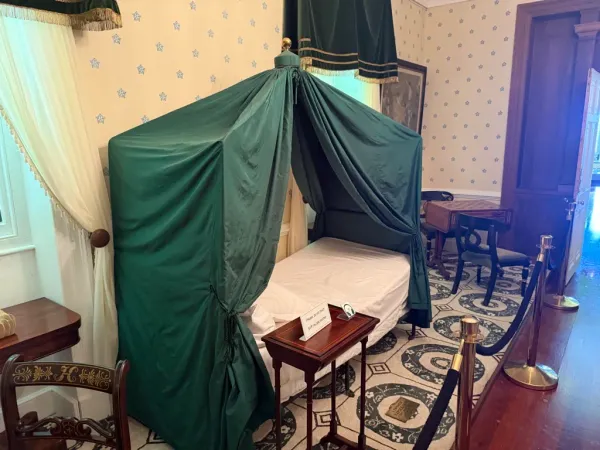
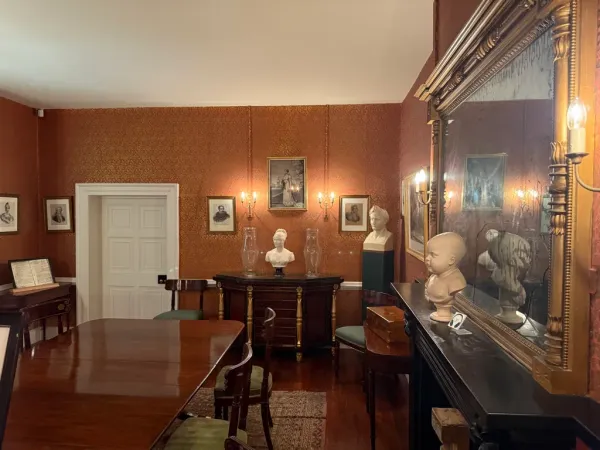
Visiting Longwood House leaves a profound impression. Standing at the window through which Napoleon gazed out at the boundless ocean, you truly begin to understand how hopeless his exile must have felt.
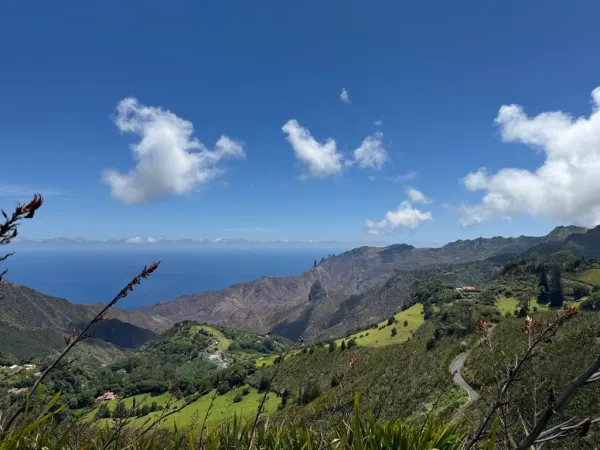
Beyond Napoleon's House, we visited the Governor's Residence — a stately colonial building that serves as the seat of the British administrator. We also stopped at Plantation House, home to one of the island's most celebrated residents: Jonathan, the oldest tortoise on Earth. Jonathan is over 190 years old and still roams his grounds with surprising vigour. And of course we simply soaked in the breathtaking landscapes that open up from practically every point on the island.
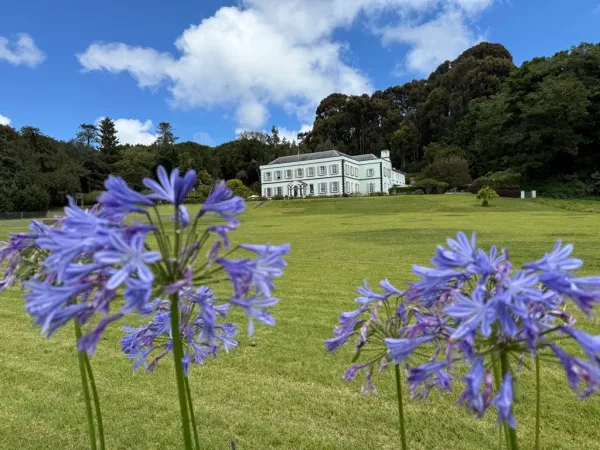
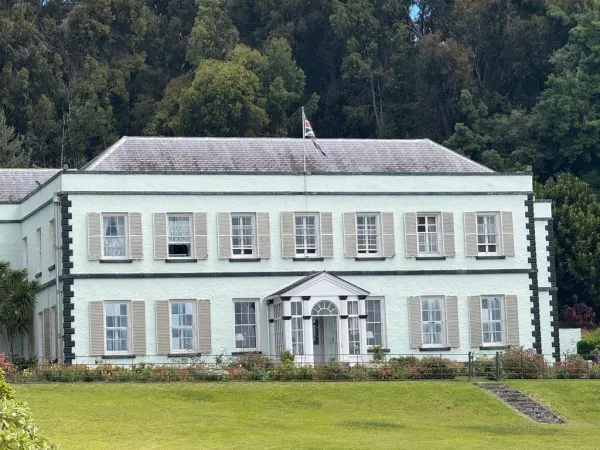
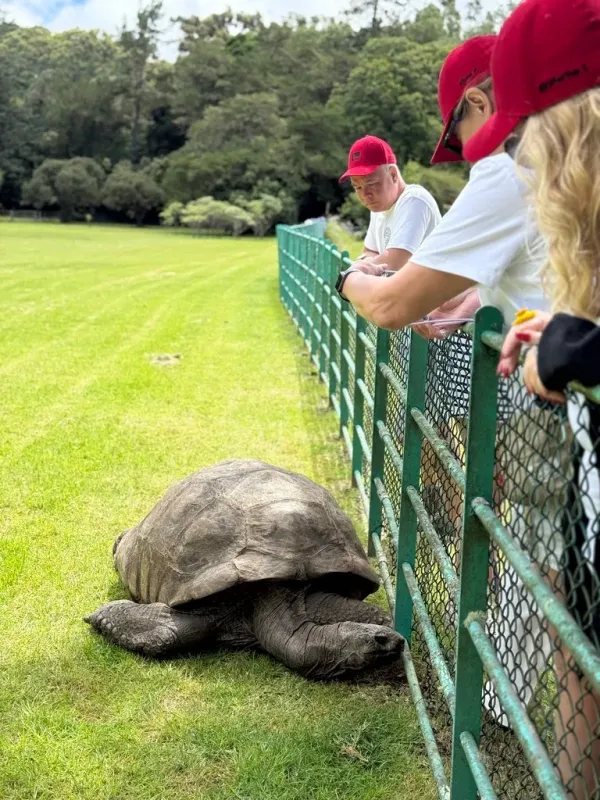
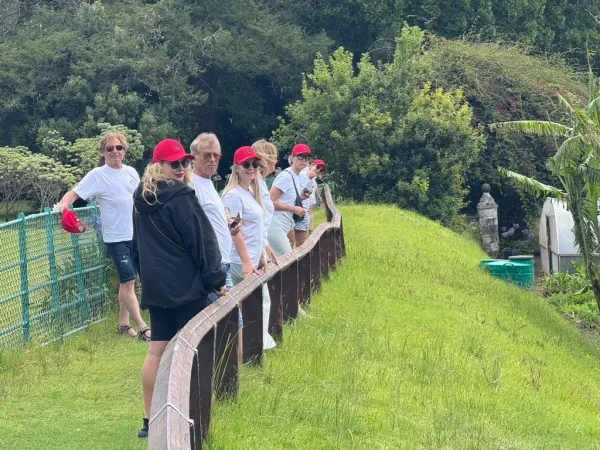
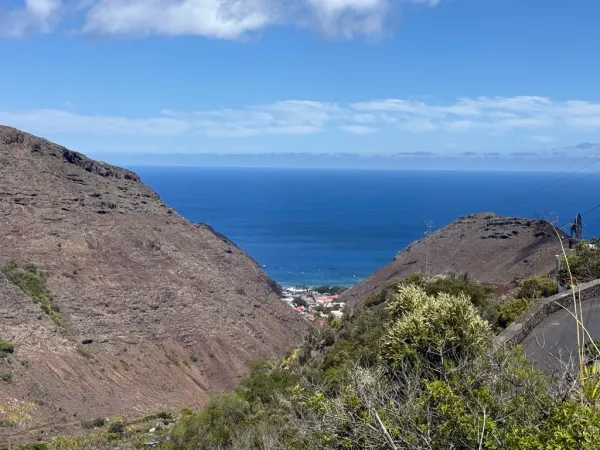
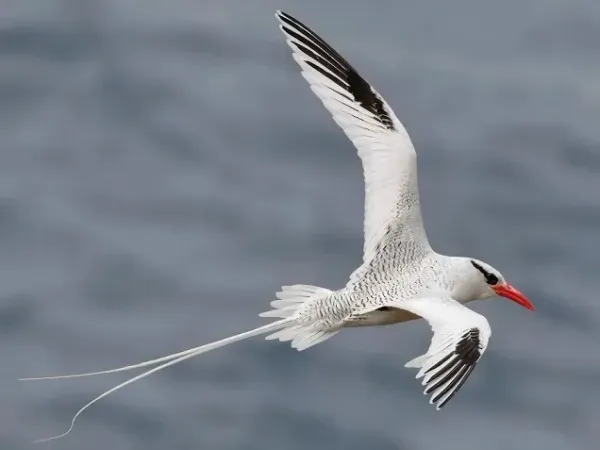
We also spotted many endemic birds, including the remarkable white-tailed tropicbird — a snow-white seabird with long tail streamers that you rarely encounter in such numbers anywhere else.
The excursions gave us a chance to feel the soul of this extraordinary place: a wild, untamed island with unique nature and a wonderfully warm, hospitable population for whom time seems to have slowed to its own gentle rhythm.
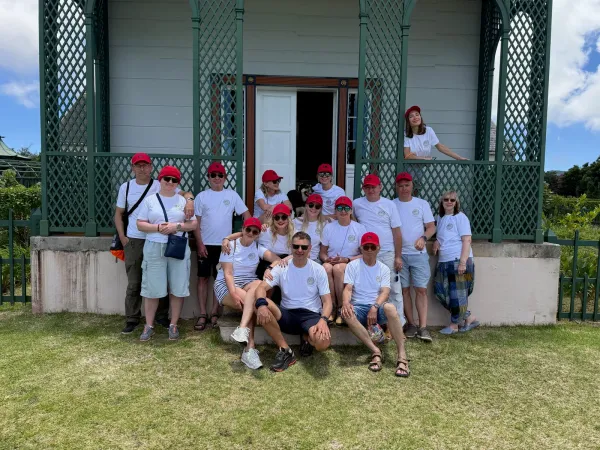
You can view the full photo album from this journey at this link ↗
A journey to St. Helena is for those who love unusual destinations and value places where nature and history have remained nearly untouched. Getting here is not easy, which means there are no tourist crowds and no well-worn tourist infrastructure. Instead, every day brings new discoveries: rare birds, extraordinary diving, walks through centuries-old streets, and a close encounter with living history. St. Helena is the right choice for anyone seeking silence, solitude, and the true feeling of being at the edge of the world — free of the ordinary and the hurried. It is a place that stays with you for a long time.
If you have been captivated by the idea of a trip to St. Helena, get in touch and we will tell you everything about how to make it happen! We also have many other exciting journeys in the pipeline — join us, and we will be delighted to take you to the ends of the earth! Our current schedule of expeditions can always be found here.