Five islands in the open ocean. Resident humpback whales. A WWI-era wreck at twenty metres. Then — canyons with emerald water, mountains at two thousand metres, and a bazaar where they trade goats and edged weapons.
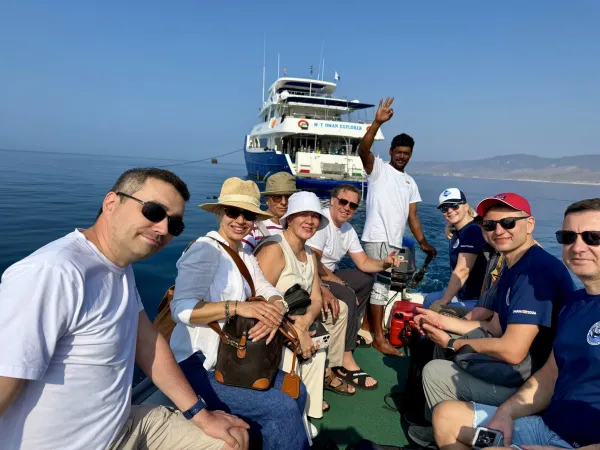
In March our group headed to Oman. We landed and went straight from the plane onto the yacht Aman Sea Explorer. No hotel, no pause. Bags dropped in cabins, and by early morning the yacht was heading for the Hallaniyat Islands — an archipelago of five islands 40–70 kilometres off the Dhofar coast. Only one is inhabited. New dive sites are still being discovered here — that's how few people make it out this far.
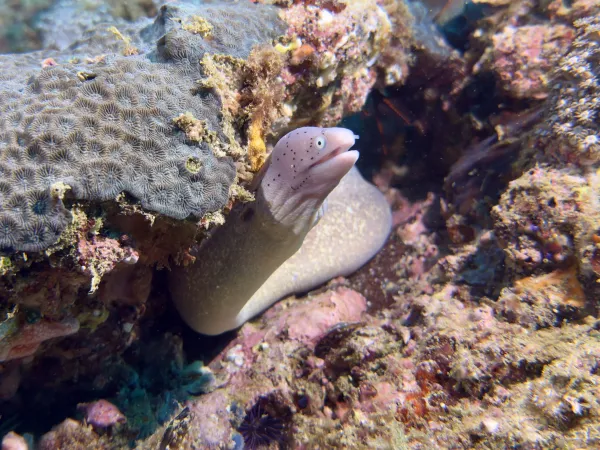
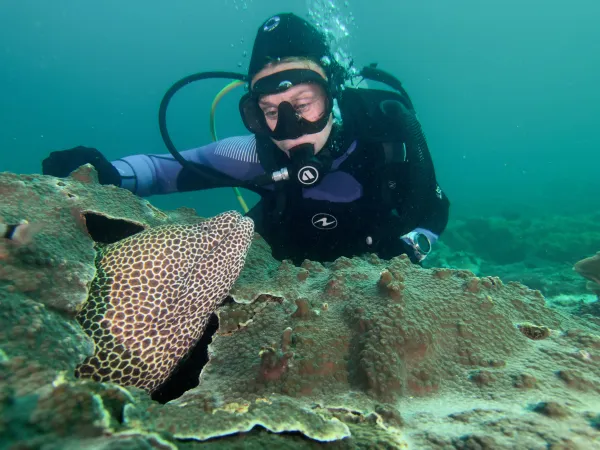
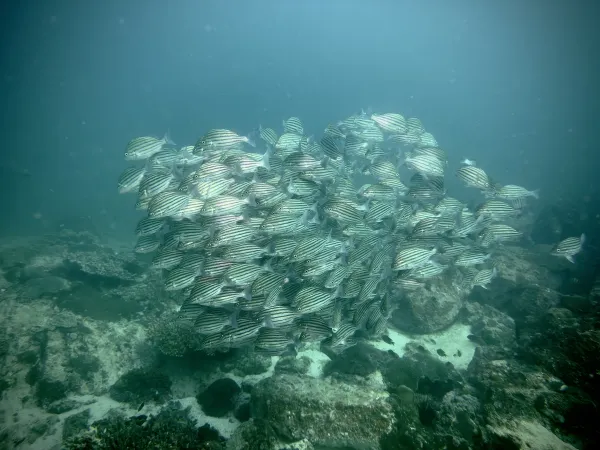
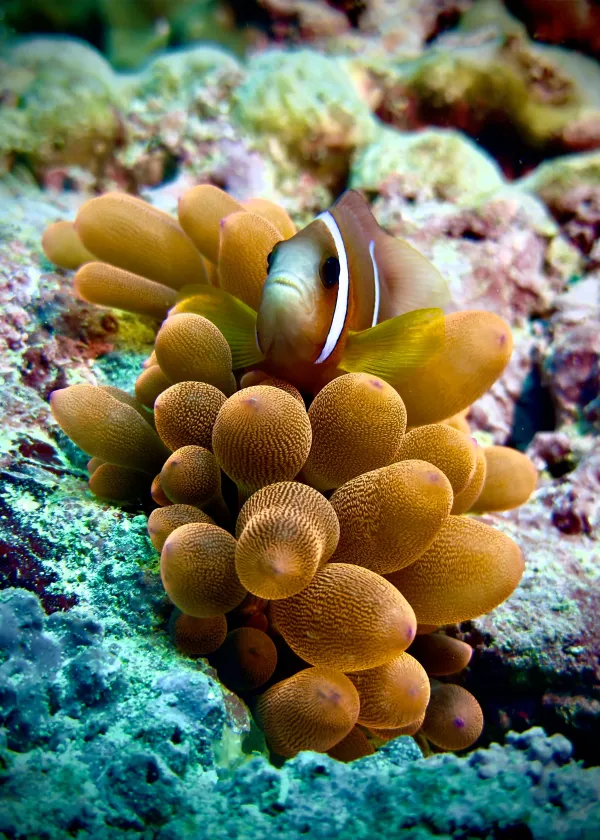
The first dive upended all expectations. Current — practically zero. Visibility — 12 to 20 metres. And the underwater landscape was like nothing else in warm seas. Rocky reefs that could have been transplanted from the Sea of Japan, but colonised by tropical life. Leopard morays peering out of every other crevice. Octopuses changing colour right in front of our masks. Schooling fish claimed patches of reef — each one a separate city. And above all — complete solitude. In the entire safari we didn't encounter a single other vessel.
Three to four dives a day. Night dives almost every evening. Conditions allowed independent diving without guides: no current, no waves, no other divers to get in the way. Total freedom underwater.
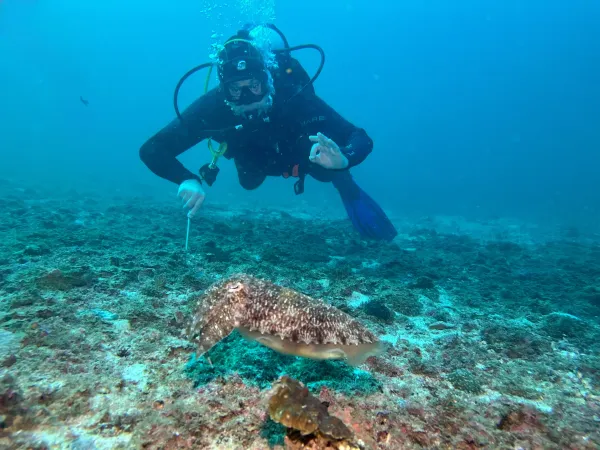
The wreck. A sunken ship at an ideal depth — about twenty metres. These waters hold, among others, the City of Winchester — a vessel from the First World War. Our wreck, though collapsed, stretched tens of metres of rusted metal, surrounded by a cloud of fish. Clear water, not another diver in sight. The kind of dive that burns into memory and won't let go.
On the way back we stopped at a bay with a resident pod of dolphins. With scuba gear they quickly lost interest — the bubbles irritated them. But switch to fins, mask and snorkel, and the dolphins came to you. They circled, passed within a metre, looked you in the eye. You could swim among them for hours. This pod lives here year-round.
After the safari some of the group flew home; most stayed — to explore Oman. We were in the south, in Salalah. The small town of Mirbat, where our safari had departed from — quiet, empty, sandy.
We arrived during Ramadan. Everything closed until sunset. Cafes, restaurants, even water kiosks. We had to improvise: knocking on doors, explaining the situation, getting let in behind closed shutters. We ate lunch with curtains drawn so as not to offend those fasting. But in the evening Salalah came alive — delicious eateries, mountains of cheap fruit at the market. We left the bazaar carrying armfuls.
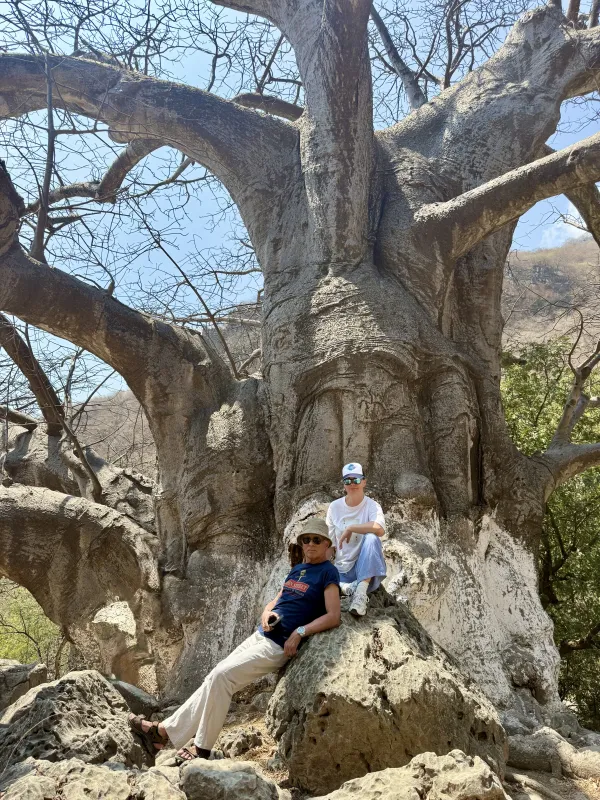
We drove to the border with Yemen. Barren cliffs, trails along the rock face, silence. This is where frankincense grows — the biblical kind. We were shown trees with scored bark, resin oozing from the cuts. An entire civilisation built on tree sap.
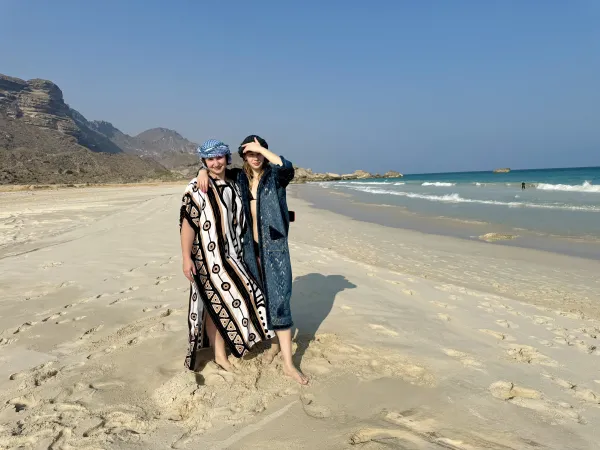

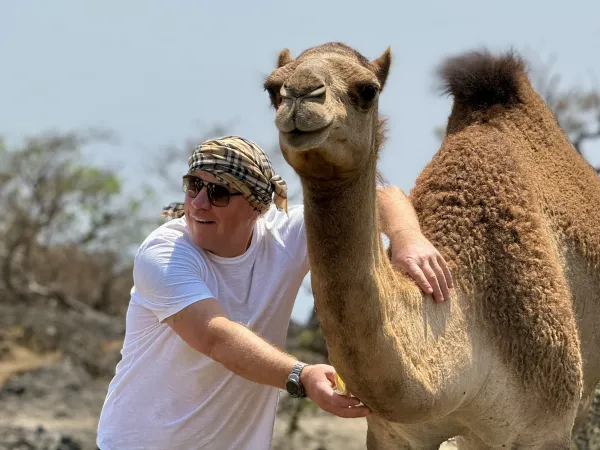
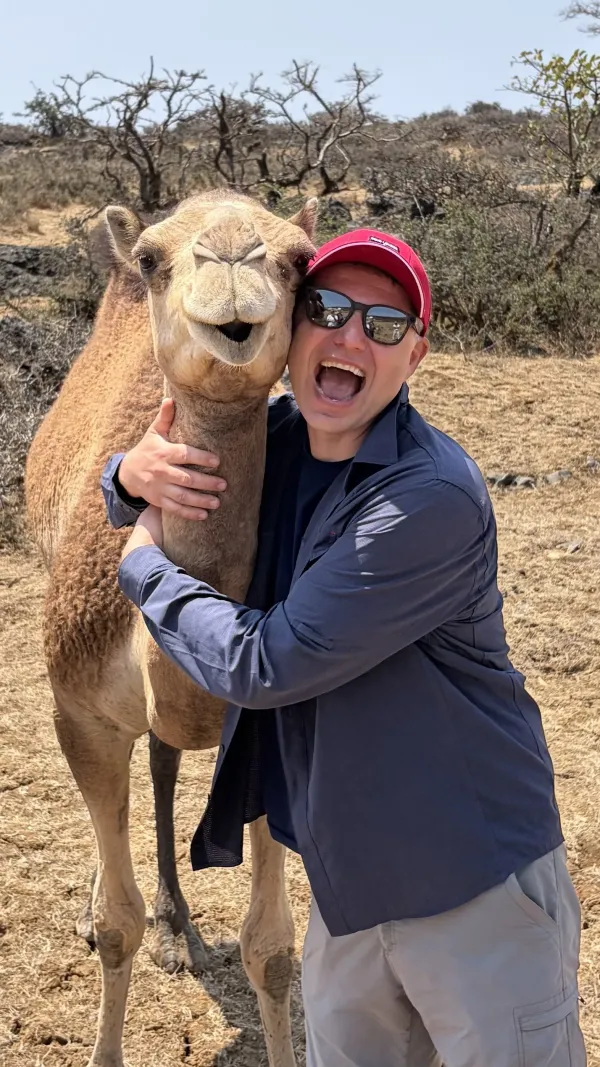
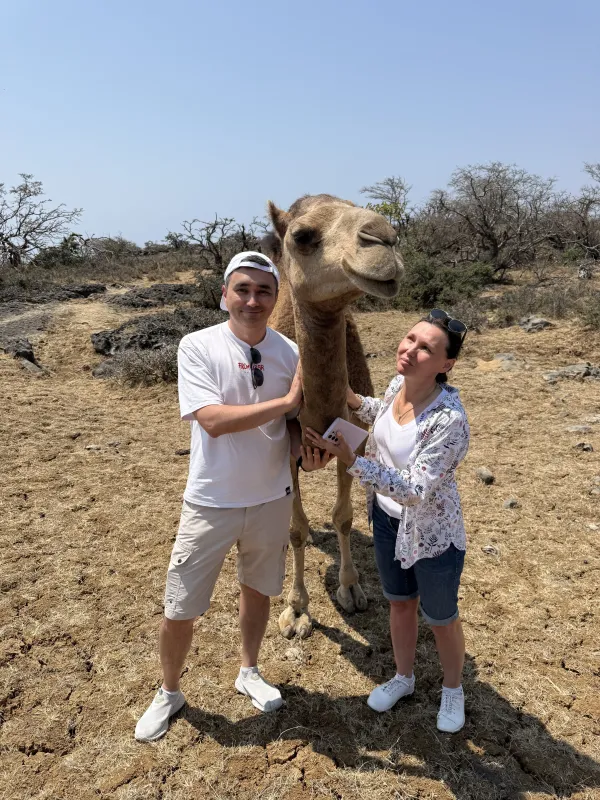
The day ended on a wild beach: endless sand, warm sea, a picnic of flatbreads and dates. Next day — Wadi Darbat valley. Along the road we chased feral camels. Or rather — not feral: they belong to someone, but roam freely across the country, like chickens in Latin America. It was a revelation that locals eat camel meat like beef. Some of our group tried it. Most liked it. I abstained.
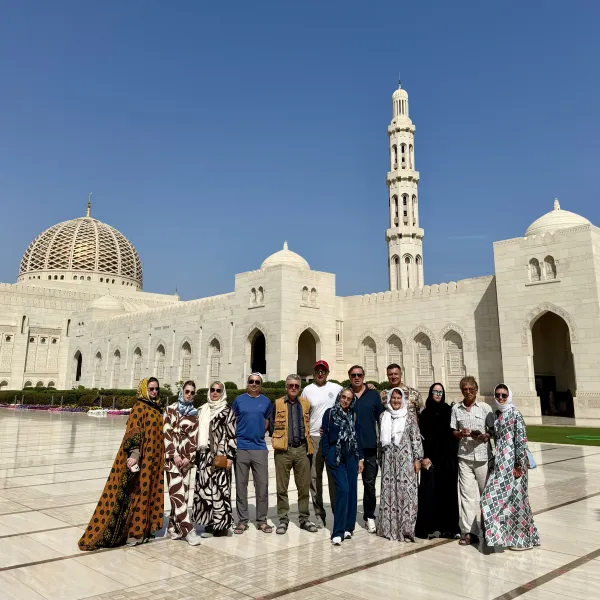
We flew to Muscat.
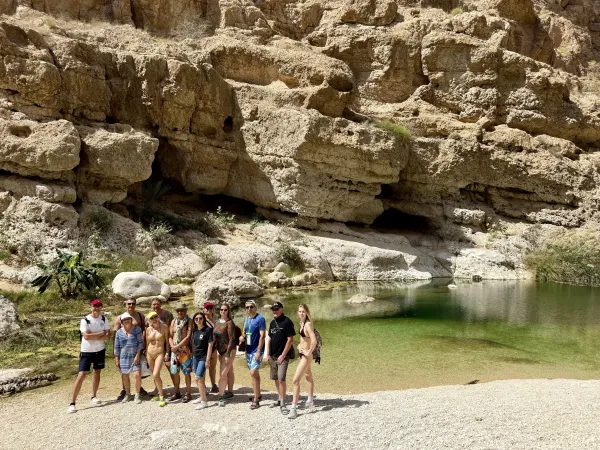
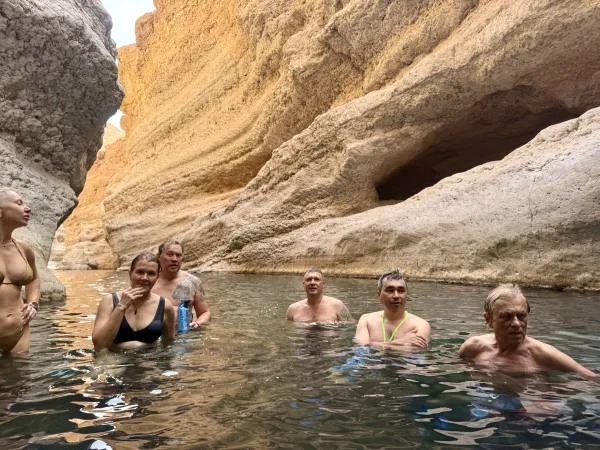
Canyoning at Wadi Shab. The rivers here dried up long ago, but carved deep gorges through the rock. We walked along the canyon floor — stones, shade, walls rising a hundred metres. Then — water. Emerald, transparent to the bottom. From here, swimming only: into grottoes, squeezing through caves with waterfalls inside, jumping off cliffs into ice-cold pools.
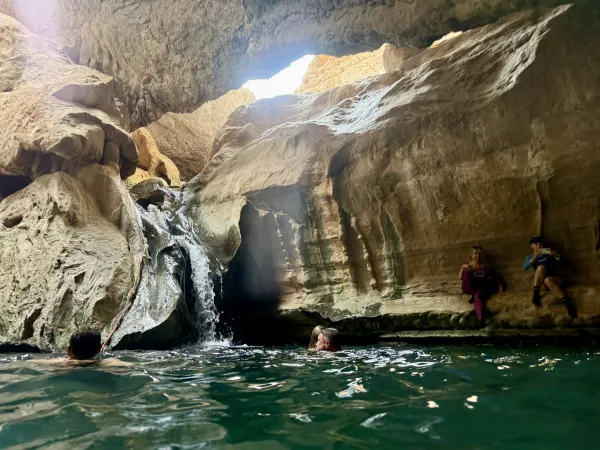
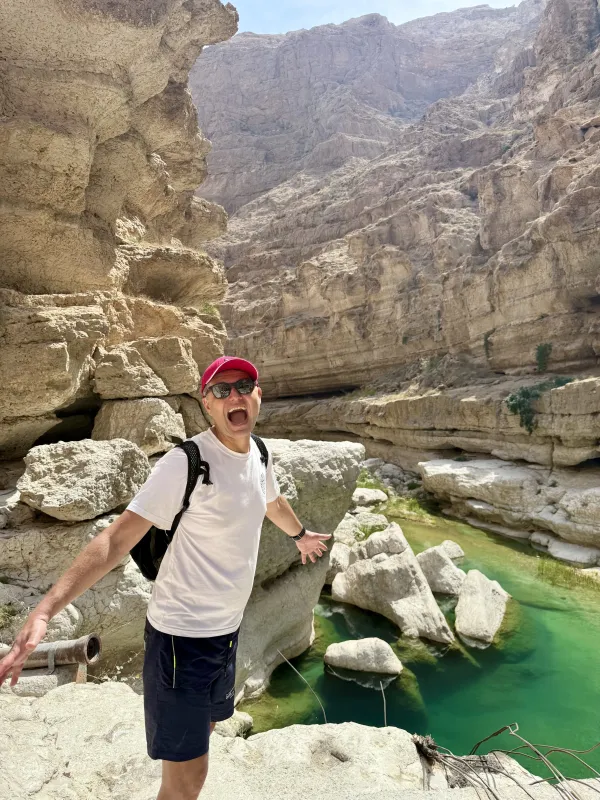
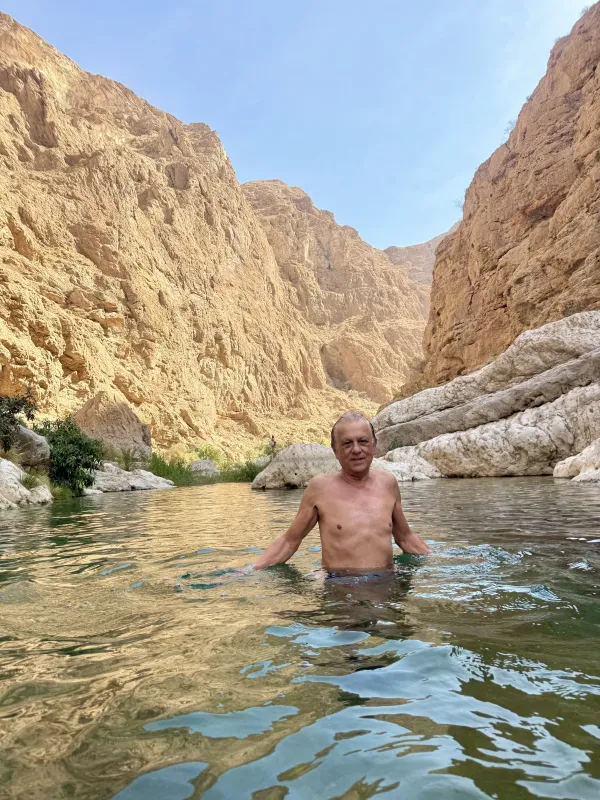
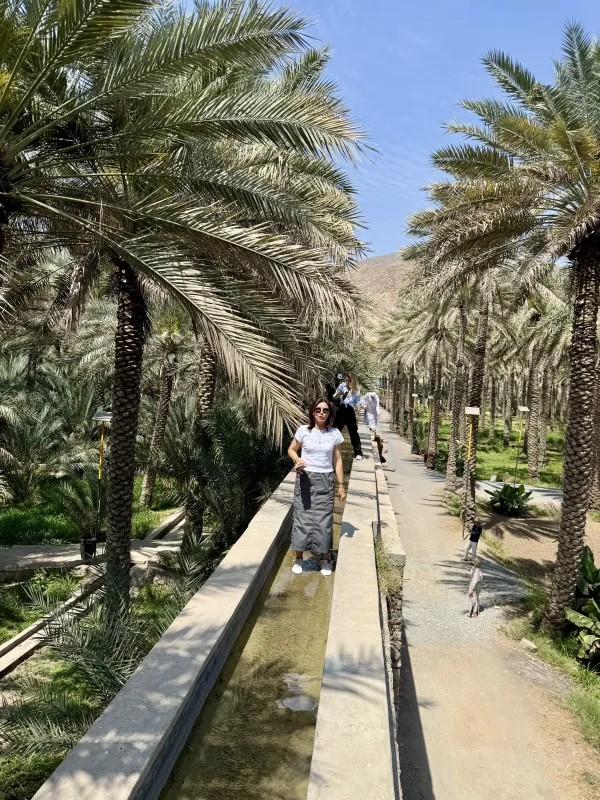
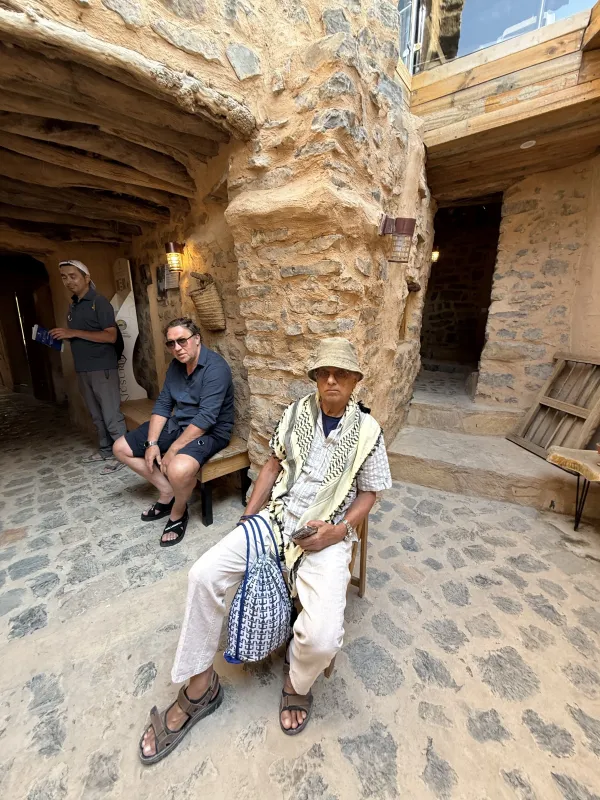
We stayed at a villa right on the shore — seven or eight rooms, our own beach, silence. After the canyon — back to Muscat. Next day — into the mountains. Jebel Akhdar — 2,100 metres. On the coast it was +35°C; up here +18°C and windy. Different air, different smells, a different country. Stone villages on the slopes, terraced gardens, palm-lined paths along ancient irrigation channels.
Last day — Nizwa bazaar. The Friday animal auction. Goats and cows sold live, amid shouts and dust. Ramadan was ending, everyone preparing for the feast — activity was off the charts. At the market next door they sold daggers, sabres, old rifles. I reckon they'd have found you a Kalashnikov under the counter if you asked. Then Nizwa Fort — 400 years of history in stone walls. And home.
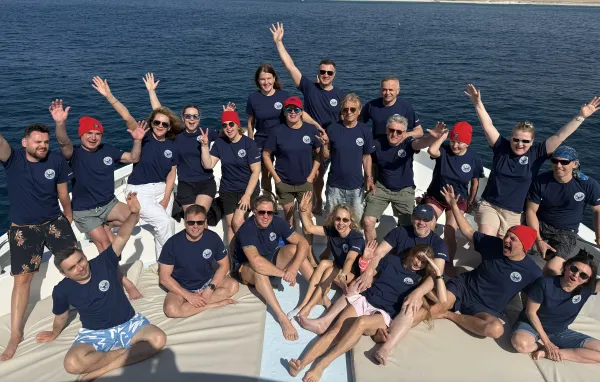
Oman is for those who've had enough of tourist conveyor belts. Underwater — pristine silence, freedom to dive at your own pace. On land — canyons, mountains, medieval forts, camels on the highway, and auctions with edged weapons. Half the group is already asking when we're going back.