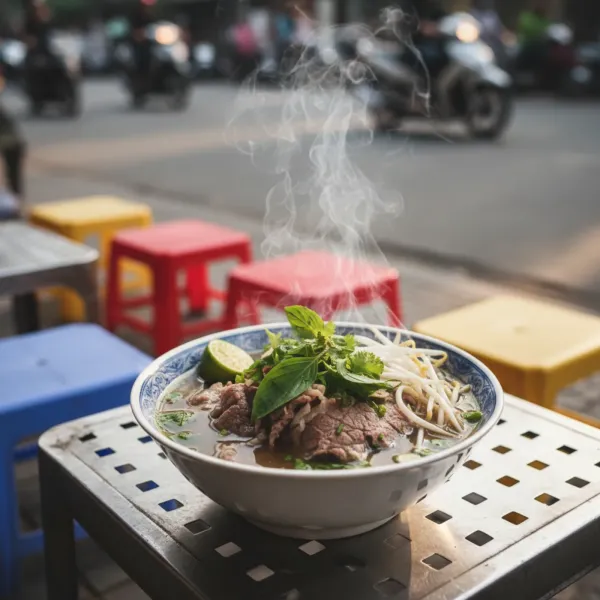
A Michelin inspector sits on a plastic chair at a folding table. On the table — a bowl of pho for 75,000 dong. Three dollars. The inspector writes in his notebook: “One star.” The same star awarded to Alain Ducasse’s restaurant in Paris. Where the tasting menu costs 380 euros.
June 2023. The Michelin Guide arrives in Vietnam for the first time in history. 103 restaurants make the inaugural list. And the world of gastronomy holds its breath. Not because it’s Vietnam. But because Michelin broke its own rules.
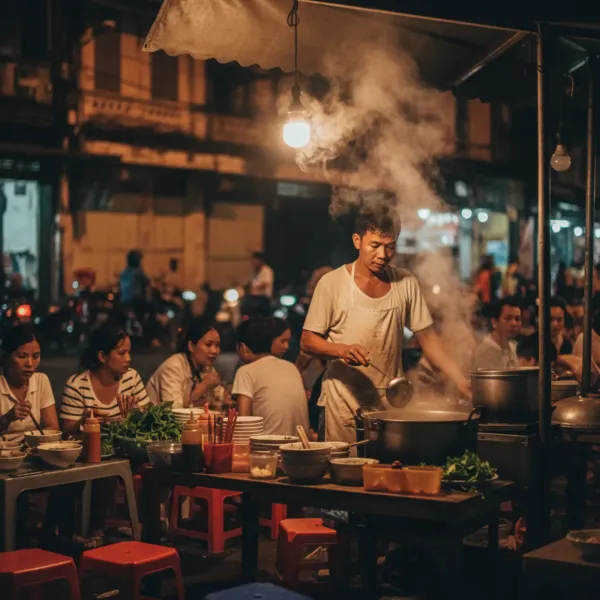
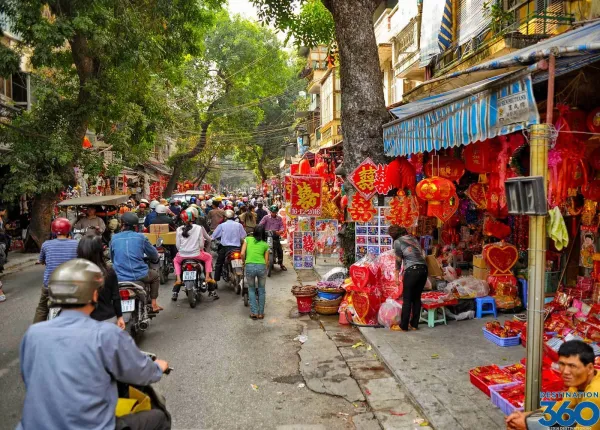
Four restaurants receive stars. Several dozen earn a Bib Gourmand. And among them — street stalls. Plastic furniture, one cook, one dish, a queue of motorcyclists. The very same Michelin that spent a hundred and twenty years evaluating white tablecloths and silverware bestowed its mark upon a hole-in-the-wall with a fan instead of air conditioning.
This is no anecdote. This is the dawn of a new era. And it concerns those accustomed to an entirely different standard.
What Happened to Michelin
Michelin is tires. Literally. Brothers André and Édouard Michelin opened a tire factory in Clermont-Ferrand in 1889 and eleven years later invented a gastronomic guidebook. The logic: the more people drive, the faster their tires wear out. The first 35,000 copies were handed out free at gas stations.
Stars appeared in 1926. One — “a very good restaurant.” Two — “worth a detour.” Three — “worth a special journey.” By the 1930s, the guide had become the bible of European gastronomy. Inspectors are anonymous, pay for dinner out of their own pocket, visit multiple times, never reveal their identity. The pressure — immense. The standards — absolute.
For a hundred and twenty years, this system operated in one context: Paris, Tokyo, New York. Fine dining meant silver, crystal, and a sommelier in a three-piece suit. Tokyo got its guide in 2007 — and instantly became the city with the most stars (191 versus Paris’s 134 as of 2024). Singapore — in 2016. There, for the first time, a street food vendor received a star: Hawker Chan, soy chicken for two dollars.
And then Michelin came to Vietnam. And went further than Singapore. An entire list of street vendors with recommendations. Michelin didn’t just let the street into its world. It acknowledged: cuisine is about the cook’s hands, not the dining room decor.
Michelin acknowledged: cuisine is about the cook’s hands, not the decor. But if the cook’s hands matter more than the setting — then where on the planet are the strongest hands? Who stands behind these plates?
Peter Cuong Franklin and His Anan Saigon
Peter Cuong Franklin was born in Dalat, a mountain town in Vietnam, in 1970 — five years before the fall of Saigon. In 1975, the family fled. A classic story of the Vietnamese diaspora: a boat, a refugee camp, America. But with one difference — his mother never stopped cooking. In a San Jose apartment, every evening a pot of pho simmered: bone broth for twelve hours, with star anise and cinnamon, with basil and mint. No compromises, no “Asian cuisine” labels, no adaptation for Western palates.
Franklin trained as a chef in New York, worked under Daniel Boulud — three Michelin stars, one of the finest French restaurants in America. Then — Hong Kong, Dubai, London. In 2017, he returned to Ho Chi Minh City.
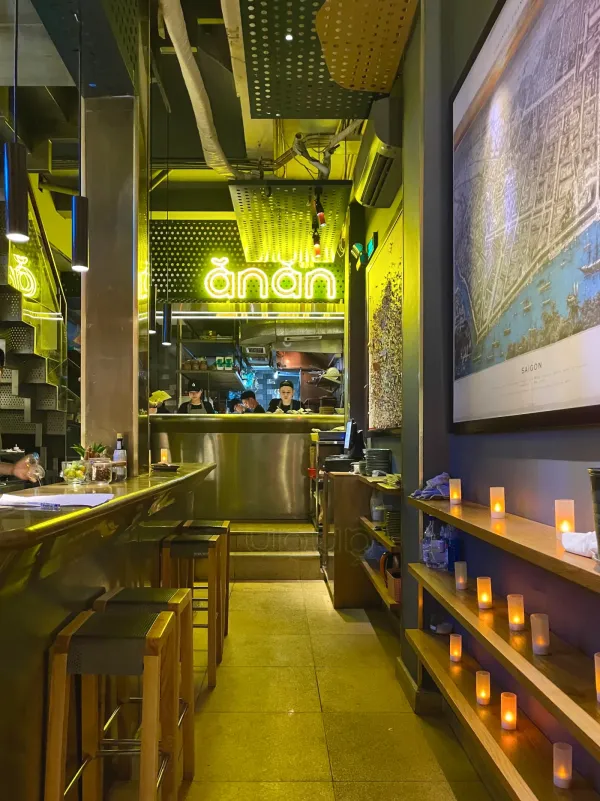
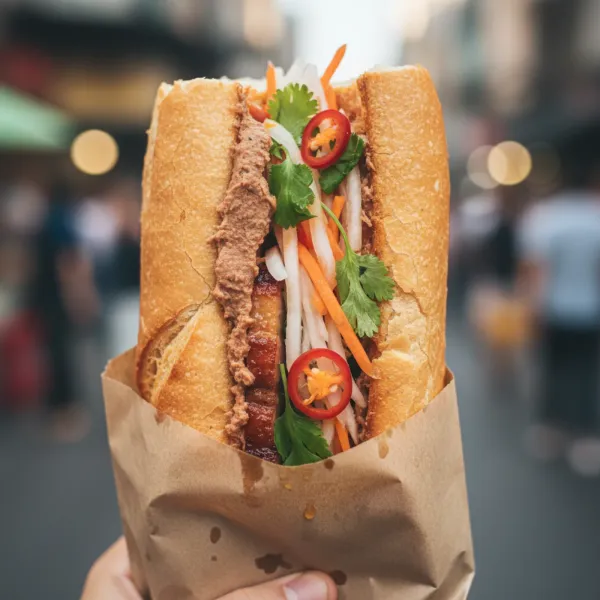
His restaurant Anan Saigon sits on the second floor of Chợ Cũ, Ho Chi Minh City’s oldest market. Downstairs — meat stalls, fish on ice, the smell of fermented shrimp paste. Upstairs — an open kitchen, concrete walls, industrial lighting. Franklin takes banh mi — the Vietnamese sandwich — and elevates it to haute cuisine. The pâté — duck liver, 48 hours of fermentation. Pickled vegetables — his grandmother’s recipe from Dalat, precise to the gram. Chili — house-fermented, eight months. Bread — rice flour and coconut milk, baked in a wood-fired oven.
The tasting menu — around 80 dollars. By Parisian standards — laughably little. By Ho Chi Minh City standards — fine dining. Michelin gave him a star for being genuine: neither a street food stall nor a Parisian restaurant. He is something third. Something new.
Tầm Vị: A Star from the Other Side
If Anan Saigon is a bridge between the street and fine dining, Tầm Vị is a chef who refused to leave the street. The restaurant — 40 square meters. Five tables. Menu: seven items. Northern Vietnamese cuisine from Nam Dinh province.
Bun cha — grilled pork patties with rice noodles. The pork marinates for 24 hours in fish sauce with lemongrass. Charcoal — only lychee wood (even heat, slightly sweet smoke). Noodles — handmade, ground fresh every morning.
One star. Average check — 15 dollars for two. For context: one star — the same level as London’s The Clove Club (175 pounds) or New York’s Atomix (365 dollars). The price difference — fifty-fold.



What This Means for Those Accustomed to Something Else
Vietnam’s Michelin list isn’t about cheap food. It’s about a shift.
For a hundred and twenty years, Michelin followed the money: Paris, London, New York, Tokyo. Cities where concentrations of capital created demand for expensive restaurants. Now Michelin follows flavor. And flavor is at the edge of the map.
In 2023 — Vietnam. That same year — Morocco and Peru. In 2024 — Argentina and Colombia. Five countries in three years. All five — in our journey catalog.
Anthony Bourdain, who visited Vietnam six times, once said: “Vietnamese food is the only cuisine in the world that gets worse when it moves into a restaurant.” Michelin, at last, agreed.



But Vietnam is only the prologue. The beginning of a story about the red guide venturing beyond its familiar world. The next chapter — a country where Michelin entered an entirely different element. Where there are no plastic chairs. Where instead of a gas burner — open flame. Where meat is tamed by fire at a thousand meters’ altitude, among vineyards that have earned 100 Parker points six years running. Where a group of eleven dines at a restaurant four hours by air from Buenos Aires. And where a bottle of wine costs as much as dinner for two in Hanoi.