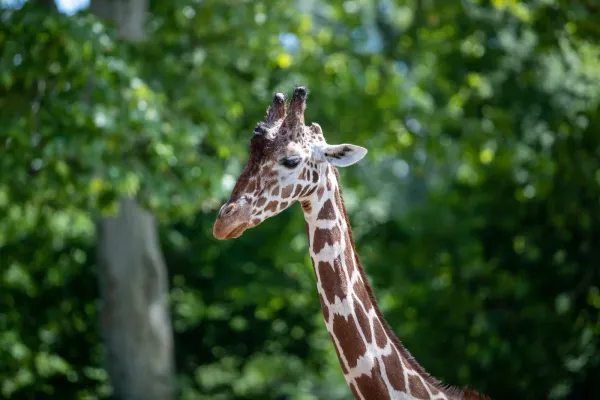
A giraffe lowers its head. Its tongue — black, 45 centimetres long — delicately takes a lettuce leaf from your hand. It chews. You look into its eyes — large, brown, with long lashes, framed by spotted skin. It stands a metre and a half away from you. Over breakfast.
Casela Nature Park is a place that shatters all expectations.
You are on a tropical island in the Indian Ocean. Two thousand kilometres from the nearest African shore. Yesterday you listened to sperm whale clicks through a hydrophone. The day before you stood inside a cave 400 million years old. And today — you are having breakfast with a giraffe. That is one day of our Mauritius trip.
Not in a zoo behind bars. Not through glass. Right beside you. The table sits on a wooden platform raised to the height of a giraffe’s neck. It approaches, lowers its head — enormous, horned, covered in velvety skin — and its muzzle is level with your plate. Its nostrils — moist, the size of a fist — sniff your hand. You hold out a lettuce leaf.
Casela is not a zoo. That matters. A zoo means concrete enclosures, bars, information plaques, and guilt. Casela is something different.
The park was founded in 1979 as a nature reserve for indigenous plants and birds — Mauritius lost not only the dodo but dozens of other endemic species, and Casela was created to preserve what remained. Fourteen hectares of tropical forest, savanna, and hills. Fifteen hundred birds of 150 species — from the pink pigeon (one of the rarest birds on the planet, surviving only thanks to a captive breeding programme) to flamingos, parrots, and hornbills. The birds don’t live in cages — they live in enclosures the size of a football pitch, with trees, water features, and a real sky overhead.
Over the years Casela has grown into something more: a fully fledged safari park with open landscapes where large animals — brought from Africa — live in conditions as close to natural as possible. This is not the Serengeti. But it is closer to the Serengeti than anything else on an island in the Indian Ocean.
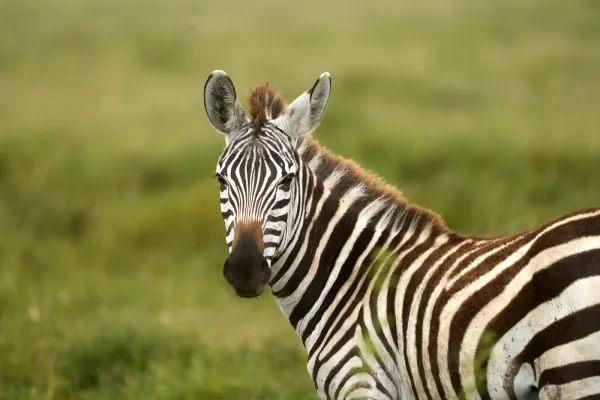
A jeep safari — an open jeep, a red dirt track, dust rising from the wheels. The ranger-driver knows every bend, every tree, every favourite spot of every animal. Zebras graze at the roadside and pay you no attention — they have grown as accustomed to jeeps as city pigeons have to buses. Ostriches — two metres tall, with powerful legs capable of killing a lion with a single kick, yet wearing an expression of unparalleled stupidity — run alongside the jeep, racing it for speed. Sometimes they win: an ostrich can run at 70 km/h.
Antelope stand in the shade of trees, chewing their cud with the air of philosophers wrestling with existential questions. Deer approach the jeep and stretch their necks — checking whether any food has arrived. Rhinoceroses — behind a double fence — lie in the mud, flapping their ears. This is not the Serengeti. But the feeling is. Because you are in an open jeep, the animals are in an open space, and between you — nothing.
And then — a walk with wild cats. This is not a circus act, not a petting zoo. Cheetahs, servals — on a long lead, with a professional trainer who has worked with them for years. You walk through the savanna beside a cheetah. The fastest land animal on the planet — 120 km/h in three seconds, quicker than most sports cars.
Right now it walks beside you — unhurried, graceful, muscles rolling beneath spotted skin. Every step a coiled spring. Every movement an economy of energy. The cheetah is the most aerodynamic land mammal alive: a light skeleton, long legs, a deep chest for enormous lungs, a flexible spine that works like a suspension spring. It could bolt at any moment — and before you blinked it would be a hundred metres away. But right now it simply walks. Beside you. And occasionally glances back at you. Without curiosity. Without aggression. Without fear. Just checking whether you are still there.
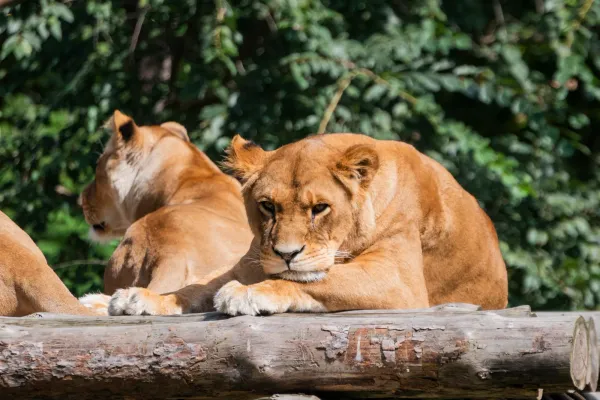
Lionesses lie in the sun behind the enclosure fence — three, four of them, relaxed, golden, eyes half-closed. They don’t perform in a circus. They simply live. And you — a few metres away — watch.
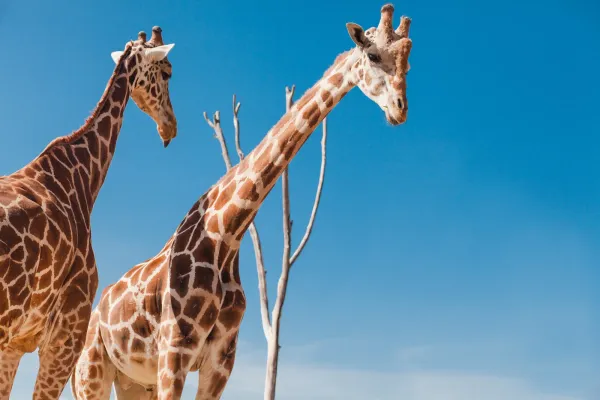
Is there something strange about giraffes, zebras, and lions living on a tropical island in the Indian Ocean? Of course. This is not the Serengeti. This is not wild Africa. Casela’s giraffes don’t sprint across the savanna away from lions — they live safely, on land where every tree was planted with purpose, every fence carefully considered, every animal under veterinary supervision.
But Casela is not about authenticity. Casela is about contact. About a feeling that no zoo in the world can give you: to be beside — truly beside, without glass, without bars, without a moat — a creature you have only ever seen on a screen. And to feel its scale. Its smell — warm, grassy, wild. Its breath — moist and heavy. Its gaze — calm, appraising, unafraid.
The difference between a photograph of a giraffe and a giraffe taking lettuce from your hand with a black 45-centimetre tongue is like the difference between a map and a journey. The map shows you where a place is. The journey shows you what it feels like.
There is something a photograph cannot convey: the scale of a living creature standing beside you. A photograph of a giraffe is flat. A giraffe beside you is three-dimensional, warm, smelling of hay and something wild, with long lashes casting shadows over enormous brown eyes. Its neck — muscular, covered in spotted skin — turns with astonishing grace. Every movement slow, deliberate, like a creature that knows there is no need to hurry.
The cheetah is different. It is pure speed, even standing still. Muscles coiled like a spring. Its tail — long as the rudder of a racing car. Eyes — yellow, with black “tear stripes” running from eye to corner of mouth (they reduce glare from the sun, like anti-reflective coating on sports glasses). You walk beside it, and with every second you are aware: this creature can accelerate from zero to 120 kilometres per hour in three seconds. And right now it simply walks. Beside you.
After Casela — a free day. The beach. Golden sand, palm trees, turquoise water, a coral reef a hundred metres from shore. Mauritius is a tropical island, and it never lets you forget it. After the giraffes, the cheetahs, and the zebras — just lying on the sand, listening to the ocean, doing nothing at all. That too is part of the journey.
And the following morning — the boat again. The hydrophone again. Sperm whale clicks from the deep again. And once more — a vast grey back cutting through the surface of the ocean.
The lionesses stretch lazily — three golden bodies against green grass and tropical trees. These are not the lions you have seen in a zoo through iron bars. Here the space is open, fenced but open — and the feeling is different. You see them whole, full length, with every muscle, with all their languor and grace. When a lioness yawns, you see canines the size of your finger. And you understand why they call it the king of beasts. Even in a yawn — authority.
But between breakfast with a giraffe and the third encounter with sperm whales there is one more day. A day in which vanilla, tea, rum, and 150-year-old tortoises come together into a story that could never be invented.