It could not fly. It could not run. It could not hide. It weighed 20 kilograms, waddled when it walked, and approached anyone who appeared on shore. Eighty-three years after the first European laid eyes on it, it was gone forever.
Dodo. Raphus cucullatus. A flightless bird the size of a large turkey, with tiny useless wings, a massive beak, and — by sailors’ accounts — a complete absence of fear toward humans. It lived only on Mauritius. Nowhere else on Earth. Today people come to the island for its other residents — sperm whales and giant tortoises; how such a trip to Mauritius works is on a separate page.
For millions of years the dodo evolved on an island with no land predators. No cats, no dogs, no rats, no snakes. Not a single creature to run from. The only danger came from above — birds of prey. So the dodo learned to hide its nests in the undergrowth, but never learned to run. Why run when there is nothing to run from? Why fly when the ground is safe?
It lost the ability to fly — its wings shrank to vestigial stumps, like the appendix in humans. In their place it gained weight: up to 20 kilograms, making it the largest bird on the island. It fed on fruits, seeds, and roots. It lived peacefully. Millions of years — without a single enemy on the ground.
In 1598, Dutch sailors landed on Mauritius. Their ships were sailing from Europe to Southeast Asia — a long voyage, months at sea, scurvy, hunger. Mauritius was an ideal stop: fresh water, fruit, meat. Meat meant dodo. The sailors found large, clumsy, trusting birds that ran from no one. They stood and watched the humans with curiosity — like penguins in Antarctica, like langurs on Mauritius today. Without fear.
The sailors were hungry. The dodo was edible — or at least edible enough for men who had not tasted fresh meat in months. Dutch sailor Volkert Evertsz wrote in his journal: “The birds are so simple that they let themselves be caught by hand.” They did not even need to be caught — they walked up on their own.
But direct killing was not the main cause of extinction. Over the following decades the Dutch, and after them the French, brought rats, cats, dogs, pigs, and macaques to the island. Each species was another blow to the dodo. Rats ate the eggs — the bird nested on the ground and had no defence against rodents. Cats and dogs hunted the adult birds, which could neither fly nor run quickly. Pigs ransacked nests, trampled the undergrowth, and destroyed the fruit the dodo depended on. Macaques competed for food.
By 1681 — eighty-three years after first contact with Europeans — the dodo was gone. The last reliable sighting was in 1662. A species that had existed for millions of years, that had evolved, found its niche, and thrived — vanished in less than a century. Faster than a single human lifetime.
Almost no skeletons survived. The only reasonably complete dodo skeleton is held at the Natural History Museum in London — and even that is assembled from bones of different individuals. What we know of the dodo’s appearance comes largely from drawings by Dutch sailors — not the most careful of artists. Some depicted it as fat and ungainly. Others as lean and almost elegant. The truth was probably somewhere in between.
“Dead as a dodo” became an English idiom, a byword for absolute and irreversible disappearance. The point of no return. When something is gone — gone for good.
The story of the dodo is not simply a sad story about a bird. It is a story about trust. The dodo trusted humans — because millions of years of evolution gave it no reason not to. It carried no gene for fear of two-legged creatures. And that trust killed it.
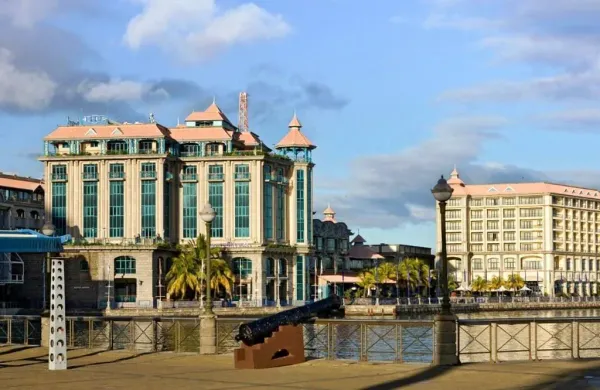
Mauritius lives with this story every day. The dodo is the national symbol. It appears on the country’s coat of arms — two animals supporting a shield: the dodo and the deer. It is on coins, on postage stamps, on restaurant signs, on T-shirts, on house numbers. The Natural History Museum in Port Louis — the capital of Mauritius — holds the only dodo skeleton on the island (reconstructed from bones found in the Mare aux Songes marsh in 1865). Children draw the dodo in school. Tourists buy plush dodos in souvenir shops. A reminder. A warning. A reproach. We did this. We could do it again.
But there is another side — one that gives reason for hope. Mauritius is one of the few islands in the world that not only acknowledged the mistake but began to correct it. The country has some of the strictest conservation laws in the Indian Ocean: marine reserves, bans on catching certain species of fish, coral reef restoration programmes (corals are grown in “nurseries” and transplanted to damaged reefs). Protection for turtles — both sea turtles and giant land tortoises. Regulated sperm whale watching: minimum distances, maximum time limits, restrictions on the number of boats.
And there is the pink pigeon recovery programme. The Mauritius pink pigeon is an endemic species; by 1991 only ten individuals remained. Ten. On the entire planet. A captive breeding programme launched in partnership with the Zoological Society of London brought the population back to 500. Mauritius could not save the dodo. But it saved the pink pigeon. That is not atonement. But it is a beginning.
In that lies the contrast that makes Mauritius more than just a beautiful place for a holiday. It is a place with a history. With a wound that has not healed — and should not heal, because the memory of a wound matters more than the comfort of forgetting. With a lesson still being learned — and one that may, at last, be sinking in.
Mauritius is not the only place where humans hunted a trusting species to extinction. The passenger pigeon in North America — billions of birds wiped out in a few decades. Steller’s sea cow — a marine mammal exterminated twenty-seven years after its discovery. The Tasmanian tiger. The quagga. The list is long and shameful. But the dodo is first on that list. And the most symbolic. Because the dodo did not simply fail to run — it walked toward you. On its own.
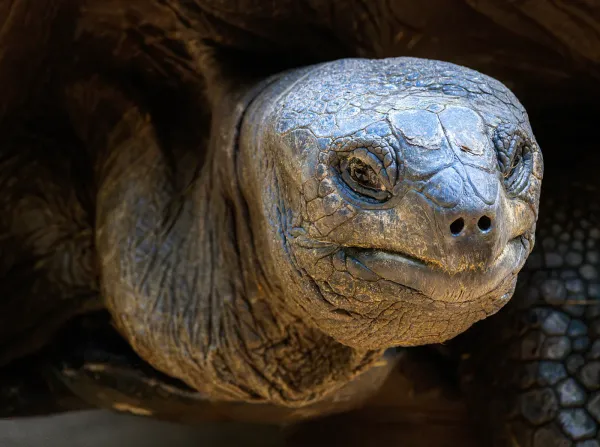
When you stand in La Vanille park on the southern coast of the island, surrounded by tropical jungle — and an Aldabra giant tortoise, 300 kilograms of living weight, 150 years of lived life, walks slowly toward you. It is in no hurry — it is never in a hurry. Each step deliberate, heavy, unhurried. It reaches you, stops, and stretches out its neck. Long, wrinkled, with skin like an elephant’s.
You reach out your hand. You stroke it. And the tortoise closes its eyes.
That is trust. A creature that has lived through two centuries — two world wars, the fall of colonial empires, the invention of the internet — allows you, a stranger, an outsider, to touch it. Just as the dodo allowed Dutch sailors to approach it four hundred years ago.
Only this time we know how it can end. And this time — we take care. Of every tortoise. Of every sperm whale. Of every coral.
Because there is no second chance. The dodo proved that.
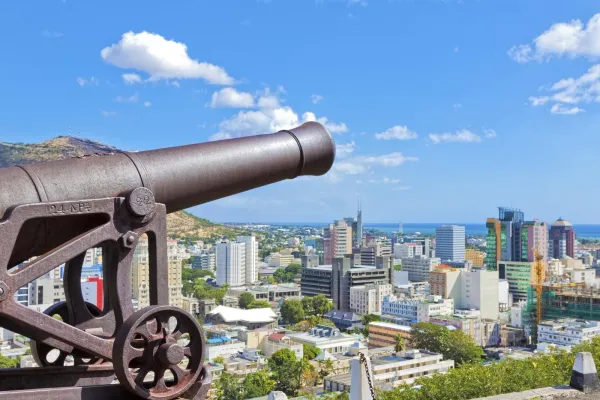
But Mauritius is not only a story of loss and redemption. It is an island that literally shimmers with colour. Seven colours, to be precise. And to see them, you have to climb into the mountains.