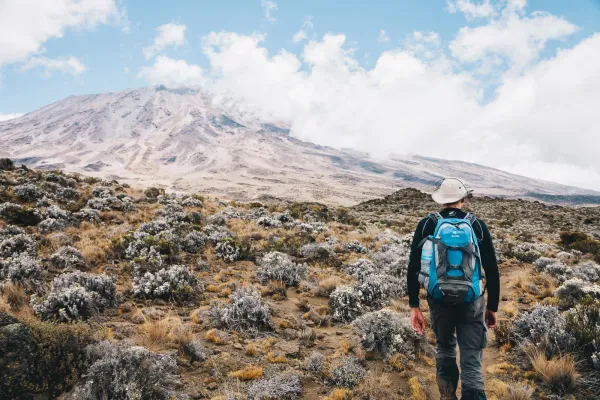
Climbing Kilimanjaro is no easy stroll in the park. And yet it is well within reach for most healthy adults with no special athletic or mountaineering background.
What to keep in mind when choosing gear for the ascent
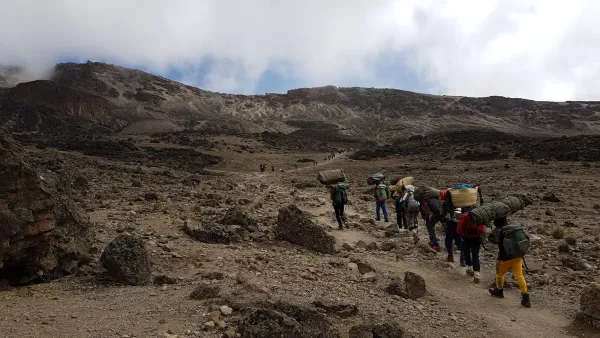
The Machame Route is a trekking route. The right modern technical clothing will keep you comfortable throughout the journey. Along the way you will pass through several climate zones — from tropical rainforest to arctic desert — so your gear needs to be versatile.
Clothing for the ascent
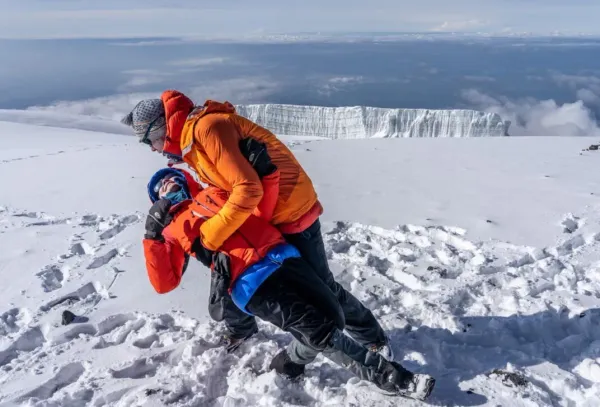
Bring 2–3 Polartec-200 fleece jackets. Opt for hooded models — they provide extra protection against wind and cold.
A warm jacket (down or synthetic) should be comfortable down to -15°C and have water-repellent properties. Temperatures at the summit can drop well below freezing.
A Gore-Tex or equivalent membrane jacket protects against wind and rain — especially important in the rainforest zone, where showers are frequent.
You will need trekking trousers for daytime walking, membrane trousers for rain protection, and warm trousers (down or synthetic) for the final push to the summit.
Pack 2–3 sets of thermal underwear — lightweight synthetic for active movement and heavier weight for overnight stays and the summit push.
Sports T-shirts should be made of polyester and spandex. Avoid cotton — it absorbs moisture and dries slowly, which can be dangerous at altitude.
You will need lightweight fleece gloves for daytime hiking and warm gloves or mittens for the summit assault.
Bags and backpacks
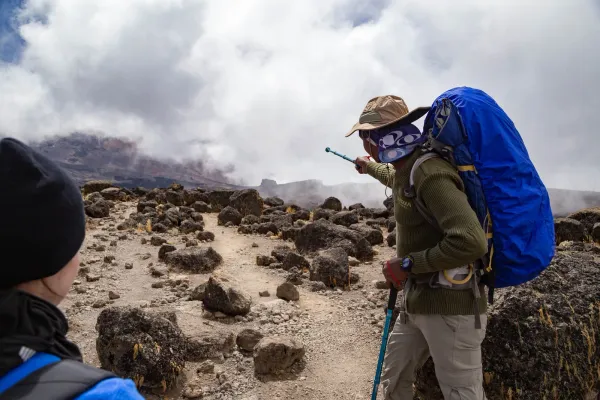
A 25–30 litre daypack for daily hiking should be light, water-resistant, and have convenient side pockets for water bottles.
A 90–120 litre duffel bag for your main gear, which will be carried by porters. It should be made of durable, water-repellent material.
A waterproof dry bag to protect the contents of your duffel from tropical downpours.
One or two water bottles are essential — you need to drink 3–4 litres per day. Staying well hydrated at altitude is critical for preventing altitude sickness.
A 1.5–2 litre hydration bladder (CamelBak-style) greatly improves comfort during the ascent by letting you drink on the move.
Footwear for the ascent
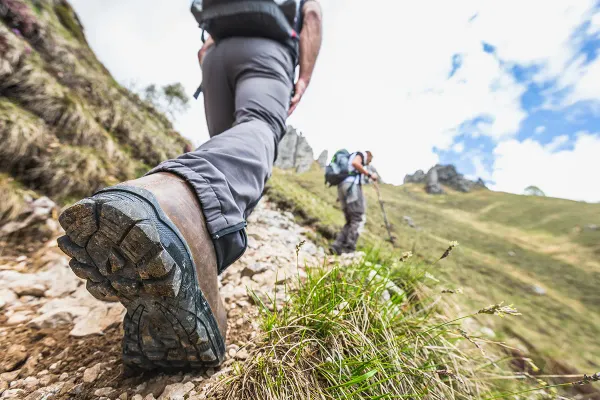
Boots should be ankle-high, mid-weight, and fitted with a waterproof membrane. A stiff sole with good tread will provide stability on rocks and slippery trails.
New boots absolutely must be broken in before the expedition! It is recommended to wear them for at least 2–3 weeks before the trip.
Trail running shoes are suitable for the first days of the ascent, when the path runs through forest and relatively flat terrain.
Merino wool trekking socks are far preferable to cotton — they wick moisture, prevent blisters, and retain warmth.
Gaiters protect against mud, snow, and small stones that work their way into your boots.
Headwear and eyewear
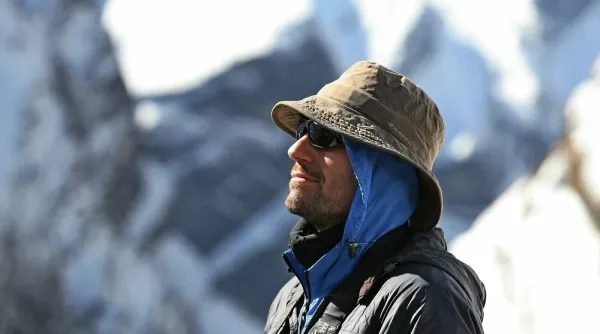
A sun hat or brimmed cap for daytime hiking, and a warm hat (fleece or wool) are both essential at different stages of the ascent.
A balaclava and a buff provide additional protection for your face against cold and wind during the summit push.
Sunglasses should have category 3 or 4 UV protection. Ultraviolet radiation is significantly stronger at altitude.
Lights
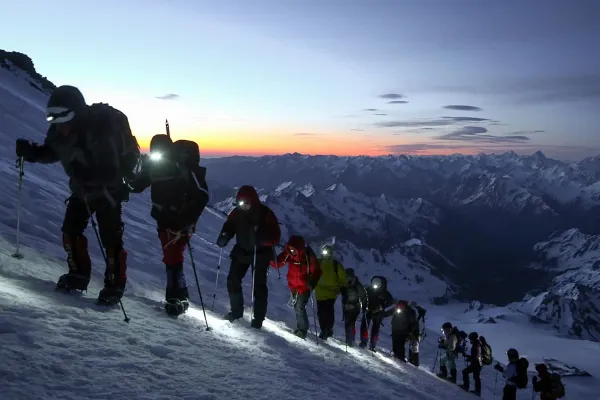
A headlamp rated at 90–100 lumens, weighing no more than 120 grams, with batteries providing 30+ hours of runtime. The summit push begins at midnight, and your headlamp is your only light source for several hours of climbing.
Trekking poles and supports
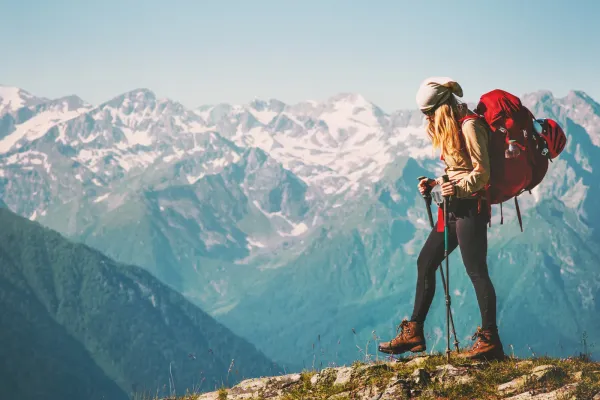
Aluminium or carbon trekking poles weighing around 400 grams significantly reduce the load on your knees — especially on descents. Telescopic poles are more convenient to transport.
Knee braces support the knee joints and help prevent injury during long descents.
Sleeping bag and overnight essentials
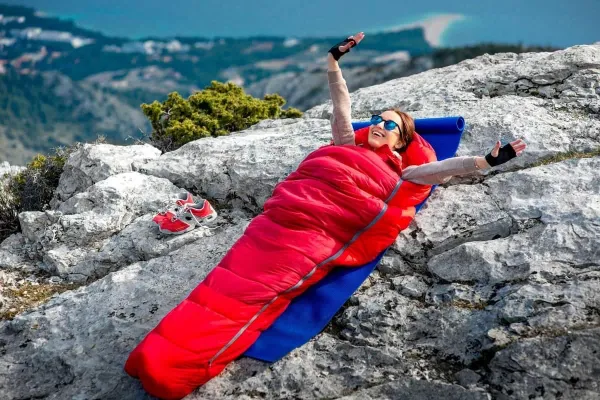
Your sleeping bag should have a comfort limit rating of -10 to -15°C and a drawcord hood. Night temperatures at altitude can drop well below zero.
A sleeping bag liner adds 3–8 degrees of warmth and extends the usable range of your sleeping bag across a wider variety of conditions.
An inflatable pillow provides extra comfort when resting in the tent and takes up almost no space.
Summary
We hope these recommendations prove useful to future climbers. If you have any remaining questions about gear, reach out to the Tour Leader Club team — we are always happy to help!