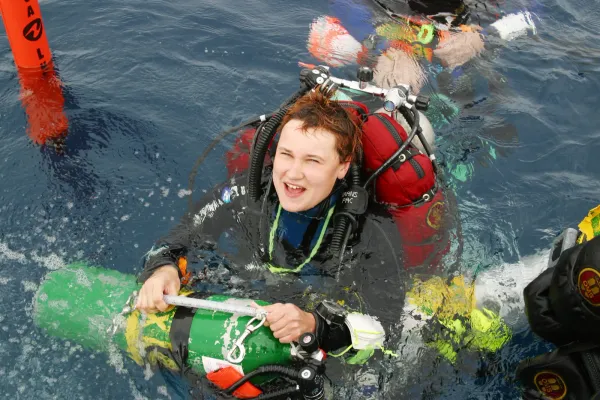
Technical diving means descending to depths that recreational divers stopped at long ago. While the limit for a recreational diver is around 40 meters, technical divers go to 60, 80, 100 meters and beyond. It is an entirely different world, demanding specialized equipment, rigorous training, and psychological resilience.
We spoke with Evgenia Kulish, a technical diving instructor whose personal depth record stands at 145 meters.
— How did you end up doing ultra-deep dives?
I got into diving at 23 and moved through all the recreational training levels fairly quickly. I wanted more — more depth, more adrenaline, more challenge. That is how I found my way into technical diving.
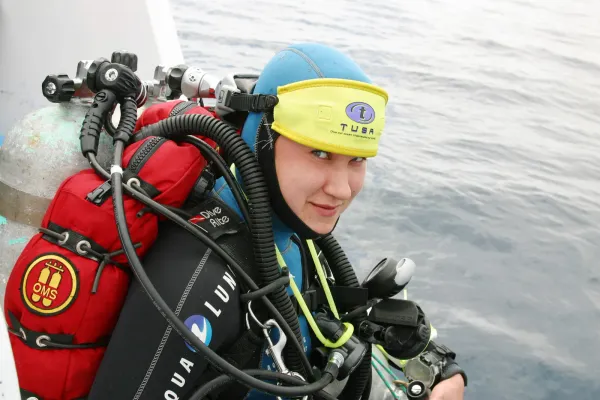
— But you didn't jump straight to ultra-deep dives?
Of course not. It was a gradual progression — from 50 meters to 70, then to 100 and further. Each new depth threshold required new skills, new equipment, and new gas mixes.
— Dives like these must be extremely dangerous?
Ultra-deep dives are always a game of Russian roulette. Below 100 meters, a great deal can go wrong, and providing assistance becomes nearly impossible. If your dive partner runs into trouble at 130 meters, there is no safe way to intervene — an attempt at rescue puts both divers at severe risk. It is the same principle as on Everest: the same laws of survival apply.
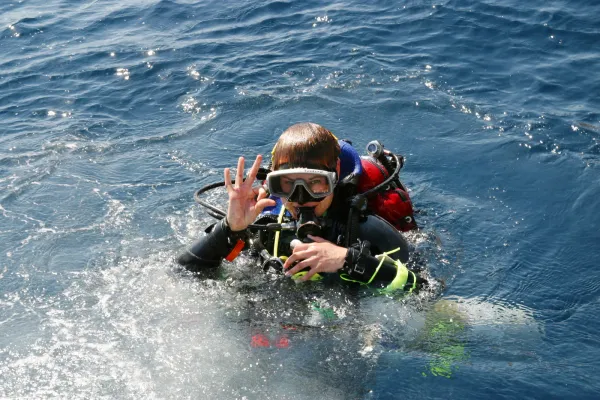
— Does that shape the relationships within a group of divers?
Absolutely. People who dive to those depths together share a very particular bond. It is built on absolute trust and on the understanding that every individual is ultimately responsible for themselves. There is no room for weakness or lack of preparation.
— Tell us about the people who pursue ultra-deep diving.
It is a very small community. There are not many people in the world who regularly go below 100 meters. Everyone knows everyone else; they meet at specialized expeditions and training sessions.
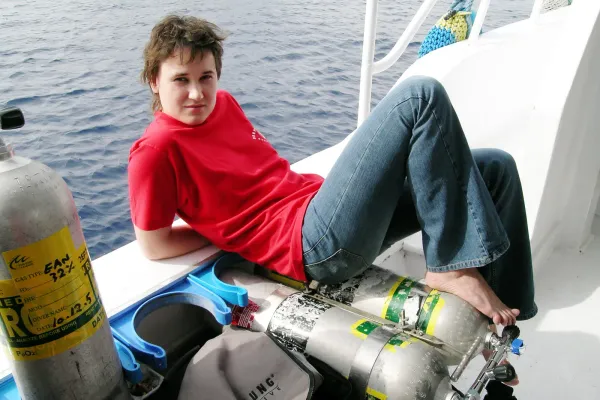
— How many dives have you done?
It is hard to give an exact number, but certainly several thousand. Of those, a few dozen have been ultra-deep — more than 100 meters.
— Have you ever dived in winter conditions?
Yes, we have dived in quarries and lakes in winter. That adds another layer of difficulty — cold water, limited visibility, and the need for a drysuit with extra thermal protection.
— What do you experience at depth?
My deepest record is 145 meters, set in Egypt near Hurghada. At that depth the sensations are extremely intense. The psychological pressure builds with every meter past the 100-meter mark. There is adrenaline, sharp focus, and at the same time an extraordinary beauty in the absolute stillness of the deep.
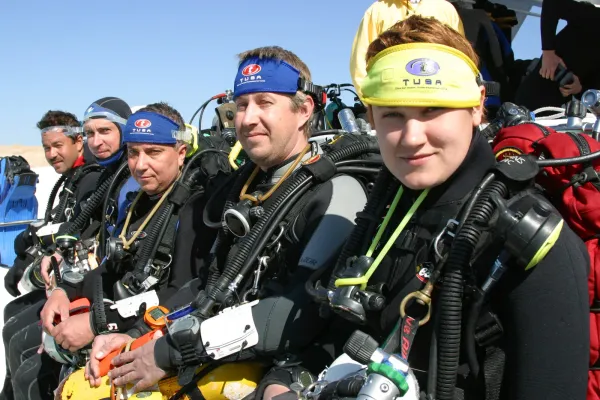
— Are there any traditions that divers follow on shared trips?
Of course! We always celebrate successful dives, share impressions, and debrief every dive in detail. That constant analysis and learning is an important part of technical diving culture.
— Do ultra-deep dives serve any research or other purposes?
Sometimes, yes — exploring wrecks, underwater caves, or geological formations. But more often the motivation is personal challenge and the desire to push the boundaries of what is possible.
— Why did you step back from ultra-deep diving?
I became a mother, and my priorities shifted. When you have a child, you weigh risks very differently. That said, I haven't ruled out returning to it one day.