Fifteen sharks on a single reef, a crocodile at the yacht’s gangway, and a bucket of lobsters caught barehanded. January in Cuba — through Varadero, Havana, and the port of Jucaro — straight into the Gardens of the Queen reserve.
The first four days — Varadero. White sand, +30°C, salty breeze off the Caribbean. We checked into a beachfront hotel as a group. Dry season — not a single cloud, the ocean warm as bathwater.
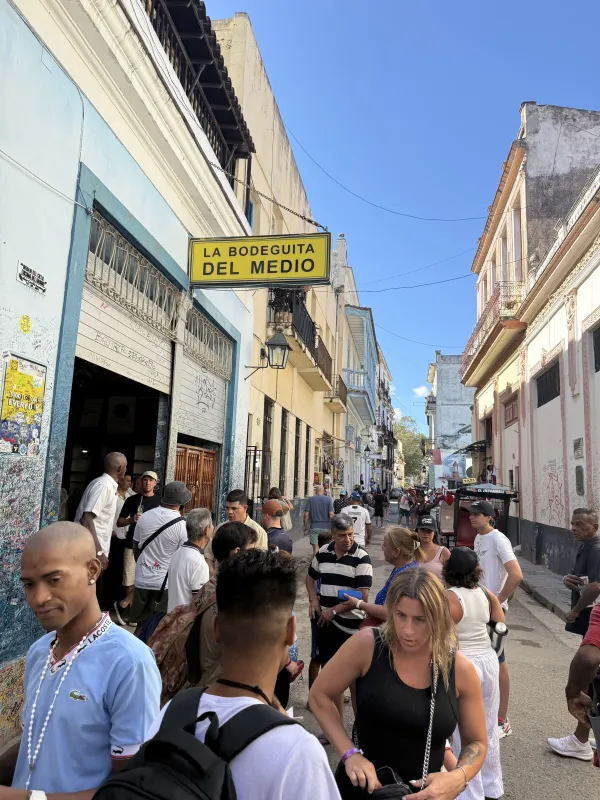
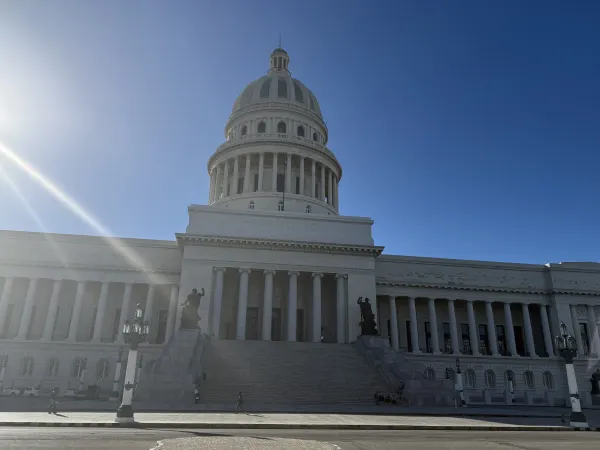
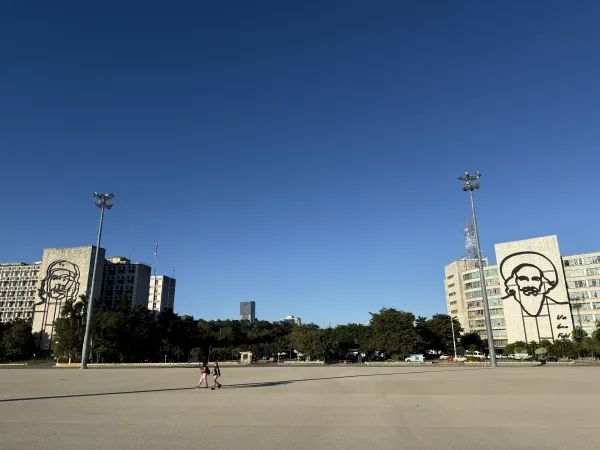
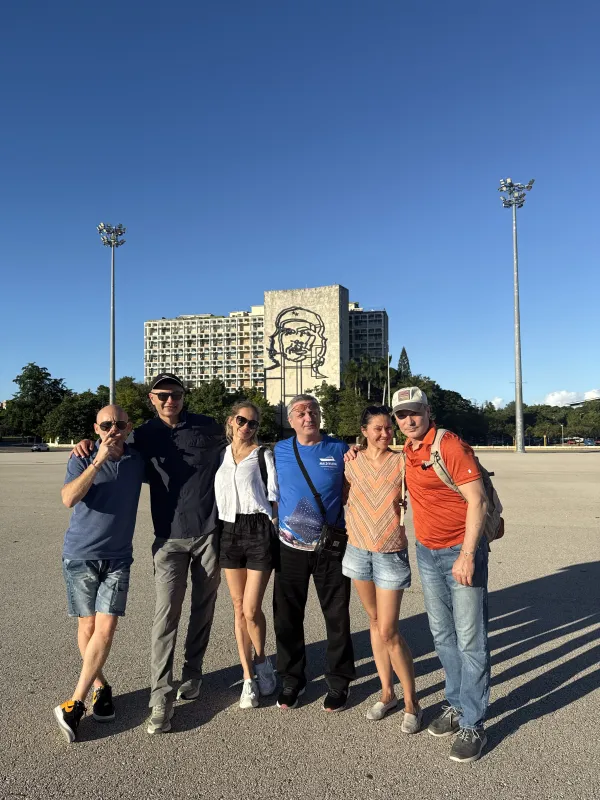
Between the beach — a foray into Havana. The old city, the La Bodeguita del Medio sign, crumbling colonial facades. What struck us — the streets were half-empty. Post-pandemic tourist flow never bounced back. Our guide told stories about Cuban history and daily life while we walked past the Capitol and Plaza de la Revolución, catching ourselves thinking: as if the city had been frozen in the middle of the last century.
Farewell dinner in Varadero — at the Dupont mansion. A historic estate built by an industrialist who manufactured tyres and rubber. Colonial ceilings, an ocean-facing veranda, white tablecloths. The Dupont family left long ago, but the house became a restaurant, and now divers dine here before heading out to sea.
Five a.m. — the bus. Five hours across the entire island to the port of Jucaro. We crossed Cuba from north to south. Along the way — horse-drawn carts on the highway, sugarcane fields to the horizon, petrol stations that get fuel once a day. At one of these we were stuck for two hours: shift change, a tanker arrived, and it was "serviced very slowly." But we got a full dose of Cuban atmosphere.
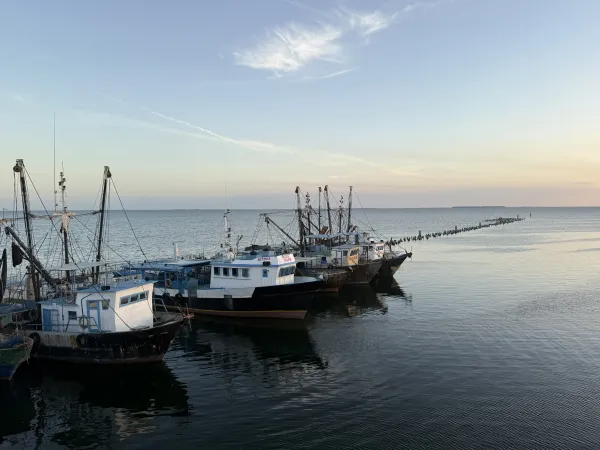
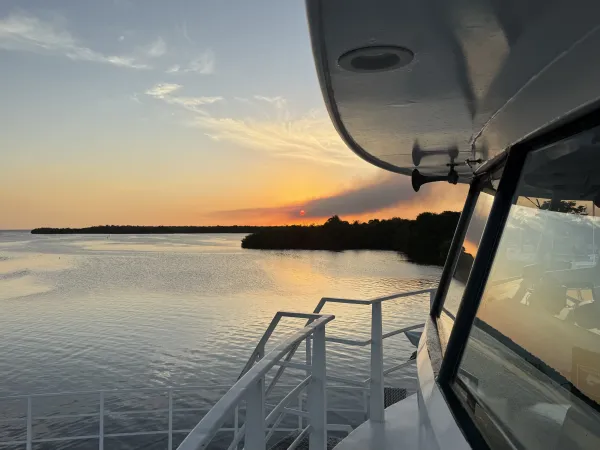
The Gardens of the Queen is the largest no-take marine reserve in the Caribbean. 2,170 square kilometres, 250 islands, established in 1996. The idea reportedly came from Fidel Castro himself — an avid diver. Columbus named it after Queen Isabella. Fewer than three thousand divers are admitted per year. We were among them.
First dive — and instantly clear: something had changed. We'd been here many times, but never seen this. Water — 28°C, visibility — twenty-five metres, zero current. And noticeably more fish. As if the reserve had rested during our years away and bloomed.
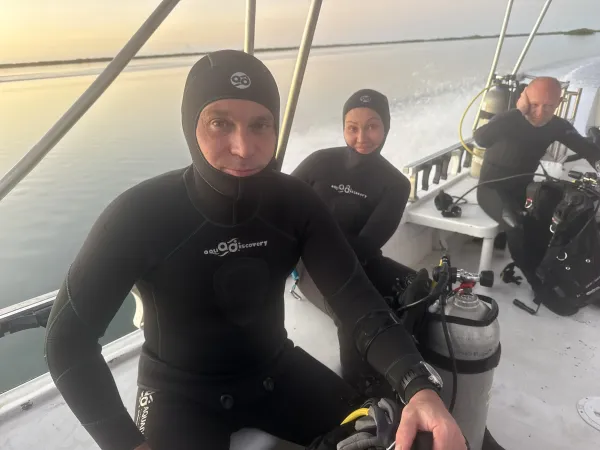

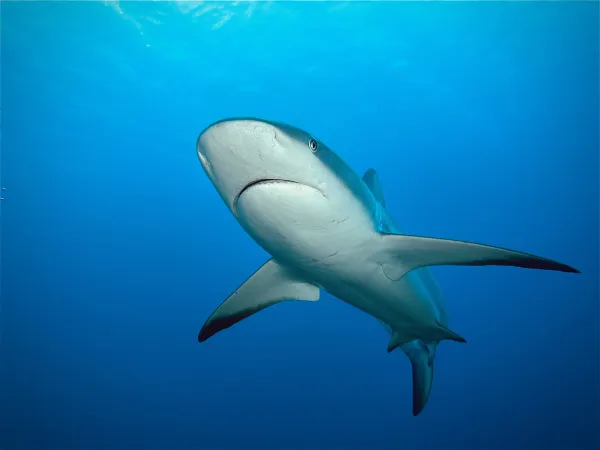
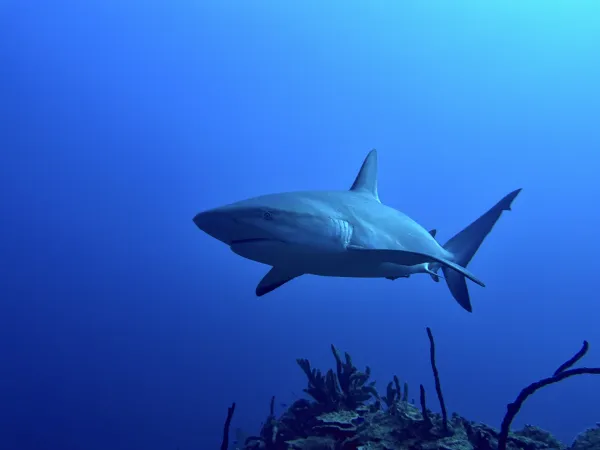
Sharks. Caribbean reef sharks escorted us on every dive — ten to fifteen on a single reef. Smooth, unhurried, utterly indifferent to divers. Silky sharks waited closer to the surface, at the safety stop — gliding within a metre, slipping between our bubbles. Not a hint of aggression. If anything, we were the nuisance: pushing closer with cameras. They tolerated us.
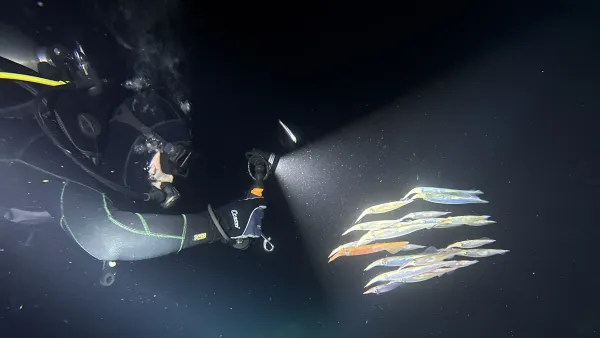
The night dive — another planet. A torch beam carves a cone of light from the black water. Inside it — a school of squid: hovering half a metre away, iridescent, motionless. Tentacles quivering. Turn the torch off — and they vanish, like a hallucination.
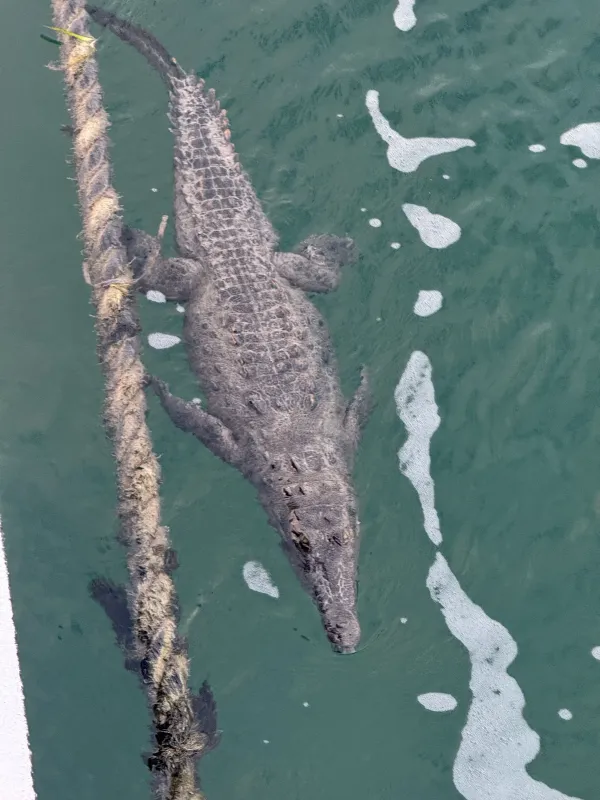
Between dives — island landings. A crocodile kept vigil by the Avalon IV every day. It would glide up to the mooring line and lie there, watching the deck with one eye. Everyone got used to it. Someone tried climbing into the water nearby — the croc bolted immediately. Shy, as it turned out.
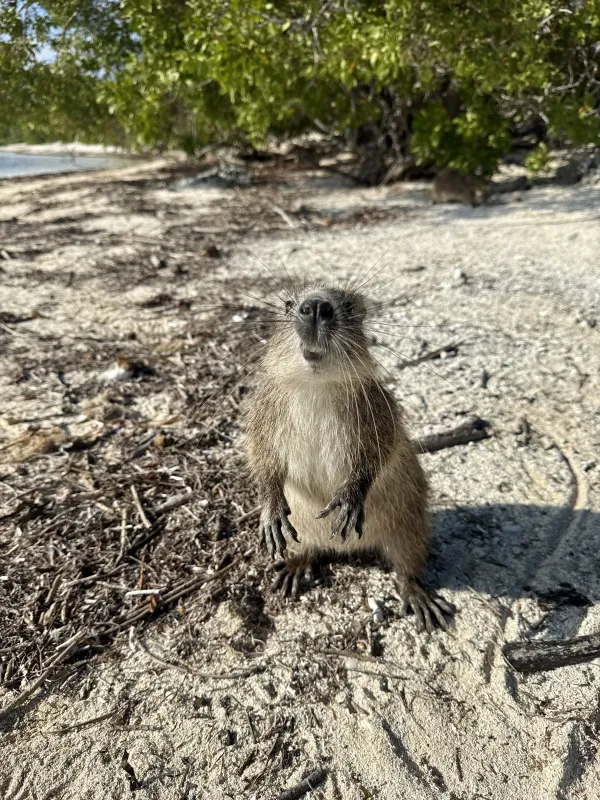
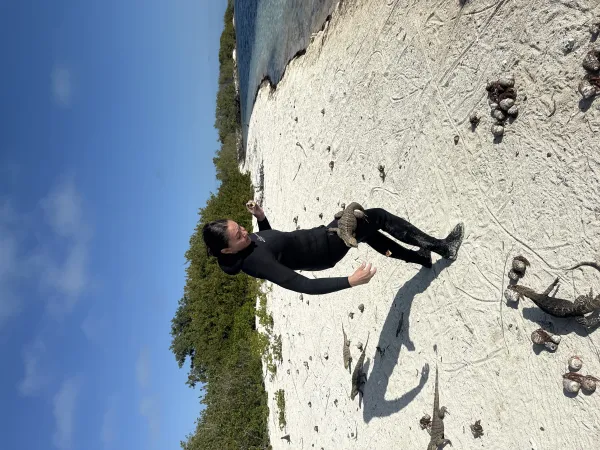
The islands are home to hutias. Cuban endemics the size of a cat — a cross between a giant rat and a guinea pig. Step ashore and they come running, sit up on their hind legs, and stare up at you. Completely tame. Alongside them — iguanas, hermit crabs, pelicans. A small world that has never learned to fear humans.
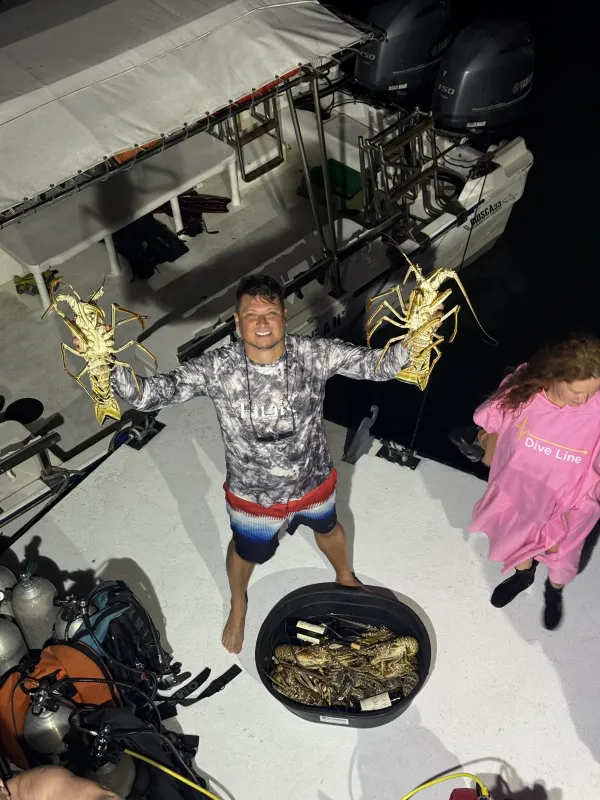
One evening the crew asked: "Want to catch your own lobsters?" We dived in with fins and gloves. An hour later — a full bucket. The lobsters here are forearm-sized, bright orange, heavy. That evening the cook outdid himself: grilled lobster, fresh fish, lemon, garlic. This was every day. The food on Avalon IV is a story in its own right: always a fresh catch, always expertly prepared.
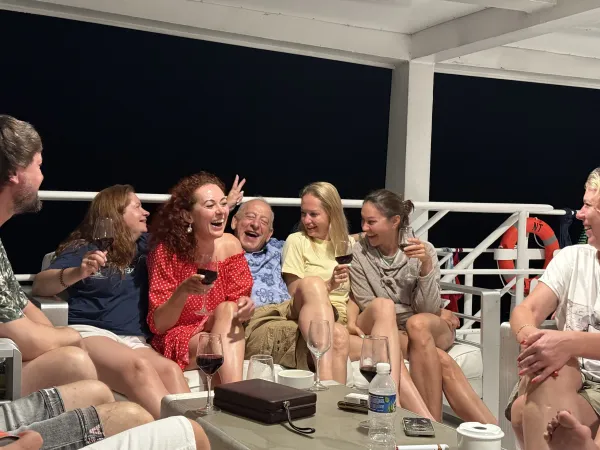
Evenings ended the same way: upper deck, cocktails, sunset, conversation. Cuban rum, warm breeze, stars. Five days — three dives a day — gone in a flash.
On the last morning we disembarked; by evening we were on the plane. As it turned out — just in time. Days later the Venezuela situation erupted, flights started getting cancelled, and the Caribbean route closed. We slipped through.