12 people. 4.9 out of 5. 14 days. Three islands. 23 species of whales. Blue sharks within arm’s reach. Wine that a Russian tsar once drank. A stew cooked by a volcano. And a waterfront covered in signatures left by those the Atlantic let go.
The Azores is a journey that cannot be put into words. Not because words fall short — but because each day is so different from the last that by the third day you stop believing it’s all one trip.
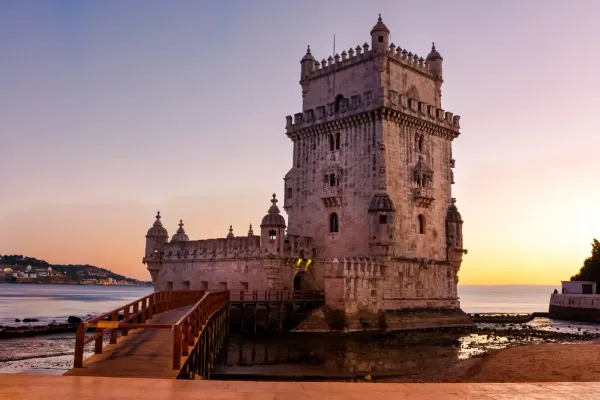
14 days. The route begins in Lisbon — the city of Vasco da Gama, the port from which ships sailed into the unknown five hundred years ago. The Tower of Belém, the Monument to the Discoveries, the Jerónimos Monastery — and a pastel de nata at the Pastéis de Belém bakery, where they have been made from a secret monastic recipe since 1837.
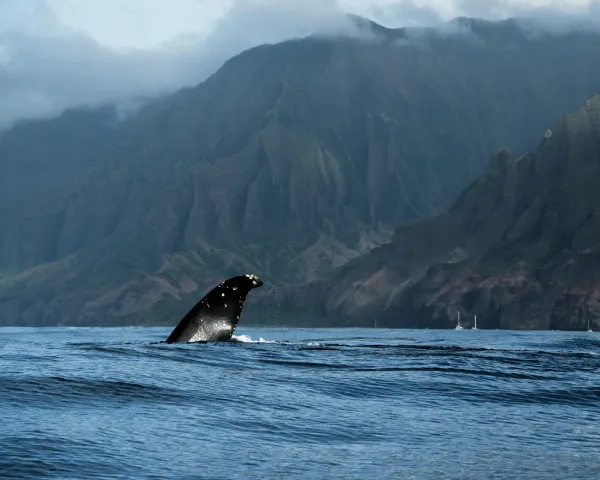
Then a flight to Faial — the island of blue hydrangeas in the middle of the ocean. A waterfront covered in sailors’ signatures. Peter Café Sport and its gin and tonic. The Capelinhos volcano, which rose from the sea over 13 months. And whales. 23 species. Sperm whales, dolphins — and if luck is on your side, a blue whale.
Diving on Faial: volcanic arches as tall as buildings, fault lines, caves lit from above by shafts of light, black coral forests, an octopus under every rock, groupers the size of a suitcase. Princess Alice Bank — discovered by Prince Albert I of Monaco in 1896 — an underwater seamount 45 miles offshore, with a carousel of hundreds of mobula rays circling in the blue like a slow dance. Diving with blue sharks — in the open ocean, no cage, no bottom beneath you, face to face with the most beautiful shark in the Atlantic, its blue back brighter than any sapphire.
The ferry to Pico — the volcano island. 2,351 metres — the highest point in Portugal, usually hidden in clouds like a shy giant. UNESCO-listed vineyards: vines growing among black lava walls, wine with a mineral character. The Whalers’ Museum in Lajes — harpoons, longboats, scrimshaw. And a story of transformation: people who once killed sperm whales became people who protect them. The Gruta das Torres lava tube — 5 kilometres of tunnel carved by lava thousands of years ago.
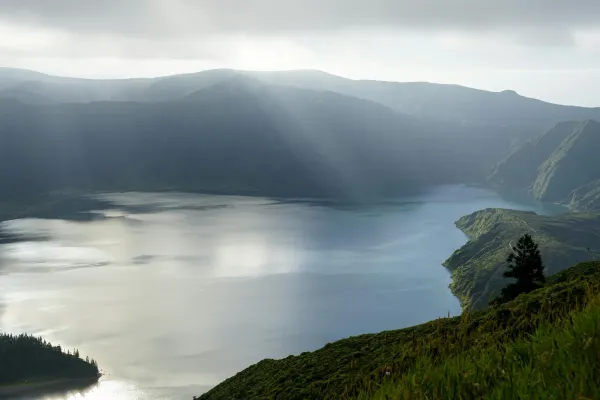
A flight to São Miguel — the green island. Sete Cidades — a twin lake: one blue, one green, with a legend of a princess. Cozido das Furnas — a stew slow-cooked in volcanic earth for 6 hours. Terra Nostra thermal pool — rust-coloured water, 38 degrees, giant tree ferns. The only tea factory in Europe. The only greenhouse-grown pineapples in the world.
Lisbon. Night. The 25 de Abril Bridge, blazing with light. Tomorrow — home.
10 people in the group plus a trip leader. A small company that over two weeks becomes a family — because it’s impossible not to grow close to the people you share a boat with every day, along with dinner, the thrill of a whale sighting, and the shock of a mako encounter. A trip leader from Turleader Club, plus a Russian-speaking guide on each island. Assistance with flights — routing through Istanbul on Turkish Airlines with carefully matched connections. Domestic flights (Lisbon — Faial, Pico — São Miguel — Lisbon) and the Faial — Pico ferry are included. 4-star hotels on each island. All transfers. All guided excursions. All entrance fees. Three lunches.
Diving is optional (€930 for 5 dives plus shark watching). And this is an important detail: the Azores is a journey that works on two levels.
Level 1 — for divers: five days underwater. Princess Alice Bank and the mobula carousel. Blue sharks and mako in the open ocean. Volcanic arches and coastal octopuses. Black coral. Groupers. Mantas. One of the best non-tropical diving destinations in the world.
Level 2 — for everyone: whales (23 species!), volcanoes (active!), wine (UNESCO!), tea (the only one in Europe!), cozido (cooked by a volcano!), Sete Cidades (twin lakes!), thermal pools (38°C!), greenhouse pineapples (the only ones in the world!), Lisbon (Vasco da Gama!). The programme works perfectly without a single dive — and it works powerfully.
A couple can come where one dives and the other explores the islands above ground. You meet over dinner and swap stories: “I saw a mako!” — “And I ate a stew cooked by a volcano!”
The Azores is a crossroads. Not Europe and not America. In between. In the middle. A place where sailors leave their signatures on the waterfront so the Atlantic will let them go. Where the Prince of Monaco abandoned his palace for the ocean — and discovered a seamount where hundreds of rays now circle. Where whale hunters — descendants of men who killed sperm whales with harpoons from open longboats — stand on those same clifftops and search for the same whales, but now to show them, not to kill them. Where the harpoon has become a pair of binoculars. Where volcanoes cook lunch. Where wine grows among lava. Where death has turned into protection.
A week after you return — when you’re back at the office, on the subway, swept up in the current of daily life — you’ll suddenly remember. Not a specific image. A feeling. A blue shark half a metre from your mask. A sperm whale’s tail slipping into the deep. A carousel of mobula rays above a seamount. Black lava walls laced with green vines. A rust-coloured thermal pool, lying in it like you’re cradled by a volcano. And the Horta waterfront — colourful, scrawled over, covered in signatures left by those the Atlantic let go.
Maybe it’s time to leave yours. Buy paint from the shop by the marina. Find a free patch of concrete (there are fewer and fewer). Draw something. A name. A date. Coordinates. A flag. A mark that you were there. That the Atlantic let you go.
A place where the world is halfway. Between shores. Between cultures. Between past (whalers) and present (whale watching). Between fire (volcanoes) and water (ocean). Between Europe and America.
And at that halfway point — more beautiful than either shore.
1–14 August 2026. Azores. Whales, mantas, and volcanoes. From €3,520.