He changes color 47 times a minute. He has 3 hearts. And he has more followers than you.
A team of marine biologists from Raja Ampat University (Indonesia) has published findings from a three-year study of an octopus of the species Abdopus aculeatus who, in the researchers’ view, “exhibits behavior indistinguishable from running a social media account.”
The octopus, nicknamed Kevin, lives at a depth of 8 meters off the coast of Misool Island. Every morning, at around 7:00 local time, Kevin emerges from his den, takes up position on a coral ledge, and begins changing color.
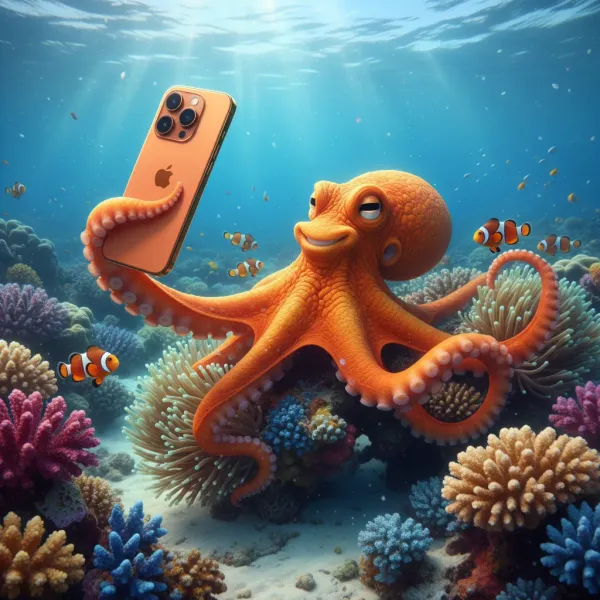
Not randomly. Methodically. With pauses. As if waiting for a reaction.
The Discovery
Dr. Lina Wirahadikusuma, the team’s lead researcher, noticed the pattern by accident. She was photographing Kevin for a local fauna catalog and observed that whenever a camera appeared, he would “strike a pose that can only be described as his best angle.”
— At first we assumed it was a defensive response, — says Wirahadikusuma. — But a defensive response does not involve rotating 35 degrees to the left and retracting two tentacles to visually elongate the silhouette.
PhD student Nur Fatima proposed an alternative hypothesis: “Maybe he’s just beautiful and knows it.” The academic committee rejected the phrasing but broadly agreed with the substance.
Over three years, the team documented 847 “sessions,” in each of which Kevin displayed a sequence of 12–15 color combinations before returning to his den. Analysis revealed that no combination was ever repeated. Not one. Over three years.
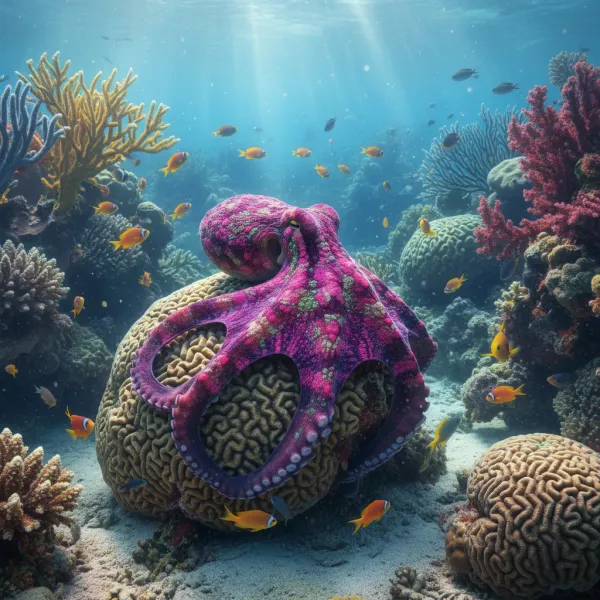
— Instagram influencers recycle content within 3 weeks, — says Dr. Wirahadikusuma. — Kevin hasn’t repeated himself once in three years. From a content strategy standpoint, he outperforms 99% of influencers. Including those who have a producer, a stylist, and a ring light.
The Audience
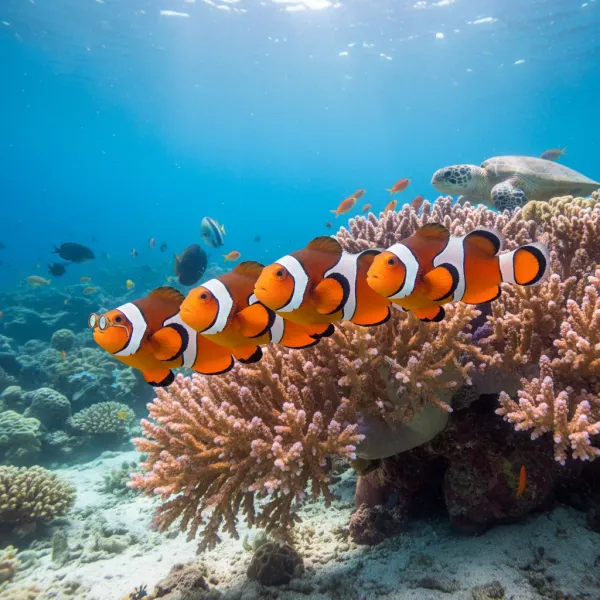
Most remarkable of all — the viewers. Every morning, between 4 and 12 clownfish, two moray eels, and a mantis shrimp swim to Kevin’s coral ledge. They take up the same positions and watch each “session” from start to finish.
The mantis shrimp is a special case. He arrives first and leaves last. The researchers believe he serves as a moderator: twice during the observation period he struck a scorpionfish that tried to take someone else’s spot. Once, he struck a cuttlefish that started changing color at the same time as Kevin.
— This isn’t an audience, — Dr. Wirahadikusuma clarifies. — It’s a community. With moderation, hierarchy, and zero tolerance for spam.
The moray eels, the researchers believe, are “silent followers” — they never interact with Kevin directly but show up reliably every time. In marketing they’re called a “warm audience.” In the ocean, they’re called moray eels.
The Like Experiment
The team ran a controlled experiment. Two LED indicators were placed near Kevin: green (“like”) and red (“dislike”).
Results: - In response to green flashes, Kevin increased the intensity of his color transitions by 23% and added new elements — undulating tentacle movements the team dubbed “stories” - In response to red flashes — he cut the session short, turned a pale grey, and retreated to his den. Once, he released ink - In the absence of any signal — he continued as usual, but “with the energy of a creator who posted and got zero likes in the first hour”
— We ran the test three times, — says Wirahadikusuma. — Statistically significant. Kevin exhibits something indistinguishable from a need for validation. We are not claiming this is vanity. We are claiming we have no evidence it is not vanity.
The Competition
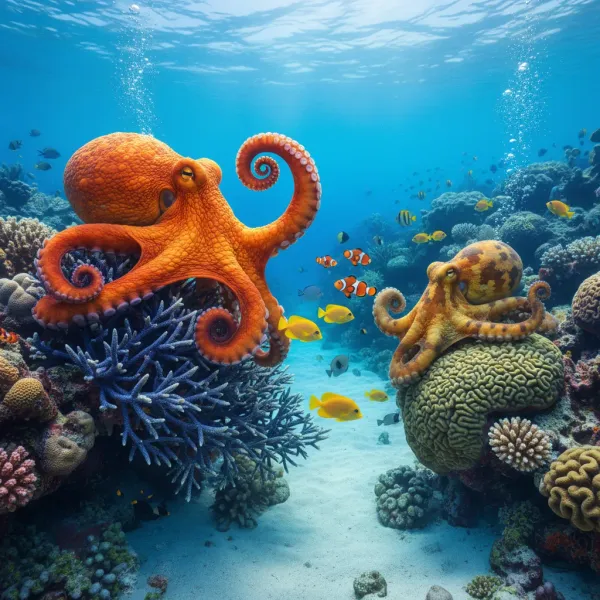
In January 2026, a second octopus appeared 40 meters from Kevin. The researchers named him Dave. Dave began holding his own color sessions — at roughly the same time, on a similar coral ledge.
Kevin’s response was immediate. He moved his sessions an hour earlier. He added two new colors to his repertoire — vivid pink and metallic green. He increased the duration from 10 to 14 minutes. And, according to Fatima’s observations, “he started turning toward Dave’s audience more often, as if trying to poach their viewers.”
— Classic competitor response, — explains Wirahadikusuma. — Earlier posting time, visual refresh, extended runtime. If Kevin were human, we’d say he was “rebranding.” If he were a teenager, we’d say he was “trying to crush his ex.”
Dave lasted two weeks. His audience (one angelfish and a shrimp) never grew. He retreated to another reef. The shrimp stayed.
The Cuttlefish Incident
On March 14, 2026, an episode occurred that the team logged in their report under the heading “requires further study.”
During Kevin’s morning session, a large cuttlefish swam past his coral. It stopped, looked at Kevin, and — to the observers’ astonishment — began changing color in sync. The same hues. The same rhythm. With a fraction-of-a-second delay.
Kevin froze. He didn’t move for two seconds. Then he started changing color faster. The cuttlefish sped up too. Kevin shifted to combinations he had never used before. The cuttlefish mirrored them.
The mantis shrimp watched.
At the twelve-minute mark, Kevin abruptly turned completely white — something he had never done in three years — released a cloud of ink, and retreated to his den. He didn’t return until the following morning.
— We don’t want to use the word “battle,” — Wirahadikusuma said in an interview. — But we don’t have another word.
The cuttlefish was never seen again. The mantis shrimp held his post.
Kevin’s Stats (Current)
- Posting schedule: daily, 6:00 ± 8 minutes (after Dave appeared — one hour earlier, and he never went back)
- Session duration: 12–14 minutes (previously 8–10)
- Unique color combinations: 847+
- Regular audience: 4–12 clownfish, 2 moray eels, 1 mantis shrimp (moderator)
- Defeated competitors: Dave (2 weeks), cuttlefish (1 day)
- Engagement rate: 100%. All viewers watch to the end. No unsubscribes recorded. No subscribes either, for that matter — fish can’t press buttons
- Monetization: none. Kevin works for the love of it
What’s Next
Raja Ampat University has submitted a grant application to study “social behavior of cephalopods in the context of digital media theory.” A reviewer wrote: “Not sure this is science. But I definitely cannot stop reading.”
Kevin keeps showing up every morning. The clownfish keep swimming over. The mantis shrimp keeps moderating. The moray eels keep watching in silence.
And the social media manager of our Telegram channel, upon reading this article, quietly closed his laptop and went to lunch. For three hours.
Happy April Fools’. Kevin isn’t real. But octopuses genuinely do change color 177 times an hour, solve puzzles, open jars from the inside, and recognize individual people. And a mantis shrimp’s claw strikes with the acceleration of a bullet — 10,000 g. So who’s the one running Instagram here.