800 kilometres of stormy ocean. 800 lost ships. 20,000 drowned sailors. And — the only way to Antarctica.
There is a rule, unspoken but absolute: to see Antarctica, you must pass through Drake Passage. Not fly over it. Not go around it. Pass through it. Two days across the widest, deepest, and most treacherous strait on the planet.
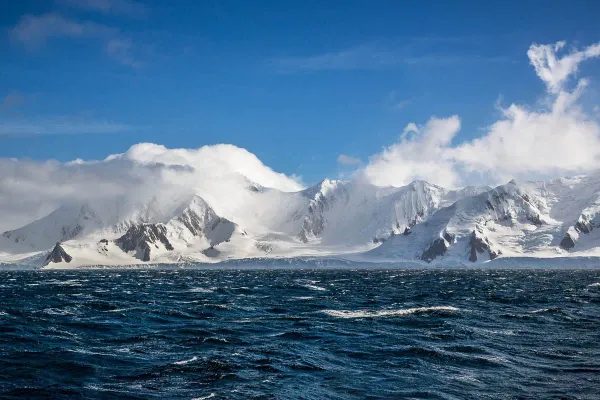
Why the most treacherous? Because Drake Passage is the only place on Earth where nothing stands in the wind’s way. The Antarctic Circumpolar Current — the most powerful ocean current in the world — flows around Antarctica from west to east, and between South America and the Antarctic Peninsula it has nowhere to go but squeeze through a 800-kilometre-wide bottleneck. The cold waters of the Southern Ocean collide with the warm waters of the Atlantic. This creates the “Antarctic convergence” — a boundary where water temperature drops by several degrees over just a few kilometres. And this is precisely where the waves are born.
What kind of waves? Captains of ships crossing the Drake have documented waves of 20 metres — the height of a six-storey building. There are records of 25-metre waves — an eight-storey building bearing down on you at the speed of a freight train. If you’re lucky, you’ll get “Drake Lake”: calm, mirror-flat water, albatrosses gliding low over the surface. If you’re not lucky, you’ll get “Drake Shake”: tossed around like a dirty sock in a washing machine on a 36-hour spin cycle. That’s how one expedition ship captain described his crossing.
Sailors have always feared these waters. For centuries. Ernest Shackleton, one of the greatest polar explorers, crossed the Drake in 1916 in an open lifeboat — the 22-foot James Caird, with five companions, no charts, no radio, navigating by the stars when they could be seen through the clouds. Alfred Lansing, who chronicled this voyage, called the Drake “the most feared stretch of ocean on the planet — and rightly so.” Shackleton and his men survived. But Shackleton later admitted that in his entire life he had never known fear like those 16 days on the waves of the Drake.
In 2019, American explorer Colin O’Brady and a crew of five became the first people to cross Drake Passage by rowboat. Twelve days in a rowing boat. Waves of 6–7 metres. Sleep in snatches — 90 minutes at a time, because the oars had to keep moving around the clock, otherwise the current would push them back. When O’Brady stepped ashore in Antarctica, he couldn’t stand — his legs had forgotten solid ground.
At Cape Horn — the southernmost tip of South America, where the Drake begins — there stands a monument. A metal albatross, wings spread wide over the cliff, facing south, toward the open ocean. A memorial to more than ten thousand sailors who perished in these waters over five centuries. Since the strait was first navigated, around 800 ships have sunk here. Twenty thousand people never came home. The floor of Drake Passage is the largest ship graveyard on the planet.
The strait itself was discovered by accident. And by a pirate.
In 1578, English privateer Sir Francis Drake was leading a squadron of five ships through the Strait of Magellan — the narrow, winding passage between the southern tip of South America and the Tierra del Fuego archipelago. Drake was heading to raid Spanish colonies on the Pacific coast. But as the squadron cleared the strait, a storm of extraordinary violence scattered the ships across the ocean. The flagship Golden Hind was driven far to the south — so far that Drake could see there was no land beyond Tierra del Fuego. Only open ocean to the horizon.
Drake had accidentally proven what cartographers had argued over for centuries: Tierra del Fuego was not part of a vast southern continent, but an archipelago. And to the south — only water. A great deal of water. 800 kilometres of furious, unpredictable water.
When Charcot first sailed the Français through the Drake in 1903, the crossing took five days. A wooden ship with no stabilisers, no radar, no weather forecasts — just sail, a steam engine, and the captain’s instinct. Half the crew were so seasick they couldn’t get out of their bunks.
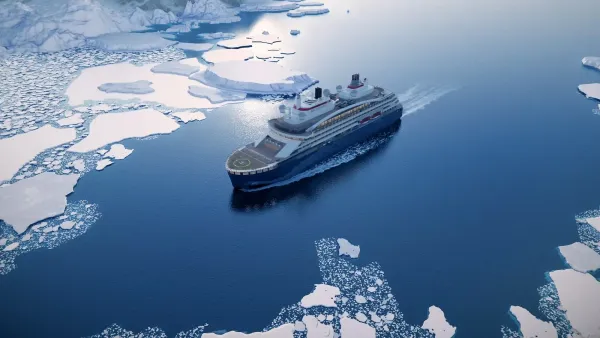
Le Commandant Charcot crosses the Drake in two days. At 31,757 tonnes displacement, this is no lifeboat and no sailing ship. Inertial stabilisers dampen the roll: specialised water tanks shift liquid from side to side to counteract the heel. The meteorological radar sees cyclones hundreds of miles away — the captain knows what lies ahead and can adjust course accordingly. Even in 10-metre swells, you can sleep in your cabin without gripping the bunk — though it’s wise to keep your glass of water in its holder.
Of course, if it’s a “Drake Shake,” you’ll feel it. An icebreaker is not a submarine; it rides the surface, and a ten-metre wave is a ten-metre wave for any ship. But the difference between the wooden Pourquoi Pas? of 1903 — no stabilisers, no radar, no weather forecast — and Le Commandant Charcot of 2027, with its 34 megawatts of power and steel hull, is the difference between crossing a river on a log and driving across a bridge. Both get you to the other side. But the experience is rather different.
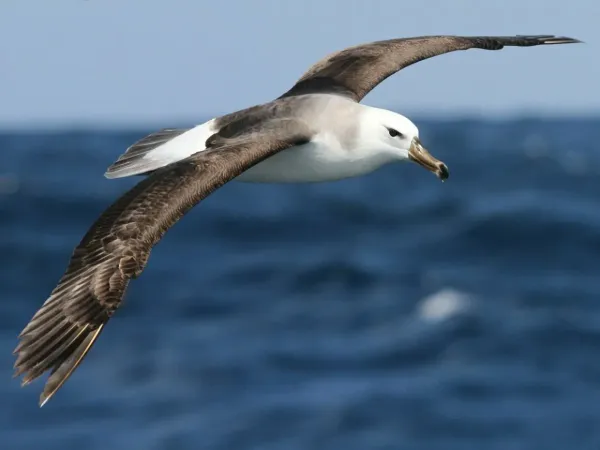
On the second day of the crossing, if you scan the horizon from the upper deck with a decent pair of binoculars, you’ll spot the first sign: albatrosses. The wandering albatross has the largest wingspan of any bird in the world — up to three and a half metres. It can soar for hours without a single wingbeat, riding the updrafts off the waves. Albatrosses don’t live on continents. They spend most of their lives above the open ocean, coming ashore only to nest on subantarctic islands. When you see an albatross, you have left the world of people behind.
And then — crossing the Antarctic Circle. 66°33’ south latitude. The place where in summer the sun doesn’t set for days on end, and in winter it doesn’t rise for months.
Champagne is poured on deck. The captain gives a brief speech. A “polar passport” is presented — a certificate stamped with the coordinates and date of crossing. A ceremony, of course. A tradition observed by every expedition vessel. But a ceremony that carries real weight: of the eight billion people on Earth, the vast majority will never cross a single polar circle. You stand on the deck of an icebreaker, past the 66th parallel, glass in hand — and you suddenly realise you are farther from home than you have ever been. And that it’s only going to get farther from here.
Beyond the polar circle, the light changes. Not the colour — the light itself. The sun doesn’t climb high here; it skims the horizon like a spotlight on a stage, casting long golden shadows even at noon. Icebergs that looked white during the day turn pink by evening, then lilac, then blue. The photographers on board stop putting their cameras away — every fifteen minutes the light shifts, and every fifteen minutes everything looks different.
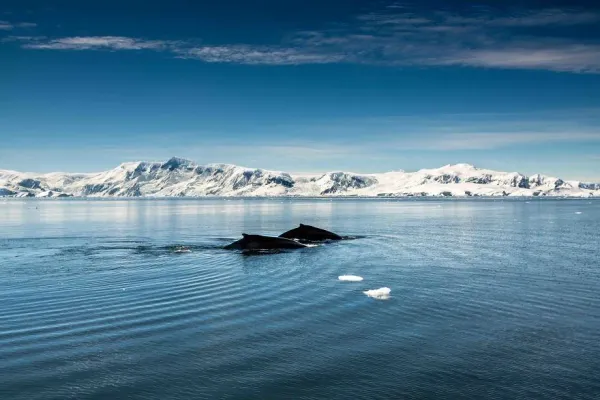
And the silence.
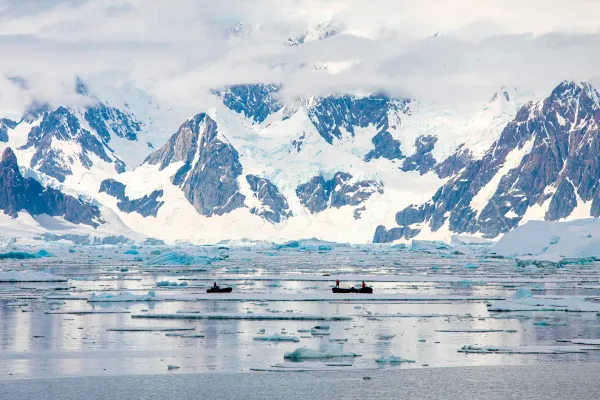
A silence unlike anything you have ever heard. It isn’t simply the absence of sound — there are sounds: the creak of ice, like a cooling fireplace; the lap of water against the hull; the distant exhale of a whale, like the sigh of a giant. It’s the absence of noise. Human noise. No hum of engines. No aircraft. No sirens. No music drifting from other windows. No voices through the wall. No air conditioning. No refrigerator. None of that background drone of civilisation we’ve stopped noticing because we’ve heard it since the day we were born.
Here, it’s gone. And when it disappears, you suddenly understand how loudly you have been living all these years.
The air is different too. It smells of nothing. Literally — nothing. No exhaust fumes, no cooking, no perfume, no trees, no earth. Antarctic air is among the cleanest on the planet: there is no industry here, no soil, no vegetation, no dust. You are breathing air that has not passed through a single city, a single factory, a single car. And that strikes you more powerfully than any landscape.
The first landing — Detaille Island, at the entrance to the Gullet. Ashore by Zodiac — an inflatable rigid-hulled boat that ties up directly against the rocks. You step onto Antarctic ground. Or rather, Antarctic rock — there is no soil here, only bare granite polished smooth by millennia of glacial grinding.
The British research station “Base W,” built in 1956, abandoned half a century ago. Empty wooden buildings — two barracks, a weather station, a storage shed — with tins still standing on the shelves. The labels have faded, but the tins are intact: nothing rots in the Antarctic cold. On the table, a yellowed observation log; the final entry is dated 1959. Dog yards — for the huskies that once pulled sledge expeditions into the interior of the continent. The dogs have been gone since 1994: the Madrid Protocol to the Antarctic Treaty banned the presence of non-native animal species on the continent. The dogs were evacuated. The penguins stayed.
And there are penguins here. And they walk right up to you. On their own. They don’t run, they don’t hide, they show not the slightest anxiety. They look up at you — head tilted, beak slightly open, like a puppy seeing a mirror for the first time. One comes right up close. Pecks at the lace of your boot. Steps back. Comes forward again. You stand completely still, barely breathing — not because you’re afraid of startling it, but because you don’t want to break the moment.
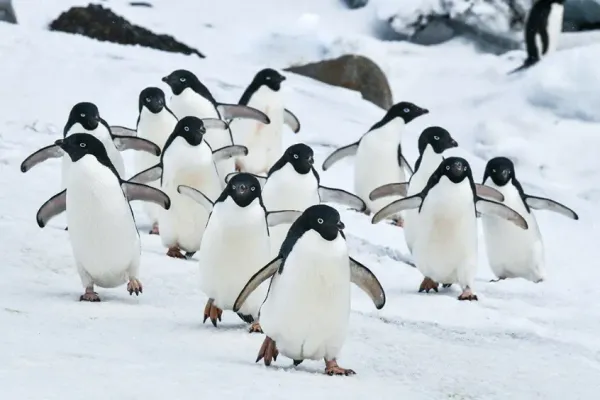
Because they are not afraid of you. They have never seen you before. Antarctica is the only continent where land animals have no instinct of fear toward humans. They evolved for millions of years without terrestrial predators.
To them, you are not a threat. You are simply a very strange, far too tall bird that, for some inexplicable reason, cannot swim.
They don’t run away. They come closer. They tilt their heads. They look you in the eye.
And beneath the water, in the darkness, three kilometres down, live creatures with transparent blood.