He could have become the greatest neurologist in France. Instead, he became the man who understood Antarctica.
To understand why Charcot did not remove his boots that night off the coast of Iceland, you have to go back forty years. To Paris at the end of the nineteenth century, to an apartment on the Boulevard Saint-Germain that smells of formalin and old books.
Jean-Martin Charcot — the father — is seeing patients. Some are famous: they come to him from all over Europe. A young Viennese physician named Freud will spend several months here, watching the elder Charcot work with hysterics and epileptics. Freud would later call those months a turning point in his career.
Little Jean-Baptiste grows up in this atmosphere. He watches his father lean over the microscope late into the night. He watches patients kiss his father’s hands. He sees shelves of medical journals from floor to ceiling. The path is clear, and the boy follows it obediently: medical school, brilliant grades, a dissertation.
In 1895, Dr. Jean-Baptiste Charcot defends his doctoral thesis on progressive muscular dystrophy. He is 28 years old. Before him lies a professorship, a private practice, his father’s name as a passport to any scientific salon, and a flawless career in one of the most respected cities in the world.
He walked away from all of it.
What drives a man with a perfect biography to give everything up and head to the ends of the earth? Charcot never explained it in detail. There is a letter in which he writes to a friend: “I am suffocating in Paris. I need a horizon where nothing is visible beyond.” There are diary entries where he describes a feeling familiar to anyone who has ever stood on the shore of an ocean: the sense that real life is out there, beyond the line where water meets sky.
In 1903, at the age of 36, Charcot bought a three-masted schooner, named her Le Français, and sailed for Antarctica.
It was the “heroic age” of Antarctic exploration — a time when several expeditions were racing toward the South Pole at once. Norwegian Amundsen was planning his secret expedition (his crew believed until the last moment they were heading to the Arctic — he revealed the truth only at the island of Madeira, already underway). Briton Scott was raising funds for an expedition that would end with his death — he would reach the Pole, find a Norwegian flag planted there, and die on the way back, just 18 kilometers short of a supply depot. Shackleton had already gotten closer to the Pole than anyone — 88°23’ South, just 180 kilometers from the goal — and turned back because the food had run out.
Charcot took no part in this race. He did not even follow it with particular excitement — when he later learned of Scott’s death, his diary entry was terse: “Scott paid for his ambitions. Science demands not sacrifice — it demands patience.”
The Pole did not interest him. The Pole is a point. A mathematical abstraction. What is there to do there? Plant a flag in the snow and take a photograph? Charcot was interested in everything else — everything lying between the edge of the ice and the horizon.
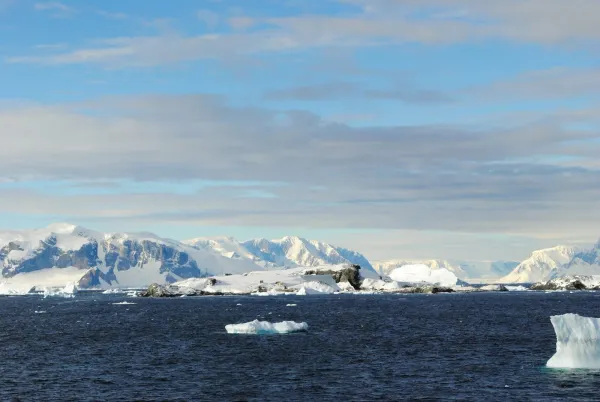
Coastlines that appeared on no map in the world. Ocean currents whose direction and temperature no one had measured. Depths no one had sounded. Species of birds, fish, and marine animals no one had classified. Rock formations no one had ever held in their hands. Charcot did not want to conquer Antarctica — he wanted to read it. As a doctor reads a patient’s body: carefully, without haste, with respect for what lies before him.
Charcot had originally planned to go to the Arctic. Then word came: Swedish explorer Otto Nordenskjöld had disappeared in Antarctica along with his expedition. Without hesitation, Charcot turned his course south to search for the missing men. Nordenskjöld was found alive before Le Français arrived, but Charcot was already in Antarctic waters. And he stayed.
The first expedition lasted two years. Le Français — a small schooner never designed for polar waters — became icebound off the shores of Booth Island, in a bay that Charcot named Port Charcot — in honor of his father, as with everything important in his life. The crew spent the polar winter trapped in the ice, at temperatures down to minus thirty degrees Celsius, in darkness that lasted twenty hours a day.
The morale of the crew was sinking. Forced inactivity is an expedition’s worst enemy. Charcot knew this and organized life aboard ship with clockwork precision: by day, meteorological observations, depth soundings, and the collection of specimens by kerosene lamplight. In the evenings, lectures that the scientists took turns delivering to one another. Chess. Musical recordings on the phonograph. And newspapers — a stack of French newspapers that Charcot had brought from Paris. One per day, to stretch them out across the whole winter. Each evening, fresh news that was already months old. But in the frozen darkness of Antarctica, even stale Parisian gossip was worth its weight in gold.
On 15 January 1905, already on the return voyage, Le Français struck a submerged rock off the shores of Alexander Island. The hull was breached. Charcot and his crew worked around the clock — caulking the holes, pumping out the water, rigging a collision mat. The ship was saved — she limped to Argentina, stern-low, with the pumps running continuously. Charcot lost the ship, but he did not lose a single man.
Over two years he charted more than a thousand kilometers of Antarctic coastline — an entire stretch he named Loubet Land in honor of the President of France. He brought 75 crates of geological, botanical, and zoological specimens back to Paris. The scientific results filled 18 volumes, published at state expense. Some of the marine species he described still bear the name Charcot in Latin classification.
The ship was lost — Le Français remained in Argentina, sold for parts. But not one man had died. And the scientific results — 18 volumes published at state expense, hundreds of described species, a thousand kilometers of new charts — were priceless. The French Academy of Sciences awarded Charcot its gold medal.
He had barely had time to receive it. He was already designing a new ship.
Pourquoi Pas? — the ship of his dreams — was laid down at a shipyard in Saint-Malo in 1907. Charcot was personally involved in the design: he chose the timber for the planking (oak for the hull, elm for the keel), calculated the spacing of the frames, and insisted on three fully equipped laboratories. This was the first research vessel designed from the outset for extended polar expeditions, rather than converted from something else. A library, electricity, steam heating, a wine cellar. And scientific equipment that any university would have envied.
In 1908, Pourquoi Pas? sailed out of Le Havre with thirty people aboard. Among them was Charcot’s wife — Marguerite. She accompanied the expedition as far as Punta Arenas, the southernmost city on earth, and stepped ashore. Beyond that point — only men and ice.
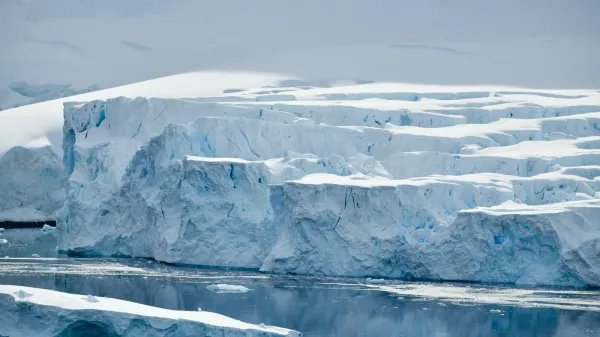
The second expedition wintered off Petermann Island — a tiny scrap of rock in the Lemaire Channel, one of the narrowest and most scenic passages in Antarctica. There, wedged between sheer glaciers, Pourquoi Pas? stood for several months. The crew studied marine fauna, took hydrographic soundings, and recorded meteorological observations every two hours — day and night, in storm and in calm.
The discoveries of this expedition remain on the world map to this day. Charcot completed the charting of Alexander Island — the very one off whose shores Le Français had nearly sunk five years earlier. He discovered a new island covering 630 square kilometers — entirely encased in ice, inaccessible, with sheer black cliffs where thousands of petrels nested. He named it after his father: Charcot Island.
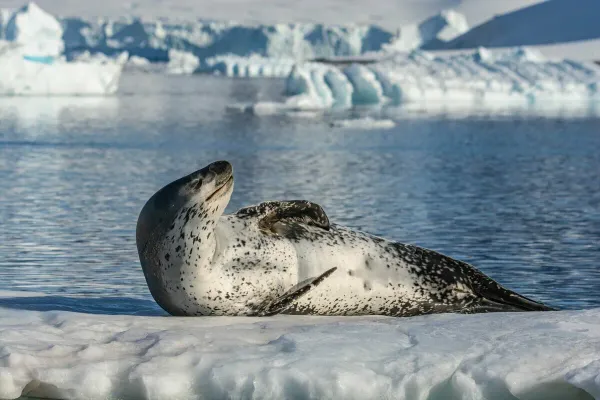
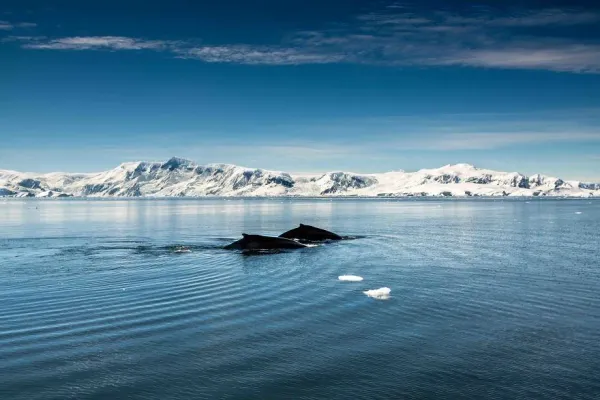
The bay between the glaciers, where humpback whales circled in water the color of dark indigo and spotted leopard seals lounged on the ice floes, he named after his wife: Marguerite Bay. The Shokalsky Strait — after a Russian oceanographer. Charcot was not vain: he named his discoveries after those he respected, not after himself. Not one cape, not one bay, not one island bears the name of Jean-Baptiste Charcot — only the names of his father, his wife, his colleagues, and the sailors who died on expeditions.
After Antarctica, a different life began — but Charcot did not return to medicine. The First World War: he commanded submarines in the Mediterranean, hunting German and Austrian U-boats. He received combat decorations, including the Croix de Guerre. He was nearly fifty — an age when most people think about rest.
Charcot was thinking about the ice.
Twenty years after the war — twenty years of Arctic expeditions. Every year, a new voyage. Every year, farther north. Greenland, Iceland, Svalbard, Jan Mayen, the Faroe Islands, Jan Mayen again. Pourquoi Pas? became his home — he spent more time aboard than in his Paris apartment. The crew changed, the routes changed, Charcot remained. The polar waters were his addiction, and the silence that can only be heard among the ice, when the engine is cut and the sails are furled — his remedy for the noise of civilization.
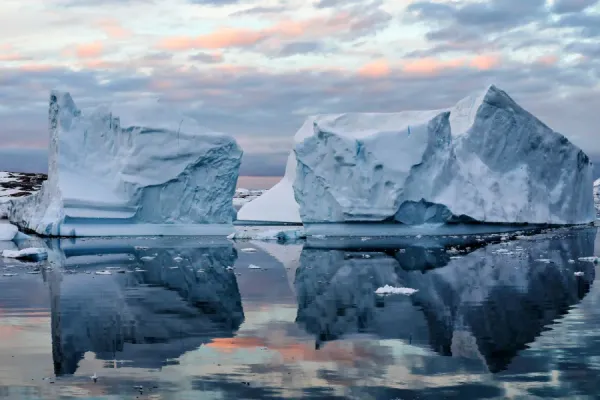
Charcot never became a great conqueror of the Pole. He won no race, set no record, planted no flag on any summit. He did something more important — he devoted his life to what cannot be conquered. Antarctica cannot be defeated. You can only approach it with respect, with science, with patience. And leave — enriched.
Or not leave at all.
Eighty-five years later, his name returned to polar waters. Aboard a ship that Charcot could not have imagined even in his boldest dreams. A ship that breaks ice two and a half meters thick and yet does not disturb the whales. A ship named Le Commandant Charcot.
150 meters of steel. 6 centimeters of armor at the bow. 34 megawatts of power — seventy-five times more than Pourquoi Pas? had. And yet it knows how to move in silence. So as not to disturb the whales.