September 16, 1936. Iceland. 30 miles from Reykjavik.
The barometer is falling. Sharply — so sharply that navigator Fleury checks the instrument twice. Through the wheelhouse windows: a leaden sky and waves growing by the minute. The wind is no longer howling — it is roaring, tearing spray from the crests and flinging it against the glass like handfuls of gravel.
The three-masted bark Pourquoi Pas? — French for “Why not?” — is returning home from Greenland. Another scientific expedition. Another load of crates filled with rock samples and test tubes of seawater. Another set of notebooks to be decoded in the laboratories of Paris. Routine, for the man commanding this ship — Jean-Baptiste Charcot, a 69-year-old polar explorer who had spent more time in icy waters than most sailors of his generation.
Two days earlier, on September 13, the ship had put in at Reykjavik to take on coal and replenish provisions. Captain Le Conniat glanced at the weather report and suggested waiting it out: a cyclone was moving in from the west, and the barometer had already begun to drop. But Charcot insisted — they would sail. He was in a hurry to reach Saint-Malo. Perhaps he was simply tired. Perhaps he believed he had seen worse storms. Forty years at sea tend to make a man feel immortal.
On September 15, the Pourquoi Pas? left Reykjavik. Course: southeast, toward the coast of France.
By evening the wind had strengthened to hurricane force. The barometer dropped several more divisions — this time, irreversibly. Charcot, the captain, and the navigator held a brief council. There was only one right decision: turn back toward Reykjavik, to the shelter of the coast.
But the cyclone was faster.
Waves swept over the deck. The wooden hull groaned with every blow — the Pourquoi Pas? had been built for science, not for storms like this. Her double oak planking, the pride of French shipbuilding, was designed to withstand the pressure of ice, not the battering of twenty-meter waves. The rudder stopped responding. Somewhere below, crates of equipment broke loose and crashed in the hold. The electric lighting — Charcot’s great pride — went out.
In the darkness, in the roar of the storm, the Pourquoi Pas? was driven toward the reefs off Cape Álftanes.
Three men stood on the bridge. The expedition commander, Jean-Baptiste Charcot. Captain Le Conniat. Navigator Fleury. Not one of them had put on a life jacket.
Charcot did not remove his boots.
A sailor who does not remove his boots on a sinking ship is neither panicking nor forgetting. He has made a decision. Heavy leather boots will drag a man to the bottom in seconds. Taking them off means a chance to swim free. Leaving them on means going down with the ship. Charcot, Le Conniat, and Fleury chose the ship.
They did not move from the bridge. They stood as the hull broke apart on the reefs. They stood as the water rushed in. They stood until the deck was gone from beneath their feet.
Of the 40 men aboard, one survived — helmsman Eugène Gonidec. He was found on shore among the wreckage, half-dead from cold and injuries. Twenty-two bodies were discovered later, scattered along the coast of Iceland. Eighteen men vanished into the sea forever — the North Atlantic does not give back its dead.
Charcot’s body was found among the wreckage. He was identified by the initials embroidered on his undergarments — JBC. His face had been disfigured by the rocks. In the pocket of his jacket: a waterlogged notebook with his final entries, no longer legible. The great explorer who had charted a thousand kilometers of Antarctic coastline, described dozens of previously unknown species of marine life, and discovered islands and bays that still bear his name — lay on a foreign stony shore, thousands of miles from his beloved ice.
News of Charcot’s death spread across France within a day. The country was in shock. Newspapers ran black borders. President Lebrun sent condolences to the family. Charcot was not merely an explorer — he was a symbol of French science, a man known to every schoolchild. His funeral at Montmartre drew thousands.
But before speaking of his death, one must understand his life.
Who was this man who chose to die standing at the bridge of a sinking ship?
Jean-Baptiste Étienne Auguste Charcot was born on July 15, 1867, in Neuilly-sur-Seine, into a family where science was a religion. His father, Jean-Martin Charcot, was considered one of the founders of modern neurology — the very physician whose Paris clinic a young Sigmund Freud had visited for training. The same man after whom Charcot disease — amyotrophic lateral sclerosis — is named.
The younger Charcot followed in his father’s footsteps: medical school, a brilliant academic record, a doctoral thesis on progressive muscular dystrophy. A flawless career lay before him — a professorship, a private practice, the respect of colleagues, his father’s name as a passport into any scientific salon in Paris.
He abandoned all of it. He chose ice. He turned his back on the warmth of Parisian apartments, on the esteem of peers, on a predictable and comfortable life — for wooden ships, polar storms, and months of darkness.
His first wife could not endure it. His marriage to the granddaughter of Victor Hugo — yes, that Hugo — collapsed. Charcot was married to the sea, and Jeanne Hugo had no intention of sharing her husband with icebergs. Later he would marry Marguerite, who understood him better. Or at least did not try to stop him.
In 1903, at the age of 36, Charcot fitted out a three-masted schooner called the Français and sailed for Antarctica. He had no part in the “heroic race to the pole” — Amundsen and Scott were still drawing up plans for the famous expeditions that would end in triumph for one and death for the other. Charcot was not interested in the glory of being first at the pole. He was a scientist. He was interested in coastlines that existed on no map. Ocean currents that no one had measured. Birds and fish that no one had described. He did not want to conquer Antarctica — he wanted to understand it.
Over two years of the first expedition, he charted a thousand kilometers of coastline — a thousand kilometers of shores that until then only albatrosses and penguins had seen. He produced detailed maps, assembled collections of mineral and biological specimens, and described dozens of species of marine life. He returned to Paris a national hero — not because he had reached some point on a map, but because he had brought back knowledge.
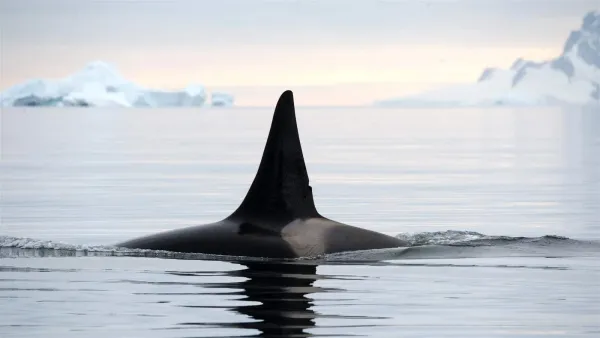
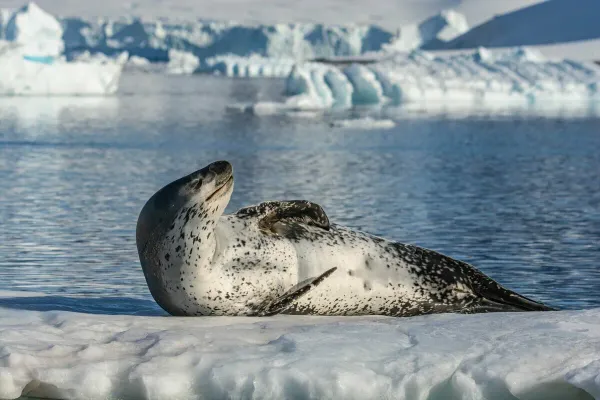
In 1908 he returned — on a new ship. The very Pourquoi Pas? that 28 years later would break apart on the reefs of Iceland. At the time, she was the finest research vessel in the world: double oak planking, an elm keel, reinforced frames spaced twice as closely as on ordinary sailing ships. A steam engine developing 450 horsepower. Electric lighting — an extraordinary luxury for a research vessel of the early twentieth century. Three fully equipped scientific laboratories. A library. And — a charming touch — a magnificent wine cellar and a supply of fresh newspapers, one per day, rationed to last the entire polar winter, when the sun does not rise above the horizon for months at a time.
On board: 30 men — officers, scientists, sailors. And Charcot’s wife, Marguerite, who went ashore at Punta Arenas, at the southern tip of South America, before the ship headed into the ice. She knew who she had married.
The second Antarctic expedition yielded discoveries that remain on the world map to this day. Charcot found an island of 630 square kilometers — entirely covered in an ice sheet, with sheer cliffs where thousands of petrels nested. He named the island after his father: Charcot Island. The bay between the glaciers, where humpback whales moved through water the color of dark indigo and leopard seals lay on the floes, he named after his wife: Marguerite Bay. A strait between the islands he named after the Russian oceanographer Shokalsky. Charcot respected the Russians. It was, after all, Fabian von Bellingshausen and Mikhail Lazarev, aboard the sloops Vostok and Mirny, who had first sighted the continent on January 28, 1820, in the course of an expedition that lasted 751 days.
After Antarctica came the First World War, in which Charcot commanded submarines. Then came twenty years of Arctic expeditions: Greenland, Iceland, Svalbard, the Faroe Islands. Each year a new voyage. Each year, farther north. He could not live without polar waters. It was like an illness — only instead of fever there was cold, and instead of delirium, the clarity of mind that silence brings.
And then — that final voyage home from Greenland. Iceland. The reefs. And the decision not to remove his boots.
Charcot was buried in the Montmartre Cemetery in Paris. Far from the sea, far from the ice. Among the graves of painters and poets — not among the polar explorers whose company would have suited him better.
At Cape Horn, at the southernmost point of South America, stands a monument — a memorial to more than ten thousand sailors lost in southern waters over five centuries. In that time, Drake Passage — 800 kilometers of storm-wracked ocean between South America and Antarctica — has swallowed some 800 ships. Charcot did not perish in Drake Passage. But he is one of those the sea has claimed. A man who never sought the glory of being first to the pole, who took part in no races, who set no speed records. He simply spent his whole life returning to places that cannot be conquered.
Antarctica cannot be defeated. You can only come to it — with respect, with science, with the willingness to pay any price.
But Charcot’s story did not end in 1936.
Eighty-five years later, his name returned to polar waters. Aboard a ship he could never have imagined. A ship with steel walls six centimeters thick and an output of 34 megawatts — seventy-five times more powerful than the Pourquoi Pas?. A ship that in 2024 reached a point in the Arctic where no vessel had ever gone before.
That ship bears his name. Le Commandant Charcot.
And in February 2027, she will sail the same route Charcot once followed. To Antarctica. Past Charcot Island. Through Marguerite Bay. To the shores that Charcot was the first to put on a map.
Charcot perished on a wooden bark. The ship that bears his name breaks through the very ice that bark would have been frozen in forever.