Travelers from Russia rarely visit Egypt to see ancient temples and pyramids. Most of the time, we go there to soak up the sun on the beach and dive in the Red Sea.
And yet, there is a reason these lands are called the "Cradle of Civilizations." The heritage preserved in the sands of this country does more than connect you to history — it lets you grasp the sheer scale of human genius, one that was crafting masterpieces thousands of years ago.
Abu Simbel
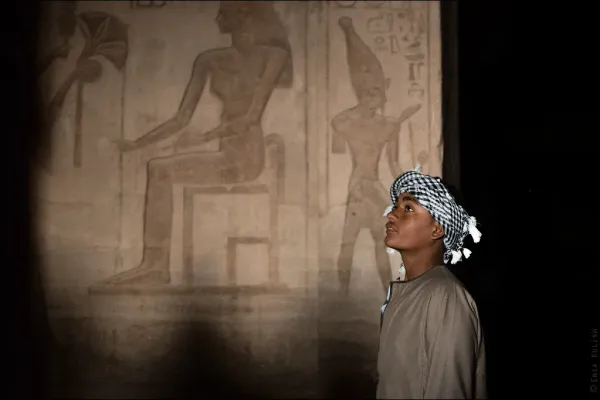
The Abu Simbel temples are one of Egypt's most iconic landmarks. This majestic complex was built in 1244 BC to commemorate Pharaoh Ramesses II's victory at the Battle of Kadesh. Four colossal statues of the pharaoh, each standing 20 meters tall, guard the entrance to the Great Temple.
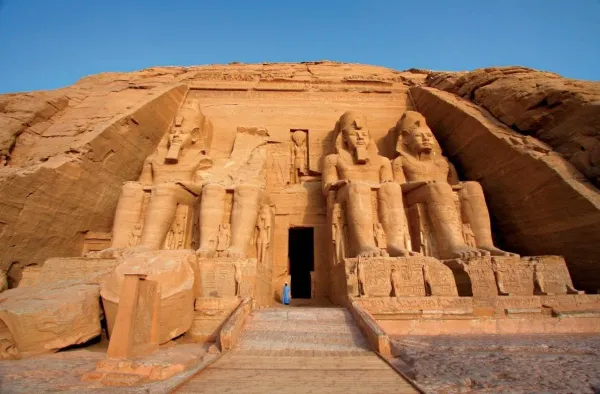
The temples were carved directly into the rock on the banks of the Nile. Next to the Great Temple stands the Small Temple, dedicated to the goddess Hathor and to Ramesses' wife, Nefertari.
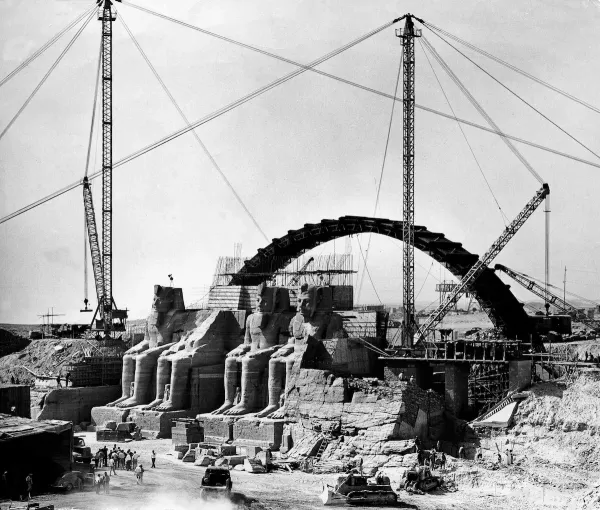
In the 1960s, the temples at Abu Simbel came close to being lost forever. The construction of the Aswan High Dam threatened to submerge them permanently. In a massive international operation led by UNESCO, the temples were carefully cut into blocks and relocated 65 meters higher and 200 meters farther from the river. The operation took four years and stands as one of the greatest engineering feats of the 20th century.
The Sun Festival
On February 22 and October 22, the rays of the rising sun penetrate deep into the temple through a narrow corridor and illuminate three of the four statues in the sanctuary — Amun-Ra, Ramesses II, and Ra-Horakhty. The fourth statue — Ptah, god of the underworld — always remains in shadow.
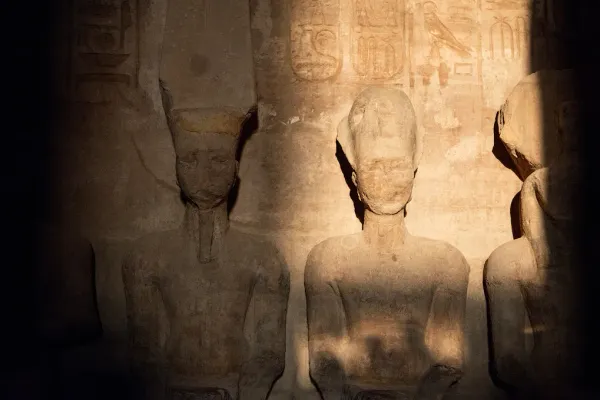
This phenomenon, precisely calculated by ancient architects over 3,000 years ago, draws thousands of visitors twice a year. February 22 is believed to be Ramesses II's birthday; October 22 marks the day of his coronation. The astronomical precision of the ancient Egyptians continues to astonish modern scholars.
Egypt from a New Angle
Egypt is far more than the beaches of the Red Sea. It is a country with an extraordinary historical heritage — one that deserves to be seen at least once in a lifetime. Abu Simbel is just one of its jewels, but perhaps the most dazzling of them all.
Evgenia Kulish